Rethinking Education
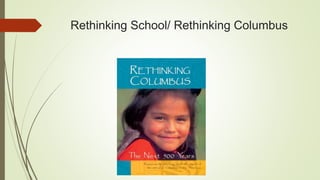
Rethinking School/ Rethinking Columbus
Perspective
 Insider
 Outsider
 On the margins
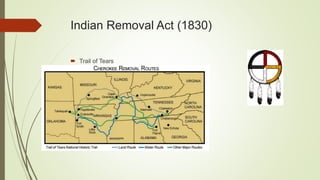
Indian Removal Act (1830)
 Trail of Tears
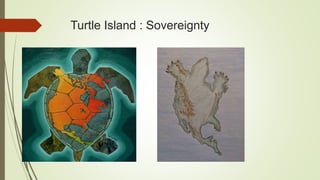
Turtle Island : Sovereignty
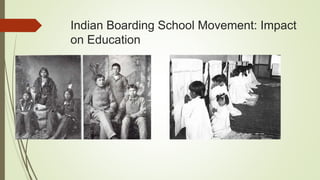
Indian Boarding School Movement: Impact
on Education
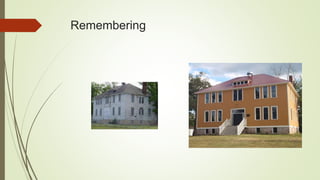
Remembering
Termination Policy (1953-1968)
 The Indian Termination Policy was intended to assimilate the Native Americans as
individuals (as opposed to one ethnic group) into mainstream Western civilization.
At least, that was the belief. It was established by Congress as a means of ending
all relations between Native American Tribes and the federal government. The
Termination Policy was intended to grant all the privileges and rights of citizenship
to the Native Americans; however, it actually ended tribe sovereignty and freedom,
trusteeship of the reservations and exclusion of Indians from state laws.
Self Determination Act (1975)
 The Indian Self-Determination and Education Assistance Act of 1975 (Public
Law 93-638) authorized the Secretary of the Interior, the Secretary of Health,
Education, and Welfare, and some other government agencies to enter into
contracts with, and make grants directly to, federally recognized Indian tribes. The
tribes would have authority for how they administered the funds, which gave them
greater control over their welfare. The ISDEAA is codified at Title 25, United States
Code, beginning at section 450.
 Signed into law on January 4, 1975, the ISDEAA made self-determination the
focus of government action. The Act reversed a 30-year effort by the federal
government under its preceding termination policy to sever treaty relationships with
and obligations to Indian tribes. The Act was the result of 15 years of change,
influenced by American Indian activism, the Civil Rights Movement, and
community development based on grassroots political participation.[1][2]
Indian Child Welfare Act (1975)
 The Indian Child Welfare Act (ICWA) is a federal law that seeks to keep American
Indian children with American Indian families. Congress passed ICWA in 1978 in
response to the alarmingly high number of Indian children being removed from
their homes by both public and private agencies. The intent of Congress under
ICWA was to "protect the best interests of Indian children and to promote the
stability and security of Indian tribes and families" (25 U.S.C. § 1902). ICWA sets
federal requirements that apply to state child custody proceedings involving an
Indian child who is a member of or eligible for membership in a federally
recognized tribe.
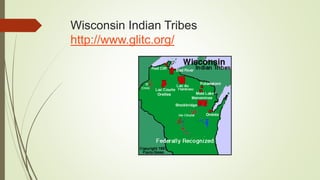
Wisconsin Indian Tribes
http://www.glitc.org/
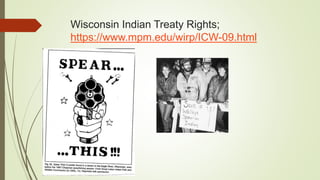
Wisconsin Indian Treaty Rights;
https://www.mpm.edu/wirp/ICW-09.html
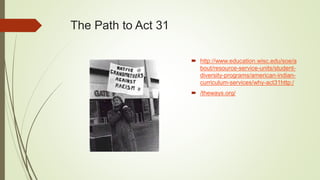
The Path to Act 31
 http://www.education.wisc.edu/soe/a
bout/resource-service-units/student-
diversity-programs/american-indian-
curriculum-services/why-act31http:/
 /theways.org/
Access 2 Success for Native American
Students in Higher Education
 Pre service teacher preparation
 Act 31 Website for Professors, Pre-service and Certified Teachers
 Native American and First Nation Studies Programs
 Indigenous Language Collaboration
Curriculum
 Tribal Colleges
 Native American and First Nation Studies Programs
 Indigenous language courses
 UW Green Bay First Nations Fusion Program
 http://www.uwgb.edu/fns/
 Connective Pedagogy- Indigenous wholistic framework
 Elders in residence
 Act 31 Fusion
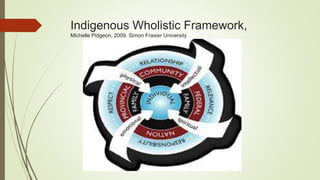
Indigenous Wholistic Framework,
Michelle Pidgeon, 2009. Simon Frasier University

Rethinking education and indigenous knowledges

  • 1.
  • 2.
  • 3.
  • 4.
    Indian Removal Act(1830)  Trail of Tears
  • 5.
    Turtle Island :Sovereignty
  • 6.
    Indian Boarding SchoolMovement: Impact on Education
  • 8.
  • 9.
    Termination Policy (1953-1968) The Indian Termination Policy was intended to assimilate the Native Americans as individuals (as opposed to one ethnic group) into mainstream Western civilization. At least, that was the belief. It was established by Congress as a means of ending all relations between Native American Tribes and the federal government. The Termination Policy was intended to grant all the privileges and rights of citizenship to the Native Americans; however, it actually ended tribe sovereignty and freedom, trusteeship of the reservations and exclusion of Indians from state laws.
  • 10.
    Self Determination Act(1975)  The Indian Self-Determination and Education Assistance Act of 1975 (Public Law 93-638) authorized the Secretary of the Interior, the Secretary of Health, Education, and Welfare, and some other government agencies to enter into contracts with, and make grants directly to, federally recognized Indian tribes. The tribes would have authority for how they administered the funds, which gave them greater control over their welfare. The ISDEAA is codified at Title 25, United States Code, beginning at section 450.  Signed into law on January 4, 1975, the ISDEAA made self-determination the focus of government action. The Act reversed a 30-year effort by the federal government under its preceding termination policy to sever treaty relationships with and obligations to Indian tribes. The Act was the result of 15 years of change, influenced by American Indian activism, the Civil Rights Movement, and community development based on grassroots political participation.[1][2]
  • 11.
    Indian Child WelfareAct (1975)  The Indian Child Welfare Act (ICWA) is a federal law that seeks to keep American Indian children with American Indian families. Congress passed ICWA in 1978 in response to the alarmingly high number of Indian children being removed from their homes by both public and private agencies. The intent of Congress under ICWA was to "protect the best interests of Indian children and to promote the stability and security of Indian tribes and families" (25 U.S.C. § 1902). ICWA sets federal requirements that apply to state child custody proceedings involving an Indian child who is a member of or eligible for membership in a federally recognized tribe.
  • 12.
  • 13.
    Wisconsin Indian TreatyRights; https://www.mpm.edu/wirp/ICW-09.html
  • 14.
    The Path toAct 31  http://www.education.wisc.edu/soe/a bout/resource-service-units/student- diversity-programs/american-indian- curriculum-services/why-act31http:/  /theways.org/
  • 15.
    Access 2 Successfor Native American Students in Higher Education  Pre service teacher preparation  Act 31 Website for Professors, Pre-service and Certified Teachers  Native American and First Nation Studies Programs  Indigenous Language Collaboration
  • 16.
    Curriculum  Tribal Colleges Native American and First Nation Studies Programs  Indigenous language courses  UW Green Bay First Nations Fusion Program  http://www.uwgb.edu/fns/  Connective Pedagogy- Indigenous wholistic framework  Elders in residence  Act 31 Fusion
  • 17.
    Indigenous Wholistic Framework, MichellePidgeon, 2009. Simon Frasier University

Editor's Notes

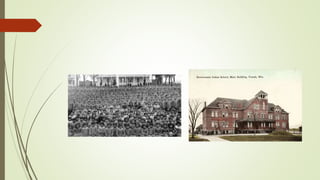
  • #8 Carlisle school Military approach/ industrial schools ( marching, designed to push vocational rather than literacy
  • #9 Mission schools located on reservations, convert to christianity
  • #18  Reationships:Seen face increasing presence of indigenous people on the campus in all levels of the university, not just in service areas. Indigenous professors, advisors, professional staff, administrators etc. Second was building relationships with authentic allies.across alllevels of the institution and to do so means providing access to indegnous people and learning about indigenous ways. The uW Green Bay program created pathways for faculty and participants to have access to elders in residence. A very positive way of entry and engagement in the community. Authenti allies can use their position of power or influence within the institutional culture to effect change. This is not just an “Indian” issue but rather it is a community issues. Reciprocity and relevance Gving back for the knowledge shared. Relevance refers to how the university through services and research relates to the lived experience of indigenous people. Reciprocity in 3 areas: financial resources, recruitment and retention and words into action. Words into action includes presence in the mission statement and goals. Respect- respect for indigenous knowledge/ valued, respected: elders in residence, credentialing? Creating opportunitites for voice, to be heard, requires active listening. Making policy public and then being accountable for implementation.