Christophe  Batier Bruxels  oct2011   Social  Learning    Learning for students    and their teachers   
A  paradox  is a  seemingly  true  statement  or group of statements that lead to a  contradiction  or a situation which  seems to  defy logic or  intuition . Typically, however, quoted paradoxical statements do not imply a real contradiction and the puzzling results can be rectified by demonstrating that one or more of the  premises  themselves are not really true, a play on words, faulty and/or cannot all be true together. But many paradoxes, such as  Curry's paradox , do not yet have universally accepted resolutions.  This  talk  may contain  some   paradoxes Abuse of Paradoxes can be dangerous The word  paradox  is often used interchangeably with  contradiction . Literary and other artistic uses of paradoxes imply no contradiction and may be used to describe situations that are  ironic . [1]  Sometimes the term  paradox  is used for situations that are merely surprising. An example of a paradox is "This statement is false.", and is explained below.
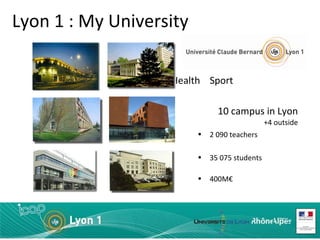
Sciences  Health  Sport  10 campus in Lyon +4 outside Lyon 1 : My University 2 090 teachers 35 075 students 400M€
 
Let’s talk about   Social   learning   What are  we talking about? Christophe Batier Bruxels , October 2011
http://www.connectivism.ca/?p=317 What are  we talking about?
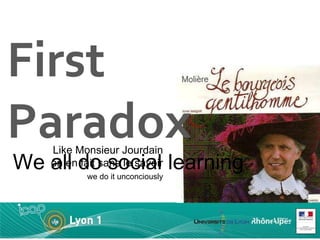
First  Paradox  We all do social learning Like Monsieur Jourdain on en fait sans le savoir   we do it unconciously
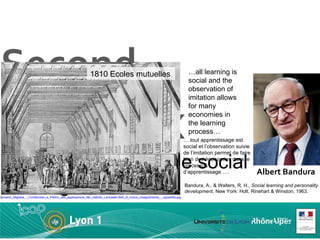
Second  Paradox We have always done social learning Giovanni_Migliara_-_Confalonieri_e_Pellico_alla_applicazione_del_metodo_Lancaster-Bell_di_mutuo_insegnamento_-_aquarello.jpg ‎ 1810 Ecoles mutuelles Bandura, A., & Walters, R. H.,  Social learning and personality development , New York: Holt, Rinehart & Winston, 1963. Albert Bandura … .tout apprentissage est social et l’observation suivie de l’imitation permet de faire bien des économies dans le processus d’apprentissage …. … all learning is social and the observation of imitation allows for many economies in the learning process…
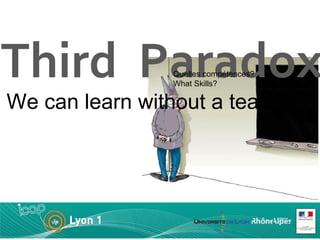
Third  Paradox   We can learn without a teacher Quelles compétences? What Skills?
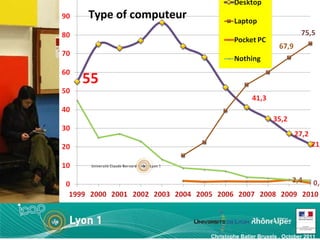
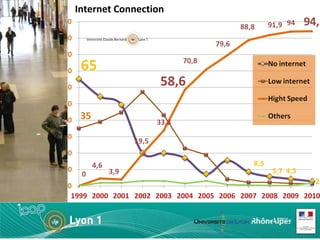
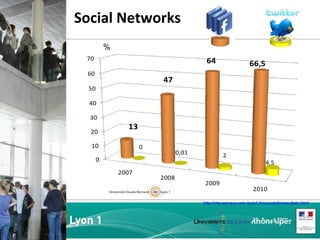
Somes observations -Student  computers   -Student internet connection - Rate of usocial networks «  Créer son propre e-portfolio ou  les limites des réseaux sociaux  » Mai 2011
Type of computeur Christophe Batier Bruxels , October 2011
Internet Connection
Social Networks http://nte-serveur.univ-lyon1.fr/coursinfo/resultats.html %
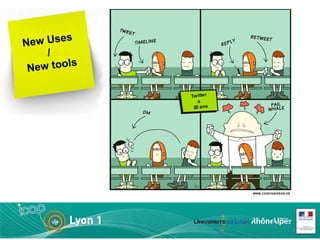
New Uses /  New tools
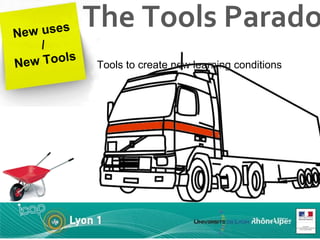
New uses / New Tools The Tools Paradox    Tools to create new learning conditions
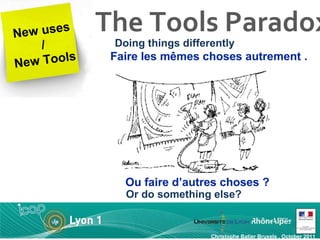
The Tools Paradox    Christophe Batier Bruxels , October 2011 New uses / New Tools Doing things differently Or do something else?
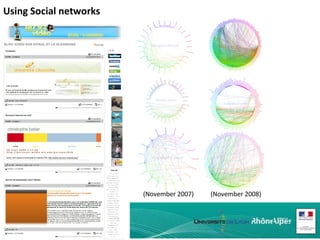
Using Social networks (November 2007) (November 2008)

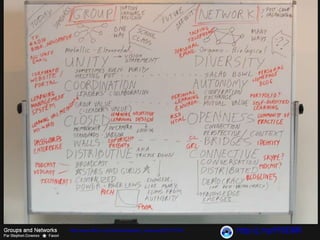
Groupe / Réseau http://www.flickr.com/photos/stephen_downes/252157734/   http://j.mp/lY6D8R  
 
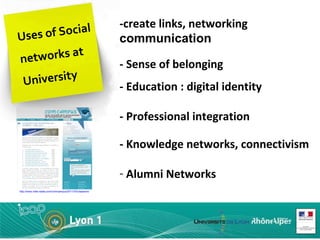
Uses of Social networks at University -create links, networking  communication - Sense of belonging   - Education : digital identity - Professional integration - Knowledge networks, connectivism Alumni Networks   http://www.mille-watts.com/comcampus/2011/03/classement-des-universites-sur-facebook-avril-2011/
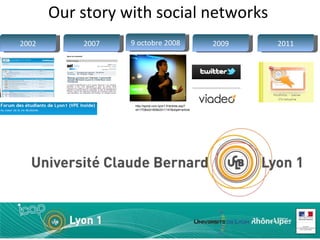
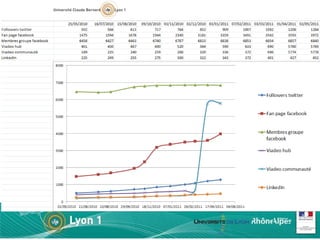
Our story with social networks 2007 9 octobre 2008 2009 http://spiral.univ-lyon1.fr/entree.asp?id=170&id2=80&id3=1147&objet=article 2011 2002
http://www.mille-watts.com/comcampus/2011/09/classement-des-universites-sur-twitter-septembre-2011/
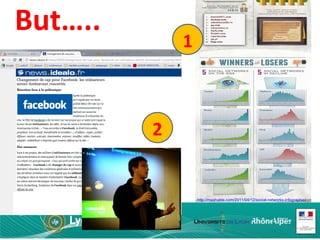
But….. http://mashable.com/2011/04/12/social-networks-infographic/ 1 2
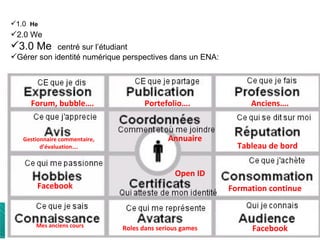
Christophe Batier 1.0  He 2.0 We 3.0 Me  centré sur l’étudiant Gérer son identité numérique perspectives dans un ENA: Annuaire Open ID Roles dans serious games Facebook Forum, bubble…. Portefolio…. Anciens…. Mes anciens cours Tableau de bord Gestionnaire commentaire, d’évaluation…. Facebook Formation continue
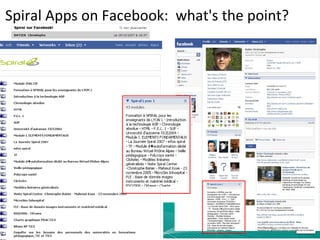
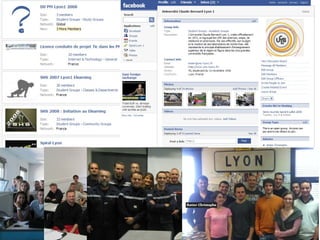
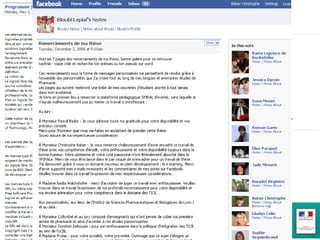
Spiral Apps on Facebook:  what's the point?
 
 
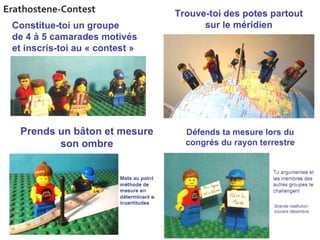
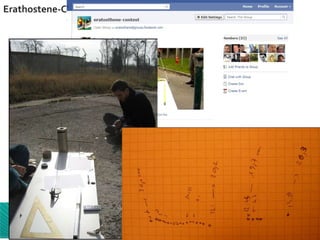
Erathostene-Contest
Erathostene-Contest
 
 
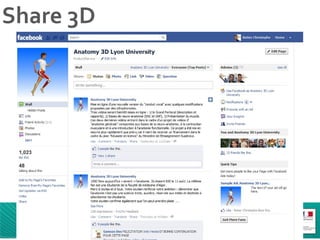
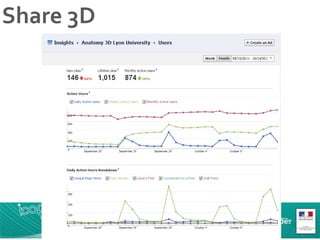
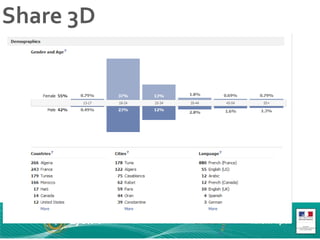
Share 3D
Share 3D
Share 3D
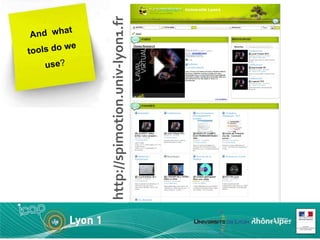
And  what tools do we  use ?
And  what tools do we  use ? http://spimotion.univ-lyon1.fr
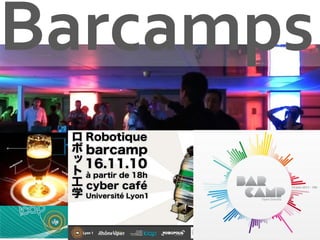
Barcamps
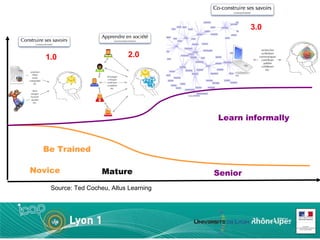
Novice Mature Senior Be Trained Learn informally Source: Ted Cocheu, Altus Learning 1.0 2.0 3.0
Last  Paradox    Informalise the formal  or  Formalise the informal
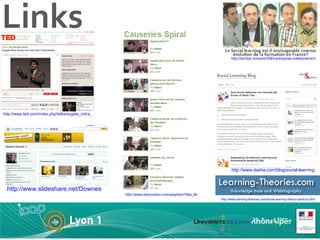
Links http://techtoc.tv/event/398/l-entreprise-collaborative/management-2.0/le-social-learning-est-il-envisageable-comme-evolution-de-la-formation-en-france http://www.ted.com/index.php/talks/sugata_mitra_shows_how_kids_teach_themselves.html http://www.dashe.com/blog/social-learning http://www.learning-theories.com/social-learning-theory-bandura.html http://www.slideshare.net/Downes http://www.dailymotion.com/playlist/x1ltbe_Batier_causeries-spira
http://www.slideshare.net/batier Presentation on : http://twitter.com/batier Follow me:  http://www.j.mp/batier

Social learning bruxels

Editor's Notes

  • #2 Universités et réseaux sociaux Jeudi 19 mai 201 Lieu Amphithéâtre Charlemagne 96, boulevard Bessières - 75017 Paris Métro: Porte de Clichy (ligne N° 13) Programme du séminai
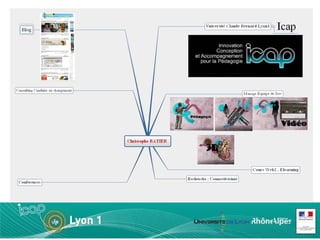
  • #5 http://twitter.com/batier Directeur technique Icap http://icap.univ-lyon1.fr   Gourou Spiral http://spiral.univ-lyon1.fr Blog Vidéo : http://bit.ly/batier +and my english blog here http://tinyurl.com/c8l3kh My job? Manage all this stuff : http://tinyurl.com/icap09
  • #6 Je viens vous parler de social learning Définition apprendre avec les autres par extentions réseaux sociaux formation informelle
  • #7 Le  crowdsourcing  (en français,  externalisation ouverte ) est un des domaines émergents du  management de la connaissance  : c'est le fait d'utiliser la  créativité , l' intelligence  et le  savoir-faire  d'un grand nombre de personnes
  • #8 Nous sommes tous des Monsieur Jourdain: Nous avons tous fais du social Learning sans le savoir.
  • #9 Les écoles mutuelle debut XIX learning by teaching
  • #10 Students can learn by themselves new skills, new knowledge. I am always amazed when I ask a work rendered as video to my students. They never had any training directed at the shooting, video editing .... But the majority is doing very well.  How did they acquire these skills?  Why we do not usein our teaching of these new skills?
  • #11 Quelques observations -L’évolution de notre population étudiante -Evolution des réseaux sociaux -Evolution des usages
  • #19 Les outils ont une influences sur les usages. Comme le montre ici Stephen Downes : Un réseau ce n’est pas un groupe. Les mecanismes sont différents en de nombreux points. Et aujourd’hui chaque étudiant a des outils de + de 38T pour gérer leurs réseaux
  • #38 Autres exemples : pour former les enseignants de notre universités on propose un nouveau format : le barcamp. On mélange enseignant, étudiants, industriels.