Downloaded 180 times


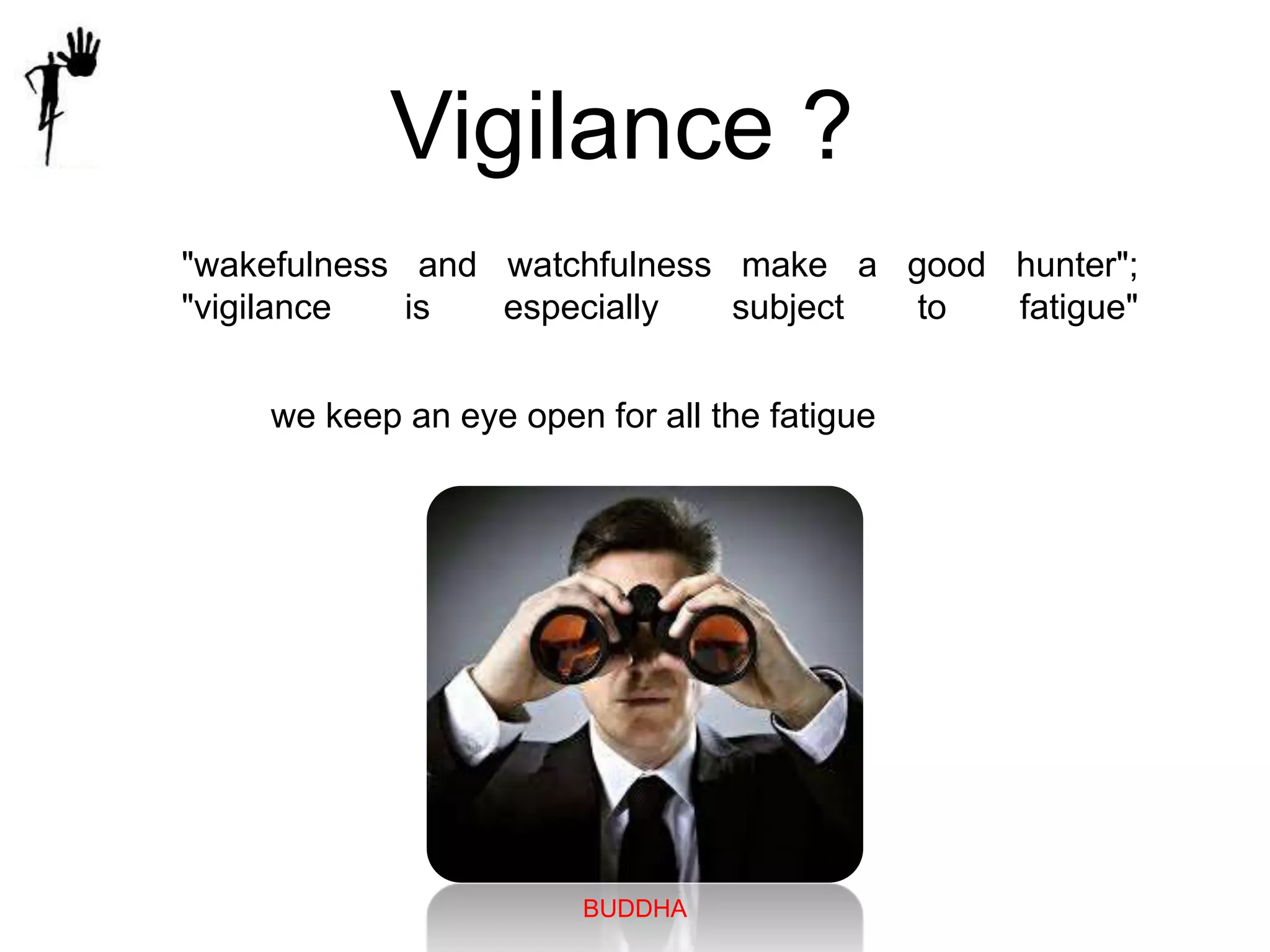






Vigilance refers to keeping careful watch to avoid potential dangers or issues, such as parents watching their young children. In an organizational context, vigilance involves monitoring employee activities and taking prompt action to ensure integrity, honesty, and fair practices in all official transactions and behaviors. The goals of vigilance include disciplining wrongdoers, protecting honest employees, increasing transparency and accountability, reducing waste and leakage, promoting a culture of honesty, and reforming systems to prevent corruption for more effective service delivery. Vigilance is especially important in units where officials have high discretion, there is opportunity for unfair advantages, rules are complex, accountability is low, and corruption risks are known to exist.
Introduction of the presenter, Buddha N. Shrestha.
Vigilance defined as careful watching to avoid danger; important in organizations for integrity.
Vigilance relates to awareness; fatigue affects vigilance, highlighting need for constant attention.
Seven reasons for vigilance: discipline, protection, transparency; enhances integrity and reduces corruption.
Vigilance necessary in all organization units, particularly where corruption opportunities exist and procedures are complex.
Conclusion by Buddha.
Cultural significance in vigilance, with no specific textual content.
Call for a transparent Nepal, emphasizing collective responsibility for integrity.
Thank you message, encouraging a 'go green' initiative.


