An Introduction
To Finance
Section 1
The Role and Scope of
Finance
2
What is Finance?
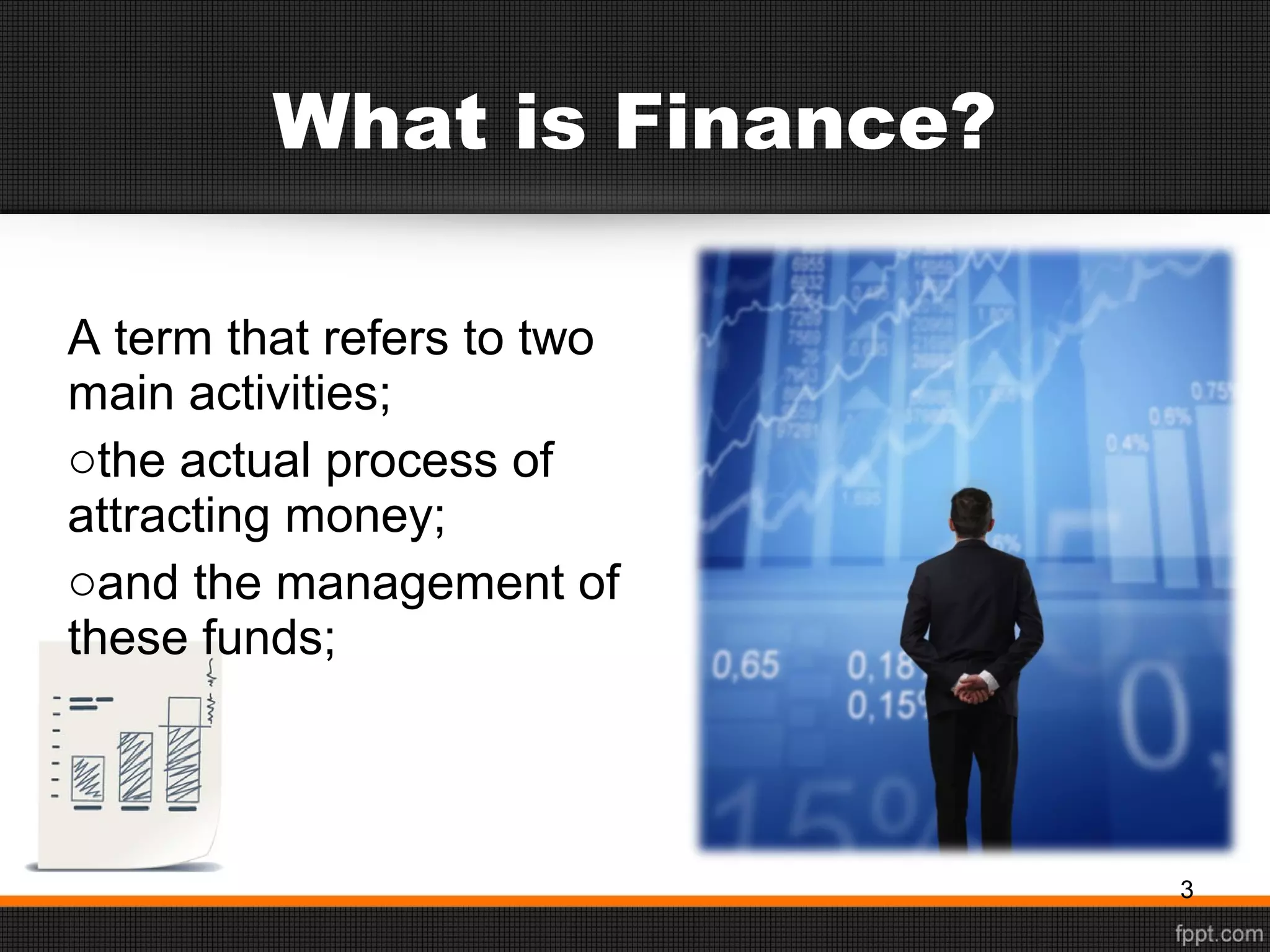
A term that refers to two
main activities;
othe actual process of
attracting money;
oand the management of
these funds;
3
The Functions of Finance
Analysis;
Decision-making;
4
The Areas of Finance
 Business or Corporate Finance-the firm’s ability
to make good finance decisions;
 Personal Finance-retirement provision, saving
plans etc.,;
Public Finance-income distribution, stability plans
etc.,;
5
Finance v
Accounting
 Financial Accounting
concentrates on record keeping
and submitting of financial
statements;
 Finance focuses on making
decisions and carrying out
analysis based on information
presented by accounting;
6
Finance v
Accounting(cont.)
Financial Accounting tends to be more
concerned with the past;
 Finance tend to be more interested in
present and the future;
7
Finance v
Accounting(cont.)
 Financial Accounting tends to have an
income focus;
 Finance tends to have a cash flow focus;
8
Business Finance
Types of Financial Decisions
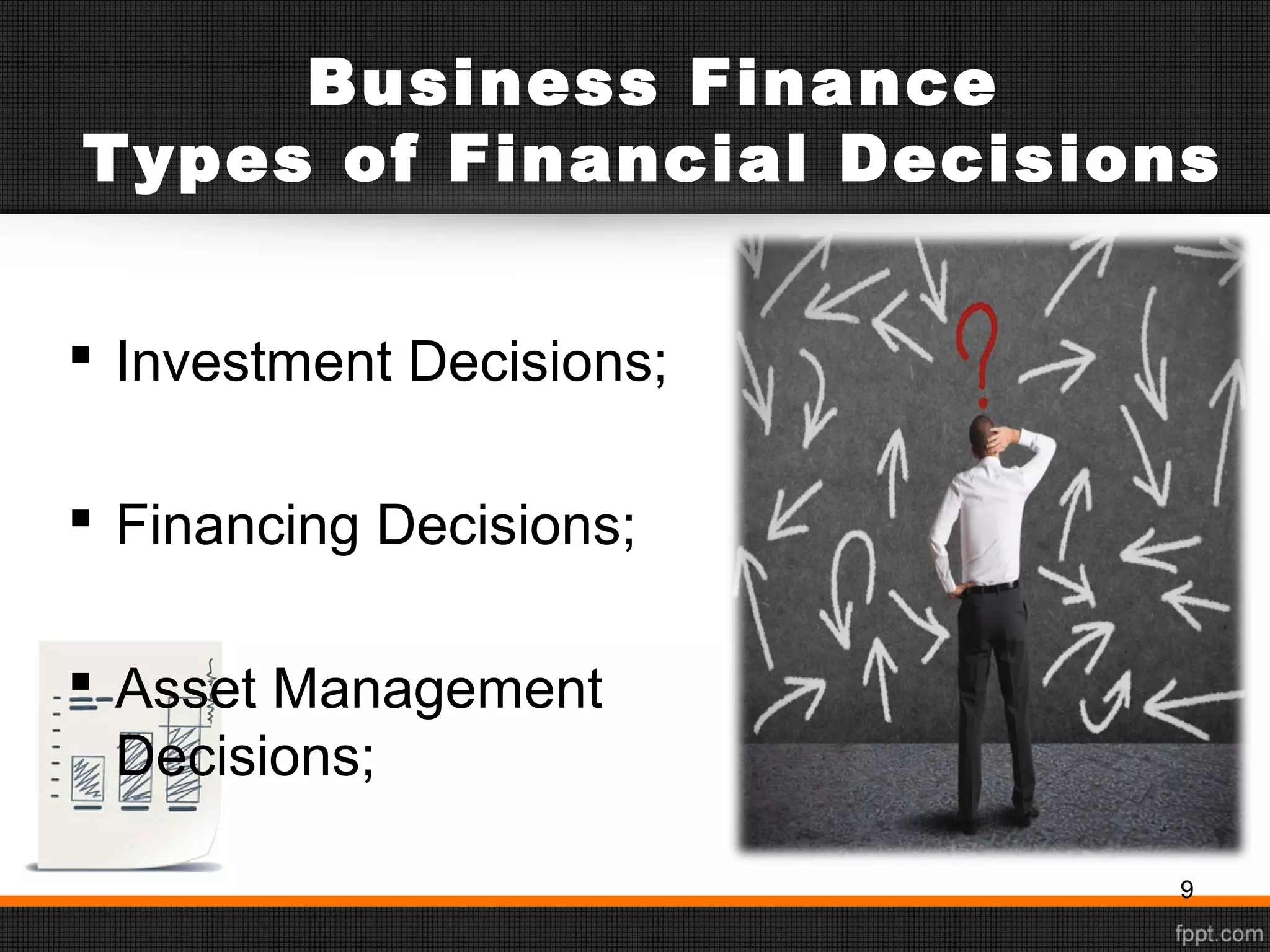
 Investment Decisions;
 Financing Decisions;
 Asset Management
Decisions;
9
Investment Decisions
 Should we built this component or buy it?
 What specific assets should be acquired?
 Should we introduce a new product?
 Which projects should be undertaken?
10
Financing Decisions
 What is the best structure of
financing(debt versus equity)?
 How much of our debt should be short-
term as opposite to long-term?
 What is the best dividend policy?
 How will the funds be physically acquired?
11
Asset-Management
Decision
 How do we manage existing assets
efficiently?
 Financial Manager has varying degrees of
operating responsibility over assets;
 Greater emphasis on current asset
management than fixed asset
management; 12
The Goal of the Business
13
 The target of business is
the maximize
shareholder’s wealth;
 It’s measured as the
price of stocks;
 Wealth maximization
concept adjusts for
deficiencies of previous
concept;
Profit Maximization
 Short-Term Oriented;
 Can not account for risk;
 Can lead
mismanagement;
Wealth
Maximization
 Long-term Oriented;
 The risk factor is taken
account;
 Recognizes the timing of
returns;
14
Comparison of Two
Concepts
Section 2
An Overview of Business
Environment
15
Types of Businesses
Sole Proprietorships
 A business that owned
and operated by one
individual;
 The owner and the
business are legally
identical;
16
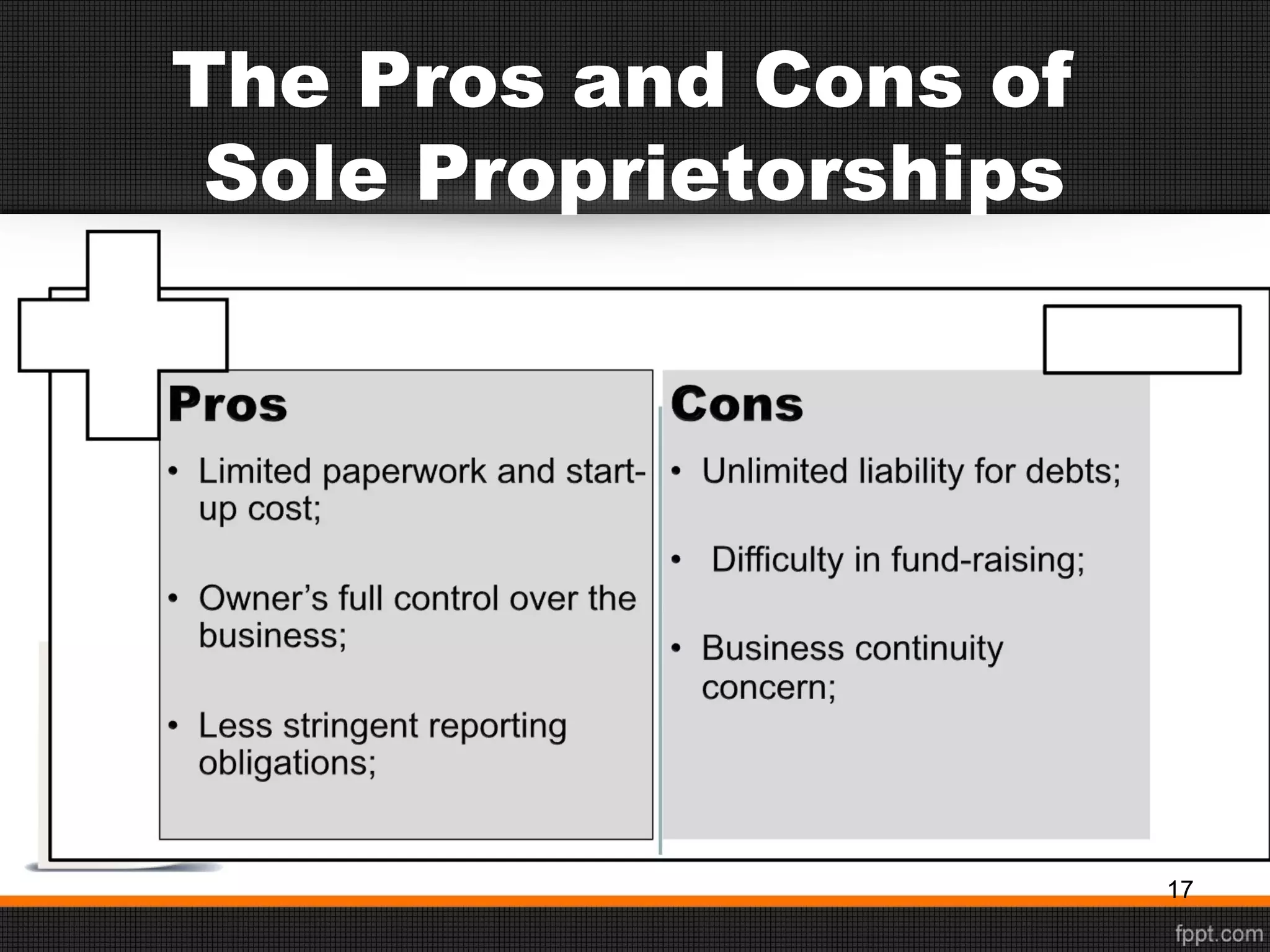
The Pros and Cons of
Sole Proprietorships
17
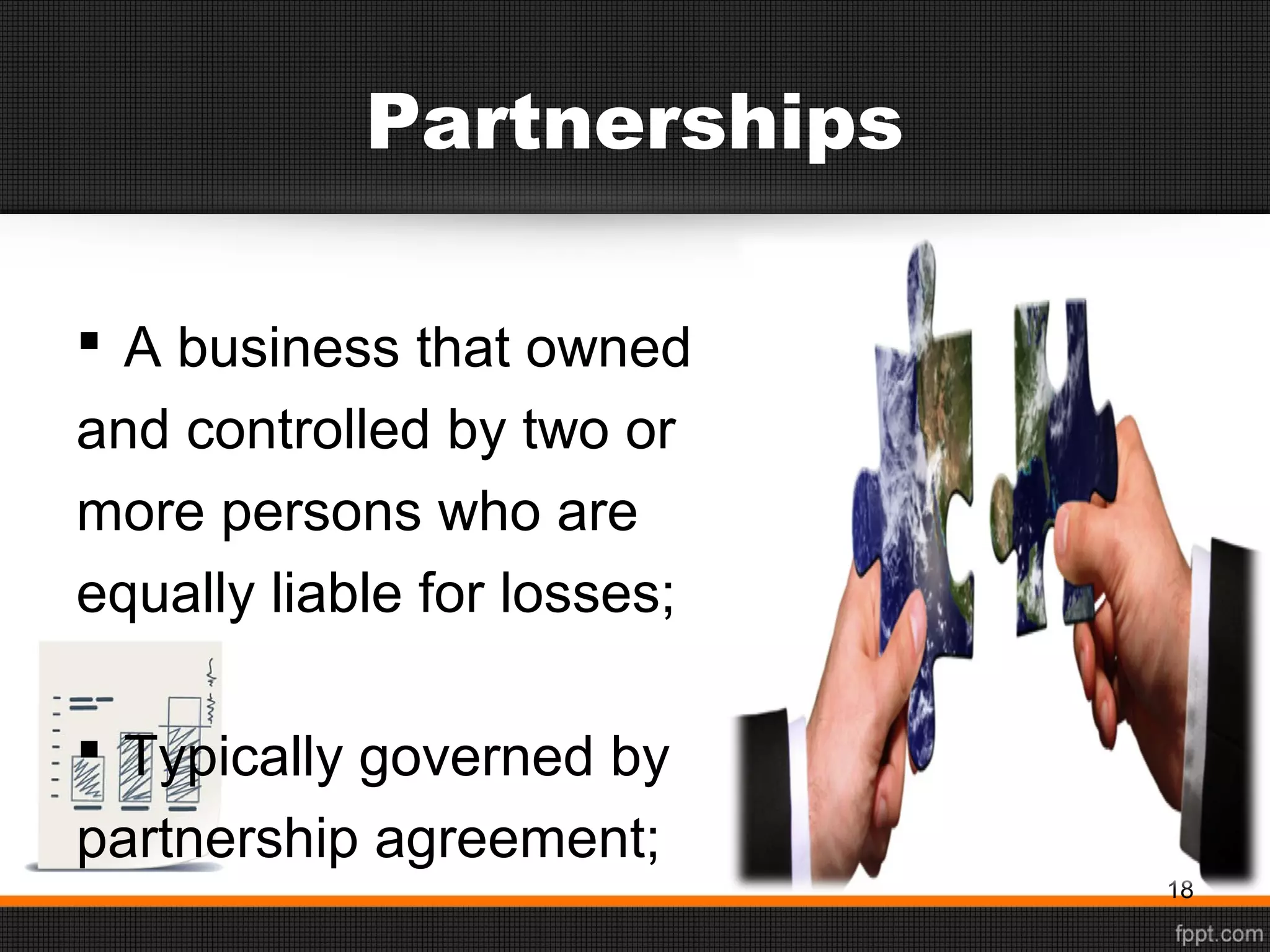
Partnerships
 A business that owned
and controlled by two or
more persons who are
equally liable for losses;
 Typically governed by
partnership agreement;
18
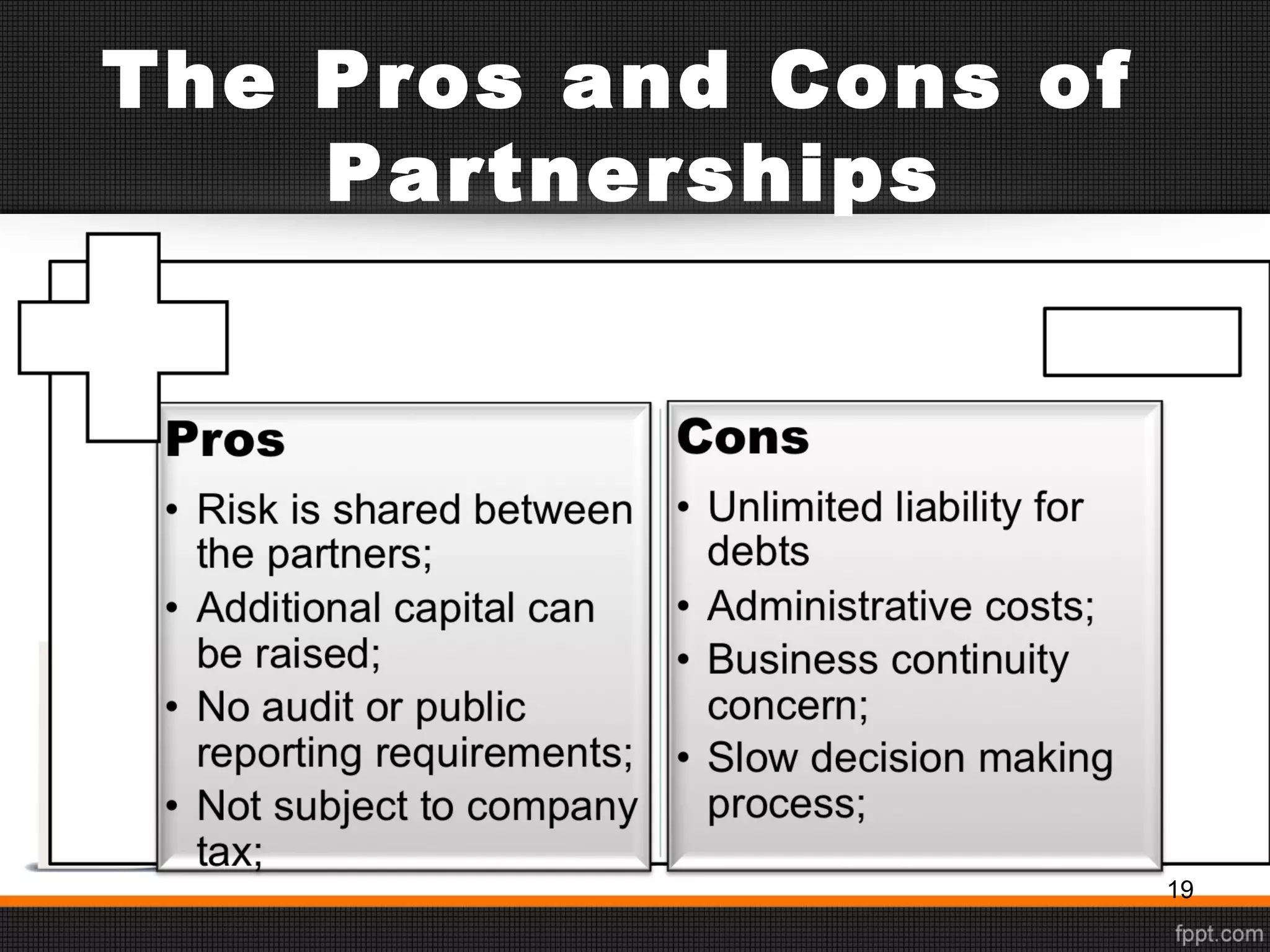
The Pros and Cons of
Partnerships
19
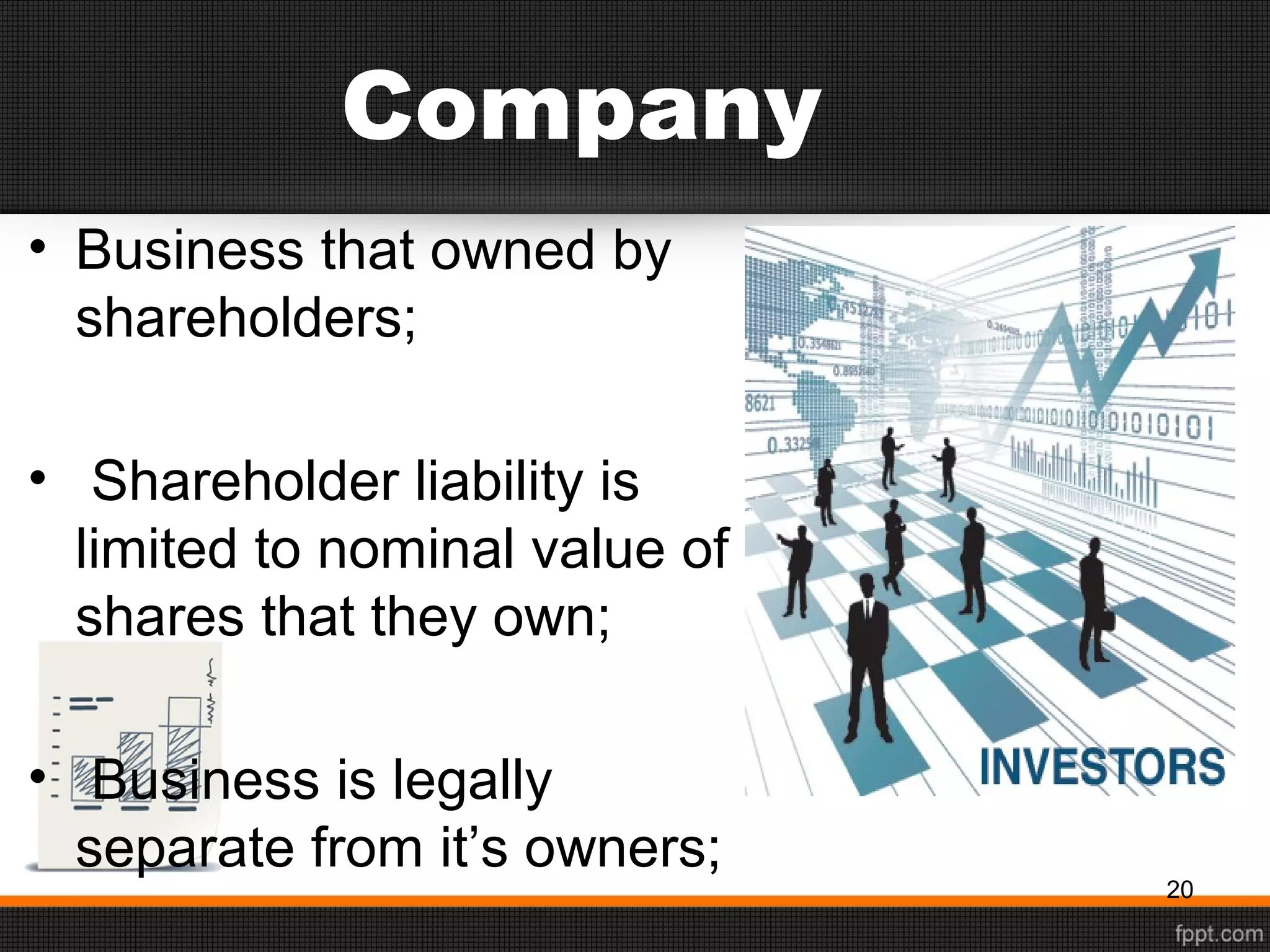
Company
• Business that owned by
shareholders;
• Shareholder liability is
limited to nominal value of
shares that they own;
• Business is legally
separate from it’s owners;
20
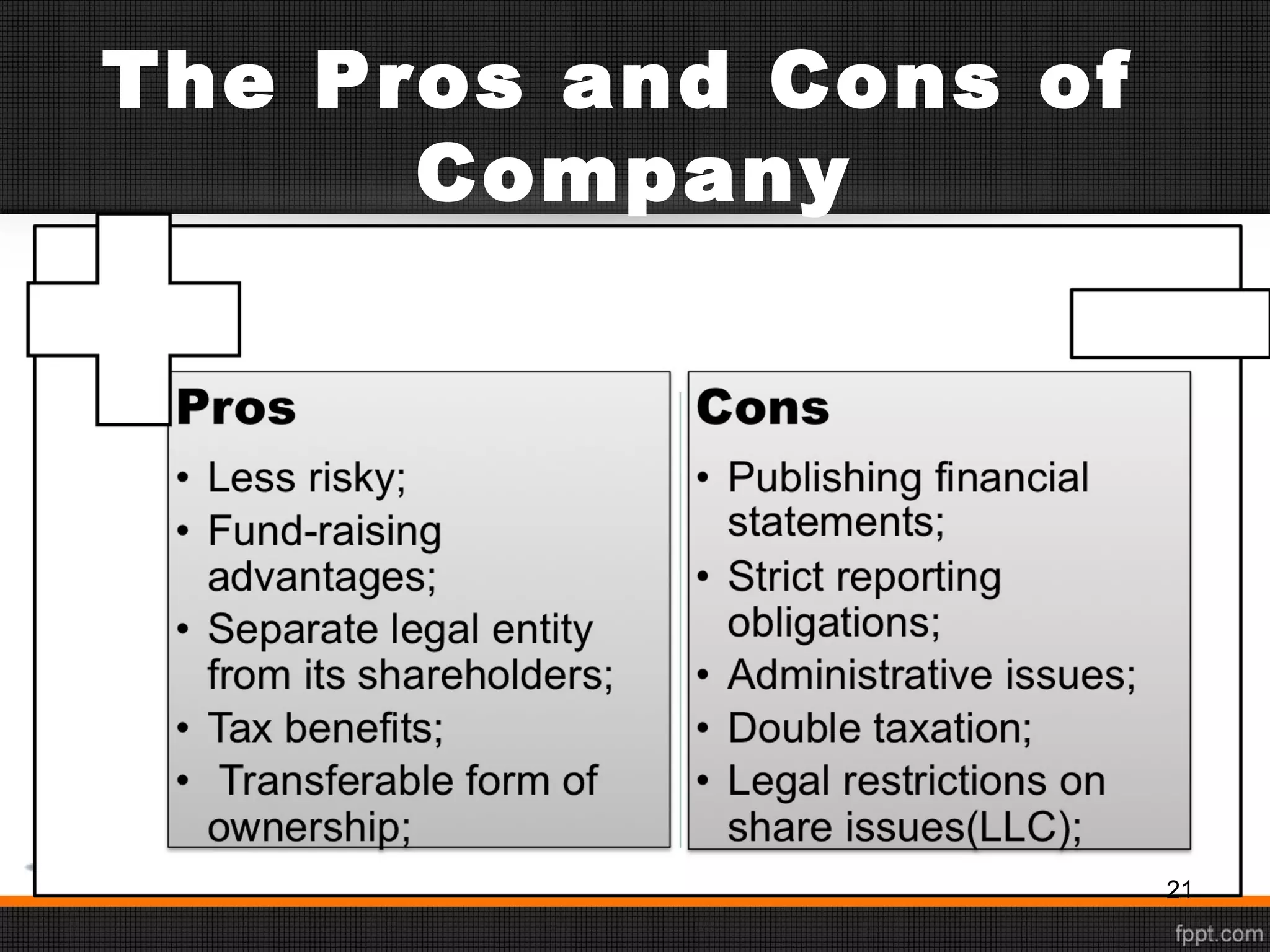
The Pros and Cons of
Company
21
Section 3
Corporate Structure
22
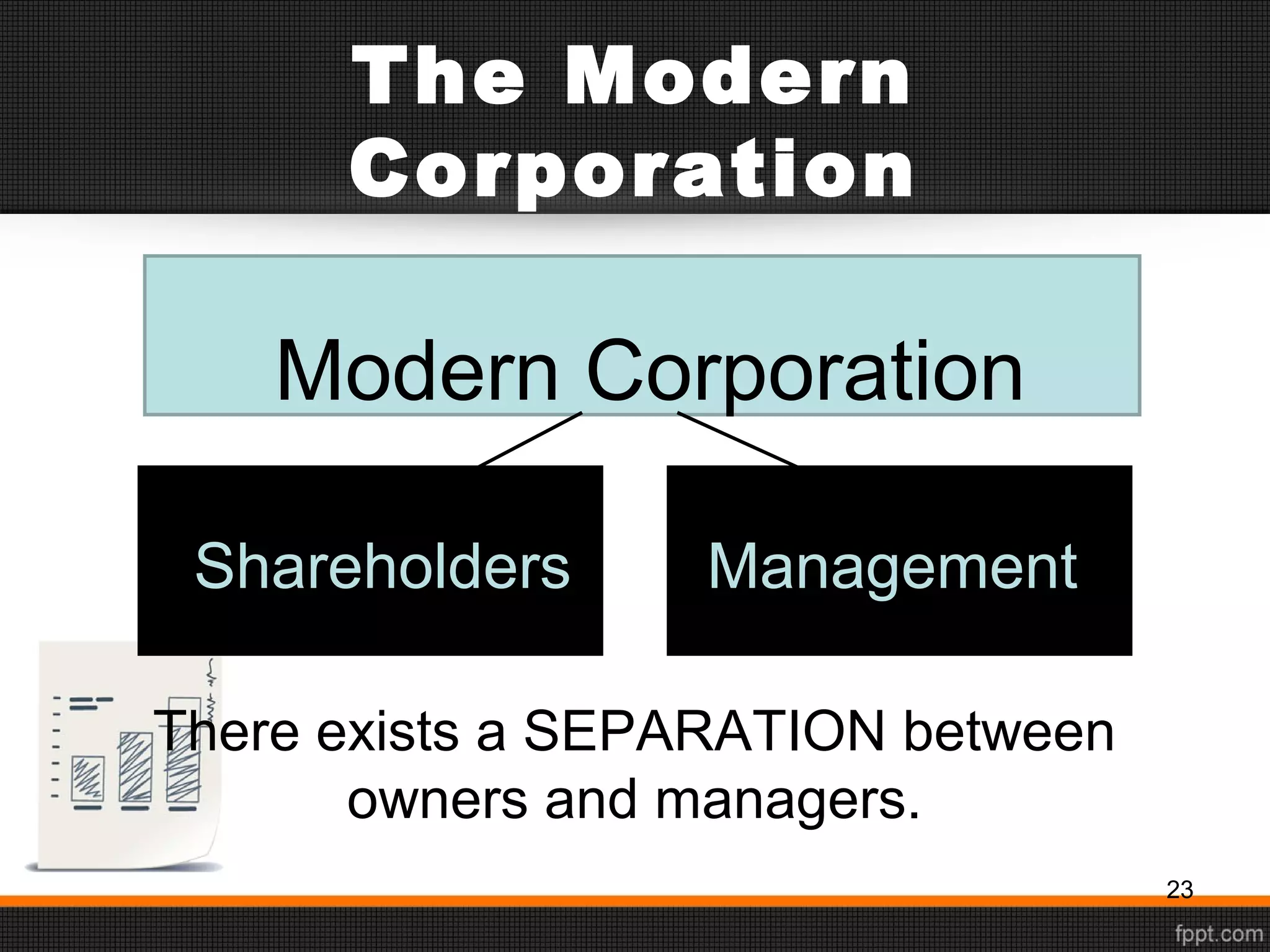
The Modern
Corporation
There exists a SEPARATION between
owners and managers.
Modern Corporation
Shareholders Management
23
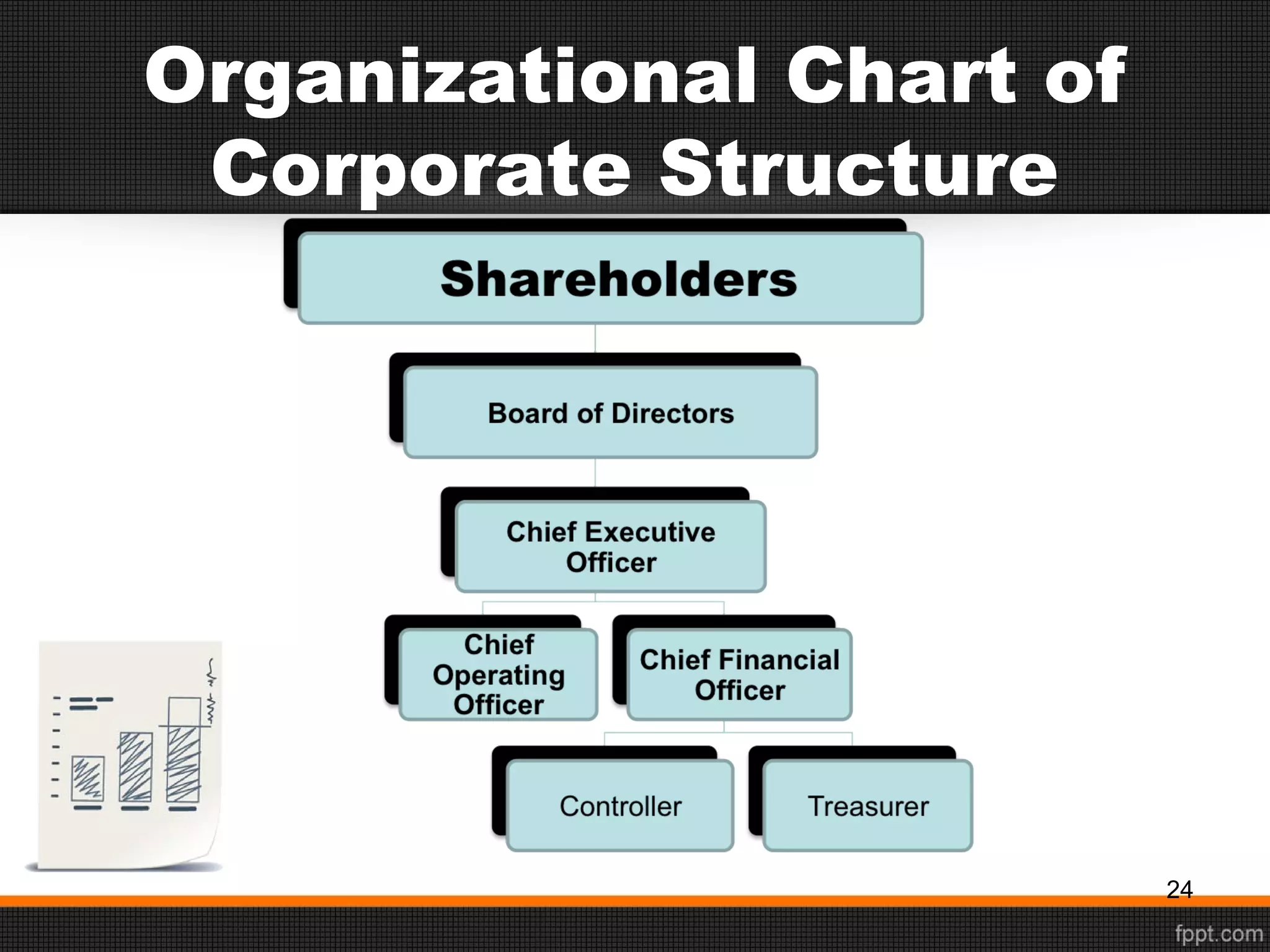
Organizational Chart of
Corporate Structure
24
Role of Management
 An agenagentt is an individual authorized by
another person, called the principal, to act
in the latter’s behalf;
 Management acts as an agentagent for the
owners (shareholders) of the firm;
25
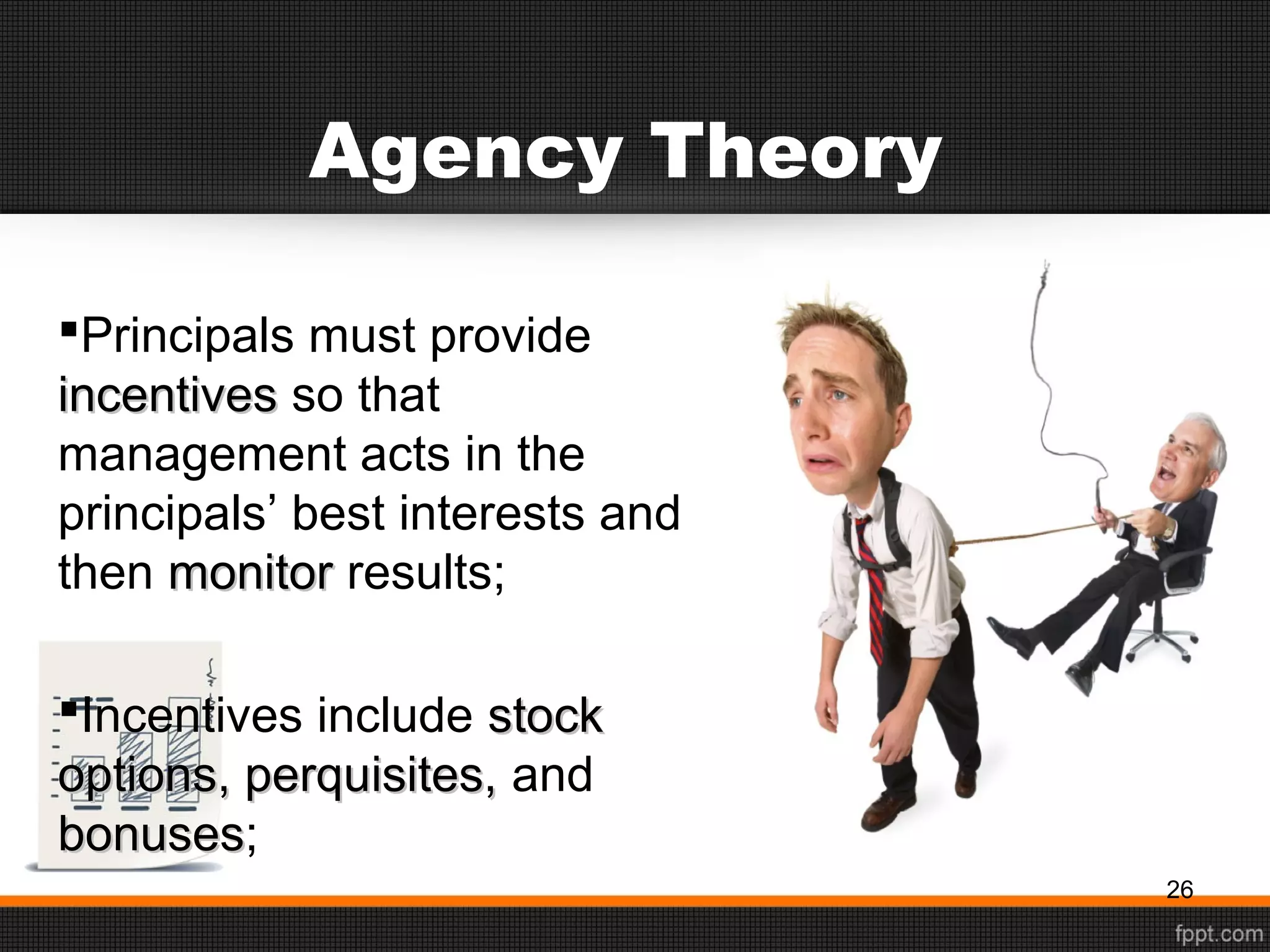
Agency Theory
Principals must provide
incentivesincentives so that
management acts in the
principals’ best interests and
then monitormonitor results;
Incentives include stockstock
options, perquisites,options, perquisites, and
bonusesbonuses;
26
Section 4
A Quick Tour to Financial
Environment
27
Financial Markets
 Businesses interact continually with the
financial markets;financial markets;
 Composed of all institutions and
procedures for bringing buyers and sellers
of financial instruments together;
28
The Purpose of Financial
Markets
 Mobilization of savings-uselessly lying fund is made to
flow the place where it is really needed;
 Facilitate price discovery-the price is determined by the
forces of demand and supply;
 Provide liquidity to financial assets-buyers or sellers of
securities are available all the times;
 Reduce the cost of transaction-making all necessary
information available without any cost;
29
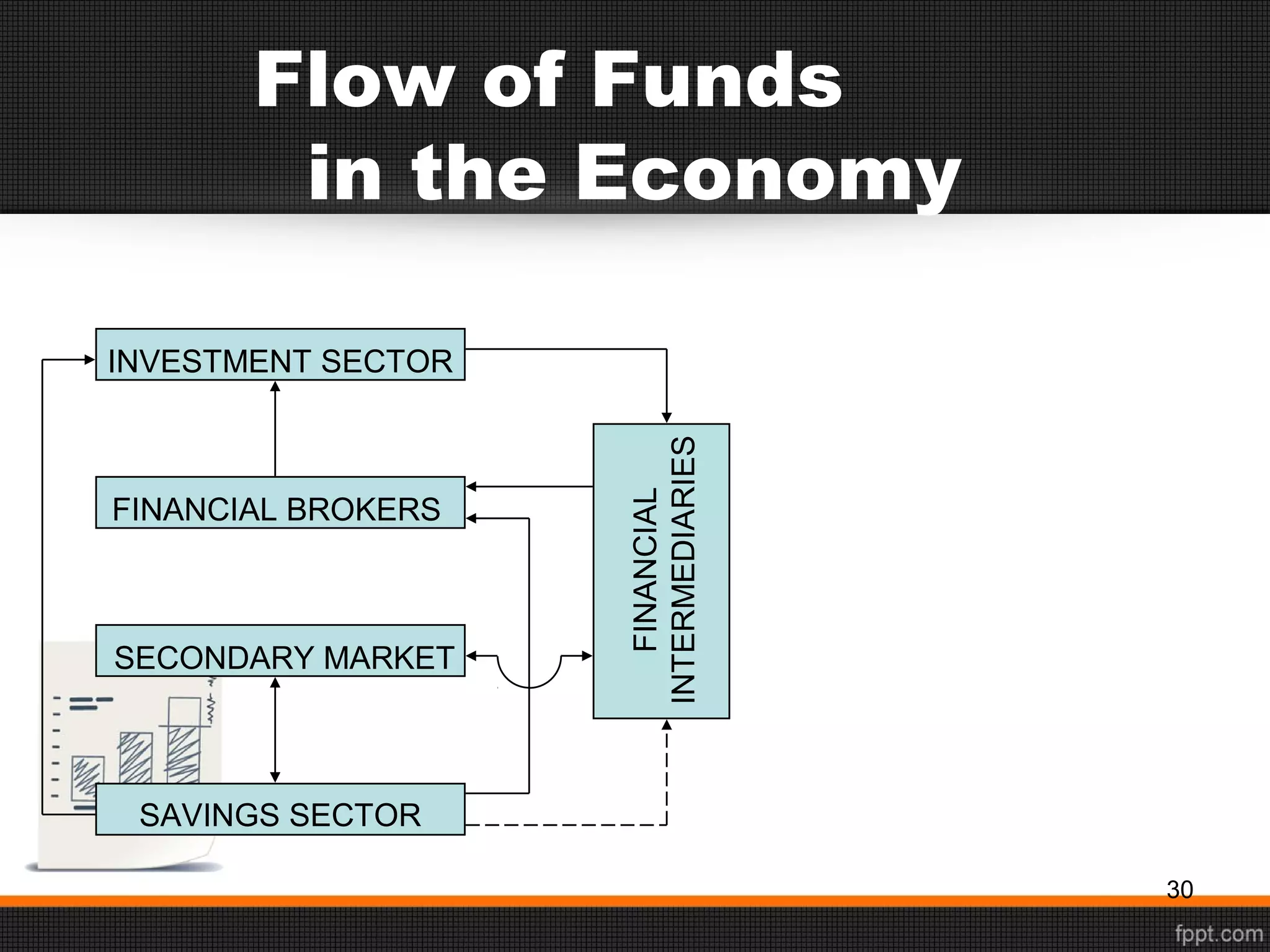
Flow of Funds
in the Economy
INVESTMENT SECTOR
FINANCIAL
INTERMEDIARIES
SAVINGS SECTOR
FINANCIAL BROKERS
SECONDARY MARKET
30
Types of Financial
Markets
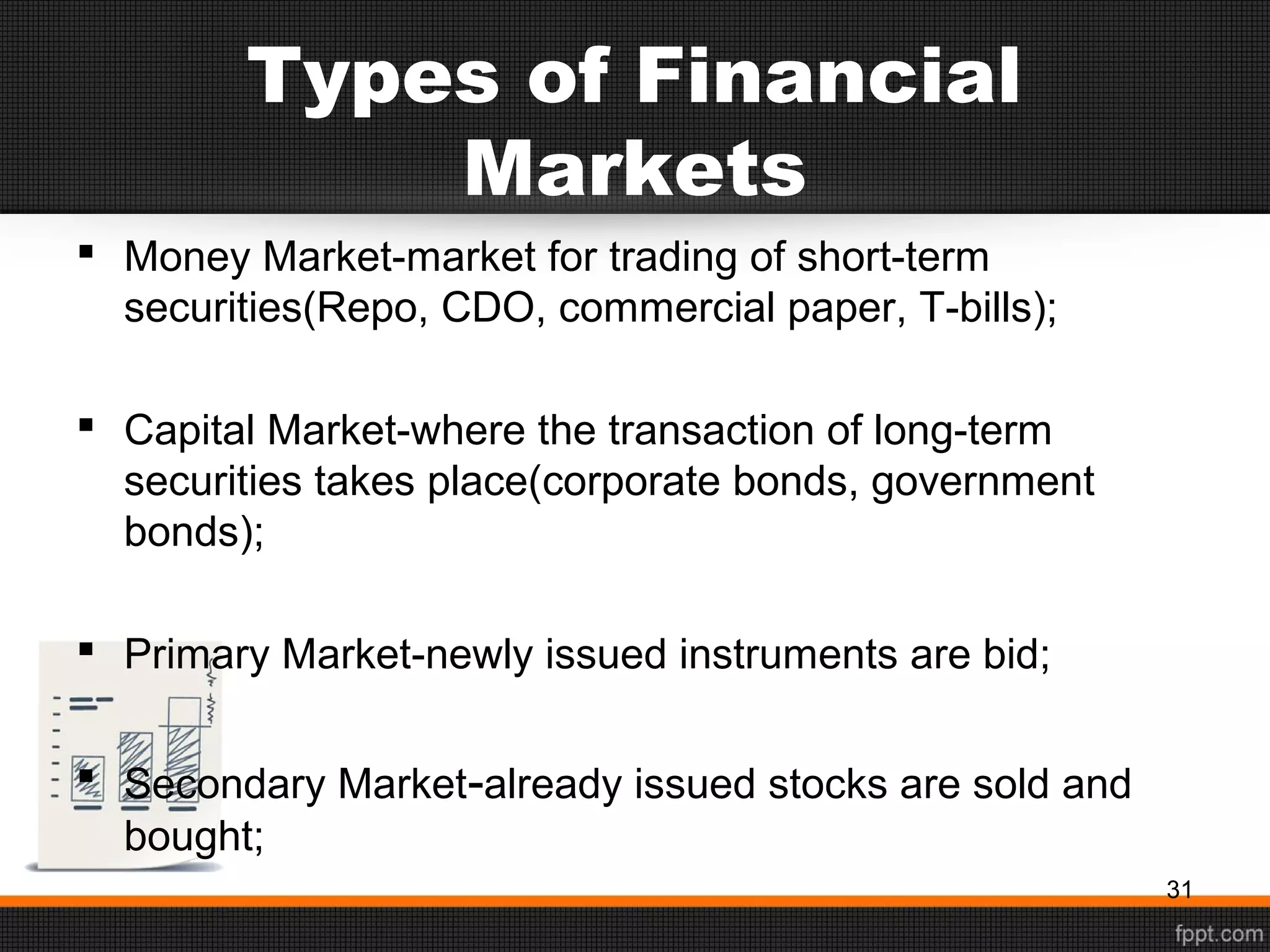
 Money Market-market for trading of short-term
securities(Repo, CDO, commercial paper, T-bills);
 Capital Market-where the transaction of long-term
securities takes place(corporate bonds, government
bonds);
 Primary Market-newly issued instruments are bid;
 Secondary Market-already issued stocks are sold and
bought;
31
Financial Intermediaries
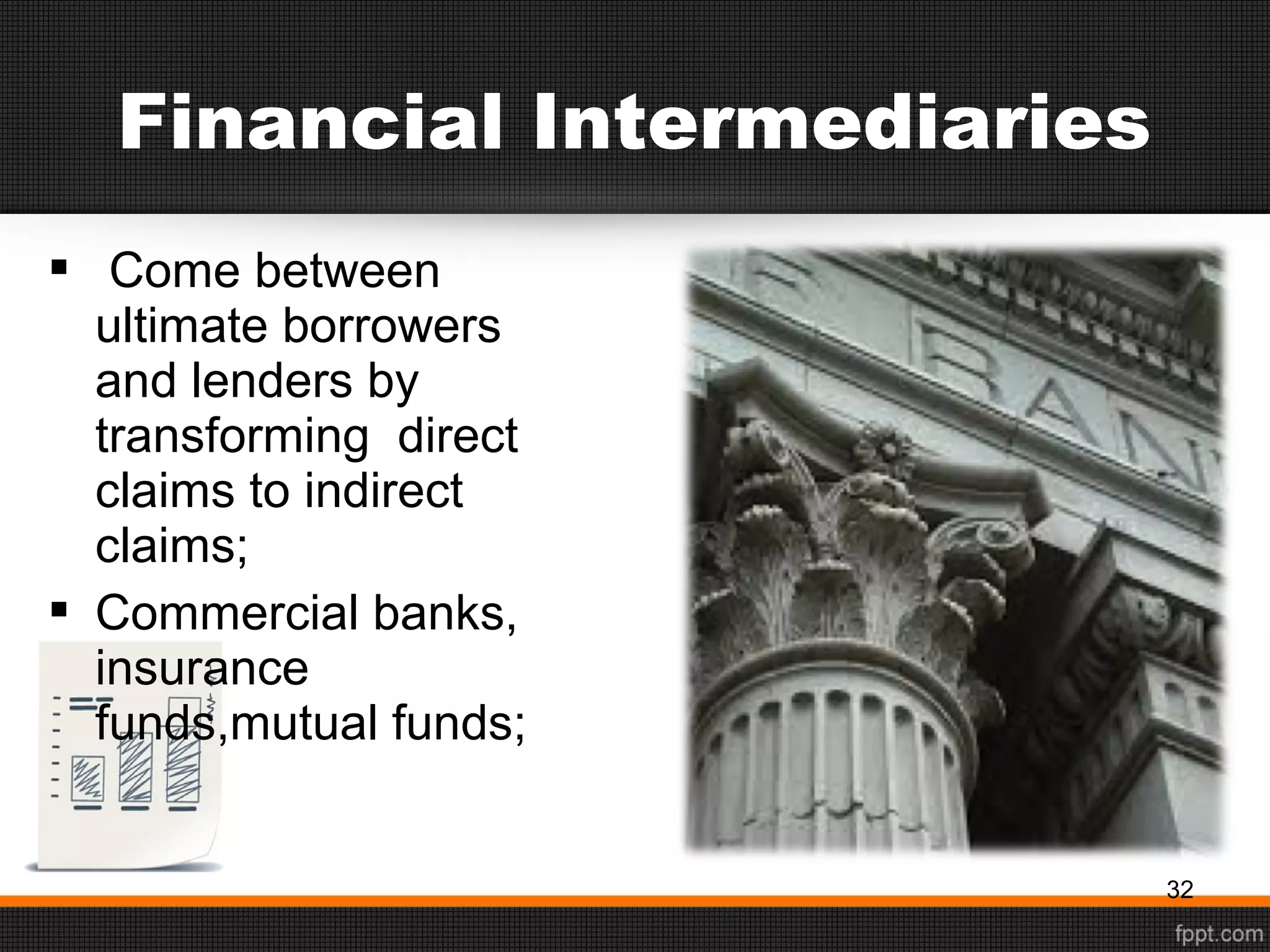
 Come between
ultimate borrowers
and lenders by
transforming direct
claims to indirect
claims;
 Commercial banks,
insurance
funds,mutual funds;
32
Efficient Allocation of
Funds
 Funds will flow to economic units that are willing
to provide the greatest expected return;
 The highest expected returns will be offered only
by those economic units with the most promising
investment opportunities;
 Result:Result: Savings tend to be allocated to the most
efficient uses;
33
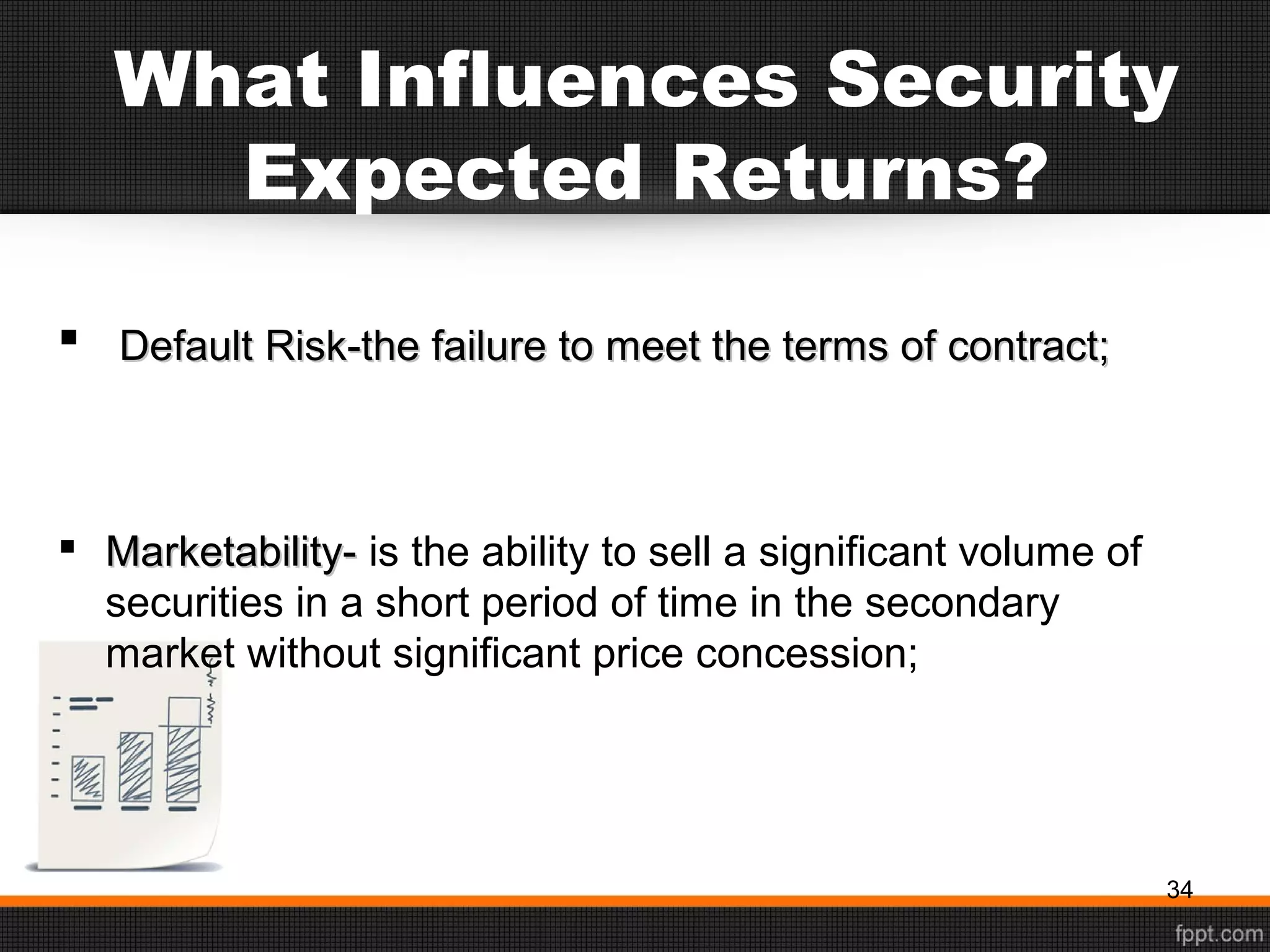
What Influences Security
Expected Returns?
 Default Risk-the failure to meet the terms of contract;Default Risk-the failure to meet the terms of contract;
 Marketability-Marketability- is the ability to sell a significant volume of
securities in a short period of time in the secondary
market without significant price concession;
34
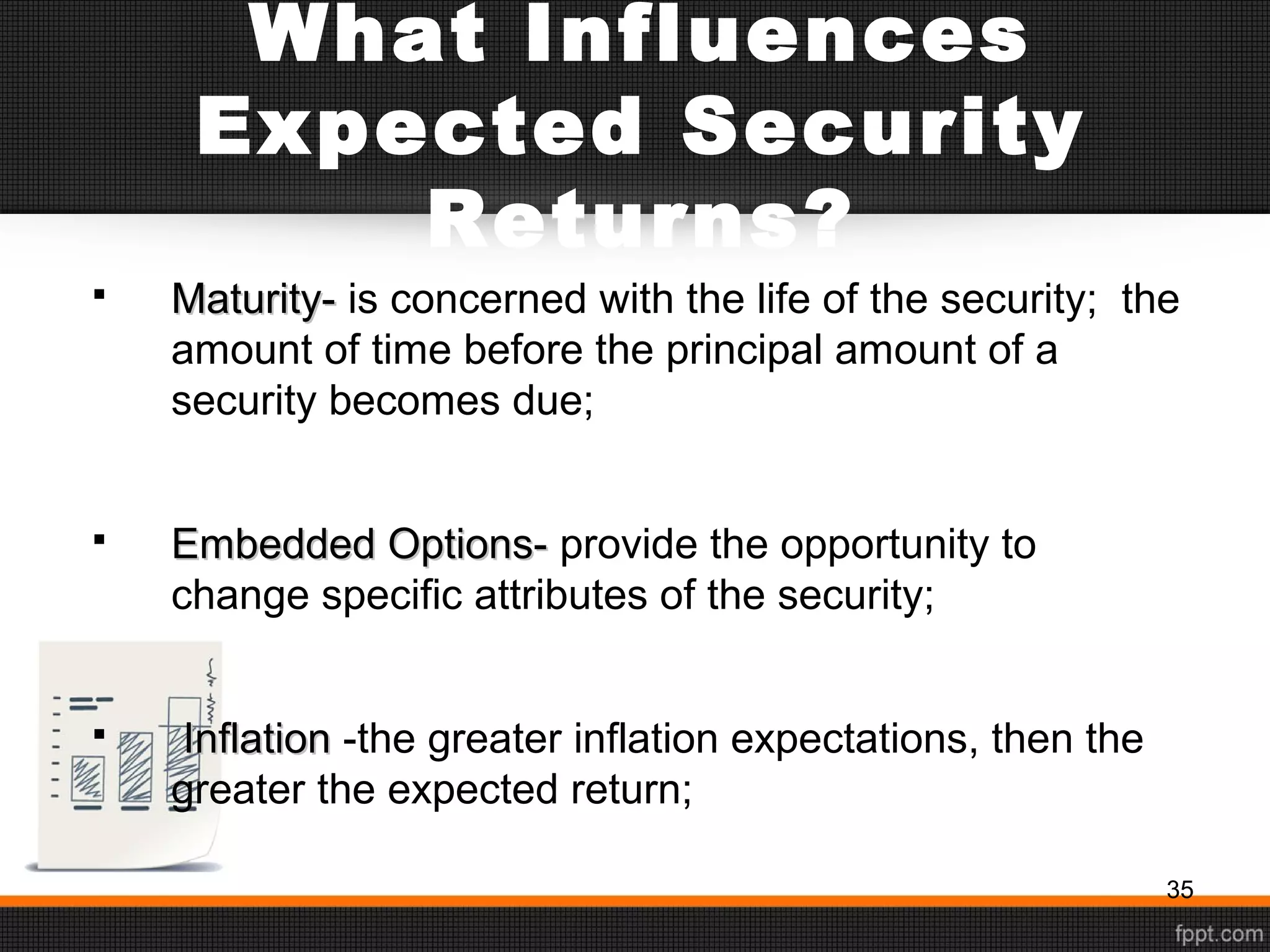
What Influences
Expected Security
Returns?
 Maturity-Maturity- is concerned with the life of the security; the
amount of time before the principal amount of a
security becomes due;
 Embedded Options-Embedded Options- provide the opportunity to
change specific attributes of the security;
 InflationInflation -the greater inflation expectations, then the
greater the expected return;
35
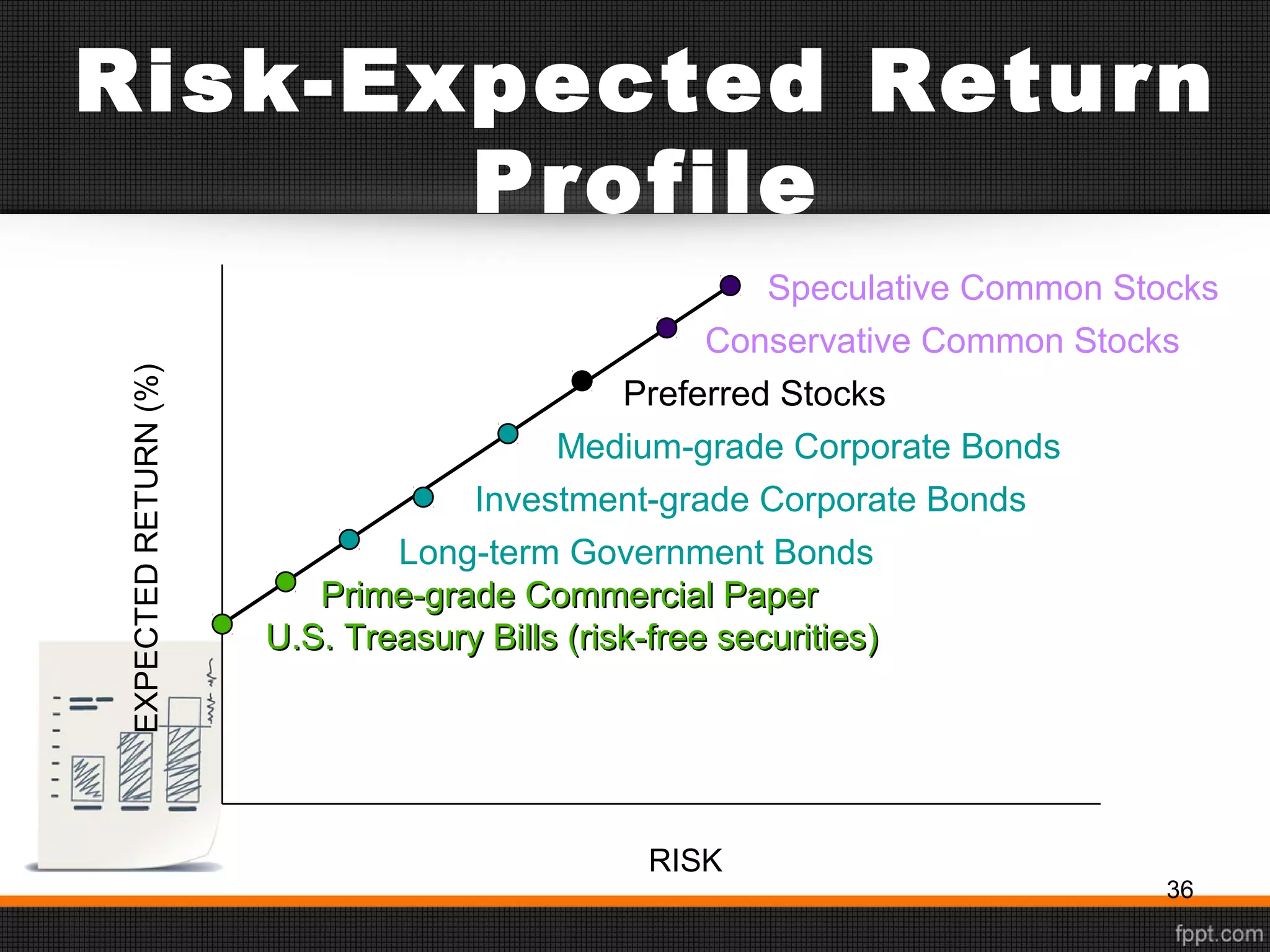
Risk-Expected Return
Profile
RISK
EXPECTEDRETURN(%)
U.S. Treasury Bills (risk-free securities)U.S. Treasury Bills (risk-free securities)
Prime-grade Commercial PaperPrime-grade Commercial Paper
Long-term Government Bonds
Investment-grade Corporate Bonds
Medium-grade Corporate Bonds
Preferred Stocks
Conservative Common Stocks
Speculative Common Stocks
36
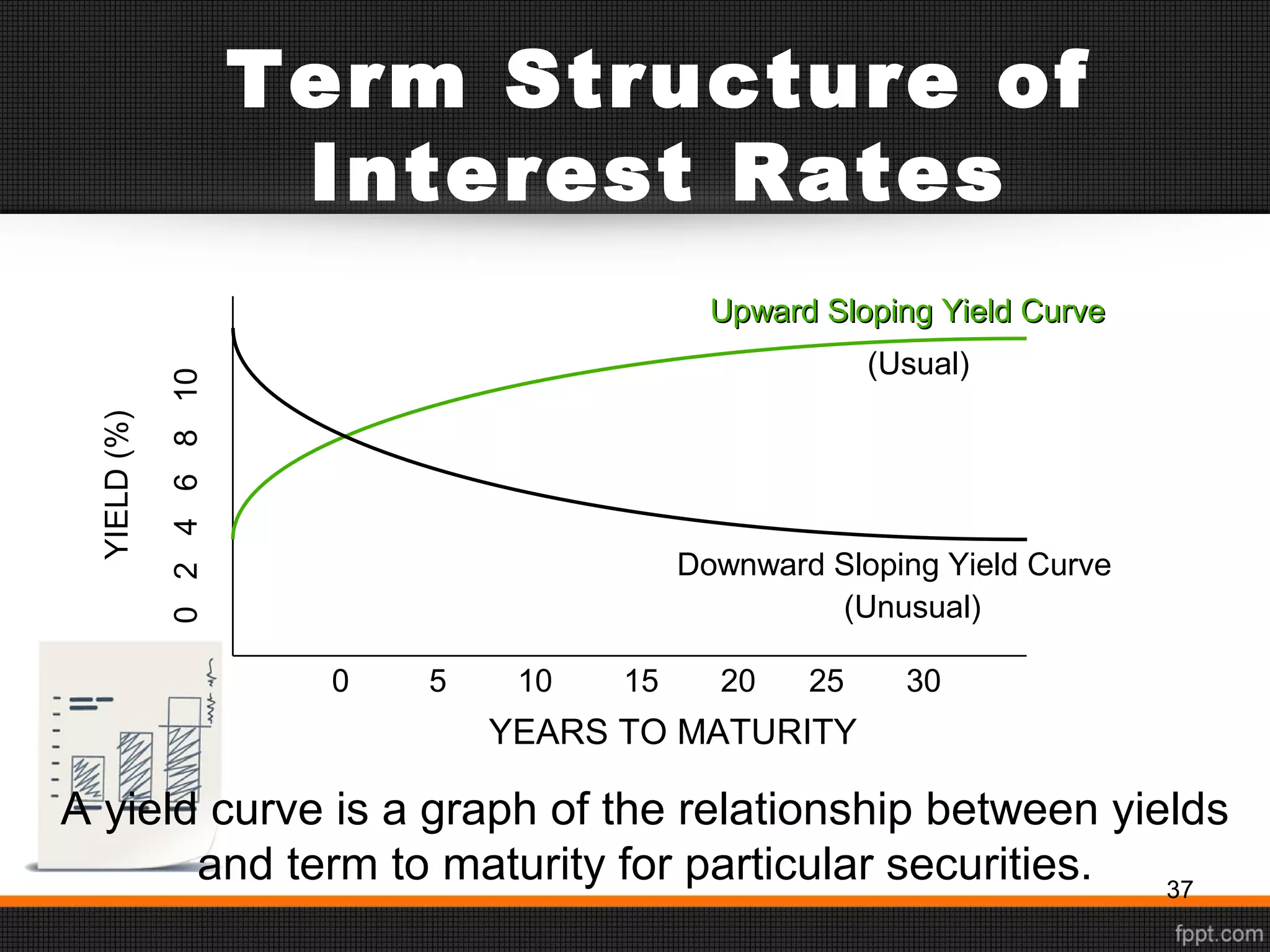
Term Structure of
Interest Rates
A yield curve is a graph of the relationship between yields
and term to maturity for particular securities.
Upward Sloping Yield CurveUpward Sloping Yield Curve
Downward Sloping Yield Curve
0246810
YIELD(%)
0 5 10 15 20 25 30
(Usual)
(Unusual)
YEARS TO MATURITY
37
THANK YOU

Chapter 1.An Introduction to Finance ppt

  • 1.
  • 2.
    Section 1 The Roleand Scope of Finance 2
  • 3.
    What is Finance? Aterm that refers to two main activities; othe actual process of attracting money; oand the management of these funds; 3
  • 4.
    The Functions ofFinance Analysis; Decision-making; 4
  • 5.
    The Areas ofFinance  Business or Corporate Finance-the firm’s ability to make good finance decisions;  Personal Finance-retirement provision, saving plans etc.,; Public Finance-income distribution, stability plans etc.,; 5
  • 6.
    Finance v Accounting  FinancialAccounting concentrates on record keeping and submitting of financial statements;  Finance focuses on making decisions and carrying out analysis based on information presented by accounting; 6
  • 7.
    Finance v Accounting(cont.) Financial Accountingtends to be more concerned with the past;  Finance tend to be more interested in present and the future; 7
  • 8.
    Finance v Accounting(cont.)  FinancialAccounting tends to have an income focus;  Finance tends to have a cash flow focus; 8
  • 9.
    Business Finance Types ofFinancial Decisions  Investment Decisions;  Financing Decisions;  Asset Management Decisions; 9
  • 10.
    Investment Decisions  Shouldwe built this component or buy it?  What specific assets should be acquired?  Should we introduce a new product?  Which projects should be undertaken? 10
  • 11.
    Financing Decisions  Whatis the best structure of financing(debt versus equity)?  How much of our debt should be short- term as opposite to long-term?  What is the best dividend policy?  How will the funds be physically acquired? 11
  • 12.
    Asset-Management Decision  How dowe manage existing assets efficiently?  Financial Manager has varying degrees of operating responsibility over assets;  Greater emphasis on current asset management than fixed asset management; 12
  • 13.
    The Goal ofthe Business 13  The target of business is the maximize shareholder’s wealth;  It’s measured as the price of stocks;  Wealth maximization concept adjusts for deficiencies of previous concept;
  • 14.
    Profit Maximization  Short-TermOriented;  Can not account for risk;  Can lead mismanagement; Wealth Maximization  Long-term Oriented;  The risk factor is taken account;  Recognizes the timing of returns; 14 Comparison of Two Concepts
  • 15.
    Section 2 An Overviewof Business Environment 15
  • 16.
    Types of Businesses SoleProprietorships  A business that owned and operated by one individual;  The owner and the business are legally identical; 16
  • 17.
    The Pros andCons of Sole Proprietorships 17
  • 18.
    Partnerships  A businessthat owned and controlled by two or more persons who are equally liable for losses;  Typically governed by partnership agreement; 18
  • 19.
    The Pros andCons of Partnerships 19
  • 20.
    Company • Business thatowned by shareholders; • Shareholder liability is limited to nominal value of shares that they own; • Business is legally separate from it’s owners; 20
  • 21.
    The Pros andCons of Company 21
  • 22.
  • 23.
    The Modern Corporation There existsa SEPARATION between owners and managers. Modern Corporation Shareholders Management 23
  • 24.
  • 25.
    Role of Management An agenagentt is an individual authorized by another person, called the principal, to act in the latter’s behalf;  Management acts as an agentagent for the owners (shareholders) of the firm; 25
  • 26.
    Agency Theory Principals mustprovide incentivesincentives so that management acts in the principals’ best interests and then monitormonitor results; Incentives include stockstock options, perquisites,options, perquisites, and bonusesbonuses; 26
  • 27.
    Section 4 A QuickTour to Financial Environment 27
  • 28.
    Financial Markets  Businessesinteract continually with the financial markets;financial markets;  Composed of all institutions and procedures for bringing buyers and sellers of financial instruments together; 28
  • 29.
    The Purpose ofFinancial Markets  Mobilization of savings-uselessly lying fund is made to flow the place where it is really needed;  Facilitate price discovery-the price is determined by the forces of demand and supply;  Provide liquidity to financial assets-buyers or sellers of securities are available all the times;  Reduce the cost of transaction-making all necessary information available without any cost; 29
  • 30.
    Flow of Funds inthe Economy INVESTMENT SECTOR FINANCIAL INTERMEDIARIES SAVINGS SECTOR FINANCIAL BROKERS SECONDARY MARKET 30
  • 31.
    Types of Financial Markets Money Market-market for trading of short-term securities(Repo, CDO, commercial paper, T-bills);  Capital Market-where the transaction of long-term securities takes place(corporate bonds, government bonds);  Primary Market-newly issued instruments are bid;  Secondary Market-already issued stocks are sold and bought; 31
  • 32.
    Financial Intermediaries  Comebetween ultimate borrowers and lenders by transforming direct claims to indirect claims;  Commercial banks, insurance funds,mutual funds; 32
  • 33.
    Efficient Allocation of Funds Funds will flow to economic units that are willing to provide the greatest expected return;  The highest expected returns will be offered only by those economic units with the most promising investment opportunities;  Result:Result: Savings tend to be allocated to the most efficient uses; 33
  • 34.
    What Influences Security ExpectedReturns?  Default Risk-the failure to meet the terms of contract;Default Risk-the failure to meet the terms of contract;  Marketability-Marketability- is the ability to sell a significant volume of securities in a short period of time in the secondary market without significant price concession; 34
  • 35.
    What Influences Expected Security Returns? Maturity-Maturity- is concerned with the life of the security; the amount of time before the principal amount of a security becomes due;  Embedded Options-Embedded Options- provide the opportunity to change specific attributes of the security;  InflationInflation -the greater inflation expectations, then the greater the expected return; 35
  • 36.
    Risk-Expected Return Profile RISK EXPECTEDRETURN(%) U.S. TreasuryBills (risk-free securities)U.S. Treasury Bills (risk-free securities) Prime-grade Commercial PaperPrime-grade Commercial Paper Long-term Government Bonds Investment-grade Corporate Bonds Medium-grade Corporate Bonds Preferred Stocks Conservative Common Stocks Speculative Common Stocks 36
  • 37.
    Term Structure of InterestRates A yield curve is a graph of the relationship between yields and term to maturity for particular securities. Upward Sloping Yield CurveUpward Sloping Yield Curve Downward Sloping Yield Curve 0246810 YIELD(%) 0 5 10 15 20 25 30 (Usual) (Unusual) YEARS TO MATURITY 37
  • 38.

Editor's Notes

  • #20 Sole trader or partnerships pays(personal income) profit tax?
  • #22 Sole trader or partnerships pays(personal income) profit tax?