ICT tools support teaching and learning in education through computers, communication facilities, and multimedia. Some key ICT tools include computers with office software and presentation tools, audio/video devices, the internet for research and communication, and mobile devices. These tools can be used at different levels from passive consumption to active construction of projects. The advantages of ICT tools are that they allow for visual teaching, ensure student comprehension, and make lessons more interactive and enjoyable. However, some disadvantages are that the devices can be troublesome to set up, expensive, and difficult for inexperienced teachers to use. In conclusion, ICT tools can make education more effective and responsive when utilized properly.
CREATED & PRESENTEDBY;
YESVITA TAMBA
ICT Tools and the Utilization for Education
2.
WHAT IS ICTIN EDUCATION?
ICT in education is features that variously
support teaching, learning and range of
activities in education, such as
;computers and communication
facilities.
3.
ICT TOOLS &UTILIZATION IN EDUCATION
CONTEXT
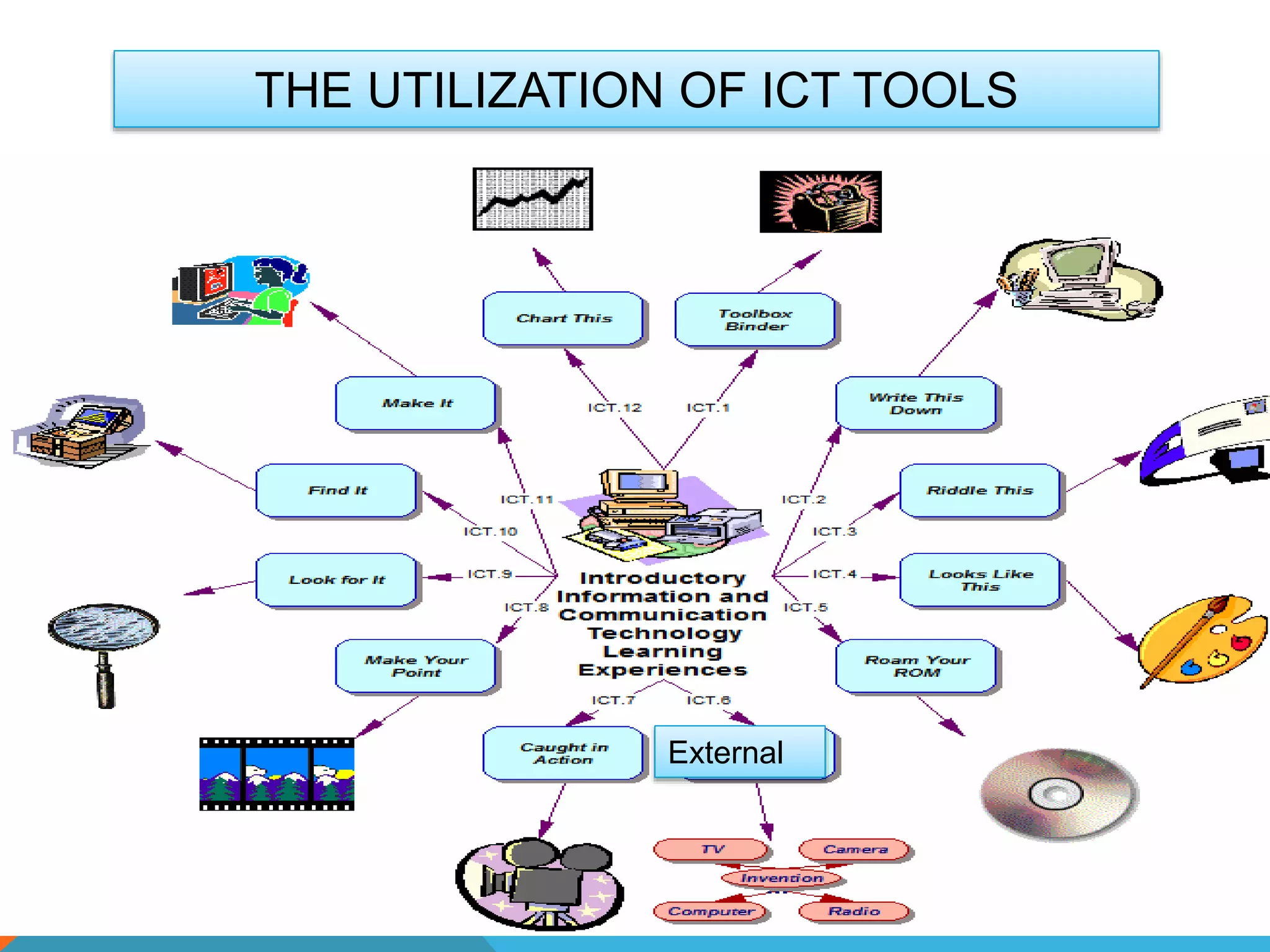
Computers ;mc office,mc excel,power point
Multimedia; graphic,audio,moving video
Audio devices ; CD/DVD Player,earphone
Internet ; google, e-mail, website
Mobile gadget can be used by internet
connection; chat, browse
NECESSITY OF ICT
•Globalization of
•Economy
•Information
• Tech Innovations
• Knowledge
•Expand Demand
for Education
Effective Learning
For All
Anytime
Anywhere
7.
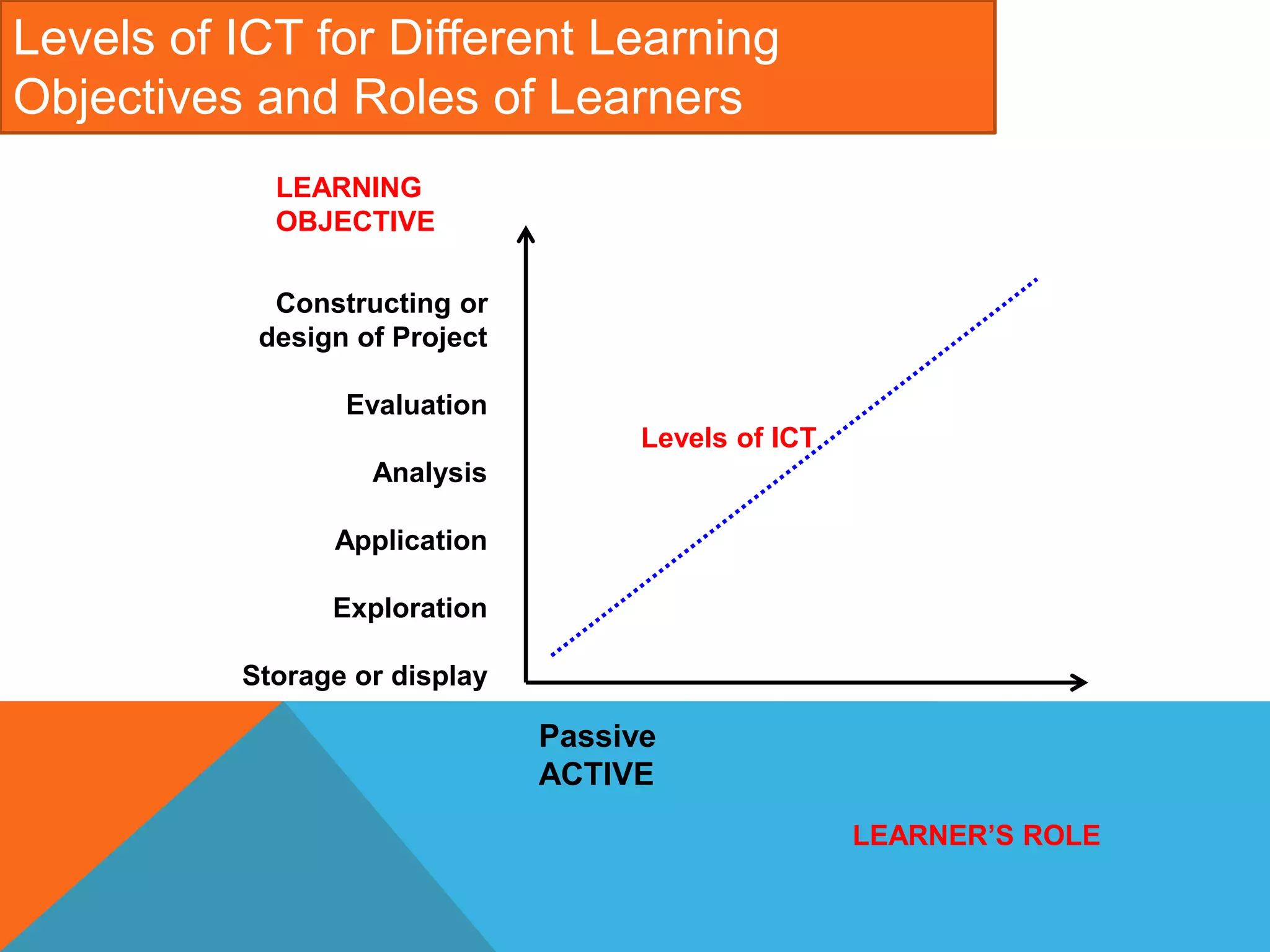
Levels of ICT
Constructingor
design of Project
Evaluation
Analysis
Application
Exploration
Storage or display
Passive
ACTIVE
LEARNER’S ROLE
Levels of ICT for Different Learning
Objectives and Roles of Learners
LEARNING
OBJECTIVE
8.
THE ADVANTAGES OFICT TOOLS FOR
EDUCATION
• Images can easily be used in teaching.
• Teacher can easily explain complex
instructions and ensure students’
comprehension.
• Teachers are able to create interactive
classes and the lessons more enjoyable.
9.
DISADVANTAGES OF ICTTOOLS FOR
EDUCATION
1. Setting up the devices can be very
troblesome.
2. Too expensive to afford.
3. Hard for teachers to use with a lack
of experience using ICT tools.





![Ict presentation[1][2]](https://cdn.slidesharecdn.com/ss_thumbnails/ictpresentation12-120306164439-phpapp02-thumbnail.jpg?width=640&height=640&fit=bounds)


