A Blueprint for Success:
How to build your learning technology stack
#LearningTechStack
Pam Boiros
Learning Advisor at
Training Orchestra
@trainingorc
Andrew Downes
Learning & Interoperability
Consultant at Watershed
@watershedLRS
Agenda
• What is a learning tech stack?
• Current trends driving the need
• Audience poll
• Learning tech stack models
• Reasons to adopt
• Pitfalls to avoid
• Solution and examples
• Q&A
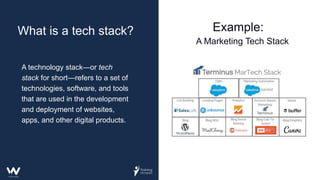
What is a tech stack?
A technology stack—or tech
stack for short—refers to a set of
technologies, software, and tools
that are used in the development
and deployment of websites,
apps, and other digital products.
A Marketing Tech Stack
Example:
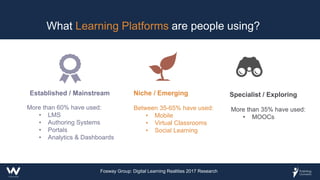
More than 60% have used:
• LMS
• Authoring Systems
• Portals
• Analytics & Dashboards
Established / Mainstream
Between 35-65% have used:
• Mobile
• Virtual Classrooms
• Social Learning
Niche / Emerging
What Learning Platforms are people using?
More than 35% have used:
• MOOCs
Specialist / Exploring
Fosway Group: Digital Learning Realities 2017 Research
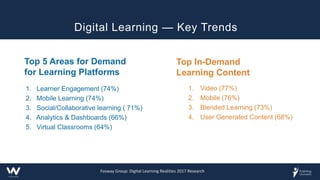
Digital Learning — Key Trends
Top 5 Areas for Demand
for Learning Platforms
1. Learner Engagement (74%)
2. Mobile Learning (74%)
3. Social/Collaborative learning ( 71%)
4. Analytics & Dashboards (66%)
5. Virtual Classrooms (64%)
Top In-Demand
Learning Content
1. Video (77%)
2. Mobile (76%)
3. Blended Learning (73%)
4. User Generated Content (68%)
Fosway Group: Digital Learning Realities 2017 Research
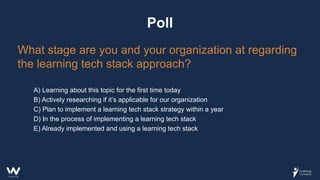
Poll
What stage are you and your organization at regarding
the learning tech stack approach?
A) Learning about this topic for the first time today
B) Actively researching if it’s applicable for our organization
C) Plan to implement a learning tech stack strategy within a year
D) In the process of implementing a learning tech stack
E) Already implemented and using a learning tech stack
Tech Stack Models
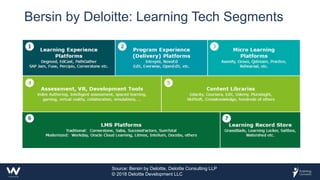
Source: Bersin by Deloitte, Deloitte Consulting LLP
© 2018 Deloitte Development LLC
Bersin by Deloitte: Learning Tech Segments
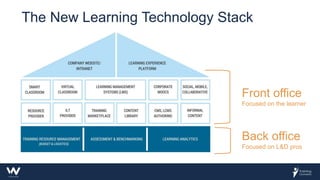
The New Learning Technology Stack
Back office
Focused on L&D pros
Front office
Focused on the learner
Foundations matter.
How do you know…
…where to focus your effort and budget?
…how to make your training more effective?
…if your new e-learning is as effective as the classroom?
…if your learning programs are having an impact?
You need to be collecting the
data to answer your questions.
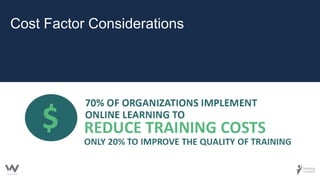
Cost Factor Considerations
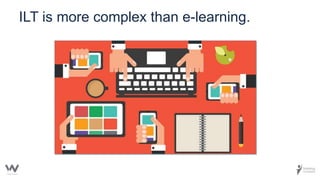
ILT is more complex than e-learning.
THREE PITFALLS TO AVOID
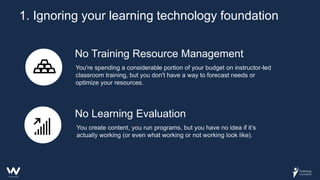
1. Ignoring your learning technology foundation
You create content, you run programs, but you have no idea if it’s
actually working (or even what working or not working look like).
No Training Resource Management
No Learning Evaluation
You're spending a considerable portion of your budget on instructor-led
classroom training, but you don't have a way to forecast needs or
optimize your resources.
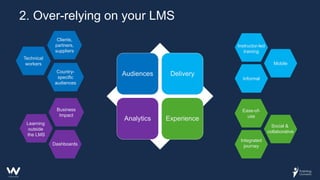
Clients,
partners,
suppliers
Technical
workers
Country-
specific
audiences
Mobile
Informal
Ease-of-
use
Business
Impact
Learning
outside
the LMS
Dashboards
Social &
collaborative
Integrated
journey
Instructor-led
training
Audiences Delivery
Analytics Experience
2. Over-relying on your LMS
3. Excel Hell
The Solution
Data, interoperability, analysis
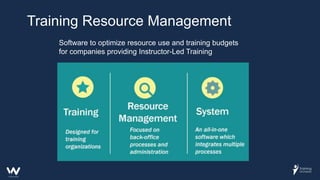
Training Resource Management
Software to optimize resource use and training budgets
for companies providing Instructor-Led Training
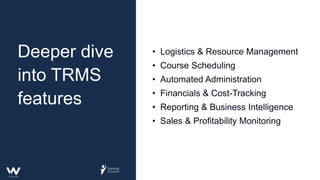
Deeper dive
into TRMS
features
• Logistics & Resource Management
• Course Scheduling
• Automated Administration
• Financials & Cost-Tracking
• Reporting & Business Intelligence
• Sales & Profitability Monitoring
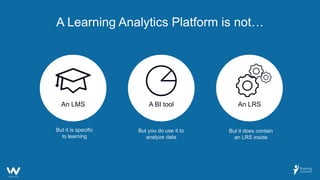
An LMS A BI tool An LRS
A Learning Analytics Platform is not…
But it does contain
an LRS inside
But you do use it to
analyze data
But it is specific
to learning
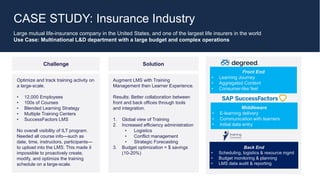
Large mutual life-insurance company in the United States, and one of the largest life insurers in the world
Use Case: Multinational L&D department with a large budget and complex operations
Challenge Solution
Optimize and track training activity on
a large-scale.
• 12,000 Employees
• 100s of Courses
• Blended Learning Strategy
• Multiple Training Centers
• SuccessFactors LMS
No overall visibility of ILT program.
Needed all course info—such as
date, time, instructors, participants—
to upload into the LMS. This made it
impossible to proactively create,
modify, and optimize the training
schedule on a large-scale.
Augment LMS with Training
Management then Learner Experience.
Results: Better collaboration between
front and back offices through tools
and integration.
1. Global view of Training
2. Increased efficiency administration
• Logistics
• Conflict management
• Strategic Forecasting
3. Budget optimization = $ savings
(10-20%)
Learning Experience
Platform
LMS
TRMS
CASE STUDY: Insurance Industry
Front End
• Learning Journey
• Aggregated Content
• Consumer-like feel
Back End
• Scheduling, logistics & resource mgmt
• Budget monitoring & planning
• LMS data audit & reporting
Middleware
• E-learning delivery
• Communication with learners
• Initial data entry
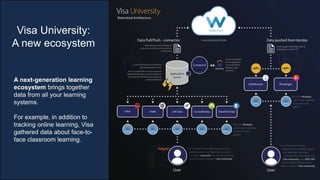
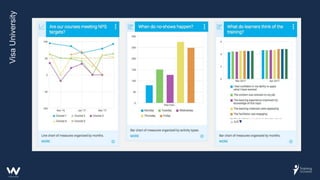
Visa University:
A new ecosystem
A next-generation learning
ecosystem brings together
data from all your learning
systems.
For example, in addition to
tracking online learning, Visa
gathered data about face-to-
face classroom learning.
VisaUniversity
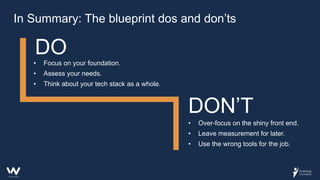
• Focus on your foundation.
• Assess your needs.
• Think about your tech stack as a whole.
In Summary: The blueprint dos and don’ts
• Over-focus on the shiny front end.
• Leave measurement for later.
• Use the wrong tools for the job.
DO
DON’T
QUESTIONS?
Pam Boiros
Learning Advisor at
Training Orchestra
@trainingorc
Andrew Downes
Learning & Interoperability
Consultant at Watershed
@watershedLRS

How to Build a Learning Tech Stack

  • 1.
    A Blueprint forSuccess: How to build your learning technology stack #LearningTechStack Pam Boiros Learning Advisor at Training Orchestra @trainingorc Andrew Downes Learning & Interoperability Consultant at Watershed @watershedLRS
  • 2.
    Agenda • What isa learning tech stack? • Current trends driving the need • Audience poll • Learning tech stack models • Reasons to adopt • Pitfalls to avoid • Solution and examples • Q&A
  • 3.
    What is atech stack? A technology stack—or tech stack for short—refers to a set of technologies, software, and tools that are used in the development and deployment of websites, apps, and other digital products. A Marketing Tech Stack Example:
  • 4.
    More than 60%have used: • LMS • Authoring Systems • Portals • Analytics & Dashboards Established / Mainstream Between 35-65% have used: • Mobile • Virtual Classrooms • Social Learning Niche / Emerging What Learning Platforms are people using? More than 35% have used: • MOOCs Specialist / Exploring Fosway Group: Digital Learning Realities 2017 Research
  • 5.
    Digital Learning —Key Trends Top 5 Areas for Demand for Learning Platforms 1. Learner Engagement (74%) 2. Mobile Learning (74%) 3. Social/Collaborative learning ( 71%) 4. Analytics & Dashboards (66%) 5. Virtual Classrooms (64%) Top In-Demand Learning Content 1. Video (77%) 2. Mobile (76%) 3. Blended Learning (73%) 4. User Generated Content (68%) Fosway Group: Digital Learning Realities 2017 Research
  • 6.
    Poll What stage areyou and your organization at regarding the learning tech stack approach? A) Learning about this topic for the first time today B) Actively researching if it’s applicable for our organization C) Plan to implement a learning tech stack strategy within a year D) In the process of implementing a learning tech stack E) Already implemented and using a learning tech stack
  • 7.
  • 8.
    Source: Bersin byDeloitte, Deloitte Consulting LLP © 2018 Deloitte Development LLC Bersin by Deloitte: Learning Tech Segments
  • 9.
    The New LearningTechnology Stack Back office Focused on L&D pros Front office Focused on the learner
  • 10.
  • 11.
    How do youknow… …where to focus your effort and budget? …how to make your training more effective? …if your new e-learning is as effective as the classroom? …if your learning programs are having an impact?
  • 12.
    You need tobe collecting the data to answer your questions.
  • 14.
  • 15.
    ILT is morecomplex than e-learning.
  • 16.
  • 17.
    1. Ignoring yourlearning technology foundation You create content, you run programs, but you have no idea if it’s actually working (or even what working or not working look like). No Training Resource Management No Learning Evaluation You're spending a considerable portion of your budget on instructor-led classroom training, but you don't have a way to forecast needs or optimize your resources.
  • 18.
  • 19.
  • 20.
  • 21.
  • 22.
    Training Resource Management Softwareto optimize resource use and training budgets for companies providing Instructor-Led Training
  • 23.
    Deeper dive into TRMS features •Logistics & Resource Management • Course Scheduling • Automated Administration • Financials & Cost-Tracking • Reporting & Business Intelligence • Sales & Profitability Monitoring
  • 24.
    An LMS ABI tool An LRS A Learning Analytics Platform is not… But it does contain an LRS inside But you do use it to analyze data But it is specific to learning
  • 25.
    Large mutual life-insurancecompany in the United States, and one of the largest life insurers in the world Use Case: Multinational L&D department with a large budget and complex operations Challenge Solution Optimize and track training activity on a large-scale. • 12,000 Employees • 100s of Courses • Blended Learning Strategy • Multiple Training Centers • SuccessFactors LMS No overall visibility of ILT program. Needed all course info—such as date, time, instructors, participants— to upload into the LMS. This made it impossible to proactively create, modify, and optimize the training schedule on a large-scale. Augment LMS with Training Management then Learner Experience. Results: Better collaboration between front and back offices through tools and integration. 1. Global view of Training 2. Increased efficiency administration • Logistics • Conflict management • Strategic Forecasting 3. Budget optimization = $ savings (10-20%) Learning Experience Platform LMS TRMS CASE STUDY: Insurance Industry Front End • Learning Journey • Aggregated Content • Consumer-like feel Back End • Scheduling, logistics & resource mgmt • Budget monitoring & planning • LMS data audit & reporting Middleware • E-learning delivery • Communication with learners • Initial data entry
  • 26.
    Visa University: A newecosystem A next-generation learning ecosystem brings together data from all your learning systems. For example, in addition to tracking online learning, Visa gathered data about face-to- face classroom learning.
  • 27.
  • 28.
    • Focus onyour foundation. • Assess your needs. • Think about your tech stack as a whole. In Summary: The blueprint dos and don’ts • Over-focus on the shiny front end. • Leave measurement for later. • Use the wrong tools for the job. DO DON’T
  • 29.
    QUESTIONS? Pam Boiros Learning Advisorat Training Orchestra @trainingorc Andrew Downes Learning & Interoperability Consultant at Watershed @watershedLRS

Editor's Notes