welcome
1
Seminar -1
PFE 581
Uooha H S
PALB 6348
Dept of Agril Engg
Techniques for extraction of essential oils
2
• Introduction
• Sources of Essential oils
• Chemical constituents
• Extraction methods
• Uses of Essential oils
• Applications
• Case studies
• Conclusion
• References
Contents
3
Essential oils are Plant-based volatile oils with strong
aromatic components made up of different chemical compounds.
INTRODUCTION
Ex; Alcohols, Hydrocarbons, Phenols, Aldehydes, Esters And Ketones .
4
Essential oil
An essential oil is concentrated Hydrophobic liquid containing
volatile aroma compounds from the plant.
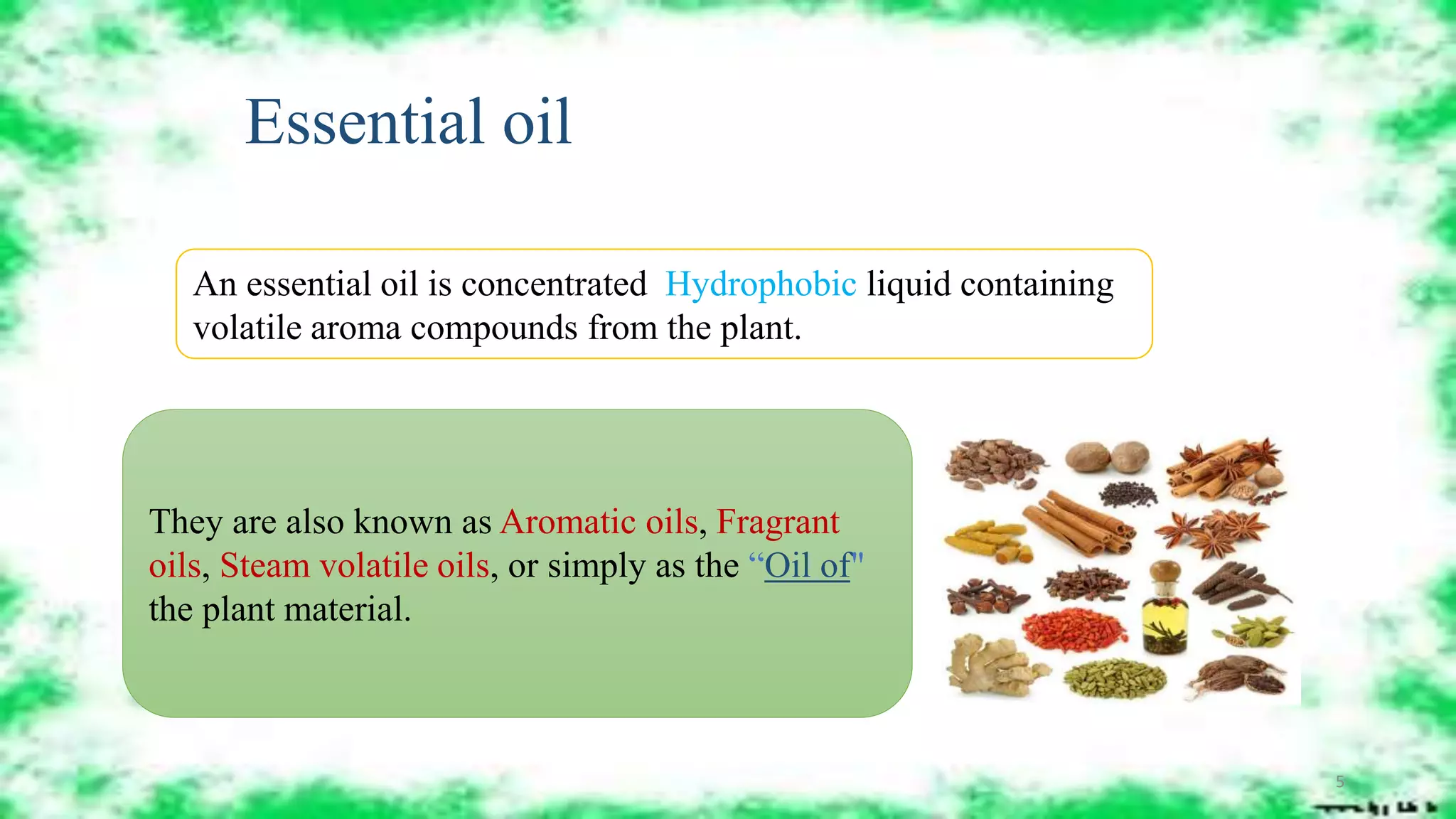
They are also known as Aromatic oils, Fragrant
oils, Steam volatile oils, or simply as the “Oil of"
the plant material.
5
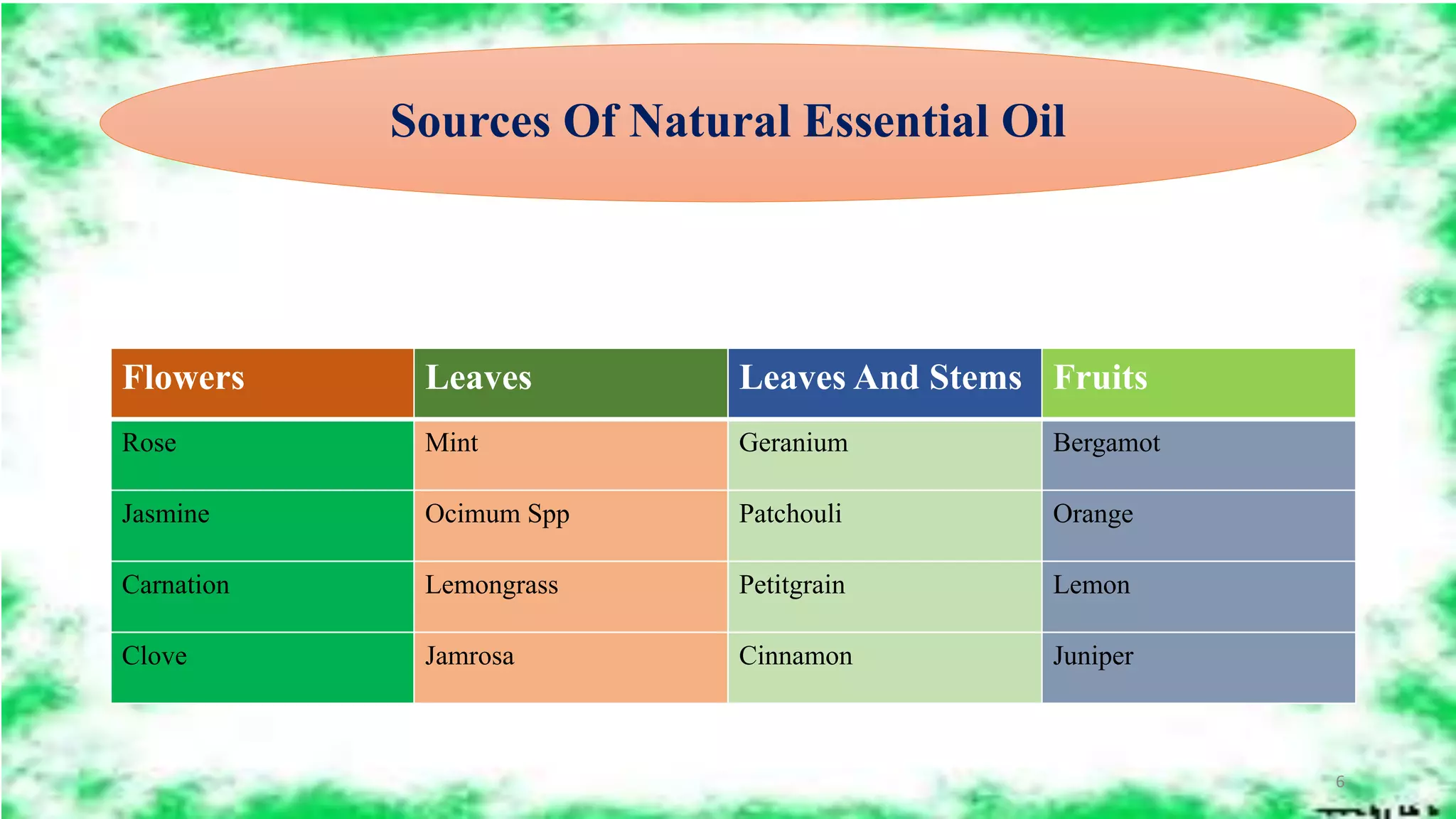
Flowers Leaves Leaves And Stems Fruits
Rose Mint Geranium Bergamot
Jasmine Ocimum Spp Patchouli Orange
Carnation Lemongrass Petitgrain Lemon
Clove Jamrosa Cinnamon Juniper
6
Sources Of Natural Essential Oil
• Characteristic Odor.
• Soluble In Organic Solvents.
• Specific Gravity Between 0.8-1.17.
• Sensitive To Heat And Light.
• Optically active
Physical Properties Of Essential Oils
7
• Complex mixtures of Terpenes, Phenolics and Alcohols.
• EO are highly complex include oxygenated compounds.
• Oxygenated derivatives of hydrocarbon terpenes such as
• Aldehydes, Ketones,
• Alcohols, Phenols,
• Acids, Ethers and Esters.
Chemical Constituents Of
Essential Oils
8
9
Market Value Of Essential Oil
Health Benefits
10
11
Essential Oils Extraction Methods
12
Hydrodistillation (HD)
Steam distillation (SD)
Solvent extraction
Soxhlet extraction
Cold pressing
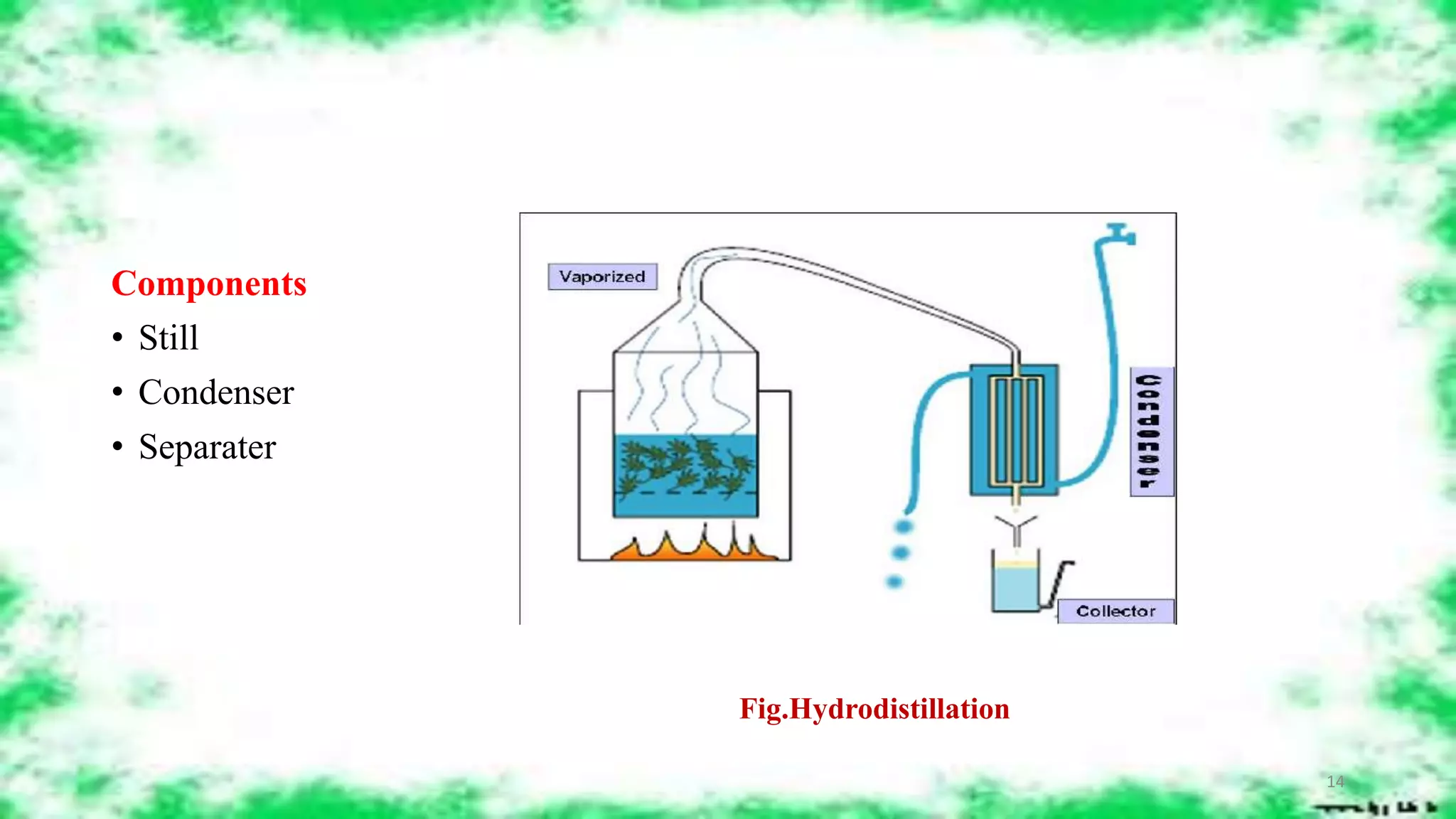
• Traditional method for removal of essential oils.
• To isolate EO from aromatic and medicinal plant.
• The EO are evaporated by heating a mixture of water and plant material
• The setup comprises also a condenser and a decanter.
• Distillation time depends on the plant material
Types of hydrodistillation:
• Water immersion,
• Direct vapor injection and
• Combination of water immersion and vapor injection.
Hydrodistillation (HD)
13
Components
• Still
• Condenser
• Separater
14
Fig.Hydrodistillation
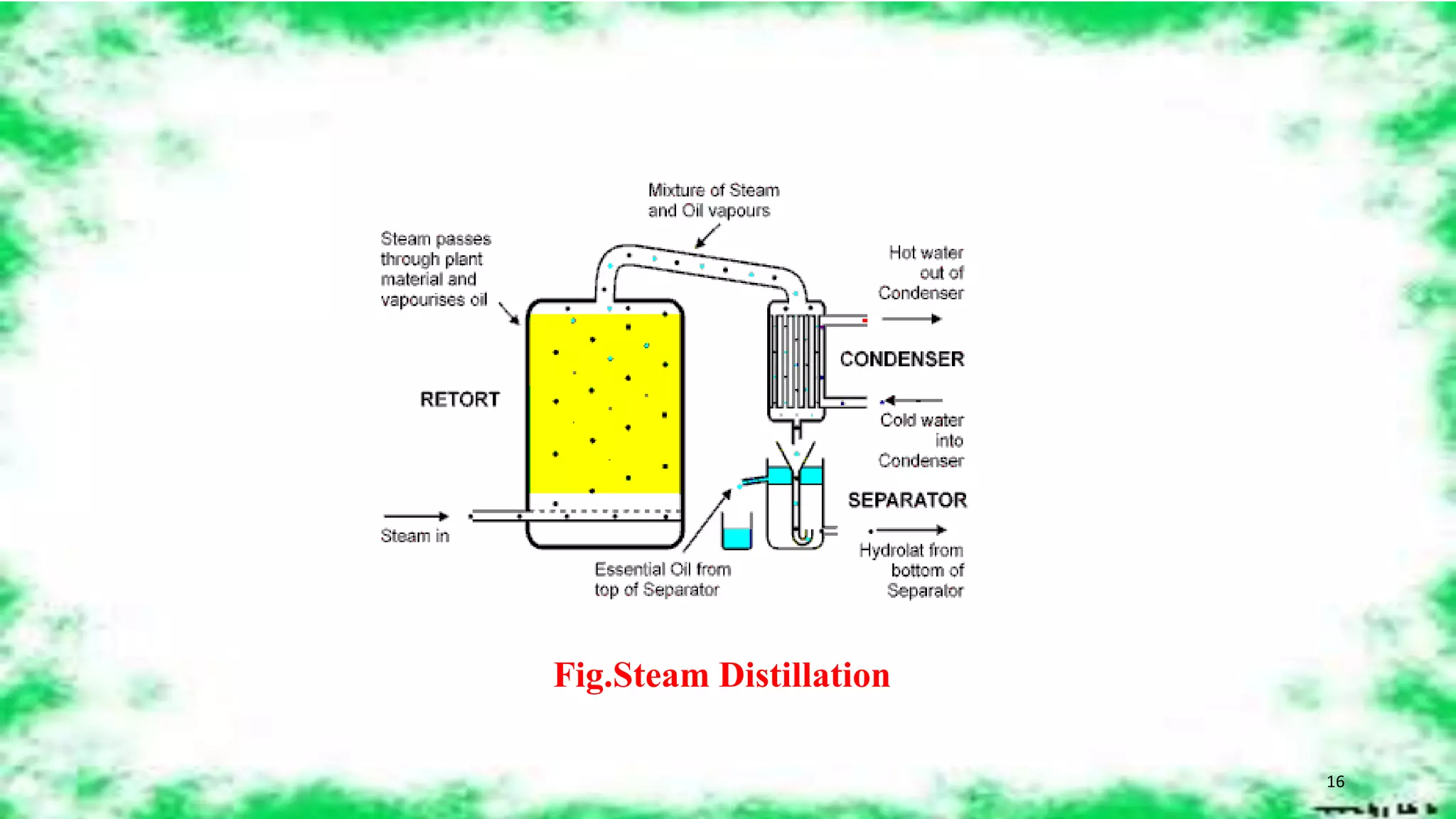
• One of Ancient and Officially approved method.
• For Temperature-sensitive plant such as natural aromatic compounds.
• The plant materials charged in the alembic are subjected to the steam
without maceration in water.
Steam Distillation
15
16
Fig.Steam Distillation
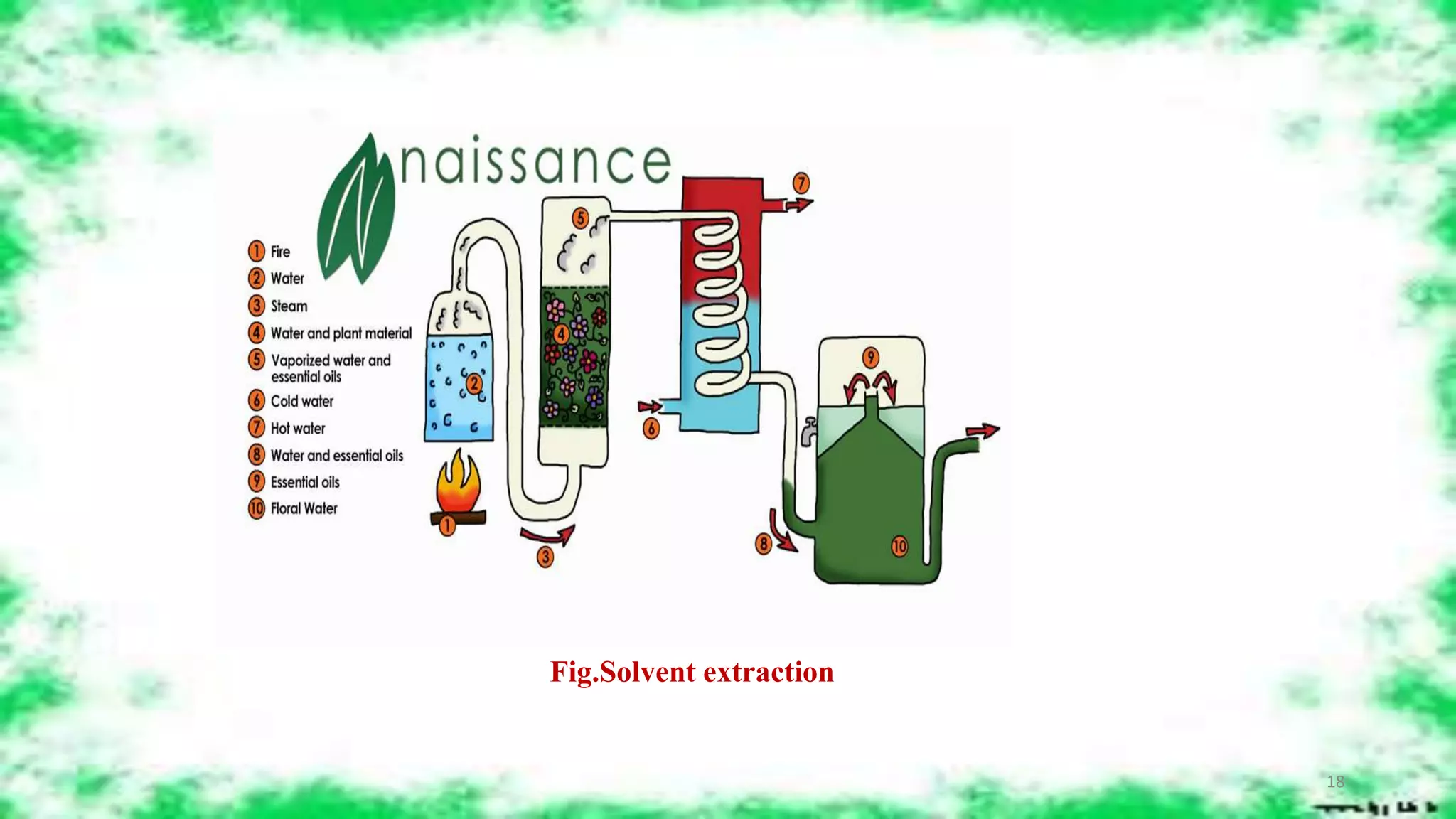
• Liquid–liquid extraction or partitioning.
• Based on Solubility of its parts
• EO recovery is more.
• Used in perfumes, vegetable oil, or biodiesel.
• It is used to produce higher amounts of essential oils at a lower cost
Solvent extraction
17
18
Fig.Solvent extraction
• Designed for the extraction of lipids.
• Desired compound has a limited solubility in a solvent.
• It involves solid-liquid contact for the removal of one or several
compounds from a solid.
Soxhlet Extraction
19
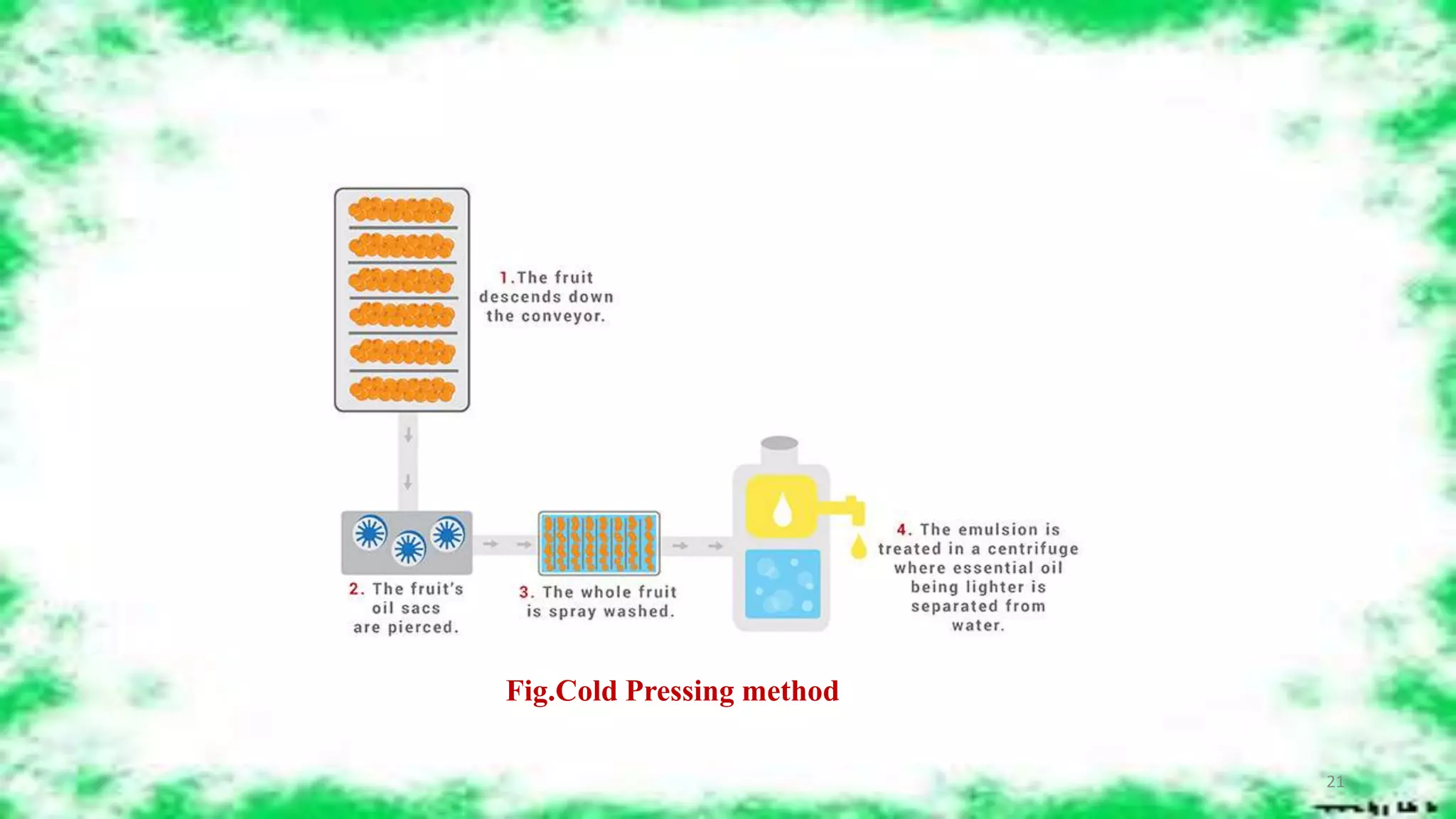
• It is also known as scarification method
• It is a method of mechanical extraction.
• The term cold press means oil is expeller-pressed at low temperatures
and pressure.
• Best methods to extract essential oils.
• 100% pure and retains all the properties.
• It is mainly used for plants, flower, seeds, lemon, tangerine oils.
Cold Pressing method
20
21
Fig.Cold Pressing method
Disadvantages of traditional method
• Thermal ability
• Extraction time is long
• Chemical alterations
22
Innovative Techniques Of Essential Oils
Extraction (Non-Traditional)
New extraction techniques must also reduce
• Extraction time
• Energy consumption
• Solvent use and
• Co2 emissions
23
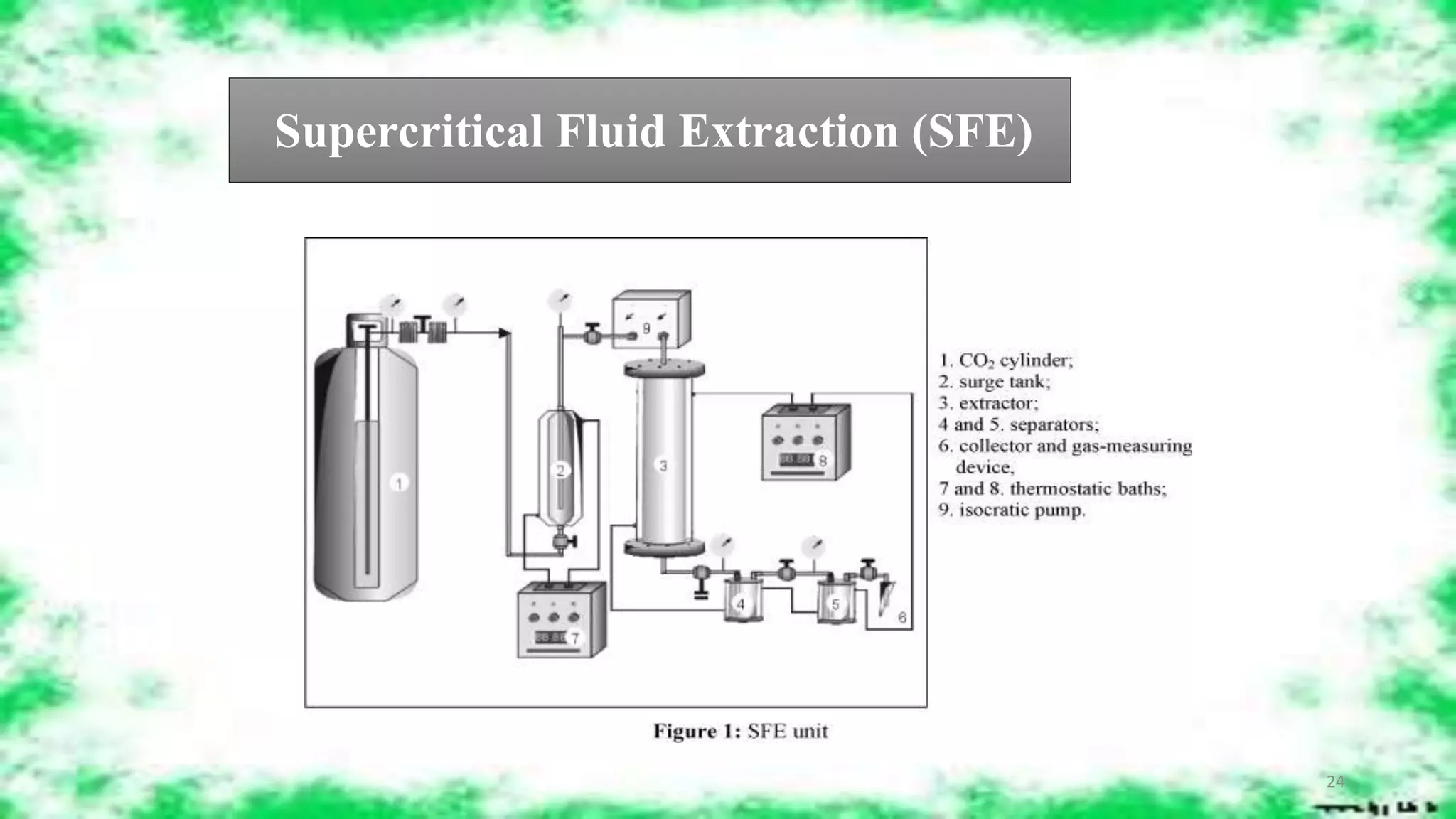
Supercritical Fluid Extraction (SFE)
24
• Separation is done by using Supercritical Fluids as the extracting
solvent.
• Extraction is usually from a solid matrix, but can also be from liquids.
• In practice, more than 90% of all (SFE) is performed with carbon
dioxide (CO2).
• Higher Yield, Higher Diffusion Coefficient, and Lower Viscosity.
25
• It is a Non-contact heat source which can achieve a more effective and selective
heating.
• Distillation can now be completed in Minutes instead of Hours with various
advantages.
• Plant materials are extracted in a microwave reactor.
• Based on the principle of Steam Distillation.
• The water and EOs are Condensed and Separated outside the microwave reactor.
Microwave-Assisted Hydrodistillation
(MAHD)
26
27
Fig.Microwave-Assisted Hydrodistillation
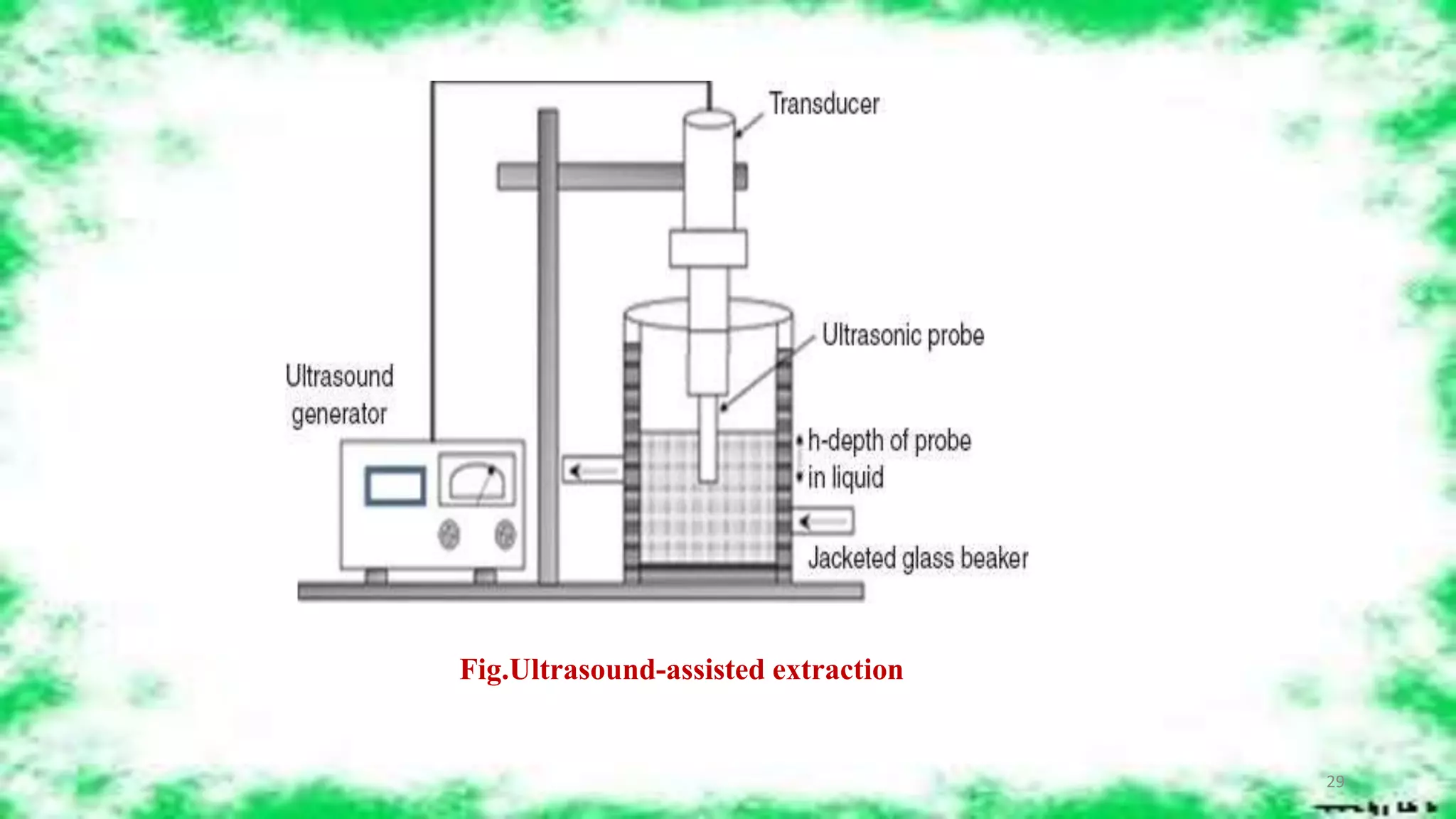
• To improve the Efficiency and reduce the Extraction time.
• The collapse of cavitation bubbles generated during Ultrasonication.
• The EOs obtained by (UAE) showed less thermal degradation with a high quality
and a good flavor.
• The yield also improved.
Ultrasound-Assisted Extraction
(UAE)
28
29
Fig.Ultrasound-assisted extraction
• Perfume,
• Aromatherapy,
• Cosmetics,
• Incense,
• Medicine,
• Household cleaning products and
• For flavoring food and drink
30
Uses of essential oils
• Pudding
• Flavored gelatins
• Pastries
• Chewing Gum
• Sauces
• Salad Dressings
• Herbal and flavor-infused teas
• Ice cream
Application Of Essential Oils
In Foods
31
• Title:Methodology to extract essential oils from lemongrass leaves:
solvent extraction approach.
• Authors: M.A.Suryawanshi1, V.B.Mane, G.B.Kumbhar
• Source: International Research Journal of Engineering and Technology (IRJET)
Volume: 03
• Year: 08 -Aug -2016
Case studies
32
Materials and methods
• 150g Of The Dry Sample Of Lemongrass Were Weighed From The Sliced Lemongrass Sample And Placed
In A 1 Lit Clean Flat Bottom Flask.
• 500ml Of N- Hexane Solvent Were Poured Into The Flask.
• The Flask And Content Were Allowed To Stand For 36 Hrs
• This Was Done To Extract All The Oil Content In The Lemongrass And For Complete Extraction.
• 200ml Of Ethanol Were Added To Extract The Essential Oil Since Essential Oil Is Soluble In Ethanol.
• The Mixture Was Then Transferred To 500ml Separating Funnel And Separated By A Process Called
Liquid/Liquid Separation Process
33
Result and discussion
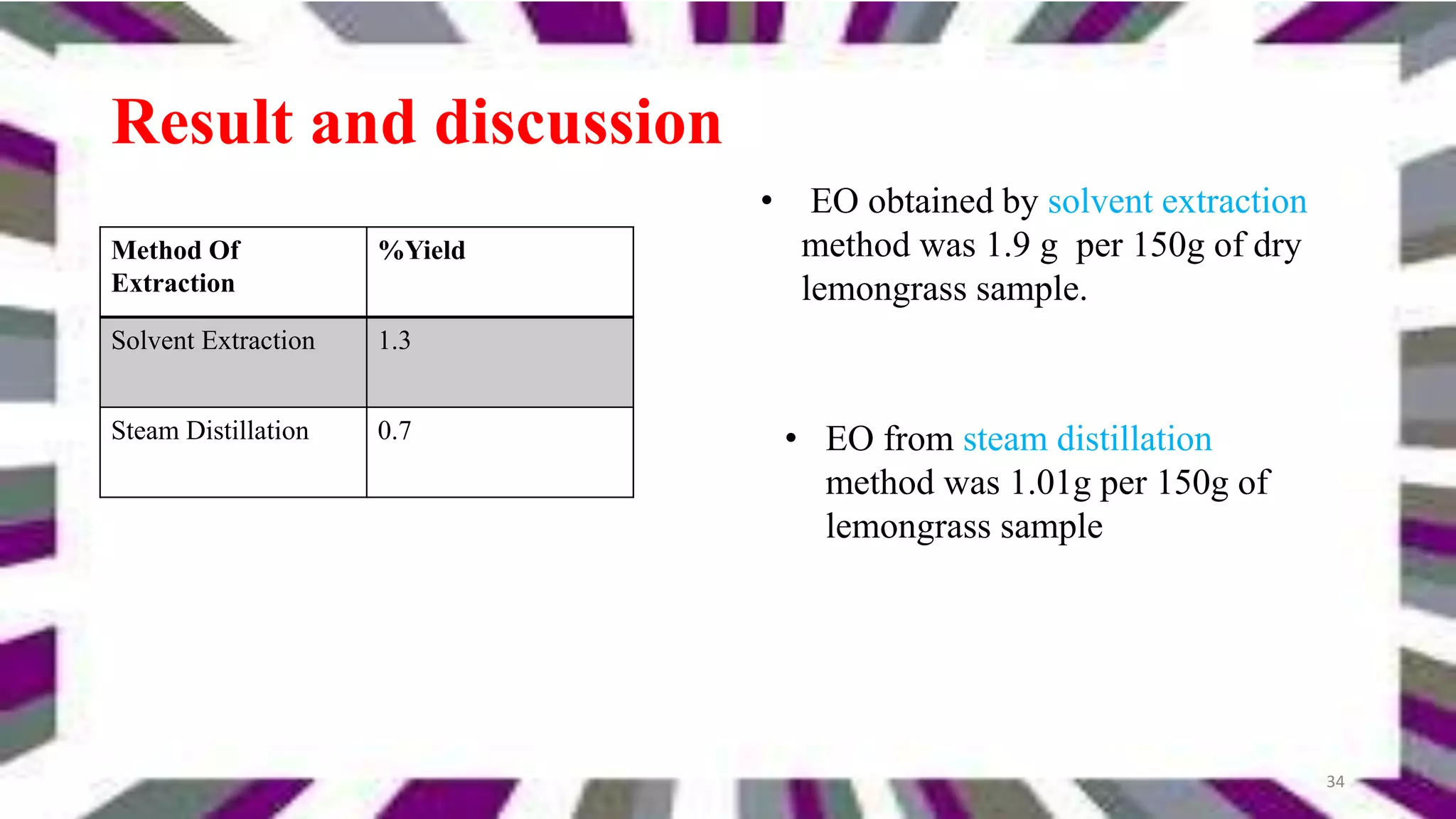
• EO obtained by solvent extraction
method was 1.9 g per 150g of dry
lemongrass sample.
• EO from steam distillation
method was 1.01g per 150g of
lemongrass sample
34
Method Of
Extraction
%Yield
Solvent Extraction 1.3
Steam Distillation 0.7
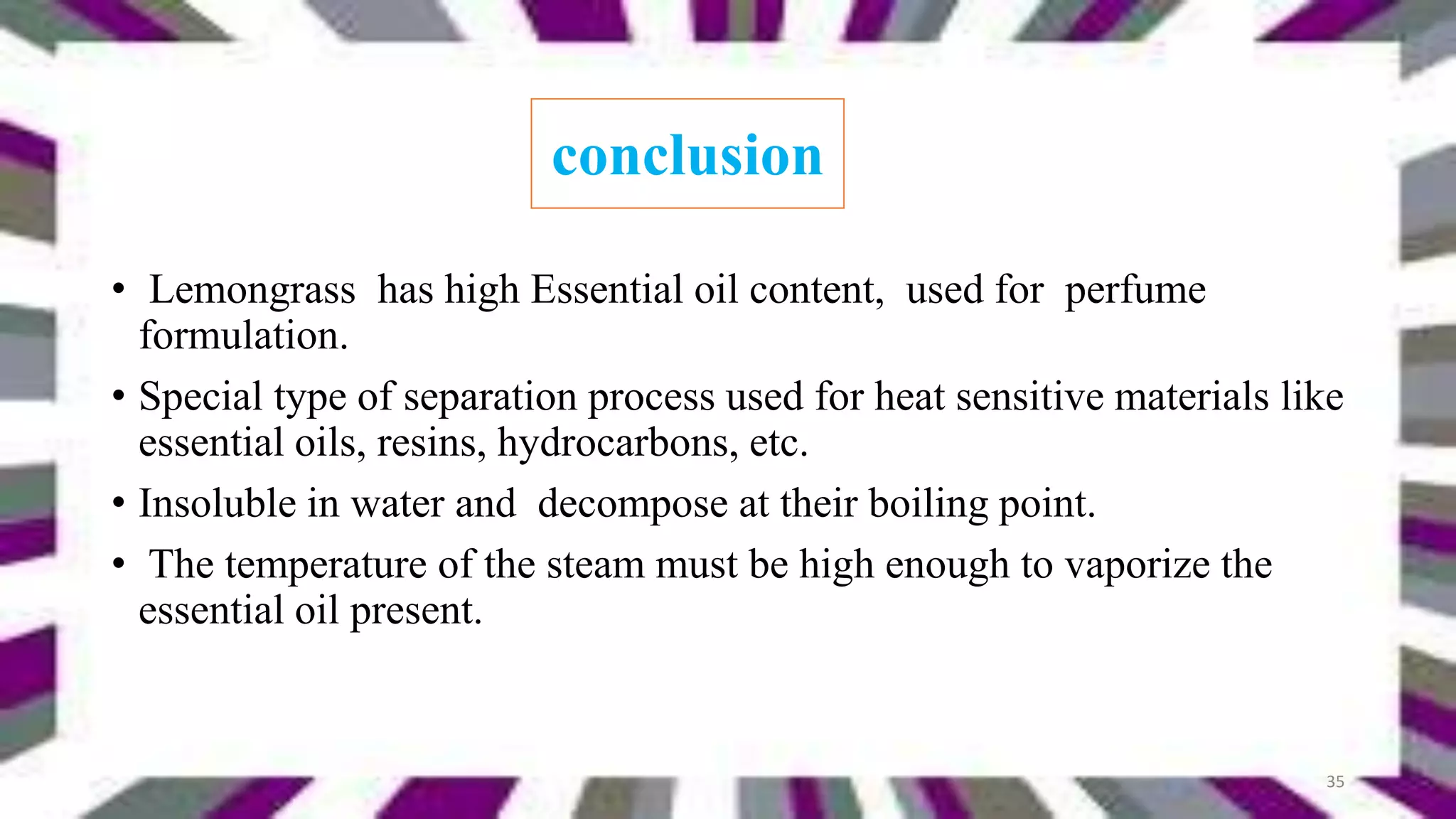
• Lemongrass has high Essential oil content, used for perfume
formulation.
• Special type of separation process used for heat sensitive materials like
essential oils, resins, hydrocarbons, etc.
• Insoluble in water and decompose at their boiling point.
• The temperature of the steam must be high enough to vaporize the
essential oil present.
conclusion
35
Conclusion:
• Essential oils consists of many volatile molecules.
• Used in pharmaceutical, cosmetics, agricultural and bioactivity
example flowers.
• Innovative methods avoid shortcomings of conventional
methods in extraction time.
• Essential oils are very sensitive to environmental factors used
as such.
36
References
• Dick, A.J., H.H.N. Starmans, (1996). Extraction of secondary metabolites from plant
material: a review. Trends Food Sci. Technol., pp: 191-197.
• Somesh, M., S. Rupali, S. Swati, M. Jose, M. Manish, (2015). In-vitro Comparative Study
on Antimicrobial Activity of five Extract of Few Citrus Fruit: Peel & Pulp vs Gentamicin.
Australian Journal of Basic and Applied Sciences, 9(1): 165-173.
• Younis, A., A. Riaz, M.A. Khan, A.A. Khan and M.A. Pervez, (2008). Extraction and
identification of chemical constituents of the essential oil of Rosa species. Acta Hort.,
766: 485-492.
• Rao, B.R.R, P.N. Kaul, K.V. Syamasundar and S. Ramesh, (2005). Chemical profiles of
primary and secondary essential oils of palmarosa (Cymbopogon martini (Roxb.) Wats
var. motia Burk.). Industrial Crops and Products, 21: 121-127.
• Wang, L., C.L. Weller, (2006). Recent advances in extraction of nutraceuticals from
plants. Trends Food Sci. Technol., 17: 300-312.
37
• Allaf T, Tomao V, Ruiz K, Chemat F (2013b) Instant controlled pressure drop
technology and ultrasound assisted extraction for sequential extraction of essential
oil and antioxidants. Ultrason Sonochem 20:239–246
• Caredda A, Marongiu B, Porcedda S, Soro C (2002) Supercritical carbon dioxide
extraction and characterization of Laurus nobilis essential oil. J Agric Food Chem
50:1492–1496
• Sahraoui N, Abert-Vian M, Bornard I, Boutekdjiret C, Chemat F (2008) Improved
microwave steam distillation apparatus for isolation of essential oils: comparison
with conventional steam distillation. J Chromatogr A 1210:229–233
38
39

Techniques for extraction of essential oils

  • 1.
  • 2.
    Seminar -1 PFE 581 UoohaH S PALB 6348 Dept of Agril Engg Techniques for extraction of essential oils 2
  • 3.
    • Introduction • Sourcesof Essential oils • Chemical constituents • Extraction methods • Uses of Essential oils • Applications • Case studies • Conclusion • References Contents 3
  • 4.
    Essential oils arePlant-based volatile oils with strong aromatic components made up of different chemical compounds. INTRODUCTION Ex; Alcohols, Hydrocarbons, Phenols, Aldehydes, Esters And Ketones . 4
  • 5.
    Essential oil An essentialoil is concentrated Hydrophobic liquid containing volatile aroma compounds from the plant. They are also known as Aromatic oils, Fragrant oils, Steam volatile oils, or simply as the “Oil of" the plant material. 5
  • 6.
    Flowers Leaves LeavesAnd Stems Fruits Rose Mint Geranium Bergamot Jasmine Ocimum Spp Patchouli Orange Carnation Lemongrass Petitgrain Lemon Clove Jamrosa Cinnamon Juniper 6 Sources Of Natural Essential Oil
  • 7.
    • Characteristic Odor. •Soluble In Organic Solvents. • Specific Gravity Between 0.8-1.17. • Sensitive To Heat And Light. • Optically active Physical Properties Of Essential Oils 7
  • 8.
    • Complex mixturesof Terpenes, Phenolics and Alcohols. • EO are highly complex include oxygenated compounds. • Oxygenated derivatives of hydrocarbon terpenes such as • Aldehydes, Ketones, • Alcohols, Phenols, • Acids, Ethers and Esters. Chemical Constituents Of Essential Oils 8
  • 9.
    9 Market Value OfEssential Oil
  • 10.
  • 11.
  • 12.
    Essential Oils ExtractionMethods 12 Hydrodistillation (HD) Steam distillation (SD) Solvent extraction Soxhlet extraction Cold pressing
  • 13.
    • Traditional methodfor removal of essential oils. • To isolate EO from aromatic and medicinal plant. • The EO are evaporated by heating a mixture of water and plant material • The setup comprises also a condenser and a decanter. • Distillation time depends on the plant material Types of hydrodistillation: • Water immersion, • Direct vapor injection and • Combination of water immersion and vapor injection. Hydrodistillation (HD) 13
  • 14.
    Components • Still • Condenser •Separater 14 Fig.Hydrodistillation
  • 15.
    • One ofAncient and Officially approved method. • For Temperature-sensitive plant such as natural aromatic compounds. • The plant materials charged in the alembic are subjected to the steam without maceration in water. Steam Distillation 15
  • 16.
  • 17.
    • Liquid–liquid extractionor partitioning. • Based on Solubility of its parts • EO recovery is more. • Used in perfumes, vegetable oil, or biodiesel. • It is used to produce higher amounts of essential oils at a lower cost Solvent extraction 17
  • 18.
  • 19.
    • Designed forthe extraction of lipids. • Desired compound has a limited solubility in a solvent. • It involves solid-liquid contact for the removal of one or several compounds from a solid. Soxhlet Extraction 19
  • 20.
    • It isalso known as scarification method • It is a method of mechanical extraction. • The term cold press means oil is expeller-pressed at low temperatures and pressure. • Best methods to extract essential oils. • 100% pure and retains all the properties. • It is mainly used for plants, flower, seeds, lemon, tangerine oils. Cold Pressing method 20
  • 21.
  • 22.
    Disadvantages of traditionalmethod • Thermal ability • Extraction time is long • Chemical alterations 22
  • 23.
    Innovative Techniques OfEssential Oils Extraction (Non-Traditional) New extraction techniques must also reduce • Extraction time • Energy consumption • Solvent use and • Co2 emissions 23
  • 24.
  • 25.
    • Separation isdone by using Supercritical Fluids as the extracting solvent. • Extraction is usually from a solid matrix, but can also be from liquids. • In practice, more than 90% of all (SFE) is performed with carbon dioxide (CO2). • Higher Yield, Higher Diffusion Coefficient, and Lower Viscosity. 25
  • 26.
    • It isa Non-contact heat source which can achieve a more effective and selective heating. • Distillation can now be completed in Minutes instead of Hours with various advantages. • Plant materials are extracted in a microwave reactor. • Based on the principle of Steam Distillation. • The water and EOs are Condensed and Separated outside the microwave reactor. Microwave-Assisted Hydrodistillation (MAHD) 26
  • 27.
  • 28.
    • To improvethe Efficiency and reduce the Extraction time. • The collapse of cavitation bubbles generated during Ultrasonication. • The EOs obtained by (UAE) showed less thermal degradation with a high quality and a good flavor. • The yield also improved. Ultrasound-Assisted Extraction (UAE) 28
  • 29.
  • 30.
    • Perfume, • Aromatherapy, •Cosmetics, • Incense, • Medicine, • Household cleaning products and • For flavoring food and drink 30 Uses of essential oils
  • 31.
    • Pudding • Flavoredgelatins • Pastries • Chewing Gum • Sauces • Salad Dressings • Herbal and flavor-infused teas • Ice cream Application Of Essential Oils In Foods 31
  • 32.
    • Title:Methodology toextract essential oils from lemongrass leaves: solvent extraction approach. • Authors: M.A.Suryawanshi1, V.B.Mane, G.B.Kumbhar • Source: International Research Journal of Engineering and Technology (IRJET) Volume: 03 • Year: 08 -Aug -2016 Case studies 32
  • 33.
    Materials and methods •150g Of The Dry Sample Of Lemongrass Were Weighed From The Sliced Lemongrass Sample And Placed In A 1 Lit Clean Flat Bottom Flask. • 500ml Of N- Hexane Solvent Were Poured Into The Flask. • The Flask And Content Were Allowed To Stand For 36 Hrs • This Was Done To Extract All The Oil Content In The Lemongrass And For Complete Extraction. • 200ml Of Ethanol Were Added To Extract The Essential Oil Since Essential Oil Is Soluble In Ethanol. • The Mixture Was Then Transferred To 500ml Separating Funnel And Separated By A Process Called Liquid/Liquid Separation Process 33
  • 34.
    Result and discussion •EO obtained by solvent extraction method was 1.9 g per 150g of dry lemongrass sample. • EO from steam distillation method was 1.01g per 150g of lemongrass sample 34 Method Of Extraction %Yield Solvent Extraction 1.3 Steam Distillation 0.7
  • 35.
    • Lemongrass hashigh Essential oil content, used for perfume formulation. • Special type of separation process used for heat sensitive materials like essential oils, resins, hydrocarbons, etc. • Insoluble in water and decompose at their boiling point. • The temperature of the steam must be high enough to vaporize the essential oil present. conclusion 35
  • 36.
    Conclusion: • Essential oilsconsists of many volatile molecules. • Used in pharmaceutical, cosmetics, agricultural and bioactivity example flowers. • Innovative methods avoid shortcomings of conventional methods in extraction time. • Essential oils are very sensitive to environmental factors used as such. 36
  • 37.
    References • Dick, A.J.,H.H.N. Starmans, (1996). Extraction of secondary metabolites from plant material: a review. Trends Food Sci. Technol., pp: 191-197. • Somesh, M., S. Rupali, S. Swati, M. Jose, M. Manish, (2015). In-vitro Comparative Study on Antimicrobial Activity of five Extract of Few Citrus Fruit: Peel & Pulp vs Gentamicin. Australian Journal of Basic and Applied Sciences, 9(1): 165-173. • Younis, A., A. Riaz, M.A. Khan, A.A. Khan and M.A. Pervez, (2008). Extraction and identification of chemical constituents of the essential oil of Rosa species. Acta Hort., 766: 485-492. • Rao, B.R.R, P.N. Kaul, K.V. Syamasundar and S. Ramesh, (2005). Chemical profiles of primary and secondary essential oils of palmarosa (Cymbopogon martini (Roxb.) Wats var. motia Burk.). Industrial Crops and Products, 21: 121-127. • Wang, L., C.L. Weller, (2006). Recent advances in extraction of nutraceuticals from plants. Trends Food Sci. Technol., 17: 300-312. 37
  • 38.
    • Allaf T,Tomao V, Ruiz K, Chemat F (2013b) Instant controlled pressure drop technology and ultrasound assisted extraction for sequential extraction of essential oil and antioxidants. Ultrason Sonochem 20:239–246 • Caredda A, Marongiu B, Porcedda S, Soro C (2002) Supercritical carbon dioxide extraction and characterization of Laurus nobilis essential oil. J Agric Food Chem 50:1492–1496 • Sahraoui N, Abert-Vian M, Bornard I, Boutekdjiret C, Chemat F (2008) Improved microwave steam distillation apparatus for isolation of essential oils: comparison with conventional steam distillation. J Chromatogr A 1210:229–233 38
  • 39.

Editor's Notes