MY DEAR STUDENTS
Sewing
Tools and
Materials
Measuring Tools
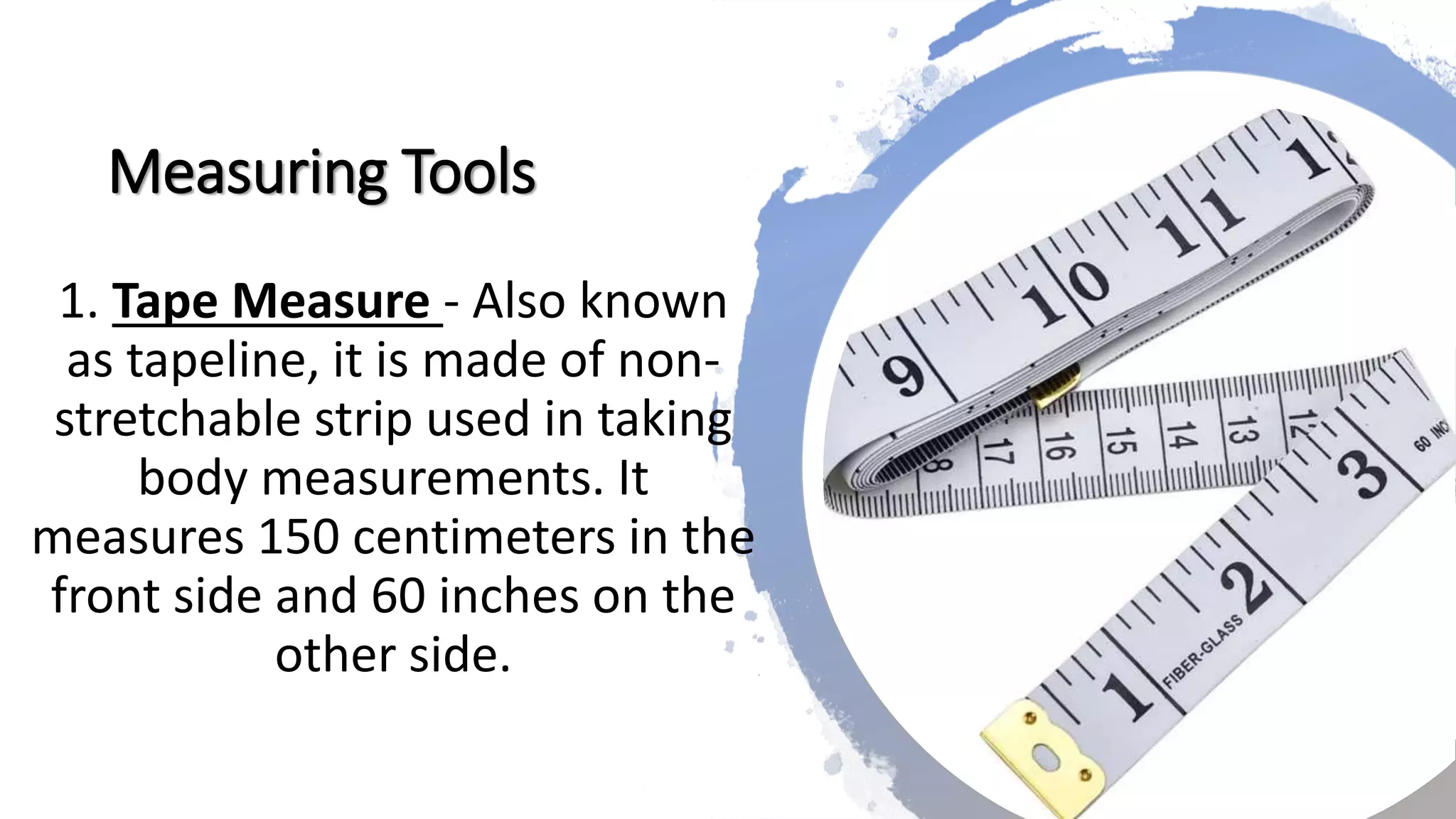
1. Tape Measure - Also known
as tapeline, it is made of non-
stretchable strip used in taking
body measurements. It
measures 150 centimeters in the
front side and 60 inches on the
other side.
Measuring Tools
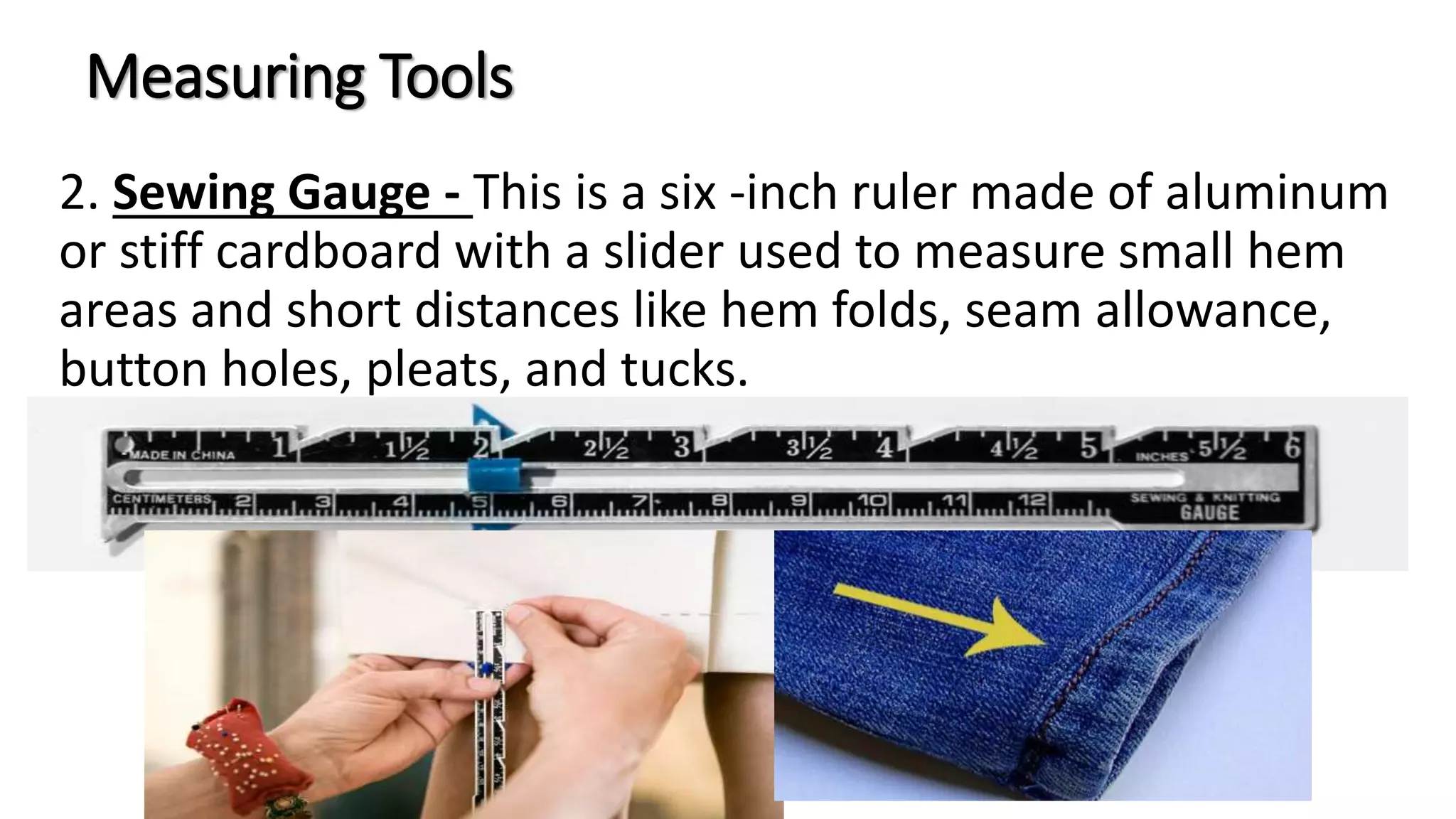
2. Sewing Gauge - This is a six -inch ruler made of aluminum
or stiff cardboard with a slider used to measure small hem
areas and short distances like hem folds, seam allowance,
button holes, pleats, and tucks.
Measuring Tools
3.Ruler - This is the
most common
measuring device; 12
inches long used to
connect two points in
drawing straight lines. It
may be made of clear
plastic or shellacked
wood.
Measuring Tools
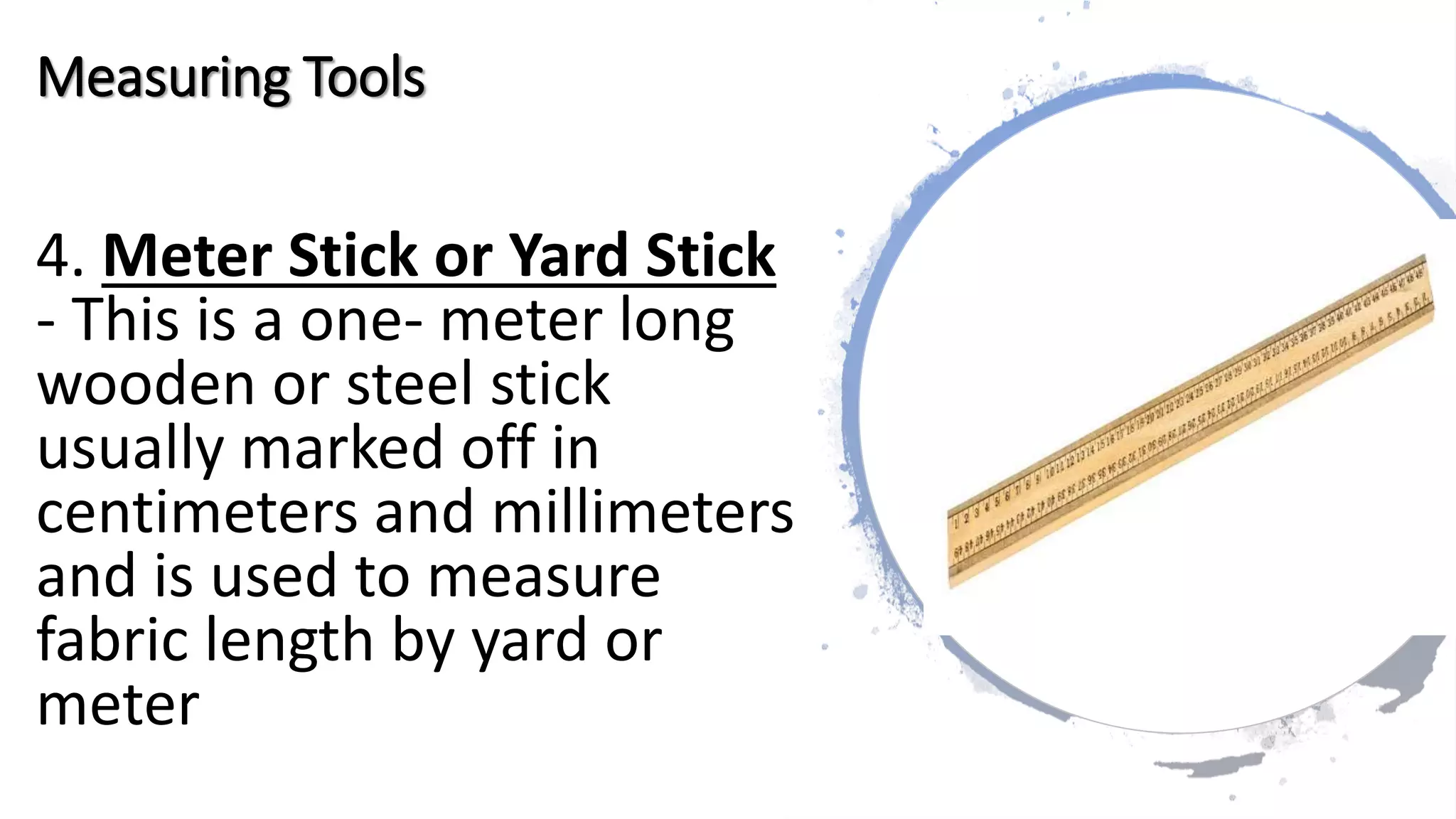
4. Meter Stick or Yard Stick
- This is a one- meter long
wooden or steel stick
usually marked off in
centimeters and millimeters
and is used to measure
fabric length by yard or
meter
MEASURING
TOOLS
1.Tape Measure
2.Sewing Gauge
3.Ruler
4.Meter Stick or
Yard Stick
1. L-square - This is an
aluminum ruler with 90
degrees angle used to draw
perpendicular lines and to
measure off parallel lines.
Two arms are connected
perpendicularly and used to
make construction lines in
pattern drafting.
Drafting Tools
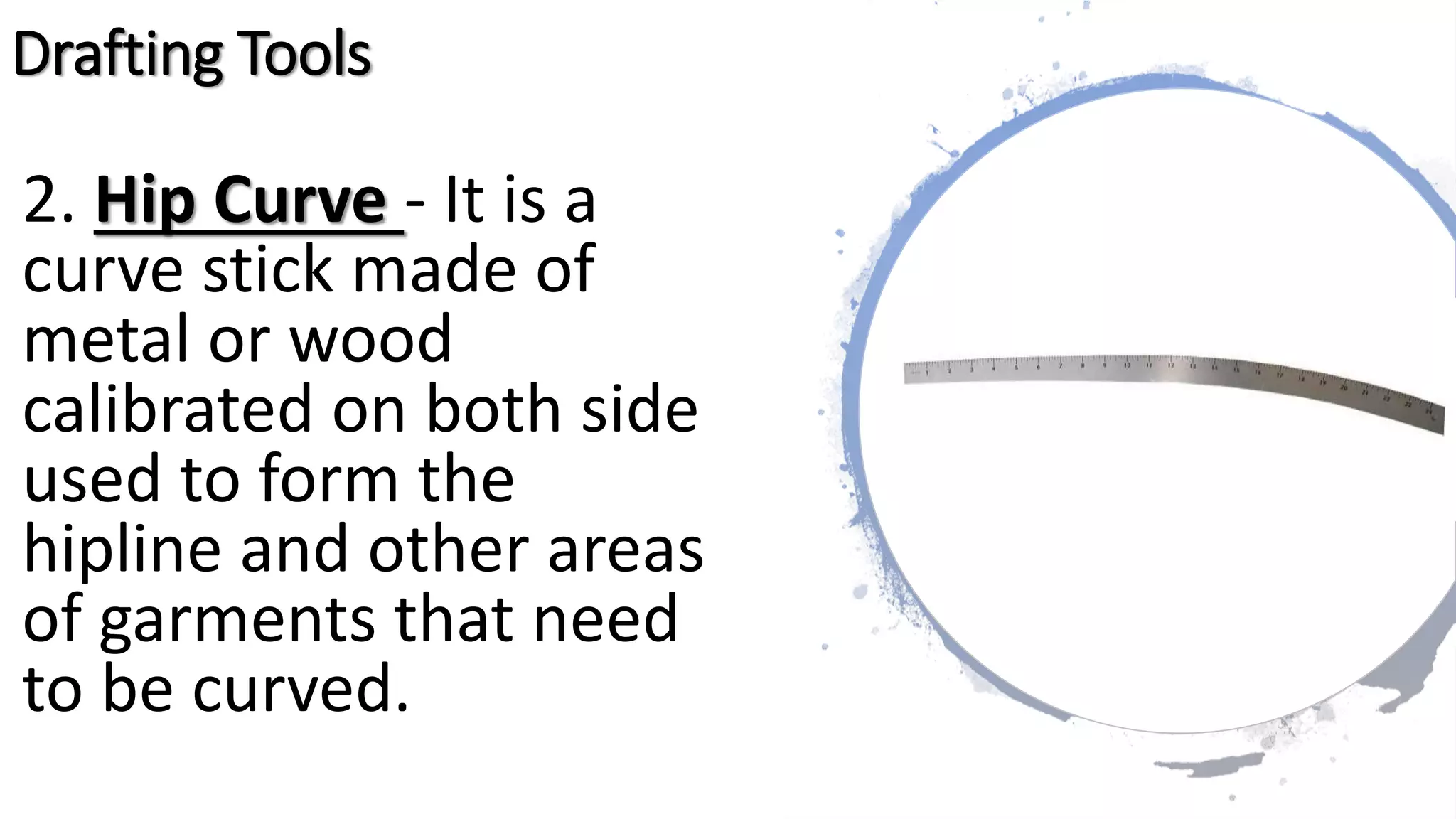
2. Hip Curve - It is a
curve stick made of
metal or wood
calibrated on both side
used to form the
hipline and other areas
of garments that need
to be curved.
Drafting Tools
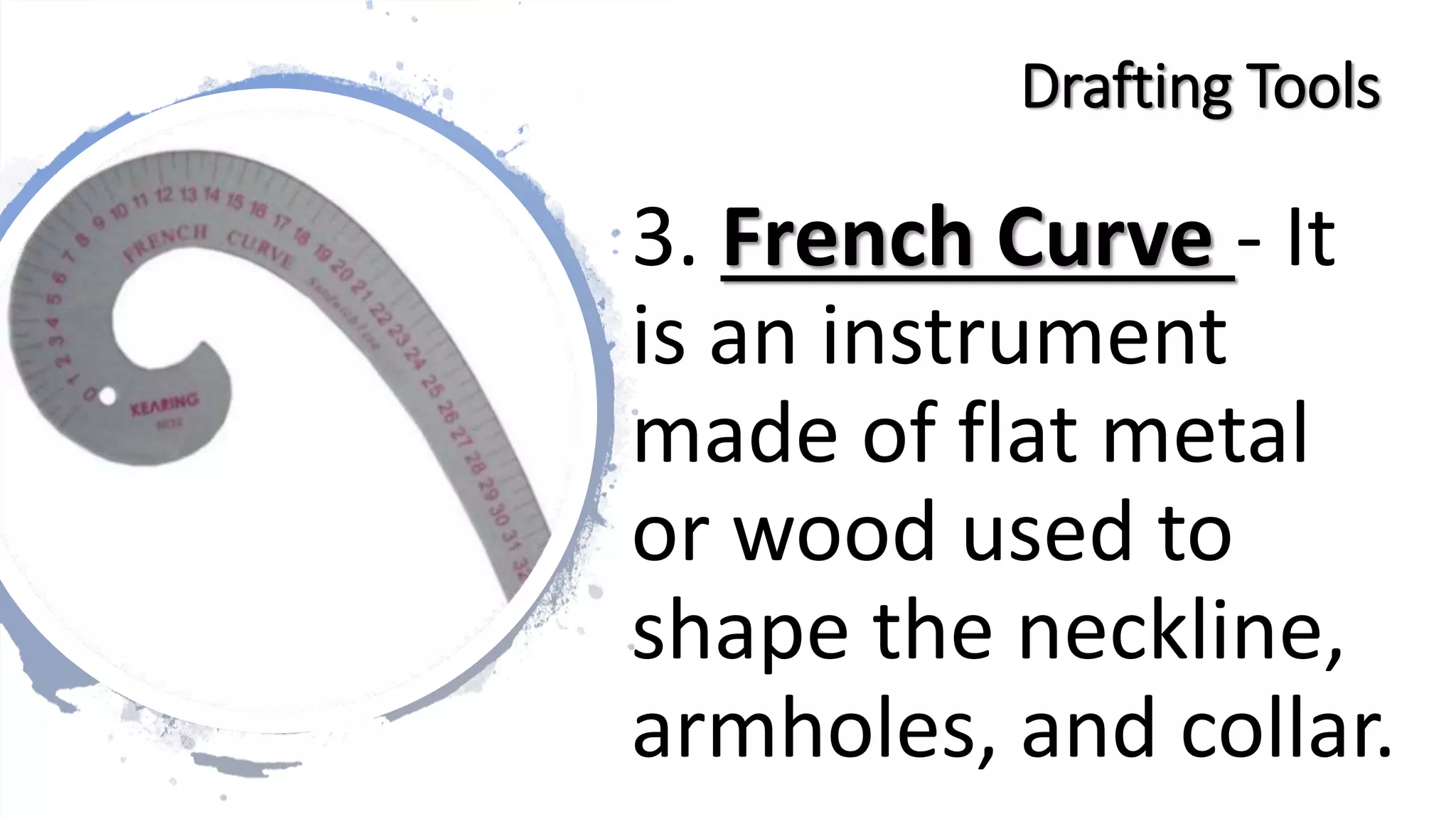
3. French Curve - It
is an instrument
made of flat metal
or wood used to
shape the neckline,
armholes, and collar.
Drafting Tools
DRAFTING
TOOLS
1.L-square
2.Hip Curve
3.French Curve
Cutting Tools
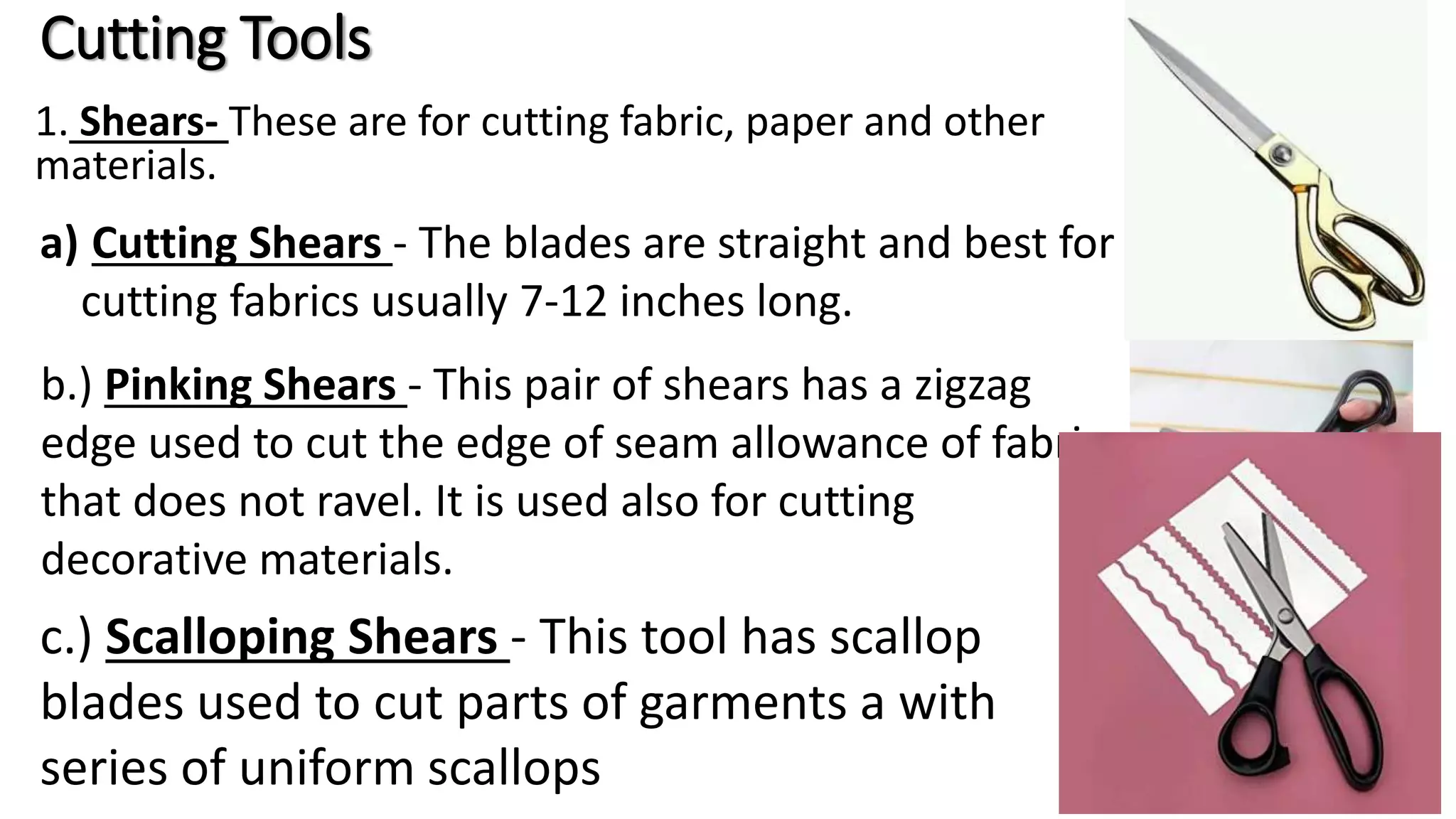
1. Shears- These are for cutting fabric, paper and other
materials.
a) Cutting Shears - The blades are straight and best for
cutting fabrics usually 7-12 inches long.
b.) Pinking Shears - This pair of shears has a zigzag
edge used to cut the edge of seam allowance of fabric
that does not ravel. It is used also for cutting
decorative materials.
c.) Scalloping Shears - This tool has scallop
blades used to cut parts of garments a with
series of uniform scallops
2. Scissors - These are
used for cutting hanging
threads, excess fabrics of a
seam, trimming hair, and
other purposes. It may be
made of plastic with metal
or all metal.
Cutting Tools
3. Buttonhole Scissors -
These are used for cutting
buttonholes. The blades
have a square shape at
the joint of scissors to
control cutting the cloth
off the buttonhole area.
Cutting Tools
4. Embroidery
Scissors - It is a sharp
pointed scissors
usually 4-5 inches
long used in cutting
fine delicate cloth
and thread in
embroidery work.
Cutting Tools
5. Seam Ripper - This
tool is intended for
cutting off stitches of a
seam. Care in using this
instrument is required
to prevent the cloth
from being damaged.
Cutting Tools
CUTTING
TOOLS1. Shears
a. Cutting Shears
b. Pinking Shears
c. Scalloping Shears
2. Scissors
3. Buttonhole Scissors
4. Embroidery Scissors
5. Seam Ripper
MARKING TOOLS
1. Tailor’s Chalk -It is available in a
variety of colors and is used to mark
the fabric. It is made of hard chalk
and can be removed by brushing.
2. Tracing Wheel - This is an
instrument with serrated edge
wheel that produces dots on the
fabric. The smooth one creates a
straight, solid line.
3. Dressmaker’s Carbon Paper -
It is a specially waxed carbon
paper that transfers the tracing
wheel’s markings to the fabric.
This is available in different
brands with different
instructions. Follow the
instructions for a particular
brand.
MARKING TOOLS
MARKING
TOOLS
1.Tailor’s Chalk
2.Tracing Wheel
3.Dressmaker’s
Carbon Paper
Sewing Aids
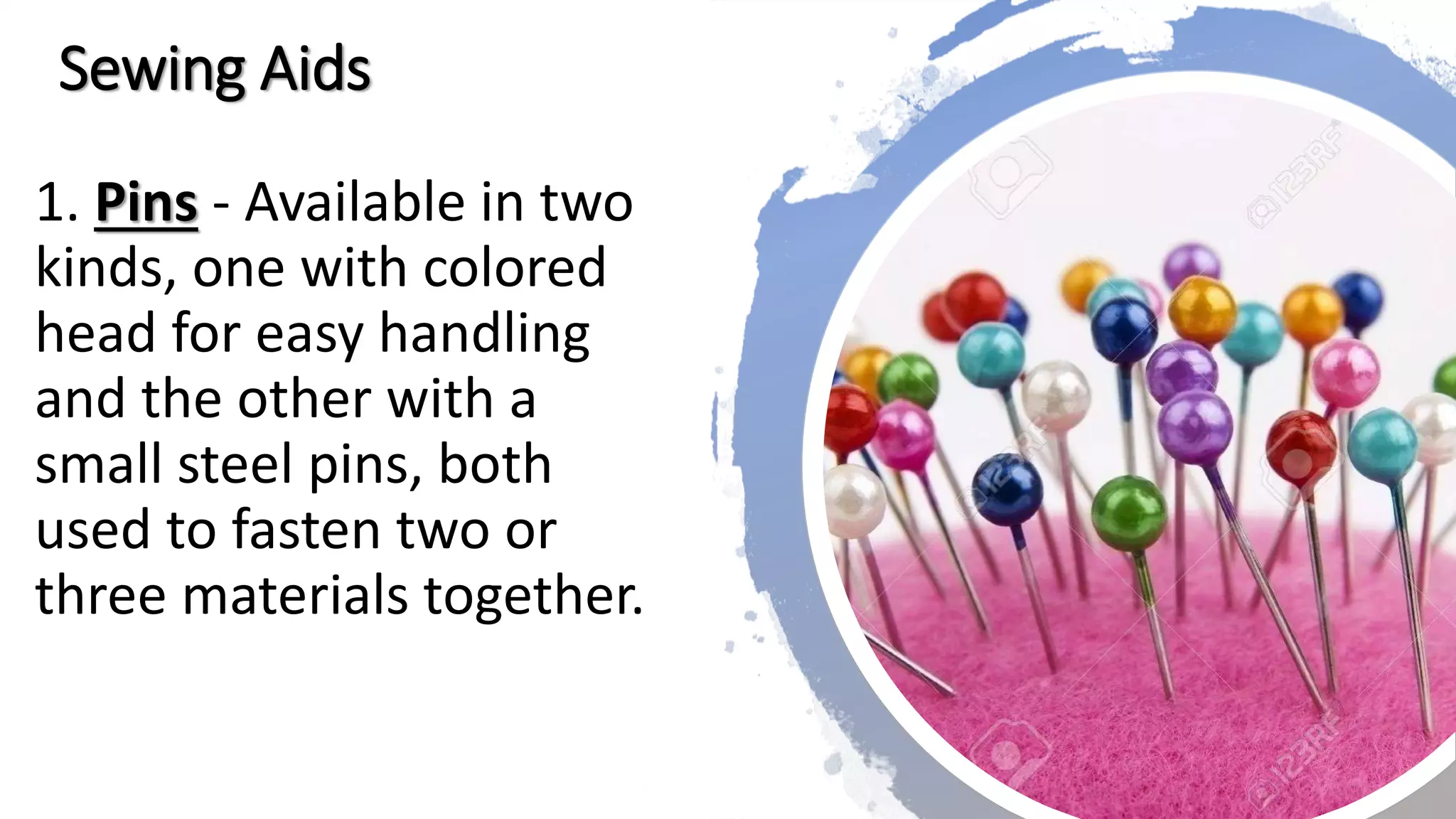
1. Pins - Available in two
kinds, one with colored
head for easy handling
and the other with a
small steel pins, both
used to fasten two or
three materials together.
2. Pin Cushion - It is a
cushion available in
different shapes and colors
used to hold pins and
needles to prevent them
from scatter in the place.
Sewing Aids
Sewing Aids
3. Hand Needles –
These are available in
different sizes and used
for temporary stitches,
hemming, and other
sewing purposes.
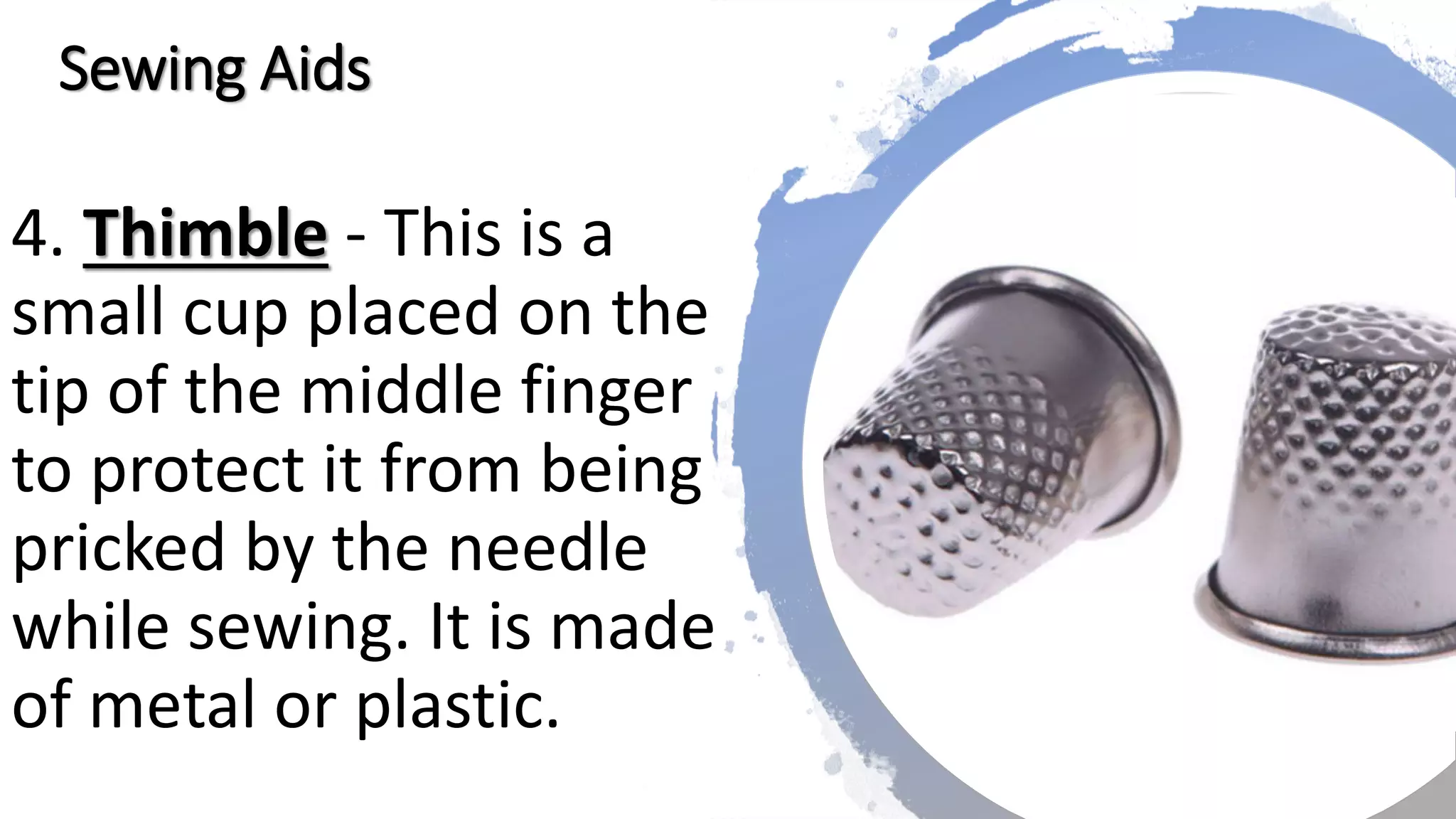
4. Thimble - This is a
small cup placed on the
tip of the middle finger
to protect it from being
pricked by the needle
while sewing. It is made
of metal or plastic.
Sewing Aids
5. Threader - This is
a diamond shaped
wire attached to a
handle and used to
insert thread
through the needle
eye.
Sewing Aids
SEWING
AIDS1.Pins
2.Pin Cushion
3.Hand Needles
4.Thimble
5.Threader

Q1 wk1 d1 classification of sewing tools and materials

  • 1.
  • 3.
  • 4.
    Measuring Tools 1. TapeMeasure - Also known as tapeline, it is made of non- stretchable strip used in taking body measurements. It measures 150 centimeters in the front side and 60 inches on the other side.
  • 5.
    Measuring Tools 2. SewingGauge - This is a six -inch ruler made of aluminum or stiff cardboard with a slider used to measure small hem areas and short distances like hem folds, seam allowance, button holes, pleats, and tucks.
  • 6.
    Measuring Tools 3.Ruler -This is the most common measuring device; 12 inches long used to connect two points in drawing straight lines. It may be made of clear plastic or shellacked wood.
  • 7.
    Measuring Tools 4. MeterStick or Yard Stick - This is a one- meter long wooden or steel stick usually marked off in centimeters and millimeters and is used to measure fabric length by yard or meter
  • 8.
  • 9.
    1. L-square -This is an aluminum ruler with 90 degrees angle used to draw perpendicular lines and to measure off parallel lines. Two arms are connected perpendicularly and used to make construction lines in pattern drafting. Drafting Tools
  • 10.
    2. Hip Curve- It is a curve stick made of metal or wood calibrated on both side used to form the hipline and other areas of garments that need to be curved. Drafting Tools
  • 11.
    3. French Curve- It is an instrument made of flat metal or wood used to shape the neckline, armholes, and collar. Drafting Tools
  • 12.
  • 13.
    Cutting Tools 1. Shears-These are for cutting fabric, paper and other materials. a) Cutting Shears - The blades are straight and best for cutting fabrics usually 7-12 inches long. b.) Pinking Shears - This pair of shears has a zigzag edge used to cut the edge of seam allowance of fabric that does not ravel. It is used also for cutting decorative materials. c.) Scalloping Shears - This tool has scallop blades used to cut parts of garments a with series of uniform scallops
  • 14.
    2. Scissors -These are used for cutting hanging threads, excess fabrics of a seam, trimming hair, and other purposes. It may be made of plastic with metal or all metal. Cutting Tools
  • 15.
    3. Buttonhole Scissors- These are used for cutting buttonholes. The blades have a square shape at the joint of scissors to control cutting the cloth off the buttonhole area. Cutting Tools
  • 16.
    4. Embroidery Scissors -It is a sharp pointed scissors usually 4-5 inches long used in cutting fine delicate cloth and thread in embroidery work. Cutting Tools
  • 17.
    5. Seam Ripper- This tool is intended for cutting off stitches of a seam. Care in using this instrument is required to prevent the cloth from being damaged. Cutting Tools
  • 18.
    CUTTING TOOLS1. Shears a. CuttingShears b. Pinking Shears c. Scalloping Shears 2. Scissors 3. Buttonhole Scissors 4. Embroidery Scissors 5. Seam Ripper
  • 19.
    MARKING TOOLS 1. Tailor’sChalk -It is available in a variety of colors and is used to mark the fabric. It is made of hard chalk and can be removed by brushing. 2. Tracing Wheel - This is an instrument with serrated edge wheel that produces dots on the fabric. The smooth one creates a straight, solid line.
  • 20.
    3. Dressmaker’s CarbonPaper - It is a specially waxed carbon paper that transfers the tracing wheel’s markings to the fabric. This is available in different brands with different instructions. Follow the instructions for a particular brand. MARKING TOOLS
  • 21.
  • 22.
    Sewing Aids 1. Pins- Available in two kinds, one with colored head for easy handling and the other with a small steel pins, both used to fasten two or three materials together.
  • 23.
    2. Pin Cushion- It is a cushion available in different shapes and colors used to hold pins and needles to prevent them from scatter in the place. Sewing Aids
  • 24.
    Sewing Aids 3. HandNeedles – These are available in different sizes and used for temporary stitches, hemming, and other sewing purposes.
  • 25.
    4. Thimble -This is a small cup placed on the tip of the middle finger to protect it from being pricked by the needle while sewing. It is made of metal or plastic. Sewing Aids
  • 26.
    5. Threader -This is a diamond shaped wire attached to a handle and used to insert thread through the needle eye. Sewing Aids
  • 27.