Using Data & Analytics
To Inform Strategy
Andrew Smith
@andismit
The PR strategy process (and the
role of data)
1. Define goals and objectives
2. Audience research
3. Planning
4. Resource allocation
5. Implementation
6. Monitor and evaluate
Setting objectives
First questions people often ask:
•What channels should we use?
•How much time and money should we spend on them?
•What metrics should we use?
First questions we ought to ask:
•WHY are we doing this?
•WHAT role do we want PR to play?
Organisational goals define PR goals
Common issues
Objectives are vague eg “raising awareness”
No “line of sight” to organisational objectives
Not quantitative
Based on outputs, not outcomes
Common issues: typical metrics
Reach
Visibility/awareness
Engagement
How would you define and measure
these goals?
Any relationship to meaningful outcomes?
How do you calculate their value?
Bigger issues: content shock is here
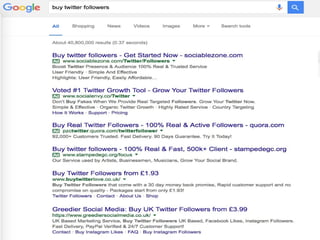
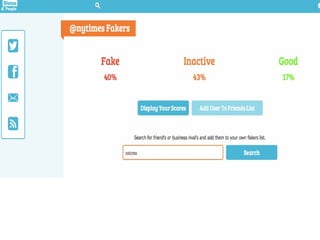
Bigger issues: can we trust the data?
How can data drive PR?
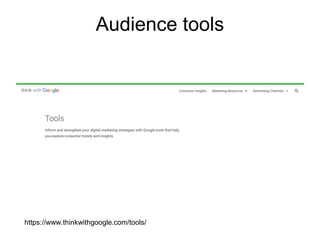
Audience tools
https://www.thinkwithgoogle.com/tools/
Benchmarking
Benchmarking
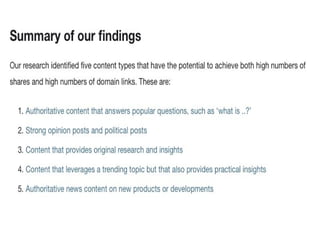
Sharing & linking
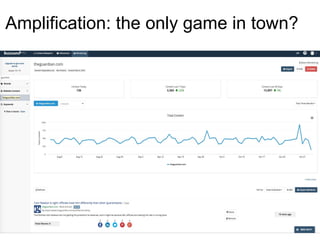
Amplification: the only game in town?
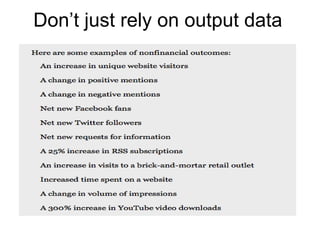
Don’t just rely on output data
A/B Testing for PR
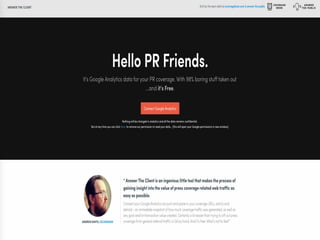
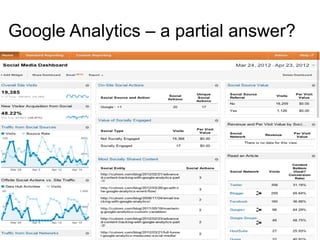
Google Analytics – a partial answer?
Google Analytics provides a way of seeing
the direct and indirect contribution made by
any channel against a specific goal
Review and summary
• Data driven PR starts with objective
setting; objectives need to be specific and
measurable, and impact oriented
• Don’t just rely on obvious data sources
• Practitioners need to use data analysis
techniques that reflect the reality of
modern day media consumption
Andrew Bruce Smith - using data and analytics to inform PR strategy - #PRFest

Andrew Bruce Smith - using data and analytics to inform PR strategy - #PRFest

Editor's Notes

  • #2 Testing to see what presenter notes look like