

12 Specific Activities
to Foster Teamwork
in the Workplace
Working with a team is
BETTER AND
FASTER IF
you can encourage members to
work towards a common goal.
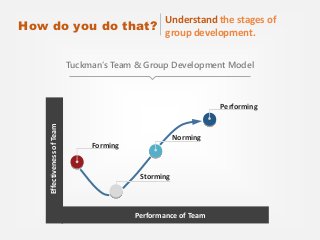
How do you do that?
Understand the stages of
group development.
Tuckman’s Team & Group Development Model
Forming
Storming
Norming
Performing
EffectivenessofTeam
Performance of Team
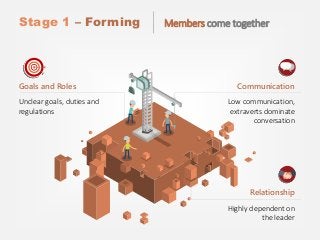
Unclear goals, duties and
regulations
Goals and Roles
Low communication,
extraverts dominate
conversation
Communication
Highly dependent on
the leader
Relationship
Stage 1 – Forming Members come together
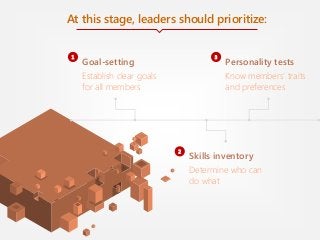
At this stage, leaders should prioritize:
Establish clear goals
for all members
Goal-setting
1
Know members’ traits
and preferences
Personality tests
3
Determine who can
do what
Skills inventory
2
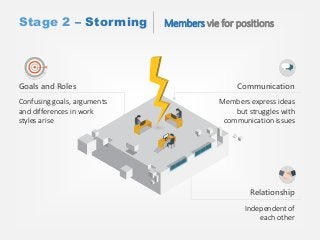
Stage 2 – Storming Members vie for positions
Confusing goals, arguments
and differences in work
styles arise
Goals and Roles
Members express ideas
but struggles with
communication issues
Communication
Independent of
each other
Relationship
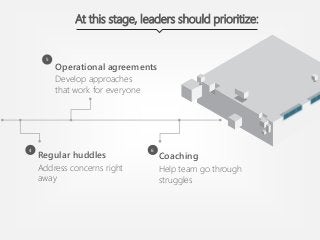
At this stage, leaders should prioritize:
Address concerns right
away
Regular huddles
Operational agreements
Develop approaches
that work for everyone
Coaching
Help team go through
struggles
5
4 6
Clarified and accepted by
members
Goals and Roles
Members can socialize
and provide
constructive feedback
Communication
Interdependent with
team members
Relationship
Stage 3 – Norming Team identity takes shape
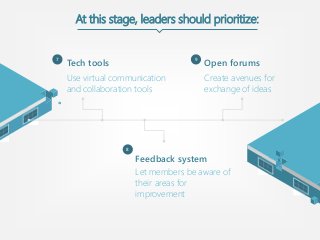
At this stage, leaders should prioritize:
Use virtual communication
and collaboration tools
Tech tools
Feedback system
Let members be aware of
their areas for
improvement
Open forums
Create avenues for
exchange of ideas
7 9
8
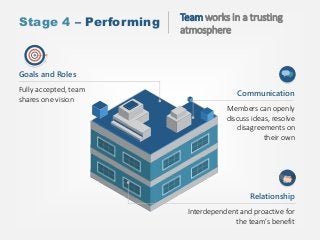
Stage 4 – Performing Team works in a trusting
atmosphere
Fully accepted, team
shares one vision
Goals and Roles
Members can openly
discuss ideas, resolve
disagreements on
their own
Communication
Interdependent and proactive for
the team’s benefit
Relationship
At this stage, leaders should prioritize:
Celebrate team and individual
accomplishments
Reinforcement
Better methods
Continuously improve tasks
and relationships
Task delegation
Empower members by
assigning tasks
10 12
11
"Coming together is a beginning.
Keeping together is progress.
Working together is success."
- Henry Ford
contact: support@slideshop.com
fb: theslideshop
twitter: @slide_shop
blog: http://blog.slideshop.com/
pinterest: Slideshop
slideshare: slideshop.com
phone number: +1 602 559 4554
The world's leading
supplier of unique, creative
and effective PowerPoint
templates.
Do you want to customize this
presentation?
Download the PowerPoint file.
Download

12 Specific Activities to Foster Teamwork in the Workplace

  • 1.
    12 Specific Activities toFoster Teamwork in the Workplace
  • 2.
    Working with ateam is BETTER AND FASTER IF you can encourage members to work towards a common goal.
  • 3.
    How do youdo that? Understand the stages of group development. Tuckman’s Team & Group Development Model Forming Storming Norming Performing EffectivenessofTeam Performance of Team
  • 4.
    Unclear goals, dutiesand regulations Goals and Roles Low communication, extraverts dominate conversation Communication Highly dependent on the leader Relationship Stage 1 – Forming Members come together
  • 5.
    At this stage,leaders should prioritize: Establish clear goals for all members Goal-setting 1 Know members’ traits and preferences Personality tests 3 Determine who can do what Skills inventory 2
  • 6.
    Stage 2 –Storming Members vie for positions Confusing goals, arguments and differences in work styles arise Goals and Roles Members express ideas but struggles with communication issues Communication Independent of each other Relationship
  • 7.
    At this stage,leaders should prioritize: Address concerns right away Regular huddles Operational agreements Develop approaches that work for everyone Coaching Help team go through struggles 5 4 6
  • 8.
    Clarified and acceptedby members Goals and Roles Members can socialize and provide constructive feedback Communication Interdependent with team members Relationship Stage 3 – Norming Team identity takes shape
  • 9.
    At this stage,leaders should prioritize: Use virtual communication and collaboration tools Tech tools Feedback system Let members be aware of their areas for improvement Open forums Create avenues for exchange of ideas 7 9 8
  • 10.
    Stage 4 –Performing Team works in a trusting atmosphere Fully accepted, team shares one vision Goals and Roles Members can openly discuss ideas, resolve disagreements on their own Communication Interdependent and proactive for the team’s benefit Relationship
  • 11.
    At this stage,leaders should prioritize: Celebrate team and individual accomplishments Reinforcement Better methods Continuously improve tasks and relationships Task delegation Empower members by assigning tasks 10 12 11
  • 12.
    "Coming together isa beginning. Keeping together is progress. Working together is success." - Henry Ford
  • 13.
    contact: support@slideshop.com fb: theslideshop twitter:@slide_shop blog: http://blog.slideshop.com/ pinterest: Slideshop slideshare: slideshop.com phone number: +1 602 559 4554 The world's leading supplier of unique, creative and effective PowerPoint templates. Do you want to customize this presentation? Download the PowerPoint file. Download