Robert Rauschenberg
Rauschenberg was known as an American painter, sculptor, printmaker,
photographer and performance artist, also he acted as an important bridge
between Abstract Expressionism and Pop Art and can be credited as one of the
major influences in the representational art in the USA. His invention of new
techniques in his wide-ranging iconography of modern life influenced younger
artists throughout the late decades of the 20th century with new possibilities.
In 1962. He began making silkscreen paintings by screen-printing images from
books and magazines, along with his own photography onto canvas, and then
applied ‘painterly’ brushstrokes reminiscent of Abstract Expressionism. His
intention for this was ‘to escape the familiarity of objects and collage’.
As a result, his pieces had no specific meaning or narrative, as the images were
organized in a loose, poetic manner, which created an impression of visual flux
that allow the viewer to ‘free-associate’.
Source: http://www.tate.org.uk/art/artworks/rauschenberg-almanac-t01135
Analysis of the piece
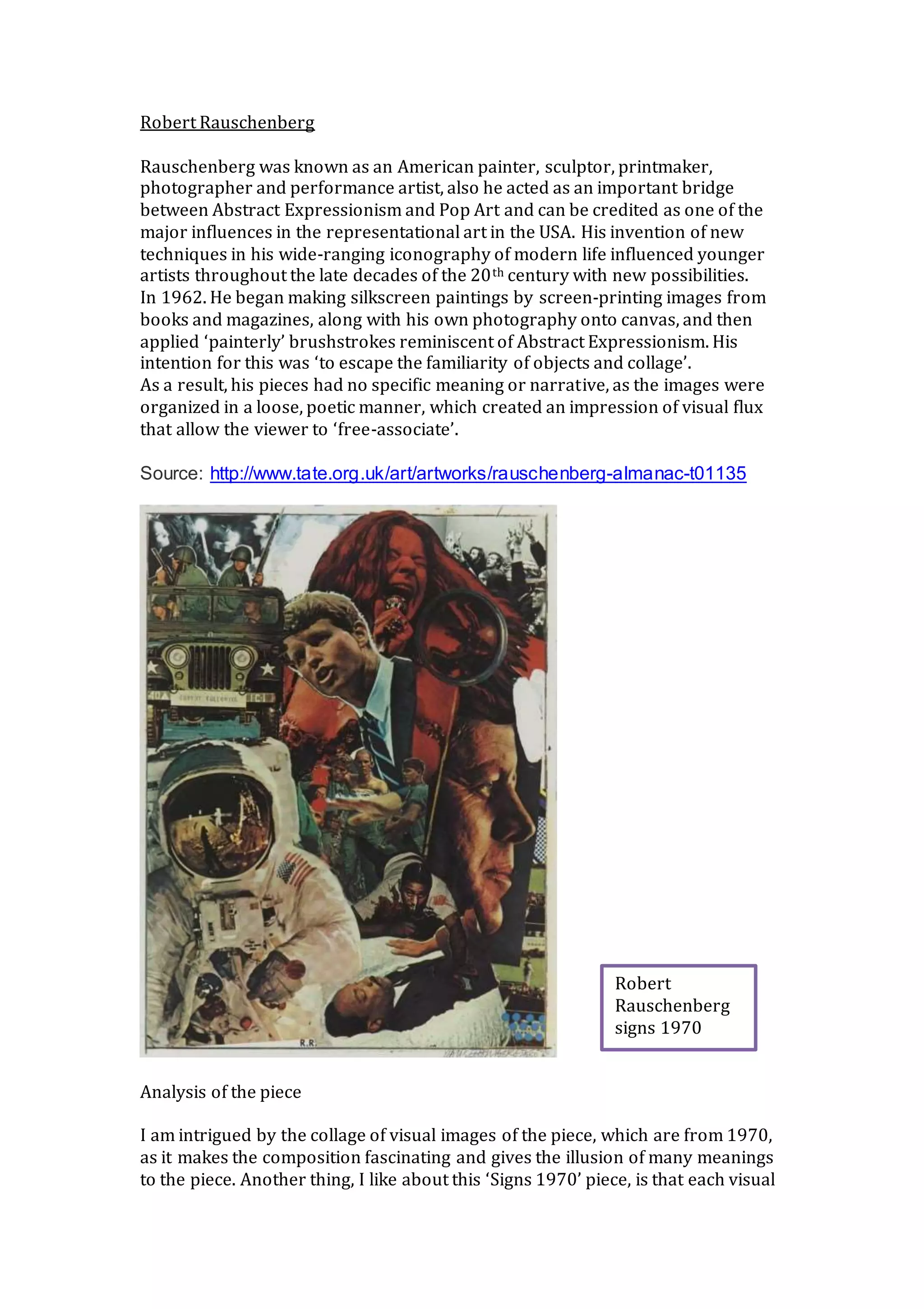
I am intrigued by the collage of visual images of the piece, which are from 1970,
as it makes the composition fascinating and gives the illusion of many meanings
to the piece. Another thing, I like about this ‘Signs 1970’ piece, is that each visual
Robert
Rauschenberg
signs 1970
picture tells a different story that has happened in the year of 1970. Such as the
astronaut representing the first man to walk on the moon and the army jeep
representing the Vietnam War. Furthermore the colours used within the piece
are eye-catching and powerful that gives the visual collage definition and
signification.
Analysis of the piece
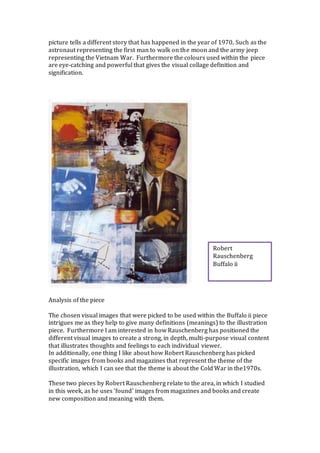
The chosen visual images that were picked to be used within the Buffalo ii piece
intrigues me as they help to give many definitions (meanings) to the illustration
piece. Furthermore I am interested in how Rauschenberg has positioned the
different visual images to create a strong, in depth, multi-purpose visual content
that illustrates thoughts and feelings to each individual viewer.
In additionally, one thing I like about how Robert Rauschenberg has picked
specific images from books and magazines that represent the theme of the
illustration, which I can see that the theme is about the Cold War in the1970s.
These two pieces by Robert Rauschenberg relate to the area, in which I studied
in this week, as he uses ‘found’ images from magazines and books and create
new composition and meaning with them.
Robert
Rauschenberg
Buffalo ii

Robert Rauschenberg

  • 1.
    Robert Rauschenberg Rauschenberg wasknown as an American painter, sculptor, printmaker, photographer and performance artist, also he acted as an important bridge between Abstract Expressionism and Pop Art and can be credited as one of the major influences in the representational art in the USA. His invention of new techniques in his wide-ranging iconography of modern life influenced younger artists throughout the late decades of the 20th century with new possibilities. In 1962. He began making silkscreen paintings by screen-printing images from books and magazines, along with his own photography onto canvas, and then applied ‘painterly’ brushstrokes reminiscent of Abstract Expressionism. His intention for this was ‘to escape the familiarity of objects and collage’. As a result, his pieces had no specific meaning or narrative, as the images were organized in a loose, poetic manner, which created an impression of visual flux that allow the viewer to ‘free-associate’. Source: http://www.tate.org.uk/art/artworks/rauschenberg-almanac-t01135 Analysis of the piece I am intrigued by the collage of visual images of the piece, which are from 1970, as it makes the composition fascinating and gives the illusion of many meanings to the piece. Another thing, I like about this ‘Signs 1970’ piece, is that each visual Robert Rauschenberg signs 1970
  • 2.
    picture tells adifferent story that has happened in the year of 1970. Such as the astronaut representing the first man to walk on the moon and the army jeep representing the Vietnam War. Furthermore the colours used within the piece are eye-catching and powerful that gives the visual collage definition and signification. Analysis of the piece The chosen visual images that were picked to be used within the Buffalo ii piece intrigues me as they help to give many definitions (meanings) to the illustration piece. Furthermore I am interested in how Rauschenberg has positioned the different visual images to create a strong, in depth, multi-purpose visual content that illustrates thoughts and feelings to each individual viewer. In additionally, one thing I like about how Robert Rauschenberg has picked specific images from books and magazines that represent the theme of the illustration, which I can see that the theme is about the Cold War in the1970s. These two pieces by Robert Rauschenberg relate to the area, in which I studied in this week, as he uses ‘found’ images from magazines and books and create new composition and meaning with them. Robert Rauschenberg Buffalo ii