Adventures in AdTech
(processing 50B user profiles in real time)
Lubos Kosco, Michal Senkyr
Senior Software Engineers at Sizmek
INTRODUCTION
Presenters Bio
Lubos is working as a software engineer in Sizmek taking care of 7 datacenters
full of bidding infrastructure to deliver real time bids and impressions for
marketing campaigns of Sizmeks clients. Previously he used to work in Oracle
and Sun Microsystems on products that managed datacenters and monitored
them. He is also one of the leaders of {OpenGrok the source code search
engine.
Michal is a Senior Software Engineer at Sizmek with background in both real-
time and batch distributed systems. Previously employed at Seznam.cz, a
local Czech alternative of Google. A strong proponent of Scala and an
occasional Apache Spark contributor.
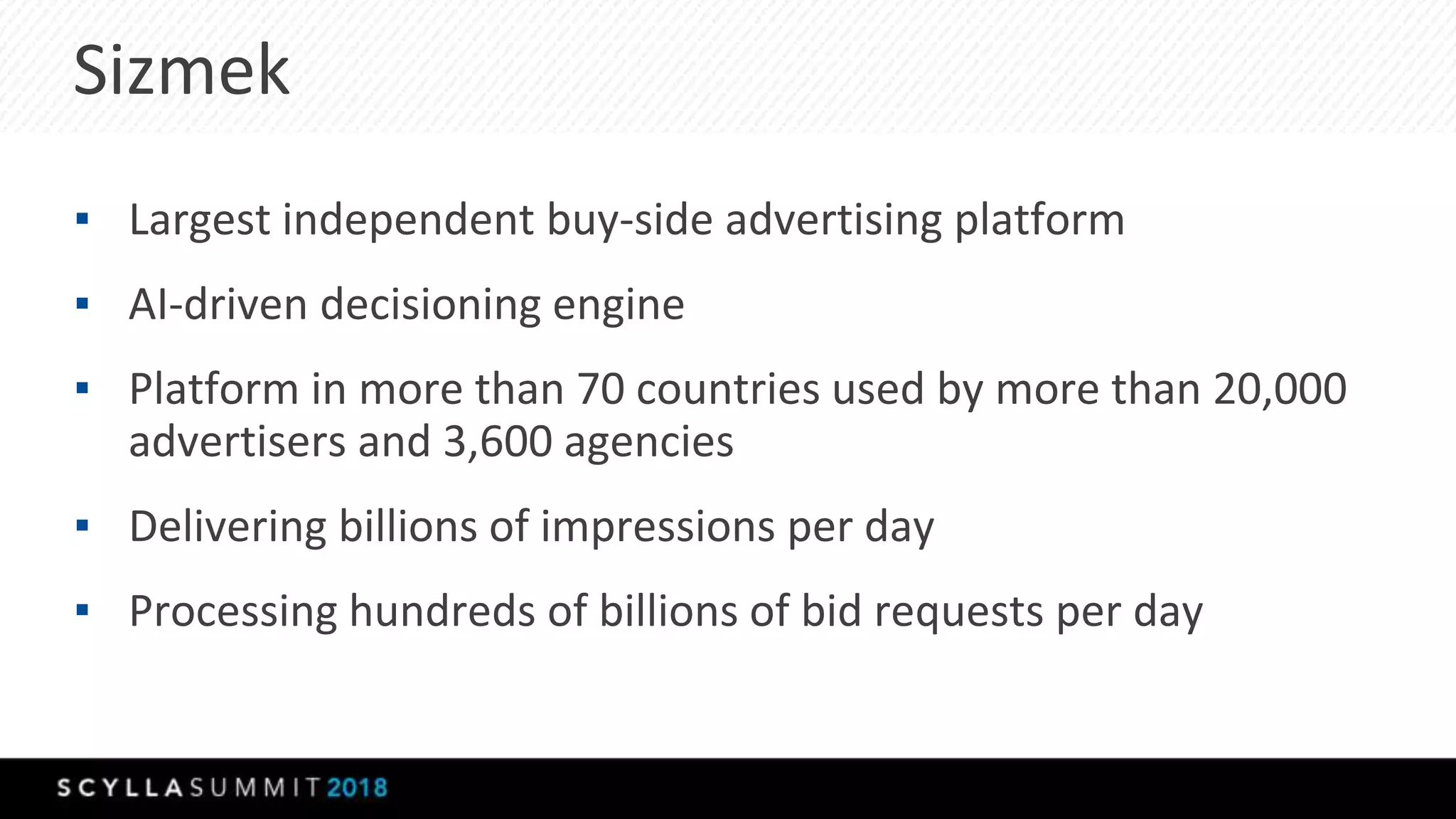
Sizmek
▪ Largest independent buy-side advertising platform
▪ AI-driven decisioning engine
▪ Platform in more than 70 countries used by more than 20,000
advertisers and 3,600 agencies
▪ Delivering billions of impressions per day
▪ Processing hundreds of billions of bid requests per day
Topics
▪ Use case
▪ Data model
▪ Server and driver configuration
▪ Short-lived caching
▪ Spark interoperability
▪ Optimizations
USE CASE
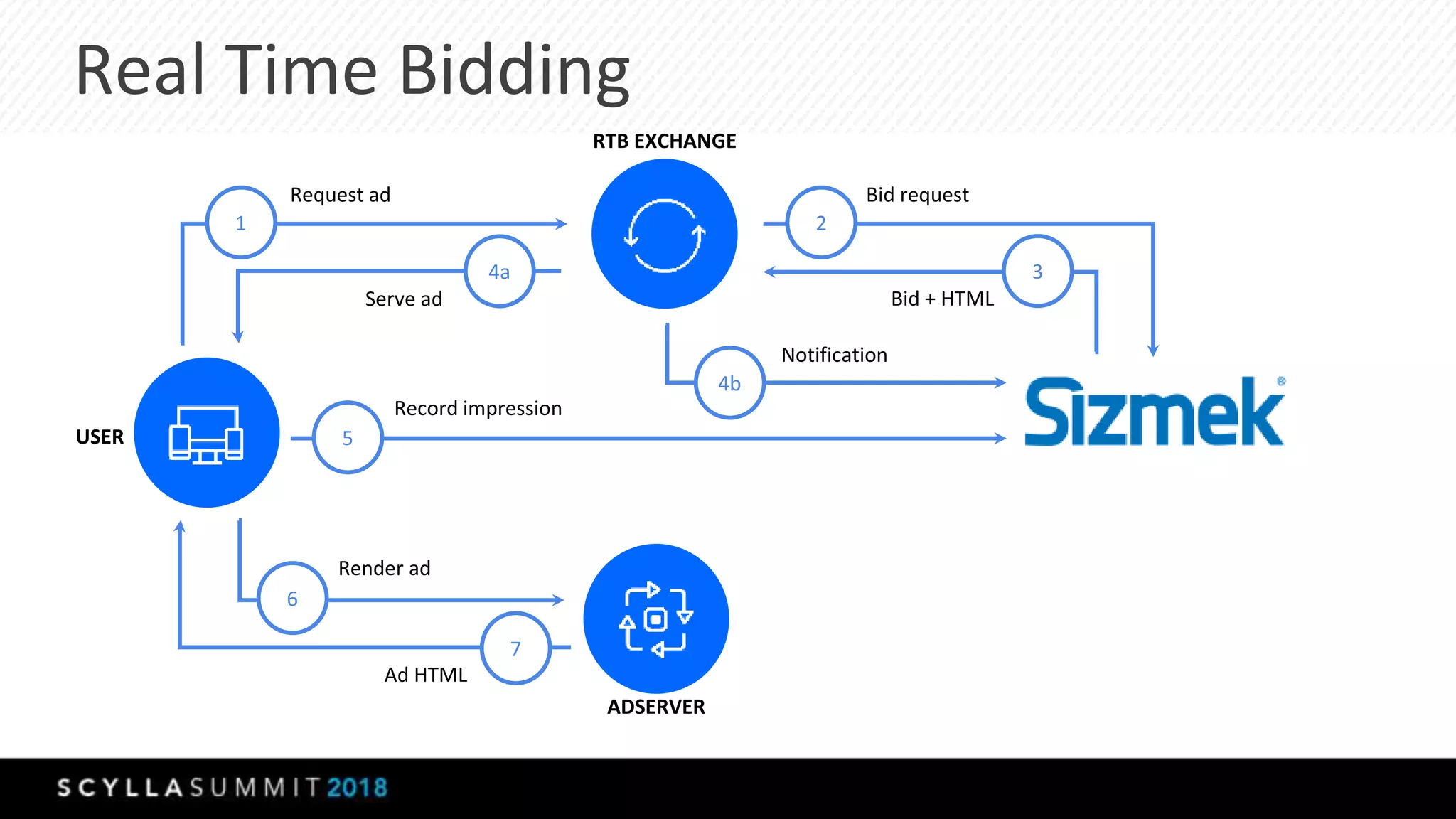
Real Time Bidding
Record impression
5
4b
Notification
Bid request
Bid + HTML
2
3
Request ad
Serve ad
1
4a
Render ad
Ad HTML
6
7
RTB EXCHANGE
USER
ADSERVER
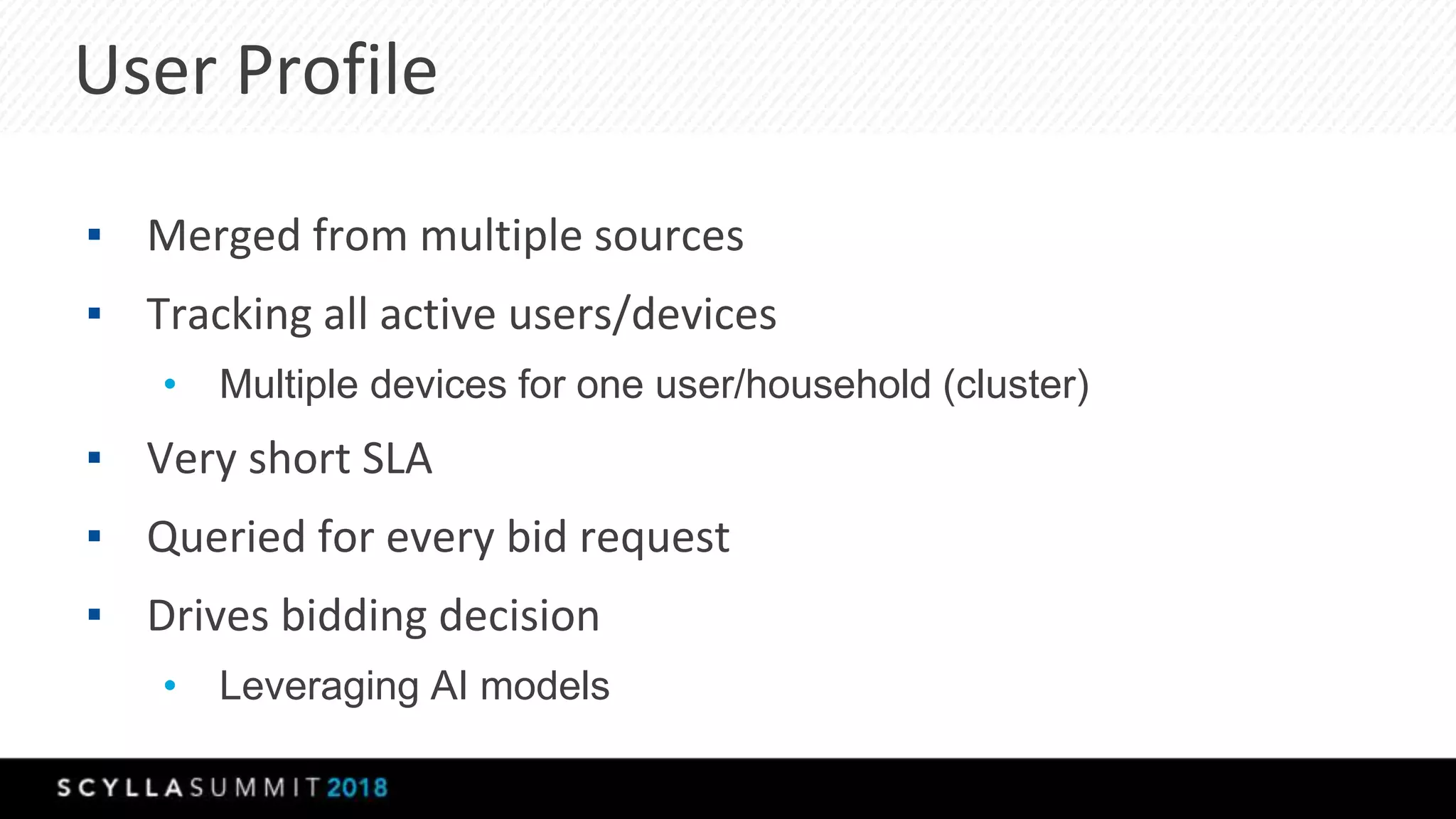
User Profile
▪ Merged from multiple sources
▪ Tracking all active users/devices
• Multiple devices for one user/household (cluster)
▪ Very short SLA
▪ Queried for every bid request
▪ Drives bidding decision
• Leveraging AI models
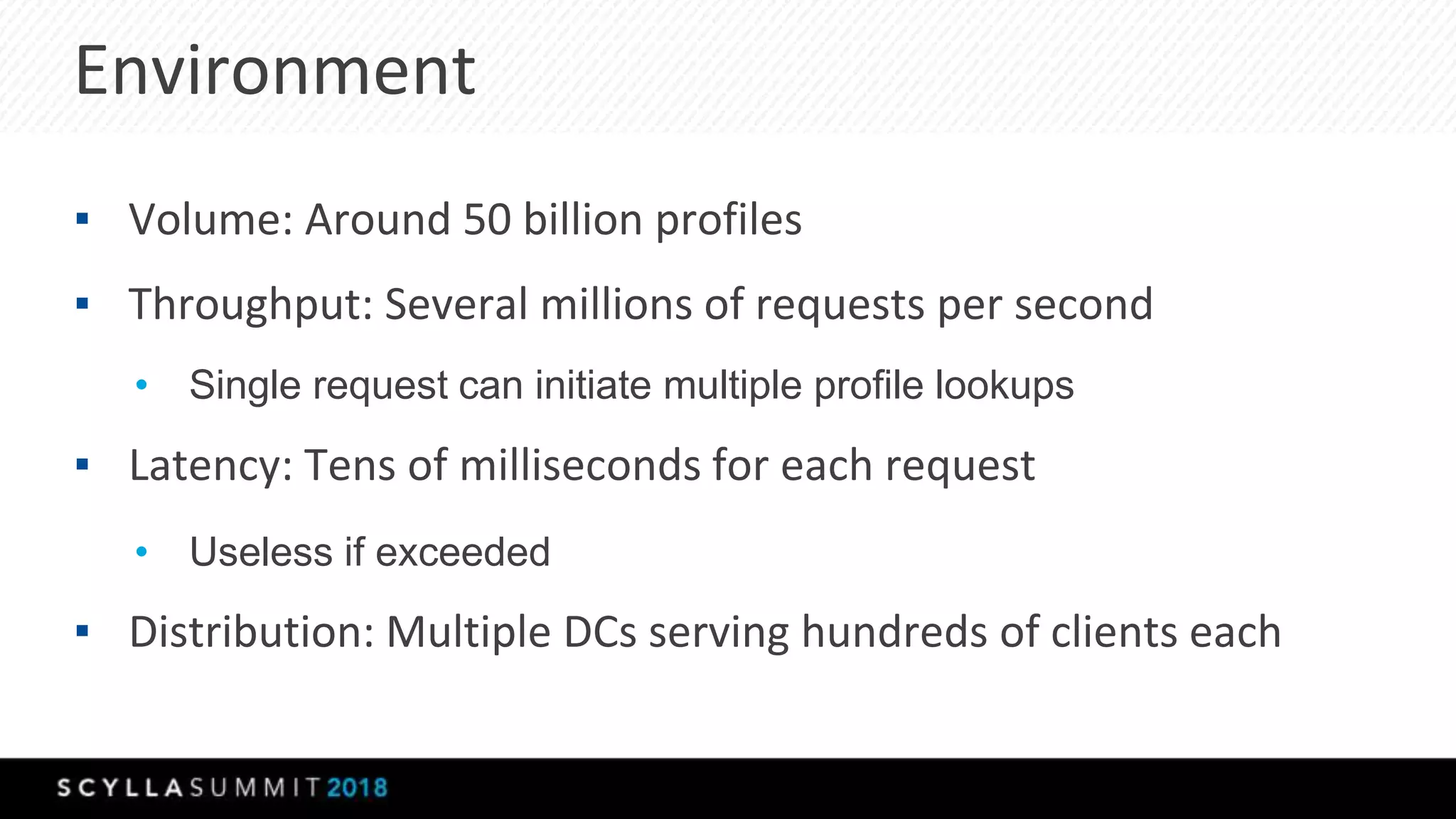
Environment
▪ Volume: Around 50 billion profiles
▪ Throughput: Several millions of requests per second
• Single request can initiate multiple profile lookups
▪ Latency: Tens of milliseconds for each request
• Useless if exceeded
▪ Distribution: Multiple DCs serving hundreds of clients each
DATA MODEL
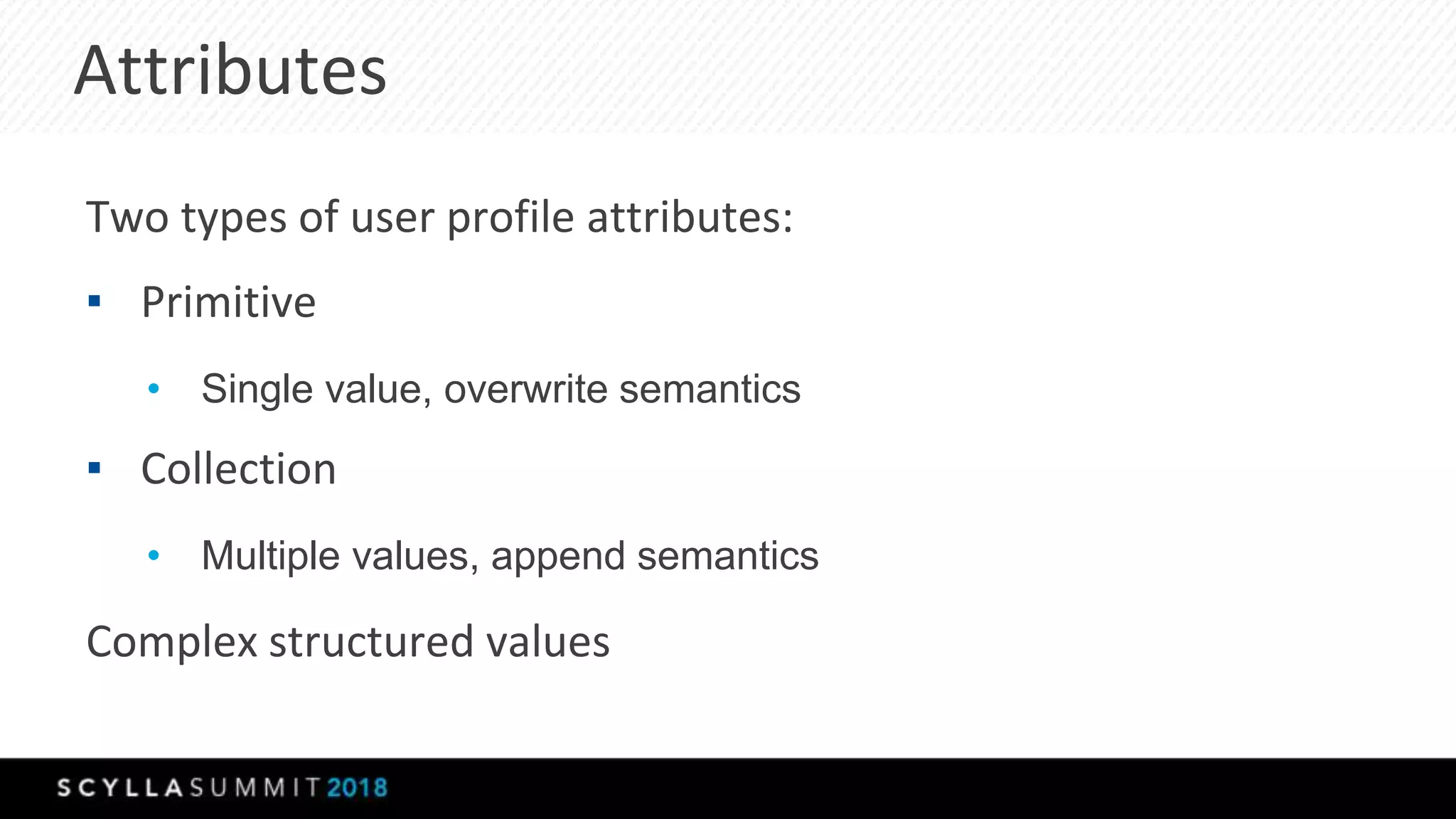
Attributes
Two types of user profile attributes:
▪ Primitive
• Single value, overwrite semantics
▪ Collection
• Multiple values, append semantics
Complex structured values
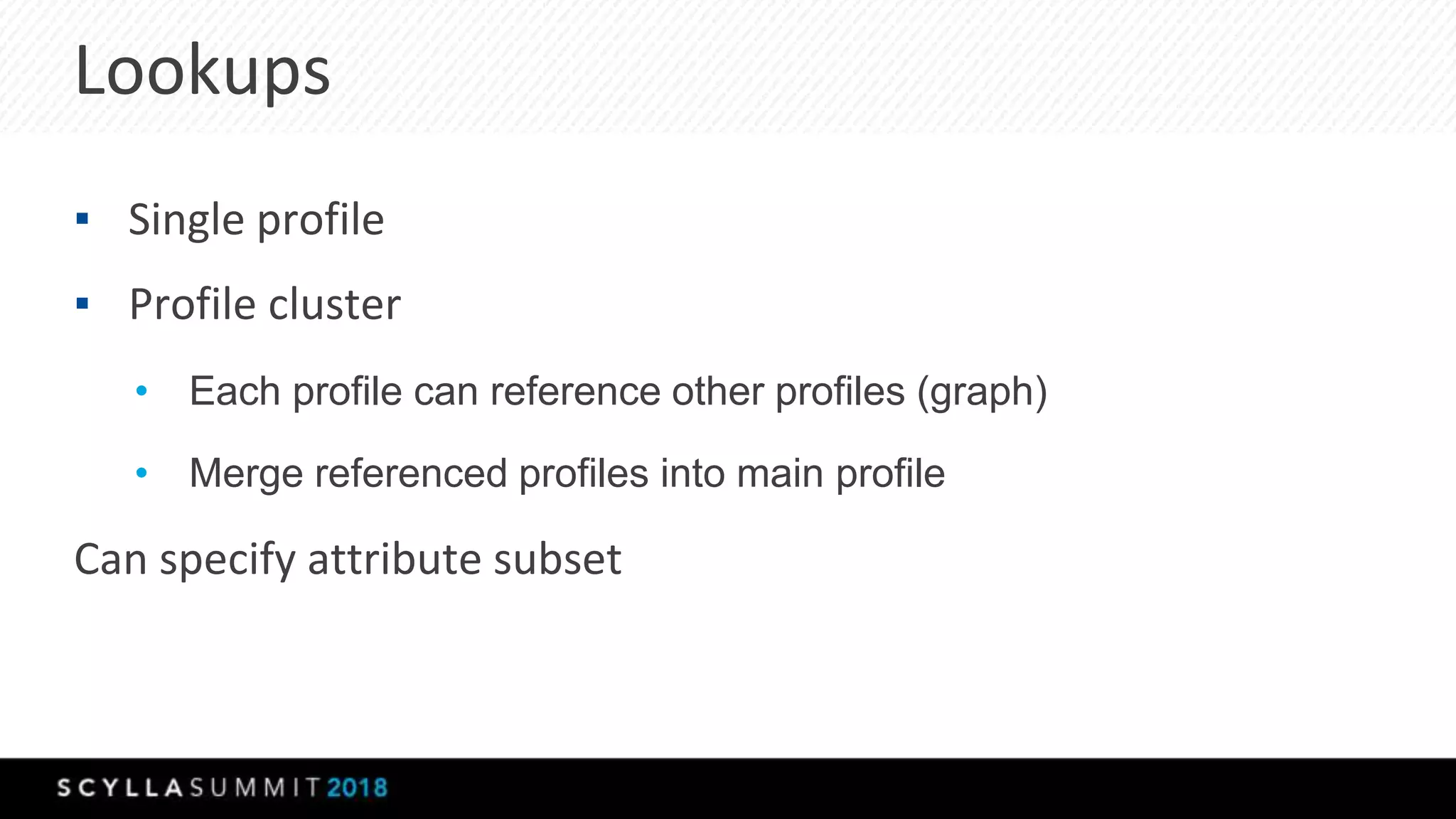
Lookups
▪ Single profile
▪ Profile cluster
• Each profile can reference other profiles (graph)
• Merge referenced profiles into main profile
Can specify attribute subset
Mutations
▪ Profile merging
• Primitive overwrite & collection append
▪ Attribute deletion
• Remove whole attribute
▪ Value deletion
• Remove single collection element
Housekeeping
▪ TTL enforcement
• Each attribute can have a different TTL
▪ Collection attribute pruning
• Keep only N newest values
• Custom processing (deduplication)
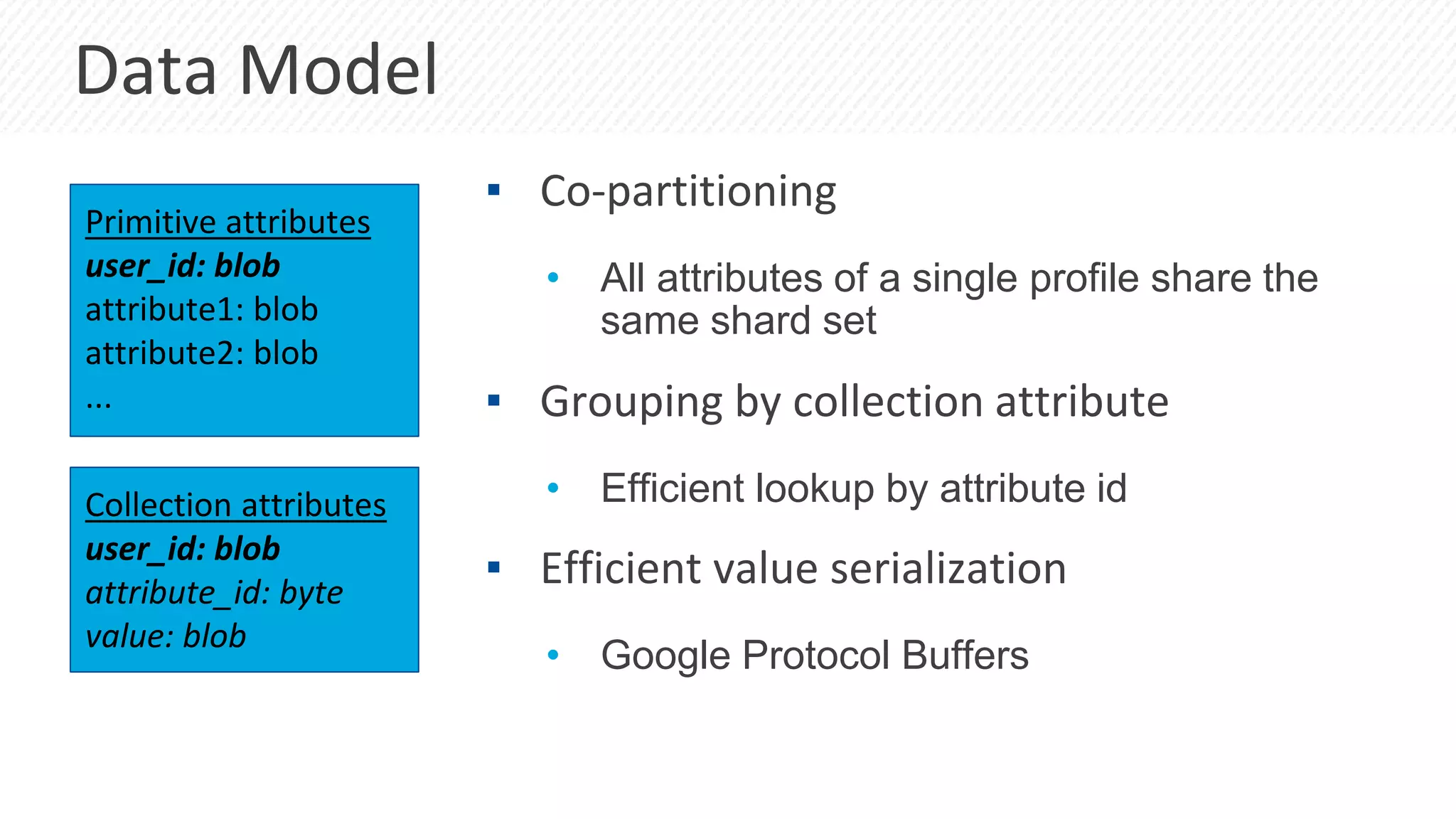
Data Model
Primitive attributes
user_id: blob
attribute1: blob
attribute2: blob
...
Collection attributes
user_id: blob
attribute_id: byte
value: blob
▪ Co-partitioning
• All attributes of a single profile share the
same shard set
▪ Grouping by collection attribute
• Efficient lookup by attribute id
▪ Efficient value serialization
• Google Protocol Buffers
SERVER & DRIVER
CONFIGURATION
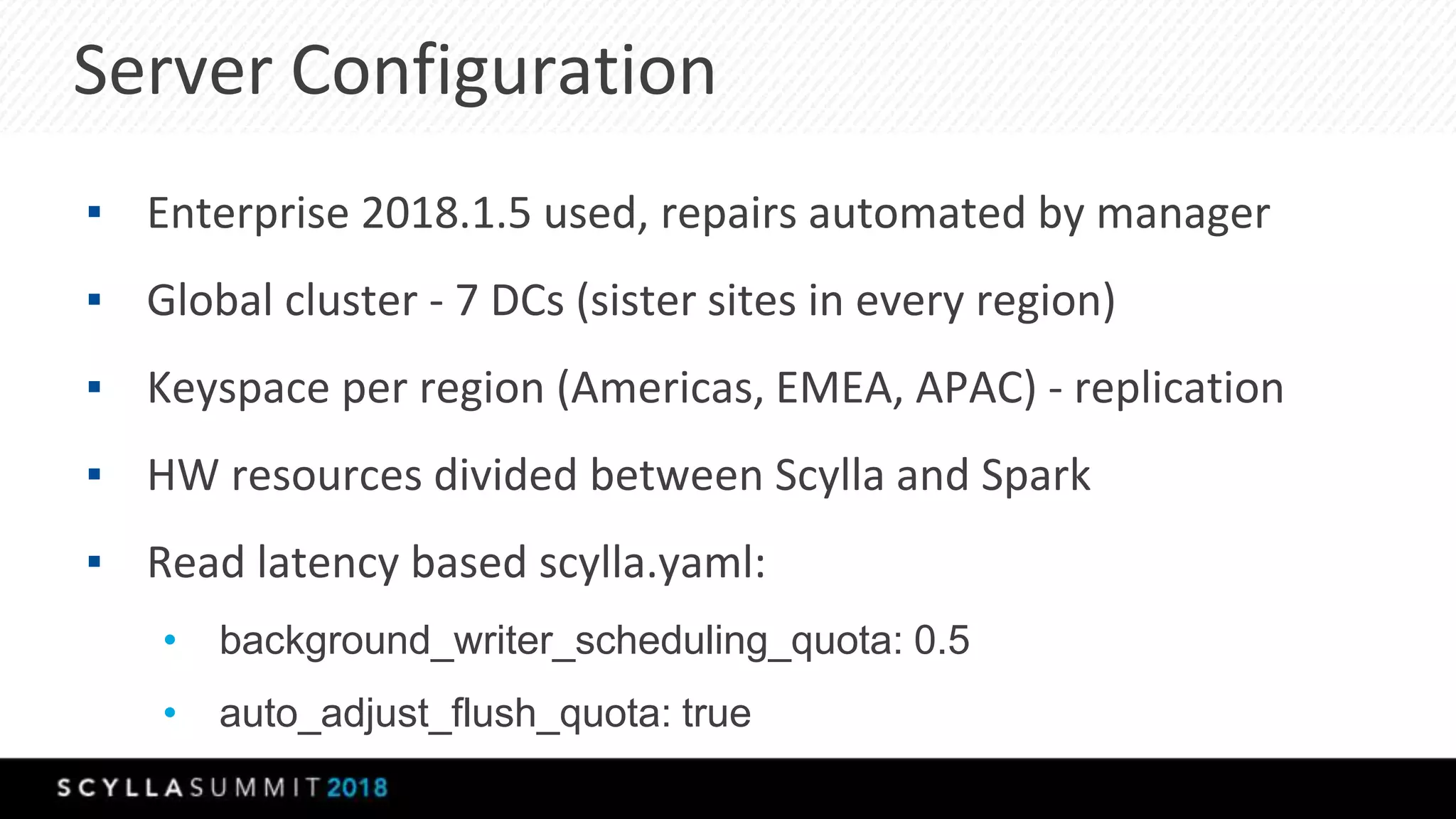
Server Configuration
▪ Enterprise 2018.1.5 used, repairs automated by manager
▪ Global cluster - 7 DCs (sister sites in every region)
▪ Keyspace per region (Americas, EMEA, APAC) - replication
▪ HW resources divided between Scylla and Spark
▪ Read latency based scylla.yaml:
• background_writer_scheduling_quota: 0.5
• auto_adjust_flush_quota: true
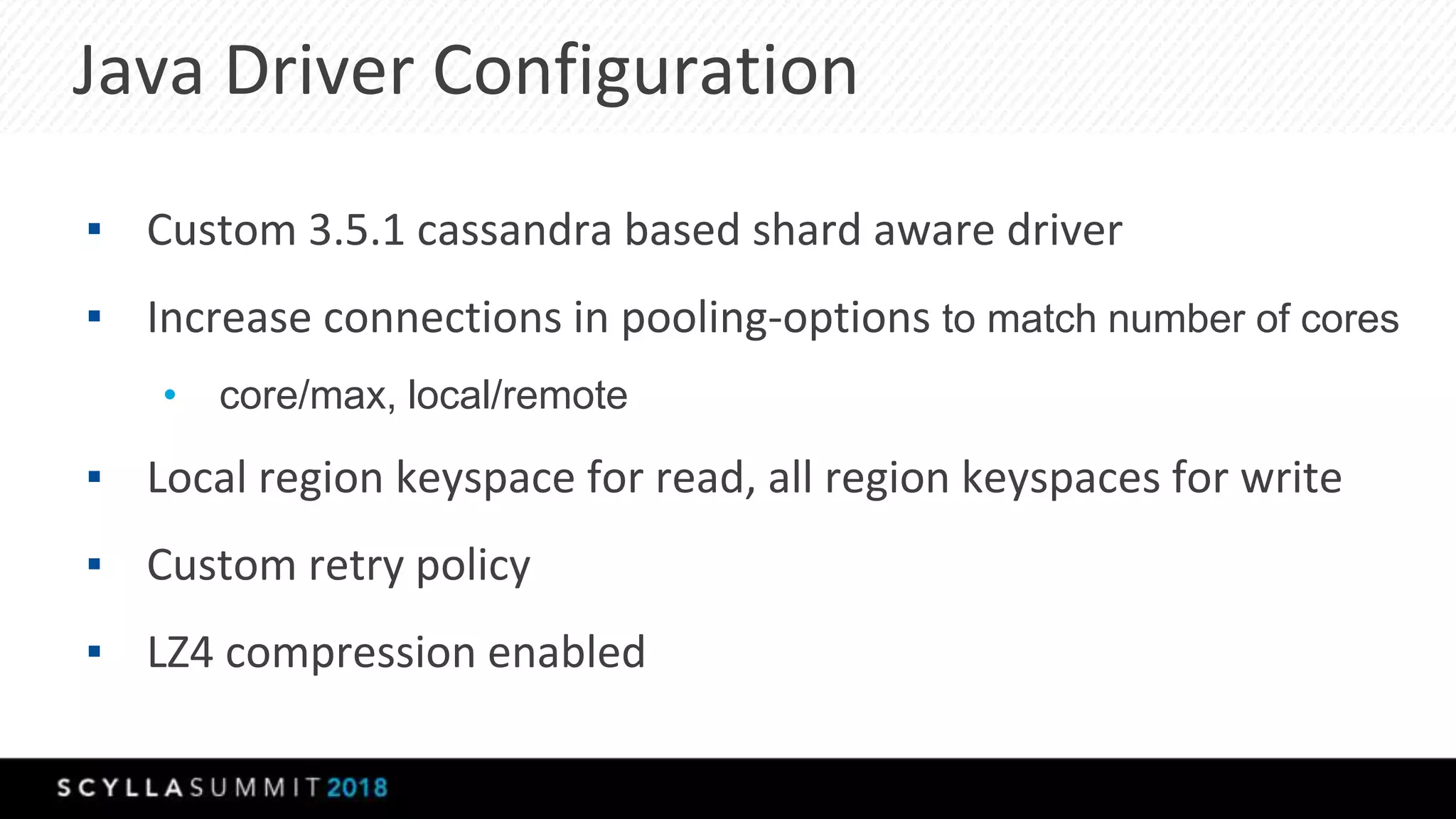
Java Driver Configuration
▪ Custom 3.5.1 cassandra based shard aware driver
▪ Increase connections in pooling-options to match number of cores
• core/max, local/remote
▪ Local region keyspace for read, all region keyspaces for write
▪ Custom retry policy
▪ LZ4 compression enabled
SHORT-LIVED CACHING
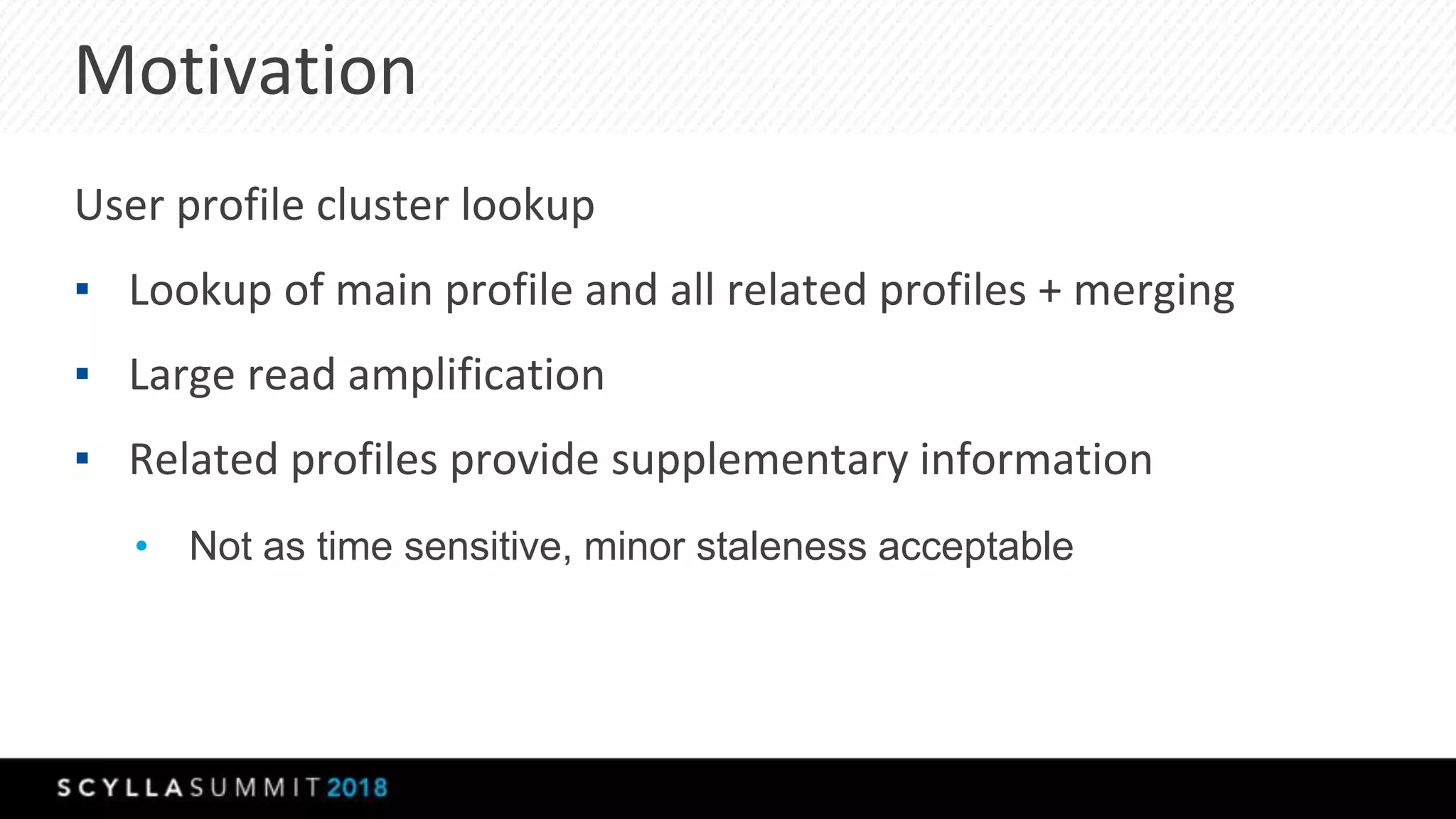
Motivation
User profile cluster lookup
▪ Lookup of main profile and all related profiles + merging
▪ Large read amplification
▪ Related profiles provide supplementary information
• Not as time sensitive, minor staleness acceptable
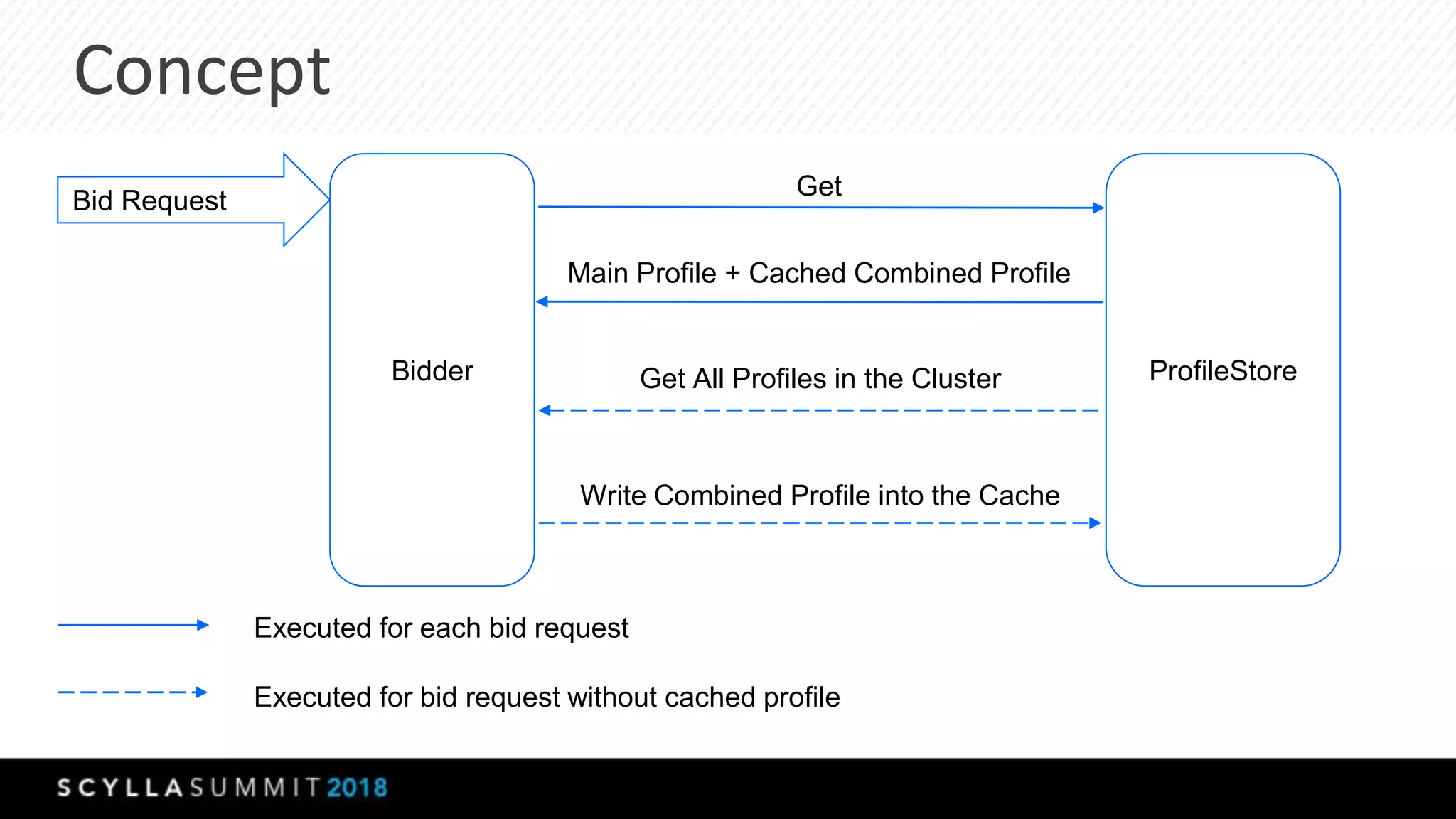
Concept
Bidder
Bid Request
ProfileStore
Get
Main Profile + Cached Combined Profile
Get All Profiles in the Cluster
Write Combined Profile into the Cache
Executed for each bid request
Executed for bid request without cached profile
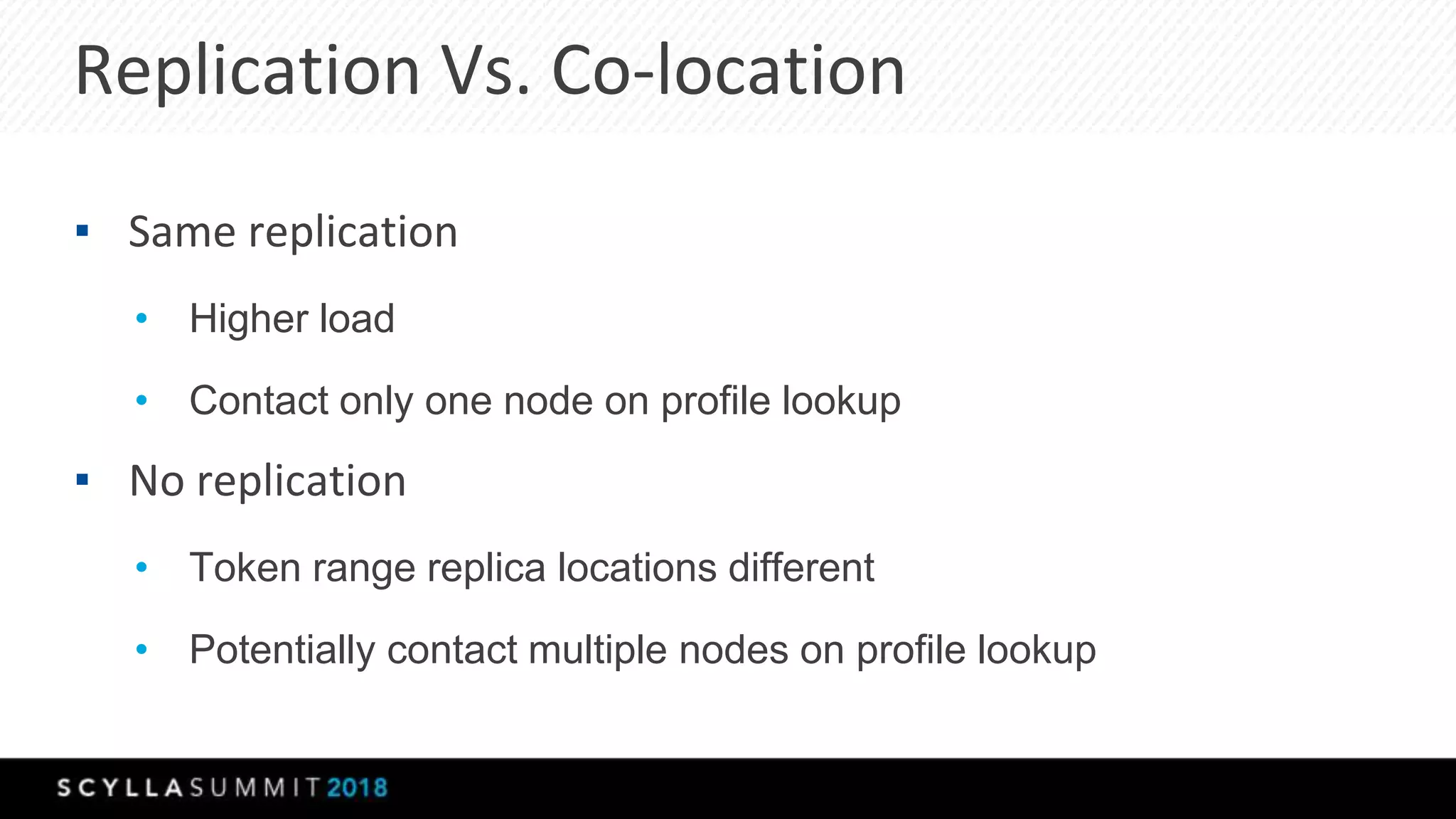
Replication Vs. Co-location
▪ Same replication
• Higher load
• Contact only one node on profile lookup
▪ No replication
• Token range replica locations different
• Potentially contact multiple nodes on profile lookup
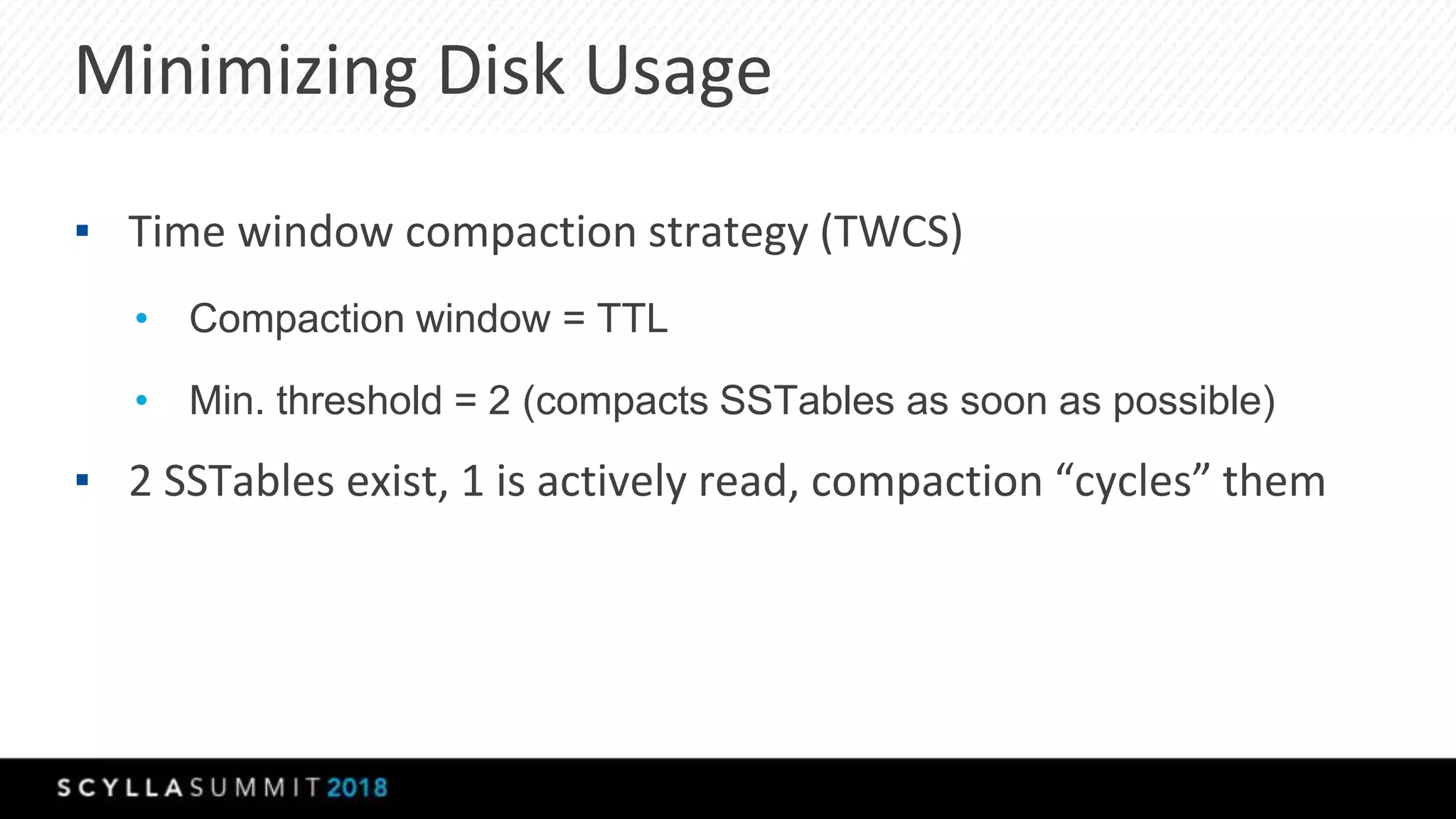
Minimizing Disk Usage
▪ Time window compaction strategy (TWCS)
• Compaction window = TTL
• Min. threshold = 2 (compacts SSTables as soon as possible)
▪ 2 SSTables exist, 1 is actively read, compaction “cycles” them
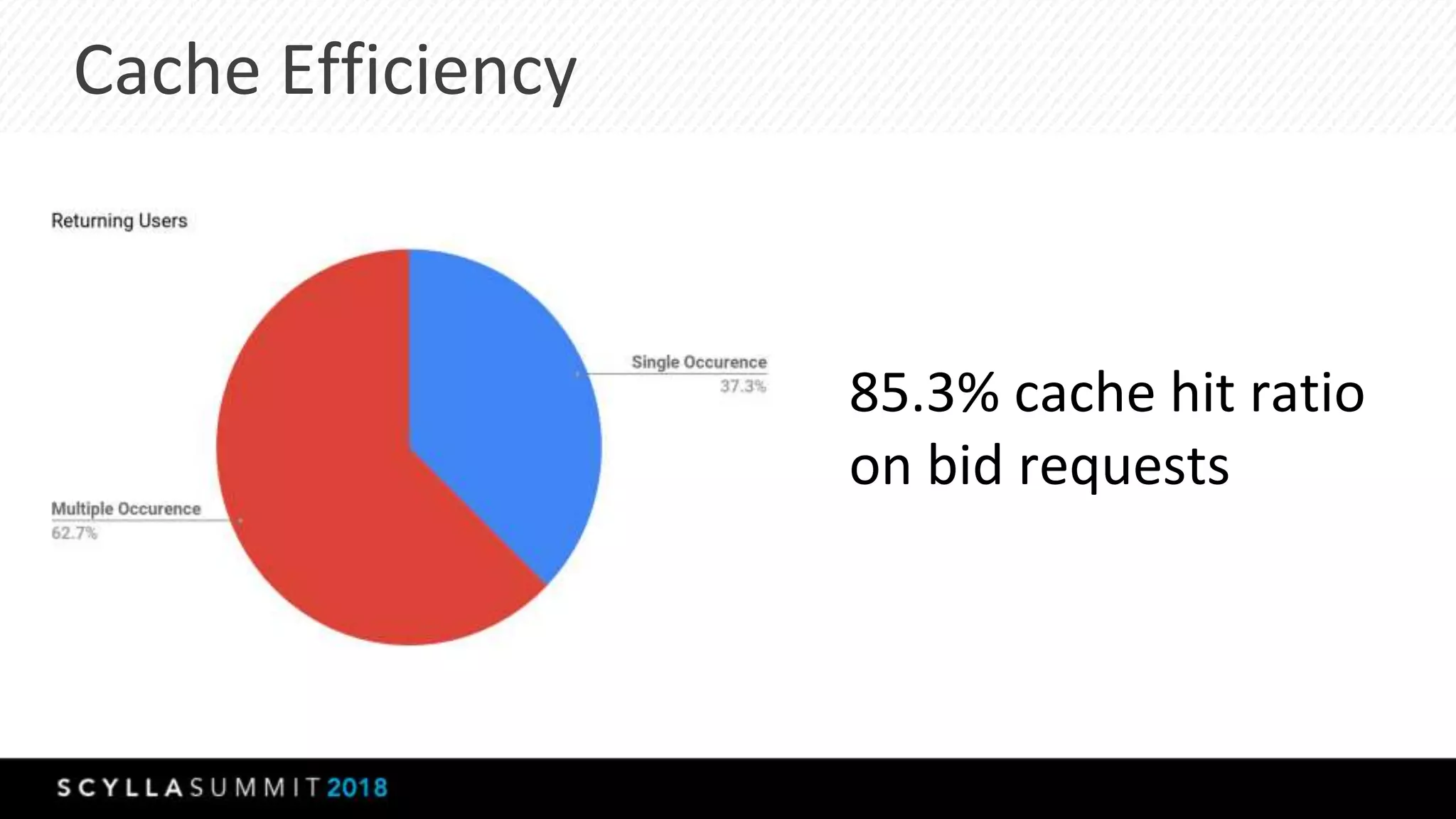
Cache Efficiency
85.3% cache hit ratio
on bid requests
SPARK INTEROPERABILITY
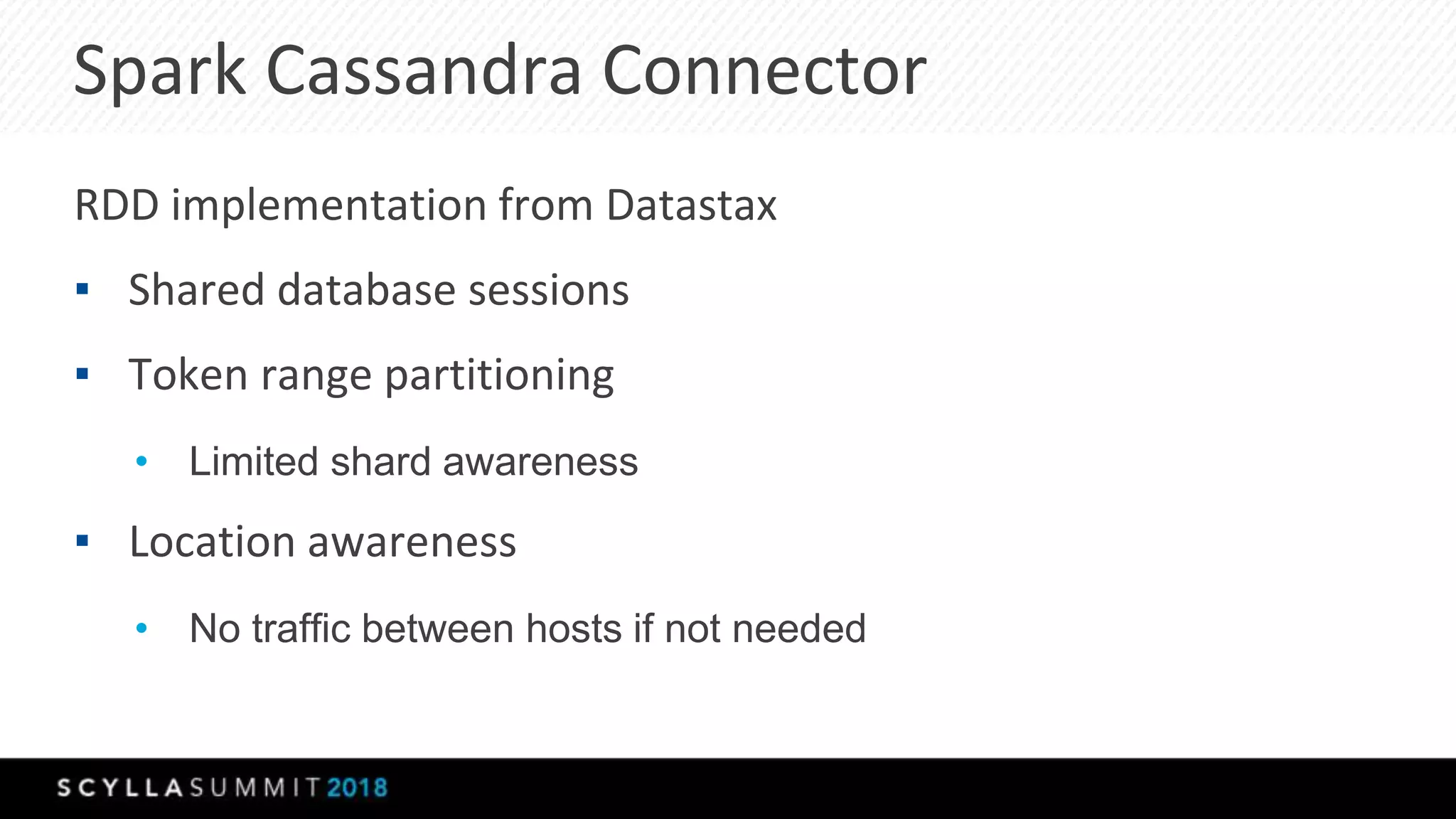
Spark Cassandra Connector
RDD implementation from Datastax
▪ Shared database sessions
▪ Token range partitioning
• Limited shard awareness
▪ Location awareness
• No traffic between hosts if not needed
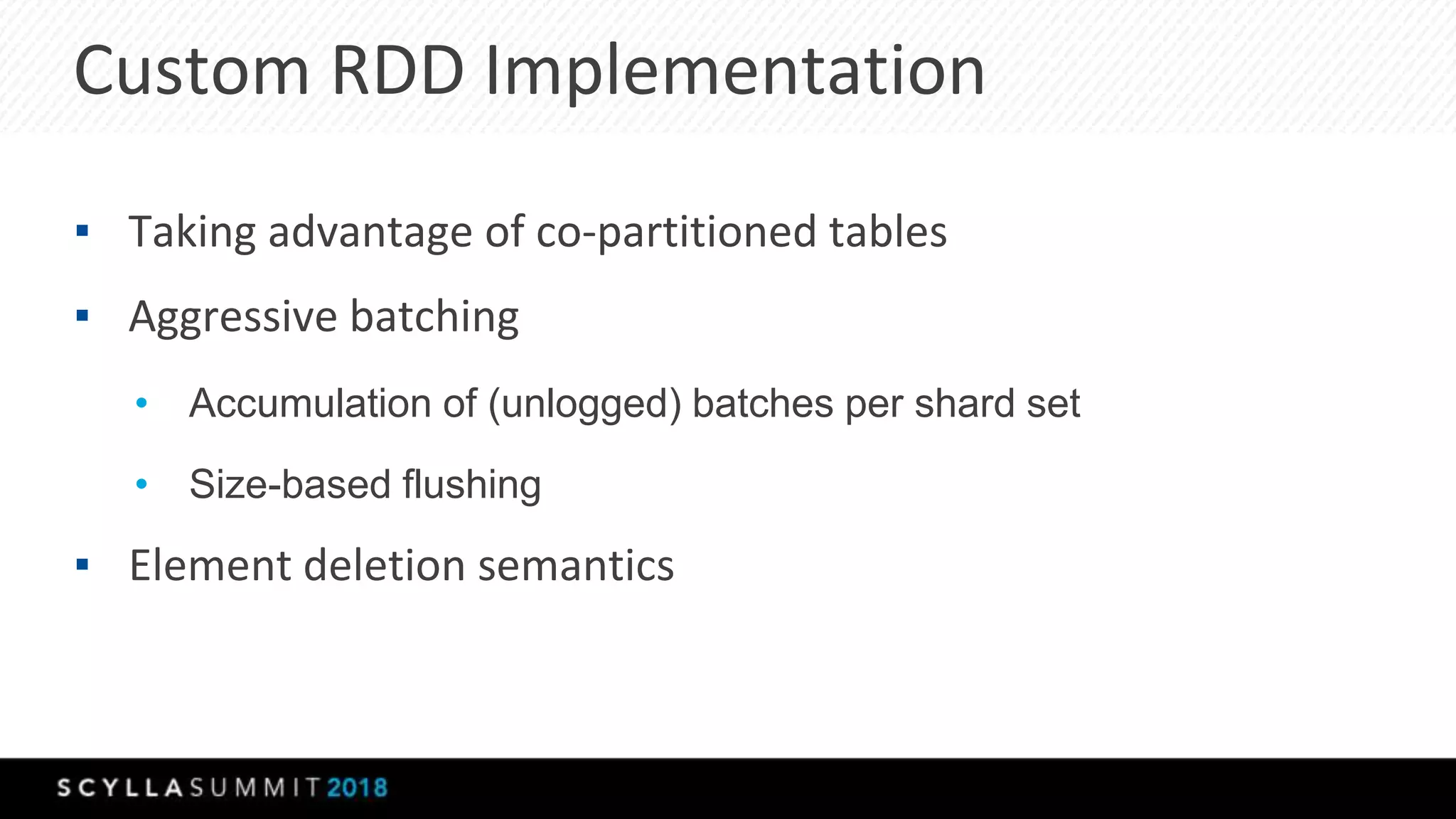
Custom RDD Implementation
▪ Taking advantage of co-partitioned tables
▪ Aggressive batching
• Accumulation of (unlogged) batches per shard set
• Size-based flushing
▪ Element deletion semantics
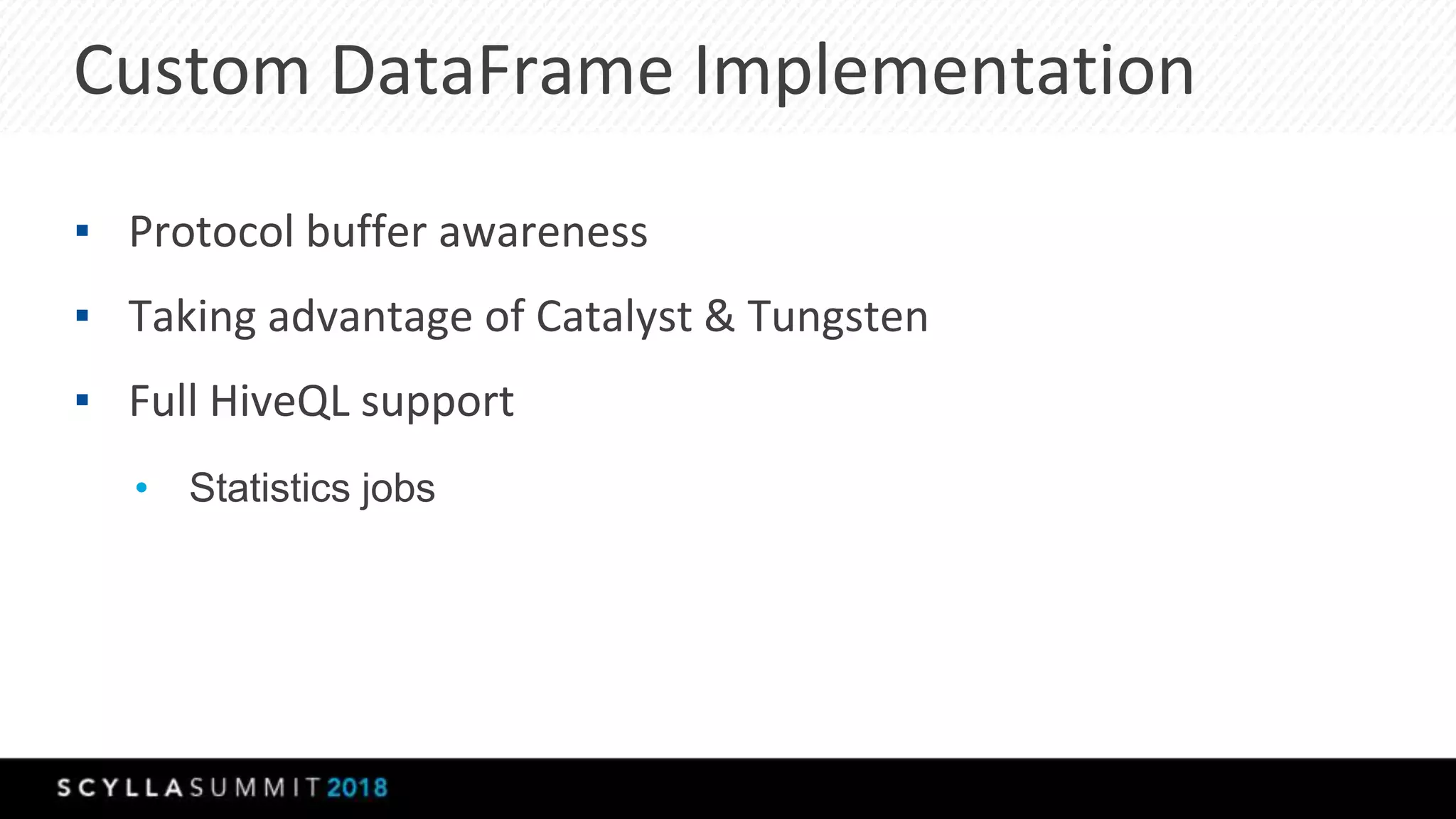
Custom DataFrame Implementation
▪ Protocol buffer awareness
▪ Taking advantage of Catalyst & Tungsten
▪ Full HiveQL support
• Statistics jobs
OPTIMIZATIONS
Java Driver Optimization
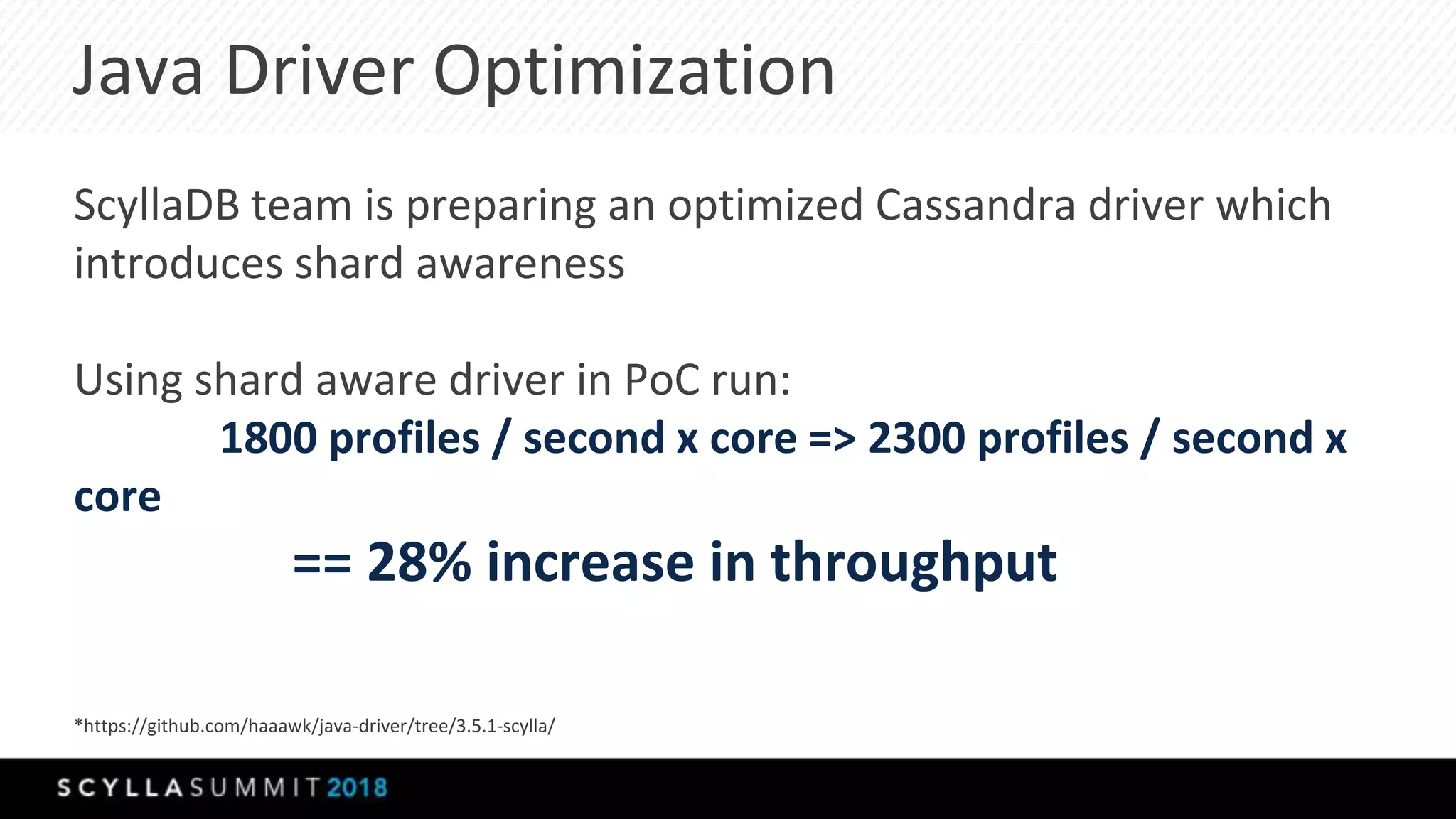
ScyllaDB team is preparing an optimized Cassandra driver which
introduces shard awareness
Using shard aware driver in PoC run:
1800 profiles / second x core => 2300 profiles / second x
core
== 28% increase in throughput
*https://github.com/haaawk/java-driver/tree/3.5.1-scylla/
Conclusion
Comparison
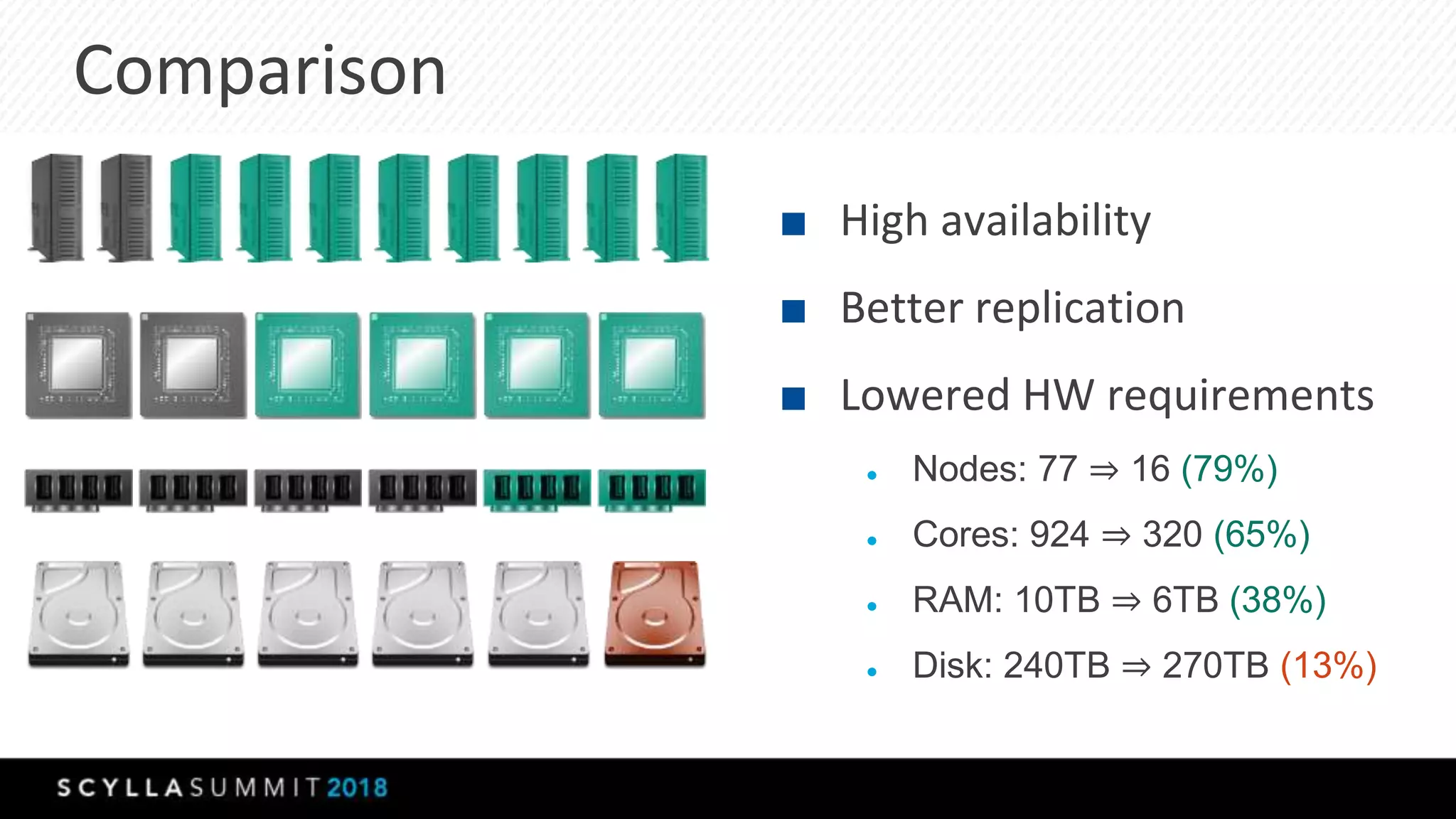
■ High availability
■ Better replication
■ Lowered HW requirements
● Nodes: 77 ⇒ 16 (79%)
● Cores: 924 ⇒ 320 (65%)
● RAM: 10TB ⇒ 6TB (38%)
● Disk: 240TB ⇒ 270TB (13%)
Thank You
Any Questions ?
Please stay in touch
Lubos.Kosco@Sizmek.com, Michal.Senkyr@Sizmek.com
@LubosKosco, @MichalSenkyr

Scylla Summit 2018: Adventures in AdTech: Processing 50 Billion User Profiles in Real Time with Scylla

  • 1.
    Adventures in AdTech (processing50B user profiles in real time) Lubos Kosco, Michal Senkyr Senior Software Engineers at Sizmek
  • 2.
  • 3.
    Presenters Bio Lubos isworking as a software engineer in Sizmek taking care of 7 datacenters full of bidding infrastructure to deliver real time bids and impressions for marketing campaigns of Sizmeks clients. Previously he used to work in Oracle and Sun Microsystems on products that managed datacenters and monitored them. He is also one of the leaders of {OpenGrok the source code search engine. Michal is a Senior Software Engineer at Sizmek with background in both real- time and batch distributed systems. Previously employed at Seznam.cz, a local Czech alternative of Google. A strong proponent of Scala and an occasional Apache Spark contributor.
  • 4.
    Sizmek ▪ Largest independentbuy-side advertising platform ▪ AI-driven decisioning engine ▪ Platform in more than 70 countries used by more than 20,000 advertisers and 3,600 agencies ▪ Delivering billions of impressions per day ▪ Processing hundreds of billions of bid requests per day
  • 5.
    Topics ▪ Use case ▪Data model ▪ Server and driver configuration ▪ Short-lived caching ▪ Spark interoperability ▪ Optimizations
  • 6.
  • 7.
    Real Time Bidding Recordimpression 5 4b Notification Bid request Bid + HTML 2 3 Request ad Serve ad 1 4a Render ad Ad HTML 6 7 RTB EXCHANGE USER ADSERVER
  • 8.
    User Profile ▪ Mergedfrom multiple sources ▪ Tracking all active users/devices • Multiple devices for one user/household (cluster) ▪ Very short SLA ▪ Queried for every bid request ▪ Drives bidding decision • Leveraging AI models
  • 9.
    Environment ▪ Volume: Around50 billion profiles ▪ Throughput: Several millions of requests per second • Single request can initiate multiple profile lookups ▪ Latency: Tens of milliseconds for each request • Useless if exceeded ▪ Distribution: Multiple DCs serving hundreds of clients each
  • 10.
  • 11.
    Attributes Two types ofuser profile attributes: ▪ Primitive • Single value, overwrite semantics ▪ Collection • Multiple values, append semantics Complex structured values
  • 12.
    Lookups ▪ Single profile ▪Profile cluster • Each profile can reference other profiles (graph) • Merge referenced profiles into main profile Can specify attribute subset
  • 13.
    Mutations ▪ Profile merging •Primitive overwrite & collection append ▪ Attribute deletion • Remove whole attribute ▪ Value deletion • Remove single collection element
  • 14.
    Housekeeping ▪ TTL enforcement •Each attribute can have a different TTL ▪ Collection attribute pruning • Keep only N newest values • Custom processing (deduplication)
  • 15.
    Data Model Primitive attributes user_id:blob attribute1: blob attribute2: blob ... Collection attributes user_id: blob attribute_id: byte value: blob ▪ Co-partitioning • All attributes of a single profile share the same shard set ▪ Grouping by collection attribute • Efficient lookup by attribute id ▪ Efficient value serialization • Google Protocol Buffers
  • 16.
  • 17.
    Server Configuration ▪ Enterprise2018.1.5 used, repairs automated by manager ▪ Global cluster - 7 DCs (sister sites in every region) ▪ Keyspace per region (Americas, EMEA, APAC) - replication ▪ HW resources divided between Scylla and Spark ▪ Read latency based scylla.yaml: • background_writer_scheduling_quota: 0.5 • auto_adjust_flush_quota: true
  • 18.
    Java Driver Configuration ▪Custom 3.5.1 cassandra based shard aware driver ▪ Increase connections in pooling-options to match number of cores • core/max, local/remote ▪ Local region keyspace for read, all region keyspaces for write ▪ Custom retry policy ▪ LZ4 compression enabled
  • 19.
  • 20.
    Motivation User profile clusterlookup ▪ Lookup of main profile and all related profiles + merging ▪ Large read amplification ▪ Related profiles provide supplementary information • Not as time sensitive, minor staleness acceptable
  • 21.
    Concept Bidder Bid Request ProfileStore Get Main Profile+ Cached Combined Profile Get All Profiles in the Cluster Write Combined Profile into the Cache Executed for each bid request Executed for bid request without cached profile
  • 22.
    Replication Vs. Co-location ▪Same replication • Higher load • Contact only one node on profile lookup ▪ No replication • Token range replica locations different • Potentially contact multiple nodes on profile lookup
  • 23.
    Minimizing Disk Usage ▪Time window compaction strategy (TWCS) • Compaction window = TTL • Min. threshold = 2 (compacts SSTables as soon as possible) ▪ 2 SSTables exist, 1 is actively read, compaction “cycles” them
  • 24.
    Cache Efficiency 85.3% cachehit ratio on bid requests
  • 25.
  • 26.
    Spark Cassandra Connector RDDimplementation from Datastax ▪ Shared database sessions ▪ Token range partitioning • Limited shard awareness ▪ Location awareness • No traffic between hosts if not needed
  • 27.
    Custom RDD Implementation ▪Taking advantage of co-partitioned tables ▪ Aggressive batching • Accumulation of (unlogged) batches per shard set • Size-based flushing ▪ Element deletion semantics
  • 28.
    Custom DataFrame Implementation ▪Protocol buffer awareness ▪ Taking advantage of Catalyst & Tungsten ▪ Full HiveQL support • Statistics jobs
  • 29.
  • 30.
    Java Driver Optimization ScyllaDBteam is preparing an optimized Cassandra driver which introduces shard awareness Using shard aware driver in PoC run: 1800 profiles / second x core => 2300 profiles / second x core == 28% increase in throughput *https://github.com/haaawk/java-driver/tree/3.5.1-scylla/
  • 31.
  • 32.
    Comparison ■ High availability ■Better replication ■ Lowered HW requirements ● Nodes: 77 ⇒ 16 (79%) ● Cores: 924 ⇒ 320 (65%) ● RAM: 10TB ⇒ 6TB (38%) ● Disk: 240TB ⇒ 270TB (13%)
  • 33.
    Thank You Any Questions? Please stay in touch Lubos.Kosco@Sizmek.com, Michal.Senkyr@Sizmek.com @LubosKosco, @MichalSenkyr