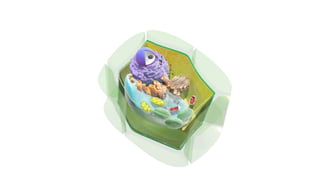
Cell, basic structure
of all living creatures
Presented By,
Sanket Kale (13)
Kunal Lokhande (17)
Mohsin Mansuri (20)
Om Tambe (32)
School Of Chemical Engineering
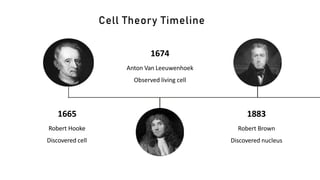
1665
Cell Theory Timeline
Robert Hooke
Discovered cell
1674
Anton Van Leeuwenhoek
Observed living cell
1883
Robert Brown
Discovered nucleus
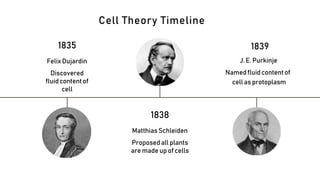
1835
FelixDujardin
Discovered
fluidcontentof
cell
1838
MatthiasSchleiden
Proposed all plants
are made up of cells
1839
J. E. Purkinje
Namedfluidcontentof
cell as protoplasm
Cell Theory Timeline
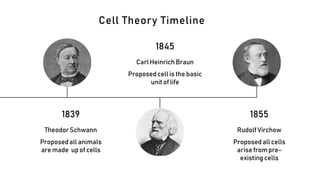
1839
TheodorSchwann
Proposed all animals
are made up of cells
1845
CarlHeinrichBraun
Proposedcell is the basic
unit of life
1855
RudolfVirchow
Proposed all cells
arisefrompre-
existing cells
Cell Theory Timeline
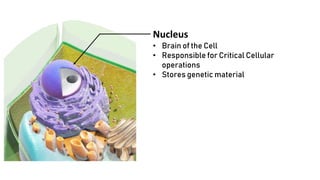
Nucleus
• Brain of the Cell
• Responsible for Critical Cellular
operations
• Stores genetic material
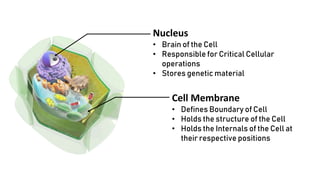
Nucleus
• Brain of the Cell
• Responsible for Critical Cellular
operations
• Stores genetic material
Cell Membrane
• Defines Boundary of Cell
• Holds the structure of the Cell
• Holds the Internals of the Cell at
their respective positions
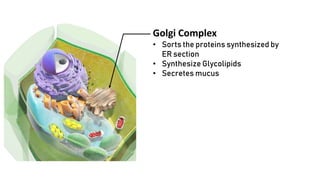
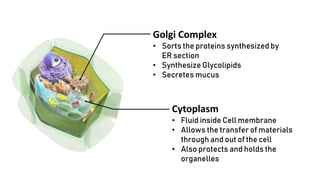
Golgi Complex
• Sorts the proteins synthesized by
ER section
• Synthesize Glycolipids
• Secretes mucus
Cytoplasm
• Fluid inside Cell membrane
• Allows the transfer of materials
through and out of the cell
• Also protects and holds the
organelles
Golgi Complex
• Sorts the proteins synthesized by
ER section
• Synthesize Glycolipids
• Secretes mucus
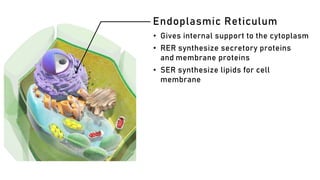
Endoplasmic Reticulum
• Gives internal support to the cytoplasm
• RER synthesize secretory proteins
and membrane proteins
• SER synthesize lipids for cell
membrane
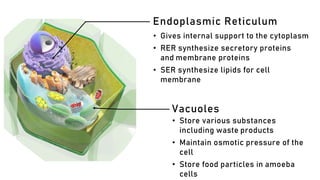
Vacuoles
• Store various substances
including waste products
• Maintain osmotic pressure of the
cell
• Store food particles in amoeba
cells
Endoplasmic Reticulum
• Gives internal support to the cytoplasm
• RER synthesize secretory proteins
and membrane proteins
• SER synthesize lipids for cell
membrane
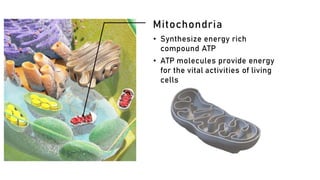
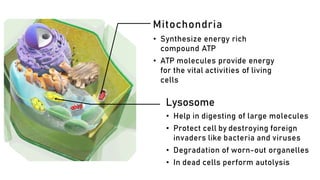
Mitochondria
• Synthesize energy rich
compound ATP
• ATP molecules provide energy
for the vital activities of living
cells
Mitochondria
• Synthesize energy rich
compound ATP
• ATP molecules provide energy
for the vital activities of living
cells
Lysosome
• Help in digesting of large molecules
• Protect cell by destroying foreign
invaders like bacteria and viruses
• Degradation of worn-out organelles
• In dead cells perform autolysis
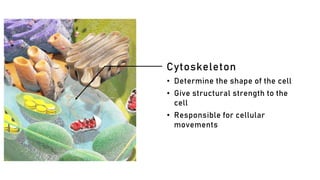
Cytoskeleton
• Determine the shape of the cell
• Give structural strength to the
cell
• Responsible for cellular
movements
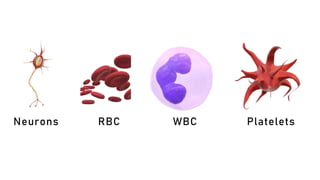
Neurons RBC WBC Platelets
Some Interesting Facts about Cell
• In every 24 hours, a cell divides to produce new cell
• First Cell appeared on earth was around 4 B year ago
• Entire human species consist of more cells (2.8*1023) than total
number of stars in observable universe (4*1022)
• The largest cell on the earth is Ostrich Egg
• Smallest cell in Human Body is Sperm while Largest is Egg
• 70% of Cell is water while rest is starch, proteins and lipids
• Longest cell in the human body are Motor Neurons (length about
4.5 ft) which runs from lower spinal cord to big toe
Some Interesting Facts about Cell
• RBC’s are created in Bone marrow and without them oxygen will
need 3 years to get transferred from lungs to toes
• At any given time, a typical cell carries out 200-500 biochemical
reactions
• Human brain alone contains almost 80 B cells
• The human body has around 200 different sophisticated cells
Thank You ❤️

Bio_Presentation.pptx

  • 1.
    Cell, basic structure ofall living creatures Presented By, Sanket Kale (13) Kunal Lokhande (17) Mohsin Mansuri (20) Om Tambe (32) School Of Chemical Engineering
  • 2.
    1665 Cell Theory Timeline RobertHooke Discovered cell 1674 Anton Van Leeuwenhoek Observed living cell 1883 Robert Brown Discovered nucleus
  • 3.
    1835 FelixDujardin Discovered fluidcontentof cell 1838 MatthiasSchleiden Proposed all plants aremade up of cells 1839 J. E. Purkinje Namedfluidcontentof cell as protoplasm Cell Theory Timeline
  • 4.
    1839 TheodorSchwann Proposed all animals aremade up of cells 1845 CarlHeinrichBraun Proposedcell is the basic unit of life 1855 RudolfVirchow Proposed all cells arisefrompre- existing cells Cell Theory Timeline
  • 6.
    Nucleus • Brain ofthe Cell • Responsible for Critical Cellular operations • Stores genetic material
  • 7.
    Nucleus • Brain ofthe Cell • Responsible for Critical Cellular operations • Stores genetic material Cell Membrane • Defines Boundary of Cell • Holds the structure of the Cell • Holds the Internals of the Cell at their respective positions
  • 8.
    Golgi Complex • Sortsthe proteins synthesized by ER section • Synthesize Glycolipids • Secretes mucus
  • 9.
    Cytoplasm • Fluid insideCell membrane • Allows the transfer of materials through and out of the cell • Also protects and holds the organelles Golgi Complex • Sorts the proteins synthesized by ER section • Synthesize Glycolipids • Secretes mucus
  • 10.
    Endoplasmic Reticulum • Givesinternal support to the cytoplasm • RER synthesize secretory proteins and membrane proteins • SER synthesize lipids for cell membrane
  • 11.
    Vacuoles • Store varioussubstances including waste products • Maintain osmotic pressure of the cell • Store food particles in amoeba cells Endoplasmic Reticulum • Gives internal support to the cytoplasm • RER synthesize secretory proteins and membrane proteins • SER synthesize lipids for cell membrane
  • 12.
    Mitochondria • Synthesize energyrich compound ATP • ATP molecules provide energy for the vital activities of living cells
  • 13.
    Mitochondria • Synthesize energyrich compound ATP • ATP molecules provide energy for the vital activities of living cells Lysosome • Help in digesting of large molecules • Protect cell by destroying foreign invaders like bacteria and viruses • Degradation of worn-out organelles • In dead cells perform autolysis
  • 14.
    Cytoskeleton • Determine theshape of the cell • Give structural strength to the cell • Responsible for cellular movements
  • 15.
    Neurons RBC WBCPlatelets
  • 16.
    Some Interesting Factsabout Cell • In every 24 hours, a cell divides to produce new cell • First Cell appeared on earth was around 4 B year ago • Entire human species consist of more cells (2.8*1023) than total number of stars in observable universe (4*1022) • The largest cell on the earth is Ostrich Egg • Smallest cell in Human Body is Sperm while Largest is Egg • 70% of Cell is water while rest is starch, proteins and lipids • Longest cell in the human body are Motor Neurons (length about 4.5 ft) which runs from lower spinal cord to big toe
  • 17.
    Some Interesting Factsabout Cell • RBC’s are created in Bone marrow and without them oxygen will need 3 years to get transferred from lungs to toes • At any given time, a typical cell carries out 200-500 biochemical reactions • Human brain alone contains almost 80 B cells • The human body has around 200 different sophisticated cells
  • 18.