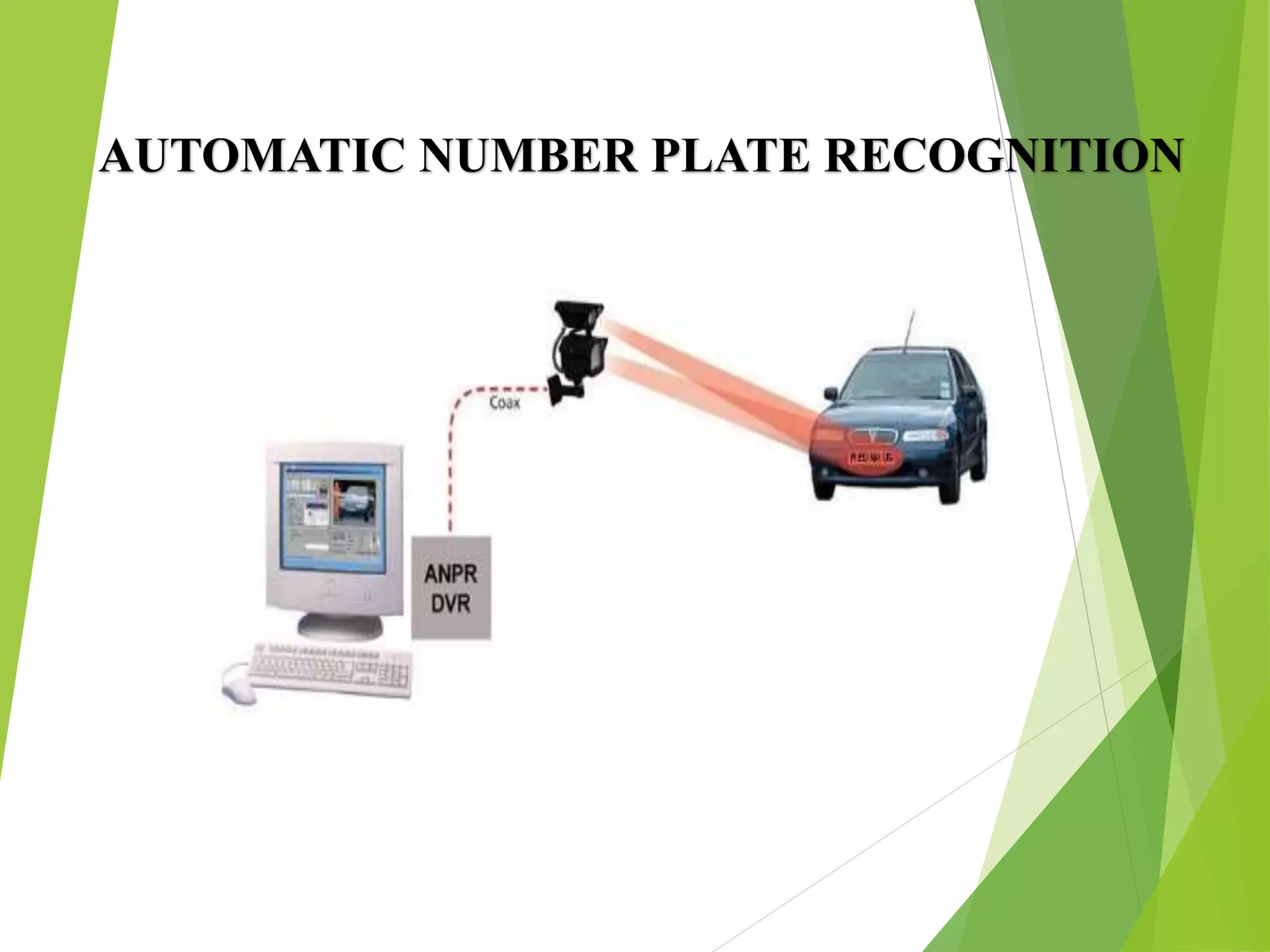
AUTOMATIC NUMBER PLATE RECOGNITION
Key concepts
 Introduction
 Technology
 Elements
 Working
 Output
 Advantages
 Disadvantages
 Applications
 Conclusion
Introduction
 A vehicle registration plate is a metal or a plastic plate attached
to a motor vehicle for official identification purposes.
 The license plates are placed on the front and back of the
vehicle.
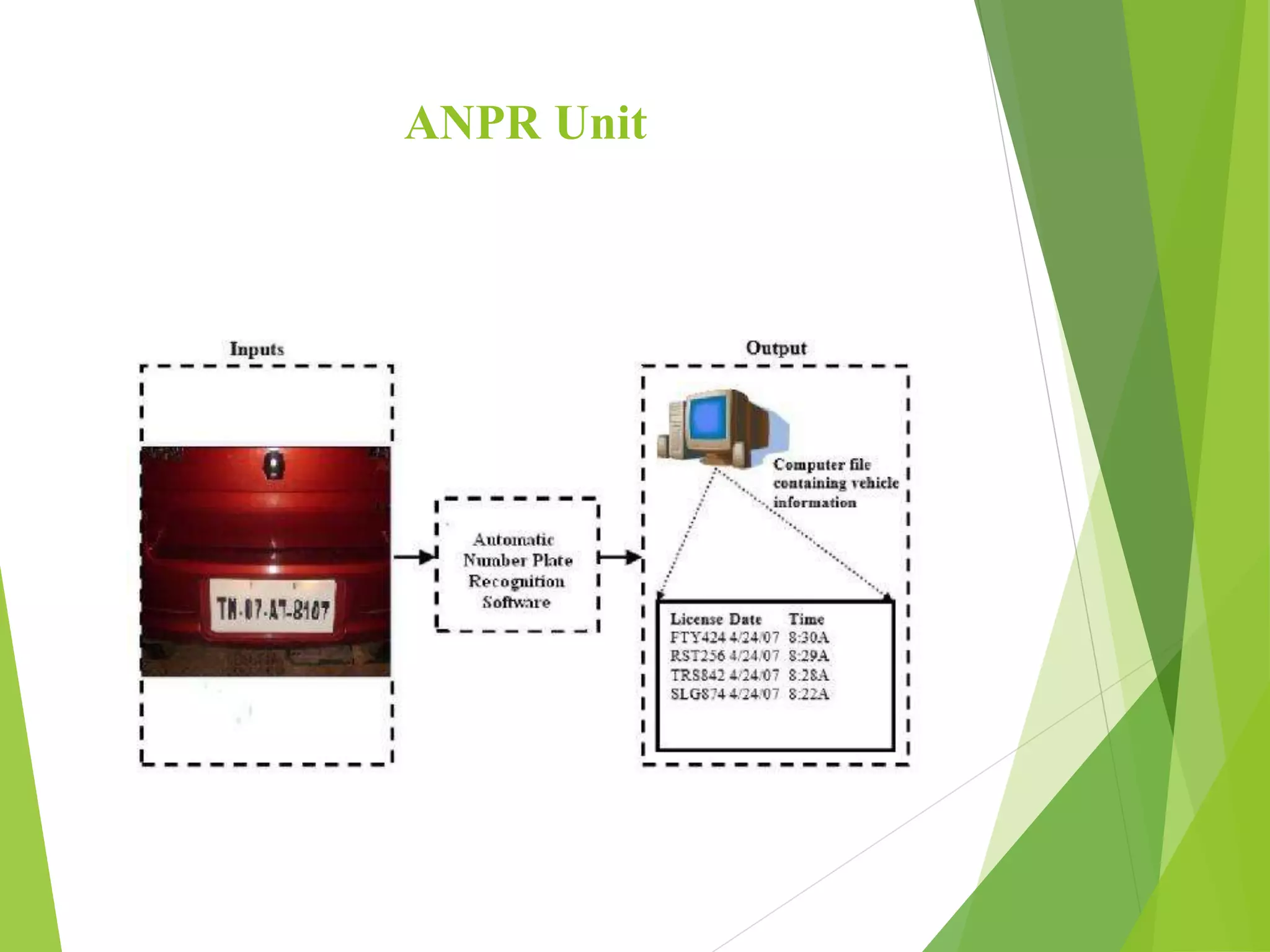
Automatic Number Plate Recognition
(ANPR)
 ANPR is an image –processing technology
which is used to identify vehicles by their
number plates using Optical Character
Recognition.
 This technology is used in various security and
traffic applications such as access-control
system.
Various names of this technology are:
 License Plate Recognition(LPR)
 Car Registration System(CRS)
 Intelligent Transport System(ITS)
Seven Elements In ANPR
1. Camera
2. Illumination
3. Frame grabber
4. Computer
5. Software
6. Hardware
7. Database
• Camera - that take the images of the car (front or rear
side).
• Illumination - a controlled light that can bright up the
plate, and allow day and night operation. In most cases the
illumination is Infra-Red (IR) which is invisible to the
driver.
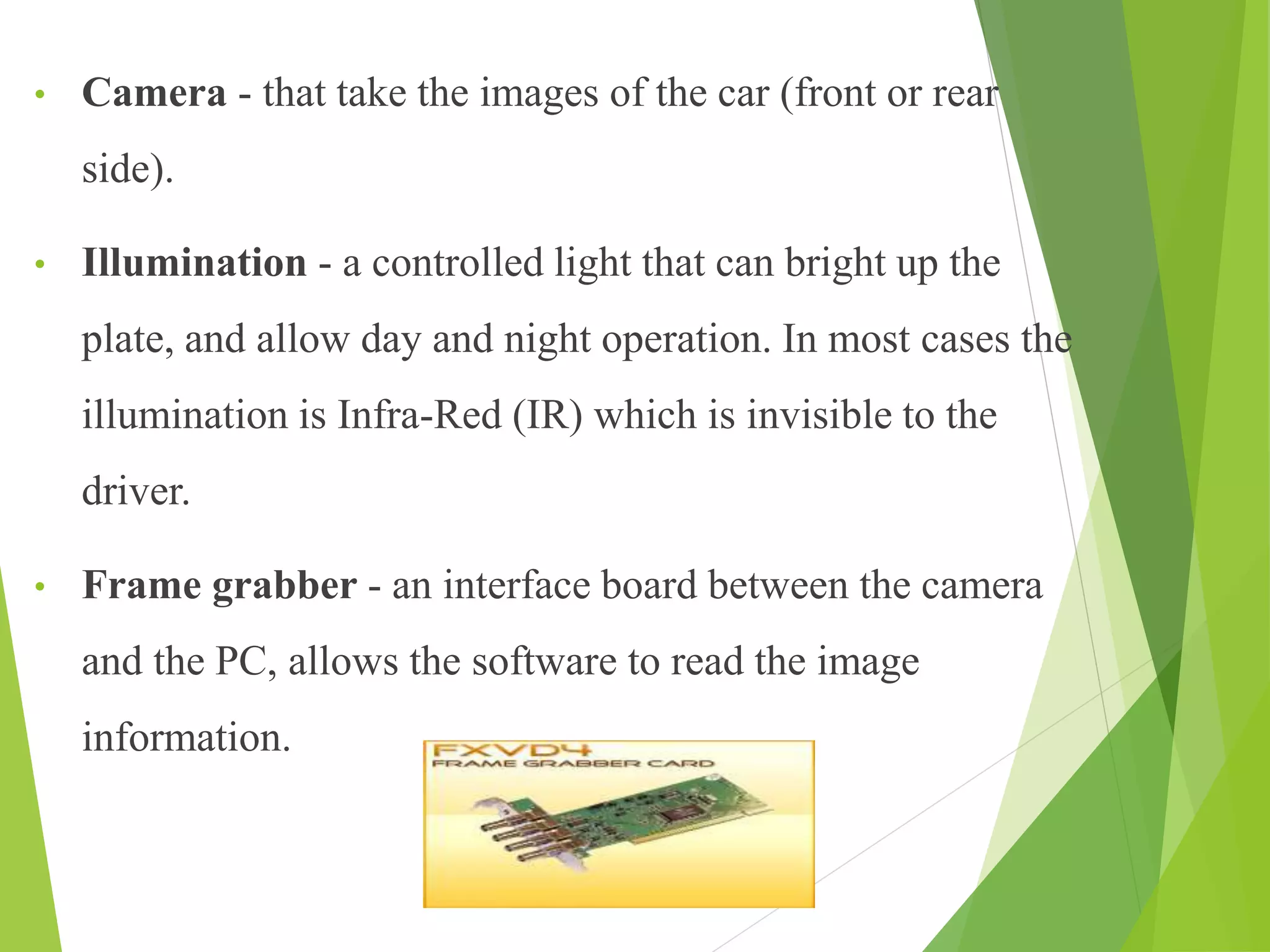
• Frame grabber - an interface board between the camera
and the PC, allows the software to read the image
information.
• Computer - normally a PC running Windows or Linux. It runs
the LPR application which controls the system, reads the
images, analyzes and identifies the plate, and interfaces with
other applications and systems.
• Software - the application and the recognition package.
Usually the recognition package is supplied as a DLL.
• Hardware - various input/output boards used to interface the
external world (such as control boards and networking
boards).
• Database - the events are recorded on a local database or
transmitted over the network. The data includes the
WORKING
The ANPR process is divided into three steps:
 Detection of vehicle.
 Capture of images.
 Process of recognition.
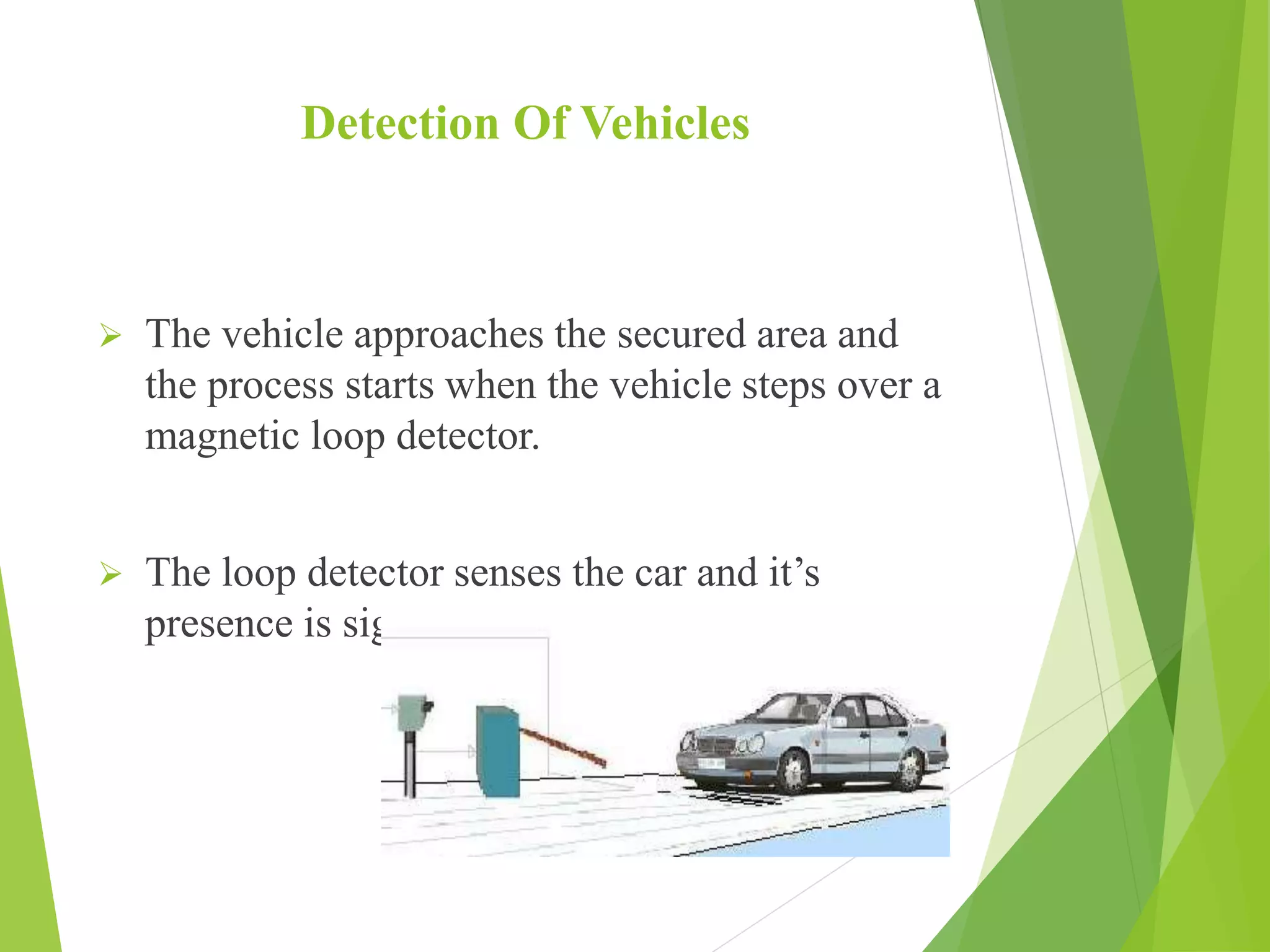
Detection Of Vehicles
 The vehicle approaches the secured area and
the process starts when the vehicle steps over a
magnetic loop detector.
 The loop detector senses the car and it’s
presence is signaled to the ANPR unit.
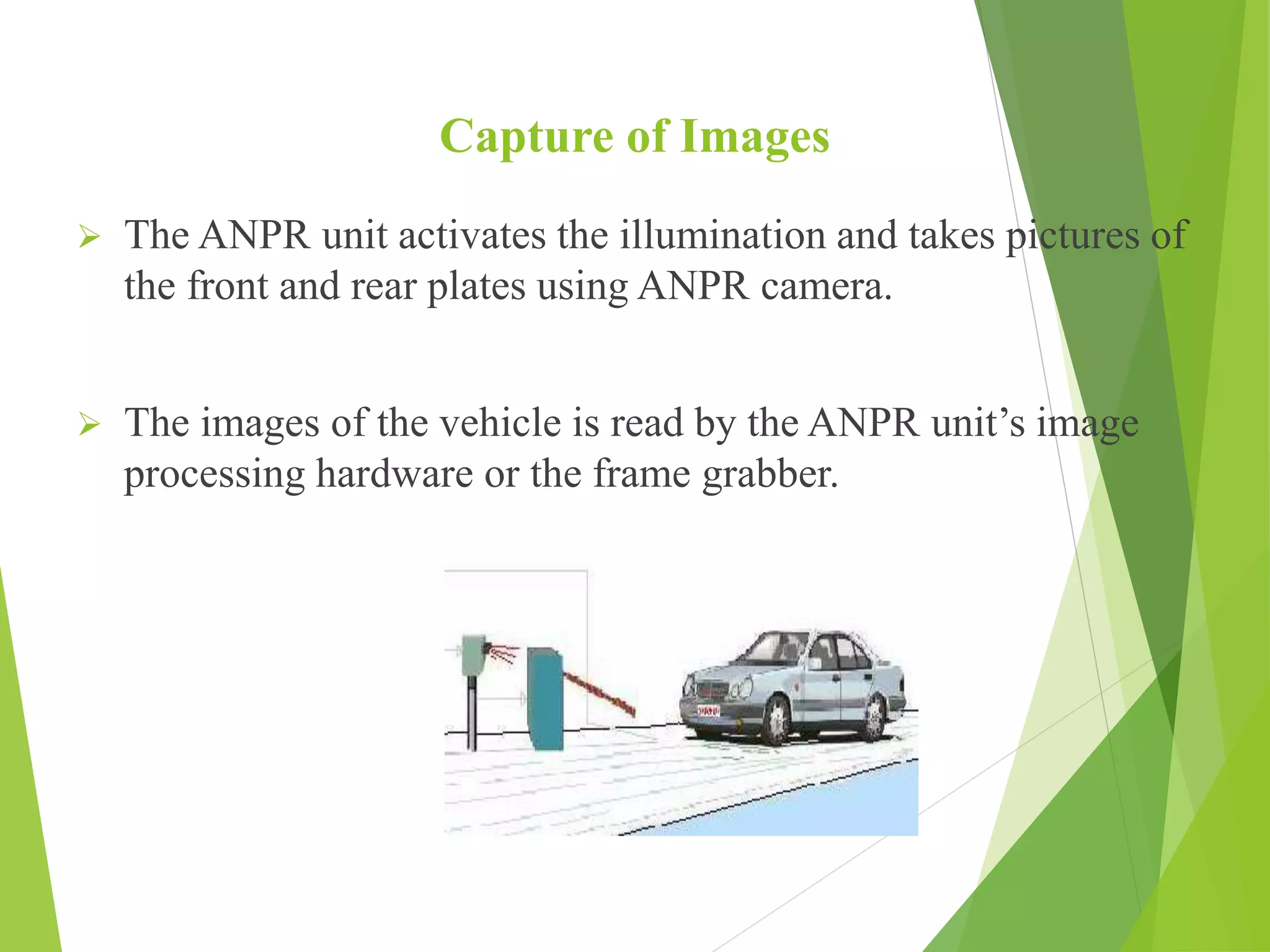
Capture of Images
 The ANPR unit activates the illumination and takes pictures of
the front and rear plates using ANPR camera.
 The images of the vehicle is read by the ANPR unit’s image
processing hardware or the frame grabber.
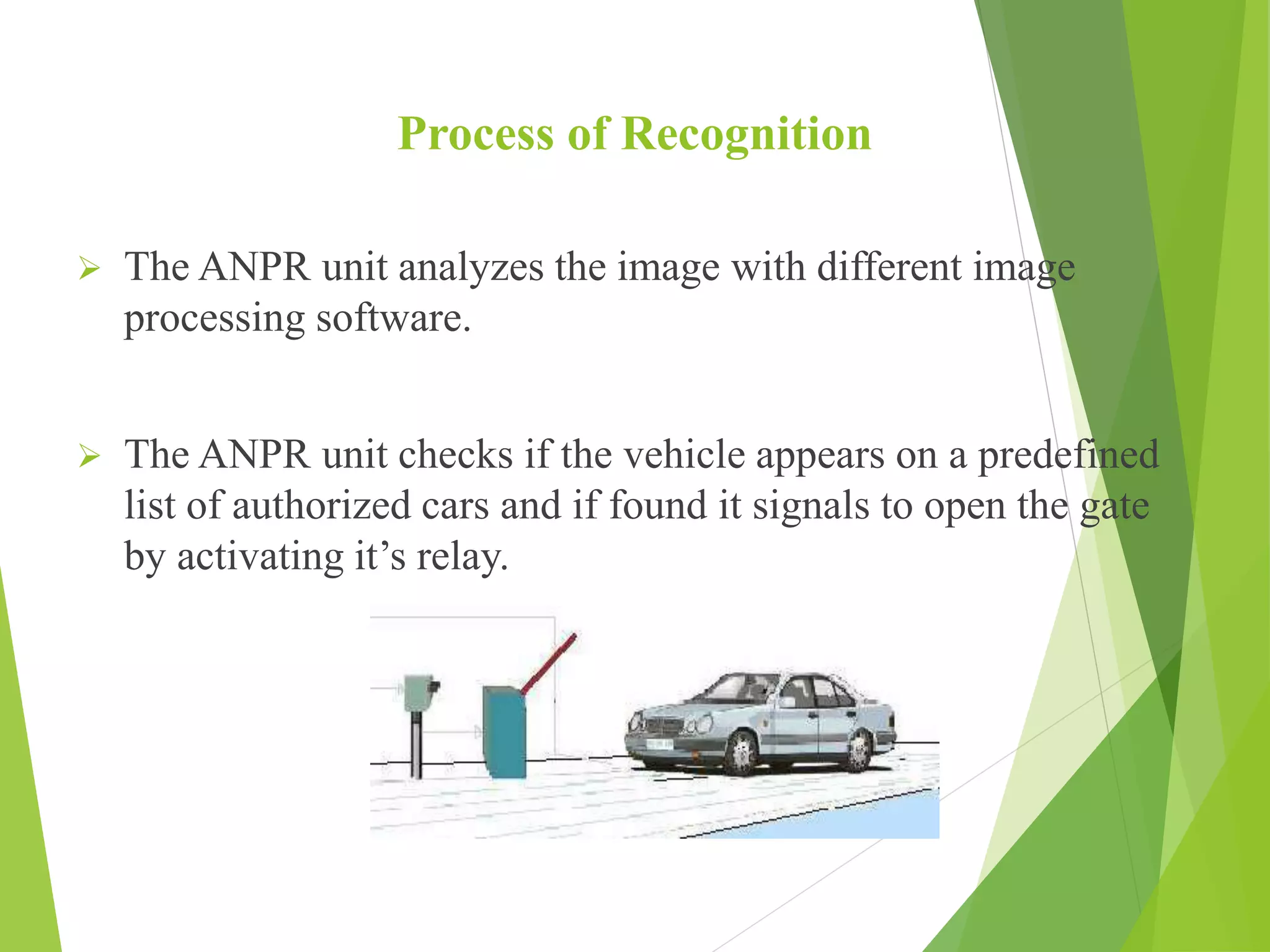
Process of Recognition
 The ANPR unit analyzes the image with different image
processing software.
 The ANPR unit checks if the vehicle appears on a predefined
list of authorized cars and if found it signals to open the gate
by activating it’s relay.
Process of Recognition(contd…)
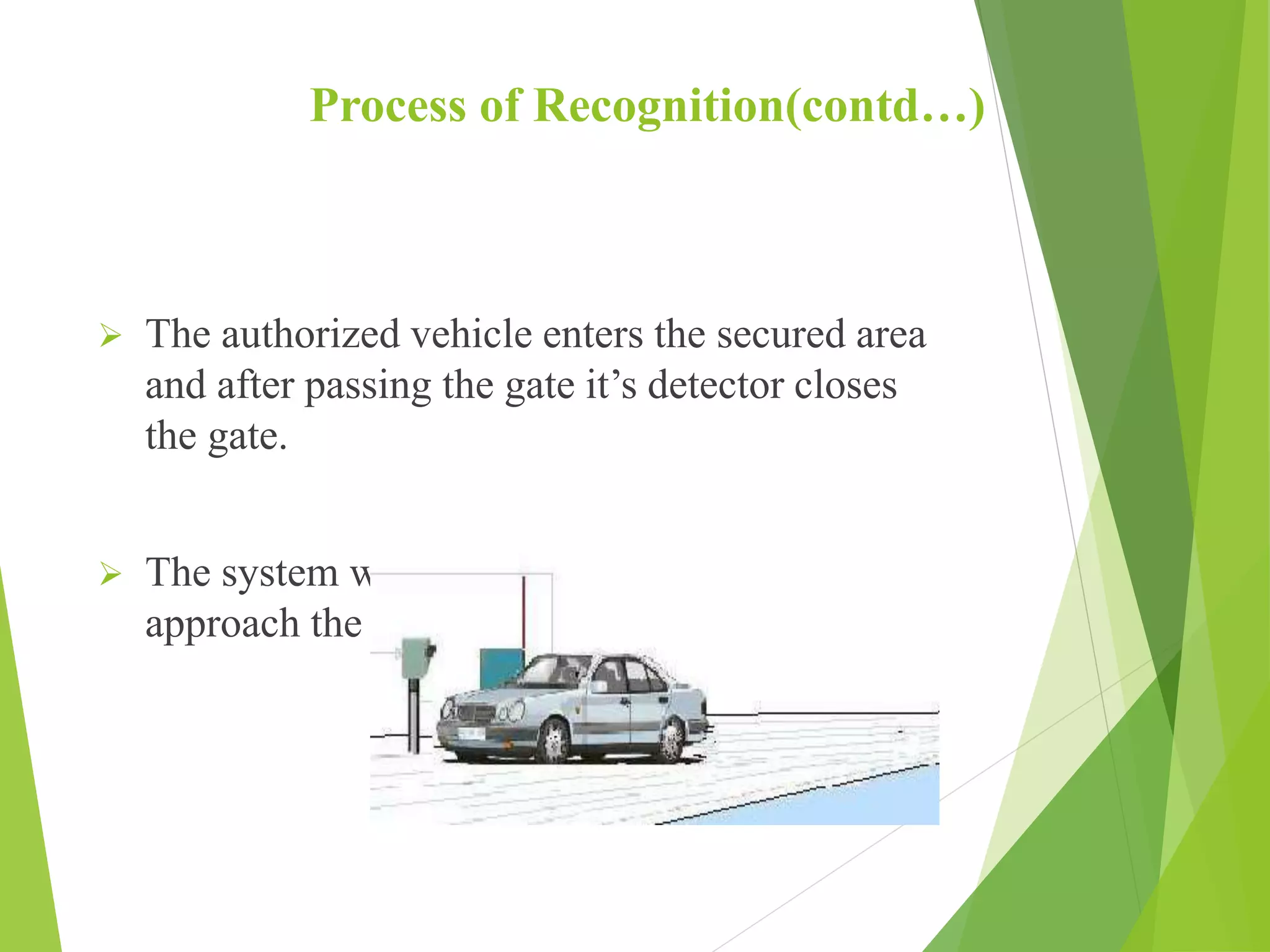
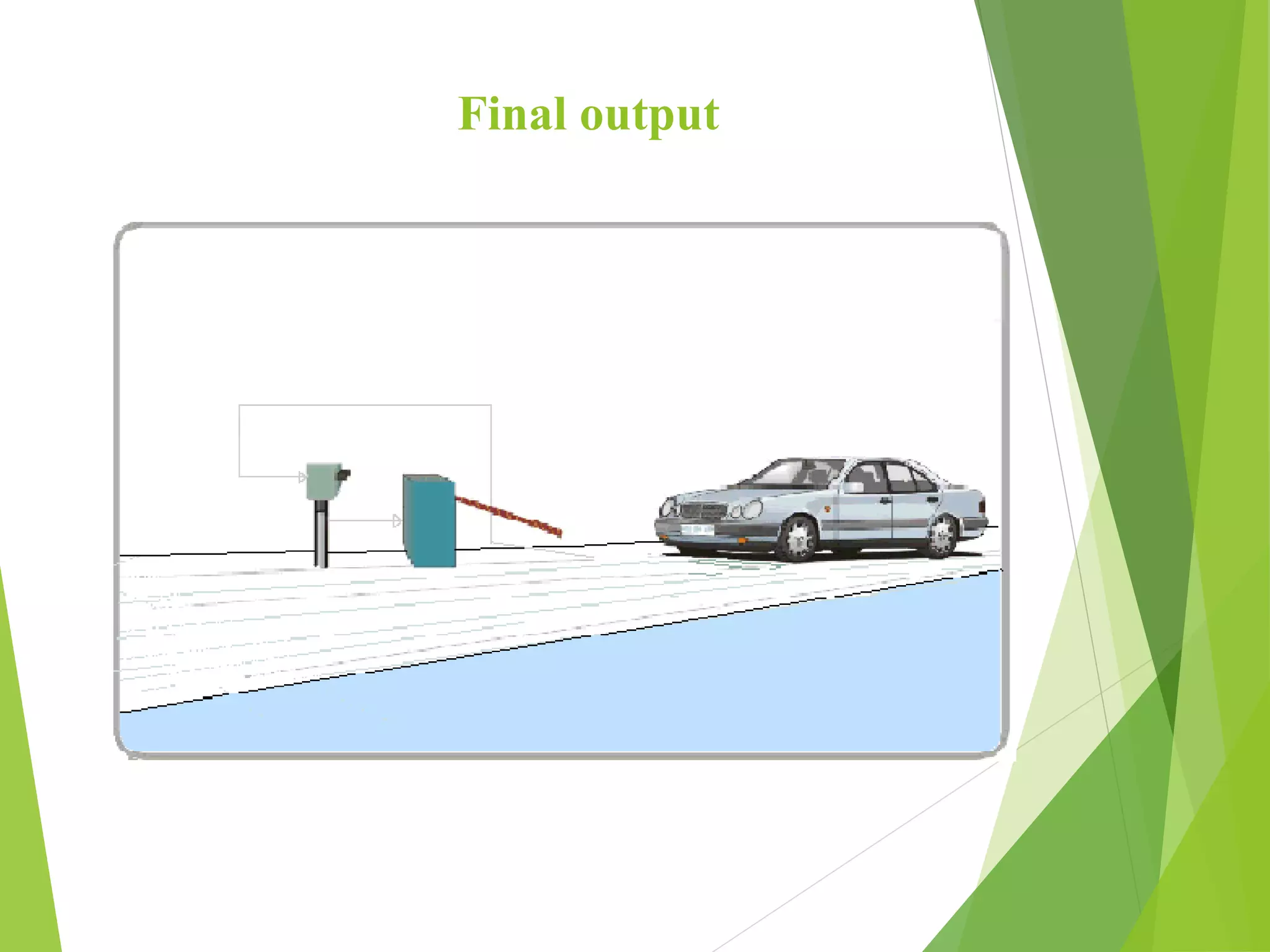
 The authorized vehicle enters the secured area
and after passing the gate it’s detector closes
the gate.
 The system waits for the next vehicle to
approach the secured area.
Final output
ANPR Unit
ADVANTAGES
 improving road safety.
 reduces crime.
 gives officers better information to work with.
 deterring terrorism.
 giving a greater police presence.
 increasing the percentage of stop/searches that lead to an
arrest.
 pre-paid parking members can be easily differentiated from
non-members.
Disadvantages
 Firstly, the images of the number plate or of any object
which is taken by using the optical character reader
technology may get blurred mainly due to the reason of
motion blurring for which the picture seems to be hazy
when uploaded in the database.
 Secondly, the technology often uses low-resolution images
for which the images are not actually visible properly in
every case.
APPLICATIONS
 Parking
 Access-control
 Tolling
 Border control
 Stolen cars
 Traffic control
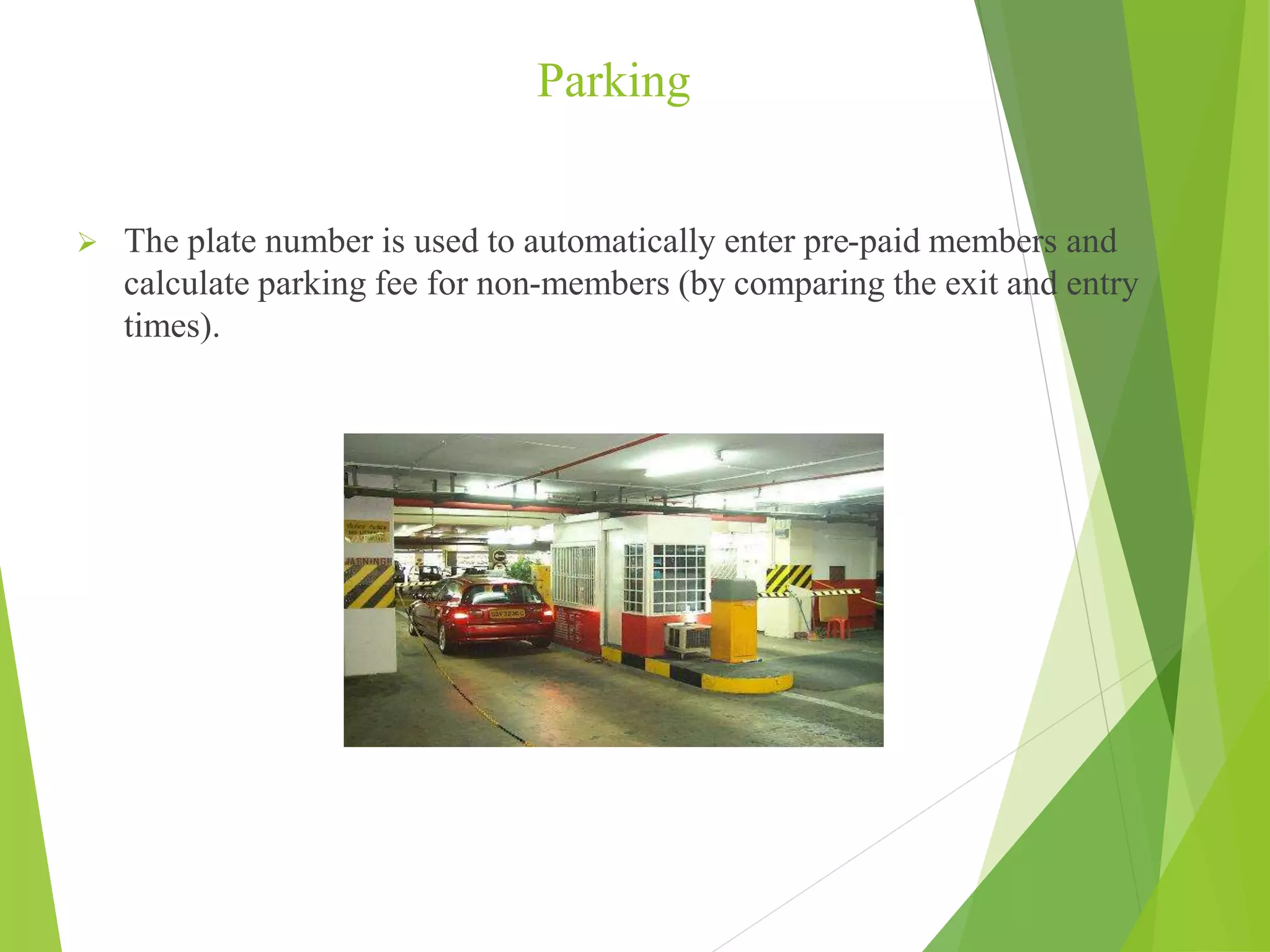
Parking
 The plate number is used to automatically enter pre-paid members and
calculate parking fee for non-members (by comparing the exit and entry
times).
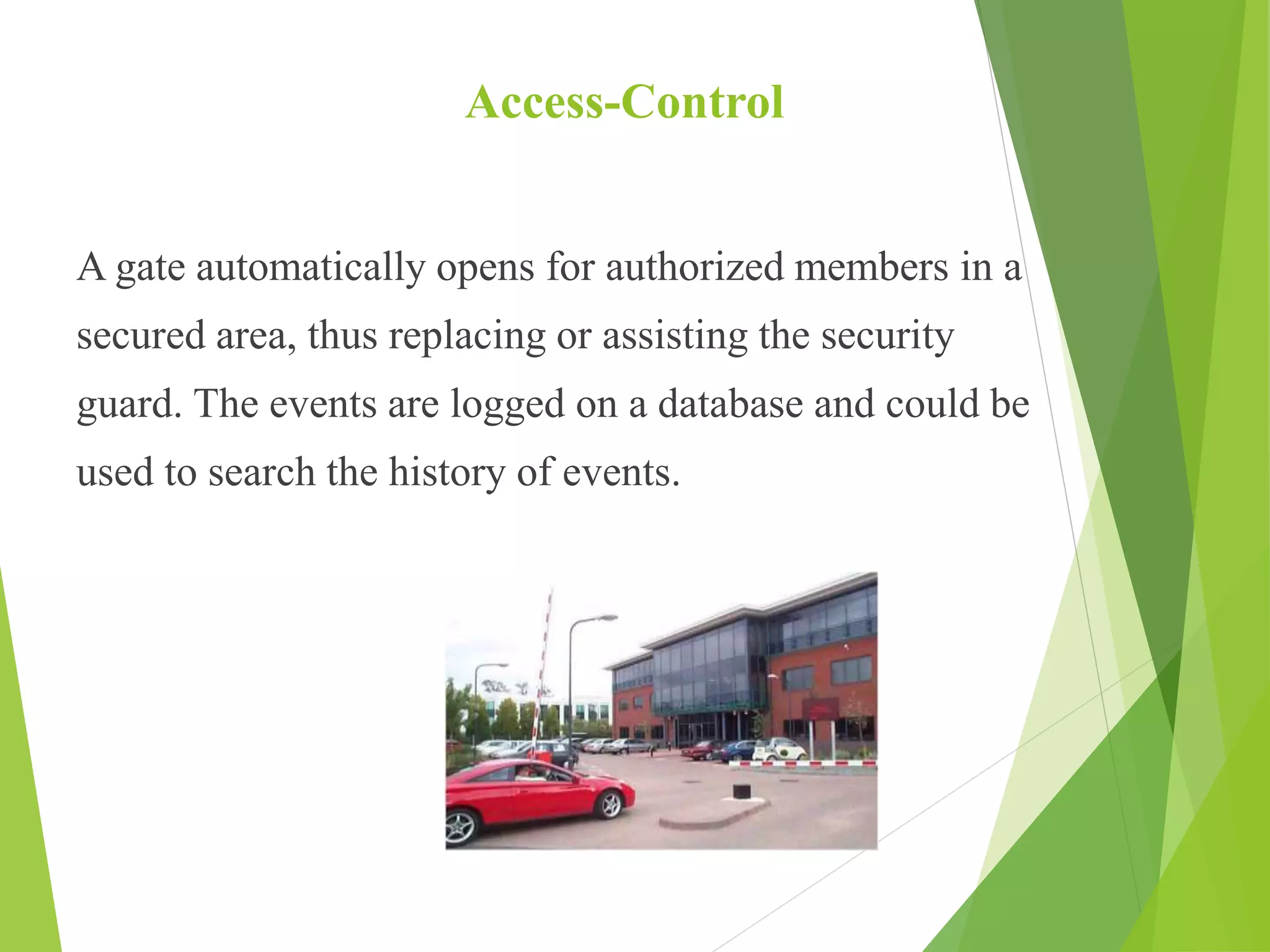
Access-Control
A gate automatically opens for authorized members in a
secured area, thus replacing or assisting the security
guard. The events are logged on a database and could be
used to search the history of events.
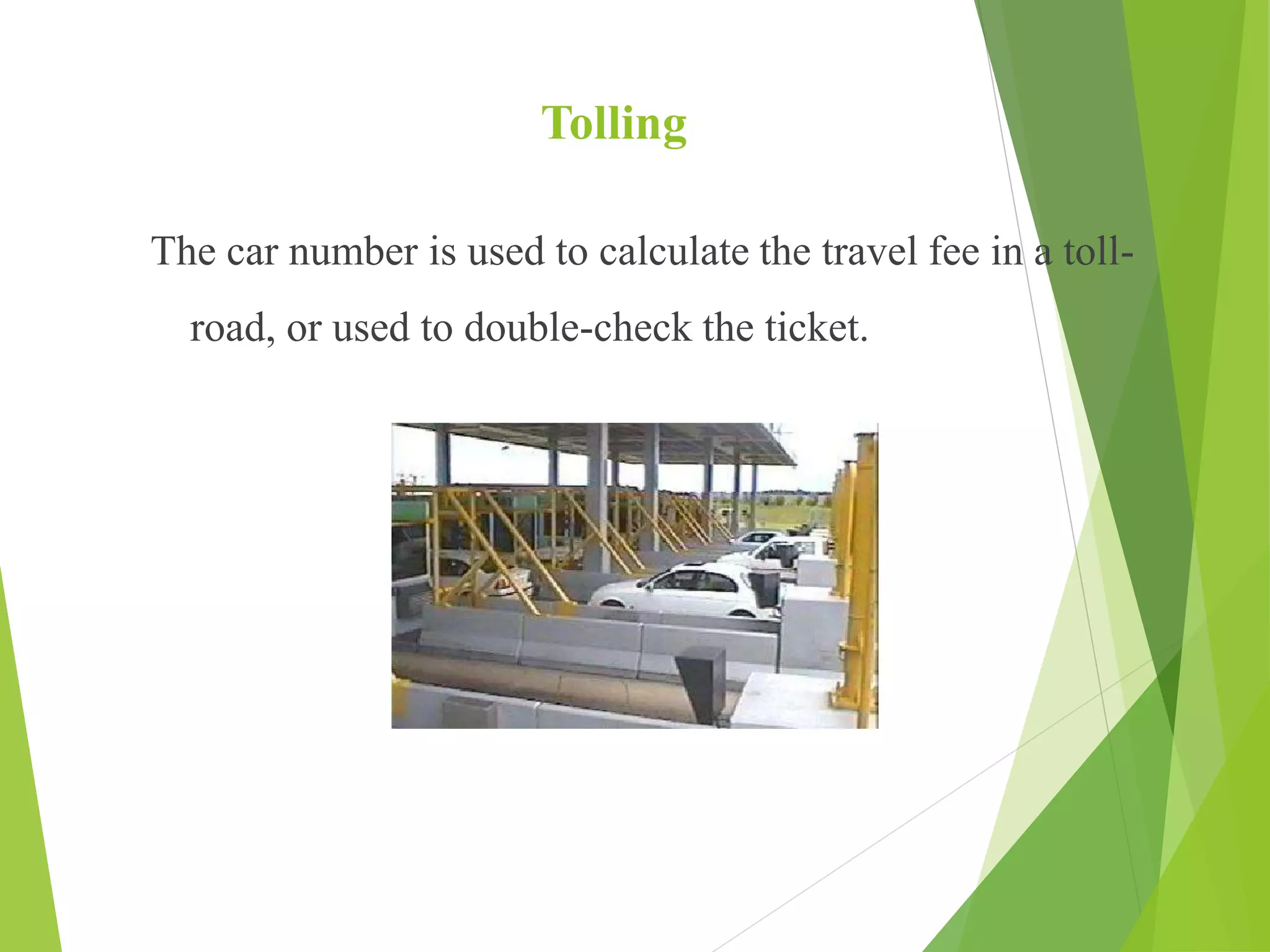
Tolling
The car number is used to calculate the travel fee in a toll-
road, or used to double-check the ticket.
Border Control
 This installation covers the borders of the
entire Country.
 Each vehicle is registered into a central
database and linked to additional information
such as the passport data. This is used to track
all border crossings.
CONCLUSION
 There is an immediate need of such kind of Automatic Number
Plate Recognition system in India as there are problems of
traffic, stealing cars etc.
 Government should take some interest in developing this
system as this system is very economical and eco-friendly, if
applied effectively .
 This change will help in the progress of the nation.
automatic number plate recognition

automatic number plate recognition

  • 1.
  • 2.
    Key concepts  Introduction Technology  Elements  Working  Output  Advantages  Disadvantages  Applications  Conclusion
  • 3.
    Introduction  A vehicleregistration plate is a metal or a plastic plate attached to a motor vehicle for official identification purposes.  The license plates are placed on the front and back of the vehicle.
  • 4.
    Automatic Number PlateRecognition (ANPR)  ANPR is an image –processing technology which is used to identify vehicles by their number plates using Optical Character Recognition.  This technology is used in various security and traffic applications such as access-control system.
  • 5.
    Various names ofthis technology are:  License Plate Recognition(LPR)  Car Registration System(CRS)  Intelligent Transport System(ITS)
  • 6.
    Seven Elements InANPR 1. Camera 2. Illumination 3. Frame grabber 4. Computer 5. Software 6. Hardware 7. Database
  • 7.
    • Camera -that take the images of the car (front or rear side). • Illumination - a controlled light that can bright up the plate, and allow day and night operation. In most cases the illumination is Infra-Red (IR) which is invisible to the driver. • Frame grabber - an interface board between the camera and the PC, allows the software to read the image information.
  • 8.
    • Computer -normally a PC running Windows or Linux. It runs the LPR application which controls the system, reads the images, analyzes and identifies the plate, and interfaces with other applications and systems. • Software - the application and the recognition package. Usually the recognition package is supplied as a DLL. • Hardware - various input/output boards used to interface the external world (such as control boards and networking boards). • Database - the events are recorded on a local database or transmitted over the network. The data includes the
  • 9.
    WORKING The ANPR processis divided into three steps:  Detection of vehicle.  Capture of images.  Process of recognition.
  • 10.
    Detection Of Vehicles The vehicle approaches the secured area and the process starts when the vehicle steps over a magnetic loop detector.  The loop detector senses the car and it’s presence is signaled to the ANPR unit.
  • 11.
    Capture of Images The ANPR unit activates the illumination and takes pictures of the front and rear plates using ANPR camera.  The images of the vehicle is read by the ANPR unit’s image processing hardware or the frame grabber.
  • 12.
    Process of Recognition The ANPR unit analyzes the image with different image processing software.  The ANPR unit checks if the vehicle appears on a predefined list of authorized cars and if found it signals to open the gate by activating it’s relay.
  • 13.
    Process of Recognition(contd…) The authorized vehicle enters the secured area and after passing the gate it’s detector closes the gate.  The system waits for the next vehicle to approach the secured area.
  • 14.
  • 15.
  • 16.
    ADVANTAGES  improving roadsafety.  reduces crime.  gives officers better information to work with.  deterring terrorism.  giving a greater police presence.  increasing the percentage of stop/searches that lead to an arrest.  pre-paid parking members can be easily differentiated from non-members.
  • 17.
    Disadvantages  Firstly, theimages of the number plate or of any object which is taken by using the optical character reader technology may get blurred mainly due to the reason of motion blurring for which the picture seems to be hazy when uploaded in the database.  Secondly, the technology often uses low-resolution images for which the images are not actually visible properly in every case.
  • 18.
    APPLICATIONS  Parking  Access-control Tolling  Border control  Stolen cars  Traffic control
  • 19.
    Parking  The platenumber is used to automatically enter pre-paid members and calculate parking fee for non-members (by comparing the exit and entry times).
  • 20.
    Access-Control A gate automaticallyopens for authorized members in a secured area, thus replacing or assisting the security guard. The events are logged on a database and could be used to search the history of events.
  • 21.
    Tolling The car numberis used to calculate the travel fee in a toll- road, or used to double-check the ticket.
  • 22.
    Border Control  Thisinstallation covers the borders of the entire Country.  Each vehicle is registered into a central database and linked to additional information such as the passport data. This is used to track all border crossings.
  • 23.
    CONCLUSION  There isan immediate need of such kind of Automatic Number Plate Recognition system in India as there are problems of traffic, stealing cars etc.  Government should take some interest in developing this system as this system is very economical and eco-friendly, if applied effectively .  This change will help in the progress of the nation.