Effective
Time Management
Lets Evaluate Ourselves
Principles Of Time Management
Select the task with highest
priority
Exclude all other tasks
Put all efforts into
Shortage of time and pressure
Incompetent
Drained
Harassed
Overloaded
Trapped
Irritable
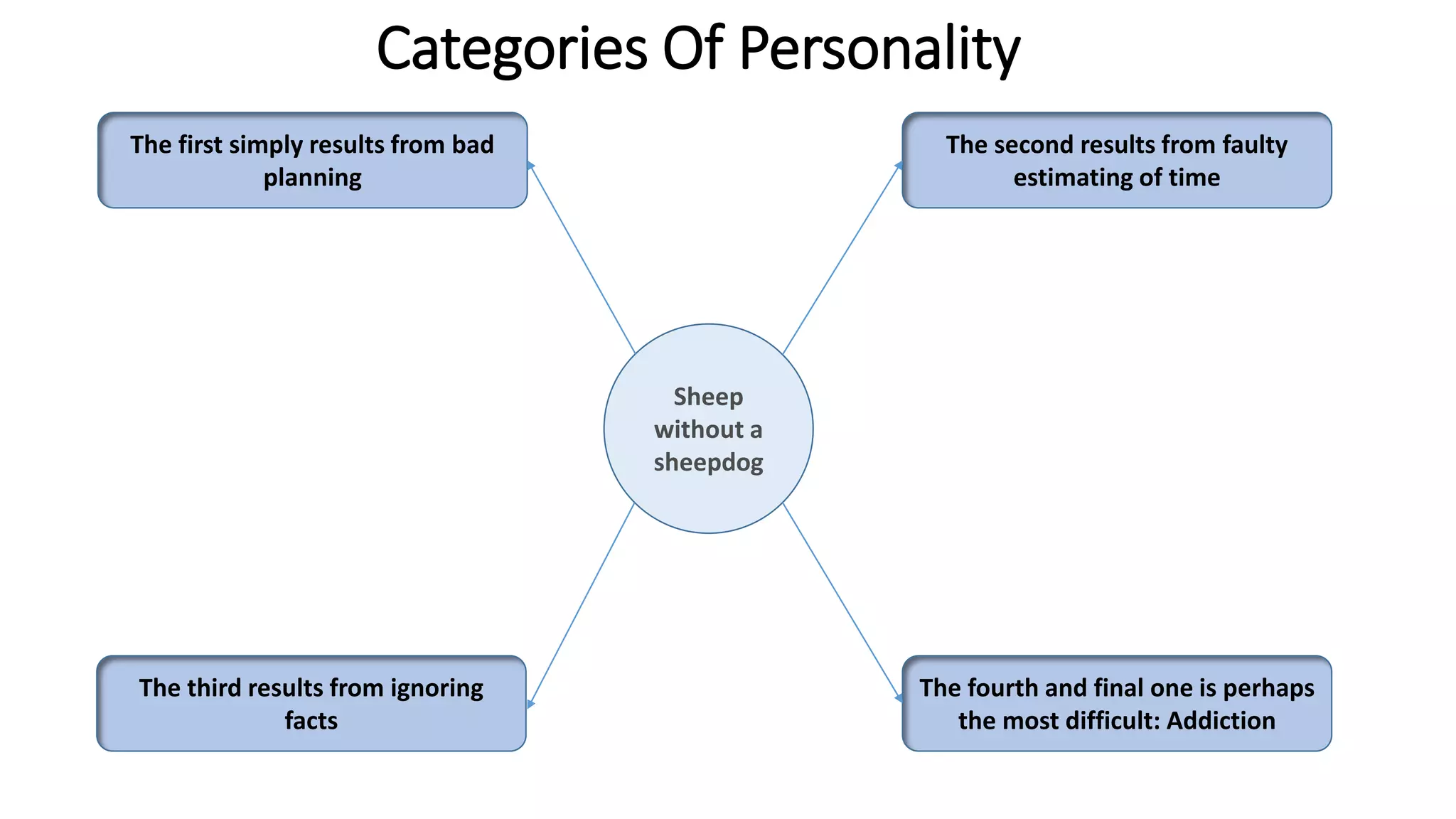
Categories Of Personality
The first simply results from bad
planning
The second results from faulty
estimating of time
The fourth and final one is perhaps
the most difficult: Addiction
The third results from ignoring
facts
Sheep
without a
sheepdog
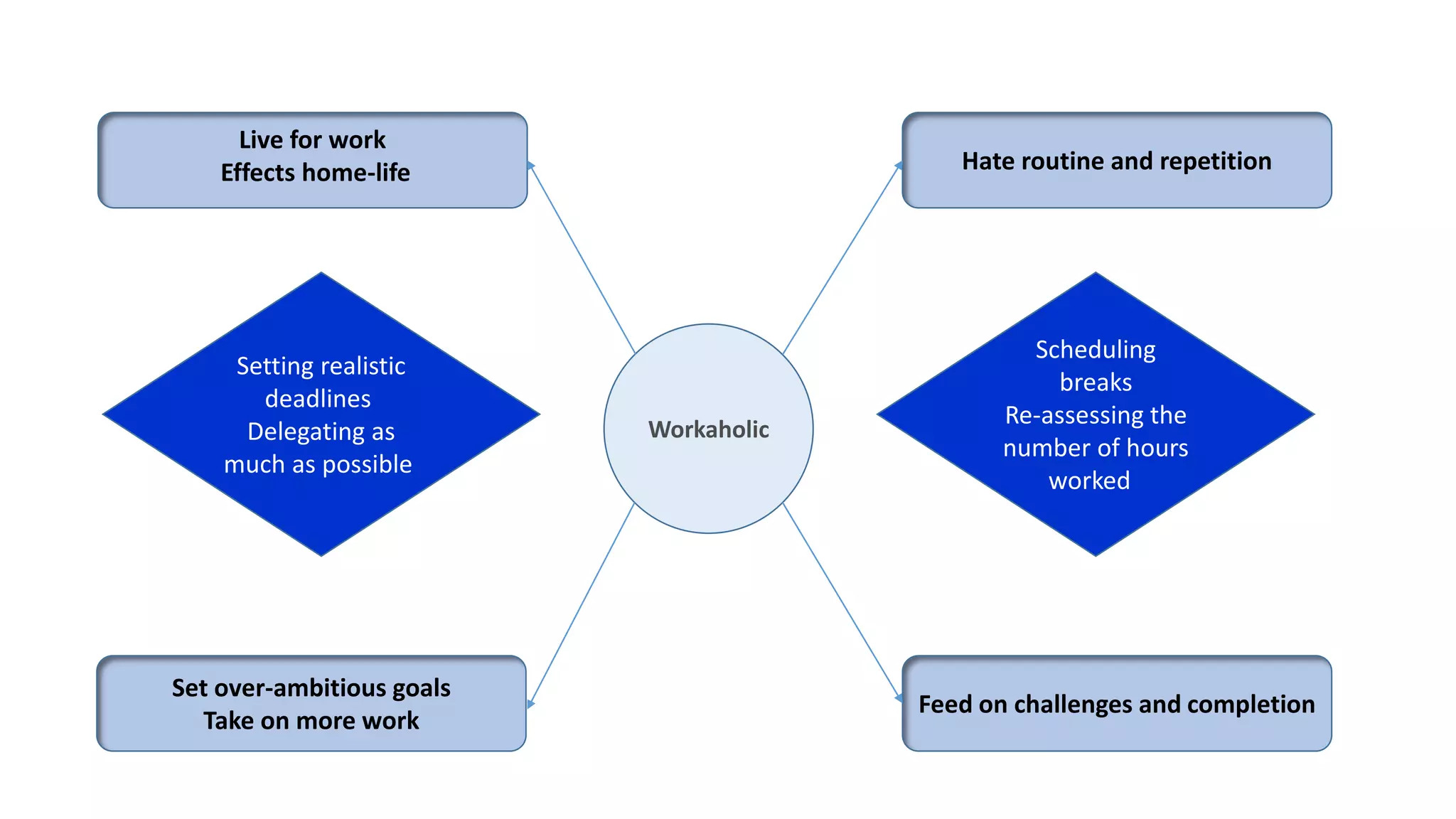
Live for work
Effects home-life Hate routine and repetition
Feed on challenges and completion
Set over-ambitious goals
Take on more work
Workaholic
Setting realistic
deadlines
Delegating as
much as possible
Scheduling
breaks
Re-assessing the
number of hours
worked
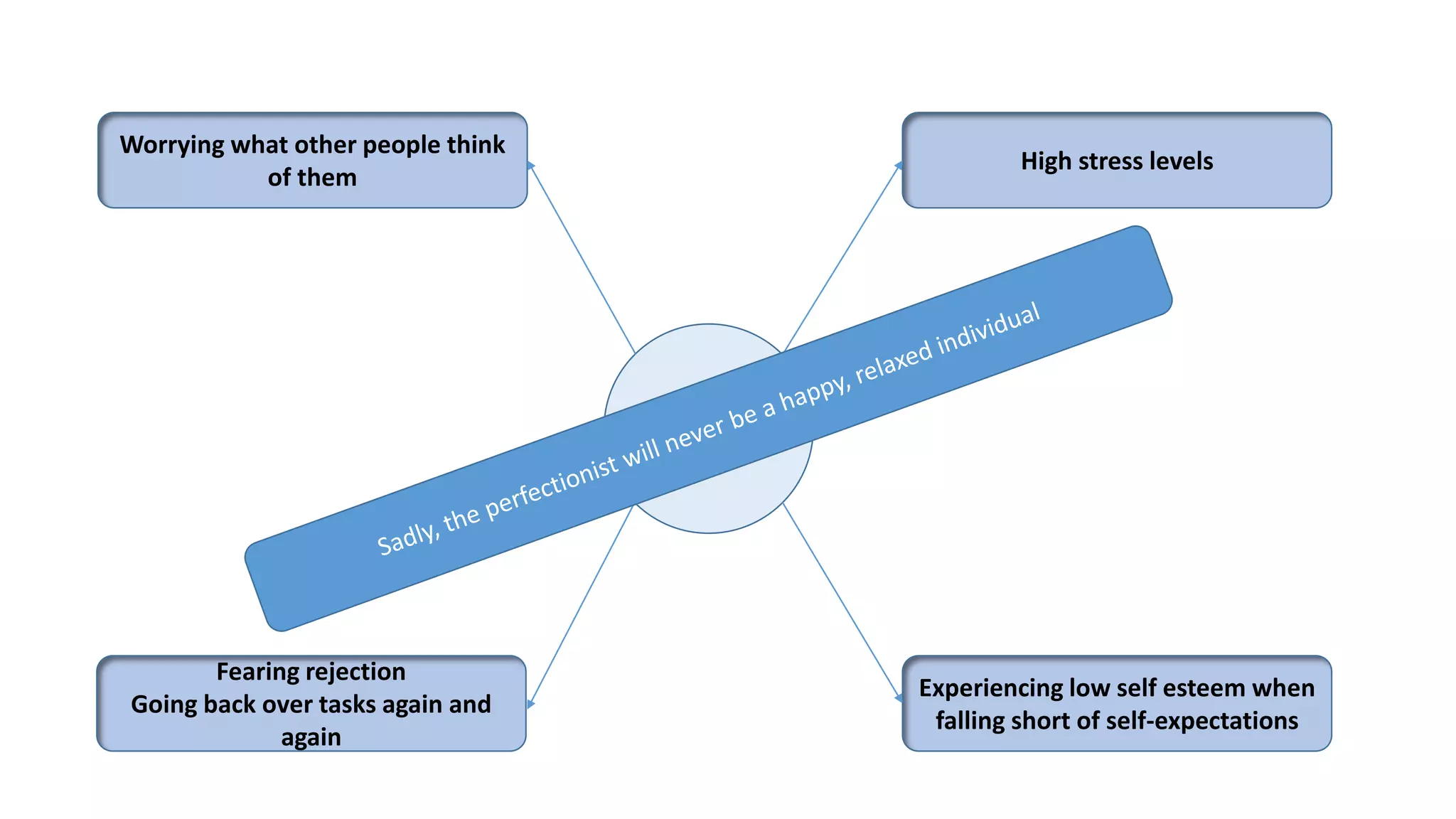
Worrying what other people think
of them
High stress levels
Experiencing low self esteem when
falling short of self-expectations
Fearing rejection
Going back over tasks again and
again
Perfectionist
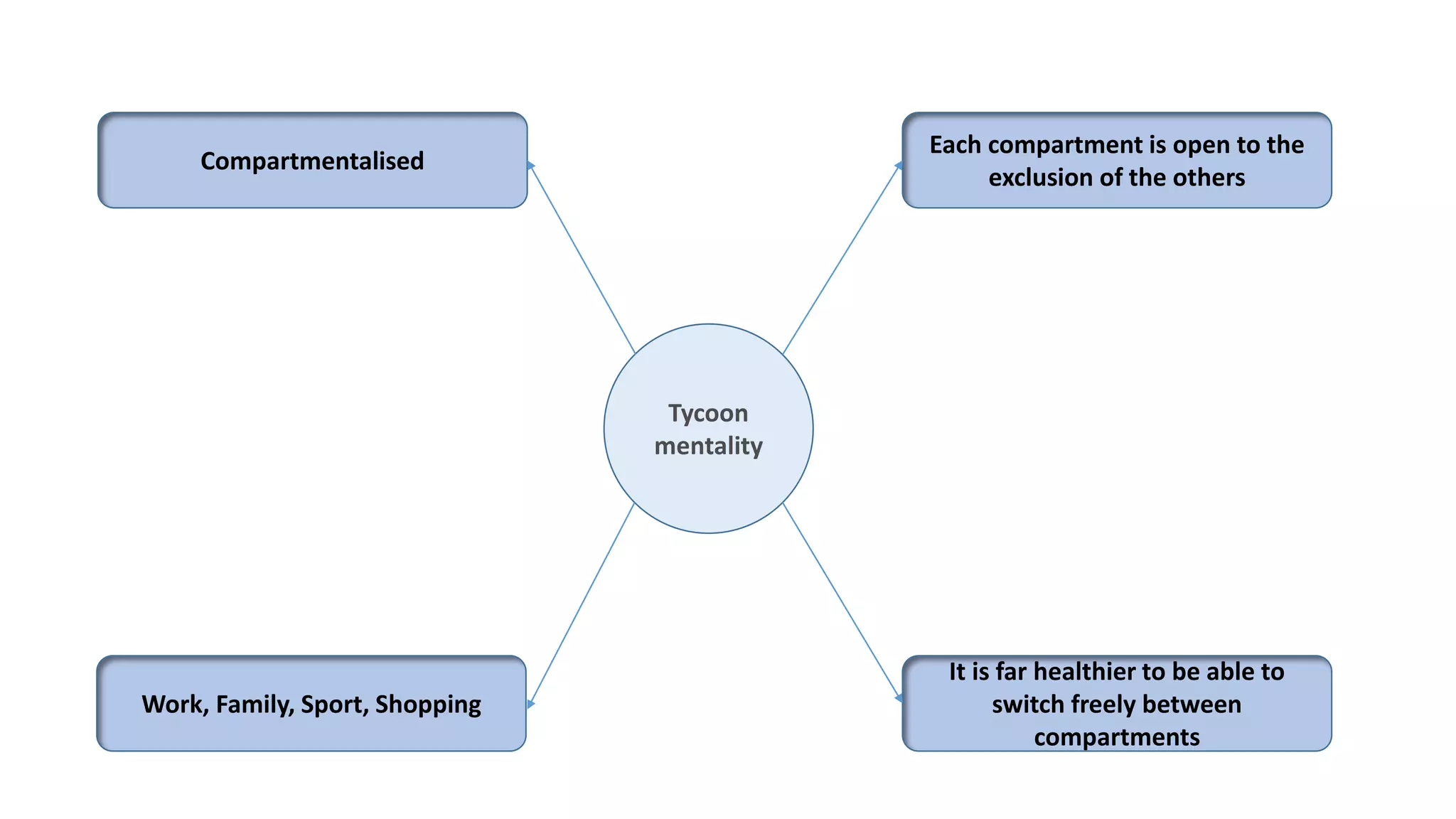
Compartmentalised
Each compartment is open to the
exclusion of the others
It is far healthier to be able to
switch freely between
compartments
Work, Family, Sport, Shopping
Tycoon
mentality
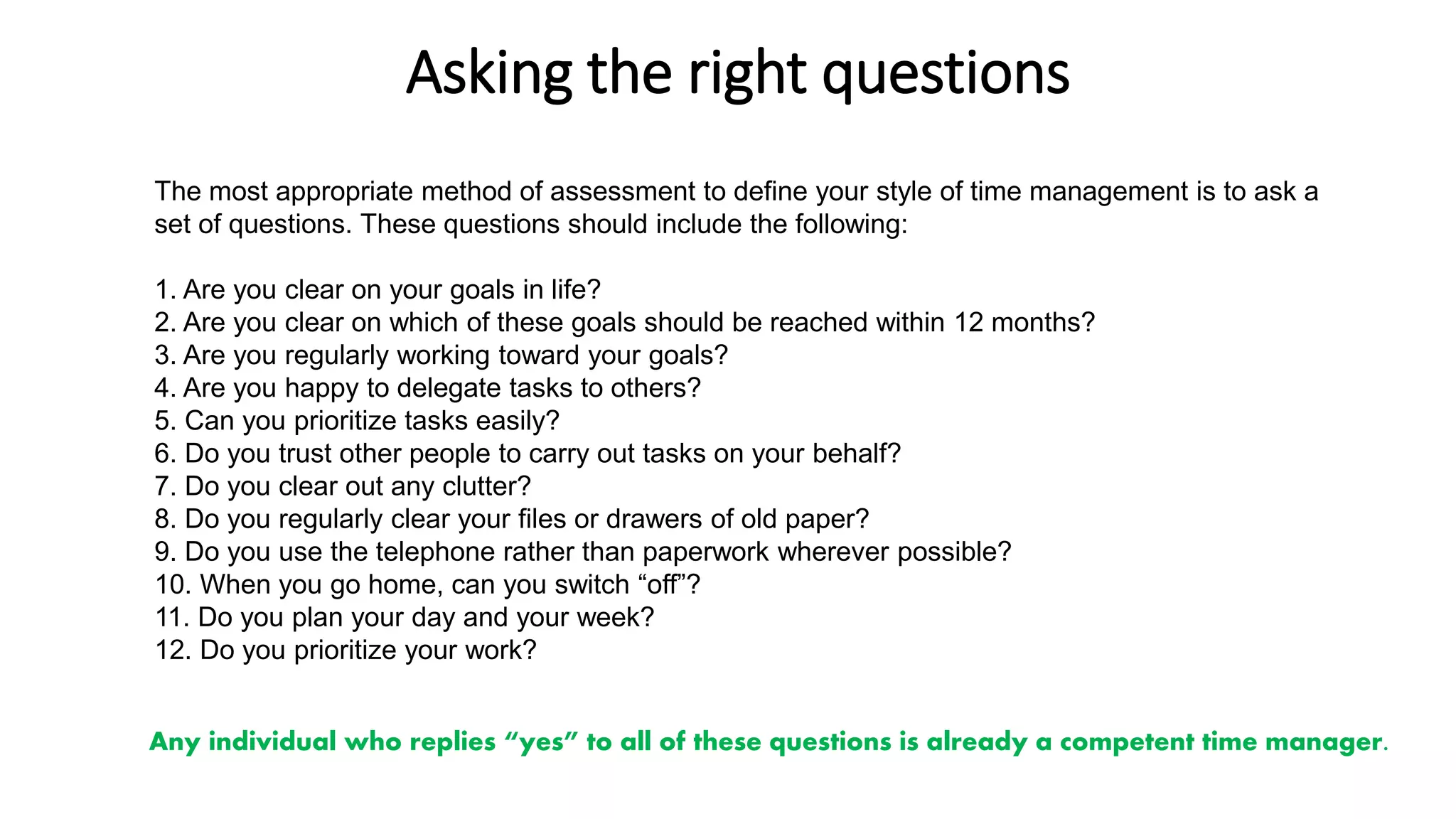
The most appropriate method of assessment to define your style of time management is to ask a
set of questions. These questions should include the following:
1. Are you clear on your goals in life?
2. Are you clear on which of these goals should be reached within 12 months?
3. Are you regularly working toward your goals?
4. Are you happy to delegate tasks to others?
5. Can you prioritize tasks easily?
6. Do you trust other people to carry out tasks on your behalf?
7. Do you clear out any clutter?
8. Do you regularly clear your files or drawers of old paper?
9. Do you use the telephone rather than paperwork wherever possible?
10. When you go home, can you switch “off”?
11. Do you plan your day and your week?
12. Do you prioritize your work?
Asking the right questions
Any individual who replies “yes” to all of these questions is already a competent time manager.
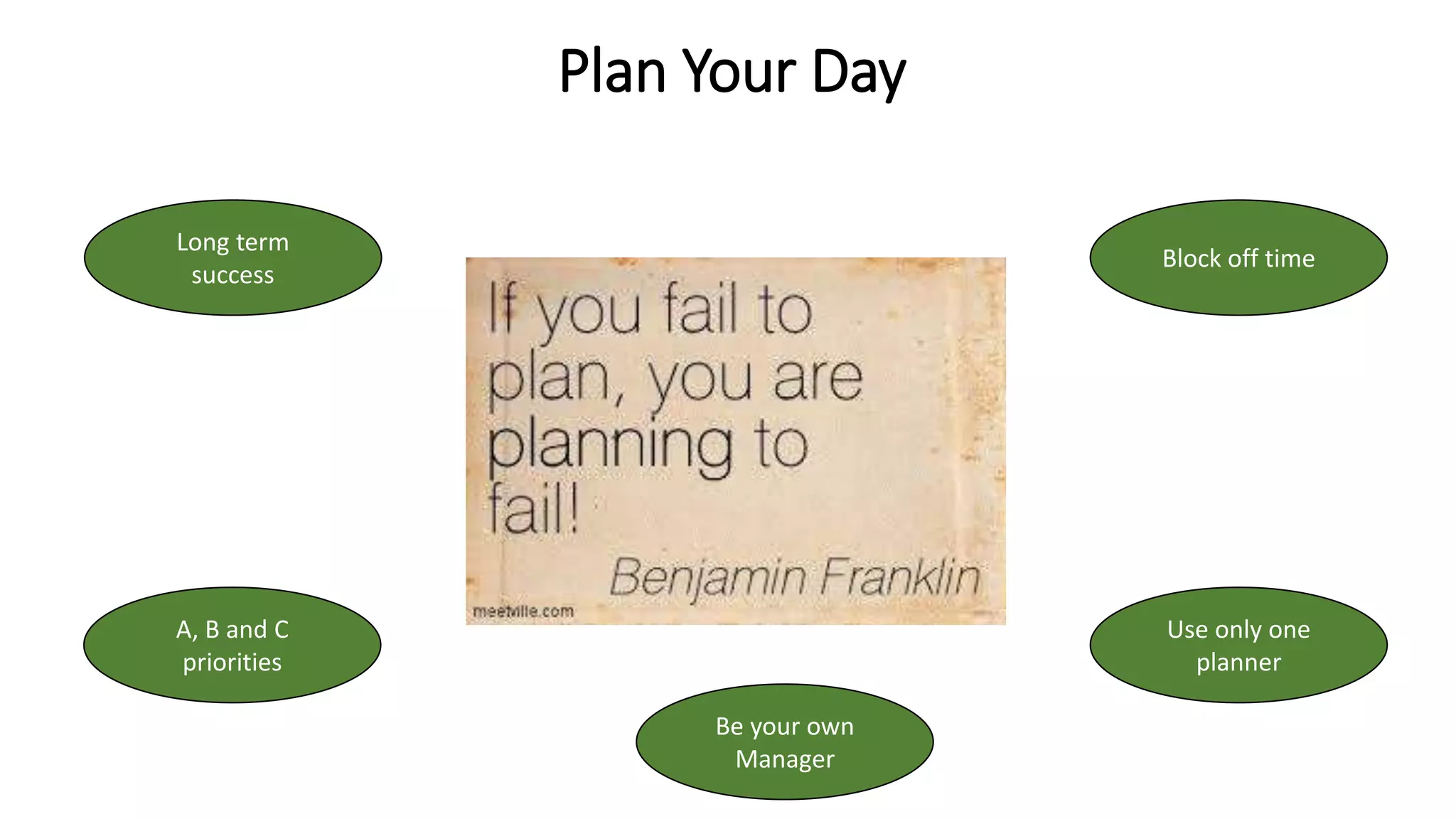
Plan Your Day
Long term
success
Use only one
planner
A, B and C
priorities
Block off time
Be your own
Manager
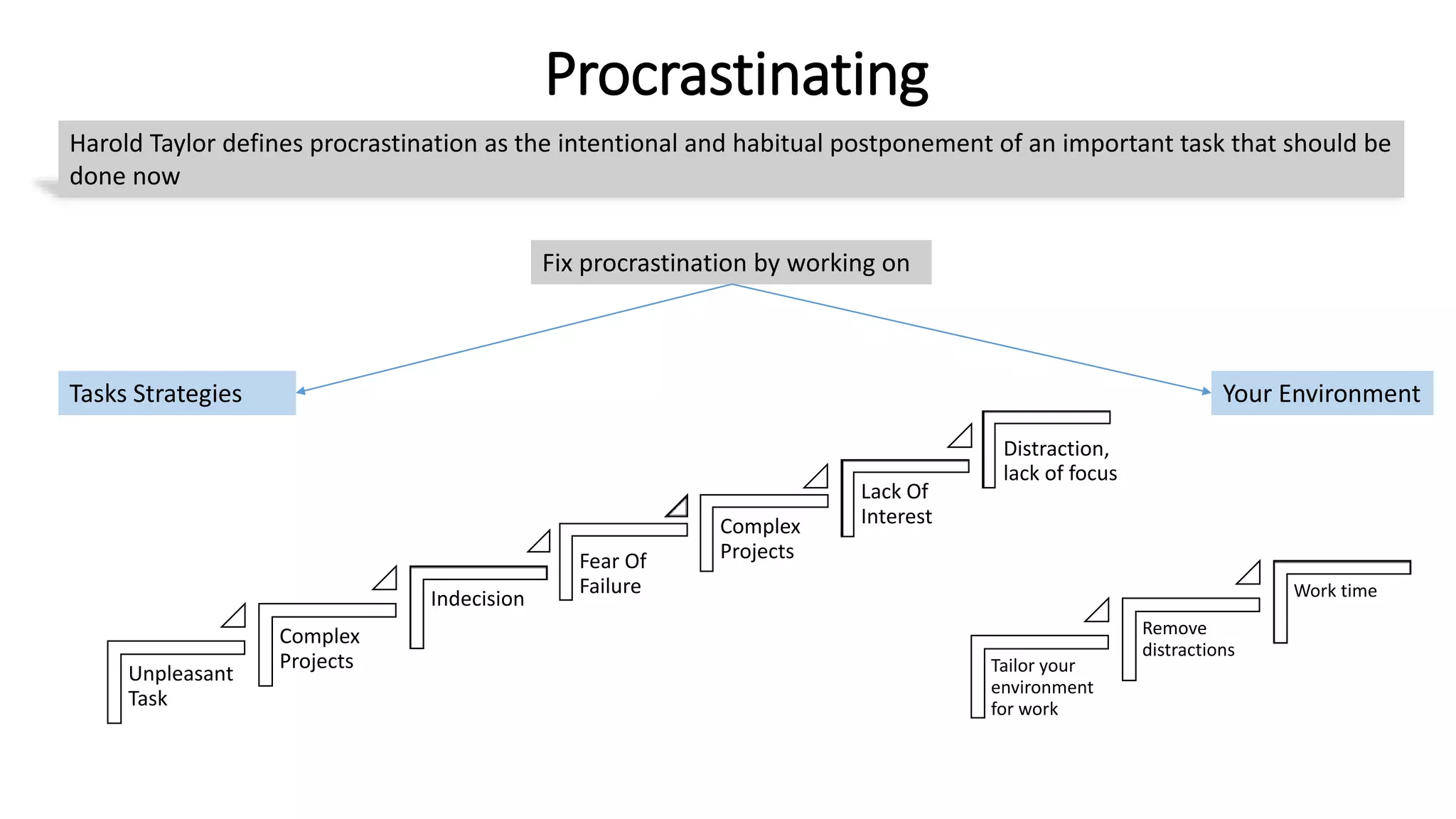
Procrastinating
Harold Taylor defines procrastination as the intentional and habitual postponement of an important task that should be
done now
Tasks Strategies
Fix procrastination by working on
Your Environment
Unpleasant
Task
Complex
Projects
Indecision
Fear Of
Failure
Complex
Projects
Lack Of
Interest
Distraction,
lack of focus
Tailor your
environment
for work
Remove
distractions
Work time
Principles of Time Management

Principles of Time Management

  • 1.
  • 3.
  • 4.
    Principles Of TimeManagement Select the task with highest priority Exclude all other tasks Put all efforts into
  • 5.
    Shortage of timeand pressure Incompetent Drained Harassed Overloaded Trapped Irritable
  • 6.
    Categories Of Personality Thefirst simply results from bad planning The second results from faulty estimating of time The fourth and final one is perhaps the most difficult: Addiction The third results from ignoring facts Sheep without a sheepdog
  • 7.
    Live for work Effectshome-life Hate routine and repetition Feed on challenges and completion Set over-ambitious goals Take on more work Workaholic Setting realistic deadlines Delegating as much as possible Scheduling breaks Re-assessing the number of hours worked
  • 8.
    Worrying what otherpeople think of them High stress levels Experiencing low self esteem when falling short of self-expectations Fearing rejection Going back over tasks again and again Perfectionist
  • 9.
    Compartmentalised Each compartment isopen to the exclusion of the others It is far healthier to be able to switch freely between compartments Work, Family, Sport, Shopping Tycoon mentality
  • 10.
    The most appropriatemethod of assessment to define your style of time management is to ask a set of questions. These questions should include the following: 1. Are you clear on your goals in life? 2. Are you clear on which of these goals should be reached within 12 months? 3. Are you regularly working toward your goals? 4. Are you happy to delegate tasks to others? 5. Can you prioritize tasks easily? 6. Do you trust other people to carry out tasks on your behalf? 7. Do you clear out any clutter? 8. Do you regularly clear your files or drawers of old paper? 9. Do you use the telephone rather than paperwork wherever possible? 10. When you go home, can you switch “off”? 11. Do you plan your day and your week? 12. Do you prioritize your work? Asking the right questions Any individual who replies “yes” to all of these questions is already a competent time manager.
  • 11.
    Plan Your Day Longterm success Use only one planner A, B and C priorities Block off time Be your own Manager
  • 12.
    Procrastinating Harold Taylor definesprocrastination as the intentional and habitual postponement of an important task that should be done now Tasks Strategies Fix procrastination by working on Your Environment Unpleasant Task Complex Projects Indecision Fear Of Failure Complex Projects Lack Of Interest Distraction, lack of focus Tailor your environment for work Remove distractions Work time