Downloaded 41 times

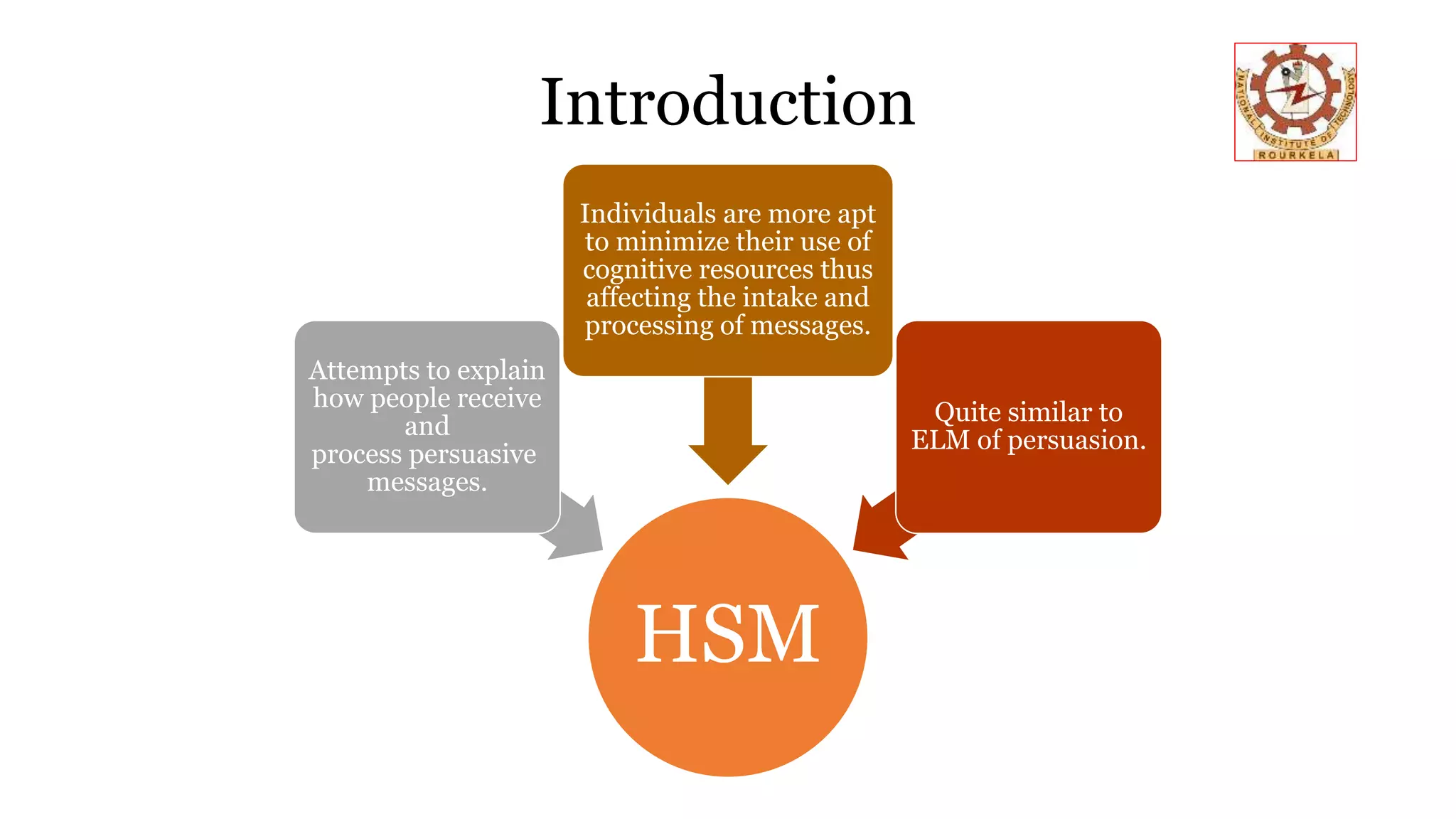
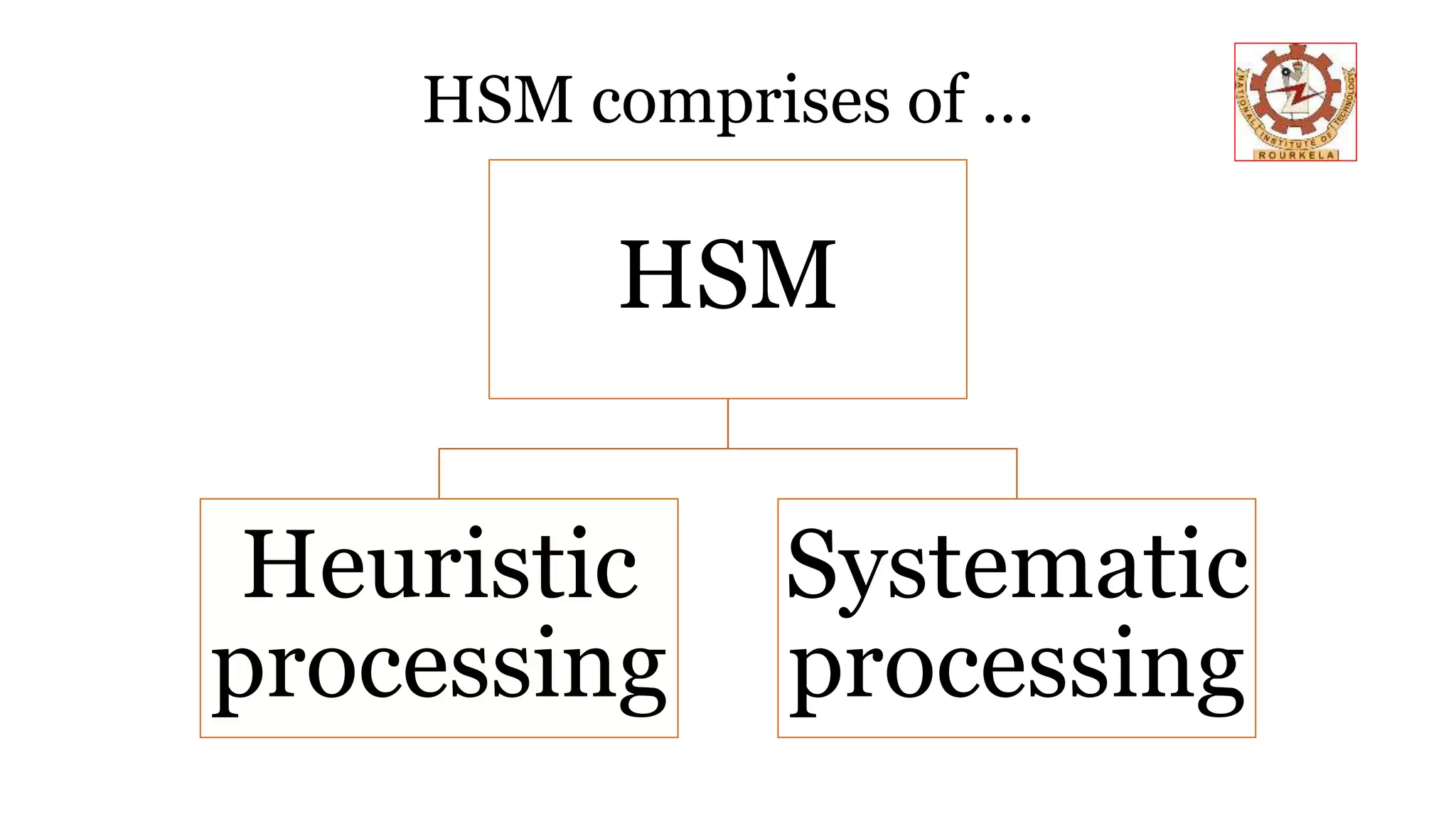


The heuristic-systematic model (HSM) attempts to explain how people receive and process persuasive messages. It comprises of heuristic processing and systematic processing. Heuristic processing uses judgmental rules stored in memory and requires minimal cognitive effort. Systematic processing involves comprehensive analysis of message content and source reliability. The model also explains that motivation and ability determine whether people use heuristic or systematic processing, and that sometimes both can occur simultaneously. A key criticism is that HSM is similar to the elaboration likelihood model, which also discusses dual routes to persuasion.


