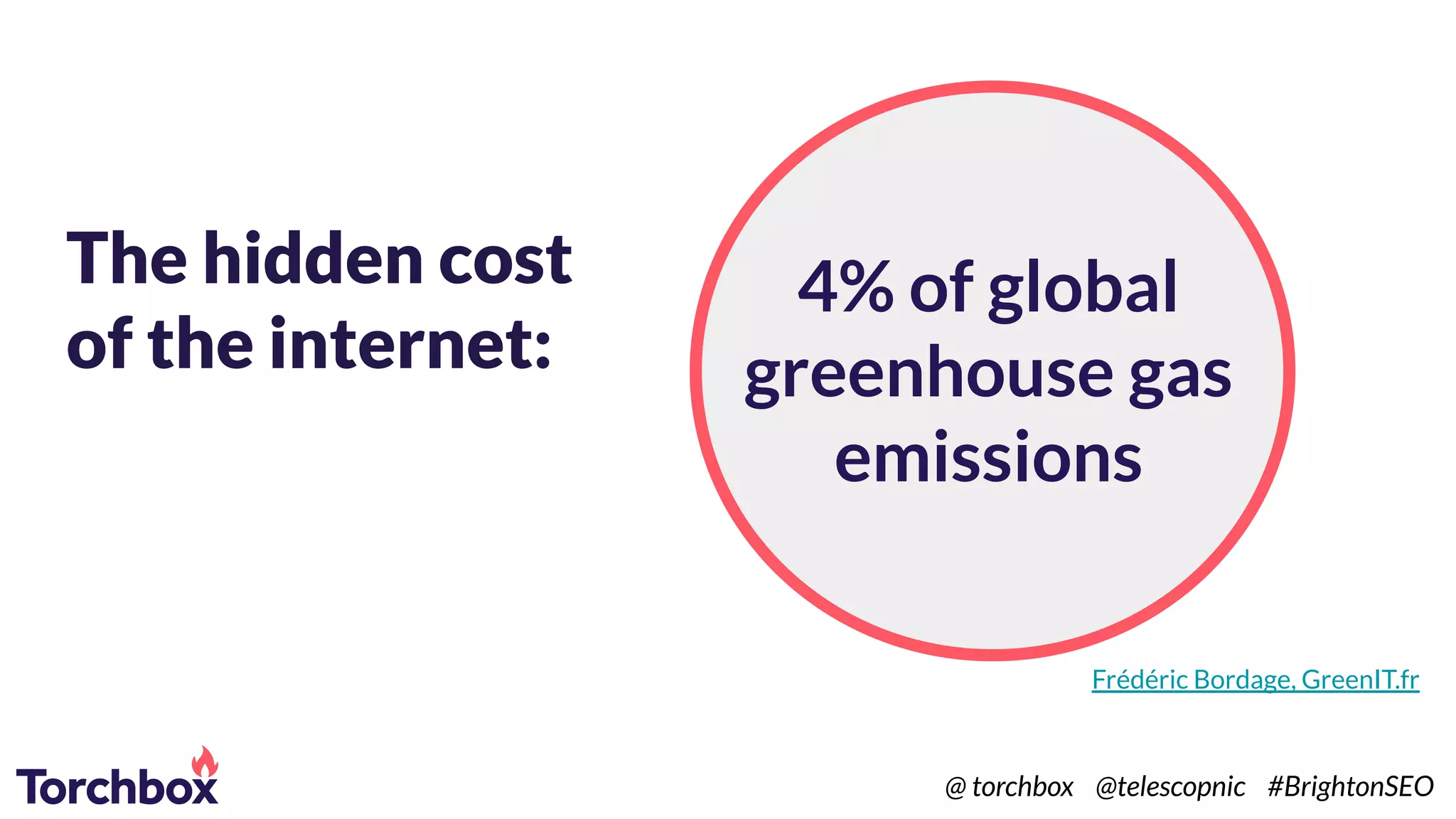
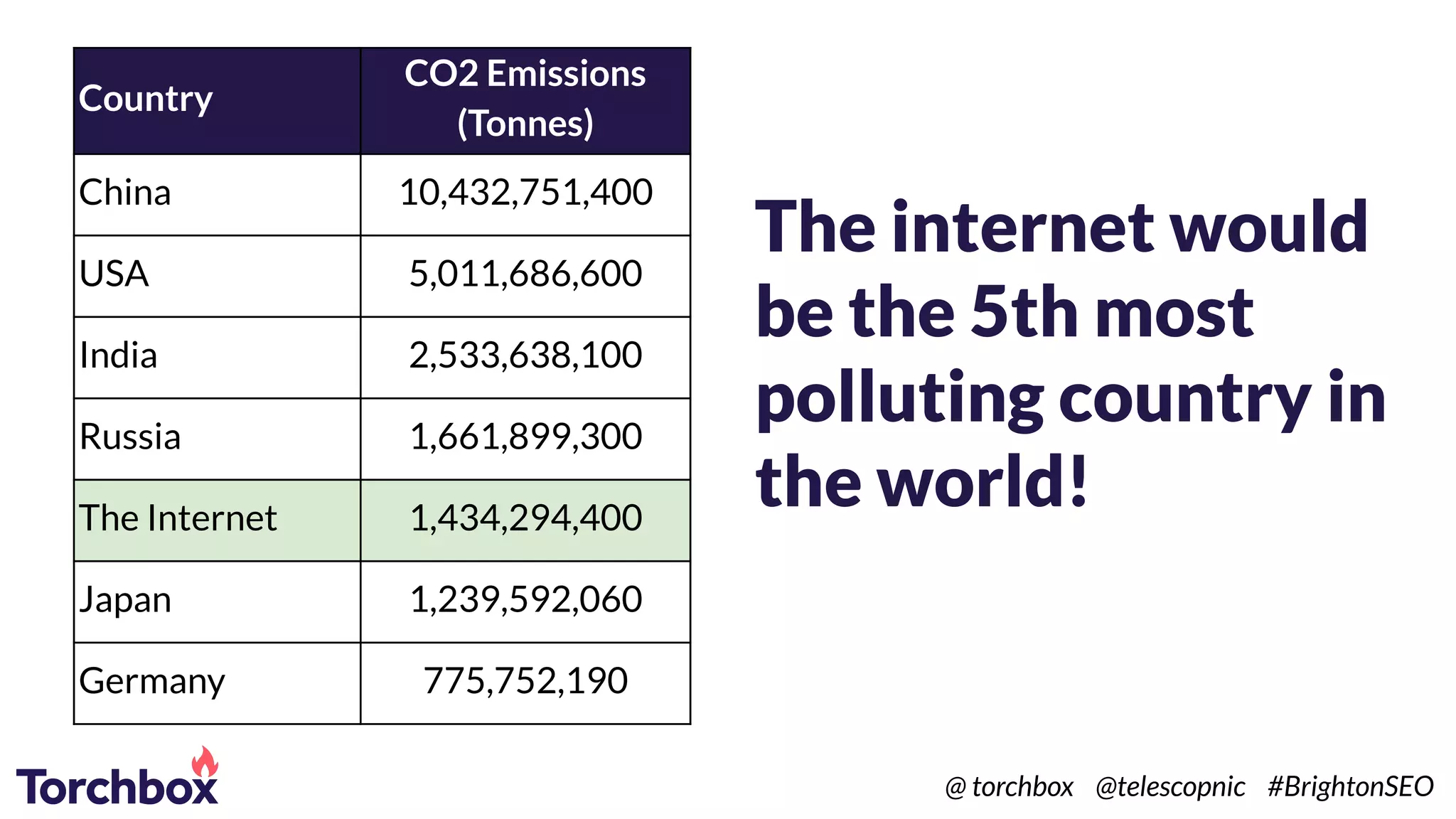
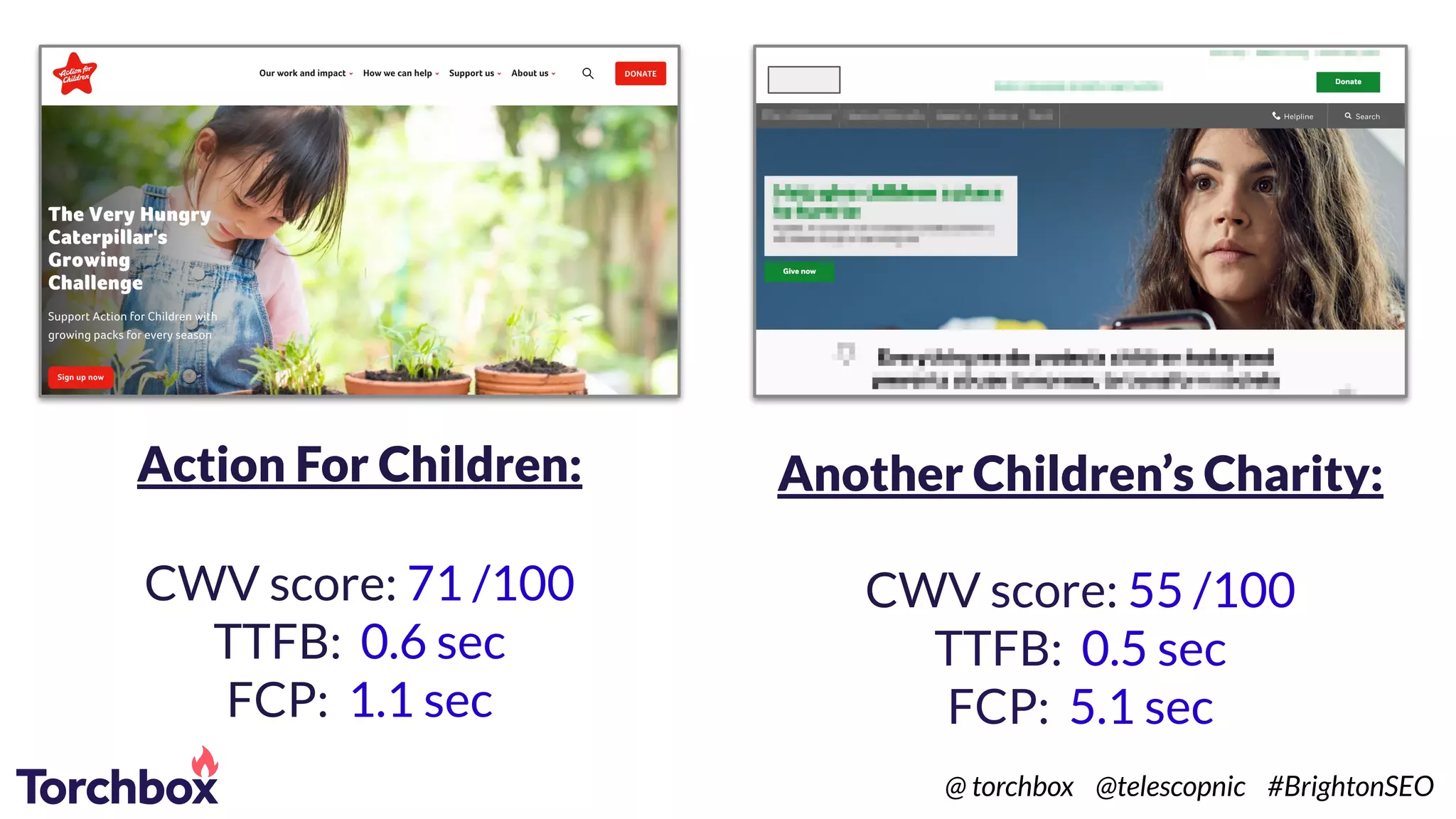
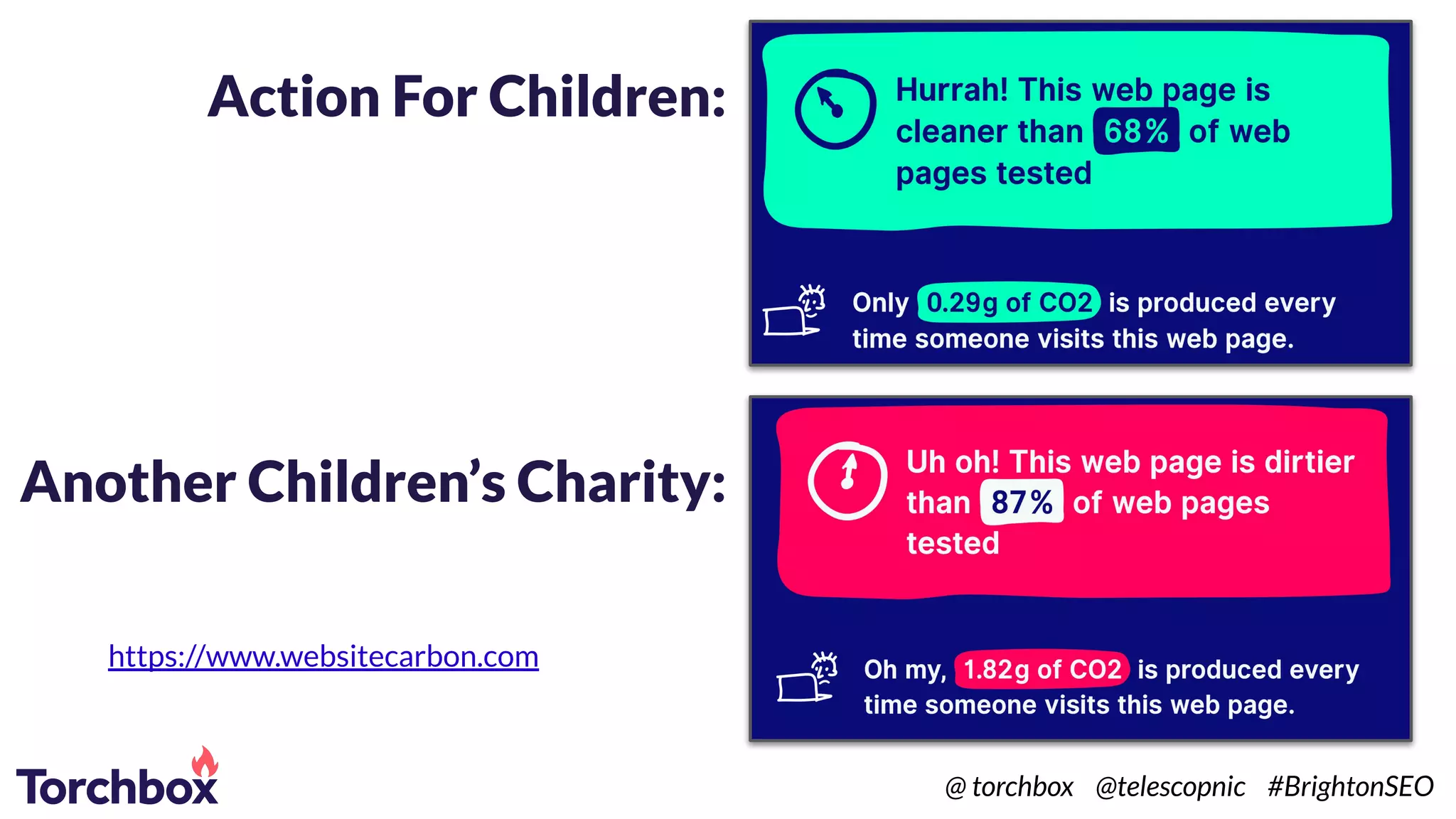
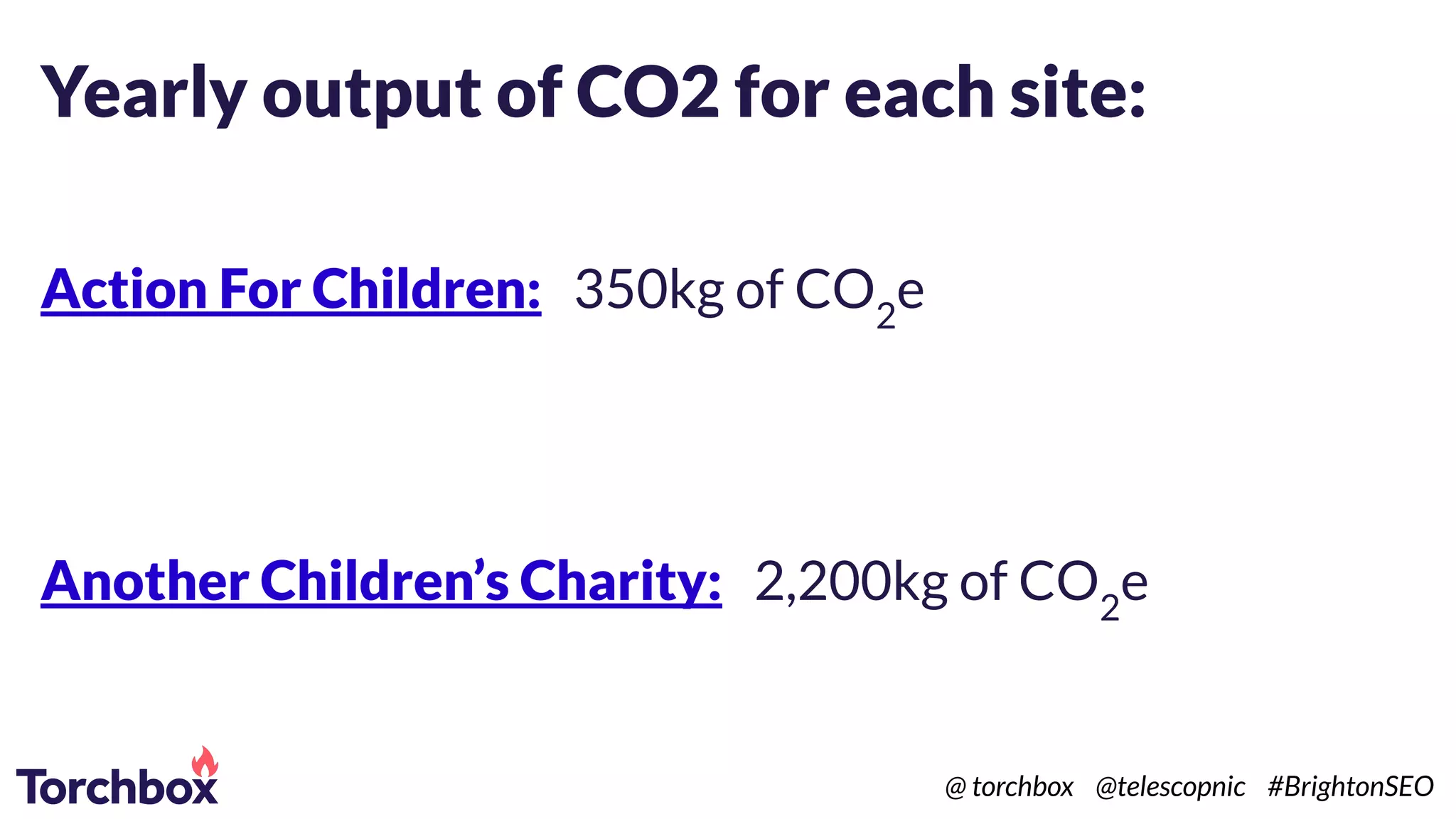
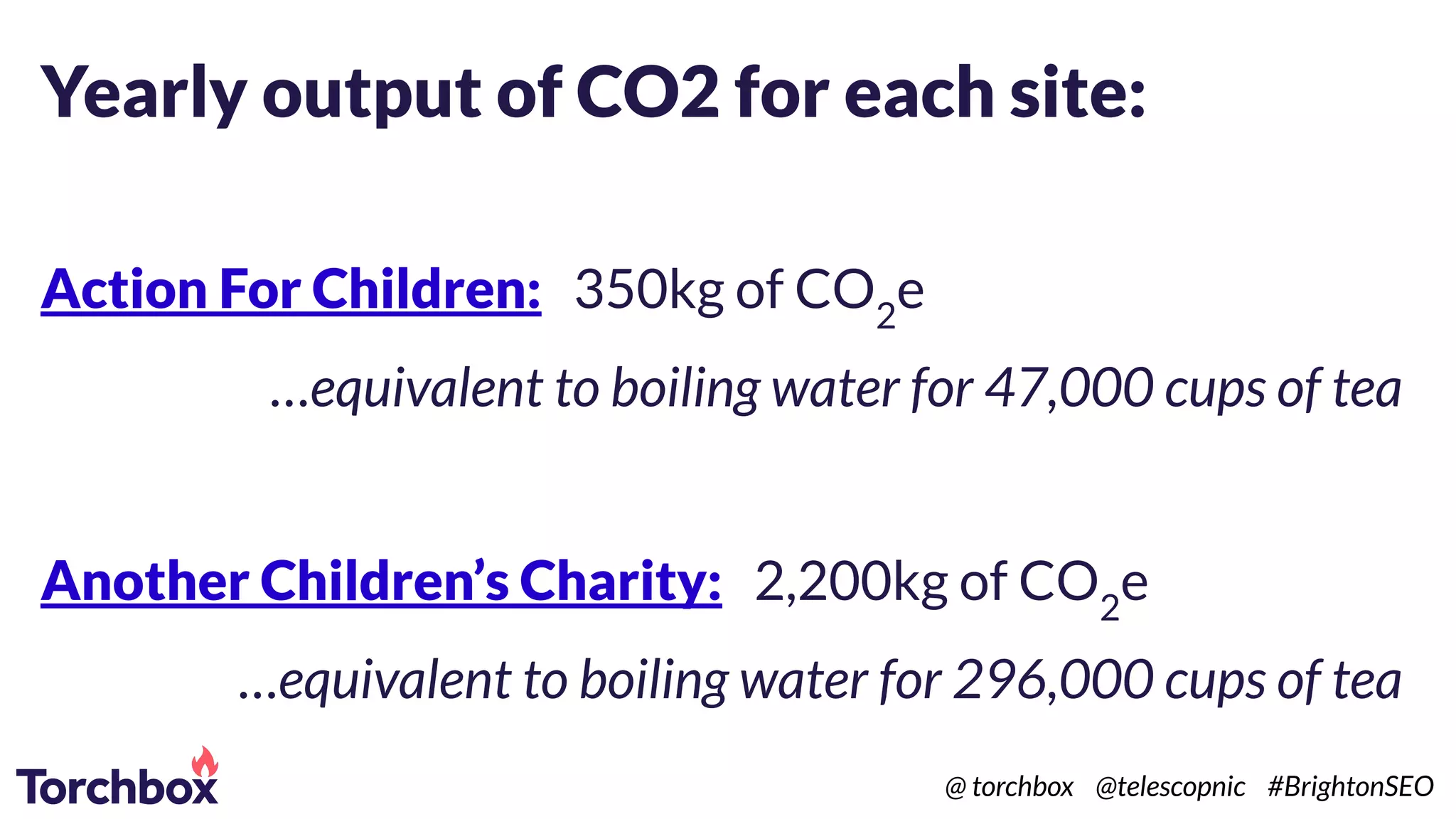
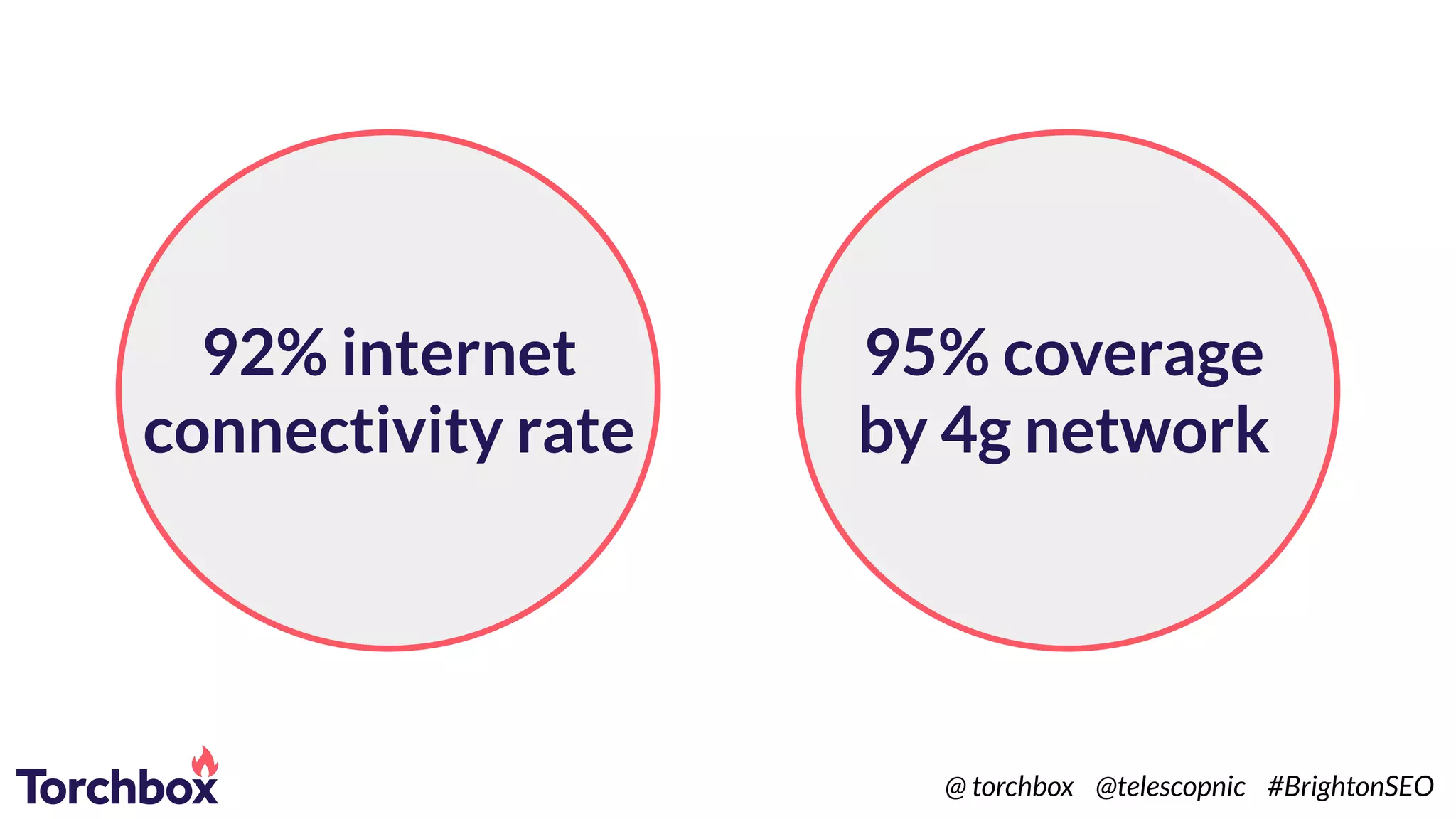
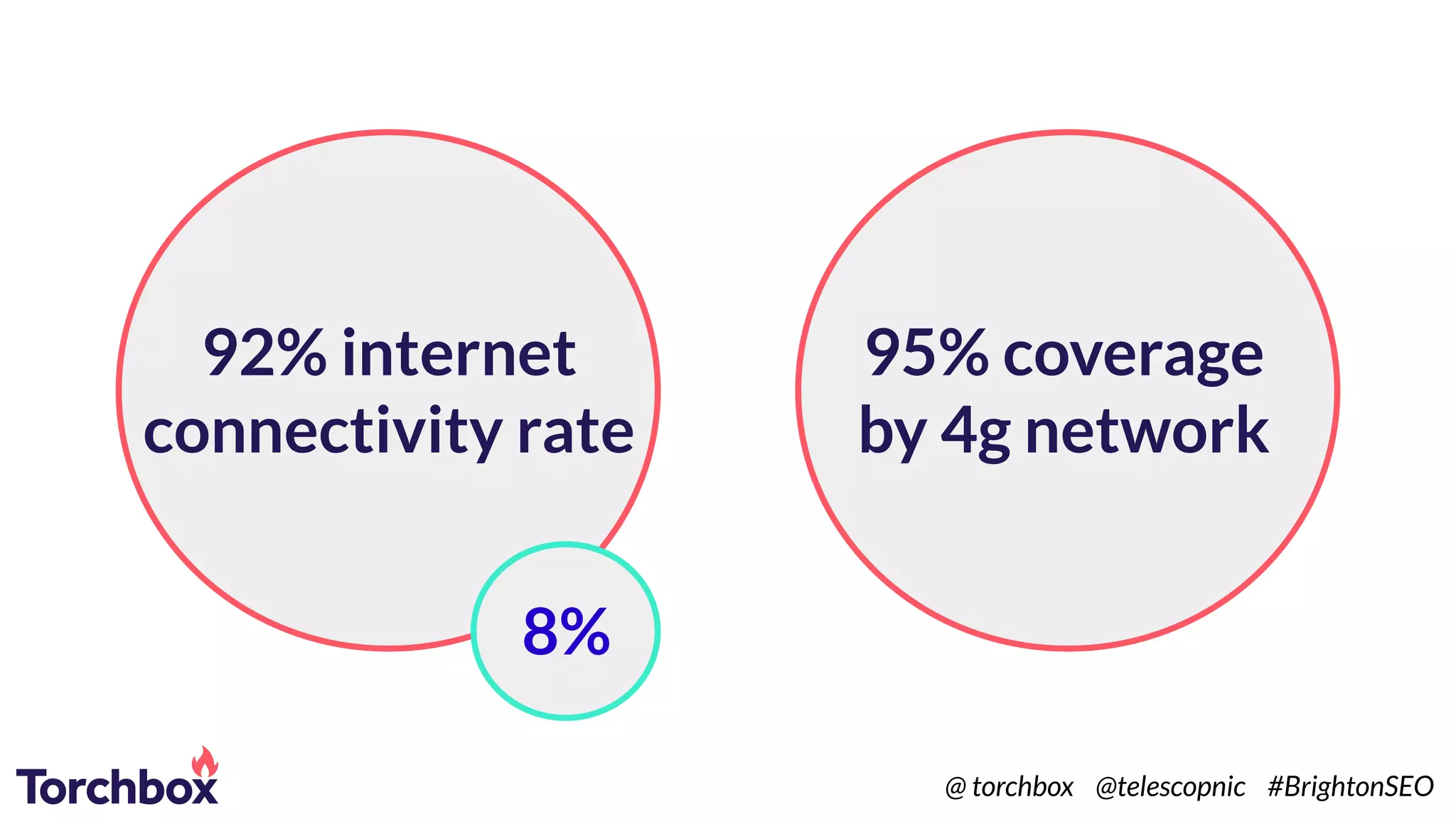
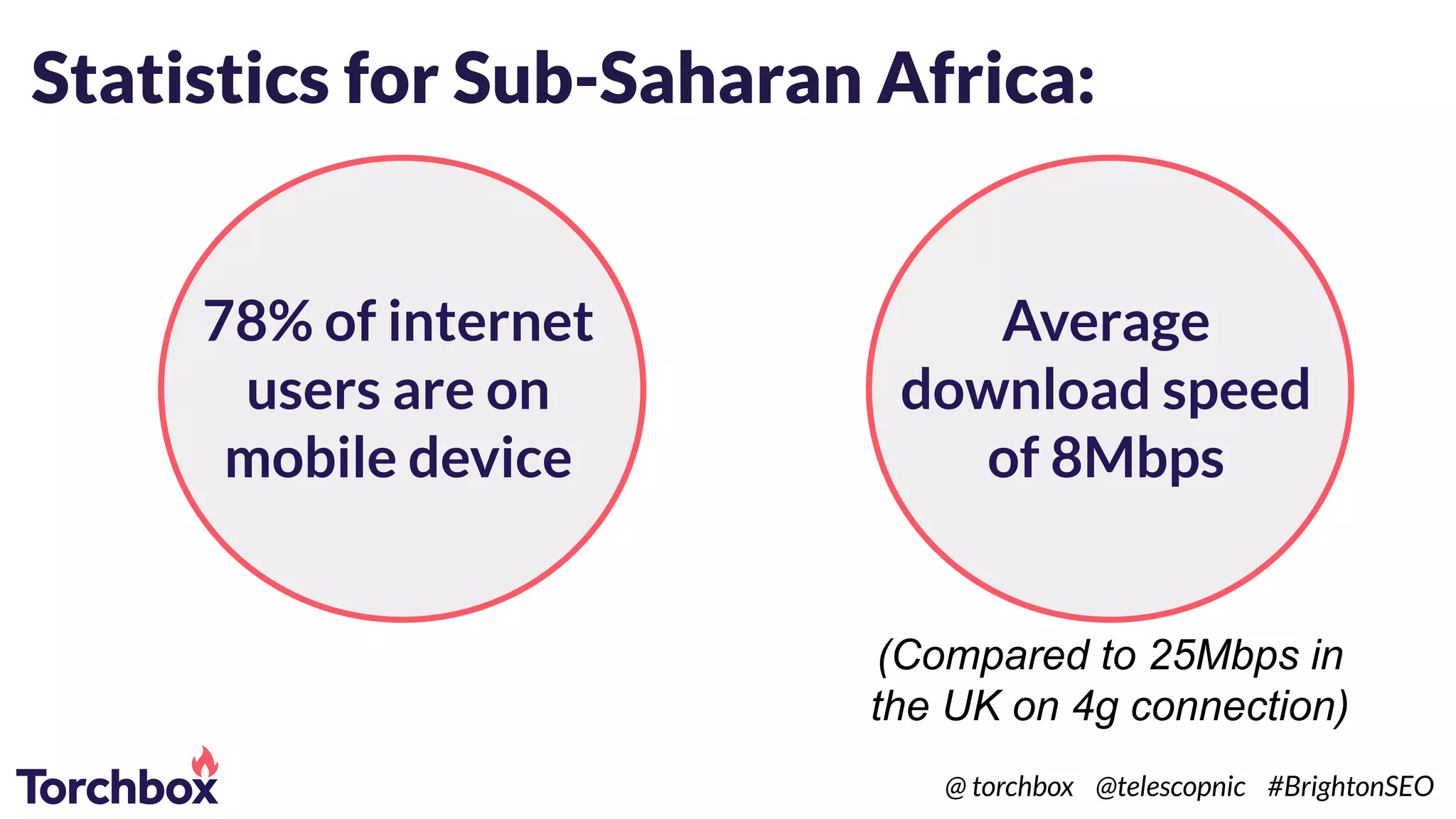
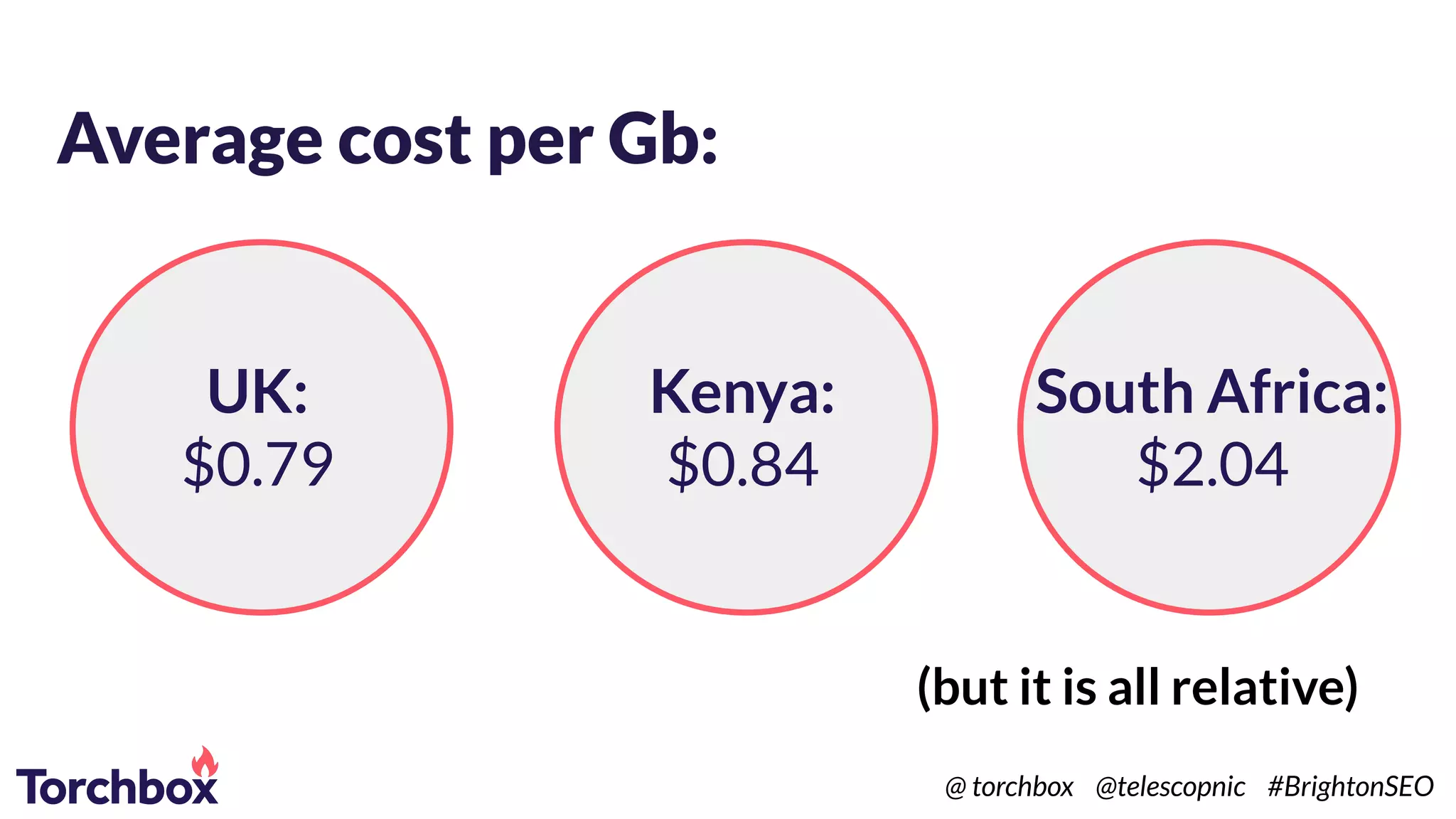
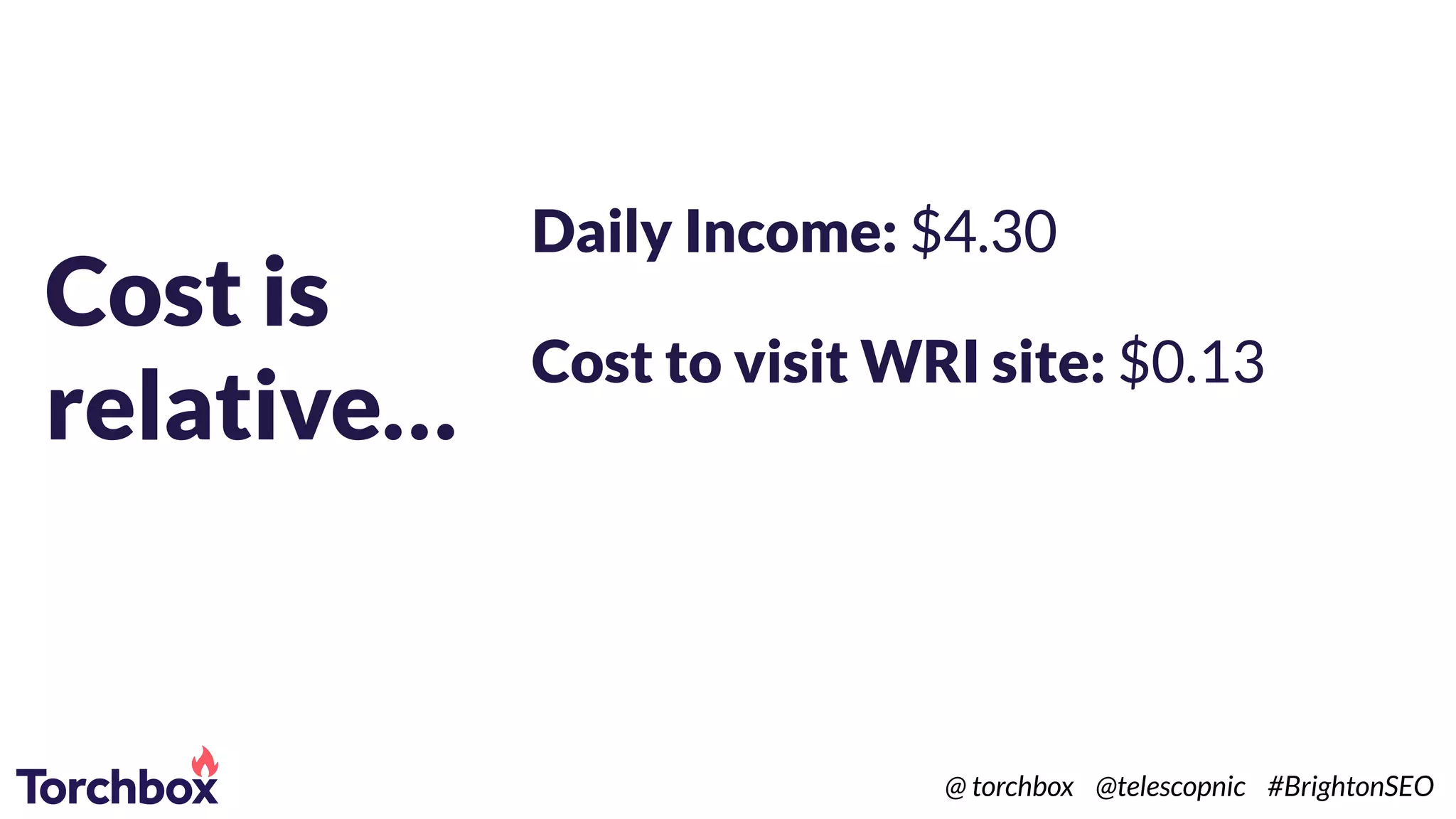
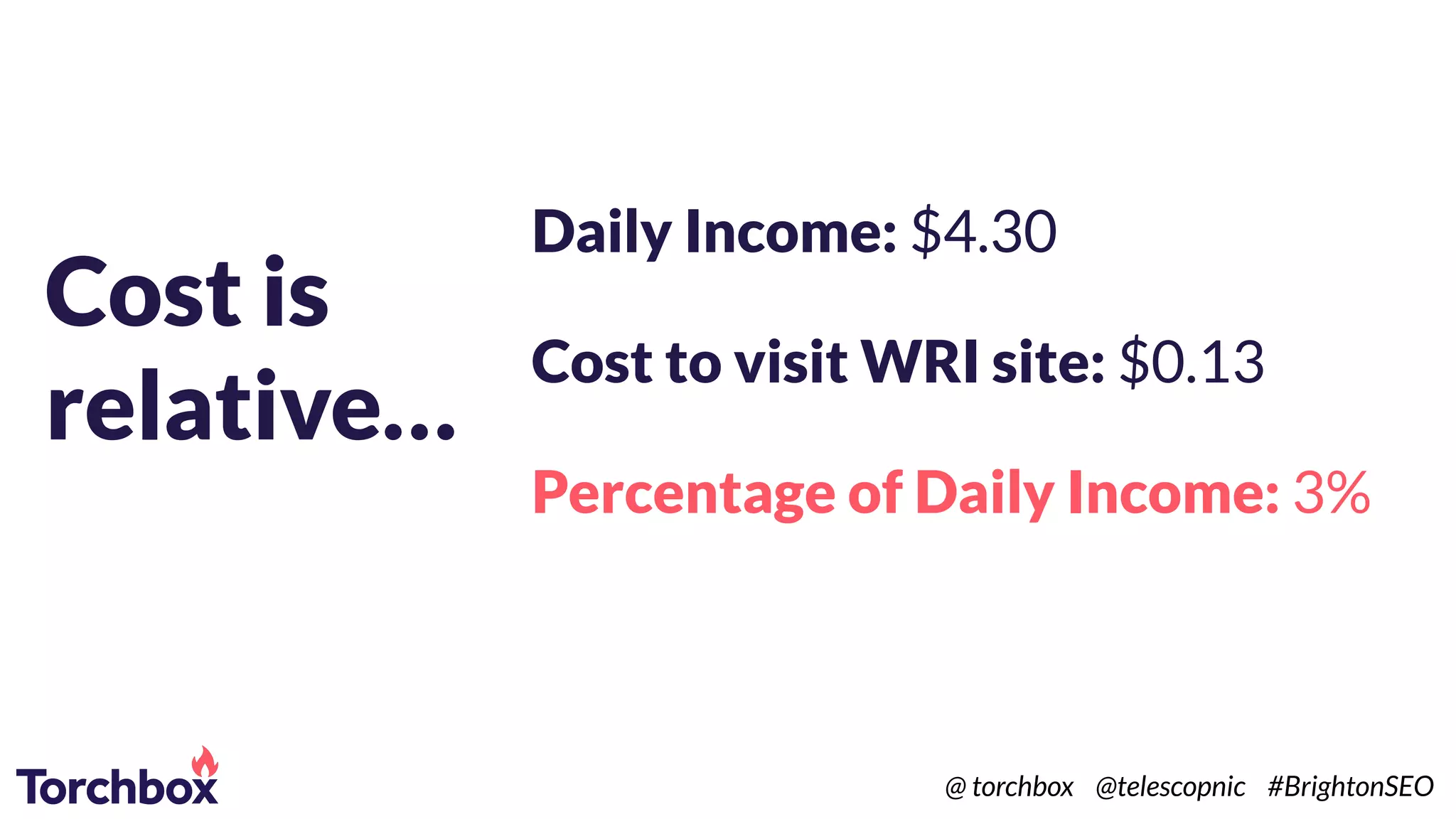
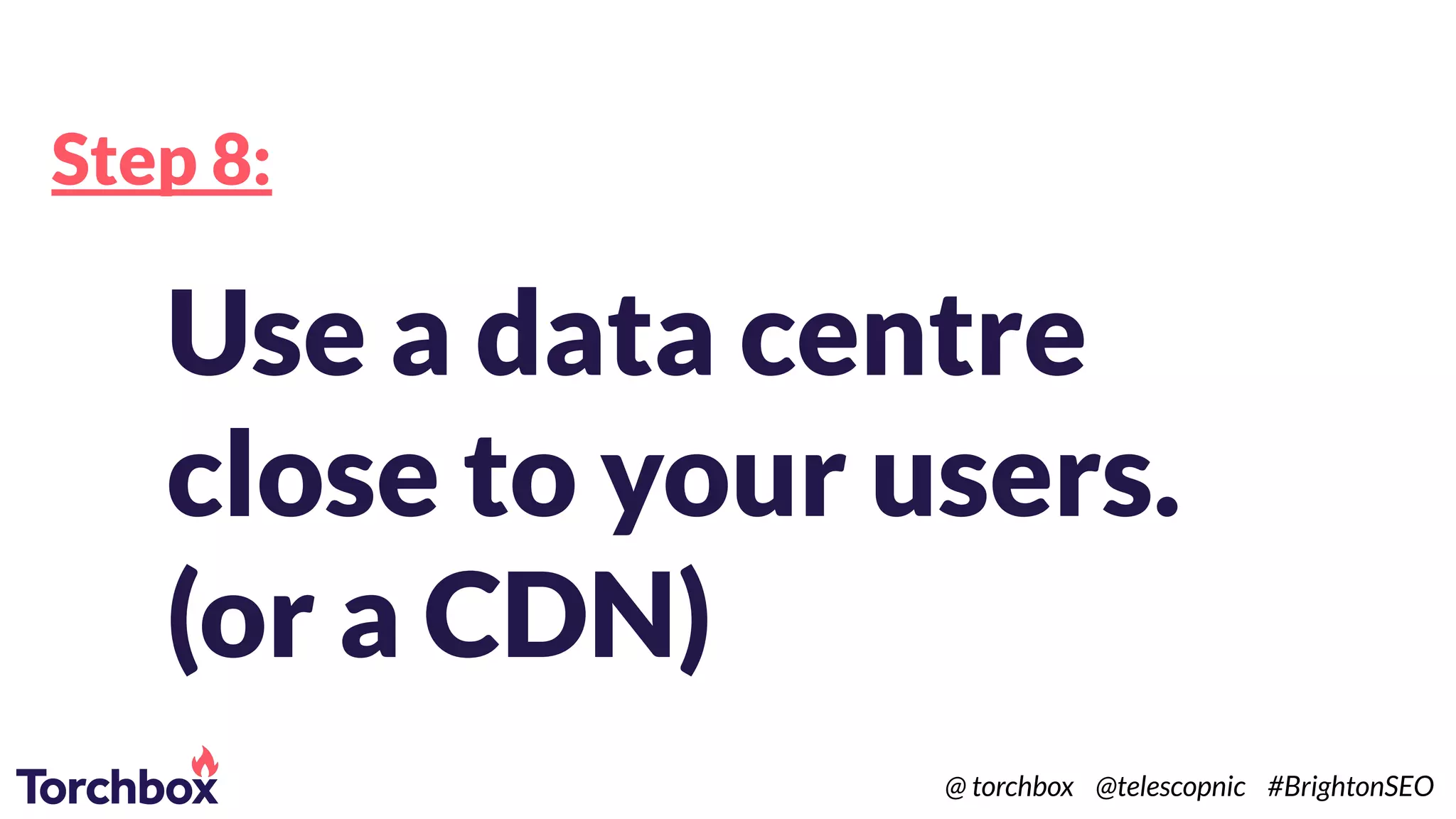
The document discusses how page speed matters for several reasons. Faster page speeds reduce the carbon footprint of the internet by reducing the energy used to load web pages. Testing the page speeds of two charity websites showed one site had a carbon footprint that was equivalent to boiling nearly 300,000 more cups of tea per year than the other site due to the slower page speeds. The document also discusses how slower page speeds disproportionately impact users in developing areas of the world with slower internet connections and higher data costs, potentially preventing access to important information. It provides eight recommendations for improving page speed, such as reducing content size, optimizing images/videos, using standard fonts, minimizing JavaScript, and using server caching and content delivery networks.


































![Content Design & its Role in SEO and Accessibility [BrightonSEO Spring 2023]](https://cdn.slidesharecdn.com/ss_thumbnails/bseocontentdesignitsroleinseoandaccessibility-230419114610-31da7d19-thumbnail.jpg?width=640&height=640&fit=bounds)


![[BrightonSEO 2022] Unlocking the Hidden Potential of Product Listing Pages](https://cdn.slidesharecdn.com/ss_thumbnails/abuali-brightonseo2022slides-221003112121-157abb52-thumbnail.jpg?width=640&height=640&fit=bounds)


