Surface Casing Vent Testing
Michael Beck
V.11.13.13
AER directive 2003-01
• Recognized as universal procedure across Canada
• Identifies differences between serious and non-serious
•
•
•

•

surface casing vents
Gives alternatives on what equipment to be used to
monitor flow rates and stabilized build-up pressure
Gives producers the opportunity to track venting issues
over a five year period
Helps identify pre-abandonment issues when it comes to
asset management
Helps identify internal or external gas migration
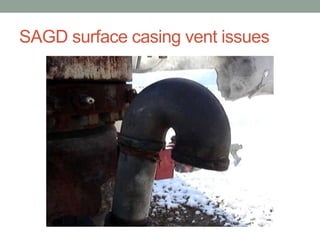
SAGD surface casing vent issues
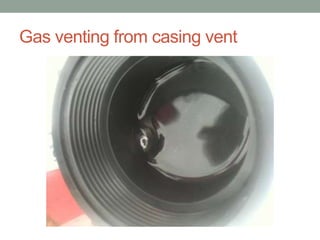
Gas venting from casing vent
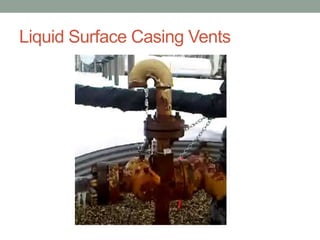
Liquid Surface Casing Vents
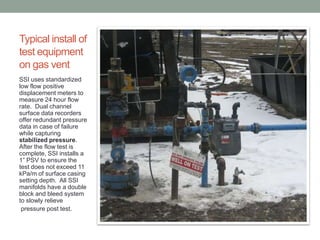
Typical install of
test equipment
on gas vent
SSI uses standardized
low flow positive
displacement meters to
measure 24 hour flow
rate. Dual channel
surface data recorders
offer redundant pressure
data in case of failure
while capturing
stabilized pressure.
After the flow test is
complete, SSI installs a
1” PSV to ensure the
test does not exceed 11
kPa/m of surface casing
setting depth. All SSI
manifolds have a double
block and bleed system
to slowly relieve
pressure post test.
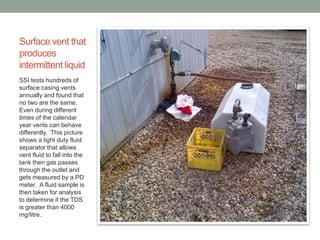
Surface vent that
produces
intermittent liquid
SSI tests hundreds of
surface casing vents
annually and found that
no two are the same.
Even during different
times of the calendar
year vents can behave
differently. This picture
shows a light duty fluid
separator that allows
vent fluid to fall into the
tank then gas passes
through the outlet and
gets measured by a PD
meter. A fluid sample is
then taken for analysis
to determine if the TDS
is greater than 4000
mg/litre.
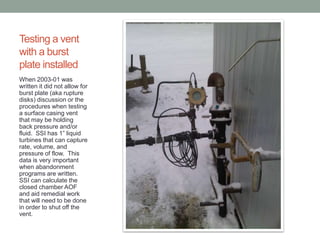
Testing a vent
with a burst
plate installed
When 2003-01 was
written it did not allow for
burst plate (aka rupture
disks) discussion or the
procedures when testing
a surface casing vent
that may be holding
back pressure and/or
fluid. SSI has 1” liquid
turbines that can capture
rate, volume, and
pressure of flow. This
data is very important
when abandonment
programs are written.
SSI can calculate the
closed chamber AOF
and aid remedial work
that will need to be done
in order to shut off the
vent.
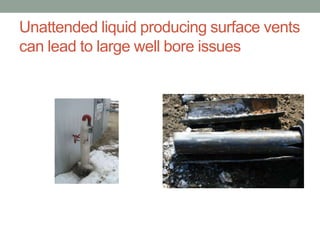
Unattended liquid producing surface vents
can lead to large well bore issues
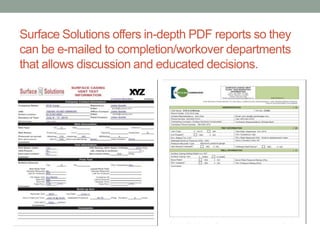
Surface Solutions offers in-depth PDF reports so they
can be e-mailed to completion/workover departments
that allows discussion and educated decisions.
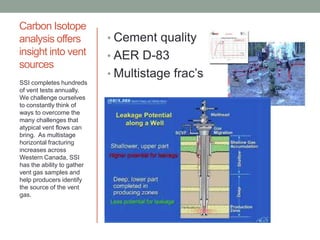
Carbon Isotope
analysis offers
insight into vent
sources
SSI completes hundreds
of vent tests annually.
We challenge ourselves
to constantly think of
ways to overcome the
many challenges that
atypical vent flows can
bring. As multistage
horizontal fracturing
increases across
Western Canada, SSI
has the ability to gather
vent gas samples and
help producers identify
the source of the vent
gas.

• Cement quality
• AER D-83
• Multistage frac’s
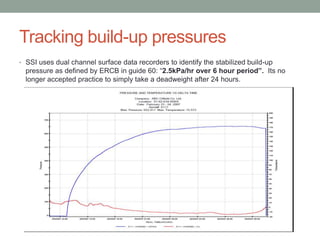
Tracking build-up pressures
• SSI uses dual channel surface data recorders to identify the stabilized build-up

pressure as defined by ERCB in guide 60: “2.5kPa/hr over 6 hour period”. Its no
longer accepted practice to simply take a deadweight after 24 hours.
Conclusion:
• SSI uses the latest equipment to effectively give you the
•
•

•
•

results needed to make important decisions
Established procedures based on over 14 years of
personal experience in the field of vent testing
Detailed reports can be processed to include laboratory
analysis helping classify the vent serious or non-serious
Experience in various situations across Western Canada
keeps Surface Solutions on top of the industry
Innovators like SSI lead the discussion in producers’
boardrooms to identify possible zonal gas migration to
surface and how to monitor, database, and identify
solutions to keep hydraulic fracturing safe for the
environment.
• Grande Prairie Head Office

#109, 8715 – 109 street
Grande Prairie, Alberta
T8V 8H7
• Red Deer Operations
Bay 7, 7421 – Edgar Industrial Drive
Red Deer, Alberta
T4P 3R2
• Saskatchewan Operations
1514 – 4th street
Estevan, Saskatchewan
S4A 0X6
• Calgary Sales Office
Suite 1600, 144 – 4th Ave. SW
Calgary, Alberta
T2P 3N4
Surface casing vent testing nov 13-2013

Surface casing vent testing nov 13-2013

  • 1.
    Surface Casing VentTesting Michael Beck V.11.13.13
  • 2.
    AER directive 2003-01 •Recognized as universal procedure across Canada • Identifies differences between serious and non-serious • • • • surface casing vents Gives alternatives on what equipment to be used to monitor flow rates and stabilized build-up pressure Gives producers the opportunity to track venting issues over a five year period Helps identify pre-abandonment issues when it comes to asset management Helps identify internal or external gas migration
  • 3.
  • 4.
    Gas venting fromcasing vent
  • 5.
  • 6.
    Typical install of testequipment on gas vent SSI uses standardized low flow positive displacement meters to measure 24 hour flow rate. Dual channel surface data recorders offer redundant pressure data in case of failure while capturing stabilized pressure. After the flow test is complete, SSI installs a 1” PSV to ensure the test does not exceed 11 kPa/m of surface casing setting depth. All SSI manifolds have a double block and bleed system to slowly relieve pressure post test.
  • 7.
    Surface vent that produces intermittentliquid SSI tests hundreds of surface casing vents annually and found that no two are the same. Even during different times of the calendar year vents can behave differently. This picture shows a light duty fluid separator that allows vent fluid to fall into the tank then gas passes through the outlet and gets measured by a PD meter. A fluid sample is then taken for analysis to determine if the TDS is greater than 4000 mg/litre.
  • 8.
    Testing a vent witha burst plate installed When 2003-01 was written it did not allow for burst plate (aka rupture disks) discussion or the procedures when testing a surface casing vent that may be holding back pressure and/or fluid. SSI has 1” liquid turbines that can capture rate, volume, and pressure of flow. This data is very important when abandonment programs are written. SSI can calculate the closed chamber AOF and aid remedial work that will need to be done in order to shut off the vent.
  • 9.
    Unattended liquid producingsurface vents can lead to large well bore issues
  • 10.
    Surface Solutions offersin-depth PDF reports so they can be e-mailed to completion/workover departments that allows discussion and educated decisions.
  • 11.
    Carbon Isotope analysis offers insightinto vent sources SSI completes hundreds of vent tests annually. We challenge ourselves to constantly think of ways to overcome the many challenges that atypical vent flows can bring. As multistage horizontal fracturing increases across Western Canada, SSI has the ability to gather vent gas samples and help producers identify the source of the vent gas. • Cement quality • AER D-83 • Multistage frac’s
  • 12.
    Tracking build-up pressures •SSI uses dual channel surface data recorders to identify the stabilized build-up pressure as defined by ERCB in guide 60: “2.5kPa/hr over 6 hour period”. Its no longer accepted practice to simply take a deadweight after 24 hours.
  • 13.
    Conclusion: • SSI usesthe latest equipment to effectively give you the • • • • results needed to make important decisions Established procedures based on over 14 years of personal experience in the field of vent testing Detailed reports can be processed to include laboratory analysis helping classify the vent serious or non-serious Experience in various situations across Western Canada keeps Surface Solutions on top of the industry Innovators like SSI lead the discussion in producers’ boardrooms to identify possible zonal gas migration to surface and how to monitor, database, and identify solutions to keep hydraulic fracturing safe for the environment.
  • 14.
    • Grande PrairieHead Office #109, 8715 – 109 street Grande Prairie, Alberta T8V 8H7 • Red Deer Operations Bay 7, 7421 – Edgar Industrial Drive Red Deer, Alberta T4P 3R2 • Saskatchewan Operations 1514 – 4th street Estevan, Saskatchewan S4A 0X6 • Calgary Sales Office Suite 1600, 144 – 4th Ave. SW Calgary, Alberta T2P 3N4