STAGES INVOLVED IN THE
COMMUNICATION PROCESS
Prepared by: Ms. Lynel Grace O, Balderas
SHS Instructor/ English Coordinator
STAGE 1: CONCEPTUALIZING
Everything you intend to convey to others
originates in your brain, the storehouse of the
things you know about your world. These are
your concepts, ideas, images, experiences,
beliefs, attitudes, values about people things,
places, or events in this universe.
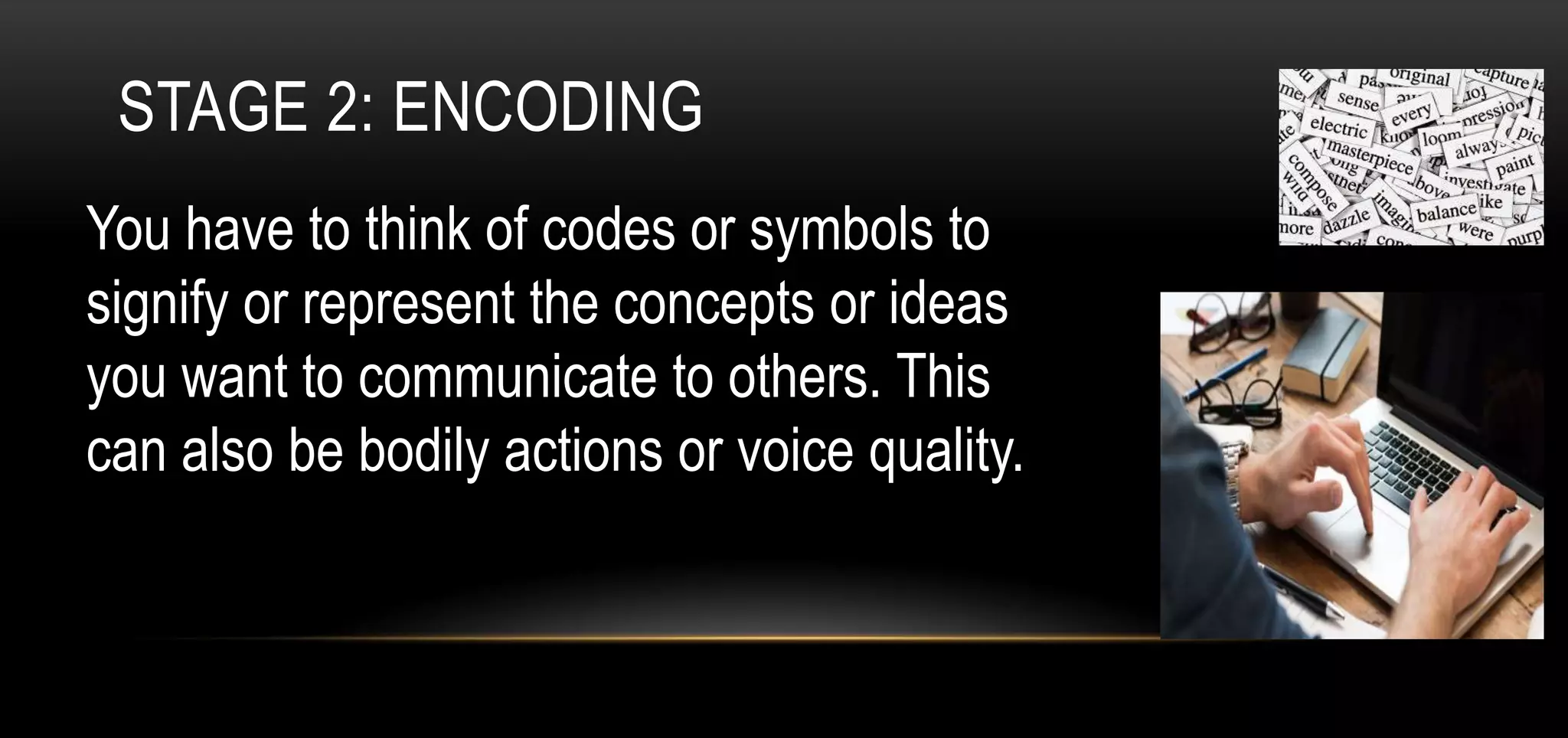
STAGE 2: ENCODING
You have to think of codes or symbols to
signify or represent the concepts or ideas
you want to communicate to others. This
can also be bodily actions or voice quality.
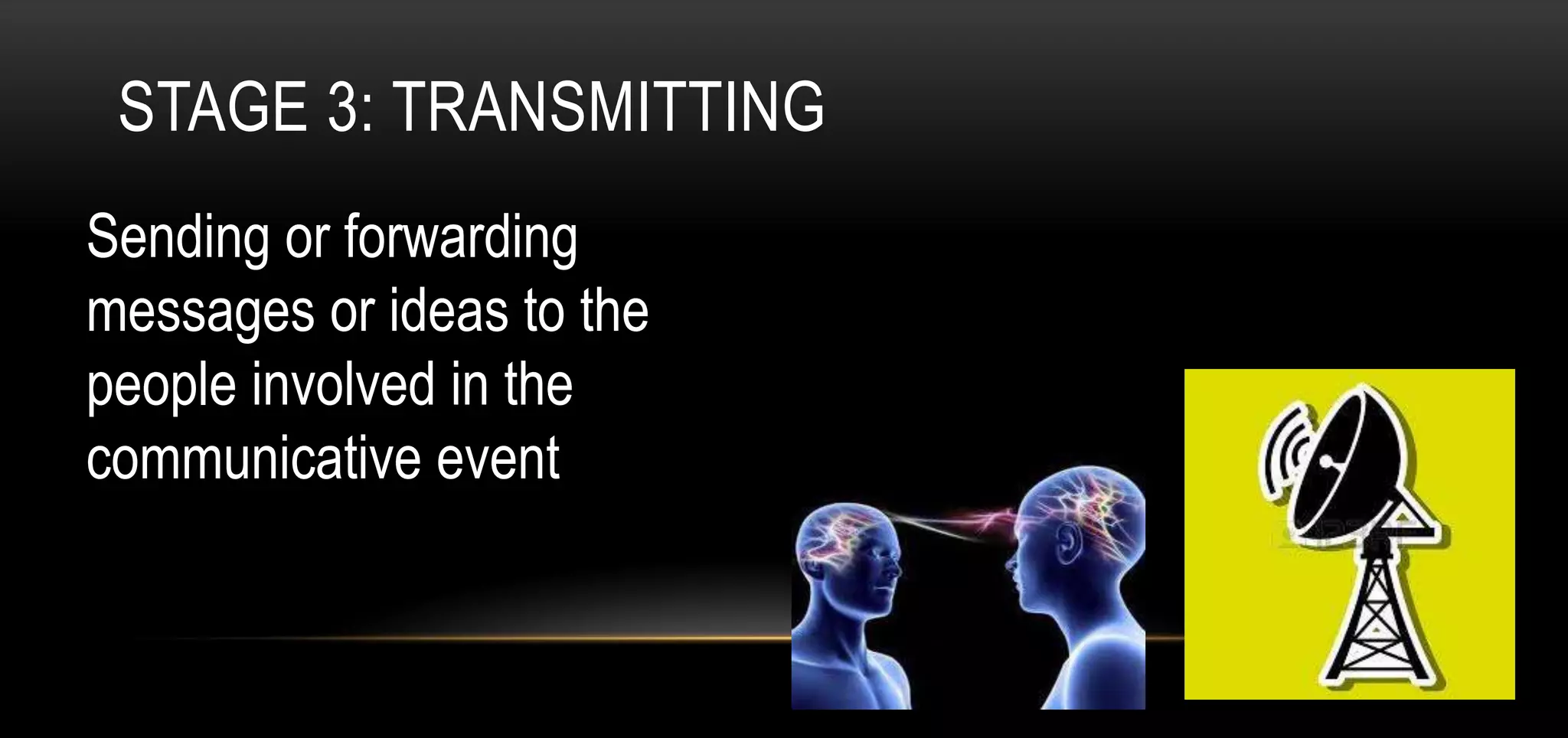
STAGE 3: TRANSMITTING
Sending or forwarding
messages or ideas to the
people involved in the
communicative event
STAGE 4: RECEIVING
In this stage , what takes place is
just hearing and seeing
STAGE 5: DECODING
In this stage you translate the symbols to ordinary
language that mirrors your cultural, sociological,
ideological, institutional or environmental
understanding of the world.
- In this stage your giving meanings to the symbols
appealing to your sensory experience.
STAGE 6: RESPONDING
• Your reaction is either positive or
negative based on the meanings signified
by the symbols or ideas expressed by
words, gestures, facial expressions, voice
intonations or tone.
STAGE 7: VERIFYING
To make sure that your acts of exchanging views or
ideas with other people really cater their interest,
likes, dislikes, you have to verify or check the effects
of your communication to them

Stages involved in the communication process

  • 1.
    STAGES INVOLVED INTHE COMMUNICATION PROCESS Prepared by: Ms. Lynel Grace O, Balderas SHS Instructor/ English Coordinator
  • 2.
    STAGE 1: CONCEPTUALIZING Everythingyou intend to convey to others originates in your brain, the storehouse of the things you know about your world. These are your concepts, ideas, images, experiences, beliefs, attitudes, values about people things, places, or events in this universe.
  • 3.
    STAGE 2: ENCODING Youhave to think of codes or symbols to signify or represent the concepts or ideas you want to communicate to others. This can also be bodily actions or voice quality.
  • 4.
    STAGE 3: TRANSMITTING Sendingor forwarding messages or ideas to the people involved in the communicative event
  • 5.
    STAGE 4: RECEIVING Inthis stage , what takes place is just hearing and seeing
  • 6.
    STAGE 5: DECODING Inthis stage you translate the symbols to ordinary language that mirrors your cultural, sociological, ideological, institutional or environmental understanding of the world. - In this stage your giving meanings to the symbols appealing to your sensory experience.
  • 7.
    STAGE 6: RESPONDING •Your reaction is either positive or negative based on the meanings signified by the symbols or ideas expressed by words, gestures, facial expressions, voice intonations or tone.
  • 8.
    STAGE 7: VERIFYING Tomake sure that your acts of exchanging views or ideas with other people really cater their interest, likes, dislikes, you have to verify or check the effects of your communication to them