Part One: Have you been fooled by
the no.1 graphic design fallacy?
You are creating a presentation
on the importance of branding for
your colleagues
Imagine the scenario.
The pressure is on because as a
marketer, if you can’t communicate a
message to your own staff, how will they
trust you to communicate a message to a
wider audience?
Is the font big
enough?
Do you have too
many slides?
Should you use a
different shade
of blue?
This presentation will help you
overcome some of these worries.
It will help you use a variety of design techniques to
layout documents, such as presentations, in a way that
communicates your core message, or messages, most
powerfully.
Your design will have a
business purpose.
What is the
no.1 graphic design
fallacy?
Sometimes design is confused
with aesthetics.
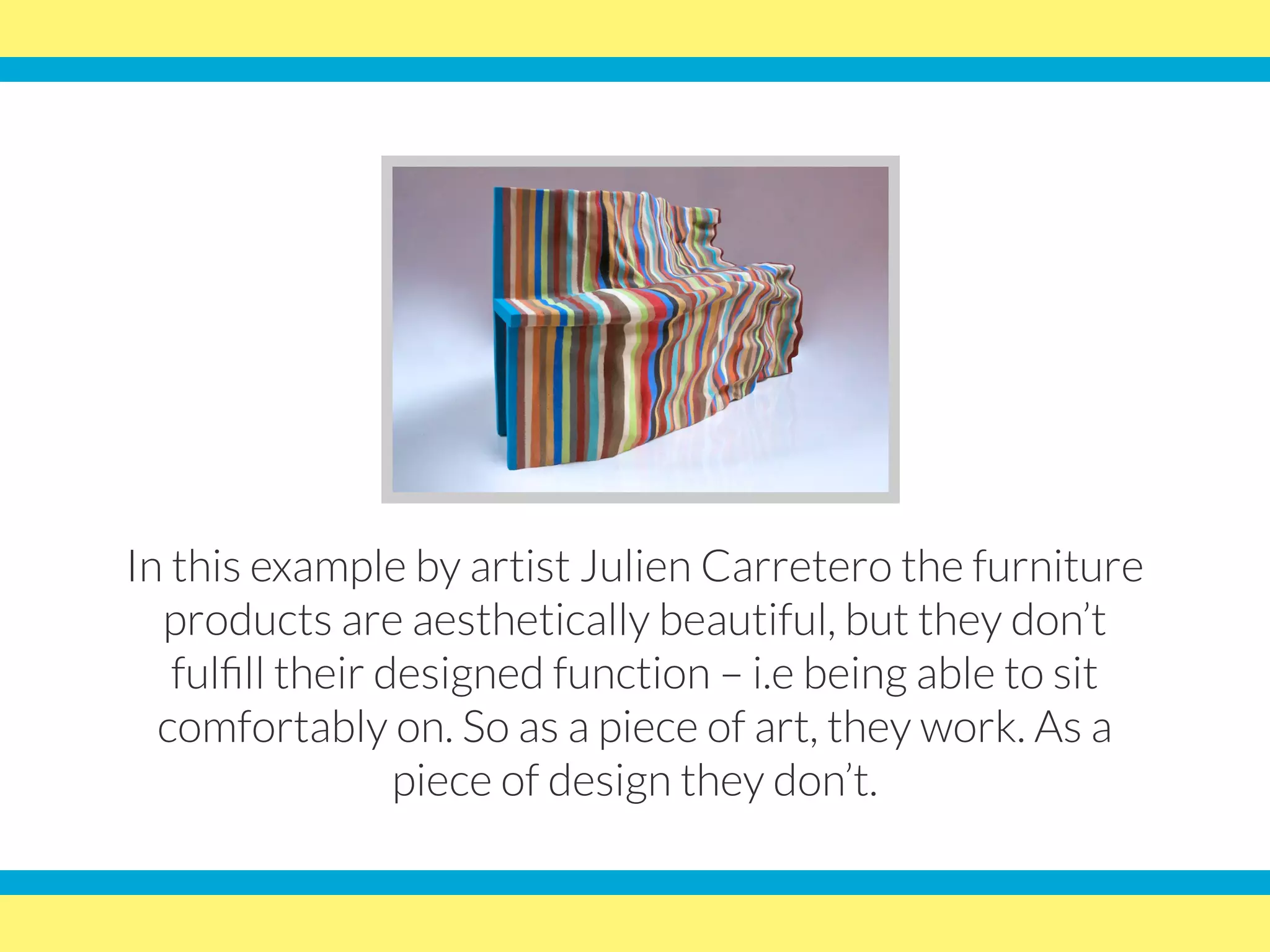
In this example by artist Julien Carretero the furniture
products are aesthetically beautiful, but they don’t
fulfill their designed function – i.e being able to sit
comfortably on. So as a piece of art, they work. As a
piece of design they don’t.
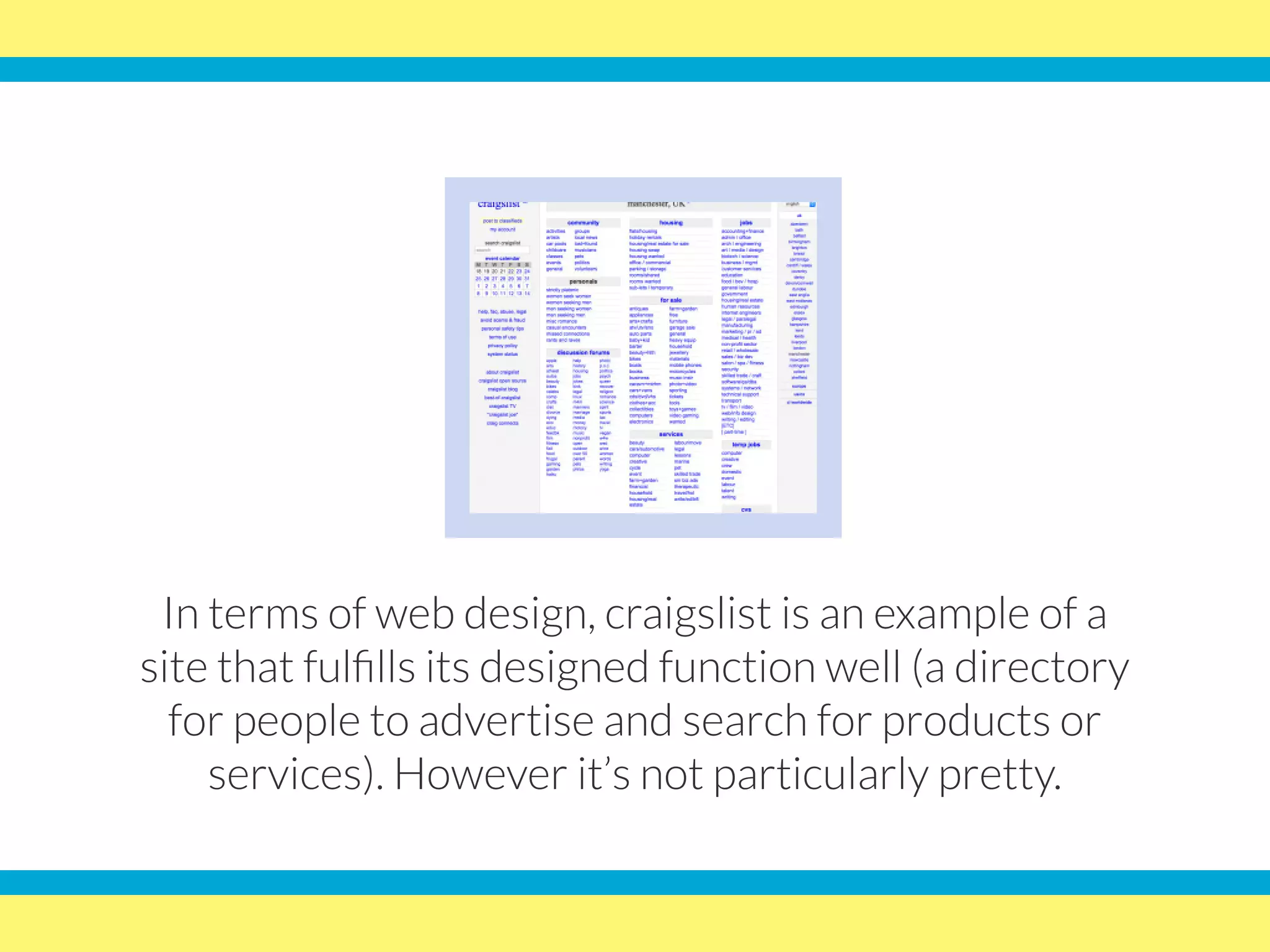
In terms of web design, craigslist is an example of a
site that fulfills its designed function well (a directory
for people to advertise and search for products or
services). However it’s not particularly pretty.
A good piece of content
primarily needs to be both. You
can create a beautiful piece of
work, but if it doesn’t solve
your original problem, it hasn’t
worked as a piece of design.
4 tried and tested techniques to
avoid this ultimate design fail
1. What is the objective?
Before you start a project, it is important to set the
objectives of what it needs to achieve and in what
context it will be used.
2. Design for your user
Who is the individual you are designing for? Are
they old? Young? Affluent? Educated? What do
they like, and respond to best?
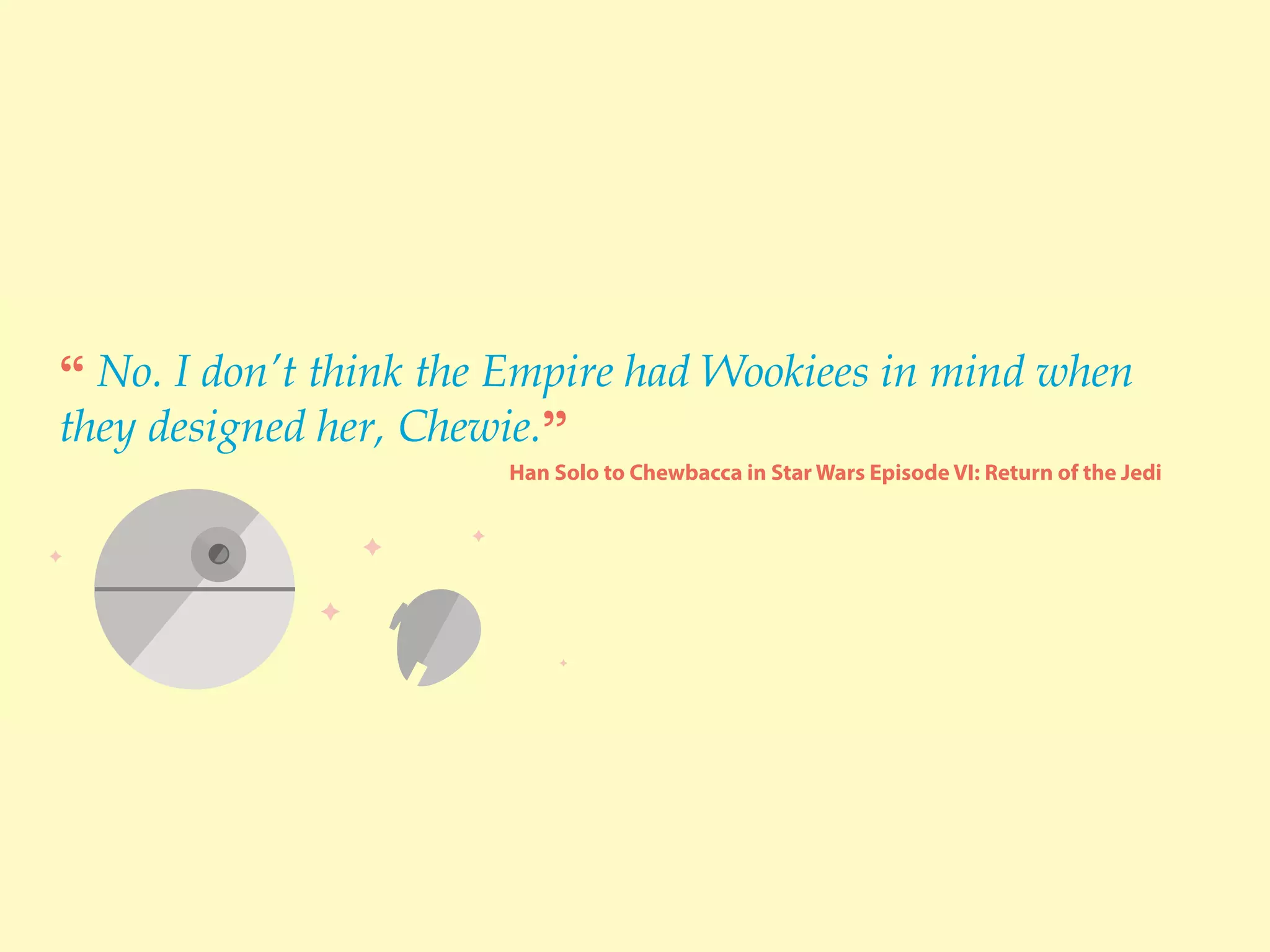
“ No. I don’t think the Empire had Wookiees in mind when
they designed her, Chewie.”
Han Solo to Chewbacca in Star Wars Episode VI: Return of the Jedi
3. Clarity
Once you have set your objectives and defined
your audience it’s time to start designing. One of
the core principles of good design is clarity.
Is it legible and easy-to-read? What are you
trying to communicate and in what order? If need
be, test it on someone. Do they understand it
immediately?
“ I strive for two things in design: simplicity and clarity. Great
design is born of those two things.”
Lindon Leader
4. Familiarity and consistency
There’s no need to re-invent the smartphone
every time you design something. Creativity is
great, but it doesn’t mean that everything you
create has to be entirely unique.
People look for semantic clues to get a sense of
how to interact with a design.
“ Any product that needs a manual to work is broken.”
Elon Musk
In conclusion, good design for business
is like good marketing for business
– it’s all about solving a problem or
communicating a message most
effectively and efficiently.
To see the full blog post and future
‘Design for Non-Designers’ updates
please visit
www.latitudegroup.com/blog
by Emma Rose | @emkaro

Design For Non Designers - Part One

  • 1.
    Part One: Haveyou been fooled by the no.1 graphic design fallacy?
  • 2.
    You are creatinga presentation on the importance of branding for your colleagues Imagine the scenario.
  • 3.
    The pressure ison because as a marketer, if you can’t communicate a message to your own staff, how will they trust you to communicate a message to a wider audience?
  • 4.
    Is the fontbig enough? Do you have too many slides? Should you use a different shade of blue?
  • 5.
    This presentation willhelp you overcome some of these worries.
  • 6.
    It will helpyou use a variety of design techniques to layout documents, such as presentations, in a way that communicates your core message, or messages, most powerfully. Your design will have a business purpose.
  • 7.
    What is the no.1graphic design fallacy?
  • 8.
    Sometimes design isconfused with aesthetics.
  • 9.
    In this exampleby artist Julien Carretero the furniture products are aesthetically beautiful, but they don’t fulfill their designed function – i.e being able to sit comfortably on. So as a piece of art, they work. As a piece of design they don’t.
  • 10.
    In terms ofweb design, craigslist is an example of a site that fulfills its designed function well (a directory for people to advertise and search for products or services). However it’s not particularly pretty.
  • 11.
    A good pieceof content primarily needs to be both. You can create a beautiful piece of work, but if it doesn’t solve your original problem, it hasn’t worked as a piece of design.
  • 12.
    4 tried andtested techniques to avoid this ultimate design fail
  • 13.
    1. What isthe objective? Before you start a project, it is important to set the objectives of what it needs to achieve and in what context it will be used.
  • 14.
    2. Design foryour user Who is the individual you are designing for? Are they old? Young? Affluent? Educated? What do they like, and respond to best?
  • 15.
    “ No. Idon’t think the Empire had Wookiees in mind when they designed her, Chewie.” Han Solo to Chewbacca in Star Wars Episode VI: Return of the Jedi
  • 16.
    3. Clarity Once youhave set your objectives and defined your audience it’s time to start designing. One of the core principles of good design is clarity. Is it legible and easy-to-read? What are you trying to communicate and in what order? If need be, test it on someone. Do they understand it immediately?
  • 17.
    “ I strivefor two things in design: simplicity and clarity. Great design is born of those two things.” Lindon Leader
  • 18.
    4. Familiarity andconsistency There’s no need to re-invent the smartphone every time you design something. Creativity is great, but it doesn’t mean that everything you create has to be entirely unique. People look for semantic clues to get a sense of how to interact with a design.
  • 19.
    “ Any productthat needs a manual to work is broken.” Elon Musk
  • 20.
    In conclusion, gooddesign for business is like good marketing for business – it’s all about solving a problem or communicating a message most effectively and efficiently.
  • 21.
    To see thefull blog post and future ‘Design for Non-Designers’ updates please visit www.latitudegroup.com/blog
  • 22.
    by Emma Rose| @emkaro