 Edited by: Dr. Hany M. El-said
INTRODUCTION TO
DESIGN FUTURE
TO DESIGN FOR THE FUTURE
YOU HAVE TO FOLLOW
THE 1ST PRINCIPLE EVER
YOU MUST HAVE A CLEAR STRATEGY.
WHAT IS DESIGN STRATEGIES ?
When beginning your next project,do you ever think of the “design strategy?”
This is an industry term among designers usually spoken when we first begin
the process of gathering information about a specific project or campaign.
WHAT IS DESIGN STRATEGIES ?
This term means a many different things to designers nowadays.What
design strategy sounds like to one might be completely different to the
other.
The thing to understand about strategy in design is that we are all a part of
it, in both large a small forms, with different roles along the process.
WHO NEEDS DESIGN STRATEGIES ?
DESIGN OR ECONOMY?
Both >>> so???
“You as designer need to find that way of bridging the gap between the
business of design and the design of business.”
TARGETS AND METRICS
Businesses have goals they are shooting for all the time. Even if it’s just to make it
through the month without going under.
There are some businesses that have a better system of setting and achieving goals,
and some who need a lot of help defining and measuring success.
Designers may have access to one but not the other, so in order for us to do our jobs,
we need to know what we are trying to do (beyond creating a new logo or website
design) and how we are going to measure the success of this project.
POSITIONING
Positioning in the marketplace is key to a project’s success. In order for a business to
position themselves correctly we need to figure out where they exist now in the market
and where they want to go as a result of your project.
You start with what the company does, both features and benefits.
Figure out the values they use to make decisions.
Learn about their positioning statement built on why someone should choose them.
And then your job is to fulfill that through design in order to move them closer to where
they want to be.
SALES AND MARKETING FUNNELS.
The buyers journey.
Funnels are a fun topic on why someone should choose to go further into the brand. At
some point what you are designing becomes a piece of this funnel.
It’s a journey through how someone goes from a non-customer into a brand ambassador.
You will have people spread throughout all
sections in your target market or user personas.
Understanding what frame of mind someone is at when they get to what you are
designing for will help you figure out how to position that piece to convert them further
down the funnel.
INSIGHT
Insight comes from poring over company data that is either supplied or collected during
your research phase of design.
This valuable data frames much of how we approach and attack the problem in order to
remember who and what we are designing for.
Hint: it’s probably not the CEO that you are designing for. It’s the end user that has to use,
see, or interact with.
https://blog.marvelapp.com/what-is-design-strategy/
• Design strategy is our first defense of being relevant in the industry
of both design and business.
• Business is transactional.
“WHEN YOU UNDERSTAND WHAT A BUSINESS OR BRAND
IS TRYING TO ACCOMPLISH,YOU CAN PROPOSE A
SOLUTION THAT ANSWERS THE BUSINESS PROBLEM WITH
CREATIVITY.”
DOUGLAS DAVIS, CREATIVE STRATEGY AND THE BUSINESS OF DESIGN
THE FUTURE???
Future is a performance that sees us all engaged through the dimensions of
desire and of the imaginary.
DESIGN FOR THE FUTURE
“I study history because I am interested in the future.”
Peter Rachleff
DESIGN FOR THE FUTURE
Design is responsible for shaping the built environment, the digital world and the
products and services we use. It’s design that creates better places, better products,
better processes and better performance.Yet too few places, people and businesses
benefit from the full potential of design.
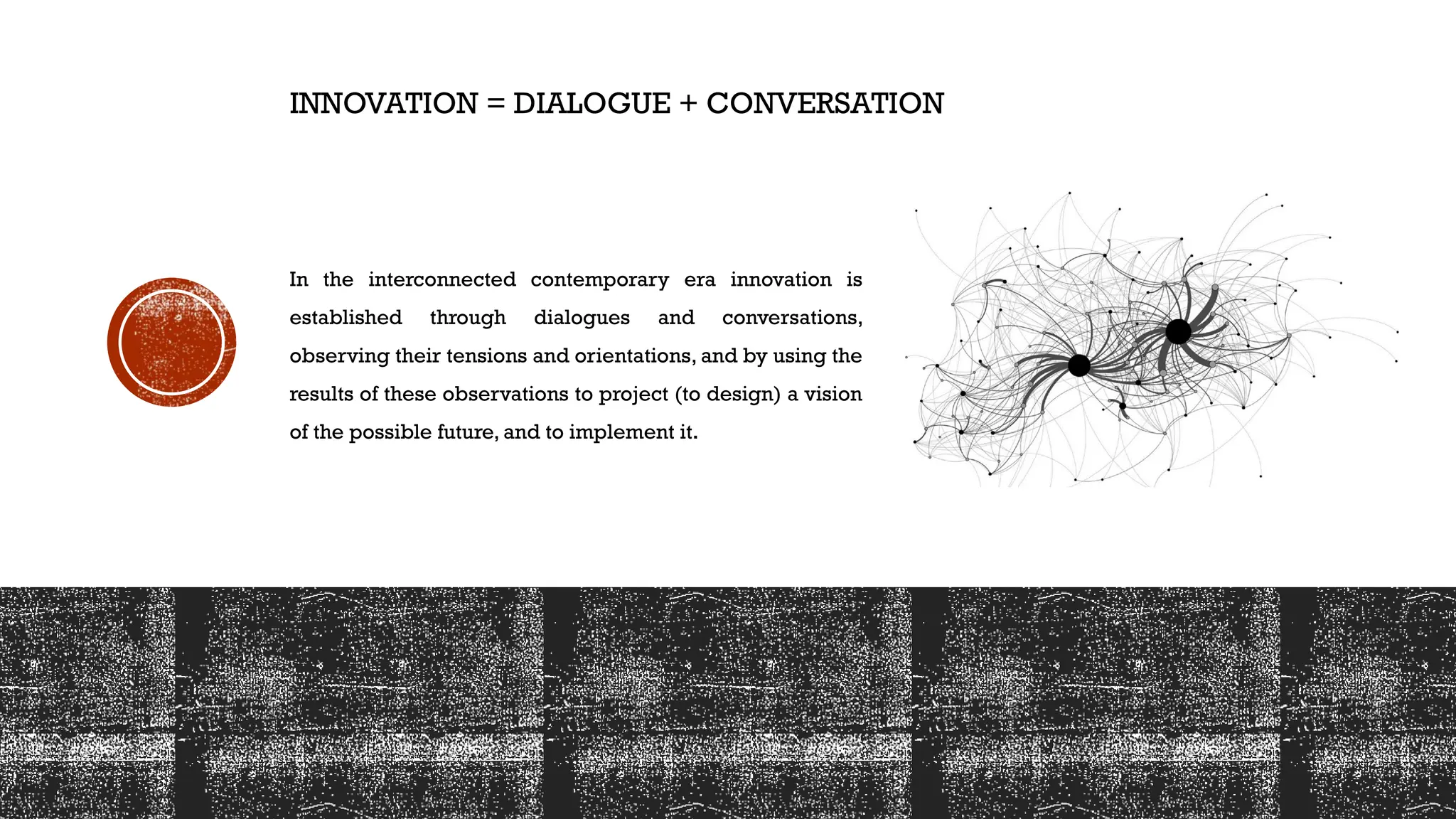
INNOVATION = DIALOGUE + CONVERSATION
In the interconnected contemporary era innovation is
established through dialogues and conversations,
observing their tensions and orientations, and by using the
results of these observations to project (to design) a vision
of the possible future, and to implement it.
DESIGNERS OF THE FUTURE:
FIVE POINTS MUST BE CONSIDERED:
1. Building mindsets
2. Skills fusions
3. Collaborative working and cross disciplines
4. Design is at a fork in the road
5. Diversify to compete
Designers, like sports people, need to be competitive as well
as team players.
Wayne Hemingway, co-founder of Red or Dead
4 keys of product innovation
1 - Technology Advances.
2 - Changing Customer Needs.
3 - Shortening Product Life Cycles.
4 - Increased World Competition.
CHANGE YOUR CHOICE
DESIGN THE FUTURE.
Thank you

Who needs design strategies - For product design students.pptx

  • 1.
     Edited by:Dr. Hany M. El-said INTRODUCTION TO DESIGN FUTURE
  • 2.
    TO DESIGN FORTHE FUTURE YOU HAVE TO FOLLOW THE 1ST PRINCIPLE EVER YOU MUST HAVE A CLEAR STRATEGY.
  • 3.
    WHAT IS DESIGNSTRATEGIES ? When beginning your next project,do you ever think of the “design strategy?” This is an industry term among designers usually spoken when we first begin the process of gathering information about a specific project or campaign.
  • 4.
    WHAT IS DESIGNSTRATEGIES ? This term means a many different things to designers nowadays.What design strategy sounds like to one might be completely different to the other. The thing to understand about strategy in design is that we are all a part of it, in both large a small forms, with different roles along the process.
  • 5.
    WHO NEEDS DESIGNSTRATEGIES ? DESIGN OR ECONOMY? Both >>> so??? “You as designer need to find that way of bridging the gap between the business of design and the design of business.”
  • 6.
    TARGETS AND METRICS Businesseshave goals they are shooting for all the time. Even if it’s just to make it through the month without going under. There are some businesses that have a better system of setting and achieving goals, and some who need a lot of help defining and measuring success. Designers may have access to one but not the other, so in order for us to do our jobs, we need to know what we are trying to do (beyond creating a new logo or website design) and how we are going to measure the success of this project.
  • 7.
    POSITIONING Positioning in themarketplace is key to a project’s success. In order for a business to position themselves correctly we need to figure out where they exist now in the market and where they want to go as a result of your project. You start with what the company does, both features and benefits. Figure out the values they use to make decisions. Learn about their positioning statement built on why someone should choose them. And then your job is to fulfill that through design in order to move them closer to where they want to be.
  • 8.
    SALES AND MARKETINGFUNNELS. The buyers journey. Funnels are a fun topic on why someone should choose to go further into the brand. At some point what you are designing becomes a piece of this funnel. It’s a journey through how someone goes from a non-customer into a brand ambassador. You will have people spread throughout all sections in your target market or user personas. Understanding what frame of mind someone is at when they get to what you are designing for will help you figure out how to position that piece to convert them further down the funnel.
  • 9.
    INSIGHT Insight comes fromporing over company data that is either supplied or collected during your research phase of design. This valuable data frames much of how we approach and attack the problem in order to remember who and what we are designing for. Hint: it’s probably not the CEO that you are designing for. It’s the end user that has to use, see, or interact with. https://blog.marvelapp.com/what-is-design-strategy/
  • 10.
    • Design strategyis our first defense of being relevant in the industry of both design and business. • Business is transactional. “WHEN YOU UNDERSTAND WHAT A BUSINESS OR BRAND IS TRYING TO ACCOMPLISH,YOU CAN PROPOSE A SOLUTION THAT ANSWERS THE BUSINESS PROBLEM WITH CREATIVITY.” DOUGLAS DAVIS, CREATIVE STRATEGY AND THE BUSINESS OF DESIGN
  • 11.
    THE FUTURE??? Future isa performance that sees us all engaged through the dimensions of desire and of the imaginary.
  • 12.
    DESIGN FOR THEFUTURE “I study history because I am interested in the future.” Peter Rachleff
  • 13.
    DESIGN FOR THEFUTURE Design is responsible for shaping the built environment, the digital world and the products and services we use. It’s design that creates better places, better products, better processes and better performance.Yet too few places, people and businesses benefit from the full potential of design.
  • 14.
    INNOVATION = DIALOGUE+ CONVERSATION In the interconnected contemporary era innovation is established through dialogues and conversations, observing their tensions and orientations, and by using the results of these observations to project (to design) a vision of the possible future, and to implement it.
  • 15.
    DESIGNERS OF THEFUTURE: FIVE POINTS MUST BE CONSIDERED: 1. Building mindsets 2. Skills fusions 3. Collaborative working and cross disciplines 4. Design is at a fork in the road 5. Diversify to compete Designers, like sports people, need to be competitive as well as team players. Wayne Hemingway, co-founder of Red or Dead
  • 16.
    4 keys ofproduct innovation 1 - Technology Advances. 2 - Changing Customer Needs. 3 - Shortening Product Life Cycles. 4 - Increased World Competition.
  • 17.
    CHANGE YOUR CHOICE DESIGNTHE FUTURE. Thank you