Some things to consider 
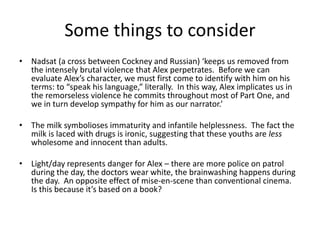
• Nadsat (a cross between Cockney and Russian) ‘keeps us removed from 
the intensely brutal violence that Alex perpetrates. Before we can 
evaluate Alex’s character, we must first come to identify with him on his 
terms: to “speak his language,” literally. In this way, Alex implicates us in 
the remorseless violence he commits throughout most of Part One, and 
we in turn develop sympathy for him as our narrator.’ 
• The milk symbolioses immaturity and infantile helplessness. The fact the 
milk is laced with drugs is ironic, suggesting that these youths are less 
wholesome and innocent than adults. 
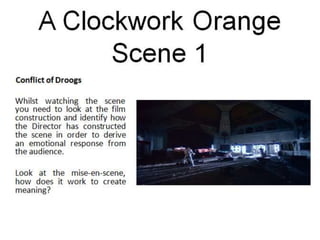
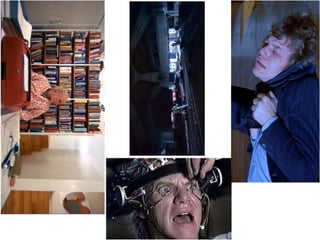
• Light/day represents danger for Alex – there are more police on patrol 
during the day, the doctors wear white, the brainwashing happens during 
the day. An opposite effect of mise-en-scene than conventional cinema. 
Is this because it’s based on a book?
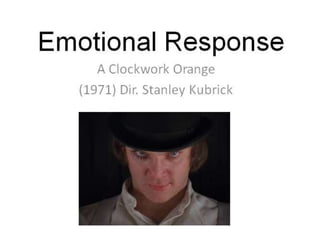
 A clockwork orange
 A clockwork orange
 A clockwork orange
 A clockwork orange
 A clockwork orange
 A clockwork orange
 A clockwork orange
 A clockwork orange
 A clockwork orange
 A clockwork orange
 A clockwork orange

A clockwork orange

  • 3.
    Some things toconsider • Nadsat (a cross between Cockney and Russian) ‘keeps us removed from the intensely brutal violence that Alex perpetrates. Before we can evaluate Alex’s character, we must first come to identify with him on his terms: to “speak his language,” literally. In this way, Alex implicates us in the remorseless violence he commits throughout most of Part One, and we in turn develop sympathy for him as our narrator.’ • The milk symbolioses immaturity and infantile helplessness. The fact the milk is laced with drugs is ironic, suggesting that these youths are less wholesome and innocent than adults. • Light/day represents danger for Alex – there are more police on patrol during the day, the doctors wear white, the brainwashing happens during the day. An opposite effect of mise-en-scene than conventional cinema. Is this because it’s based on a book?

Editor's Notes