A2 Media


20th February 2012
Historical View of Representation
of Youth
Aims

 To introduce the ideas of moral panic and
  deviance amplification.

 To analyse and discuss the representation of
  youths and youth culture in a historical text.
What is a moral panic?

 A moral panic is the intensity of feeling expressed
  in a population about an issue that appears to
  threaten the social order

 "The process underscores the importance of the
  mass media in providing, maintaining and
  'policing' the available frameworks and
  definitions of deviance, which structure both
  public awareness of, and attitudes
  towards, social problems."
Folk Devils

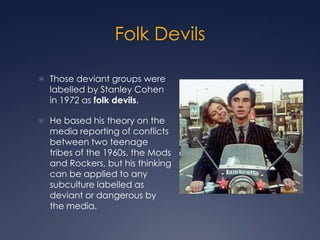
 Those deviant groups were
  labelled by Stanley Cohen
  in 1972 as folk devils.

 He based his theory on the
  media reporting of conflicts
  between two teenage
  tribes of the 1960s, the Mods
  and Rockers, but his thinking
  can be applied to any
  subculture labelled as
  deviant or dangerous by
  the media.
Stan Cohen – Moral Panic
 According to Stanley Cohen, author of Folk Devils and
  Moral Panics (1972) and credited as creator of the term, a
  moral panic occurs when ”…condition, episode, person or
  group of persons emerges to become defined as a threat
  to societal values and interests.”

 Those who start the panic when they fear a threat to
  prevailing social or cultural values are known by
  researchers as "moral entrepreneurs," while people who
  supposedly threaten the social order have been described
  as "folk devils."
Stan Cohen

 Cohen's study was primarily about the Mods and
  Rockers of the 1960's and the treatment they
  received in the public eye. The main criticism
  was that they were seen as a threat to law and
  order largely through the way the mass media
  represented them, in the form of what Cohen
  calls the 'control culture'.

 Largely this refers to the media sensationalising
  an event and then calling for a punishment to
  be set to persecute the offenders.
Clockwork Orange

 Background

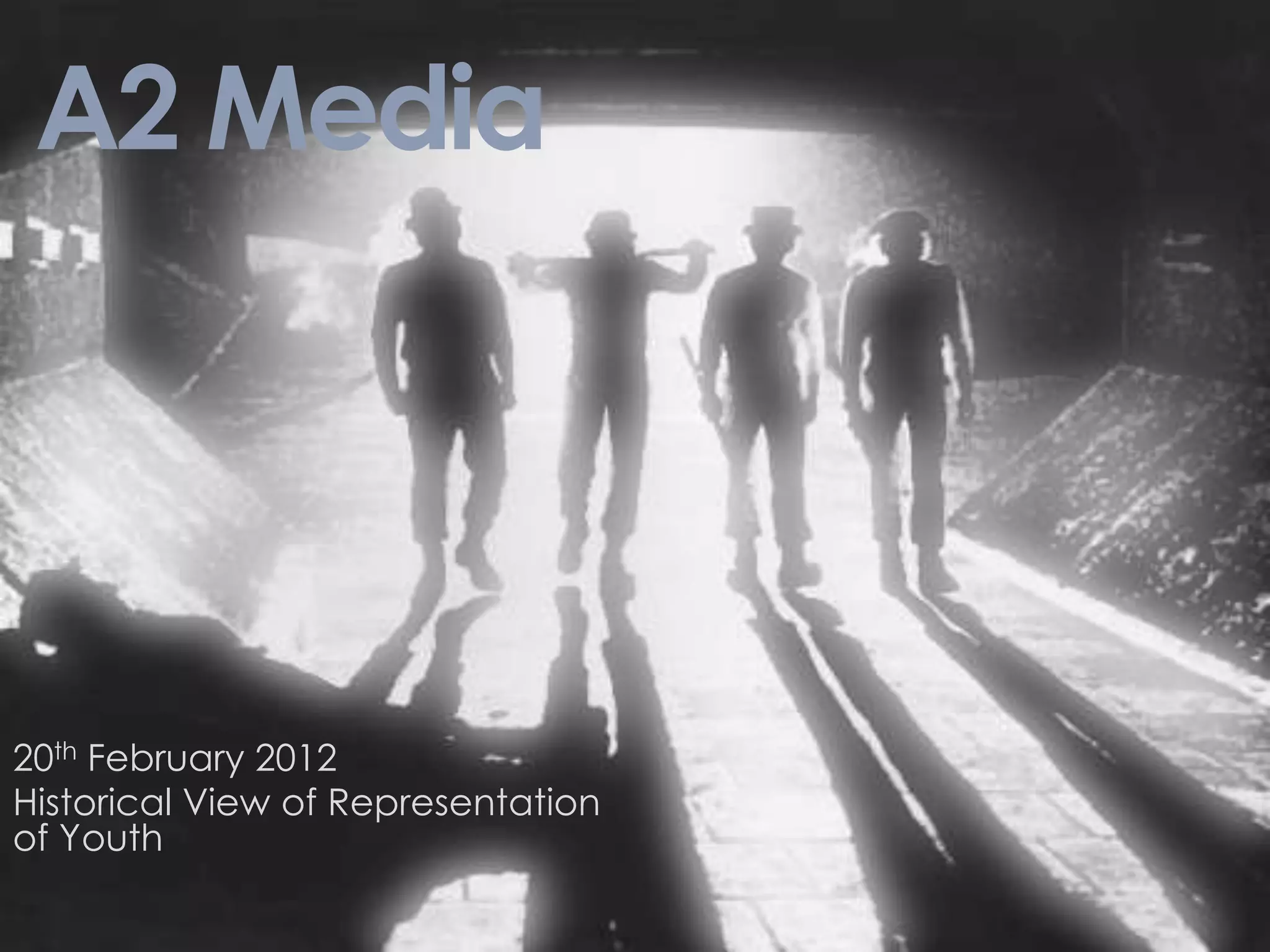
 A Clockwork Orange is a 1971 film adaptation of
  Anthony Burgess's 1962 novel of the same name.

 It features disturbing, violent images, facilitating
  its social commentary on psychiatry, youth
  gangs, and other social, political, and economic
  subjects in a dystopian, future Britain.
The Clockwork Controversy
      by Christian Bugge
 The problems really started when the press reported a
  spate of supposed copy-cat crimes.

 The first and most famous of these was the case
  involving a 16 year old boy called James Palmer who
  had beaten to death a tramp in Oxfordshire.

 Edward Laxton reported in the Daily Mirror, "The
  terrifying violence of the film A Clockwork Orange
  fascinated a quiet boy from a Grammar School...And
  it turned him into a brutal murderer". Laxton
  continues, "The boy viciously battered to death a
  harmless old tramp as he acted out in real life a
  scene straight from the movie A Clockwork Orange”
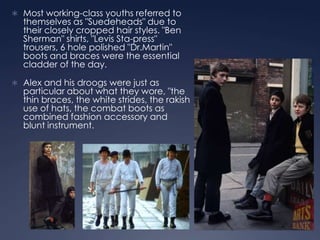
 Most working-class youths referred to
  themselves as "Suedeheads" due to
  their closely cropped hair styles. "Ben
  Sherman" shirts, "Levis Sta-press"
  trousers, 6 hole polished "Dr.Martin"
  boots and braces were the essential
  cladder of the day.

 Alex and his droogs were just as
  particular about what they wore, "the
  thin braces, the white strides, the rakish
  use of hats, the combat boots as
  combined fashion accessory and
  blunt instrument.
The Clockwork Controversy
      by Christian Bugge
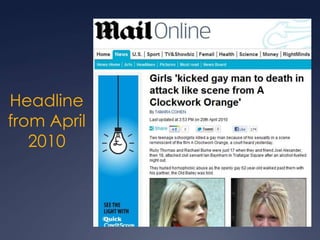
 A Clockwork Orange began to be developed
  into an euphemism in the press for referring to
  teenage crime and societal deviance.


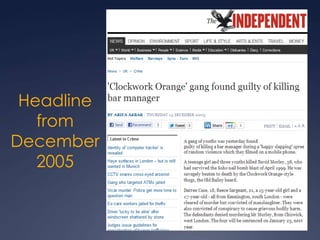
 This is still relevant today as you can see from the
  following headlines…
Headline
   from
December
   2005
Headline
from April
   2010
The Clockwork Controversy
      by Christian Bugge
 So how did all this effect the youngsters? Were
  they really affected in the way that the moral
  majority feared?

 It appears not. In fact the youth of the day saw
  A Clockwork Orange in a completely different
  light. What they saw was a representation of a
  life they already lived. In working class urban
  areas the violence and the tribal identity of Alex
  and his droogs was a reflection of football
  hooliganism, gang fighting and loyalty to your
  friends and team.
Clockwork Orange Summary
 Moral panic created by press about the effect the film
  had on groups of teenagers and encouraging societal
  deviance.

 Sensationalist headlines reporting incidents of violence
  (deviance amplification).

 Was found that the youth of the time did not see the
  film as encouraging violence and anti social behaviour.

 However they did identify with the representation of a
  life in which they already lived (violence and
  hooliganism) and having loyalty to your friends.
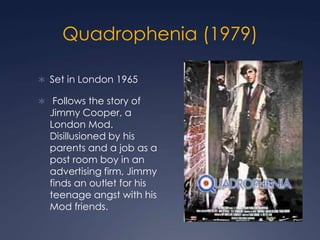
Quadrophenia (1979)

 Set in London 1965

 Follows the story of
  Jimmy Cooper, a
  London Mod.
  Disillusioned by his
  parents and a job as a
  post room boy in an
  advertising firm, Jimmy
  finds an outlet for his
  teenage angst with his
  Mod friends.
Quadrophenia

 Think about how fashion, music, language, drugs
  and sex are used symbolically to make meaning
  and represent values like rebellion , anger and
  disillusion.

 ‘subcultures use style to represent their resistance
  to the dominant ideologies of a corrupt society.
  They take symbols like the smart clothes or
  mopeds and modify or customise them to show
  their alternative values’.
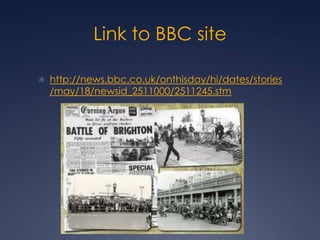
Link to BBC site

 http://news.bbc.co.uk/onthisday/hi/dates/stories
  /may/18/newsid_2511000/2511245.stm
Task

 Watch Quadrophenia (1979)

 Make notes on the following:
   Representation and values of Jimmy, Steph and
    Kevin.
   What examples of mise en scene would reinforce
    idea of youth culture?
   What ideologies are present within the film? Use
    textual examples to back up your points.

   Post your findings on your blog.
Representation of Jimmy

 Wanted to be part of a gang, group identity
  very important to him.
 Wanted to be different but he was the same as
  any other mod - wanted to be alternative.
 Took it too seriously wanted to get out of his
  dead end job and his life.
 Identity compromised when his friend is beaten
  up.
 Stereotyped (scenes at home with his Dad and
  at work).
Jimmy continued…

‘ Got to be part of a gang, haven’t you got a mind
   of your own’.

There is a divide between youth and adults.

Divide between middle class and working class
  (jimmy being sick in the toilets at work)

Reinforces the representation of youth and the
  binary oppositions in the film
Steph

 Sexual Freedom

 Feminine compared to androgynous mods

 No loyalty
Ideologies

 Sub cultural ideology

 Living for the here and now

 Dominant ideology of being in a gang.

 Them and us – (mods v society)- binary
  oppositions (My Generation – young v old)
Other Key ideas

 Mob mentality

 Racism – ignorance

 Finding your identity
Case Study

 To get high marks in the exam paper you must
  make detailed reference to examples to back
  up points made.

 Clockwork Orange and Quadrophenia are
  historical texts which you can reference i8n an
  exam answer.
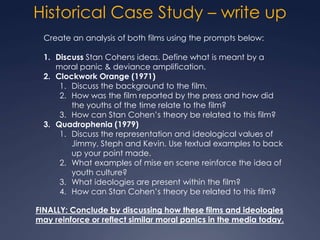
Historical Case Study – write up
  Create an analysis of both films using the prompts below:

  1. Discuss Stan Cohens ideas. Define what is meant by a
     moral panic & deviance amplification.
  2. Clockwork Orange (1971)
      1. Discuss the background to the film.
      2. How was the film reported by the press and how did
         the youths of the time relate to the film?
      3. How can Stan Cohen’s theory be related to this film?
  3. Quadrophenia (1979)
      1. Discuss the representation and ideological values of
         Jimmy, Steph and Kevin. Use textual examples to back
         up your point made.
      2. What examples of mise en scene reinforce the idea of
         youth culture?
      3. What ideologies are present within the film?
      4. How can Stan Cohen’s theory be related to this film?

FINALLY: Conclude by discussing how these films and ideologies
may reinforce or reflect similar moral panics in the media today.

Moral panics clockwork orange

  • 1.
    A2 Media 20th February2012 Historical View of Representation of Youth
  • 2.
    Aims  To introducethe ideas of moral panic and deviance amplification.  To analyse and discuss the representation of youths and youth culture in a historical text.
  • 3.
    What is amoral panic?  A moral panic is the intensity of feeling expressed in a population about an issue that appears to threaten the social order  "The process underscores the importance of the mass media in providing, maintaining and 'policing' the available frameworks and definitions of deviance, which structure both public awareness of, and attitudes towards, social problems."
  • 4.
    Folk Devils  Thosedeviant groups were labelled by Stanley Cohen in 1972 as folk devils.  He based his theory on the media reporting of conflicts between two teenage tribes of the 1960s, the Mods and Rockers, but his thinking can be applied to any subculture labelled as deviant or dangerous by the media.
  • 5.
    Stan Cohen –Moral Panic  According to Stanley Cohen, author of Folk Devils and Moral Panics (1972) and credited as creator of the term, a moral panic occurs when ”…condition, episode, person or group of persons emerges to become defined as a threat to societal values and interests.”  Those who start the panic when they fear a threat to prevailing social or cultural values are known by researchers as "moral entrepreneurs," while people who supposedly threaten the social order have been described as "folk devils."
  • 6.
    Stan Cohen  Cohen'sstudy was primarily about the Mods and Rockers of the 1960's and the treatment they received in the public eye. The main criticism was that they were seen as a threat to law and order largely through the way the mass media represented them, in the form of what Cohen calls the 'control culture'.  Largely this refers to the media sensationalising an event and then calling for a punishment to be set to persecute the offenders.
  • 7.
    Clockwork Orange  Background A Clockwork Orange is a 1971 film adaptation of Anthony Burgess's 1962 novel of the same name.  It features disturbing, violent images, facilitating its social commentary on psychiatry, youth gangs, and other social, political, and economic subjects in a dystopian, future Britain.
  • 8.
    The Clockwork Controversy by Christian Bugge  The problems really started when the press reported a spate of supposed copy-cat crimes.  The first and most famous of these was the case involving a 16 year old boy called James Palmer who had beaten to death a tramp in Oxfordshire.  Edward Laxton reported in the Daily Mirror, "The terrifying violence of the film A Clockwork Orange fascinated a quiet boy from a Grammar School...And it turned him into a brutal murderer". Laxton continues, "The boy viciously battered to death a harmless old tramp as he acted out in real life a scene straight from the movie A Clockwork Orange”
  • 9.
     Most working-classyouths referred to themselves as "Suedeheads" due to their closely cropped hair styles. "Ben Sherman" shirts, "Levis Sta-press" trousers, 6 hole polished "Dr.Martin" boots and braces were the essential cladder of the day.  Alex and his droogs were just as particular about what they wore, "the thin braces, the white strides, the rakish use of hats, the combat boots as combined fashion accessory and blunt instrument.
  • 10.
    The Clockwork Controversy by Christian Bugge  A Clockwork Orange began to be developed into an euphemism in the press for referring to teenage crime and societal deviance.  This is still relevant today as you can see from the following headlines…
  • 11.
    Headline from December 2005
  • 12.
  • 13.
    The Clockwork Controversy by Christian Bugge  So how did all this effect the youngsters? Were they really affected in the way that the moral majority feared?  It appears not. In fact the youth of the day saw A Clockwork Orange in a completely different light. What they saw was a representation of a life they already lived. In working class urban areas the violence and the tribal identity of Alex and his droogs was a reflection of football hooliganism, gang fighting and loyalty to your friends and team.
  • 14.
    Clockwork Orange Summary Moral panic created by press about the effect the film had on groups of teenagers and encouraging societal deviance.  Sensationalist headlines reporting incidents of violence (deviance amplification).  Was found that the youth of the time did not see the film as encouraging violence and anti social behaviour.  However they did identify with the representation of a life in which they already lived (violence and hooliganism) and having loyalty to your friends.
  • 15.
    Quadrophenia (1979)  Setin London 1965  Follows the story of Jimmy Cooper, a London Mod. Disillusioned by his parents and a job as a post room boy in an advertising firm, Jimmy finds an outlet for his teenage angst with his Mod friends.
  • 16.
    Quadrophenia  Think abouthow fashion, music, language, drugs and sex are used symbolically to make meaning and represent values like rebellion , anger and disillusion.  ‘subcultures use style to represent their resistance to the dominant ideologies of a corrupt society. They take symbols like the smart clothes or mopeds and modify or customise them to show their alternative values’.
  • 17.
    Link to BBCsite  http://news.bbc.co.uk/onthisday/hi/dates/stories /may/18/newsid_2511000/2511245.stm
  • 18.
    Task  Watch Quadrophenia(1979)  Make notes on the following:  Representation and values of Jimmy, Steph and Kevin.  What examples of mise en scene would reinforce idea of youth culture?  What ideologies are present within the film? Use textual examples to back up your points.  Post your findings on your blog.
  • 19.
    Representation of Jimmy Wanted to be part of a gang, group identity very important to him.  Wanted to be different but he was the same as any other mod - wanted to be alternative.  Took it too seriously wanted to get out of his dead end job and his life.  Identity compromised when his friend is beaten up.  Stereotyped (scenes at home with his Dad and at work).
  • 20.
    Jimmy continued… ‘ Gotto be part of a gang, haven’t you got a mind of your own’. There is a divide between youth and adults. Divide between middle class and working class (jimmy being sick in the toilets at work) Reinforces the representation of youth and the binary oppositions in the film
  • 21.
    Steph  Sexual Freedom Feminine compared to androgynous mods  No loyalty
  • 22.
    Ideologies  Sub culturalideology  Living for the here and now  Dominant ideology of being in a gang.  Them and us – (mods v society)- binary oppositions (My Generation – young v old)
  • 23.
    Other Key ideas Mob mentality  Racism – ignorance  Finding your identity
  • 24.
    Case Study  Toget high marks in the exam paper you must make detailed reference to examples to back up points made.  Clockwork Orange and Quadrophenia are historical texts which you can reference i8n an exam answer.
  • 25.
    Historical Case Study– write up Create an analysis of both films using the prompts below: 1. Discuss Stan Cohens ideas. Define what is meant by a moral panic & deviance amplification. 2. Clockwork Orange (1971) 1. Discuss the background to the film. 2. How was the film reported by the press and how did the youths of the time relate to the film? 3. How can Stan Cohen’s theory be related to this film? 3. Quadrophenia (1979) 1. Discuss the representation and ideological values of Jimmy, Steph and Kevin. Use textual examples to back up your point made. 2. What examples of mise en scene reinforce the idea of youth culture? 3. What ideologies are present within the film? 4. How can Stan Cohen’s theory be related to this film? FINALLY: Conclude by discussing how these films and ideologies may reinforce or reflect similar moral panics in the media today.