© 2017 InfluxData. All rights reserved.1
Pull vs Push
© 2017 InfluxData. All rights reserved.2
Gianluca Arbezzano
SRE at InfluxData
@gianarb
Site Reliability Engineer
https://landing.google.com/sre/interview/ben-treynor.html
© 2017 InfluxData. All rights reserved.4
© 2017 InfluxData. All rights reserved.5
© 2017 InfluxData. All rights reserved.6
© 2017 InfluxData. All rights reserved.7
In both cases you need to
instrument your applications.
Sometimes PUSH it easy, in
other cases PULL it’s easy...
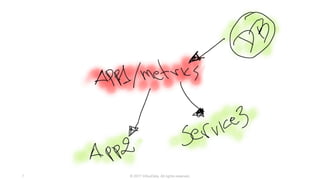
You can try to pull
from millions of
IoT devices around
the globe
© 2017 InfluxData. All rights reserved.10
You can always try to push
metrics from mysql
you can try forever!
© 2017 InfluxData. All rights reserved.11
© 2017 InfluxData. All rights reserved.12
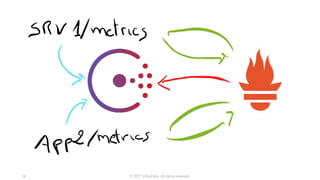
Thanks Prometheus, CNCF and the OpenMetrics initiative
“The real strength of formalizing the pull method is that it
gives a standard language for services and applications
of all kinds to expose targets with a standard format to
pull metrics data from”
https://www.influxdata.com/monitoring-with-push-vs-pull-influxdb-adds-pull-support-with-kapacitor/
© 2017 InfluxData. All rights reserved.13
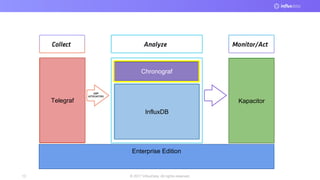
Enterprise Edition
Telegraf Kapacitor
InfluxDB
Chronograf
© 2017 InfluxData. All rights reserved.14
From Kapacitor 1.13
we’ve integrated Prometheus’ service
discovery and scraping code into Kapacitor
Demo
https://github.com/gianarb/devops-milan-demo
© 2017 InfluxData. All rights reserved.16
© 2017 InfluxData. All rights reserved.17
© 2017 InfluxData. All rights reserved.18
CNCF and OpenMetrics initiative
https://github.com/RichiH/OpenMetrics
Time is too important to play politics with!
InfluxDB ❤
Prometheus
Pull vs Push has no winner
@gianarb

Monitoring Pull vs Push, InfluxDB and Prometheus