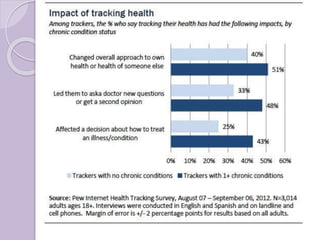
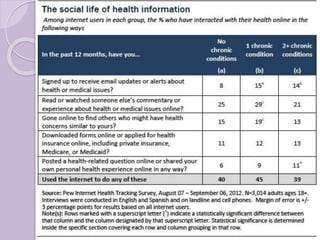
On Being an ePatient:
Erin M. Gilmer
@GilmerHealthLaw
erin@gilmerhealthlaw.com
Equipped, Enabled, Empowered, Engaged
What is an ePatient?
 Equipped
 Enabled
 Empowered
 Engaged
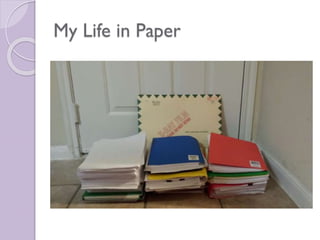
My Life in Paper
Why I became an ePatient
 Several chronic conditions
 Little support from friends and family
 In College
 Personal struggles with coping
 Socioecomic factors (insurance/costs)
 Need for control
 Personal Interest in health policy
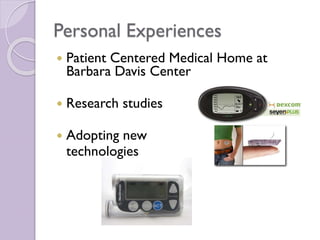
Personal Experiences
 Patient Centered Medical Home at
Barbara Davis Center
 Research studies
 Adopting new
technologies
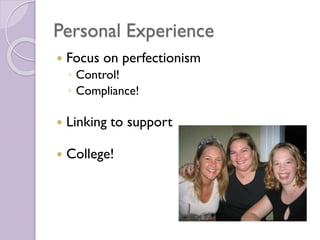
Personal Experience
 Focus on perfectionism
◦ Control!
◦ Compliance!
 Linking to support
 College!
Randomness and chaos is
part of what we do
- Dr. Stephen Ponder
(@StephenPonderMD)
Stigma - Barrier or Motivation?
 Barriers
◦ Misinformation
◦ Embarrassment
◦ Depression
 Motivation
◦ Want to know the information & beat the
stigma
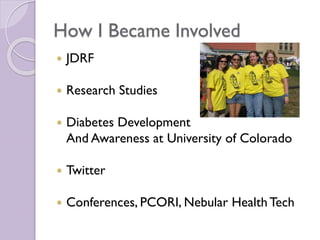
How I Became Involved
 JDRF
 Research Studies
 Diabetes Development
And Awareness at University of Colorado
 Twitter
 Conferences, PCORI, Nebular Health Tech
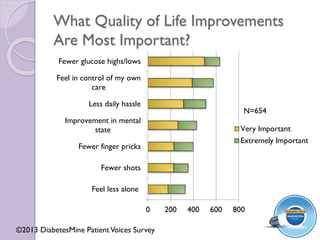
What Quality of Life Improvements
Are Most Important?
0 200 400 600 800
Feel less alone
Fewer shots
Fewer finger pricks
Improvement in mental
state
Less daily hassle
Feel in control of my own
care
Fewer glucose highs/lows
Very Important
Extremely Important
N=654
©2013 DiabetesMine PatientVoices Survey
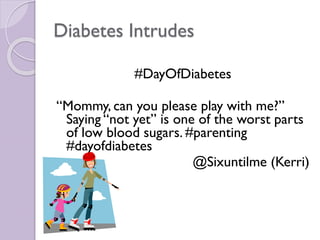
Diabetes Intrudes
#DayOfDiabetes
“Mommy, can you please play with me?”
Saying “not yet” is one of the worst parts
of low blood sugars. #parenting
#dayofdiabetes
@Sixuntilme (Kerri)
Characteristics of an ePatient
 Looking for information and trying to
learn
 Collaborate with providers
 Share information across platforms
 May have 1 or more chronic conditions
and be a caregiver
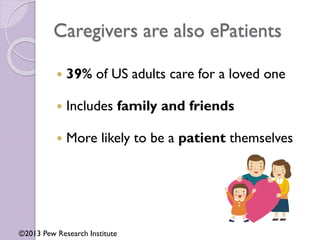
Caregivers are also ePatients
 39% of US adults care for a loved one
 Includes family and friends
 More likely to be a patient themselves
©2013 Pew Research Institute
Self Trackers/Quantified Self
 Diabetics are by default self-trackers
“As patients it’s not enough that we have to live with
the disease itself. We have to live with the data
management as well.”
- KimVlasnik (Texting My Pancreas)
How Do PatientsTrack?
 How do people track in general?
◦ 49% - in their heads
◦ 34% - pencil and paper
◦ 8% - medical device (like glucometer)
◦ 7% - mobile app
◦ 5% - computer program
◦ 1% - websites
©2013 Pew Research Institute
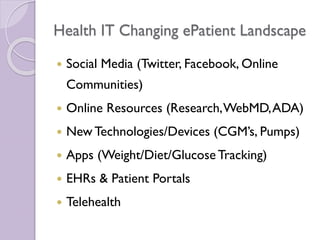
Health IT Changing ePatient Landscape
 Social Media (Twitter, Facebook, Online
Communities)
 Online Resources (Research,WebMD,ADA)
 New Technologies/Devices (CGM’s, Pumps)
 Apps (Weight/Diet/Glucose Tracking)
 EHRs & Patient Portals
 Telehealth
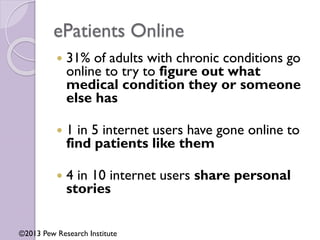
ePatients Online
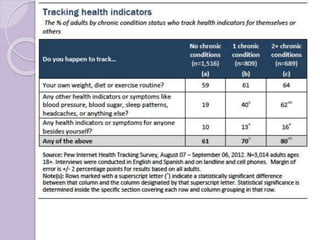
 31% of adults with chronic conditions go
online to try to figure out what
medical condition they or someone
else has
 1 in 5 internet users have gone online to
find patients like them
 4 in 10 internet users share personal
stories
©2013 Pew Research Institute
 Pew
What do ePatients Share?
 Treatment information
◦ Medications
◦ Technology
 Personal Stories
 Stories of other ePatients
 Education/Research/News
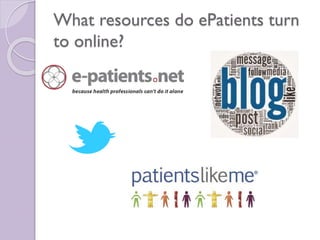
What resources do ePatients turn
to online?
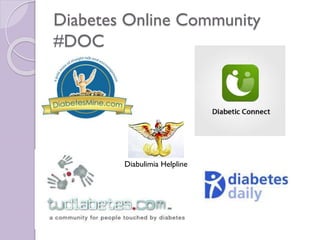
Diabetes Online Community
#DOC
Diabulimia Helpline
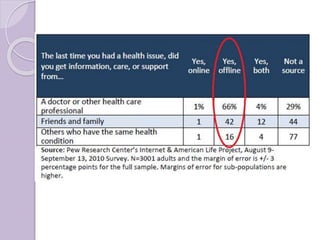
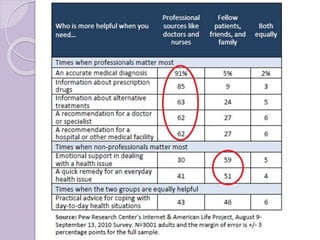
ePatients Not Just Online
 Providers are still by far the most
important aspect in patient care
 Only 5% receive information online with a
healthcare professional or fellow patient
©2013 Pew Research Institute
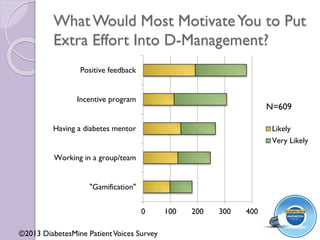
What Would Most MotivateYou to Put
Extra Effort Into D-Management?
0 100 200 300 400
"Gamification"
Working in a group/team
Having a diabetes mentor
Incentive program
Positive feedback
Likely
Very Likely
N=609
©2013 DiabetesMine PatientVoices Survey
Change from Perfectionism to
Positivism
“Scott was diagnosed withType 1 diabetes
in 1970 and grew up expecting to go
blind, lose a limb, and probably die before
he could graduate college. Nearly 45
years later, he is a father, live-in caregiver
for an elderly parent and has suffered
from clinical depression for as long as he
can remember”
- Scott Strange (@Strangely_T1)
How to engage and collaborate
with an ePatient
 Clinicians are the top source of
information
 Need to
◦ Educate
◦ Collaborate
◦ Coordinate
◦ Support
Education - When ePatients Know
More
 Healthcare professionals cannot become
experts in everything
 Educated ePatients should be considered
part of the healthcare team
 If ePatients aren’t listened to:
◦ Frustration and Feelings of loss of control
◦ Medication errors and proper resources
denied
BMJ article “What happens when patients know more than their doctors”
EducateThrough Resources
 Reputable online websites
 Printed materials
 Phone numbers for support groups
 Apps
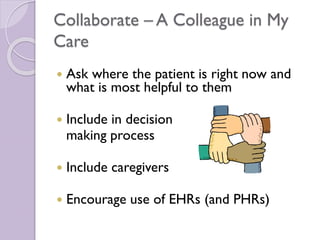
Collaborate – A Colleague in My
Care
 Ask where the patient is right now and
what is most helpful to them
 Include in decision
making process
 Include caregivers
 Encourage use of EHRs (and PHRs)
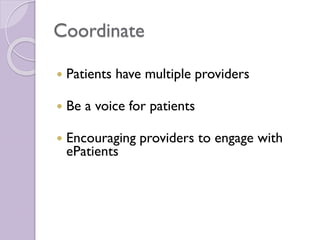
Coordinate
 Patients have multiple providers
 Be a voice for patients
 Encouraging providers to engage with
ePatients
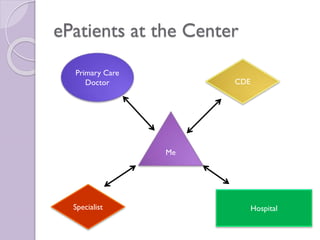
ePatients at the Center
Primary Care
Doctor
Me
Hospital
CDE
Specialist
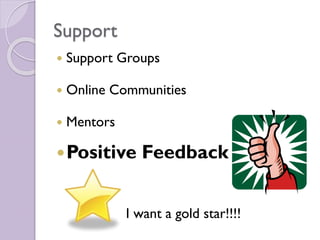
Support
 Support Groups
 Online Communities
 Mentors
Positive Feedback
I want a gold star!!!!
Considerations when engaging
 Health literacy
 Cultural influences
 Economic influences
 At what level do they want to engage?
 In what format do they want to engage?
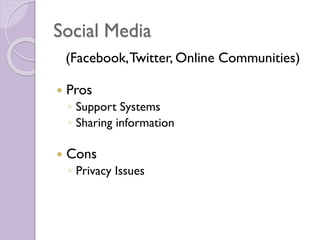
Social Media
(Facebook,Twitter, Online Communities)
 Pros
◦ Support Systems
◦ Sharing information
 Cons
◦ Privacy Issues
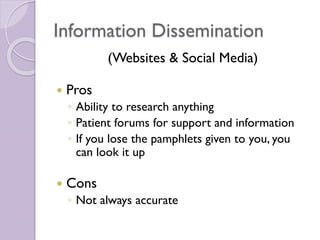
Information Dissemination
(Websites & Social Media)
 Pros
◦ Ability to research anything
◦ Patient forums for support and information
◦ If you lose the pamphlets given to you, you
can look it up
 Cons
◦ Not always accurate
New Technologies
 Pros
◦ Better management
◦ Allows patient to be more engaged
◦ Ease of sharing information electronically
 Cons
◦ Expensive
◦ Information Overload
◦ Not all providers up-to-date on technology
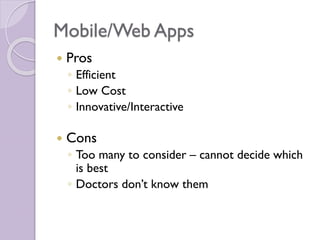
Mobile/Web Apps
 Pros
◦ Efficient
◦ Low Cost
◦ Innovative/Interactive
 Cons
◦ Too many to consider – cannot decide which
is best
◦ Doctors don’t know them
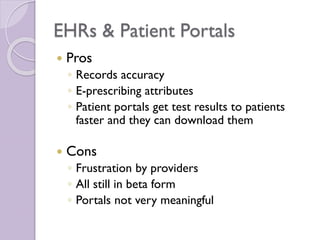
EHRs & Patient Portals
 Pros
◦ Records accuracy
◦ E-prescribing attributes
◦ Patient portals get test results to patients
faster and they can download them
 Cons
◦ Frustration by providers
◦ All still in beta form
◦ Portals not very meaningful
PHRs
 Pros
◦ Ability to take your information with you
wherever you go
◦ Ability to enter in information your doctor
might not have
 Cons
◦ Do not connect with Patient Portals in EHRs
◦ Doctors may not pay attention to them
Medical Devices
 Pros
◦ Connect more and more to other
mobile/web apps and EHRs
◦ Ability to track metrics over time
 Cons
◦ Security of devices
◦ FDA regulation uncertain
Telehealth
 Pros
◦ Reaches remote populations
◦ Cost efficient
 Cons
◦ Removed from in-person care that may be
needed to address more serious issues
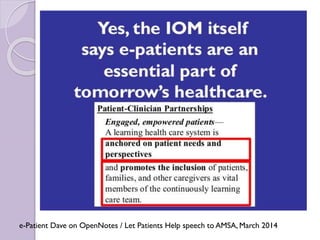
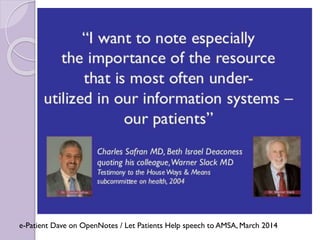
e-Patient Dave on OpenNotes / Let Patients Help speech to AMSA, March 2014
The value of an ePatient
 Better management
 Greater coordination/collaboration of
care
 Increased health literacy
 Educating and engaging peers and those
they care for
 Patient Safety
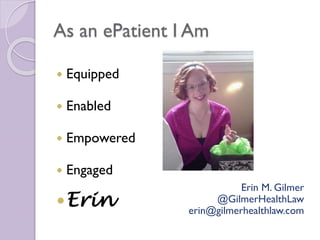
As an ePatient I Am
 Equipped
 Enabled
 Empowered
 Engaged
Erin
Erin M. Gilmer
@GilmerHealthLaw
erin@gilmerhealthlaw.com

On Being an ePatient

  • 1.
    On Being anePatient: Erin M. Gilmer @GilmerHealthLaw erin@gilmerhealthlaw.com Equipped, Enabled, Empowered, Engaged
  • 2.
    What is anePatient?  Equipped  Enabled  Empowered  Engaged
  • 3.
  • 4.
    Why I becamean ePatient  Several chronic conditions  Little support from friends and family  In College  Personal struggles with coping  Socioecomic factors (insurance/costs)  Need for control  Personal Interest in health policy
  • 5.
    Personal Experiences  PatientCentered Medical Home at Barbara Davis Center  Research studies  Adopting new technologies
  • 6.
    Personal Experience  Focuson perfectionism ◦ Control! ◦ Compliance!  Linking to support  College!
  • 7.
    Randomness and chaosis part of what we do - Dr. Stephen Ponder (@StephenPonderMD)
  • 8.
    Stigma - Barrieror Motivation?  Barriers ◦ Misinformation ◦ Embarrassment ◦ Depression  Motivation ◦ Want to know the information & beat the stigma
  • 9.
    How I BecameInvolved  JDRF  Research Studies  Diabetes Development And Awareness at University of Colorado  Twitter  Conferences, PCORI, Nebular Health Tech
  • 10.
    What Quality ofLife Improvements Are Most Important? 0 200 400 600 800 Feel less alone Fewer shots Fewer finger pricks Improvement in mental state Less daily hassle Feel in control of my own care Fewer glucose highs/lows Very Important Extremely Important N=654 ©2013 DiabetesMine PatientVoices Survey
  • 11.
    Diabetes Intrudes #DayOfDiabetes “Mommy, canyou please play with me?” Saying “not yet” is one of the worst parts of low blood sugars. #parenting #dayofdiabetes @Sixuntilme (Kerri)
  • 12.
    Characteristics of anePatient  Looking for information and trying to learn  Collaborate with providers  Share information across platforms  May have 1 or more chronic conditions and be a caregiver
  • 13.
    Caregivers are alsoePatients  39% of US adults care for a loved one  Includes family and friends  More likely to be a patient themselves ©2013 Pew Research Institute
  • 14.
    Self Trackers/Quantified Self Diabetics are by default self-trackers “As patients it’s not enough that we have to live with the disease itself. We have to live with the data management as well.” - KimVlasnik (Texting My Pancreas)
  • 15.
    How Do PatientsTrack? How do people track in general? ◦ 49% - in their heads ◦ 34% - pencil and paper ◦ 8% - medical device (like glucometer) ◦ 7% - mobile app ◦ 5% - computer program ◦ 1% - websites ©2013 Pew Research Institute
  • 18.
    Health IT ChangingePatient Landscape  Social Media (Twitter, Facebook, Online Communities)  Online Resources (Research,WebMD,ADA)  New Technologies/Devices (CGM’s, Pumps)  Apps (Weight/Diet/Glucose Tracking)  EHRs & Patient Portals  Telehealth
  • 19.
    ePatients Online  31%of adults with chronic conditions go online to try to figure out what medical condition they or someone else has  1 in 5 internet users have gone online to find patients like them  4 in 10 internet users share personal stories ©2013 Pew Research Institute
  • 20.
  • 21.
    What do ePatientsShare?  Treatment information ◦ Medications ◦ Technology  Personal Stories  Stories of other ePatients  Education/Research/News
  • 22.
    What resources doePatients turn to online?
  • 23.
  • 24.
    ePatients Not JustOnline  Providers are still by far the most important aspect in patient care  Only 5% receive information online with a healthcare professional or fellow patient ©2013 Pew Research Institute
  • 27.
    What Would MostMotivateYou to Put Extra Effort Into D-Management? 0 100 200 300 400 "Gamification" Working in a group/team Having a diabetes mentor Incentive program Positive feedback Likely Very Likely N=609 ©2013 DiabetesMine PatientVoices Survey
  • 28.
    Change from Perfectionismto Positivism “Scott was diagnosed withType 1 diabetes in 1970 and grew up expecting to go blind, lose a limb, and probably die before he could graduate college. Nearly 45 years later, he is a father, live-in caregiver for an elderly parent and has suffered from clinical depression for as long as he can remember” - Scott Strange (@Strangely_T1)
  • 29.
    How to engageand collaborate with an ePatient  Clinicians are the top source of information  Need to ◦ Educate ◦ Collaborate ◦ Coordinate ◦ Support
  • 30.
    Education - WhenePatients Know More  Healthcare professionals cannot become experts in everything  Educated ePatients should be considered part of the healthcare team  If ePatients aren’t listened to: ◦ Frustration and Feelings of loss of control ◦ Medication errors and proper resources denied BMJ article “What happens when patients know more than their doctors”
  • 31.
    EducateThrough Resources  Reputableonline websites  Printed materials  Phone numbers for support groups  Apps
  • 32.
    Collaborate – AColleague in My Care  Ask where the patient is right now and what is most helpful to them  Include in decision making process  Include caregivers  Encourage use of EHRs (and PHRs)
  • 33.
    Coordinate  Patients havemultiple providers  Be a voice for patients  Encouraging providers to engage with ePatients
  • 34.
    ePatients at theCenter Primary Care Doctor Me Hospital CDE Specialist
  • 35.
    Support  Support Groups Online Communities  Mentors Positive Feedback I want a gold star!!!!
  • 36.
    Considerations when engaging Health literacy  Cultural influences  Economic influences  At what level do they want to engage?  In what format do they want to engage?
  • 37.
    Social Media (Facebook,Twitter, OnlineCommunities)  Pros ◦ Support Systems ◦ Sharing information  Cons ◦ Privacy Issues
  • 38.
    Information Dissemination (Websites &Social Media)  Pros ◦ Ability to research anything ◦ Patient forums for support and information ◦ If you lose the pamphlets given to you, you can look it up  Cons ◦ Not always accurate
  • 39.
    New Technologies  Pros ◦Better management ◦ Allows patient to be more engaged ◦ Ease of sharing information electronically  Cons ◦ Expensive ◦ Information Overload ◦ Not all providers up-to-date on technology
  • 40.
    Mobile/Web Apps  Pros ◦Efficient ◦ Low Cost ◦ Innovative/Interactive  Cons ◦ Too many to consider – cannot decide which is best ◦ Doctors don’t know them
  • 41.
    EHRs & PatientPortals  Pros ◦ Records accuracy ◦ E-prescribing attributes ◦ Patient portals get test results to patients faster and they can download them  Cons ◦ Frustration by providers ◦ All still in beta form ◦ Portals not very meaningful
  • 42.
    PHRs  Pros ◦ Abilityto take your information with you wherever you go ◦ Ability to enter in information your doctor might not have  Cons ◦ Do not connect with Patient Portals in EHRs ◦ Doctors may not pay attention to them
  • 43.
    Medical Devices  Pros ◦Connect more and more to other mobile/web apps and EHRs ◦ Ability to track metrics over time  Cons ◦ Security of devices ◦ FDA regulation uncertain
  • 44.
    Telehealth  Pros ◦ Reachesremote populations ◦ Cost efficient  Cons ◦ Removed from in-person care that may be needed to address more serious issues
  • 45.
    e-Patient Dave onOpenNotes / Let Patients Help speech to AMSA, March 2014
  • 46.
    e-Patient Dave onOpenNotes / Let Patients Help speech to AMSA, March 2014
  • 47.
    The value ofan ePatient  Better management  Greater coordination/collaboration of care  Increased health literacy  Educating and engaging peers and those they care for  Patient Safety
  • 48.
    As an ePatientI Am  Equipped  Enabled  Empowered  Engaged Erin Erin M. Gilmer @GilmerHealthLaw erin@gilmerhealthlaw.com