




Pressure Ulcer
Dr. Doha Rasheedy
Lecturer of Geriatric medicine
Ain Shams University
Definition
• A localized area of soft-tissue injury resulting
from compression between a bony prominence
and an external surface.
• The National Pressure Ulcer Advisory Panel
(NPUAP) defines a pressure ulcer as localized
injury to the skin and/ or underlying tissue
usually over a bony prominence as a result of
pressure, or pressure in combination with
shear and/ or friction.
• Blanchable erythema or reactive hyperemia
often precede pressure ulcer development
and can resolve in 24 hours if treatment starts.
However, once the skin changes go beyond
the initial stage, pressure ulcer formation has
started.
Epidemiology
• The older adult population is especially at risk.
• Incidence rates of pressure ulcer in the United
States approach 38% in acute care, 40% in
critical care units, and 24% in long-term care
facilities.
• Prevalence rates in the United Kingdom range
from 8% to 20% for hospitalized patients
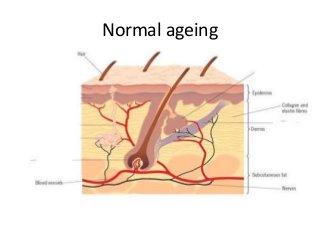
Normal ageing
1.Epidermal turnover rates decrease by 30% to 50% by the
age of 70, resulting in rougher skin with decreased barrier
function, delayed wound healing.
2.The dermal- epidermal junction fattens resulting in
decreased contact between the two layers. As a result the
two layers may easily separate, making older skin more
likely to tear and blister.
3.Basal and peak levels of cutaneous blood flow are reduced
by about 60%, resulting in compromised vascular
responsiveness during injury or infection.
4.Collagen synthesis decreases and degradation increases,
resulting in a loss of the connective tissue matrix and
impaired wound healing.
5.Elastic fibers decrease in number and size, resulting in
decreased skin elasticity.
6.Subcutaneous fat decreases with age, decreasing its ability
to protect deeper structures from injury.
7.Distribution of subcutaneous fat changes (decreasing in face
and hands, increasing in thighs and abdomen), which
decreases pressure diffusion over bony prominences.
PATHOGENESIS
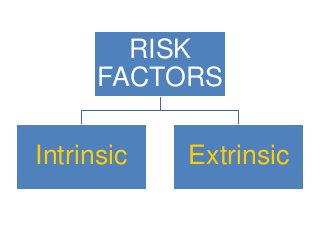
RISK
FACTORS
Intrinsic Extrinsic
Pressure
• Pressure that disrupts normal circulation to the skin and deep
structures is the primary factor in the development of pressure
ulcers.
• The injury caused by compression of tissue with decline in blood
flow to tissues when subjected to pressure.
• Dermis capillary blood flow pressures range from 11 mm Hg at
the venule side to 32 mm Hg on the arterial side. If capillary
pressures rises above 32 mm Hg, blood flow will be disrupted,
causing ischemia within hours. Lying supine on a regular hospital
bed applies a pressure of 100 to 150 mm Hg over the sacrum.
• Muscle fibers begin to degenerate after exposure to 60 to 70 mm
Hg of pressure for 1 or 2 hours.
• Muscle and subcutaneous tissue are more
sensitive than the epidermis and dermis to
pressure induced injuries. The damage in the
tissue occurs in a cone-shaped pattern with
the tip of the cone at the skin. Therefore, the
damage to the skin seen at a pressure ulcer
site may be the “tip of an iceberg,” with more
severe injury to tissues under the skin.
Friction
• Friction causes epidermal injury, which can
increase damage already present by pressure.
• This often occurs when objects such as bed
linen or clothes are allowed to rub on the skin,
removing the epidermis.
• The age associated decrease in epidermal
turnover rate may delay repair
Shear
• Shear is the internal force that is generated
when a body moves in a direction parallel to
the plane of contact.
• As an elderly person slides down in the bed,
the skin adheres to the bed surface but the
underlying structures move with the body.
• This causes tearing of capillaries and
disruption in blood flow.
• less pressure is needed to occlude blood flow.
Moisture
• from urinary or fecal incontinence or profuse
sweating
• lead to skin maceration and perhaps increased
friction and sheer forces when left sticky and
wet.
Intrinsic Risk factors
Aside from extrinsic forces, several intrinsic forces
also impact the development of pressure ulcers.
• Immobility: due to increased rates of cerebral
vascular disease, hip fracture, and increased recovery
time from acute illness or surgery.
• Decreased sensory perception: diabetic neuropathy
or cerebral vascular disease, which may prevent an
older adult from feeling the pain associated with
damage from extrinsic forces.
• Inadequate nutrition increases risk for ulcer
development and impairs healing
• Soft tissue edema, dehydration,
atherosclerosis lead to impaired tissue repair
and healing.
Common sites
• The sacrum is the most common site; the heel
is the second most common.
• The head, elbows, ears, trochanters, ischial
tuberosities, lateral malleoli, and other areas
over bony prominences can all be pressure
ulcer sites.
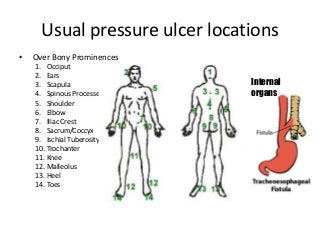
Usual pressure ulcer locations
• Over Bony Prominences
1. Occiput
2. Ears
3. Scapula
4. Spinous Processes
5. Shoulder
6. Elbow
7. Iliac Crest
8. Sacrum/Coccyx
9. Ischial Tuberosity
10. Trochanter
11. Knee
12. Malleolus
13. Heel
14. Toes
Internal
organs
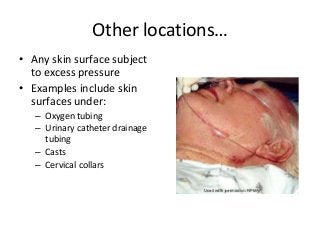
Other locations…
• Any skin surface subject
to excess pressure
• Examples include skin
surfaces under:
– Oxygen tubing
– Urinary catheter drainage
tubing
– Casts
– Cervical collars
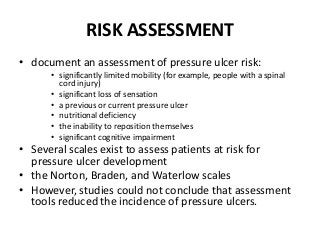
RISK ASSESSMENT
• document an assessment of pressure ulcer risk:
• significantly limited mobility (for example, people with a spinal
cord injury)
• significant loss of sensation
• a previous or current pressure ulcer
• nutritional deficiency
• the inability to reposition themselves
• significant cognitive impairment
• Several scales exist to assess patients at risk for
pressure ulcer development
• the Norton, Braden, and Waterlow scales
• However, studies could not conclude that assessment
tools reduced the incidence of pressure ulcers.
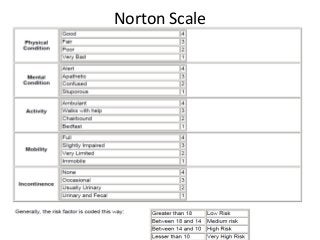
Norton Scale
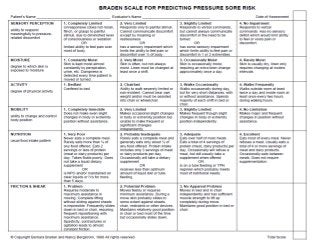
• The Braden scale assesses risks in six categories:
sensory perception, activity, mobility, nutrition,
moisture level, and friction/shear (three point
scale)
• The maximum score is 23.
• A score of 18 indicates increased risk for elderly
patients
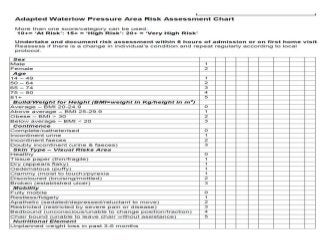
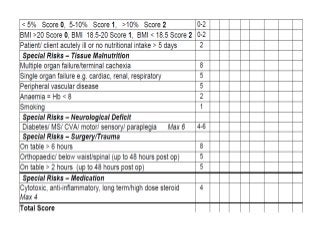
• The Waterlow scale is a modification of the
Norton scale and assesses eight factors: build,
sex and age, continence,mobility, appetite,
medication, and special risk factors.
• The higher the score on this complex scale
indicates an increased risk.
skin assessment
• skin integrity in areas of pressure
• colour changes or discoloration
• variations in heat, firmness and moisture (for
example, because of incontinence, oedema,
dry or inflamed skin).
CLASSIFICATION
• The NPUAP uses a four-stage system of
pressure ulcer classification.
• In 2007, two new stages were added:
suspected deep tissue injury and unstageable.
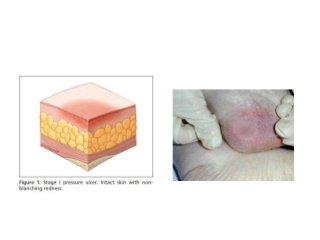
Stage I
• is intact skin with non-blanchable erythema of
a localized area usually over a bony
prominence. The skin may be painful, and a
different temperature compared with
surrounding skin. This indicates that there is
inadequate perfusion to the cutaneous
microcirculation
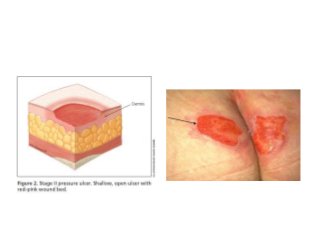
Stage II
• is a partial thickness loss of dermis presenting
as a shallow open ulcer with a red-pink wound
bed, without slough or bruising. An open or
ruptured blister may also be present. At this
stage, tissue anoxia has progressed to such an
extent that the epidermis starts to necrose.
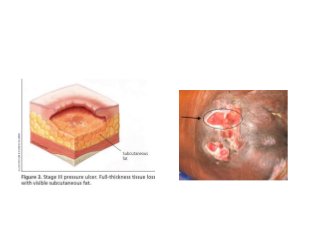
Stage III
• is full thickness tissue loss associated with
undermining and tunneling. Subcutaneous fat
may be visible but bone, tendon, or muscle is
not exposed
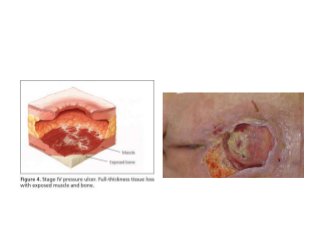
Stage IV
• is full thickness tissue loss with exposed bone,
tendon, or muscle. It is often associated with
slough or eschar, undermining and tunneling,
and osteomyelitis.
• Stage I: Persistent non-blanchable erythema of intact
skin
• Stage II: Partial-thickness skin loss involving epidermis,
dermis, or both. Ulcer is superficial and presents as an
abrasion, blister, or shallow crater
• Stage III: Full-thickness skin loss involving damage or
necrosis of subcutaneous tissue that may extend down to,
but not through, underlying fascia.
•Stage IV: Full-thickness skin loss with extensive
destruction, tissue necrosis, or damage to muscle, bone, or
supporting structures (e.g. tendon, joint capsule).
Undermining and sinus tracts may also be present.
Suspected deep tissue injury
• is a purple or maroon localized area of
discolored intact skin or blood-filled blister
because of damage of underlying soft tissue.
• The skin may be painful, different temperature
compared to surrounding skin. Deep tissue
injury may progress rapidly to a pressure ulcer,
despite treatment
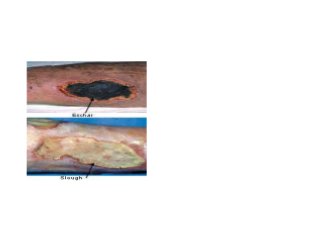
An unstageable ulcer
• is full thickness tissue loss in which the base of
the ulcer is covered by slough (yellow, tan,
gray, green, or brown) and/or eschar (tan,
brown, or black) in the wound bed. The slough
and/or eschar must be removed before the
true stage can be determined. However, an
eschar on the heels is considered stable if it is
dry, adherent, and intact without erythema
and should not be removed
Ulcer assessment
•Location
• Stage
• Area
• Depth
•Drainage
• Necrosis
• Granulation
• Cellulitis
•document undermining or tunneling
MONITORING HEALING
• Document all observations over time
• Describe each ulcer to track progress of
healing
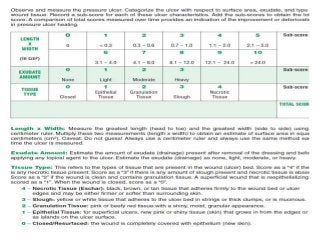
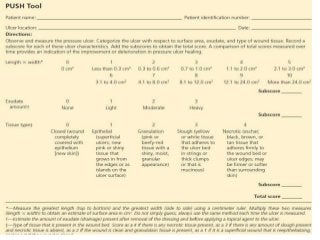
• Pressure Ulcer Scale for Healing (PUSH)
• PUSH Tool 3.0
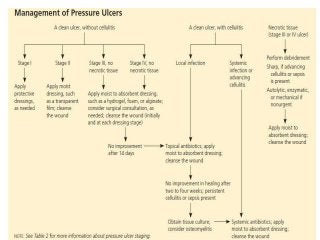
Management of PU
• Prevention
• Treatment
PREVENTION
focuses on:
Local Pressure reduction
Skin care
Improve general condition
LOCAL PRESSURE REDUCTION
PRESSURE REDUCTION TO PRESERVE
MICROCIRCULATION IS A MAINSTAY OF
PREVENTIVE THERAPY.
Reduce MECHANICAL LOADING
 Reposition every 2 hours
 Use pillows to keep bony prominence away from
direct contact
 Use devices that relieve pressure on heels
• to minimize shear, the head of the bed should not
be elevated more than 30 degrees
 Use lifting devices to move rather than drag the
patient during transfer
 Pressure reducing mattresses
Support surfaces
• Support surfaces can reduce pressure but not
eliminate pressure, so repositioning is still
important.
• Static support surfaces are usually foam, air, or
water overlays and can reduce pressure,
especially for stage I and stage II ulcers and if
the patient can move. These surfaces lie over
the existing mattress or replace the existing
mattress and can be used in the home
• Dynamic support surfaces are low air loss beds,
alternating pressure beds, and air fluidized beds.
• These devices are usually reserved for stage III and
stage IV ulcers, for patients can’t reposition himself
or when there is less than 1 inch of material
between the bed and pressure ulcer when feeling
beneath the static surface
• The low air loss beds and air fluidized beds reduce
pressure by keeping the person floating on a bed of
air or fluidized beads.
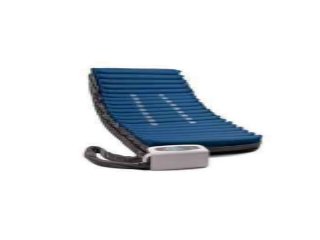
alternating pressure beds
• reduce pressure by reproducing the
alternation of high and low pressure in the
weight-bearing areas, which occurs in normal
people as a result of postural changes in
response to pressure pain. They consist of two
alternating systems of air cells powered by a
pump, which causes them to inflate and
deflate reciprocally over a 5- to 10-minute
cycle, thus continually changing the
supporting areas of pressure on the body.
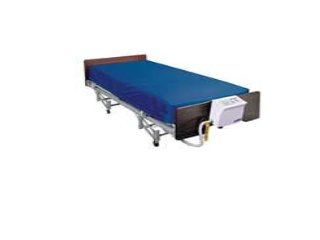
Low air loss beds (LAL)
• bed on which patients are supported on a series
of air sacs through which warmed air passes. The
actual temperature of the air can be adjusted to
warm or cool the patient as needed.
• The amount of pressure in each pillow can be
adjusted to provide maximum pressure
redistribution for the individual patient.
• In addition to providing support, the LAL bed
provides a continuous flow of air across the
surface of the mattress which prevents moisture
build-up on the patient’s skin.
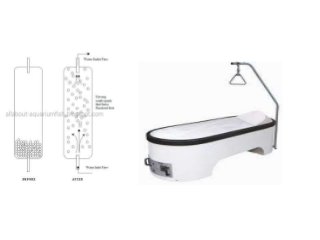
Air Fluidized Therapy (AFT) bed
• bed in which warmed air is circulated through fine silicon-
coated or ceramic beads covered by a permeable sheet.
• The beads in the bed behave like a liquid when air is
pumped through them.
• On this type of bed, the body is immersed in the warm, dry
fluidized beads which act similar to being immersed in
water, and provides support over a large contact area.
• When the bed is turned off, the beads settle to the bottom
and mold around the patient’s body to provide support.
• Temperature regulation is an important factor when using
these beds since dehydration and overheating can occur if
the temperature of the air is not set properly
Skin care
• Daily systematic skin inspection and cleansing
• Consider using a barrier preparation to prevent
skin damage in patients who are at high risk of
developing a moisture lesion or incontinence-
associated dermatitis, as identified by skin
assessment (such as those with incontinence,
oedema, dry or inflamed skin).
•  factors that promote dryness
• Avoid massaging over bony prominences
• adequate nutrition
• adequate hydration
• control of medical illnesses
Improve general health by:
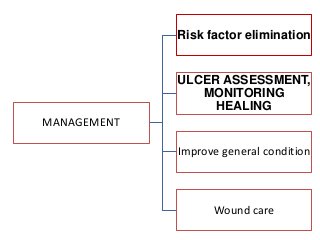
MANAGEMENT
Risk factor elimination
ULCER ASSESSMENT,
MONITORING
HEALING
Improve general condition
Wound care
wound care
Wound cleansing
• Wound cleansing should be done with tap water
or saline.
• Wounds should be cleansed initially and with
each dressing change. U se of a 35-mL syringe
and 19-gauge angiocatheter provides a degree of
force that is effective yet safe;
• Wound cleansing with antiseptic agents (e.g.,
povidone-iodine [Betadine], hydrogen peroxide,
acetic acid) should be avoided because they
destroy granulation tissue
Debridement-1
• Necrotic tissue promotes bacterial growth and
impairs wound healing, and it should be
debrided until eschar is removed and
granulation tissue is present. Debridement,
however, is not recommended for heel ulcers
that have stable, dry eschar without edema,
erythema, fluctuance, or drainage.
Debridement-2
• Sharp débridement uses a scalpel and scissors,
removing only the dead tissue.
• Mechanical débridement uses wet to dry dressings,
whirlpool, and irrigation. It is a nonselective method
and may remove healthy tissue.
• Enzymatic débridement uses enzymes to slowly break
down the fibrin and collagen in the necrotic tissue. The
enzymatic ointments are expensive.
• Autolytic débridement uses the wounds own enzymes
to slowly remove the necrotic tissue through use of an
occlusive dressing.
• Bio surgery: Larvae to digest dead tissue
• Povidone-iodine solution can be used to
debride infected ulcers. Although the
effervescent action of hydrogen peroxide
results in wound débridement, it is not
recommended for frequent or long-term use
in pressure ulcers, because it indiscriminately
removes necrotic material and fragile
granulation tissue and because it and other
cleansing agents have been found to be toxic
to fibroblasts.
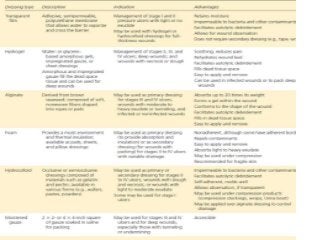
Wound dressings
• The choice of wound dressings varies with the
state of the wound, the goal being to achieve
a clean, healing wound with granulation
tissue. A stage I pressure ulcer may not
require any dressing. For more advanced
ulcers, various dressing options are available
• dressings include transparent films, hydrogels,
alginates, foams, and hydrocolloids.
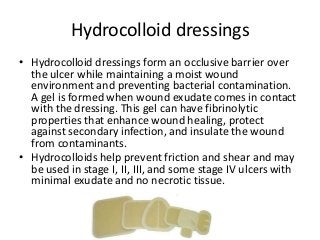
Hydrocolloid dressings
• Hydrocolloid dressings form an occlusive barrier over
the ulcer while maintaining a moist wound
environment and preventing bacterial contamination.
A gel is formed when wound exudate comes in contact
with the dressing. This gel can have fibrinolytic
properties that enhance wound healing, protect
against secondary infection, and insulate the wound
from contaminants.
• Hydrocolloids help prevent friction and shear and may
be used in stage I, II, III, and some stage IV ulcers with
minimal exudate and no necrotic tissue.
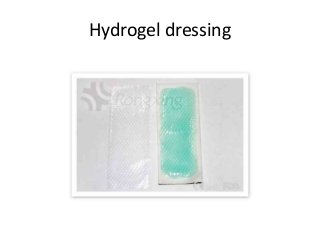
Gel dressings
• Gel dressings are available in sheet form, in
granules, and as liquid gel. All forms of gel
dressings keep the wound surface moist as
long as they are not allowed to dehydrate.
Some gel dressings provide limited to
moderate absorption, some provide
insulation, and some provide protection
against bacterial invasion. All gel dressings
allow atraumatic removal
Hydrogel dressing
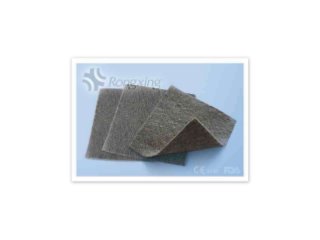
Calcium alginate
• Alginate dressings are semiocclusive, highly
absorbent, and easy to use.They are natural,
sterile, nonwoven dressings derived from brown
seaweed. Alginate forms a gel when it comes into
contact with wound drainage, and may be used in
light to heavily draining stage II, III, and IV ulcers.
It may be used in both infected and noninfected
wounds; however, it should not be applied to dry
or minimally draining wounds, as it can cause
dehydration and delay wound healing.
Transparent adhesive dressings
• Transparent adhesive dressings are semipermeable and
occlusive. They allow gaseous exchange and transfer of
water vapor from the skin and prevent maceration of
healthy skin around the wound.
• In addition, they are nonabsorptive, reduce secondary
infection, and allow atraumatic removal.
• These dressings minimize friction and shear and may
be used in shallow stage I, II, and III ulcers with minimal
exudate and no necrotic tissue; however, they do not
work well on patients who are diaphoretic or have
wounds with significant exudation
Surgical closure
• The recurrence rate for pressure ulcers after
surgical repair can be 30% to 50%. Surgical
repairs can include direct closure, skin
grafting, skin flaps, and musculocutaneous
flaps.
Topical Antibiotic
• Mafenide, an antimicrobial agent that is
bacteriostatic to many gram-positive and
gram-negative organisms
including Pseudomonas aeruginosa, can
penetrate an eschar and promote autolytic
softening of the eschar prior to debridement.
• trial of topical antibiotics, such as silver
sulfadiazine cream (Silvadene), should be used
for up to two weeks for clean ulcers that are
not healing properly after two to four weeks
of optimal wound care.
OTHER LINES OF THERAPY
Growth factors
• (e.g., platelet-derived growth factor becaplermin
[Regranex]).
• PDGF promotes chemotaxis of neutrophils, monocytes
and smooth muscle cells in wounds. Topical
application of recombinant PDGF speeds wound
healing and promotes granulation tissue formation,
synthesis of extracellular matrix and the inflammatory
phase of the wound healing process.
• PDGF promotes cutaneous wound healing by
increasing proliferation and migration of dermal
fibroblasts and extracellular matrix deposition
Negative pressure therapy, Vaccum
assisted closure
• Negative pressure therapy enhances wound
healing by reducing edema, increasing the
rate of granulation tissue formation, and
increases blood flow
• Contraindication:
– Malignant ulcer
– Osteomyelitis (untreated)
– Necrotic tissue, eschar
– Direct contact with vessels, nerves
hyperbaric oxygen therapy
• Systemic hyperbaric oxygen therapy involves 100%
oxygen presentation under 2.4 atmospheres of
pressure, and induces both increased collagen
production and fibroblast proliferation, which are
considered evidence for improved wound healing. HBO
treatment for 90 min daily for a total of 30 treatments
results in healing with complete epithelialisation in
60% of the treatment group compared to 13% in the
control group
• Proven for Diabetic ulcer but need further trials in
pressure, arterial, and venous ulcers
Electrical Stimulation
• Several forms of electrical stimulation have been
tested for their efficacy in eliminating pressure
ulcers, among which are bio-electrical stimulation
therapy (BEST) and pulsed electromagnetic force
stimulation (PEMF), also called interrupted direct
current (IDC).
• further work is required to determine the validity
of electrical stimulation in eliminating pressure
ulcers.
• The role of laser therapy, ultrasound, and is
unclear.
COMPLICATIONS
Infection
• Any infection in the skin, soft tissues, or bone
associated with the pressure ulcer needs systemic
antibiotic coverage.
• Soft tissue infections are quite often
polymicrobial. Awide range of gram-negative,
gram-positive and anaerobic organisms can all
cause infection. Methicillin-resistant
Staphylococcus aureus (MRSA) or other
antimicrobial resistant bacteria can infect these
wounds.
• Culture material should be obtained from
needle aspiration around the wound through
good skin or from tissue biopsy. Swab cultures
are not recommended.
Bacteremia
• Therapy with clindamycin plus gentamicin or
another combination for broad coverage given
intravenously is indicated. Initially consider
vancomycin to cover MRSA in the sick patient
until the organism and sensitivity profile are
available. In the immune compromised
patient or with recent hospitalization cover for
P. aeruginosa.
Osteomyelitis
• A change in the pattern of pain or development of pain is
quite common with new osteomyelitis. With the WBC
count greater than 15,000/mL, sedimentation rate greater
than 120 mm/hr, and an abnormal radiograph, the
probability of osteomyelitis is 69%.
• Bone scan has a high false-positive rate for osteomyelitis.
• The magnetic resonance image may accurately separate
soft tissue from bone infection but has false-positive
results because of edema in bone near infected soft
tissue.
• Bone biopsy off antibiotics for 2 weeks is still considered
the gold standard for the diagnosis of osteomyelitis. Bone
biopsy can create osteomyelitis by introducing bacteria
into the bone from the overlying wound. Biopsy is not
needed in all cases where osteomyelitis is established or
being considered as the diagnosis.
THANK YOU

Pressure ulcer

  • 1.
    Pressure Ulcer Dr. DohaRasheedy Lecturer of Geriatric medicine Ain Shams University
  • 2.
    Definition • A localizedarea of soft-tissue injury resulting from compression between a bony prominence and an external surface.
  • 3.
    • The NationalPressure Ulcer Advisory Panel (NPUAP) defines a pressure ulcer as localized injury to the skin and/ or underlying tissue usually over a bony prominence as a result of pressure, or pressure in combination with shear and/ or friction. • Blanchable erythema or reactive hyperemia often precede pressure ulcer development and can resolve in 24 hours if treatment starts. However, once the skin changes go beyond the initial stage, pressure ulcer formation has started.
  • 4.
    Epidemiology • The olderadult population is especially at risk. • Incidence rates of pressure ulcer in the United States approach 38% in acute care, 40% in critical care units, and 24% in long-term care facilities. • Prevalence rates in the United Kingdom range from 8% to 20% for hospitalized patients
  • 5.
  • 6.
    1.Epidermal turnover ratesdecrease by 30% to 50% by the age of 70, resulting in rougher skin with decreased barrier function, delayed wound healing. 2.The dermal- epidermal junction fattens resulting in decreased contact between the two layers. As a result the two layers may easily separate, making older skin more likely to tear and blister. 3.Basal and peak levels of cutaneous blood flow are reduced by about 60%, resulting in compromised vascular responsiveness during injury or infection. 4.Collagen synthesis decreases and degradation increases, resulting in a loss of the connective tissue matrix and impaired wound healing. 5.Elastic fibers decrease in number and size, resulting in decreased skin elasticity. 6.Subcutaneous fat decreases with age, decreasing its ability to protect deeper structures from injury. 7.Distribution of subcutaneous fat changes (decreasing in face and hands, increasing in thighs and abdomen), which decreases pressure diffusion over bony prominences.
  • 7.
  • 8.
  • 9.
    Pressure • Pressure thatdisrupts normal circulation to the skin and deep structures is the primary factor in the development of pressure ulcers. • The injury caused by compression of tissue with decline in blood flow to tissues when subjected to pressure. • Dermis capillary blood flow pressures range from 11 mm Hg at the venule side to 32 mm Hg on the arterial side. If capillary pressures rises above 32 mm Hg, blood flow will be disrupted, causing ischemia within hours. Lying supine on a regular hospital bed applies a pressure of 100 to 150 mm Hg over the sacrum. • Muscle fibers begin to degenerate after exposure to 60 to 70 mm Hg of pressure for 1 or 2 hours.
  • 10.
    • Muscle andsubcutaneous tissue are more sensitive than the epidermis and dermis to pressure induced injuries. The damage in the tissue occurs in a cone-shaped pattern with the tip of the cone at the skin. Therefore, the damage to the skin seen at a pressure ulcer site may be the “tip of an iceberg,” with more severe injury to tissues under the skin.
  • 11.
    Friction • Friction causesepidermal injury, which can increase damage already present by pressure. • This often occurs when objects such as bed linen or clothes are allowed to rub on the skin, removing the epidermis. • The age associated decrease in epidermal turnover rate may delay repair
  • 12.
    Shear • Shear isthe internal force that is generated when a body moves in a direction parallel to the plane of contact. • As an elderly person slides down in the bed, the skin adheres to the bed surface but the underlying structures move with the body. • This causes tearing of capillaries and disruption in blood flow. • less pressure is needed to occlude blood flow.
  • 13.
    Moisture • from urinaryor fecal incontinence or profuse sweating • lead to skin maceration and perhaps increased friction and sheer forces when left sticky and wet.
  • 14.
    Intrinsic Risk factors Asidefrom extrinsic forces, several intrinsic forces also impact the development of pressure ulcers. • Immobility: due to increased rates of cerebral vascular disease, hip fracture, and increased recovery time from acute illness or surgery. • Decreased sensory perception: diabetic neuropathy or cerebral vascular disease, which may prevent an older adult from feeling the pain associated with damage from extrinsic forces.
  • 15.
    • Inadequate nutritionincreases risk for ulcer development and impairs healing • Soft tissue edema, dehydration, atherosclerosis lead to impaired tissue repair and healing.
  • 16.
    Common sites • Thesacrum is the most common site; the heel is the second most common. • The head, elbows, ears, trochanters, ischial tuberosities, lateral malleoli, and other areas over bony prominences can all be pressure ulcer sites.
  • 17.
    Usual pressure ulcerlocations • Over Bony Prominences 1. Occiput 2. Ears 3. Scapula 4. Spinous Processes 5. Shoulder 6. Elbow 7. Iliac Crest 8. Sacrum/Coccyx 9. Ischial Tuberosity 10. Trochanter 11. Knee 12. Malleolus 13. Heel 14. Toes Internal organs
  • 18.
    Other locations… • Anyskin surface subject to excess pressure • Examples include skin surfaces under: – Oxygen tubing – Urinary catheter drainage tubing – Casts – Cervical collars
  • 19.
    RISK ASSESSMENT • documentan assessment of pressure ulcer risk: • significantly limited mobility (for example, people with a spinal cord injury) • significant loss of sensation • a previous or current pressure ulcer • nutritional deficiency • the inability to reposition themselves • significant cognitive impairment • Several scales exist to assess patients at risk for pressure ulcer development • the Norton, Braden, and Waterlow scales • However, studies could not conclude that assessment tools reduced the incidence of pressure ulcers.
  • 21.
  • 24.
    • The Bradenscale assesses risks in six categories: sensory perception, activity, mobility, nutrition, moisture level, and friction/shear (three point scale) • The maximum score is 23. • A score of 18 indicates increased risk for elderly patients
  • 25.
    • The Waterlowscale is a modification of the Norton scale and assesses eight factors: build, sex and age, continence,mobility, appetite, medication, and special risk factors. • The higher the score on this complex scale indicates an increased risk.
  • 26.
    skin assessment • skinintegrity in areas of pressure • colour changes or discoloration • variations in heat, firmness and moisture (for example, because of incontinence, oedema, dry or inflamed skin).
  • 27.
    CLASSIFICATION • The NPUAPuses a four-stage system of pressure ulcer classification. • In 2007, two new stages were added: suspected deep tissue injury and unstageable.
  • 28.
    Stage I • isintact skin with non-blanchable erythema of a localized area usually over a bony prominence. The skin may be painful, and a different temperature compared with surrounding skin. This indicates that there is inadequate perfusion to the cutaneous microcirculation
  • 30.
    Stage II • isa partial thickness loss of dermis presenting as a shallow open ulcer with a red-pink wound bed, without slough or bruising. An open or ruptured blister may also be present. At this stage, tissue anoxia has progressed to such an extent that the epidermis starts to necrose.
  • 32.
    Stage III • isfull thickness tissue loss associated with undermining and tunneling. Subcutaneous fat may be visible but bone, tendon, or muscle is not exposed
  • 34.
    Stage IV • isfull thickness tissue loss with exposed bone, tendon, or muscle. It is often associated with slough or eschar, undermining and tunneling, and osteomyelitis.
  • 36.
    • Stage I:Persistent non-blanchable erythema of intact skin • Stage II: Partial-thickness skin loss involving epidermis, dermis, or both. Ulcer is superficial and presents as an abrasion, blister, or shallow crater • Stage III: Full-thickness skin loss involving damage or necrosis of subcutaneous tissue that may extend down to, but not through, underlying fascia. •Stage IV: Full-thickness skin loss with extensive destruction, tissue necrosis, or damage to muscle, bone, or supporting structures (e.g. tendon, joint capsule). Undermining and sinus tracts may also be present.
  • 37.
    Suspected deep tissueinjury • is a purple or maroon localized area of discolored intact skin or blood-filled blister because of damage of underlying soft tissue. • The skin may be painful, different temperature compared to surrounding skin. Deep tissue injury may progress rapidly to a pressure ulcer, despite treatment
  • 38.
    An unstageable ulcer •is full thickness tissue loss in which the base of the ulcer is covered by slough (yellow, tan, gray, green, or brown) and/or eschar (tan, brown, or black) in the wound bed. The slough and/or eschar must be removed before the true stage can be determined. However, an eschar on the heels is considered stable if it is dry, adherent, and intact without erythema and should not be removed
  • 40.
    Ulcer assessment •Location • Stage •Area • Depth •Drainage • Necrosis • Granulation • Cellulitis •document undermining or tunneling
  • 41.
    MONITORING HEALING • Documentall observations over time • Describe each ulcer to track progress of healing • Pressure Ulcer Scale for Healing (PUSH) • PUSH Tool 3.0
  • 45.
    Management of PU •Prevention • Treatment
  • 46.
    PREVENTION focuses on: Local Pressurereduction Skin care Improve general condition
  • 47.
  • 48.
    PRESSURE REDUCTION TOPRESERVE MICROCIRCULATION IS A MAINSTAY OF PREVENTIVE THERAPY.
  • 49.
    Reduce MECHANICAL LOADING Reposition every 2 hours  Use pillows to keep bony prominence away from direct contact  Use devices that relieve pressure on heels • to minimize shear, the head of the bed should not be elevated more than 30 degrees  Use lifting devices to move rather than drag the patient during transfer  Pressure reducing mattresses
  • 50.
    Support surfaces • Supportsurfaces can reduce pressure but not eliminate pressure, so repositioning is still important. • Static support surfaces are usually foam, air, or water overlays and can reduce pressure, especially for stage I and stage II ulcers and if the patient can move. These surfaces lie over the existing mattress or replace the existing mattress and can be used in the home
  • 51.
    • Dynamic supportsurfaces are low air loss beds, alternating pressure beds, and air fluidized beds. • These devices are usually reserved for stage III and stage IV ulcers, for patients can’t reposition himself or when there is less than 1 inch of material between the bed and pressure ulcer when feeling beneath the static surface • The low air loss beds and air fluidized beds reduce pressure by keeping the person floating on a bed of air or fluidized beads.
  • 52.
    alternating pressure beds •reduce pressure by reproducing the alternation of high and low pressure in the weight-bearing areas, which occurs in normal people as a result of postural changes in response to pressure pain. They consist of two alternating systems of air cells powered by a pump, which causes them to inflate and deflate reciprocally over a 5- to 10-minute cycle, thus continually changing the supporting areas of pressure on the body.
  • 54.
    Low air lossbeds (LAL) • bed on which patients are supported on a series of air sacs through which warmed air passes. The actual temperature of the air can be adjusted to warm or cool the patient as needed. • The amount of pressure in each pillow can be adjusted to provide maximum pressure redistribution for the individual patient. • In addition to providing support, the LAL bed provides a continuous flow of air across the surface of the mattress which prevents moisture build-up on the patient’s skin.
  • 56.
    Air Fluidized Therapy(AFT) bed • bed in which warmed air is circulated through fine silicon- coated or ceramic beads covered by a permeable sheet. • The beads in the bed behave like a liquid when air is pumped through them. • On this type of bed, the body is immersed in the warm, dry fluidized beads which act similar to being immersed in water, and provides support over a large contact area. • When the bed is turned off, the beads settle to the bottom and mold around the patient’s body to provide support. • Temperature regulation is an important factor when using these beds since dehydration and overheating can occur if the temperature of the air is not set properly
  • 58.
    Skin care • Dailysystematic skin inspection and cleansing • Consider using a barrier preparation to prevent skin damage in patients who are at high risk of developing a moisture lesion or incontinence- associated dermatitis, as identified by skin assessment (such as those with incontinence, oedema, dry or inflamed skin). •  factors that promote dryness • Avoid massaging over bony prominences
  • 59.
    • adequate nutrition •adequate hydration • control of medical illnesses Improve general health by:
  • 60.
    MANAGEMENT Risk factor elimination ULCERASSESSMENT, MONITORING HEALING Improve general condition Wound care
  • 61.
  • 62.
    Wound cleansing • Woundcleansing should be done with tap water or saline. • Wounds should be cleansed initially and with each dressing change. U se of a 35-mL syringe and 19-gauge angiocatheter provides a degree of force that is effective yet safe; • Wound cleansing with antiseptic agents (e.g., povidone-iodine [Betadine], hydrogen peroxide, acetic acid) should be avoided because they destroy granulation tissue
  • 63.
    Debridement-1 • Necrotic tissuepromotes bacterial growth and impairs wound healing, and it should be debrided until eschar is removed and granulation tissue is present. Debridement, however, is not recommended for heel ulcers that have stable, dry eschar without edema, erythema, fluctuance, or drainage.
  • 64.
    Debridement-2 • Sharp débridementuses a scalpel and scissors, removing only the dead tissue. • Mechanical débridement uses wet to dry dressings, whirlpool, and irrigation. It is a nonselective method and may remove healthy tissue. • Enzymatic débridement uses enzymes to slowly break down the fibrin and collagen in the necrotic tissue. The enzymatic ointments are expensive. • Autolytic débridement uses the wounds own enzymes to slowly remove the necrotic tissue through use of an occlusive dressing. • Bio surgery: Larvae to digest dead tissue
  • 65.
    • Povidone-iodine solutioncan be used to debride infected ulcers. Although the effervescent action of hydrogen peroxide results in wound débridement, it is not recommended for frequent or long-term use in pressure ulcers, because it indiscriminately removes necrotic material and fragile granulation tissue and because it and other cleansing agents have been found to be toxic to fibroblasts.
  • 66.
    Wound dressings • Thechoice of wound dressings varies with the state of the wound, the goal being to achieve a clean, healing wound with granulation tissue. A stage I pressure ulcer may not require any dressing. For more advanced ulcers, various dressing options are available • dressings include transparent films, hydrogels, alginates, foams, and hydrocolloids.
  • 68.
    Hydrocolloid dressings • Hydrocolloiddressings form an occlusive barrier over the ulcer while maintaining a moist wound environment and preventing bacterial contamination. A gel is formed when wound exudate comes in contact with the dressing. This gel can have fibrinolytic properties that enhance wound healing, protect against secondary infection, and insulate the wound from contaminants. • Hydrocolloids help prevent friction and shear and may be used in stage I, II, III, and some stage IV ulcers with minimal exudate and no necrotic tissue.
  • 69.
    Gel dressings • Geldressings are available in sheet form, in granules, and as liquid gel. All forms of gel dressings keep the wound surface moist as long as they are not allowed to dehydrate. Some gel dressings provide limited to moderate absorption, some provide insulation, and some provide protection against bacterial invasion. All gel dressings allow atraumatic removal
  • 70.
  • 71.
    Calcium alginate • Alginatedressings are semiocclusive, highly absorbent, and easy to use.They are natural, sterile, nonwoven dressings derived from brown seaweed. Alginate forms a gel when it comes into contact with wound drainage, and may be used in light to heavily draining stage II, III, and IV ulcers. It may be used in both infected and noninfected wounds; however, it should not be applied to dry or minimally draining wounds, as it can cause dehydration and delay wound healing.
  • 73.
    Transparent adhesive dressings •Transparent adhesive dressings are semipermeable and occlusive. They allow gaseous exchange and transfer of water vapor from the skin and prevent maceration of healthy skin around the wound. • In addition, they are nonabsorptive, reduce secondary infection, and allow atraumatic removal. • These dressings minimize friction and shear and may be used in shallow stage I, II, and III ulcers with minimal exudate and no necrotic tissue; however, they do not work well on patients who are diaphoretic or have wounds with significant exudation
  • 74.
    Surgical closure • Therecurrence rate for pressure ulcers after surgical repair can be 30% to 50%. Surgical repairs can include direct closure, skin grafting, skin flaps, and musculocutaneous flaps.
  • 75.
    Topical Antibiotic • Mafenide,an antimicrobial agent that is bacteriostatic to many gram-positive and gram-negative organisms including Pseudomonas aeruginosa, can penetrate an eschar and promote autolytic softening of the eschar prior to debridement.
  • 76.
    • trial oftopical antibiotics, such as silver sulfadiazine cream (Silvadene), should be used for up to two weeks for clean ulcers that are not healing properly after two to four weeks of optimal wound care.
  • 78.
  • 79.
    Growth factors • (e.g.,platelet-derived growth factor becaplermin [Regranex]). • PDGF promotes chemotaxis of neutrophils, monocytes and smooth muscle cells in wounds. Topical application of recombinant PDGF speeds wound healing and promotes granulation tissue formation, synthesis of extracellular matrix and the inflammatory phase of the wound healing process. • PDGF promotes cutaneous wound healing by increasing proliferation and migration of dermal fibroblasts and extracellular matrix deposition
  • 80.
    Negative pressure therapy,Vaccum assisted closure • Negative pressure therapy enhances wound healing by reducing edema, increasing the rate of granulation tissue formation, and increases blood flow • Contraindication: – Malignant ulcer – Osteomyelitis (untreated) – Necrotic tissue, eschar – Direct contact with vessels, nerves
  • 81.
    hyperbaric oxygen therapy •Systemic hyperbaric oxygen therapy involves 100% oxygen presentation under 2.4 atmospheres of pressure, and induces both increased collagen production and fibroblast proliferation, which are considered evidence for improved wound healing. HBO treatment for 90 min daily for a total of 30 treatments results in healing with complete epithelialisation in 60% of the treatment group compared to 13% in the control group • Proven for Diabetic ulcer but need further trials in pressure, arterial, and venous ulcers
  • 82.
    Electrical Stimulation • Severalforms of electrical stimulation have been tested for their efficacy in eliminating pressure ulcers, among which are bio-electrical stimulation therapy (BEST) and pulsed electromagnetic force stimulation (PEMF), also called interrupted direct current (IDC). • further work is required to determine the validity of electrical stimulation in eliminating pressure ulcers.
  • 83.
    • The roleof laser therapy, ultrasound, and is unclear.
  • 84.
  • 85.
    Infection • Any infectionin the skin, soft tissues, or bone associated with the pressure ulcer needs systemic antibiotic coverage. • Soft tissue infections are quite often polymicrobial. Awide range of gram-negative, gram-positive and anaerobic organisms can all cause infection. Methicillin-resistant Staphylococcus aureus (MRSA) or other antimicrobial resistant bacteria can infect these wounds.
  • 86.
    • Culture materialshould be obtained from needle aspiration around the wound through good skin or from tissue biopsy. Swab cultures are not recommended.
  • 87.
    Bacteremia • Therapy withclindamycin plus gentamicin or another combination for broad coverage given intravenously is indicated. Initially consider vancomycin to cover MRSA in the sick patient until the organism and sensitivity profile are available. In the immune compromised patient or with recent hospitalization cover for P. aeruginosa.
  • 88.
    Osteomyelitis • A changein the pattern of pain or development of pain is quite common with new osteomyelitis. With the WBC count greater than 15,000/mL, sedimentation rate greater than 120 mm/hr, and an abnormal radiograph, the probability of osteomyelitis is 69%. • Bone scan has a high false-positive rate for osteomyelitis. • The magnetic resonance image may accurately separate soft tissue from bone infection but has false-positive results because of edema in bone near infected soft tissue. • Bone biopsy off antibiotics for 2 weeks is still considered the gold standard for the diagnosis of osteomyelitis. Bone biopsy can create osteomyelitis by introducing bacteria into the bone from the overlying wound. Biopsy is not needed in all cases where osteomyelitis is established or being considered as the diagnosis.
  • 89.