Indigenous Knowledge Systems
lesson 6 - Indigenous Irrigation systems (cascade system,
water harvesting concepts) (2hrs)
• P.B. Dharmasena
• 0777 - 613234, 0717 – 613234
• dharmasenapb@ymail.com , dharmasenapb@gmail.com
• Links to publications:
https://independent.academia.edu/PunchiBandageDharmasena
https://www.researchgate.net/profile/Punchi_Bandage_Dharmasena/contribu
tions
http://www.slideshare.net/DharmasenaPb
https://www.youtube.com/channel/UC_PFqwl0OqsrxH1wTm_jZeg
• Course Code: MS 5208 (02:30/00)
• Saturday 3.30 pm – 5.30 pm (ZOOM)
Indigenous Knowledge Systems
2. Fundamental features of Sri Lankan Agriculture; climate, Soil, Genetic
resources, agro biodiversity (2 hrs)
3. History and the culture of Sri Lankan agriculture sector development (1 hr)
4. Green revolution and its impact on Sri Lankan traditional agricultural
system (biodiversity deterioration, inorganic substances for pest and disease
controlling, development of hybrid varieties etc.) (1hr)
5. Indigenous soil management practices (2hrs)
6. Indigenous Irrigation systems (cascade system, water harvesting
concepts) (2hrs)
9. Traditional practices for, weather forecasting, plant nutrient supplementing,
pest and disease control and indigenous agricultural machines and tools (2hrs)
13. Cultural dimensions of Agricultural rituals in Sri Lanka (1 hr)
14. Climate change and Indigenous Agricultural knowledge in Sri Lanka(1 hr)
Total: 12 hours)
List of lectures by P.B. Dharmasena
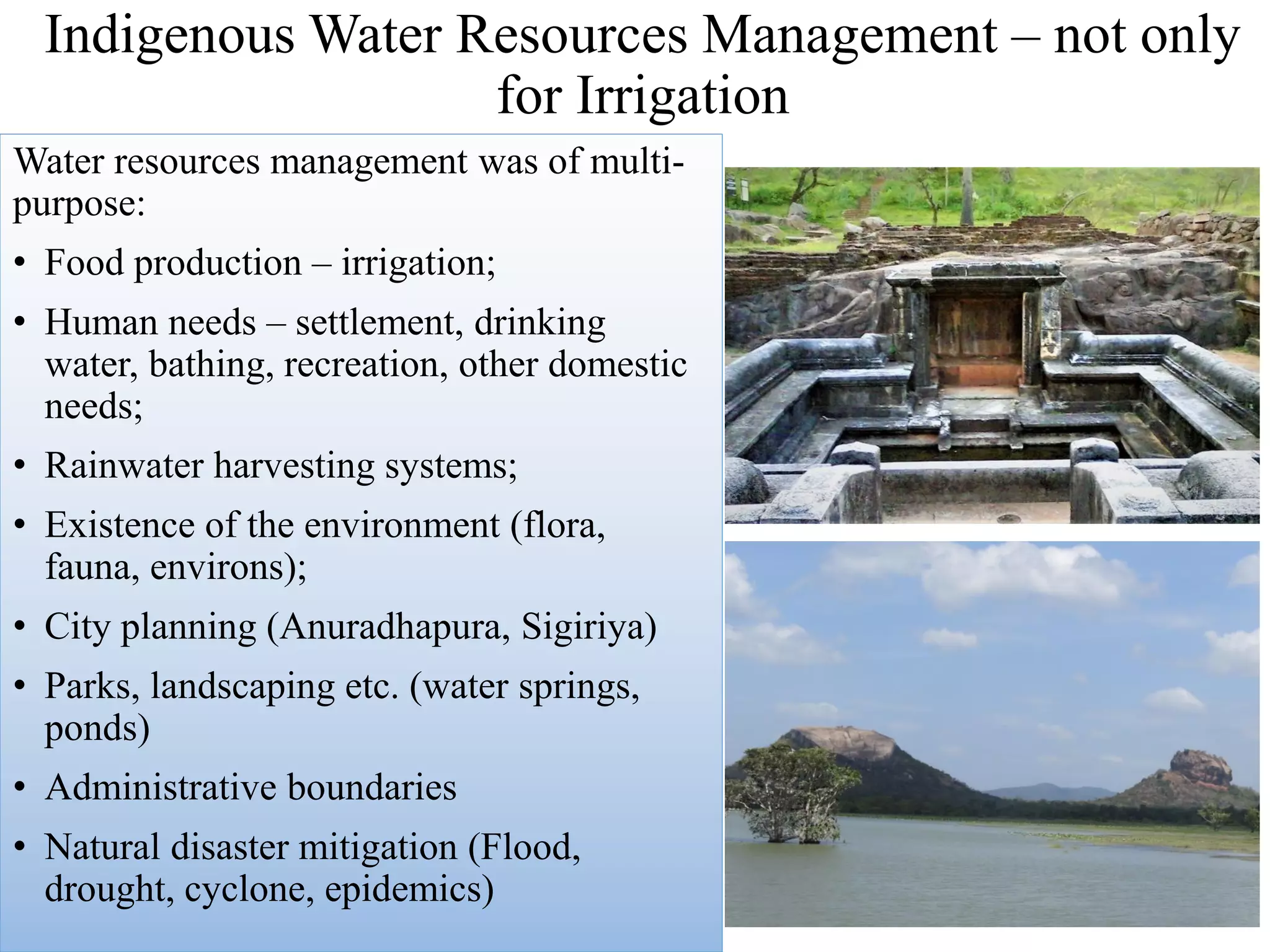
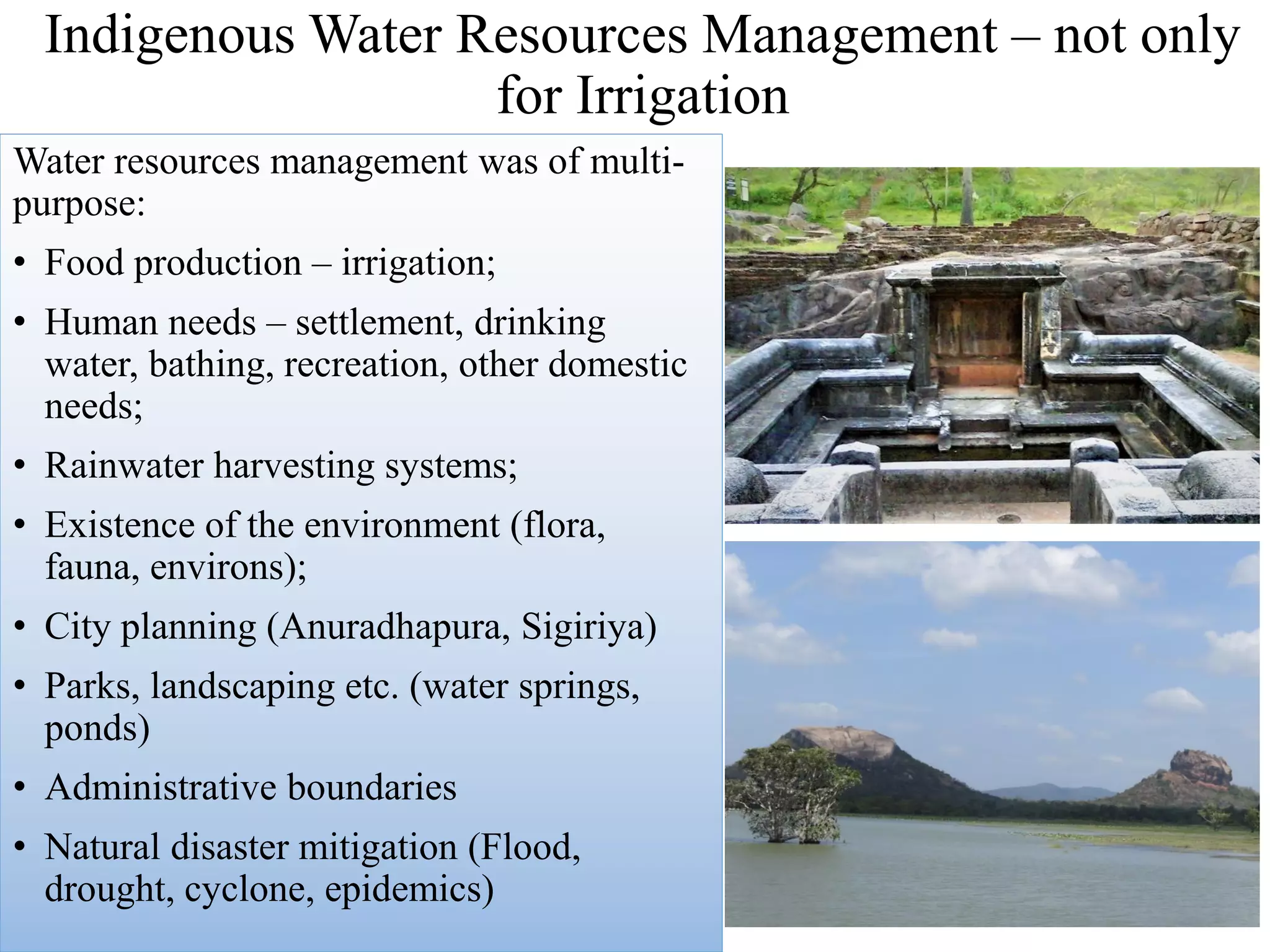
Indigenous Water Resources Management – not only
for Irrigation
Water resources management was of multi-
purpose:
• Food production – irrigation;
• Human needs – settlement, drinking
water, bathing, recreation, other domestic
needs;
• Rainwater harvesting systems;
• Existence of the environment (flora,
fauna, environs);
• City planning (Anuradhapura, Sigiriya)
• Parks, landscaping etc. (water springs,
ponds)
• Administrative boundaries
• Natural disaster mitigation (Flood,
drought, cyclone, epidemics)
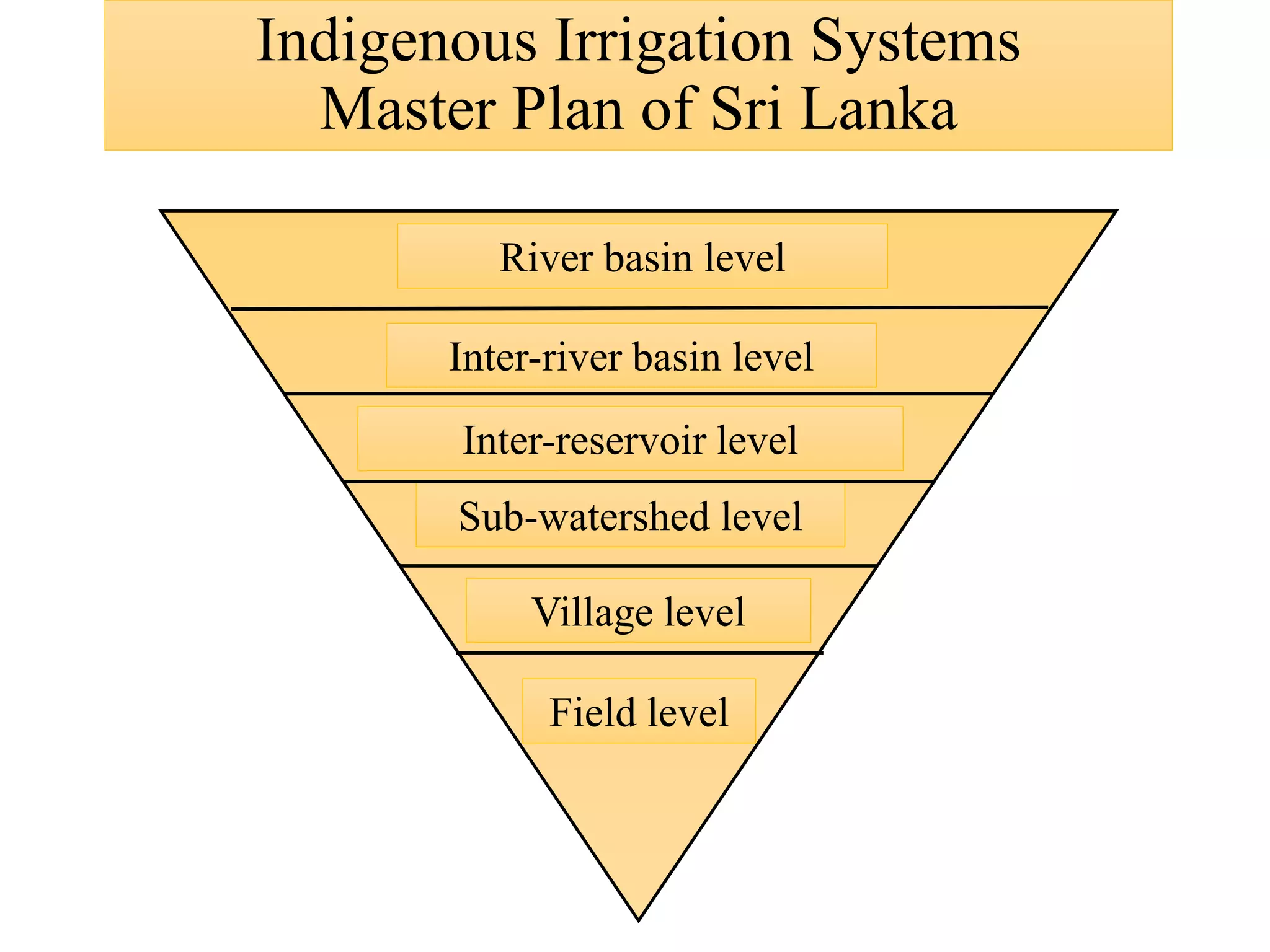
Indigenous Irrigation Systems
Master Plan of Sri Lanka
River basin level
Inter-river basin level
Inter-reservoir level
Sub-watershed level
Village level
Field level
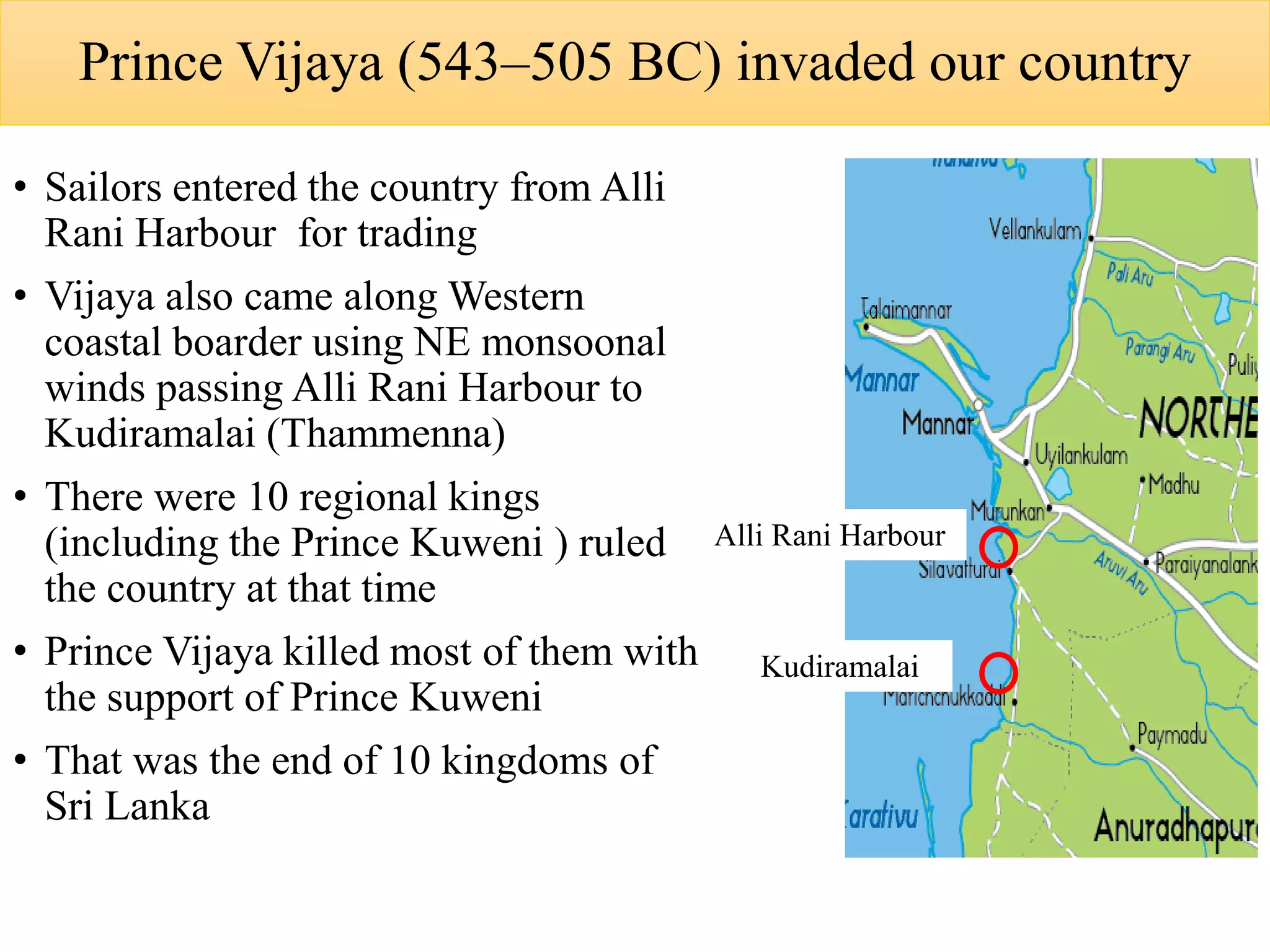
Prince Vijaya (543–505 BC) invaded our country
• Sailors entered the country from Alli
Rani Harbour for trading
• Vijaya also came along Western
coastal boarder using NE monsoonal
winds passing Alli Rani Harbour to
Kudiramalai (Thammenna)
• There were 10 regional kings
(including the Prince Kuweni ) ruled
the country at that time
• Prince Vijaya killed most of them with
the support of Prince Kuweni
• That was the end of 10 kingdoms of
Sri Lanka
Alli Rani Harbour
Kudiramalai
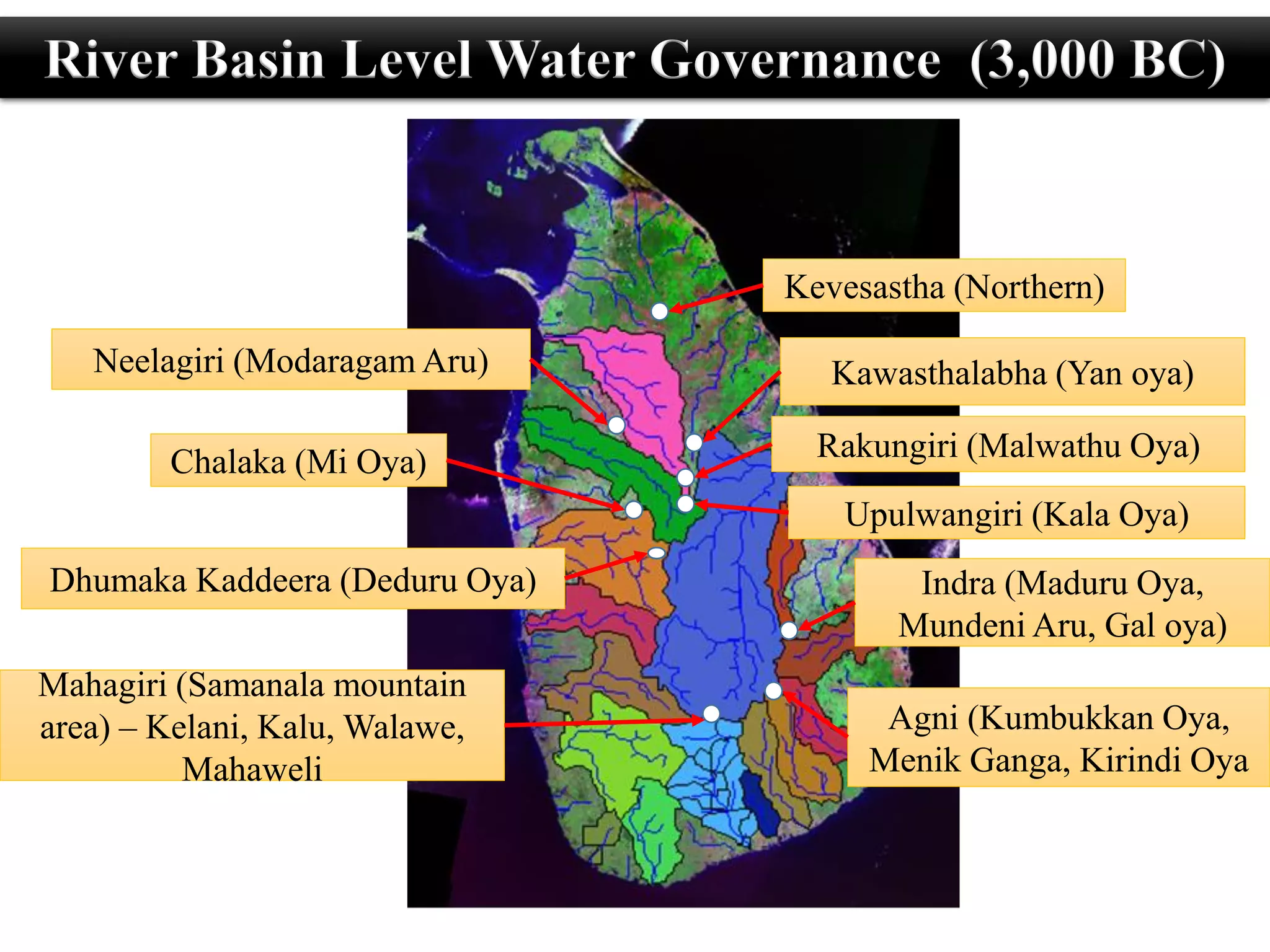
Kevesastha (Northern)
Upulwangiri (Kala Oya)
Rakungiri (Malwathu Oya)
Mahagiri (Samanala mountain
area) – Kelani, Kalu, Walawe,
Mahaweli
Chalaka (Mi Oya)
Neelagiri (Modaragam Aru) Kawasthalabha (Yan oya)
Dhumaka Kaddeera (Deduru Oya) Indra (Maduru Oya,
Mundeni Aru, Gal oya)
Agni (Kumbukkan Oya,
Menik Ganga, Kirindi Oya
River Basin Level Water Governance (3,000 BC)
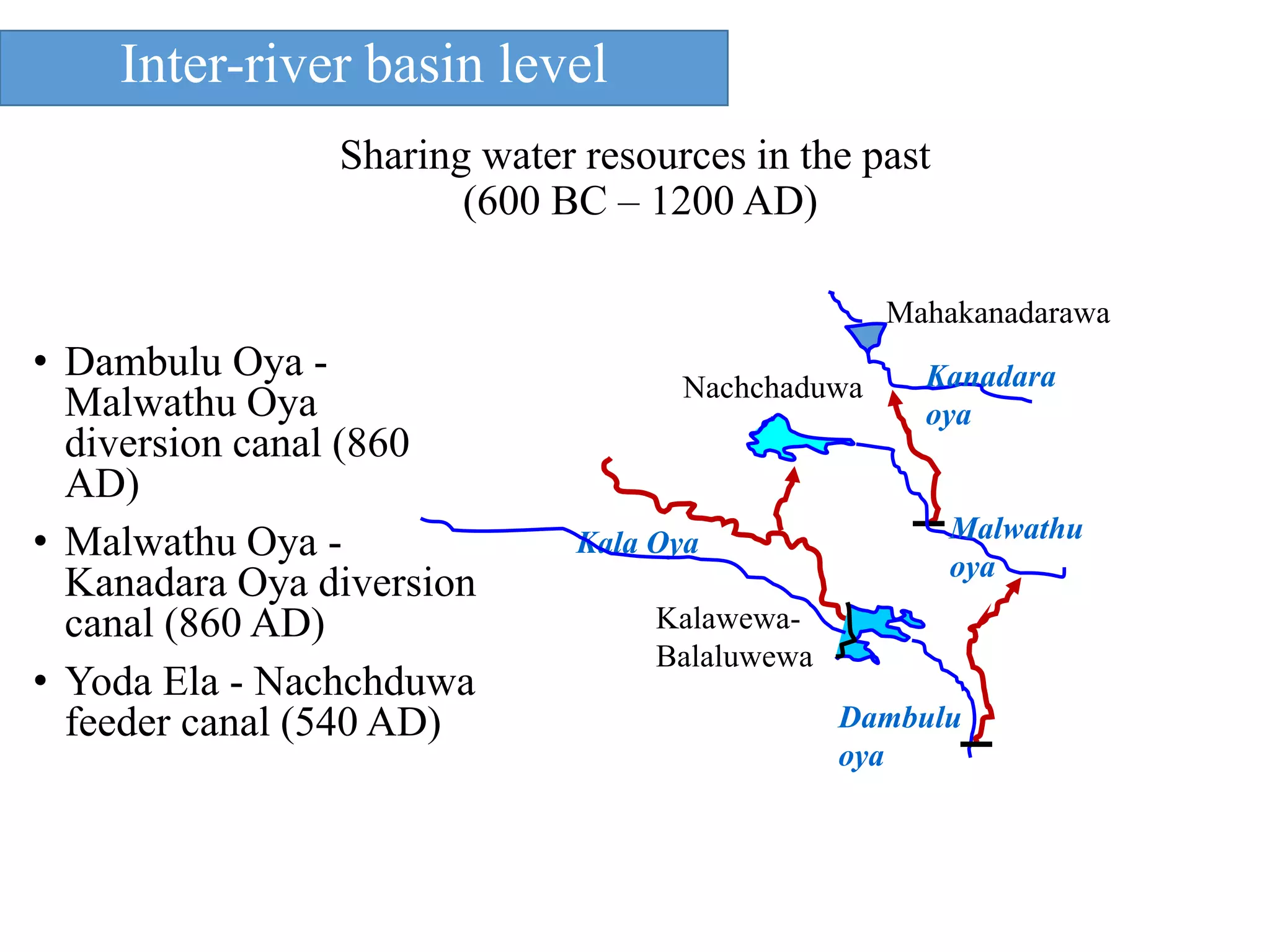
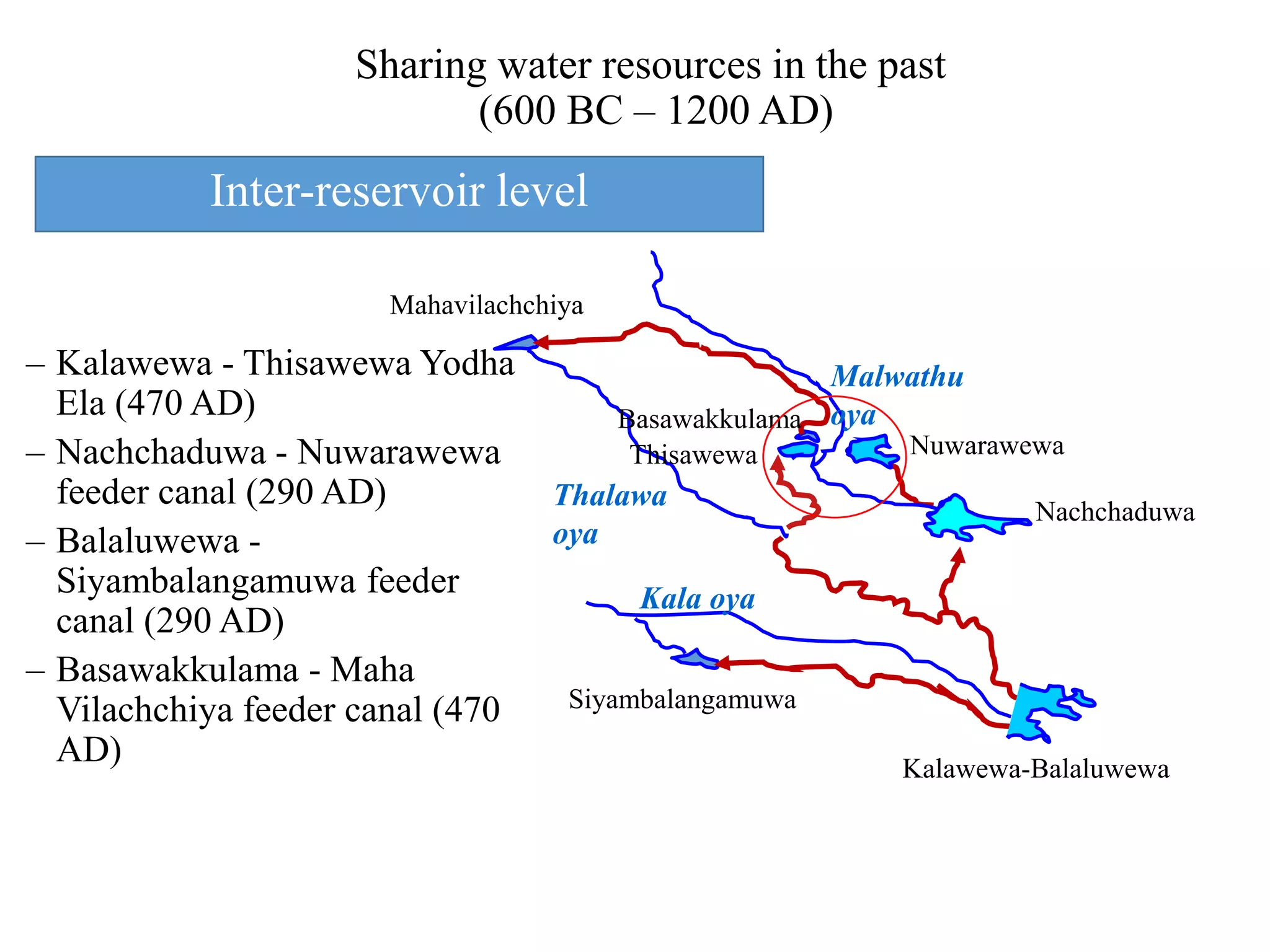
Sharing water resources in the past
(600 BC – 1200 AD)
• Dambulu Oya -
Malwathu Oya
diversion canal (860
AD)
• Malwathu Oya -
Kanadara Oya diversion
canal (860 AD)
• Yoda Ela - Nachchduwa
feeder canal (540 AD)
Mahakanadarawa
Nachchaduwa
Kalawewa-
Balaluwewa
Dambulu
oya
Malwathu
oya
Kanadara
oya
Kala Oya
Inter-river basin level
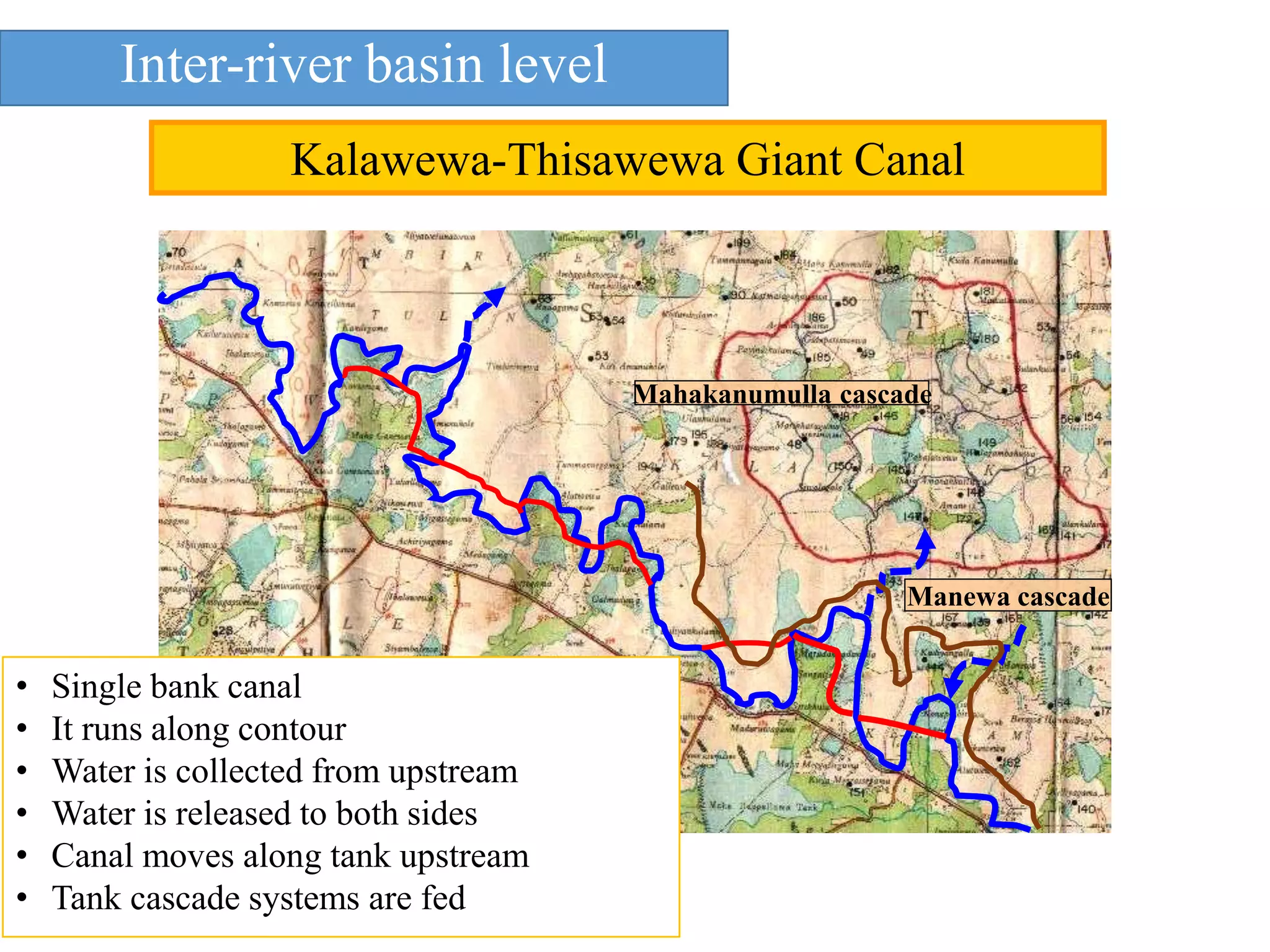
Manewa cascade
Mahakanumulla cascade
• Single bank canal
• It runs along contour
• Water is collected from upstream
• Water is released to both sides
• Canal moves along tank upstream
• Tank cascade systems are fed
Kalawewa-Thisawewa Giant Canal
Inter-river basin level
– Kalawewa - Thisawewa Yodha
Ela (470 AD)
– Nachchaduwa - Nuwarawewa
feeder canal (290 AD)
– Balaluwewa -
Siyambalangamuwa feeder
canal (290 AD)
– Basawakkulama - Maha
Vilachchiya feeder canal (470
AD) Kalawewa-Balaluwewa
Thisawewa
Siyambalangamuwa
Nachchaduwa
Nuwarawewa
Mahavilachchiya
Basawakkulama
Malwathu
oya
Thalawa
oya
Kala oya
Sharing water resources in the past
(600 BC – 1200 AD)
Inter-reservoir level
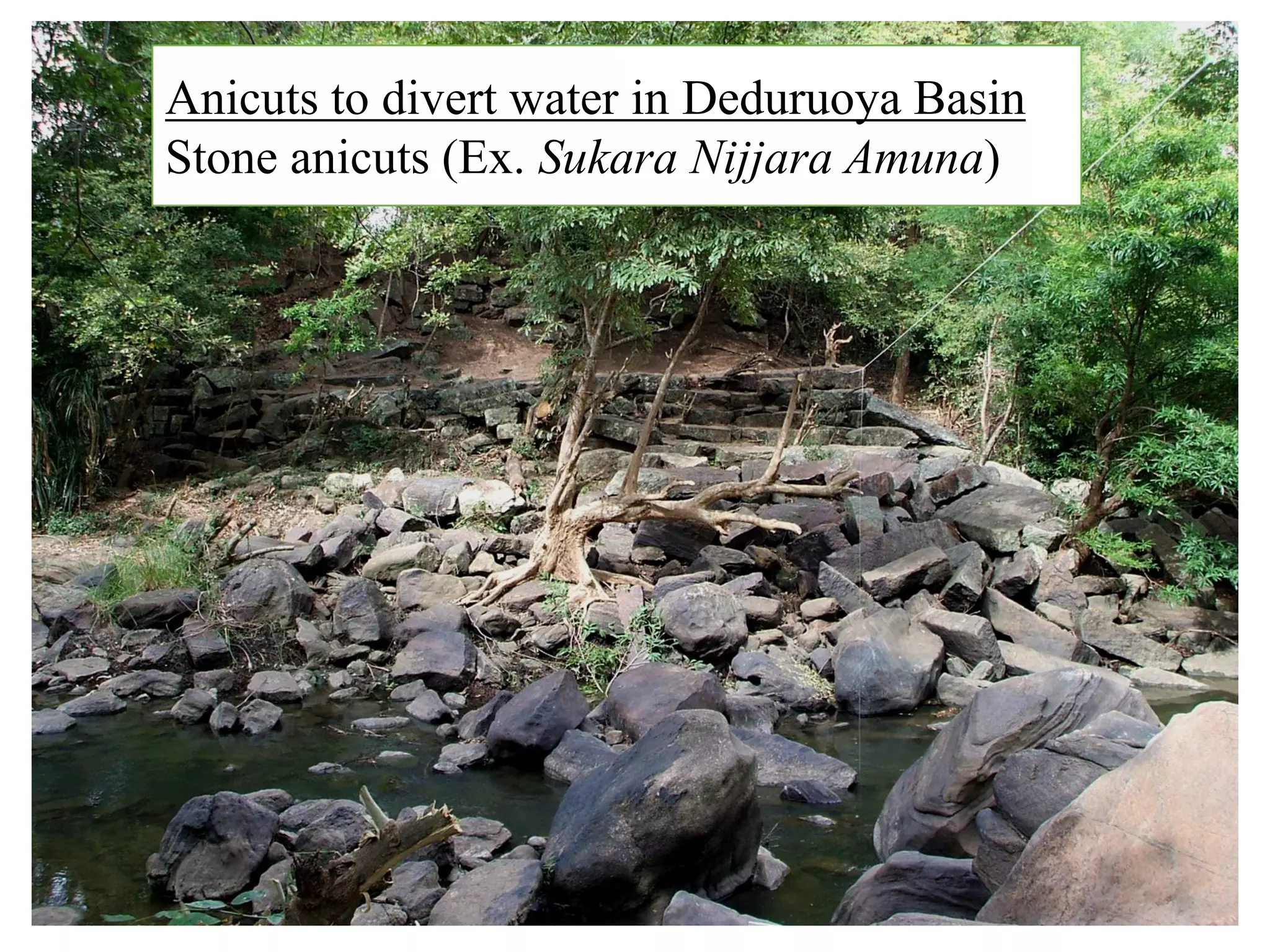
Anicuts to divert water in Deduruoya Basin
Stone anicuts (Ex. Sukara Nijjara Amuna)
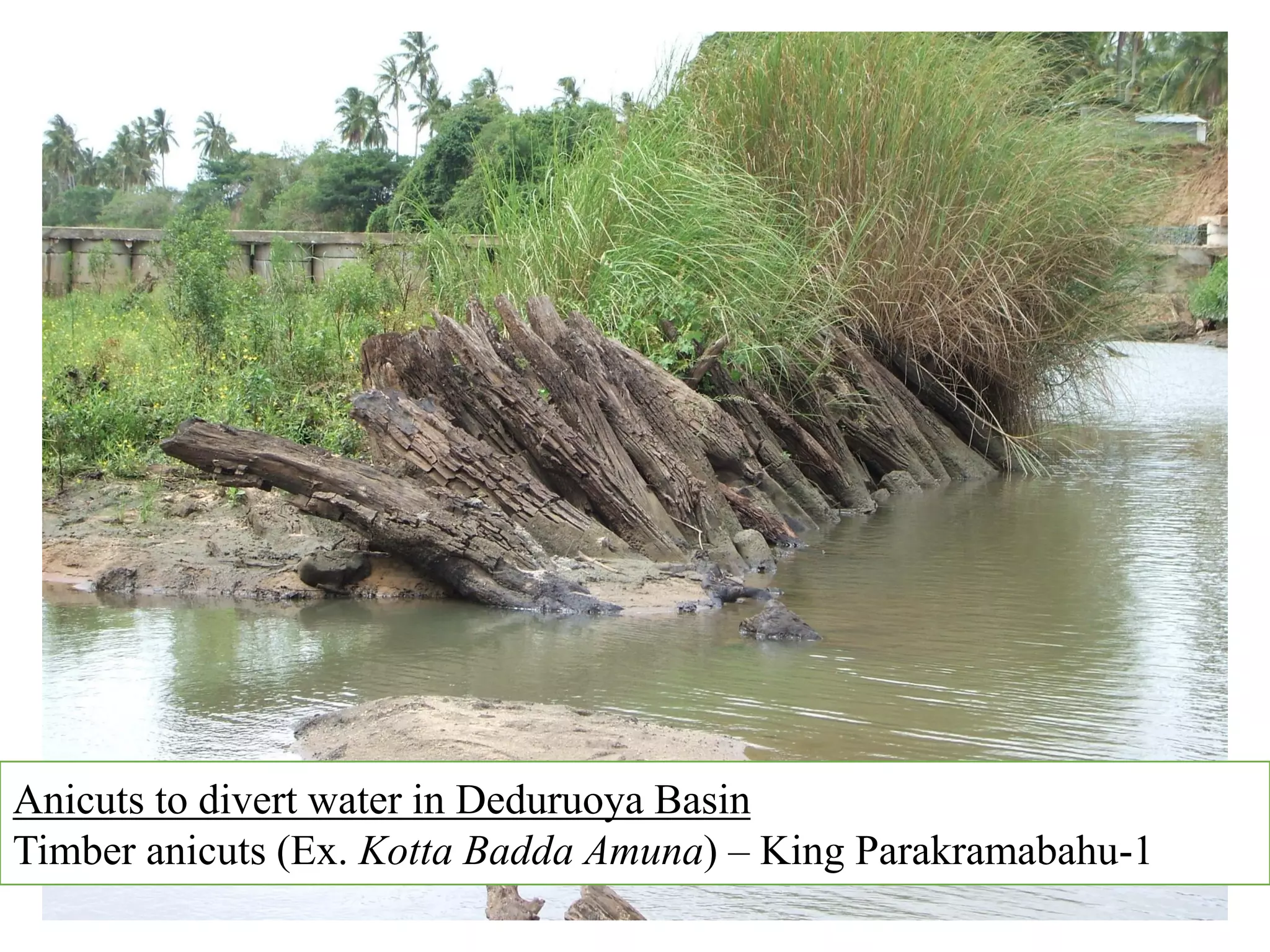
Anicuts to divert water in Deduruoya Basin
Timber anicuts (Ex. Kotta Badda Amuna) – King Parakramabahu-1
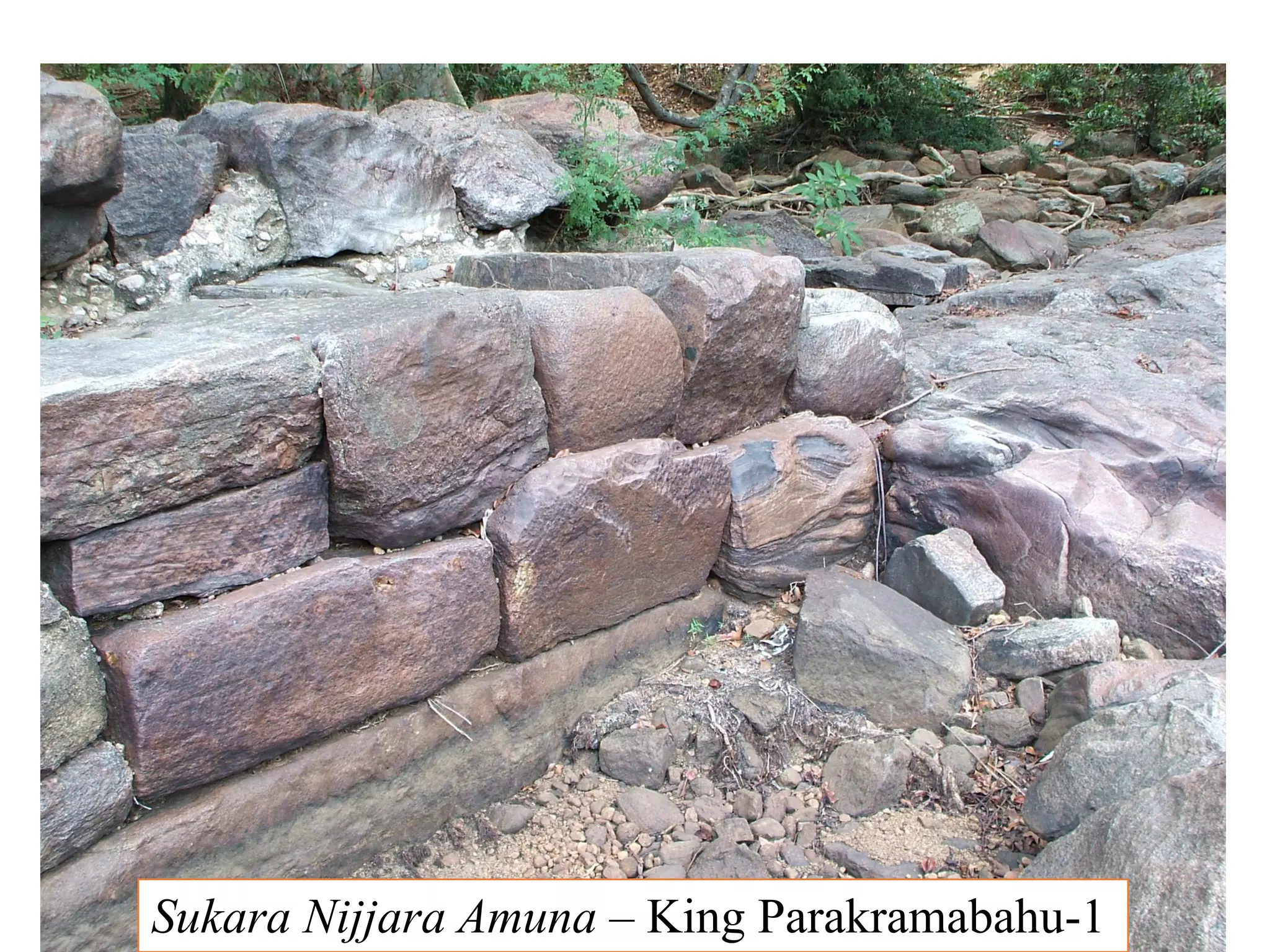
Sukara Nijjara Amuna – King Parakramabahu-1
Thekkama Amuna –
Malwathuoya by King
Dhatusena (459-477 AD)
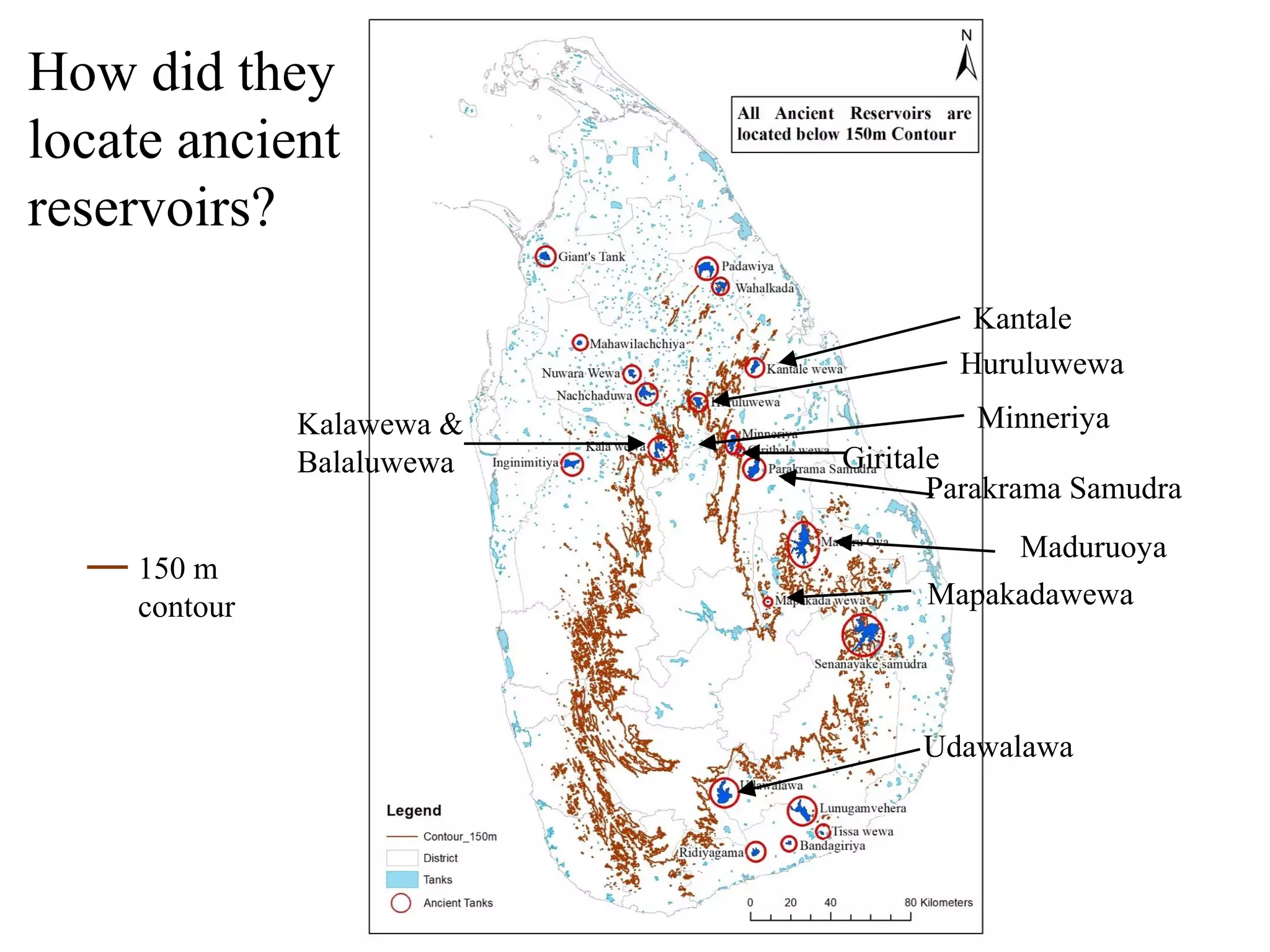
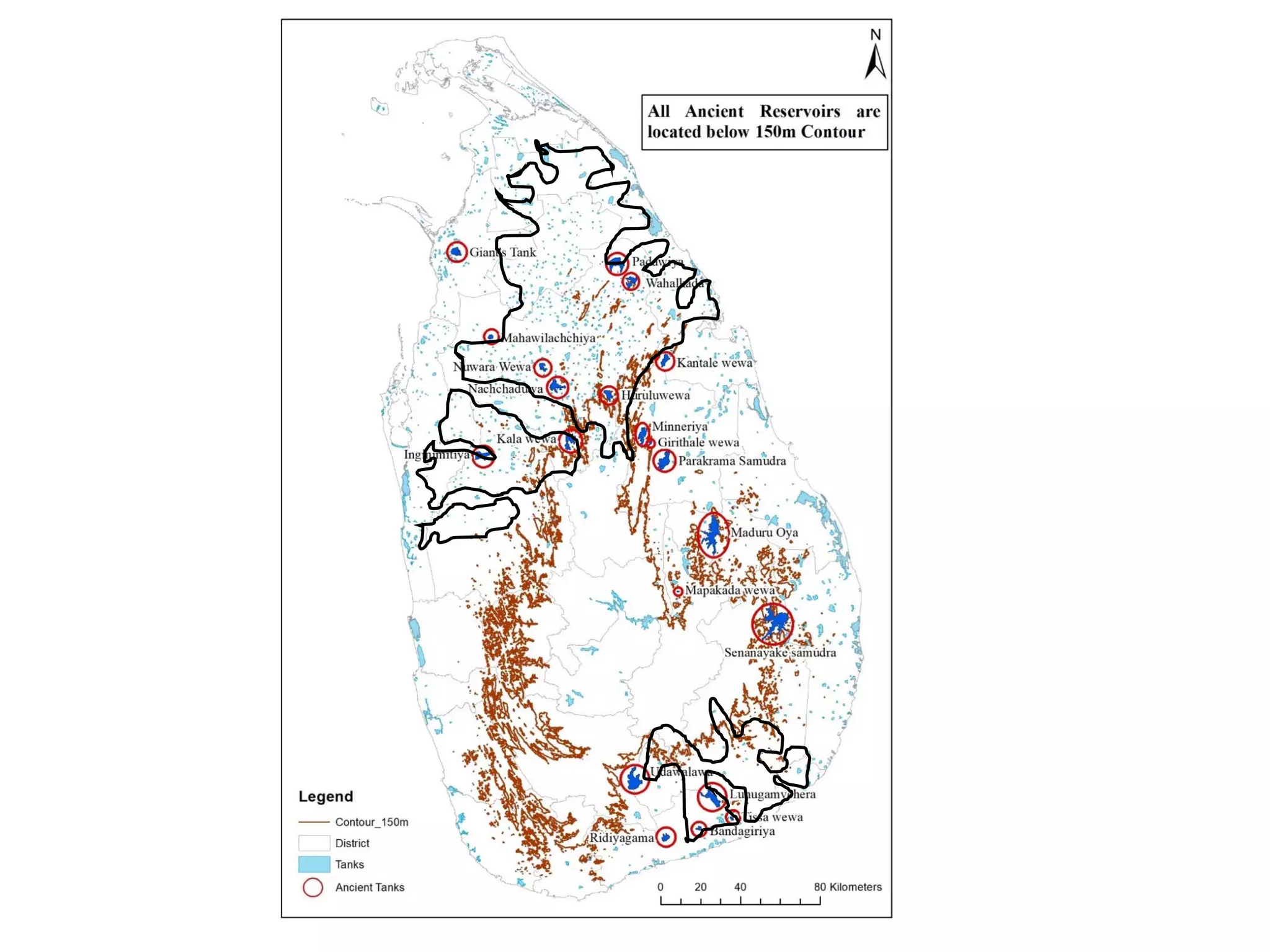
How did they
locate ancient
reservoirs?
Kantale
Huruluwewa
Minneriya
Giritale
Parakrama Samudra
Maduruoya
Mapakadawewa
Udawalawa
Kalawewa &
Balaluwewa
150 m
contour
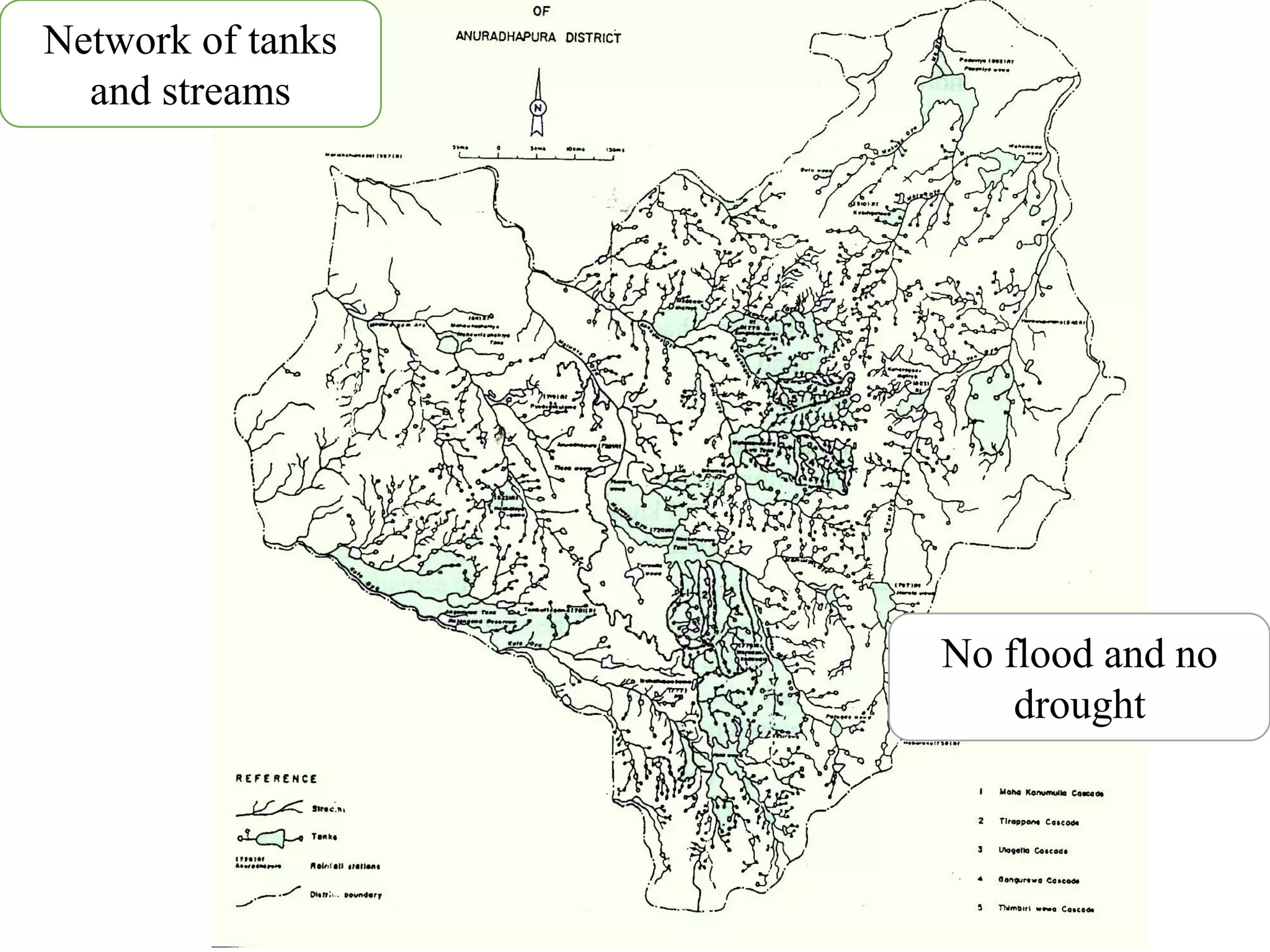
Network of tanks
and streams
No flood and no
drought
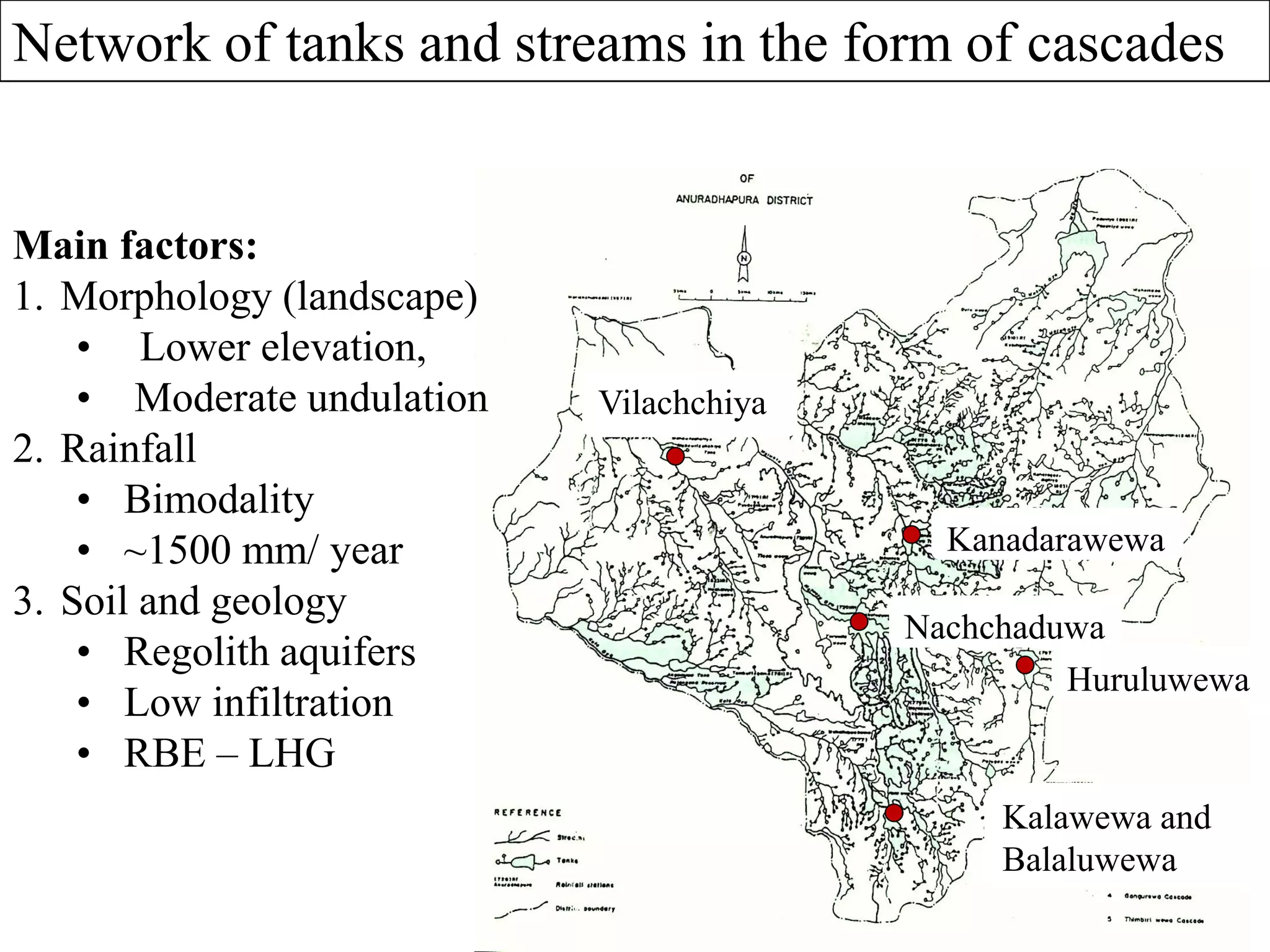
Nachchaduwa
Kanadarawewa
Vilachchiya
Kalawewa and
Balaluwewa
Huruluwewa
Main factors:
1. Morphology (landscape)
• Lower elevation,
• Moderate undulation
2. Rainfall
• Bimodality
• ~1500 mm/ year
3. Soil and geology
• Regolith aquifers
• Low infiltration
• RBE – LHG
Network of tanks and streams in the form of cascades
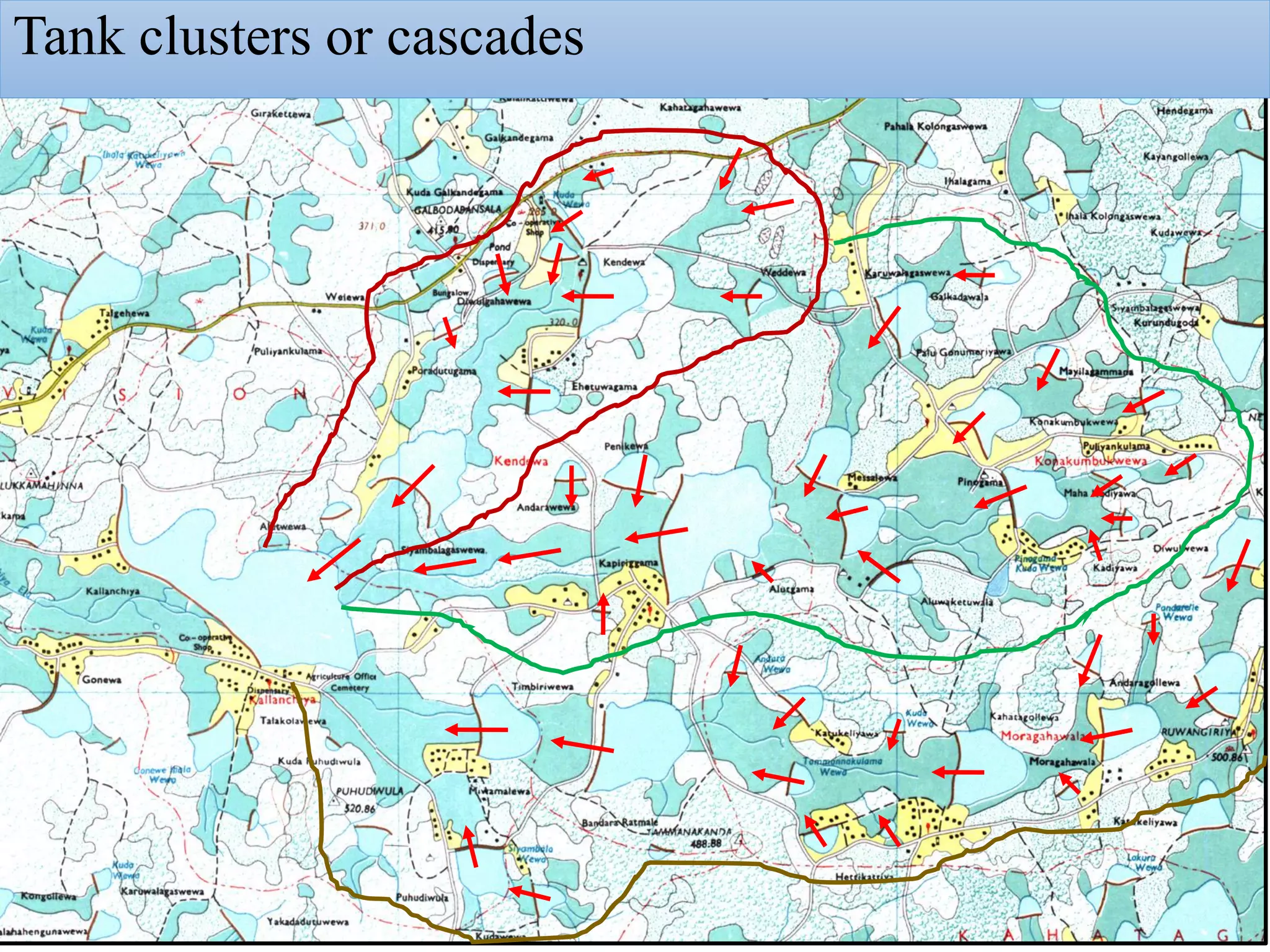
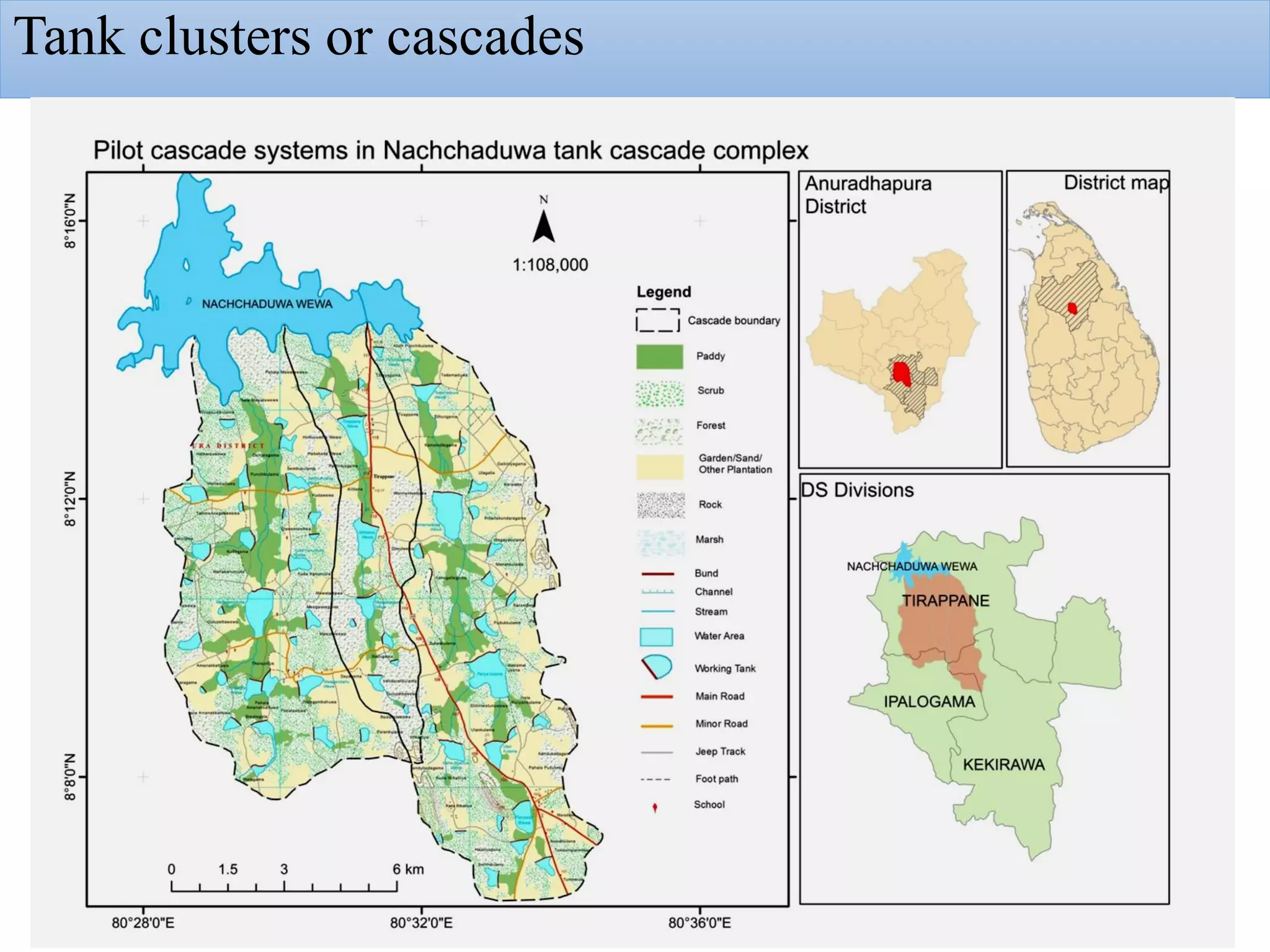
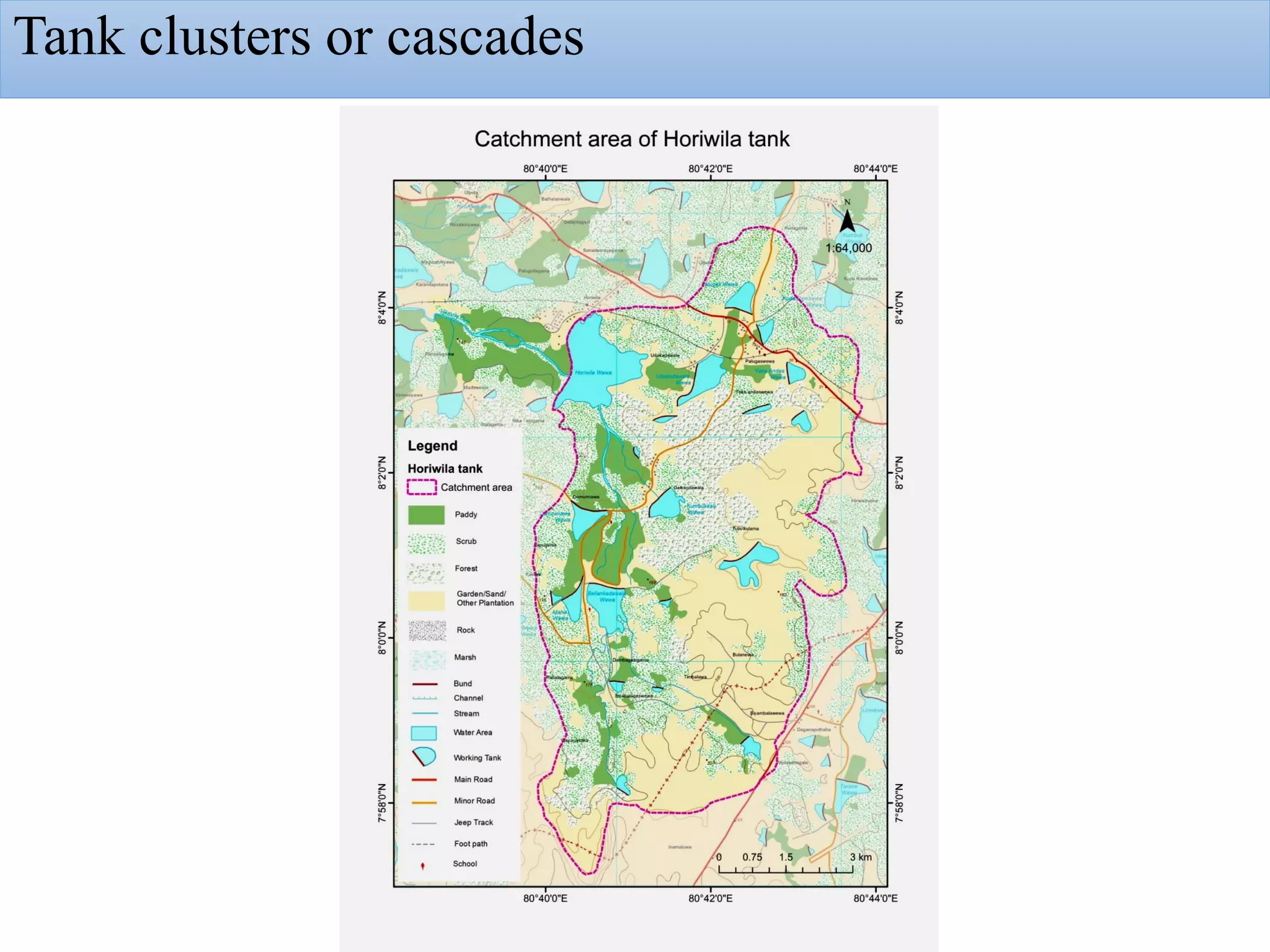
Tank clusters or cascades
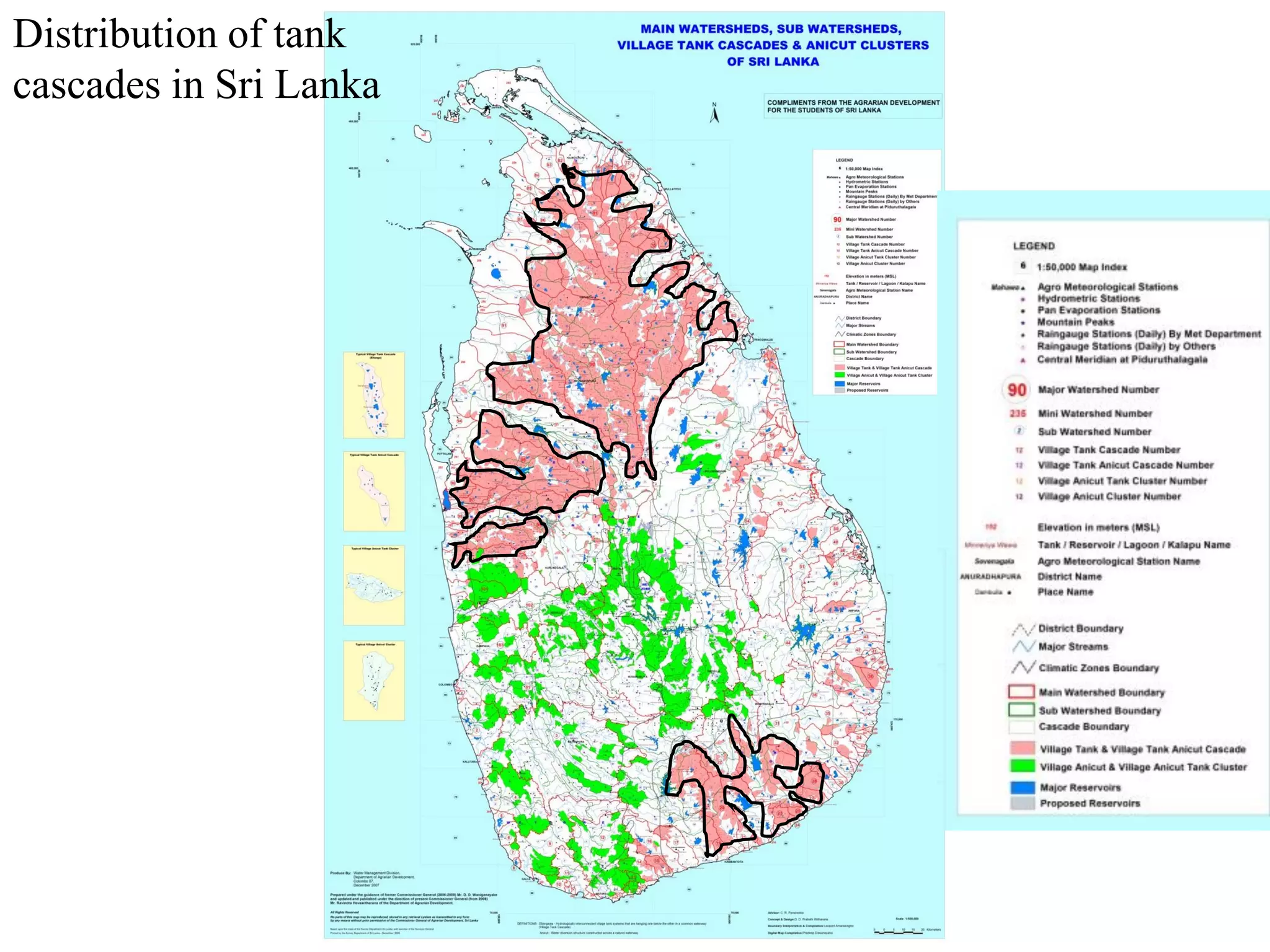
Distribution of tank
cascades in Sri Lanka
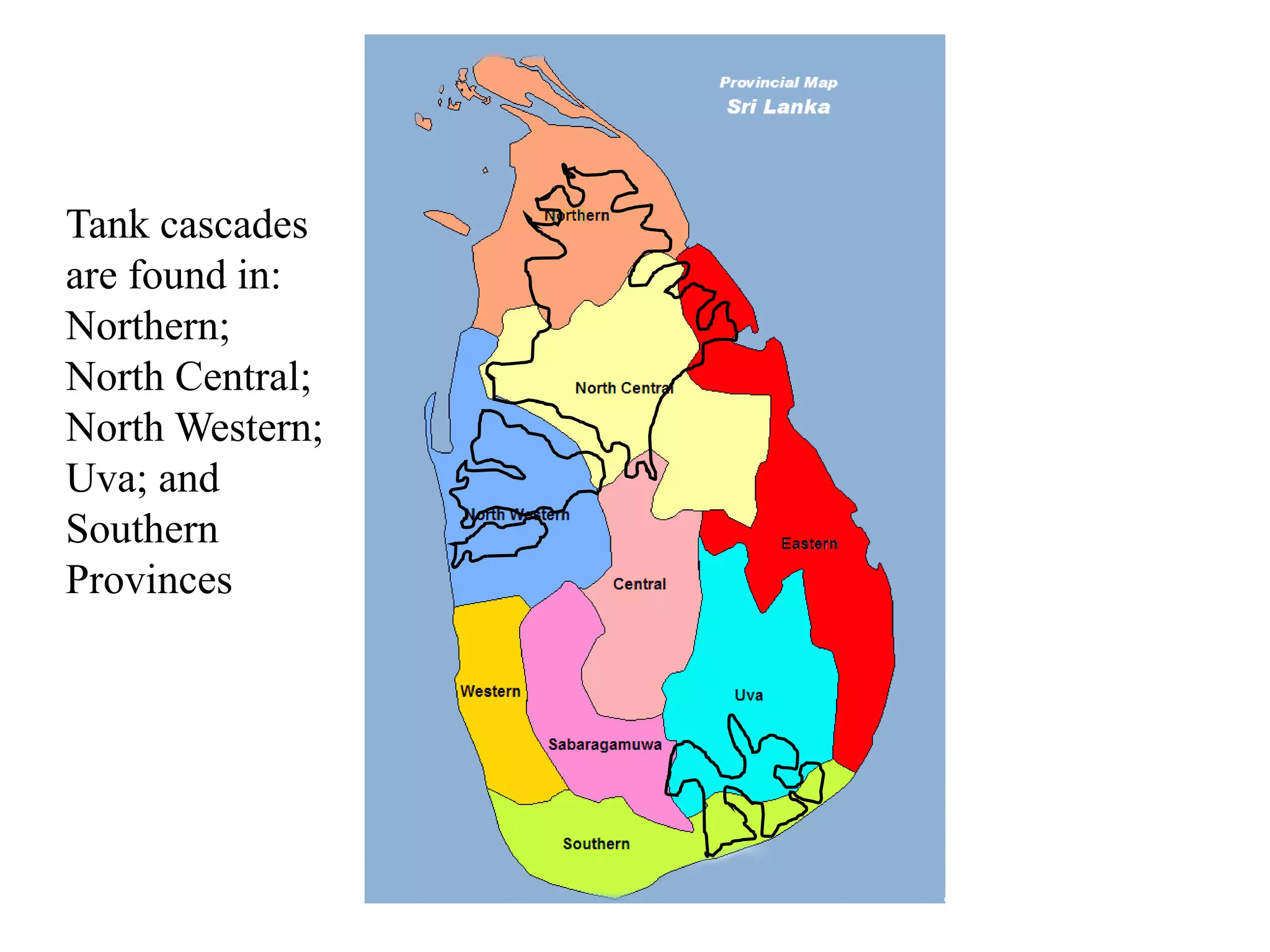
Tank cascades
are found in:
Northern;
North Central;
North Western;
Uva; and
Southern
Provinces
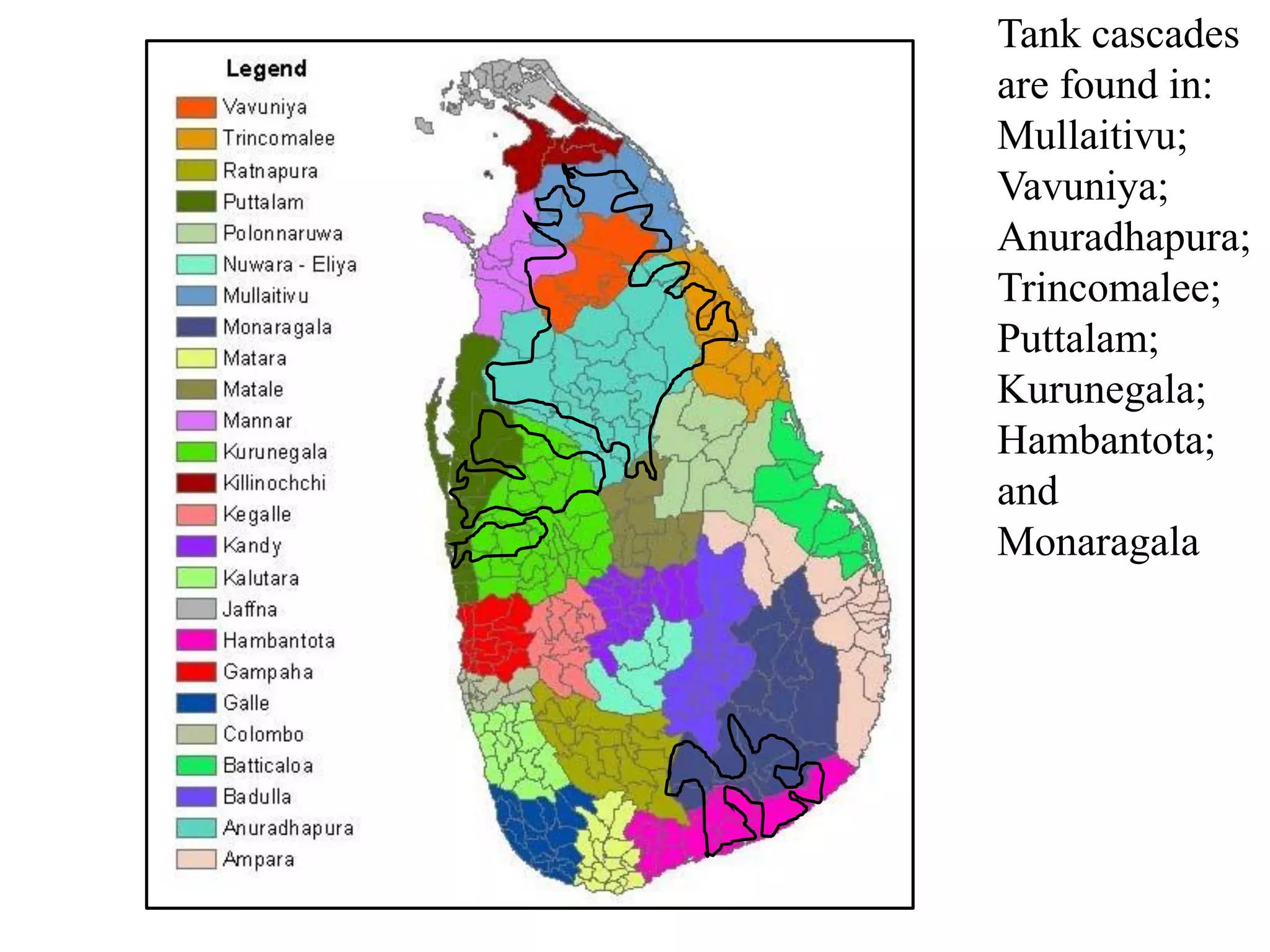
Tank cascades
are found in:
Mullaitivu;
Vavuniya;
Anuradhapura;
Trincomalee;
Puttalam;
Kurunegala;
Hambantota;
and
Monaragala
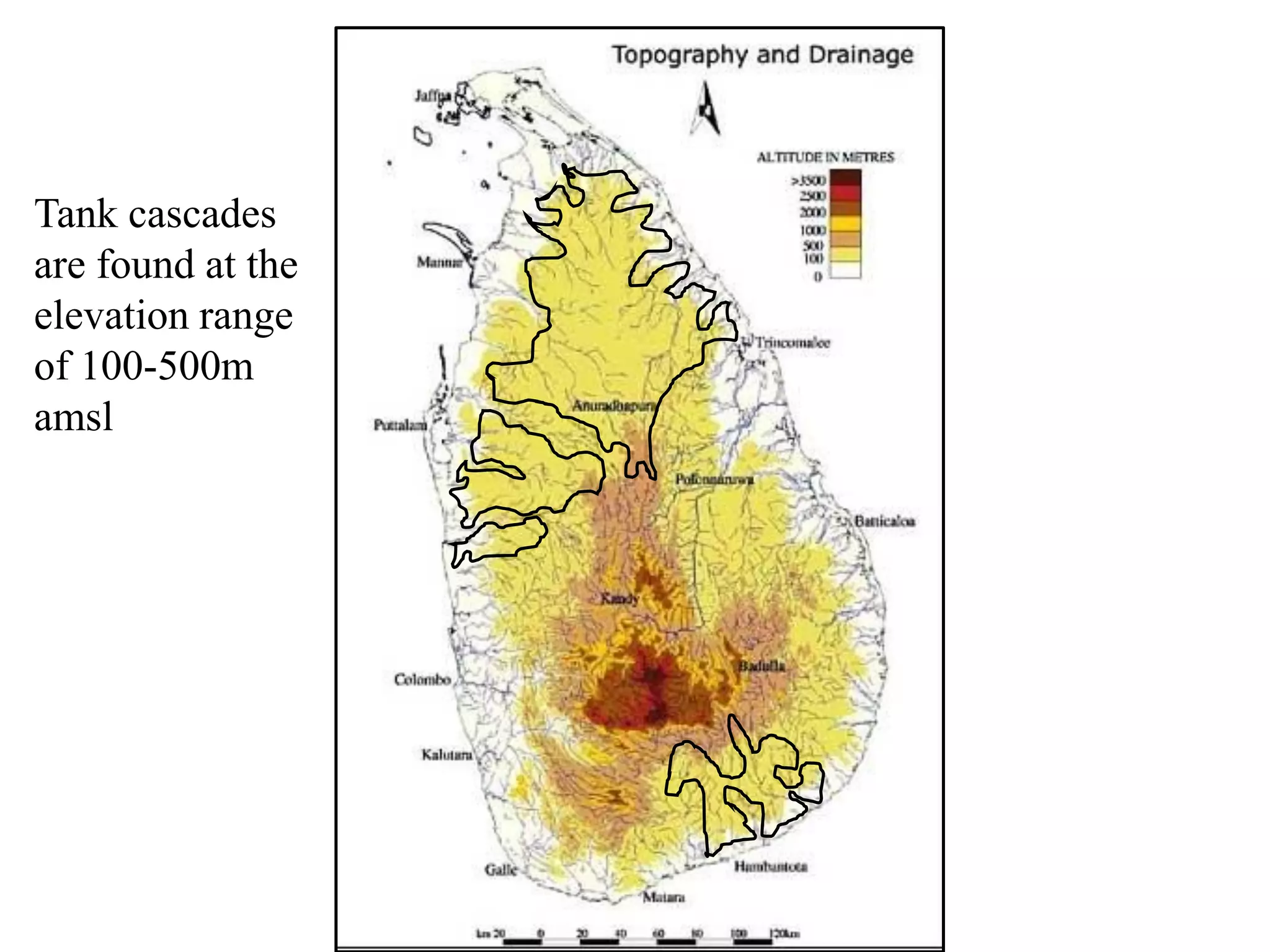
Tank cascades
are found at the
elevation range
of 100-500m
amsl
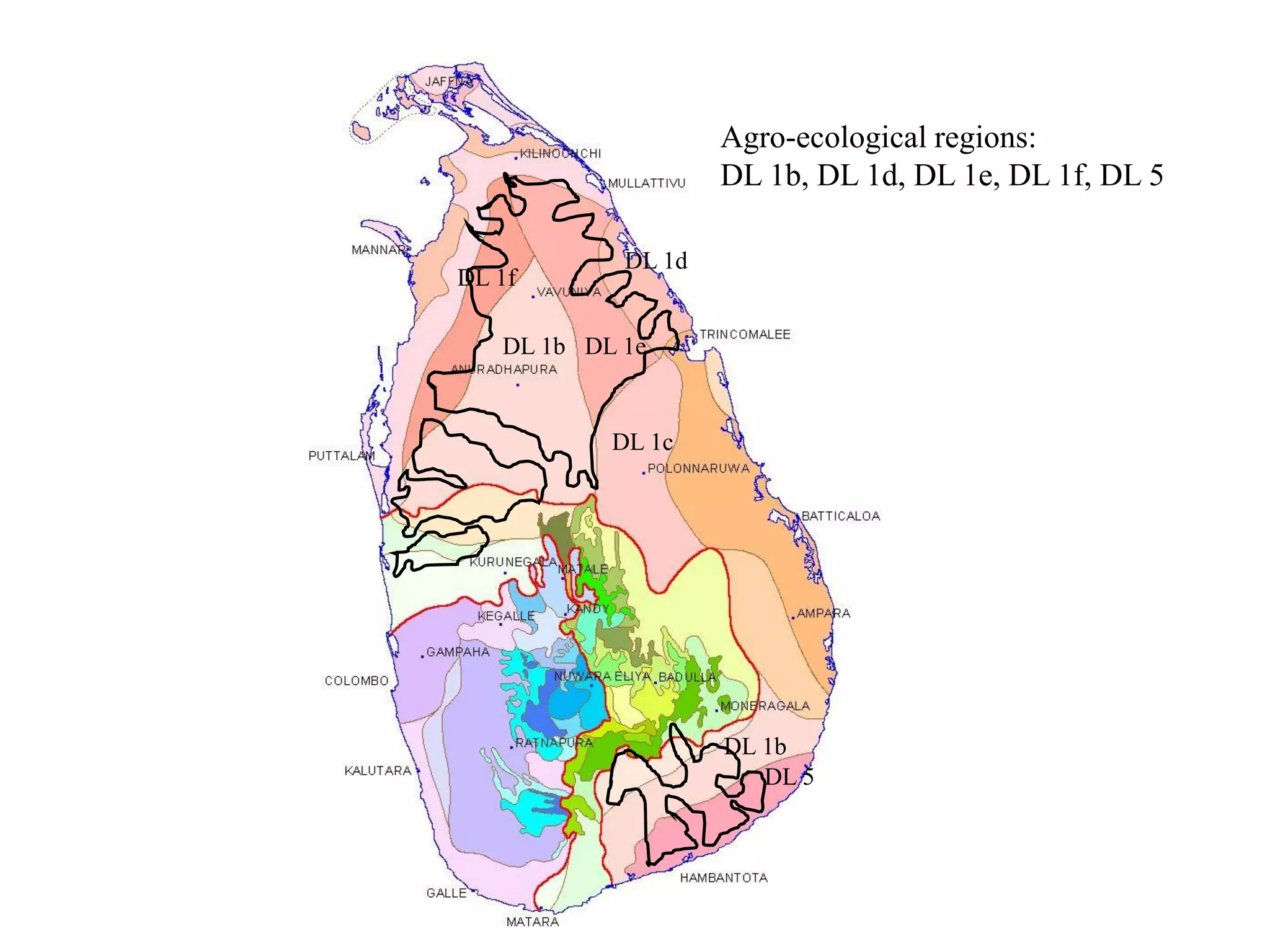
DL 1b DL 1e
DL 1f
DL 1c
DL 1b
DL 5
Agro-ecological regions:
DL 1b, DL 1d, DL 1e, DL 1f, DL 5
DL 1d
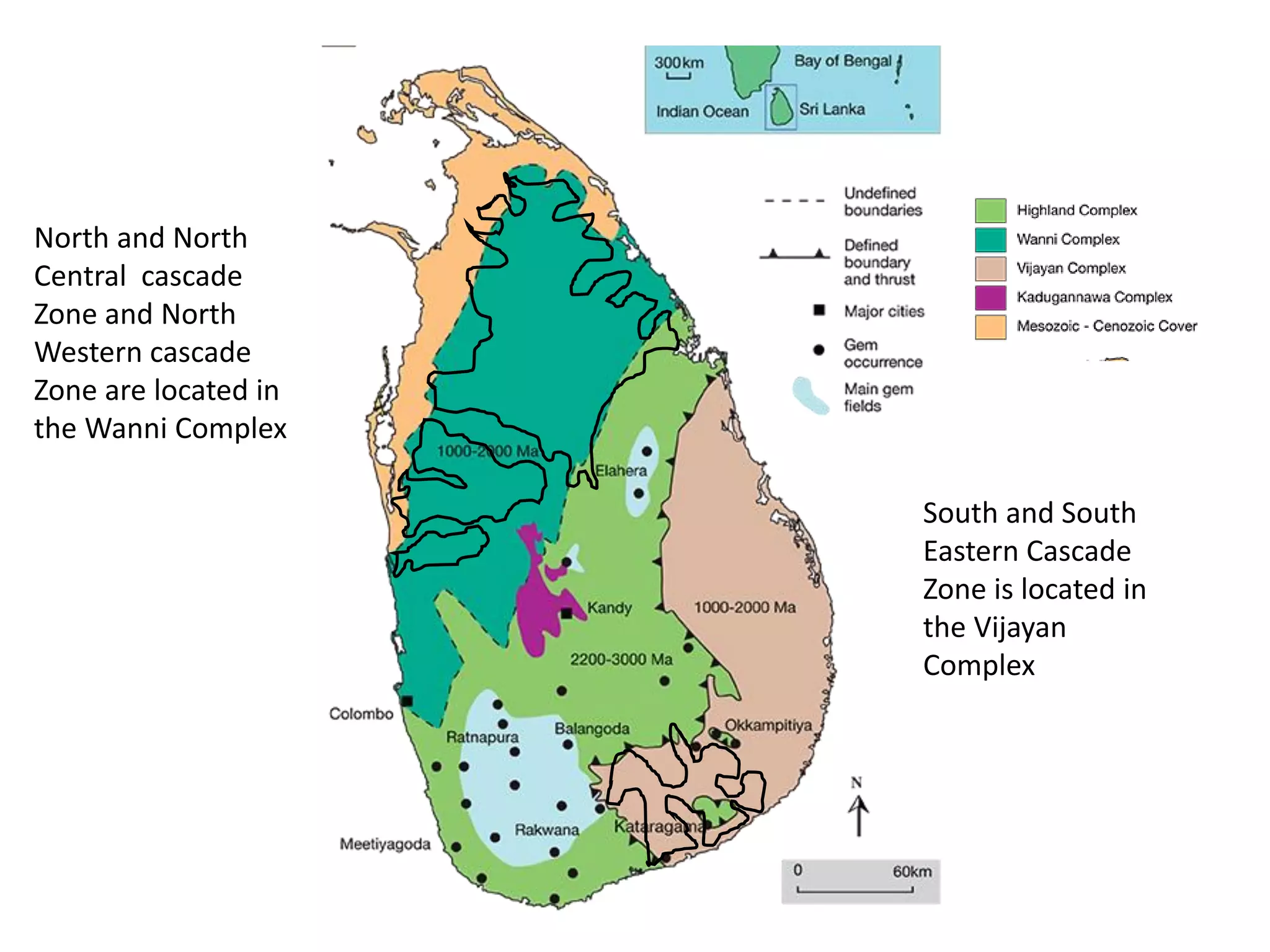
North and North
Central cascade
Zone and North
Western cascade
Zone are located in
the Wanni Complex
South and South
Eastern Cascade
Zone is located in
the Vijayan
Complex
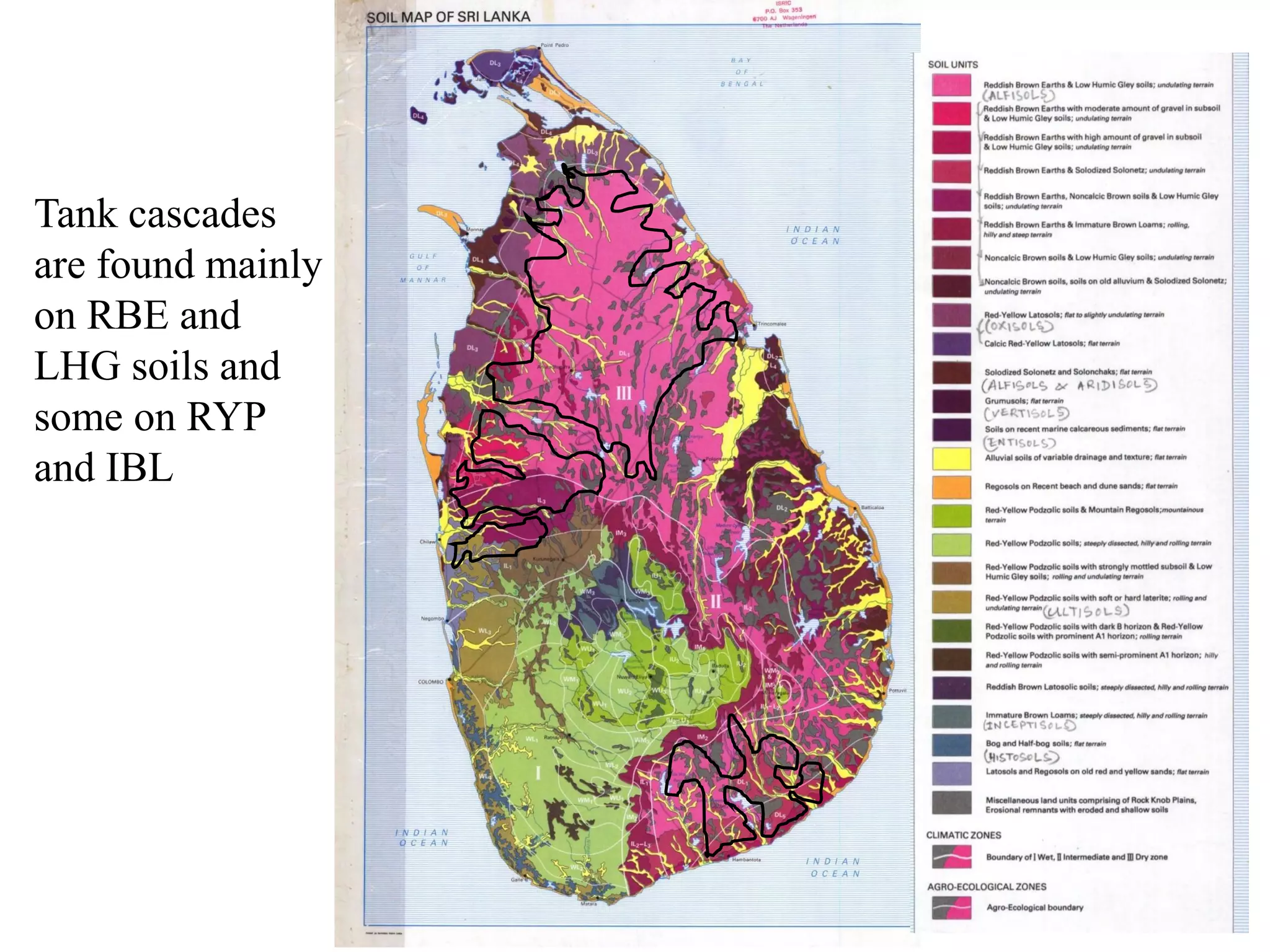
Tank cascades
are found mainly
on RBE and
LHG soils and
some on RYP
and IBL
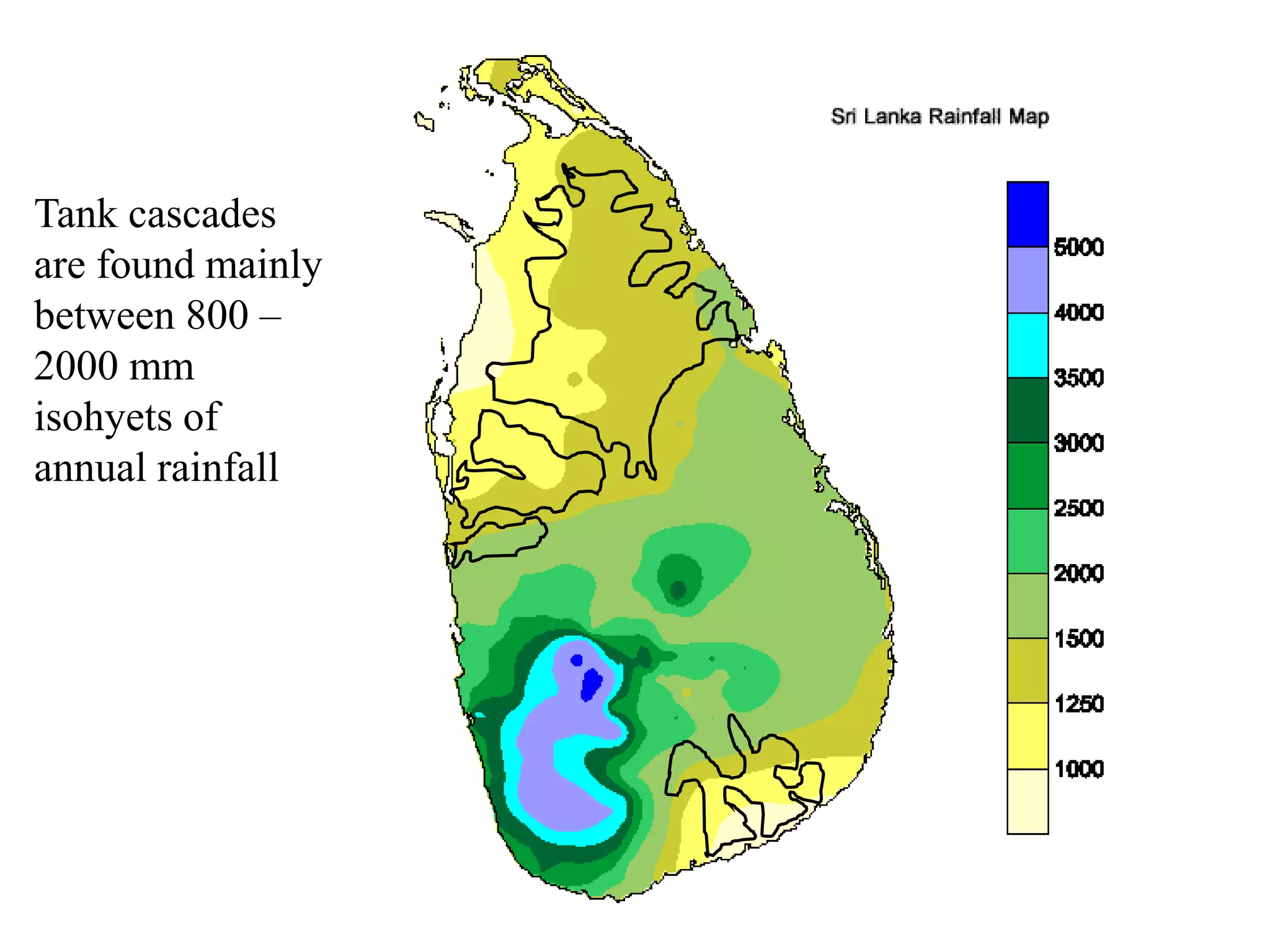
Tank cascades
are found mainly
between 800 –
2000 mm
isohyets of
annual rainfall
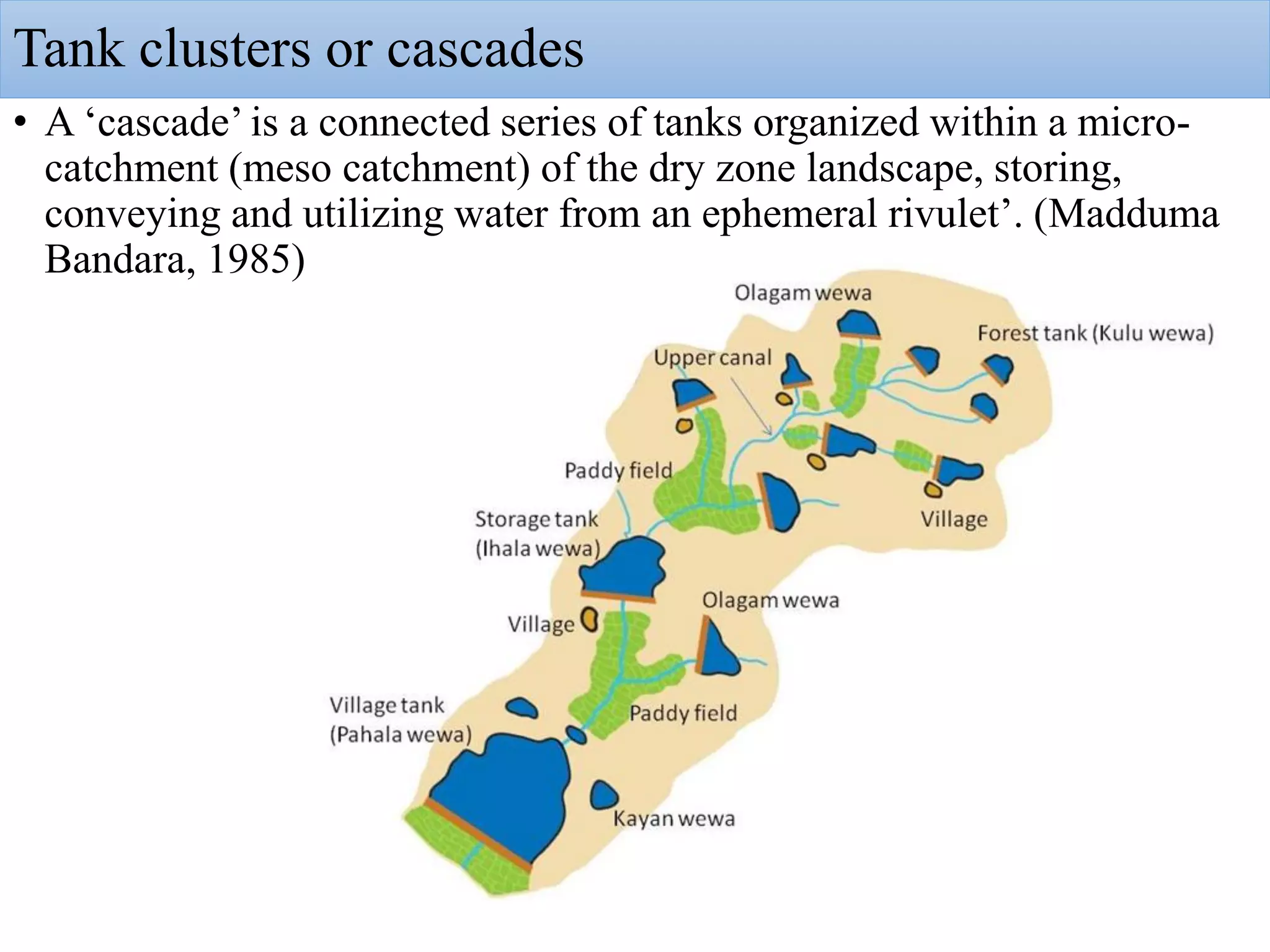
Tank clusters or cascades
• A ‘cascade’ is a connected series of tanks organized within a micro-
catchment (meso catchment) of the dry zone landscape, storing,
conveying and utilizing water from an ephemeral rivulet’. (Madduma
Bandara, 1985)
Cascade defines surface water movement
alone
• Cascade ecology (Ecology is the study of the interactions of
living organisms with one another and with their physical
environment).
• Land (extent covered by cascade catchment)
• land use (specific land use systems with natural and
agricultural land uses and commons),
• Soil properties (changed soil properties due to
cultivation, water table and groundwater movement),
• Flora (different floral communities and ecosystems),
• Fauna (different faunal communities and ecosystems),
• Groundwater (water table fluctuation and groundwater
movement with chain of surface storages),
• Human activities
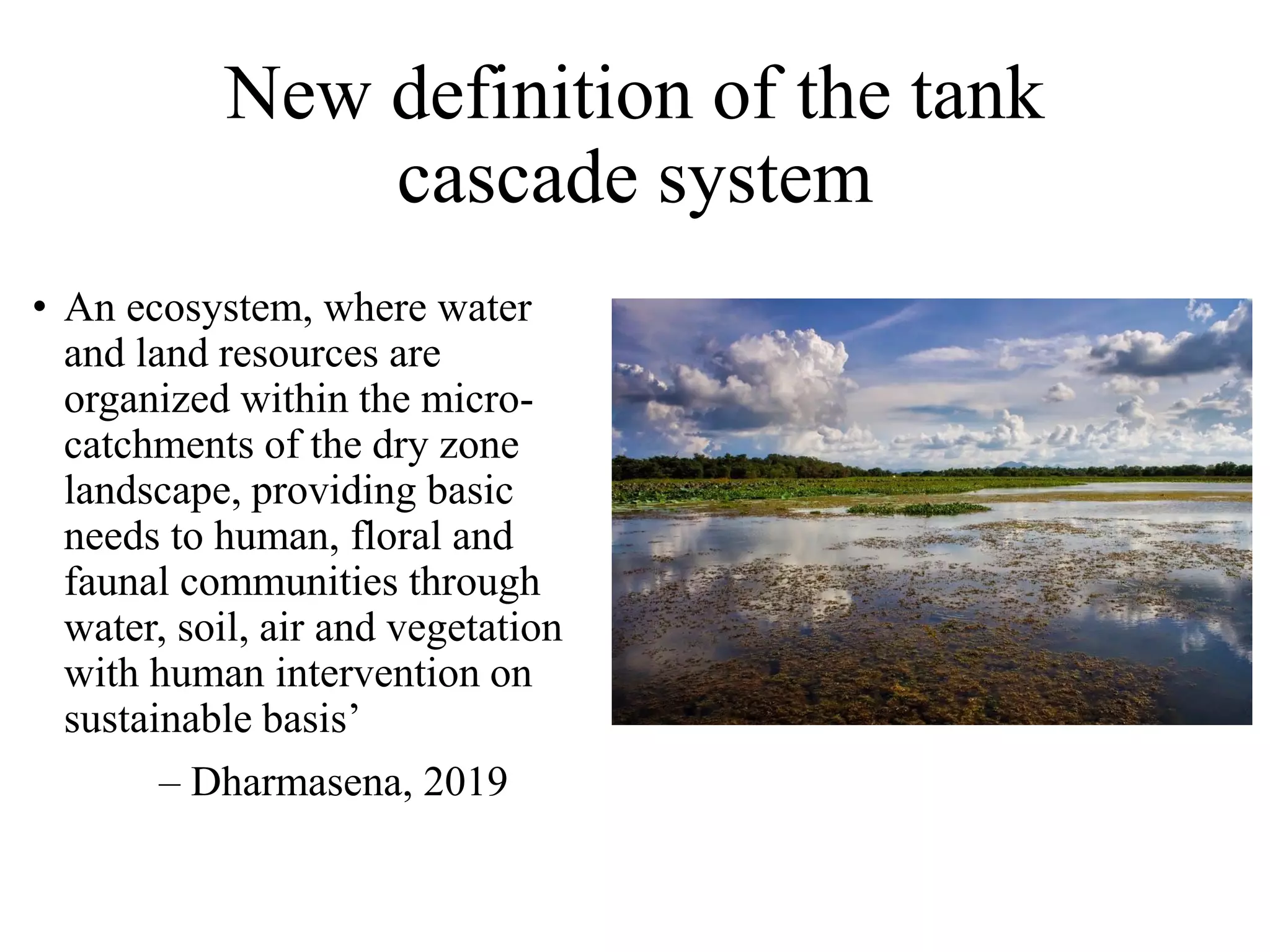
New definition of the tank
cascade system
• An ecosystem, where water
and land resources are
organized within the micro-
catchments of the dry zone
landscape, providing basic
needs to human, floral and
faunal communities through
water, soil, air and vegetation
with human intervention on
sustainable basis’
– Dharmasena, 2019
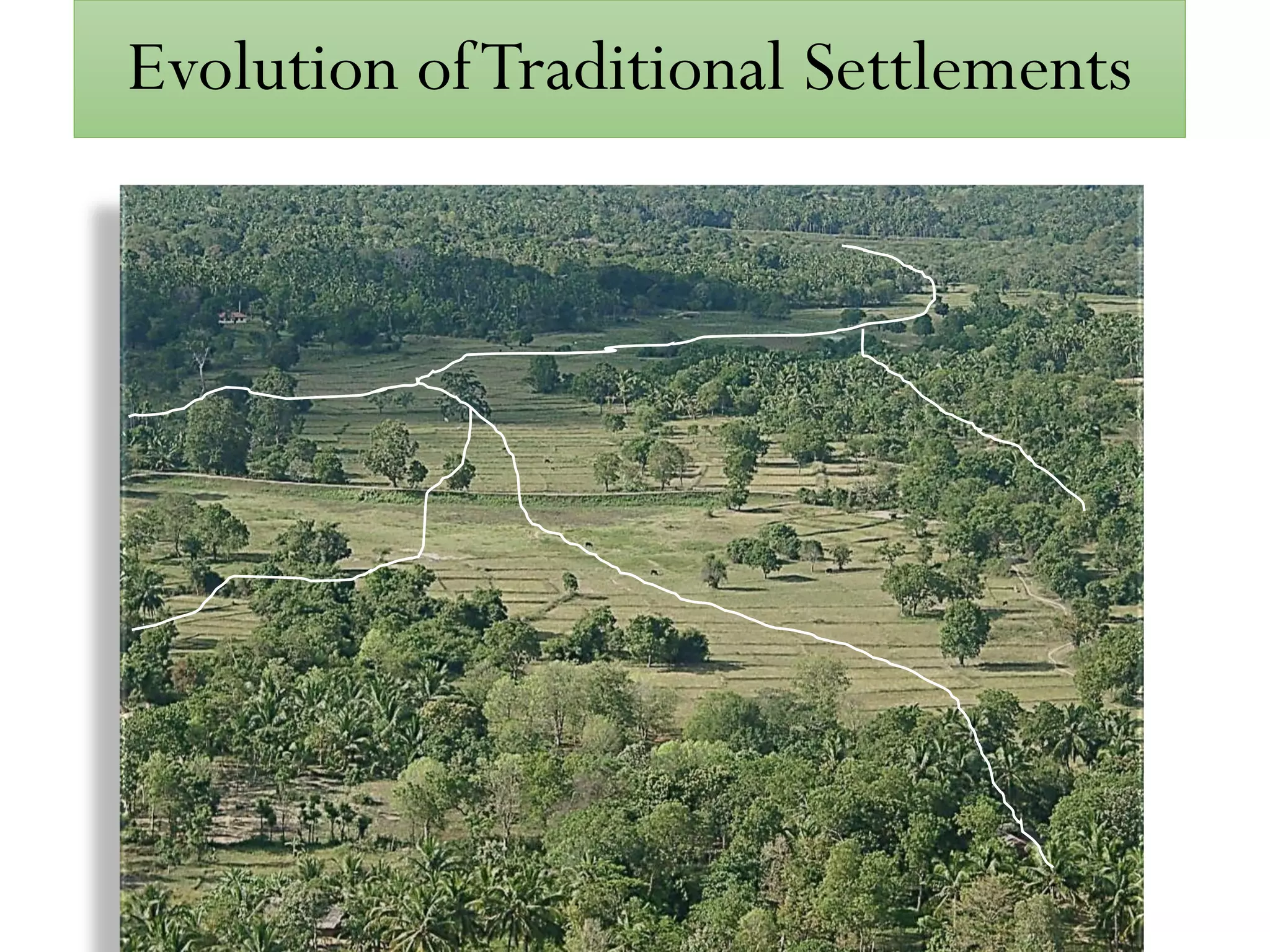
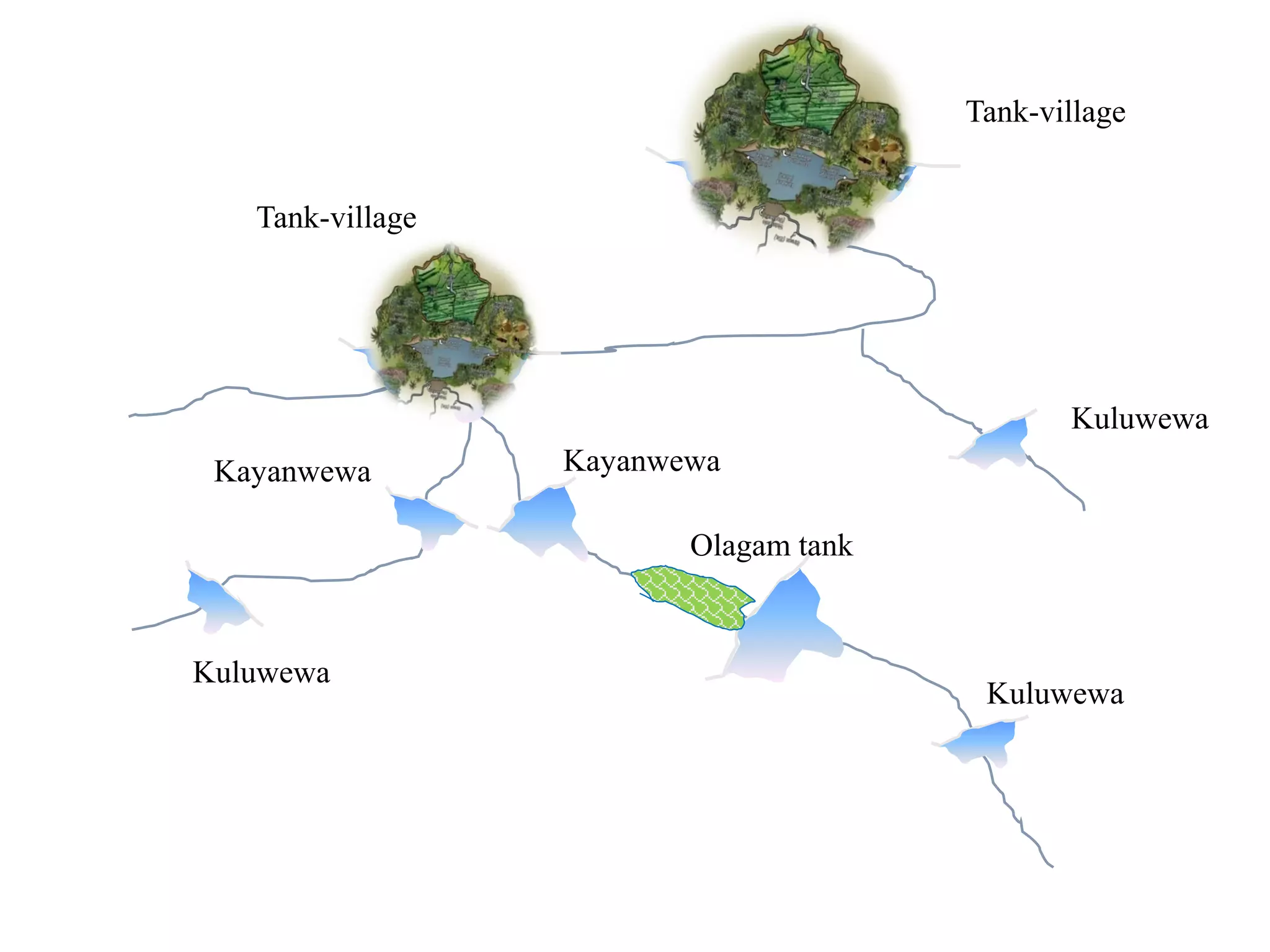
Evolution ofTraditional Settlements
Tank-village
Tank-village
Olagam tank
Kuluwewa
Kuluwewa
Kuluwewa
Kayanwewa Kayanwewa
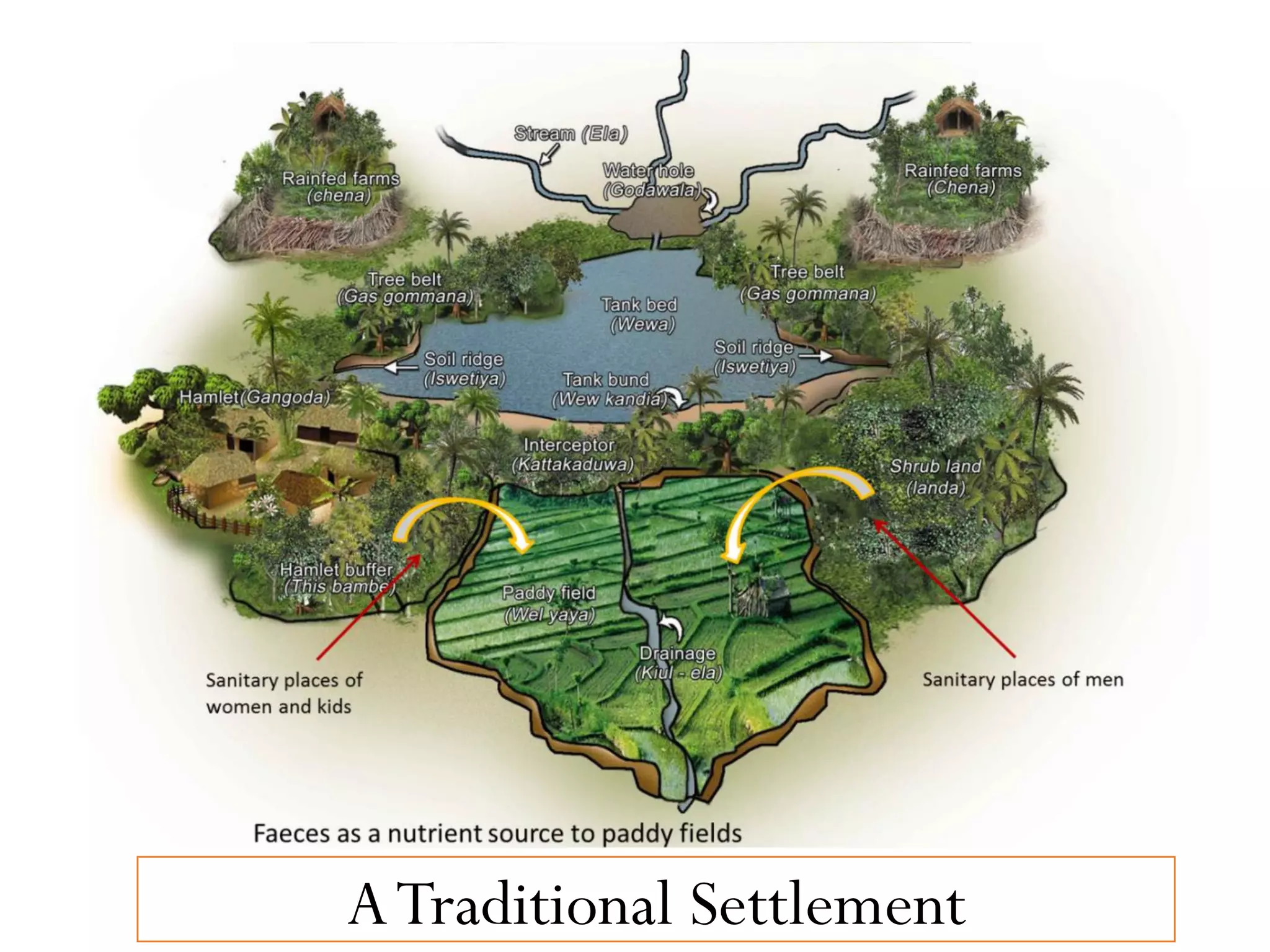
ATraditional Settlement
Traditional Agricultural Practices in adaptation to
climate change
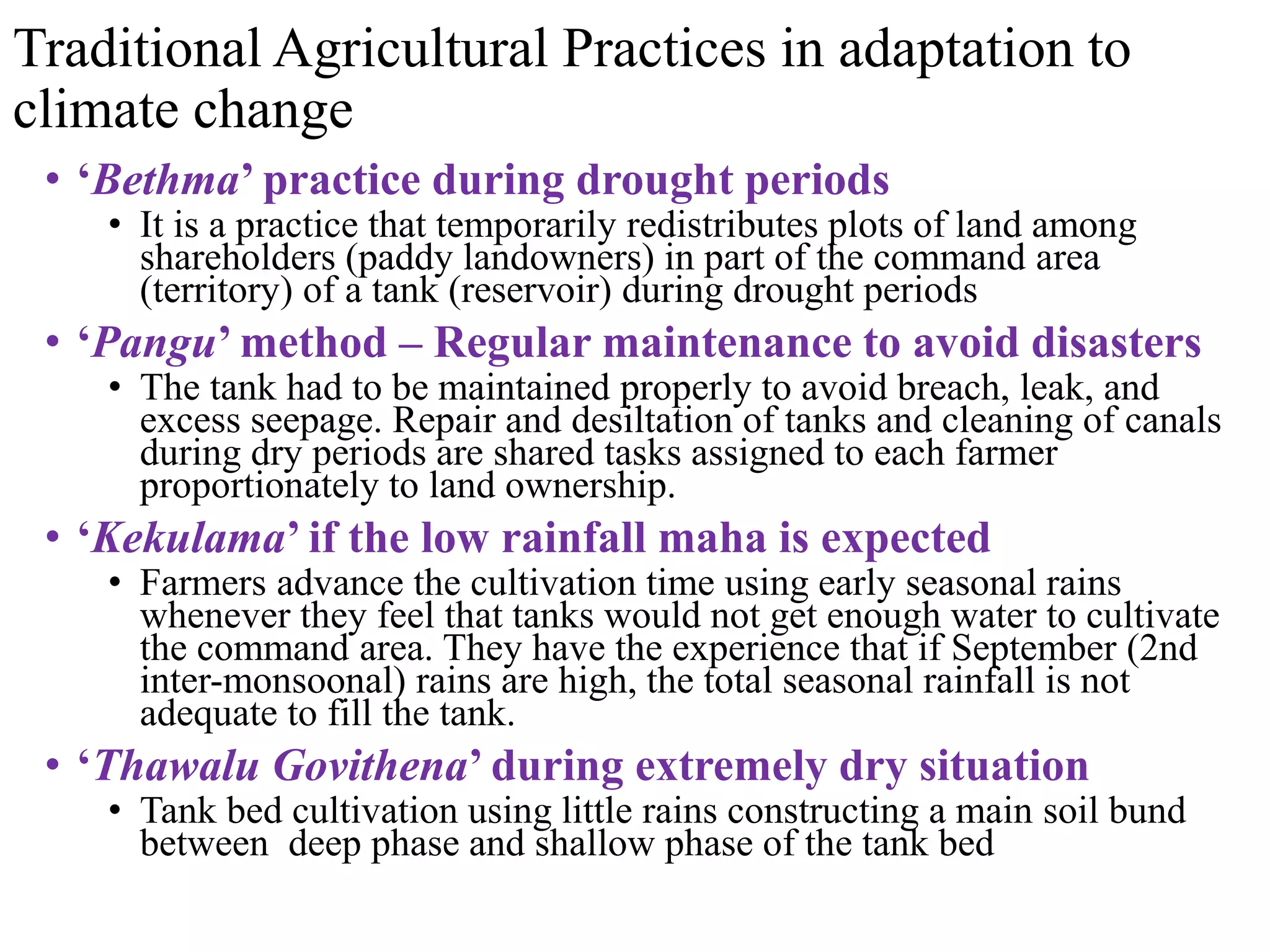
• ‘Bethma’ practice during drought periods
• It is a practice that temporarily redistributes plots of land among
shareholders (paddy landowners) in part of the command area
(territory) of a tank (reservoir) during drought periods
• ‘Pangu’ method – Regular maintenance to avoid disasters
• The tank had to be maintained properly to avoid breach, leak, and
excess seepage. Repair and desiltation of tanks and cleaning of canals
during dry periods are shared tasks assigned to each farmer
proportionately to land ownership.
• ‘Kekulama’ if the low rainfall maha is expected
• Farmers advance the cultivation time using early seasonal rains
whenever they feel that tanks would not get enough water to cultivate
the command area. They have the experience that if September (2nd
inter-monsoonal) rains are high, the total seasonal rainfall is not
adequate to fill the tank.
• ‘Thawalu Govithena’ during extremely dry situation
• Tank bed cultivation using little rains constructing a main soil bund
between deep phase and shallow phase of the tank bed
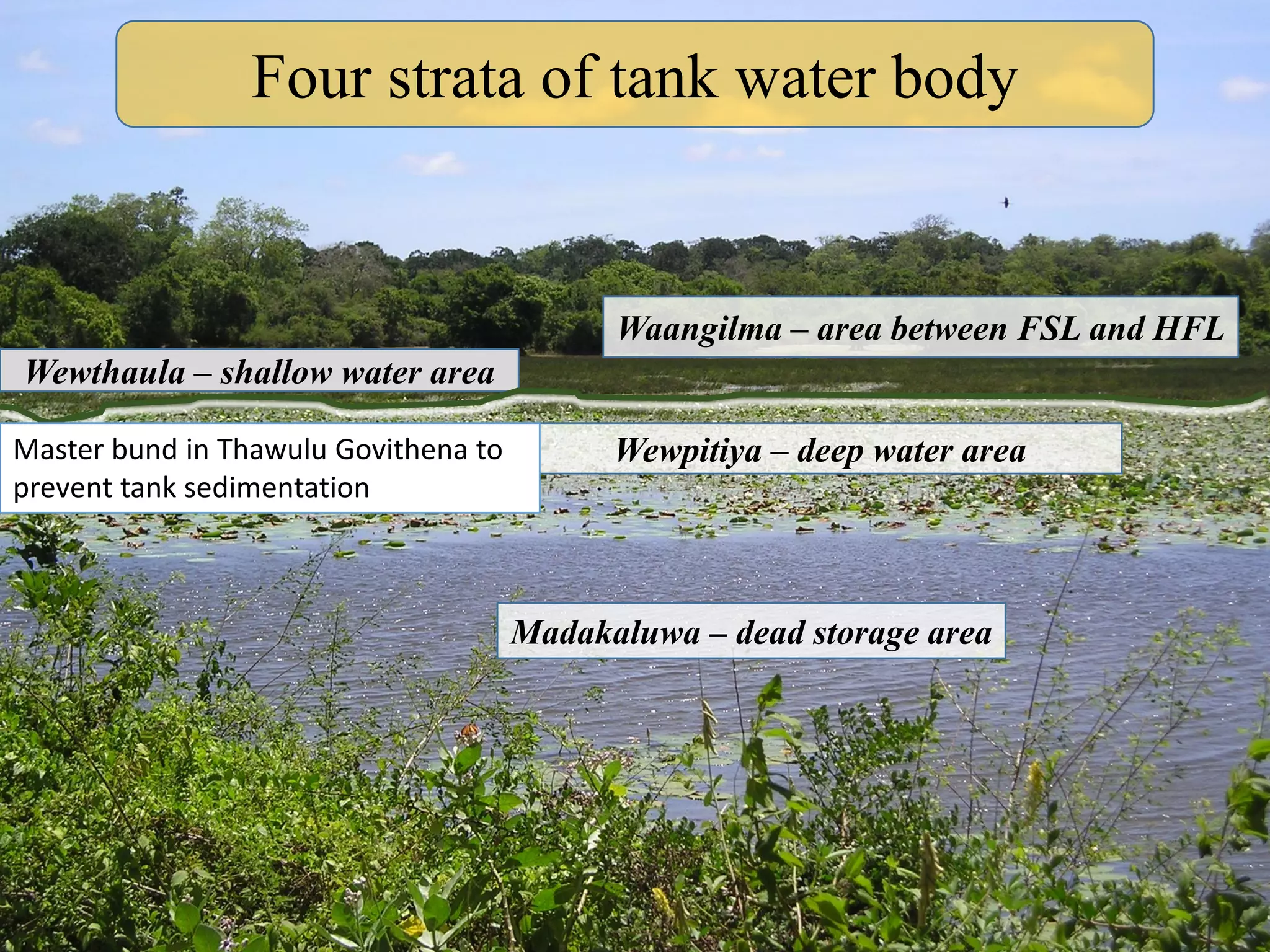
Four strata of tank water body
Madakaluwa – dead storage area
Wewpitiya – deep water area
Waangilma – area between FSL and HFL
Wewthaula – shallow water area
Master bund in Thawulu Govithena to
prevent tank sedimentation
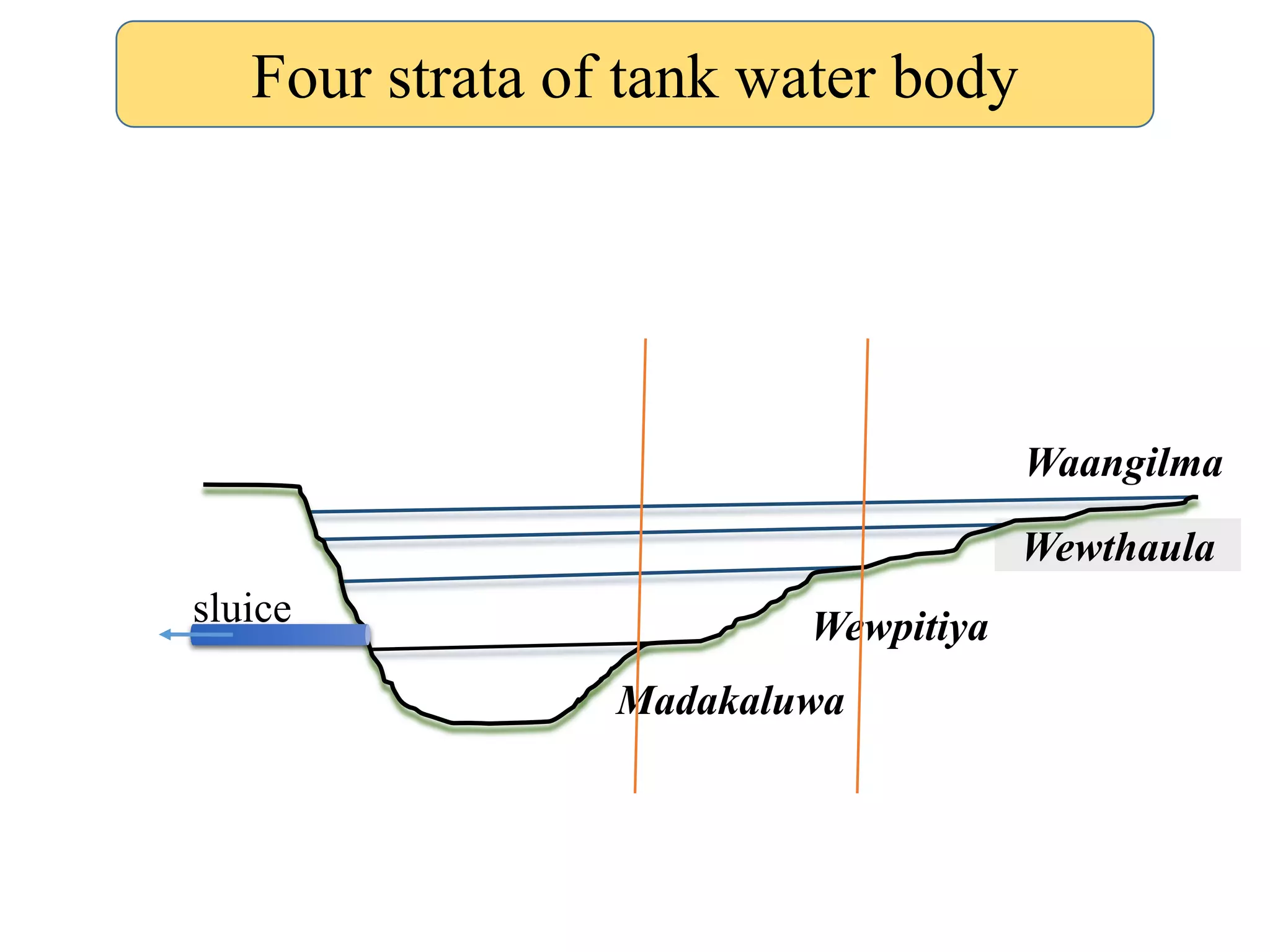
Waangilma
Wewthaula
Wewpitiya
Madakaluwa
sluice
Four strata of tank water body
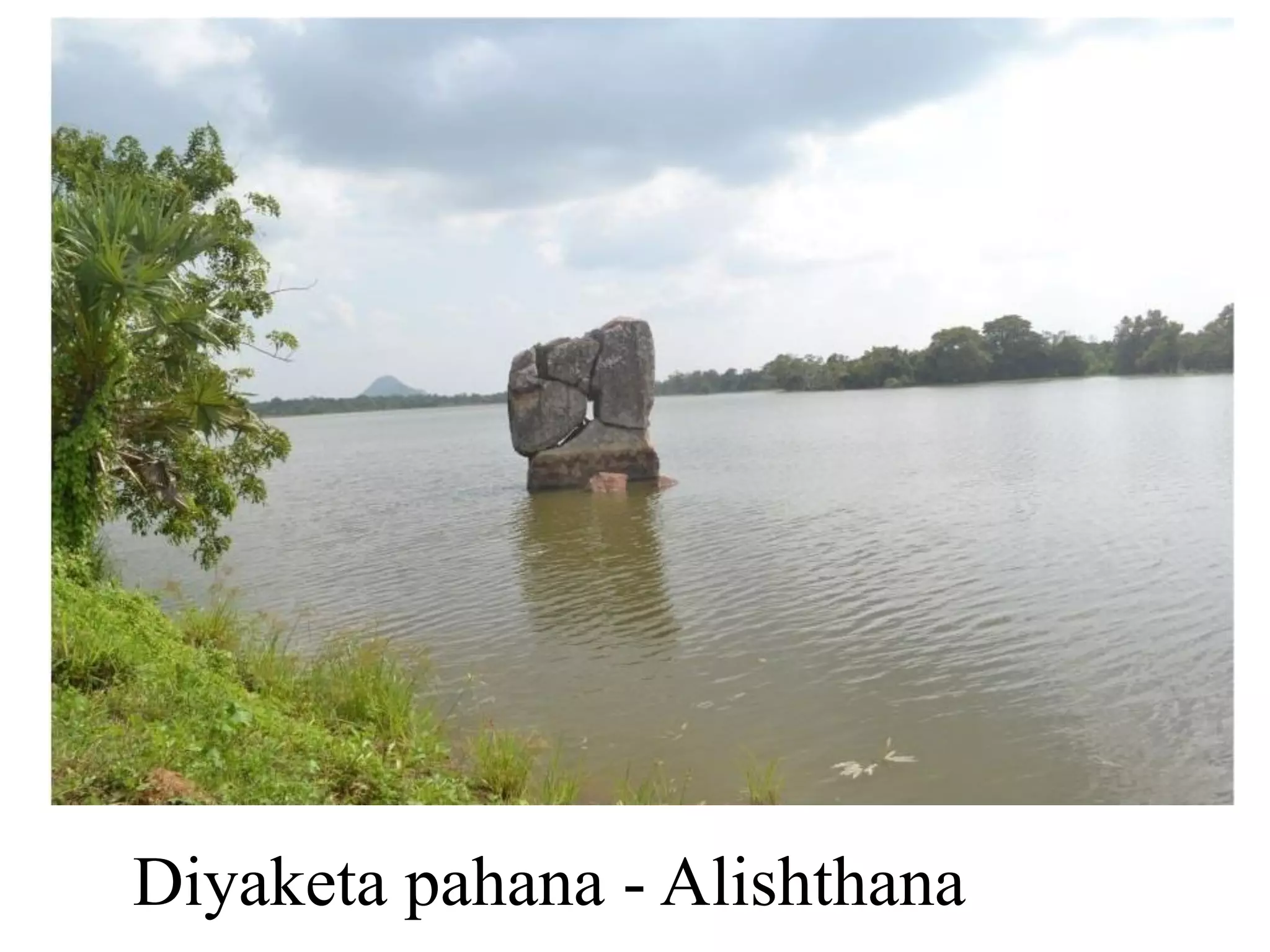
Diyaketa pahana - Alishthana
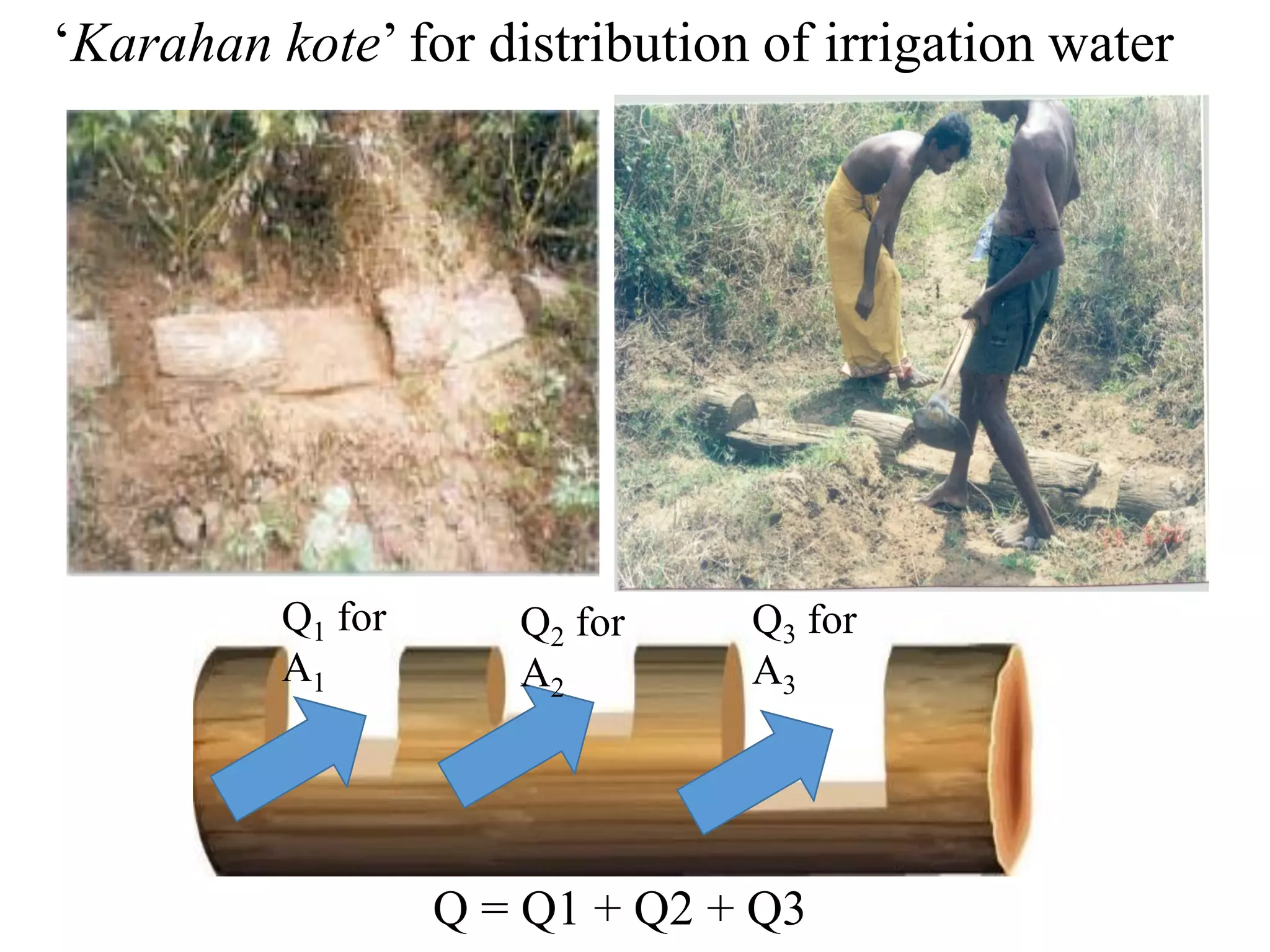
‘Karahan kote’ for distribution of irrigation water
Q1 for
A1
Q2 for
A2
Q3 for
A3
Q = Q1 + Q2 + Q3
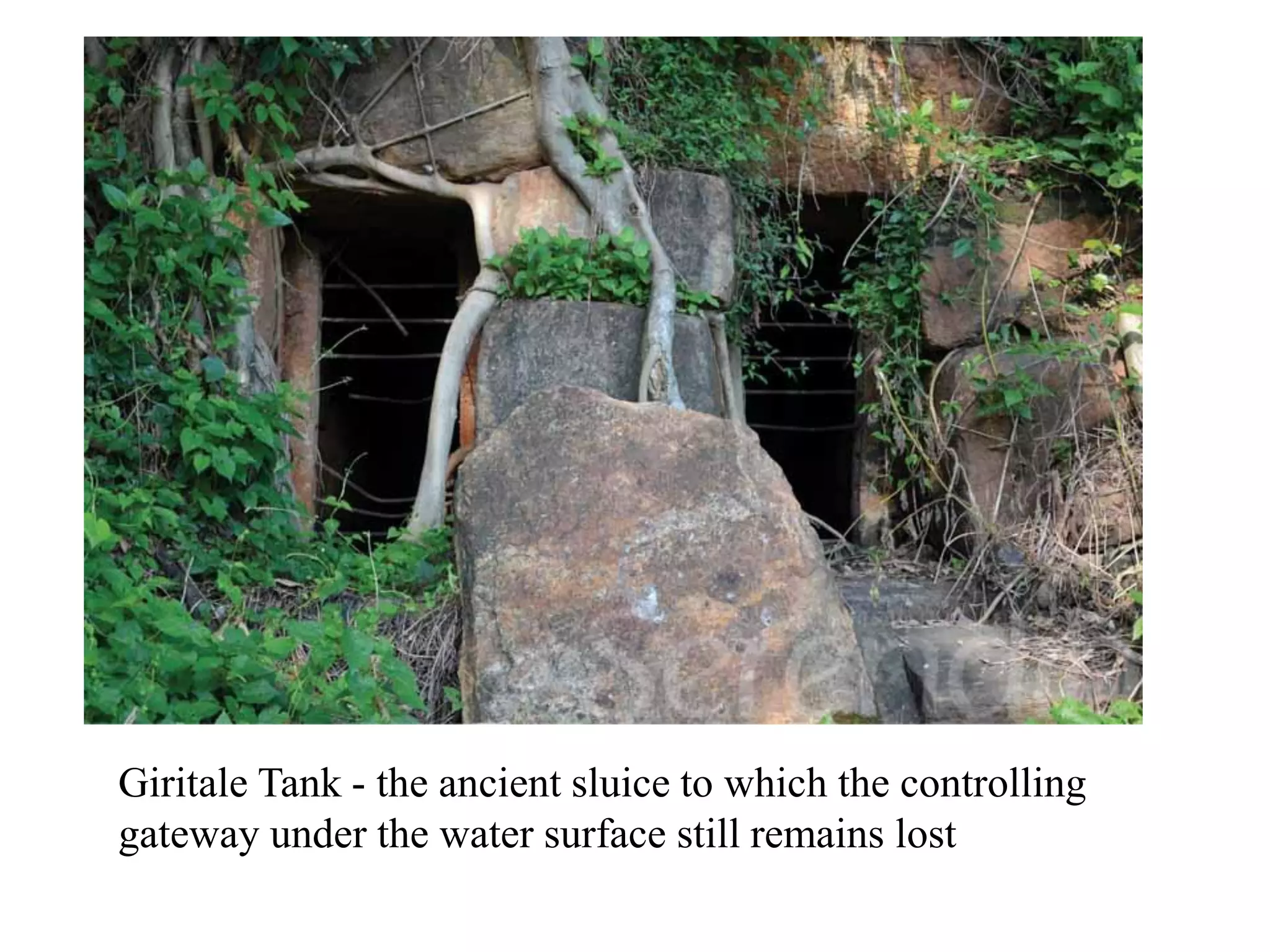
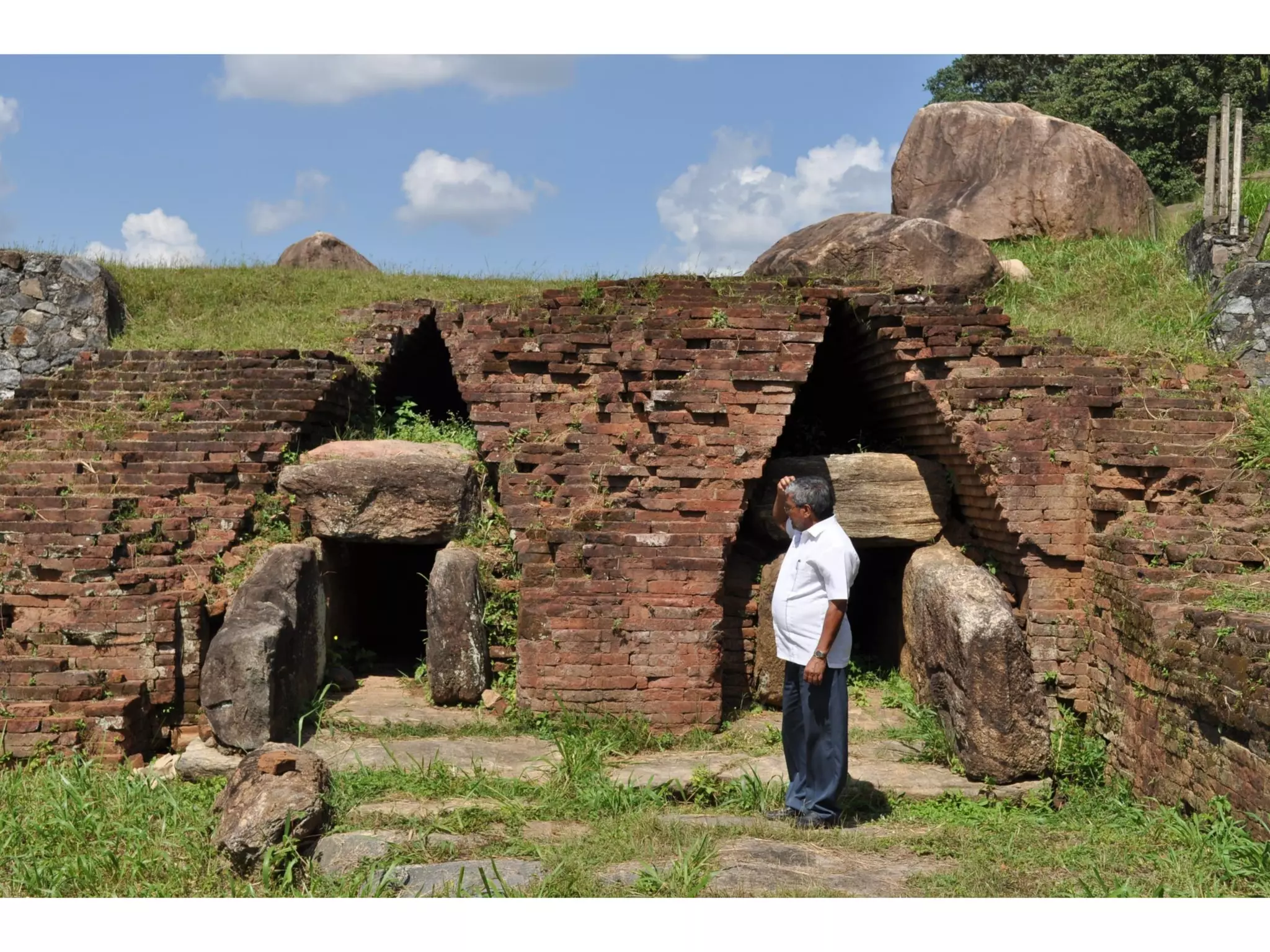
Giritale Tank - the ancient sluice to which the controlling
gateway under the water surface still remains lost
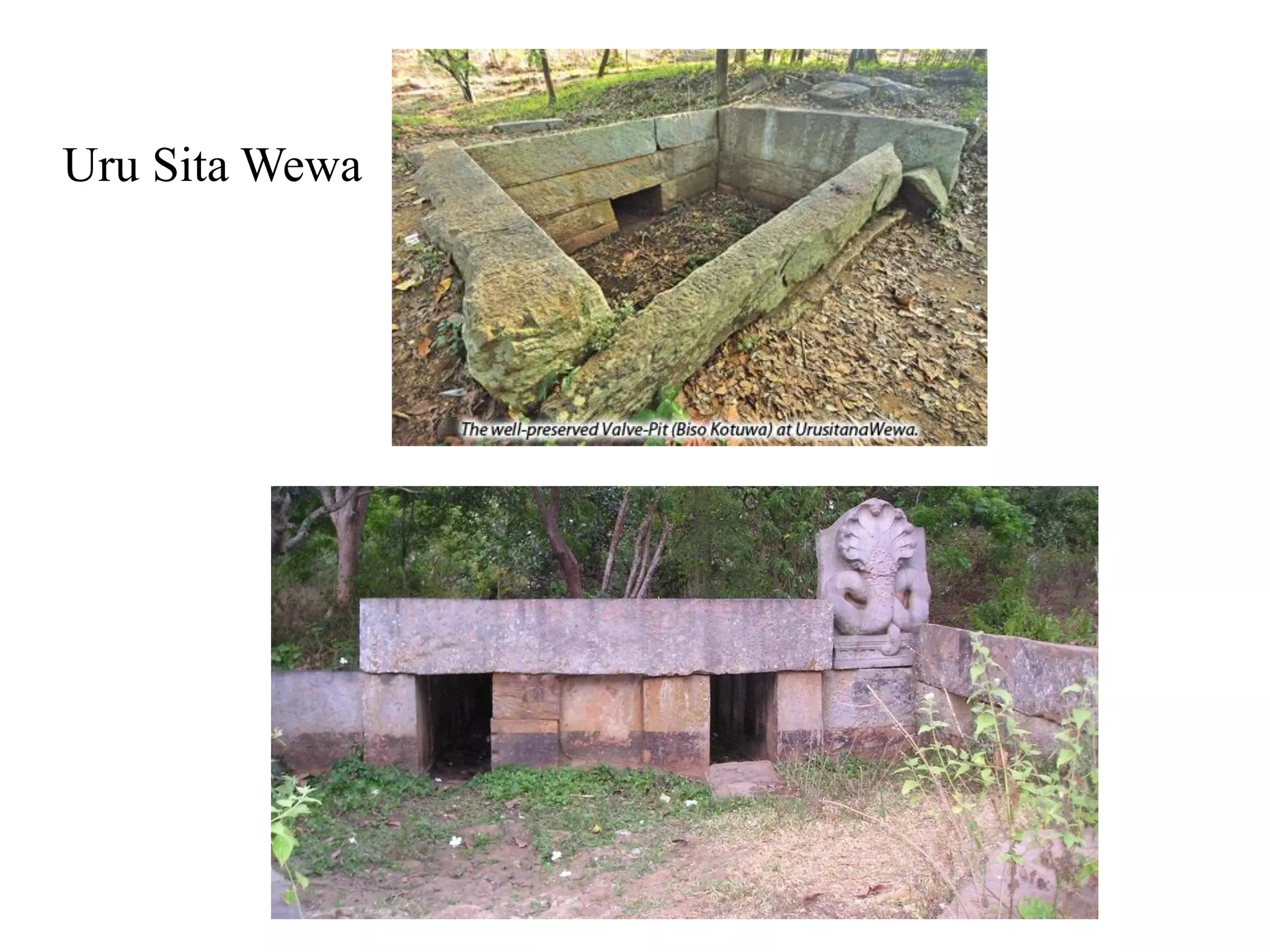
Uru Sita Wewa
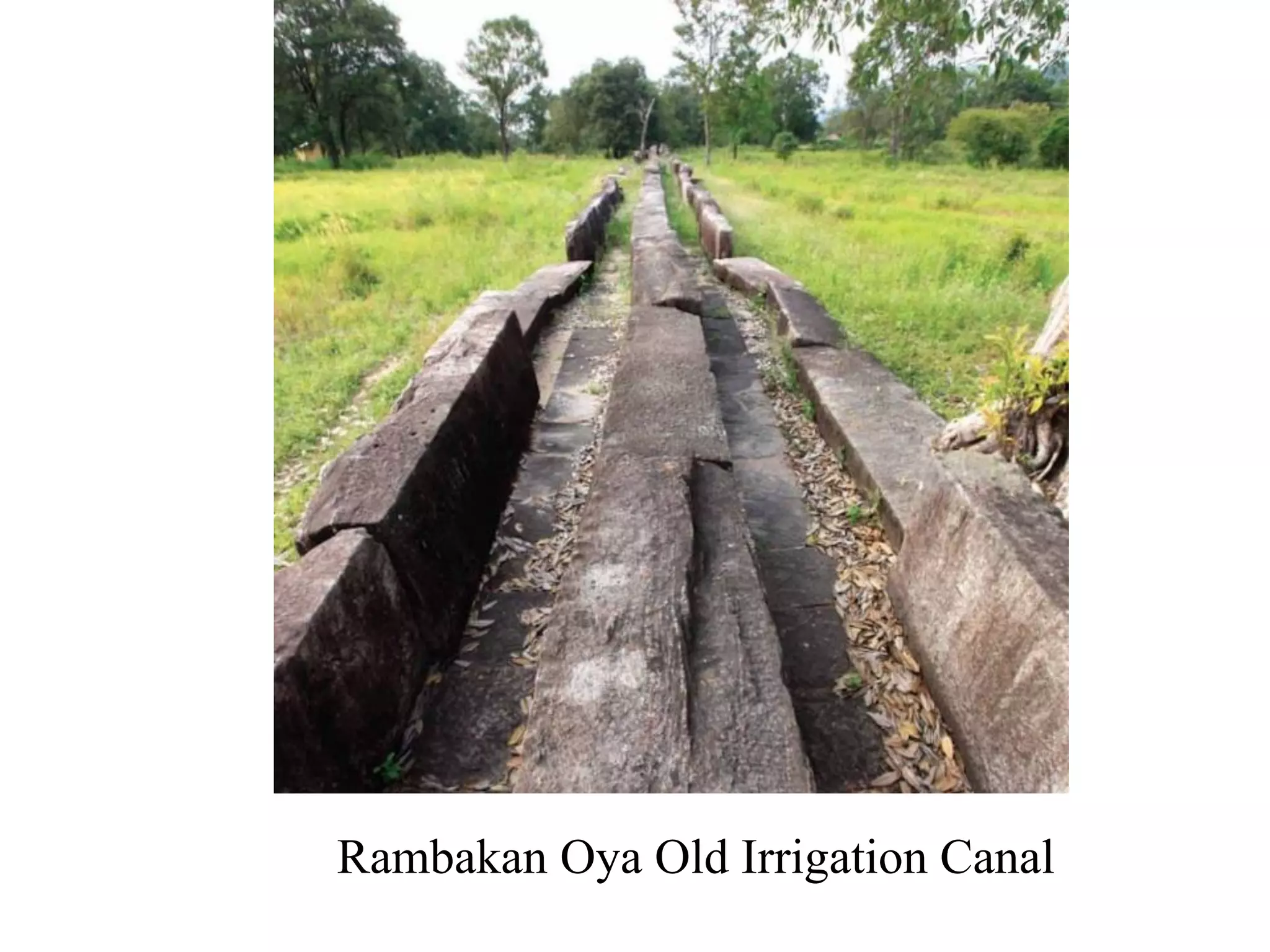
Rambakan Oya Old Irrigation Canal
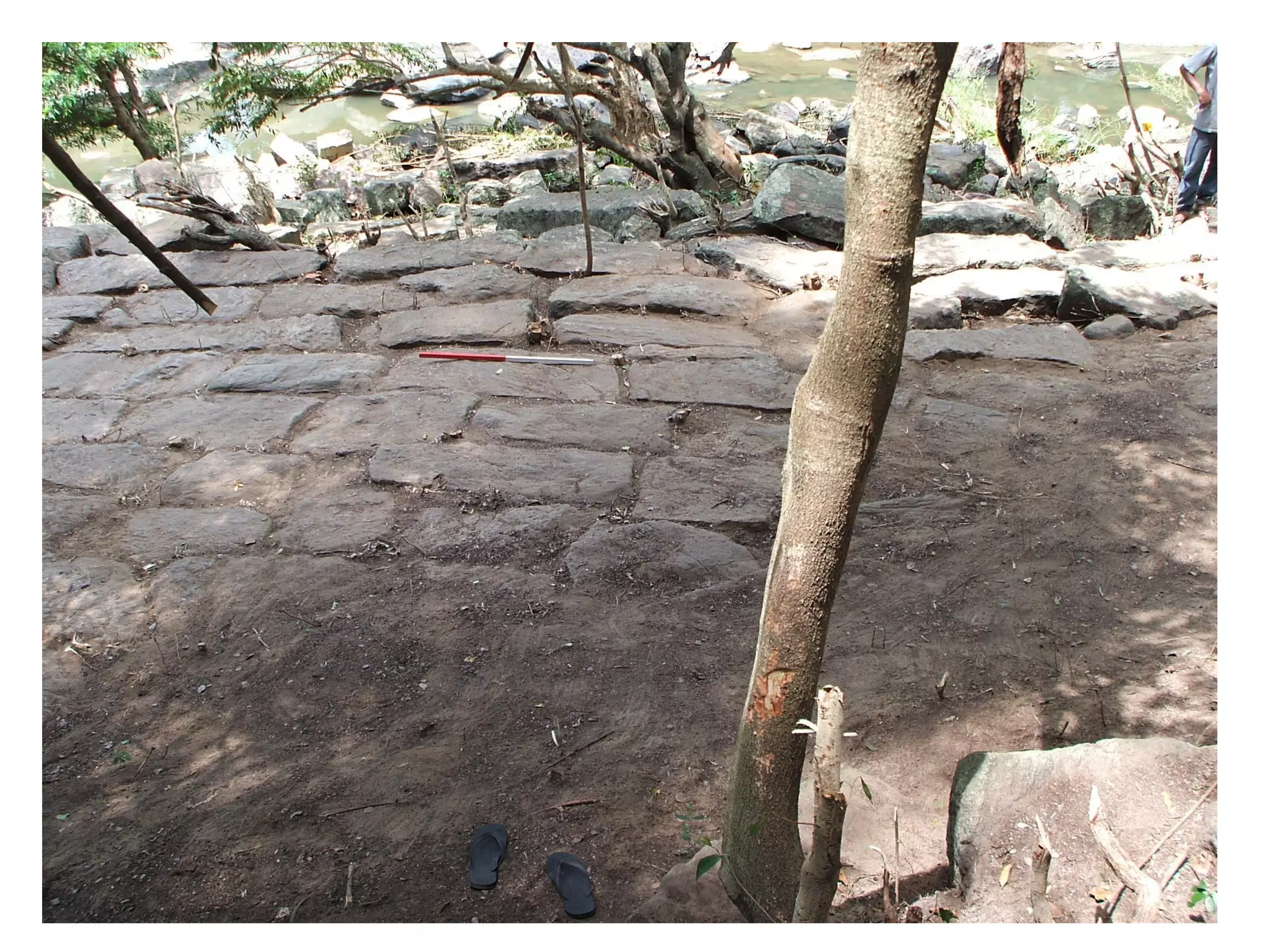
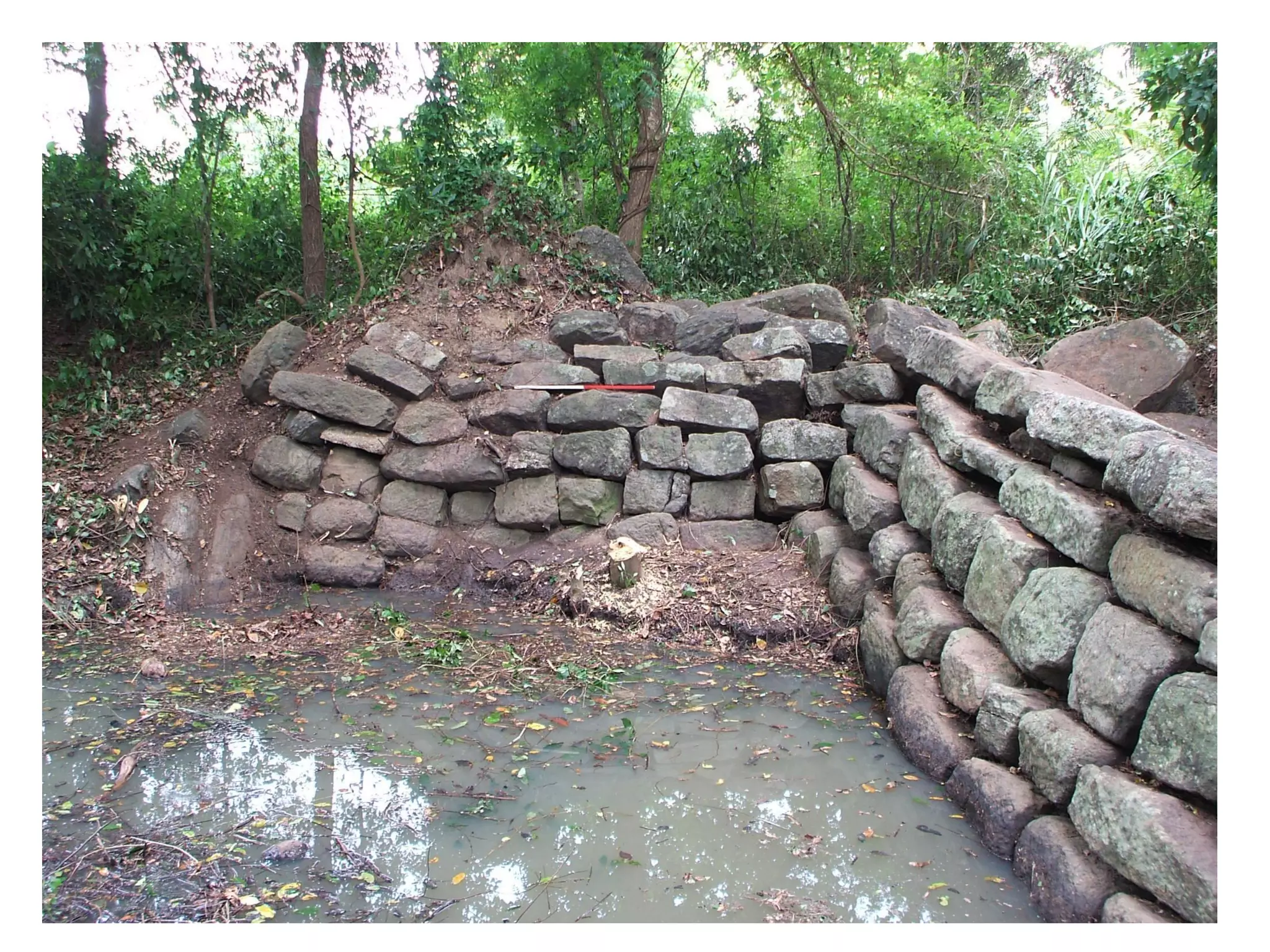
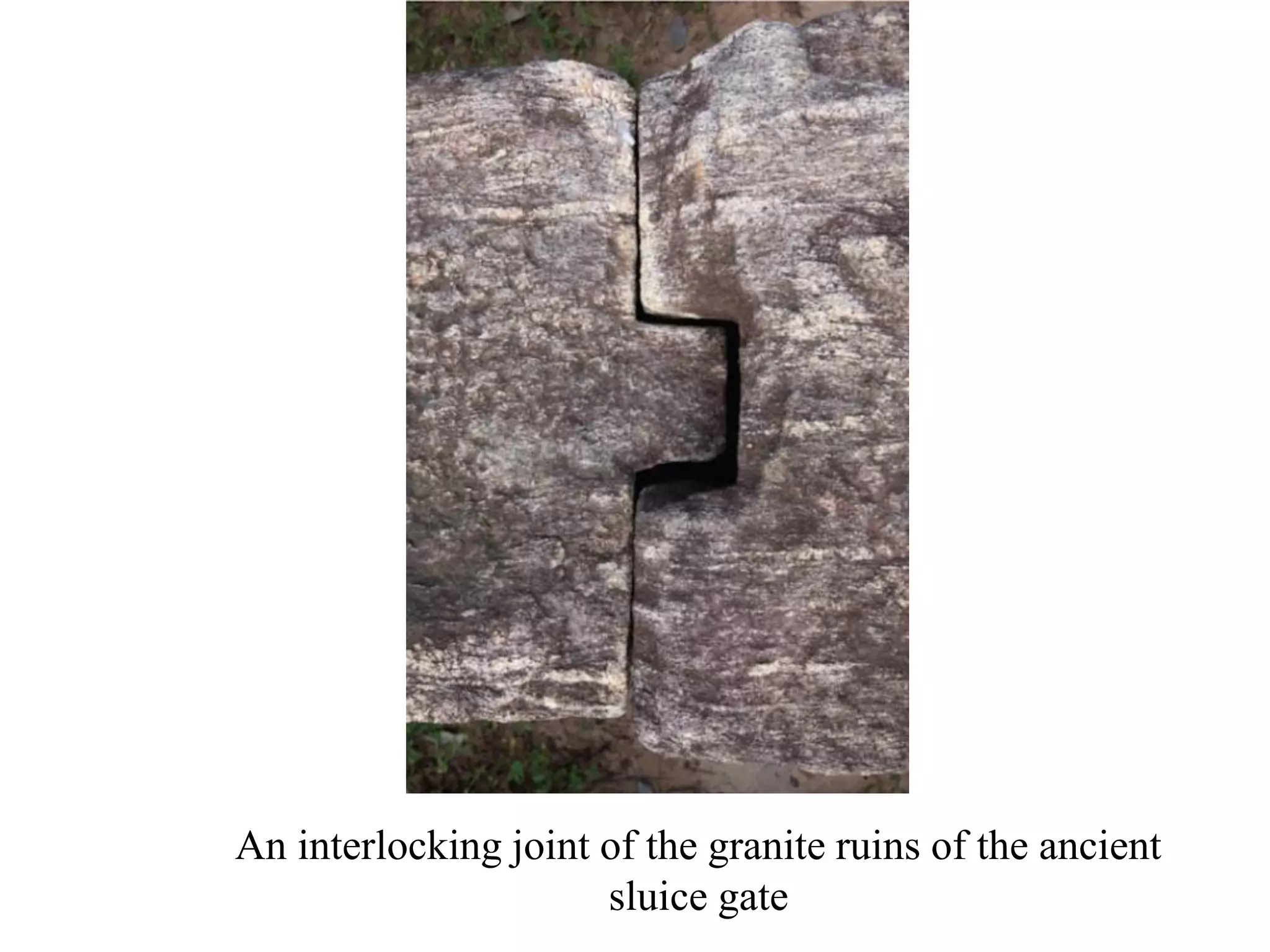
An interlocking joint of the granite ruins of the ancient
sluice gate
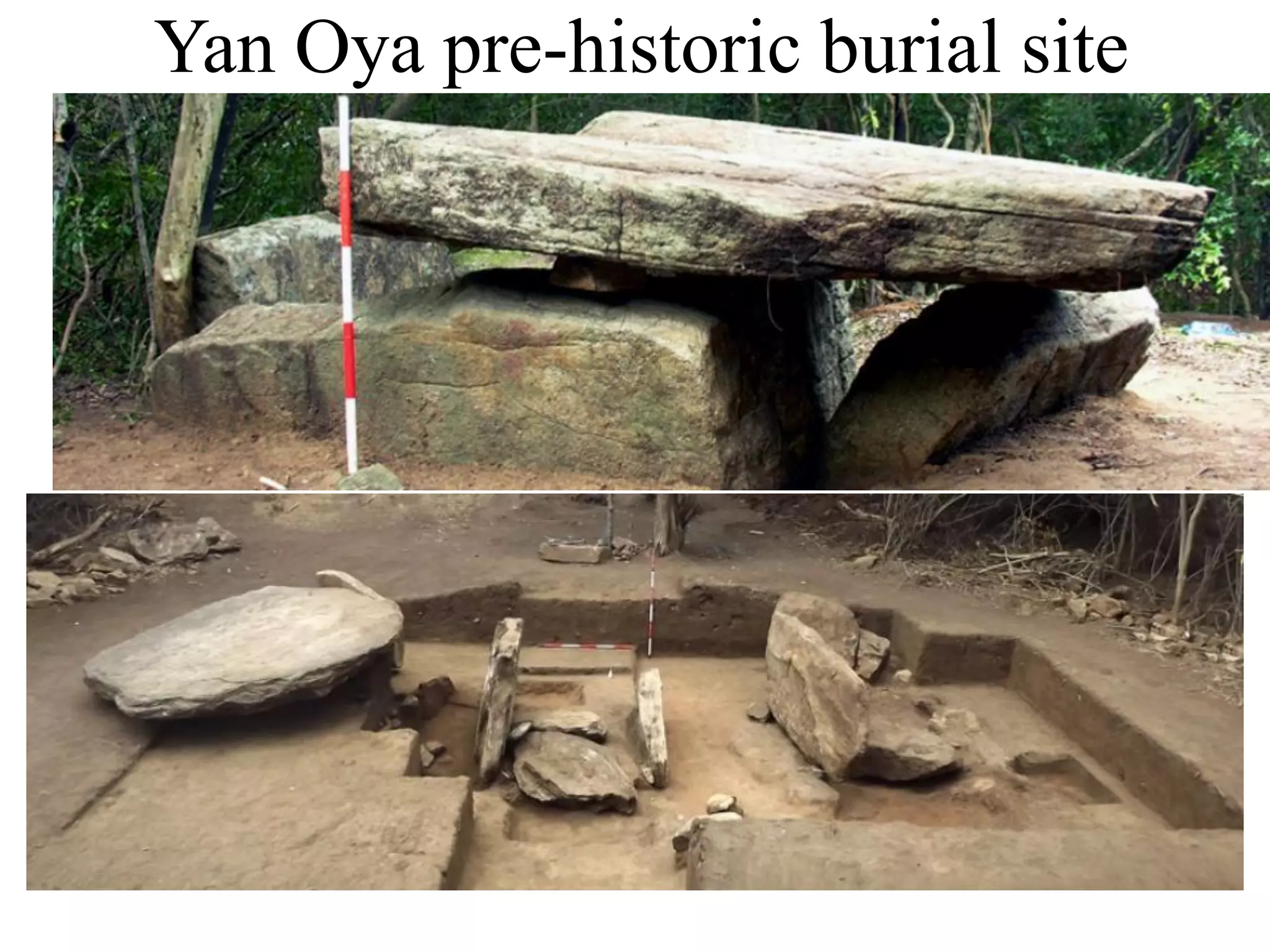
Yan Oya pre-historic burial site
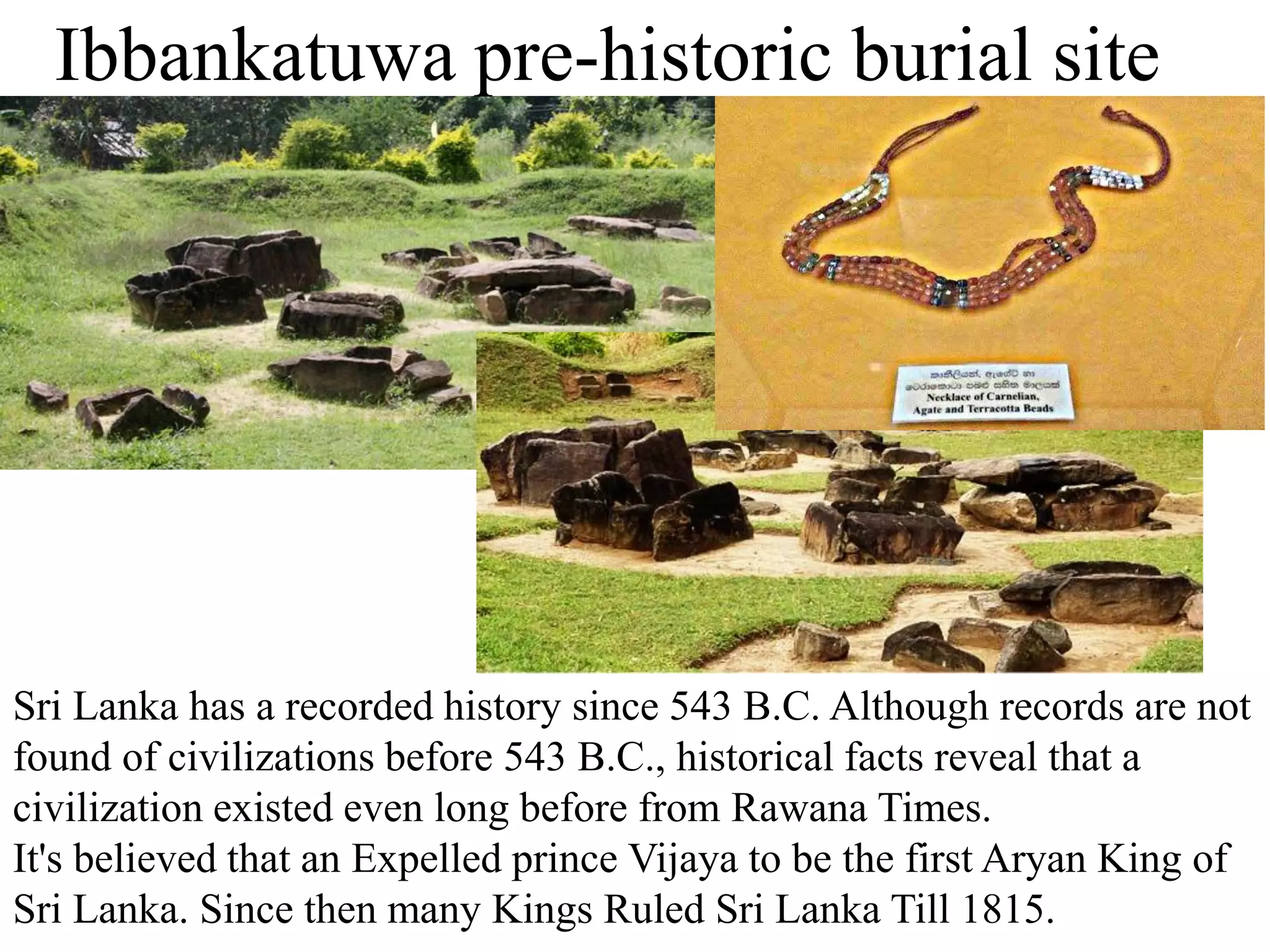
Ibbankatuwa pre-historic burial site
Sri Lanka has a recorded history since 543 B.C. Although records are not
found of civilizations before 543 B.C., historical facts reveal that a
civilization existed even long before from Rawana Times.
It's believed that an Expelled prince Vijaya to be the first Aryan King of
Sri Lanka. Since then many Kings Ruled Sri Lanka Till 1815.
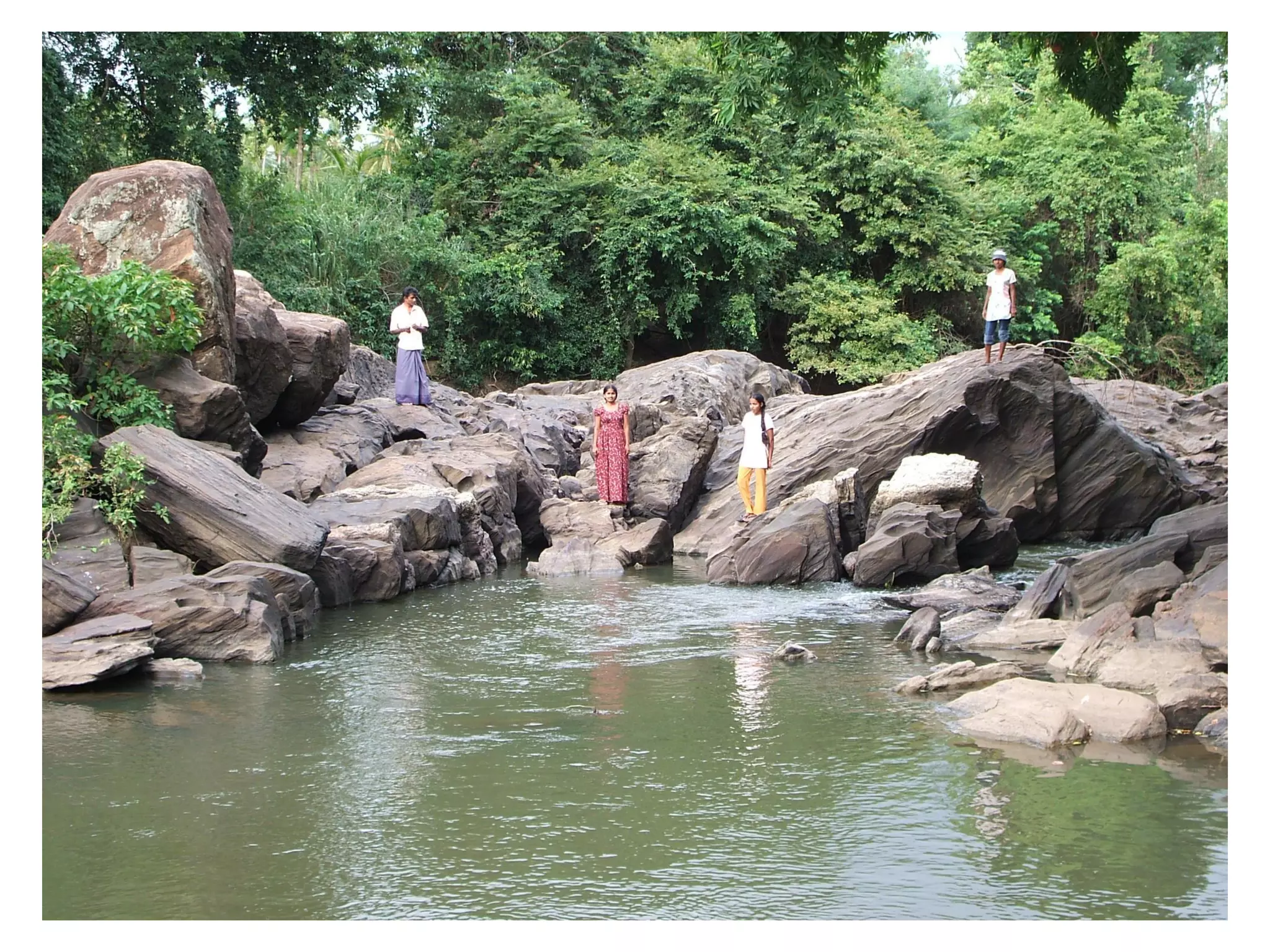
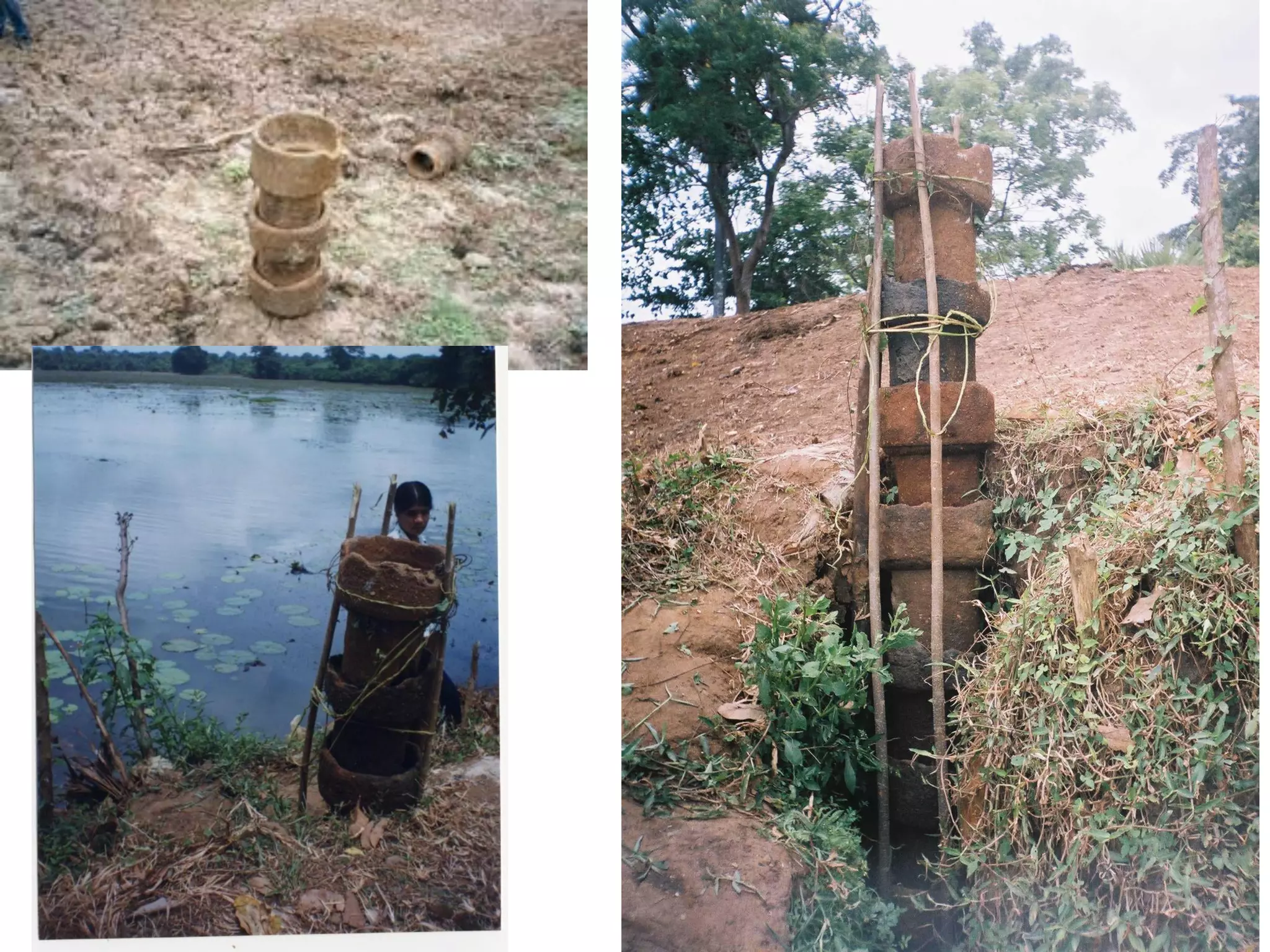
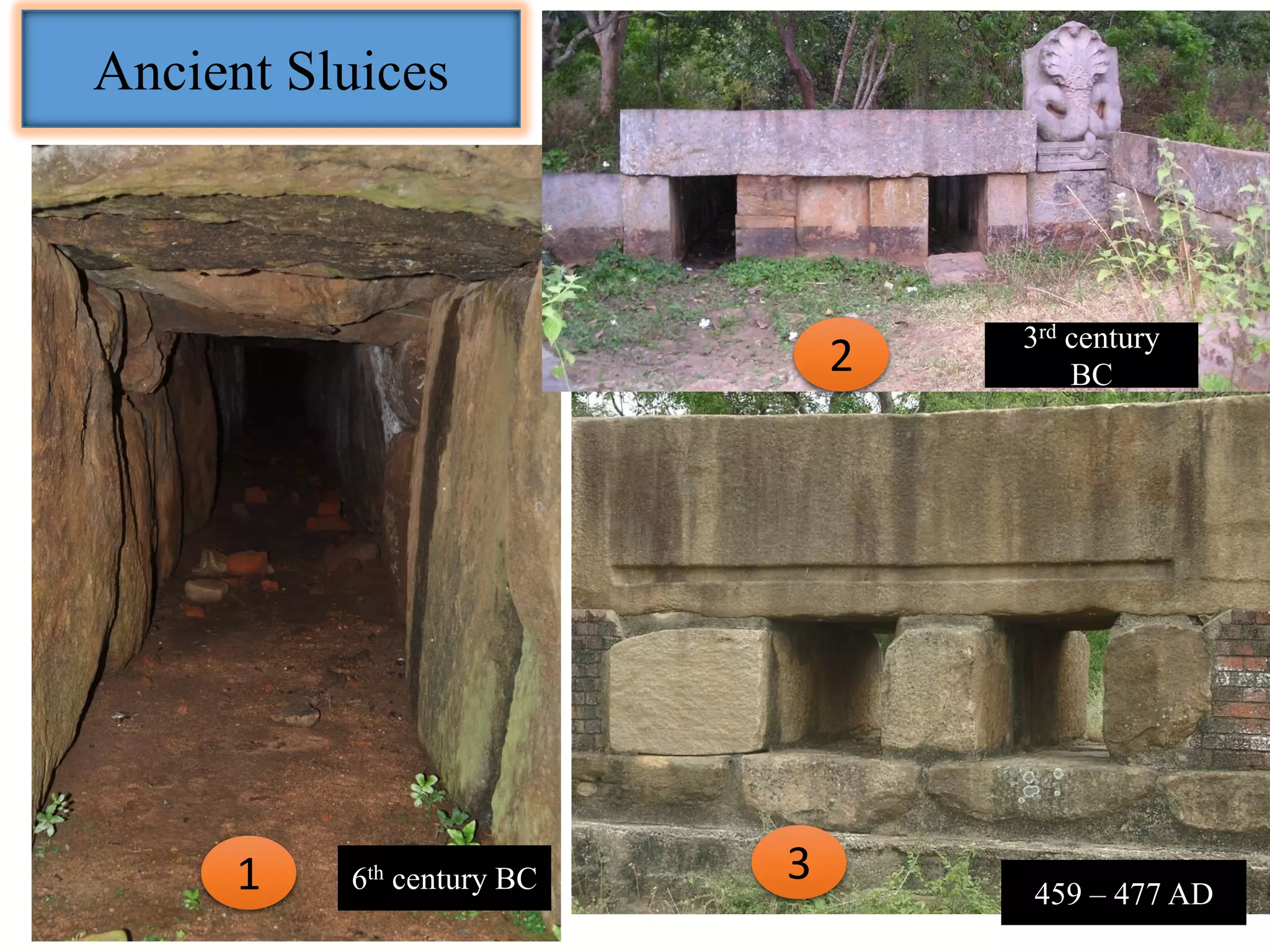
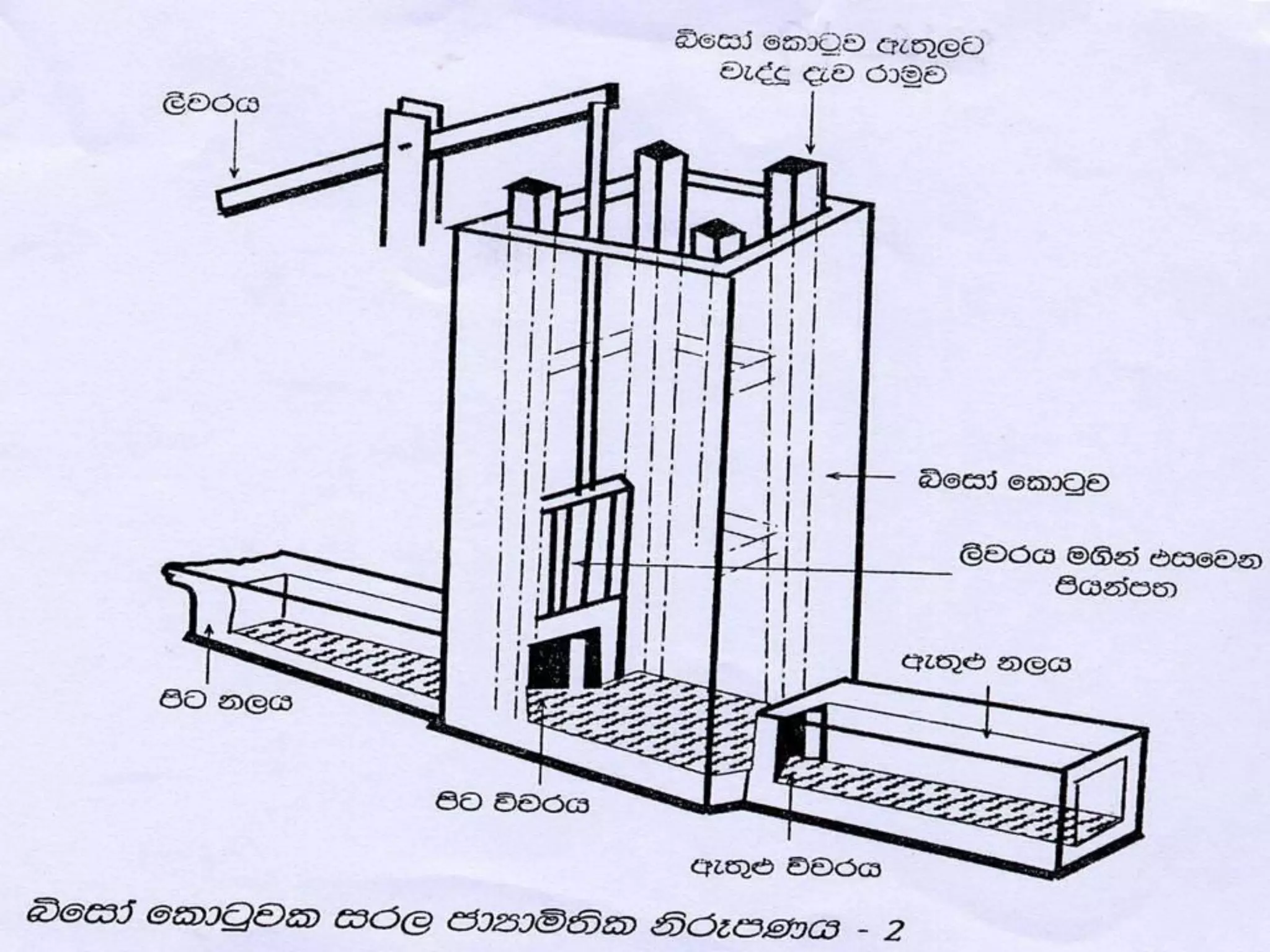
Ancient Sluices
1
2
3
6th century BC
3rd century
BC
459 – 477 AD
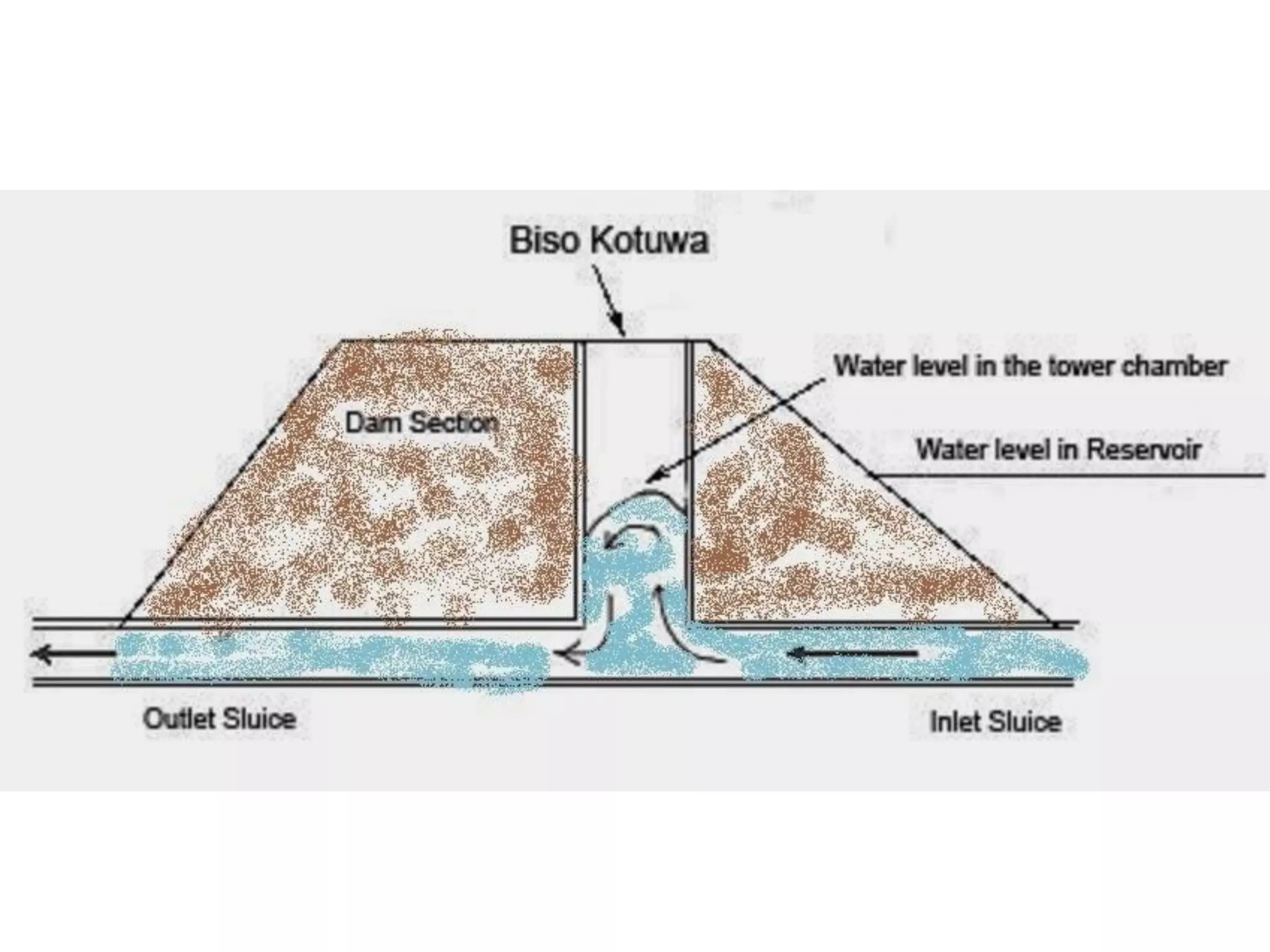
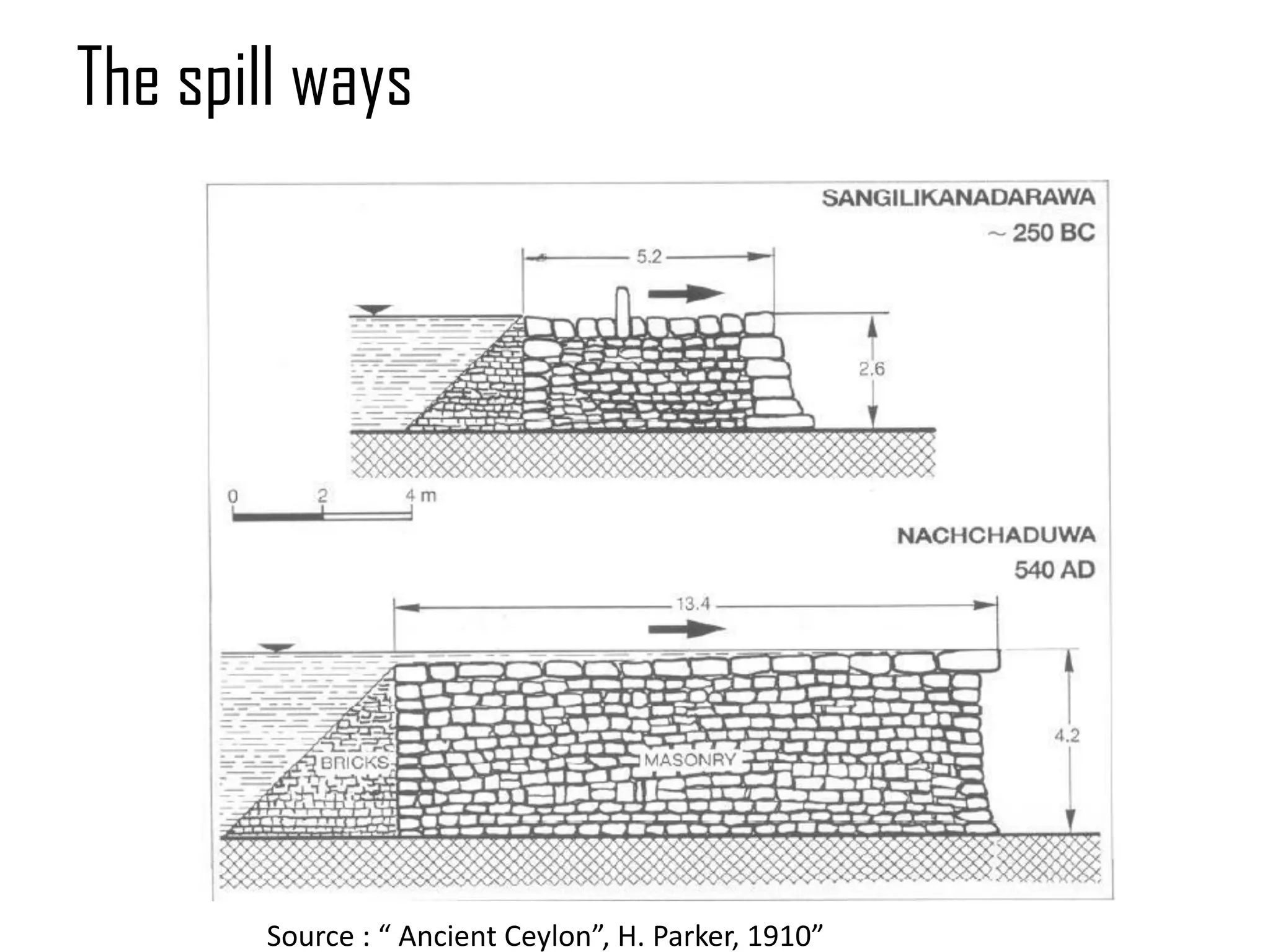
The spill ways
Source : “ Ancient Ceylon”, H. Parker, 1910”
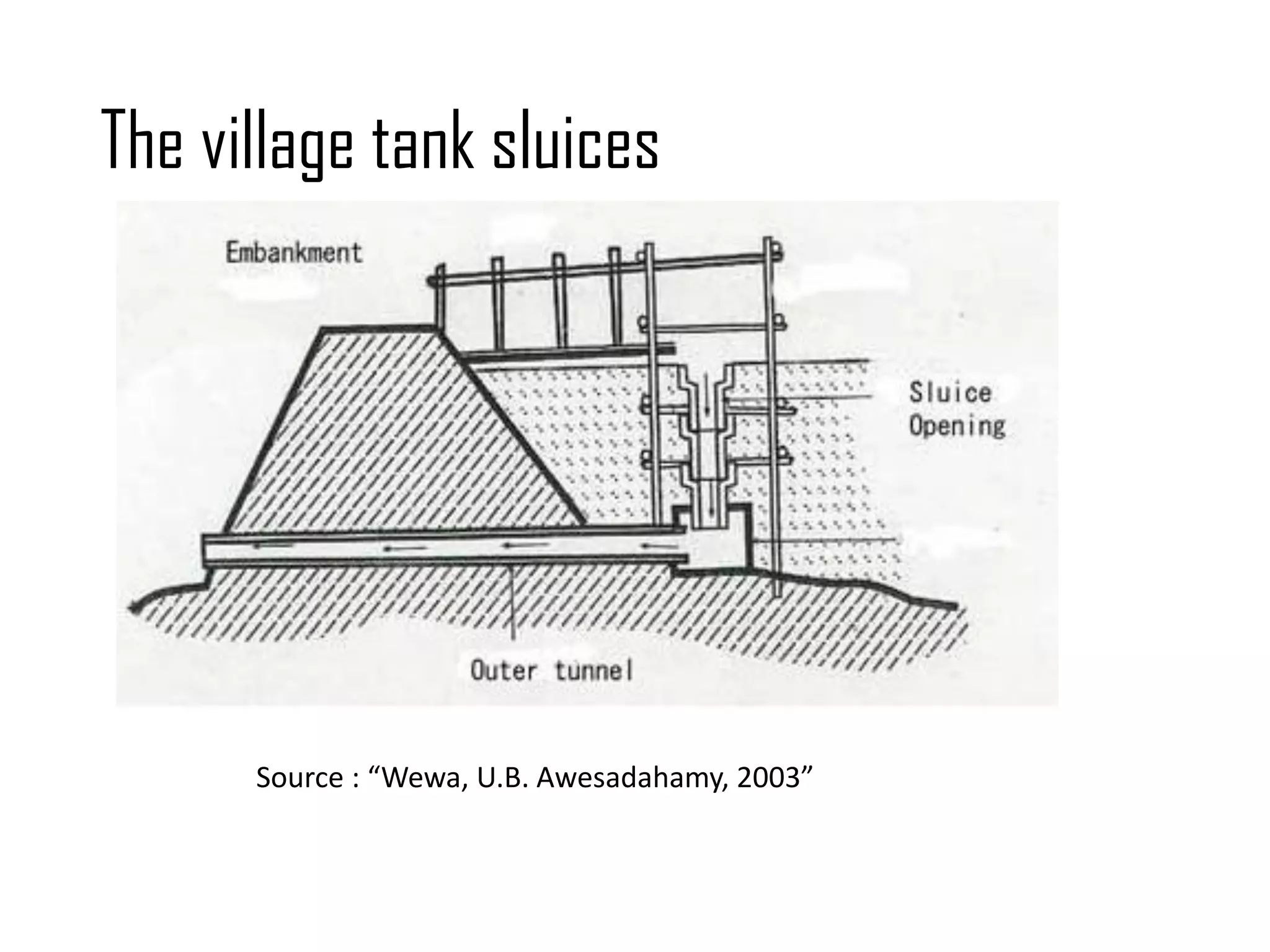
The village tank sluices
Source : “Wewa, U.B. Awesadahamy, 2003”
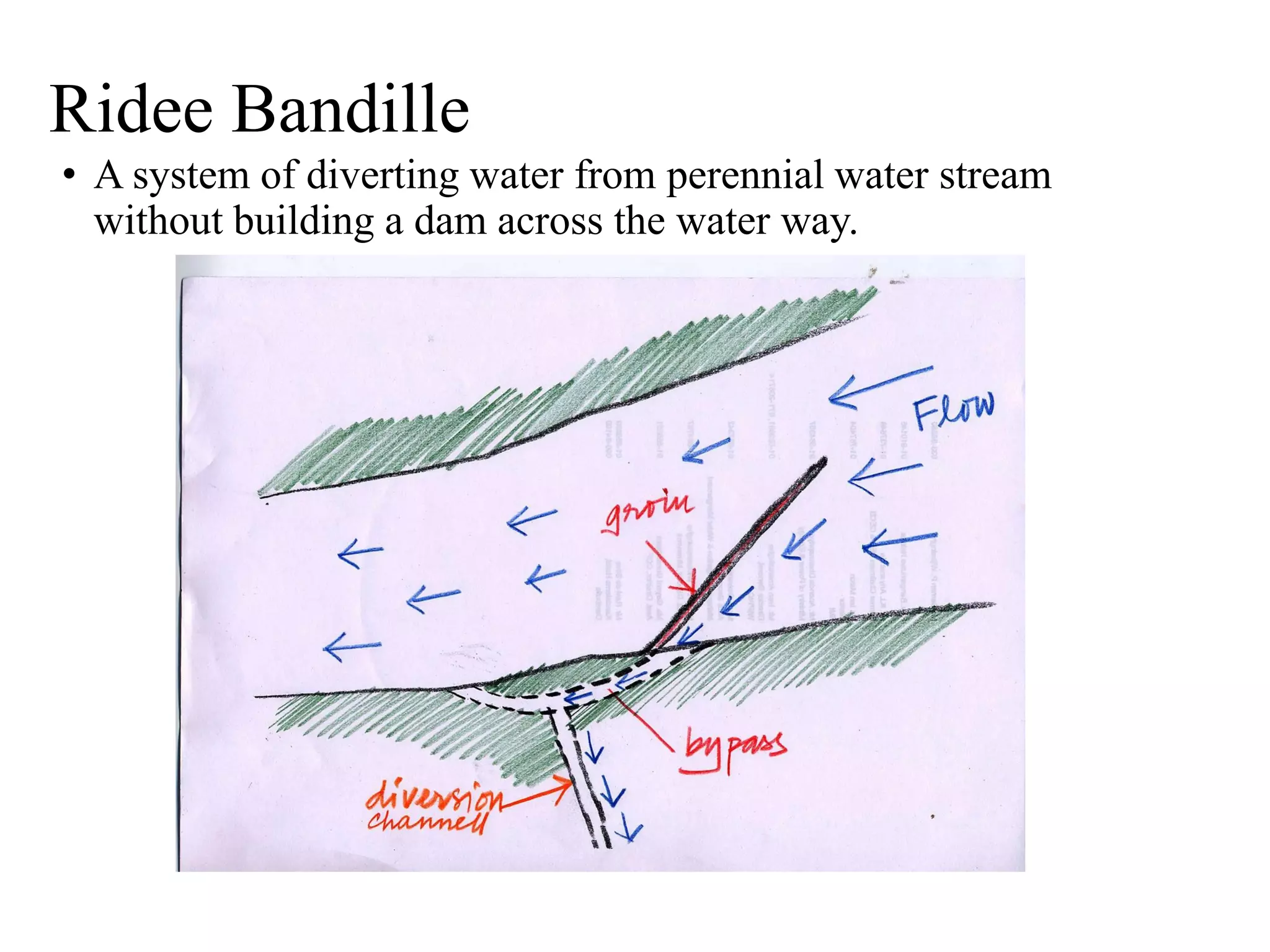
Ridee Bandille
• A system of diverting water from perennial water stream
without building a dam across the water way.
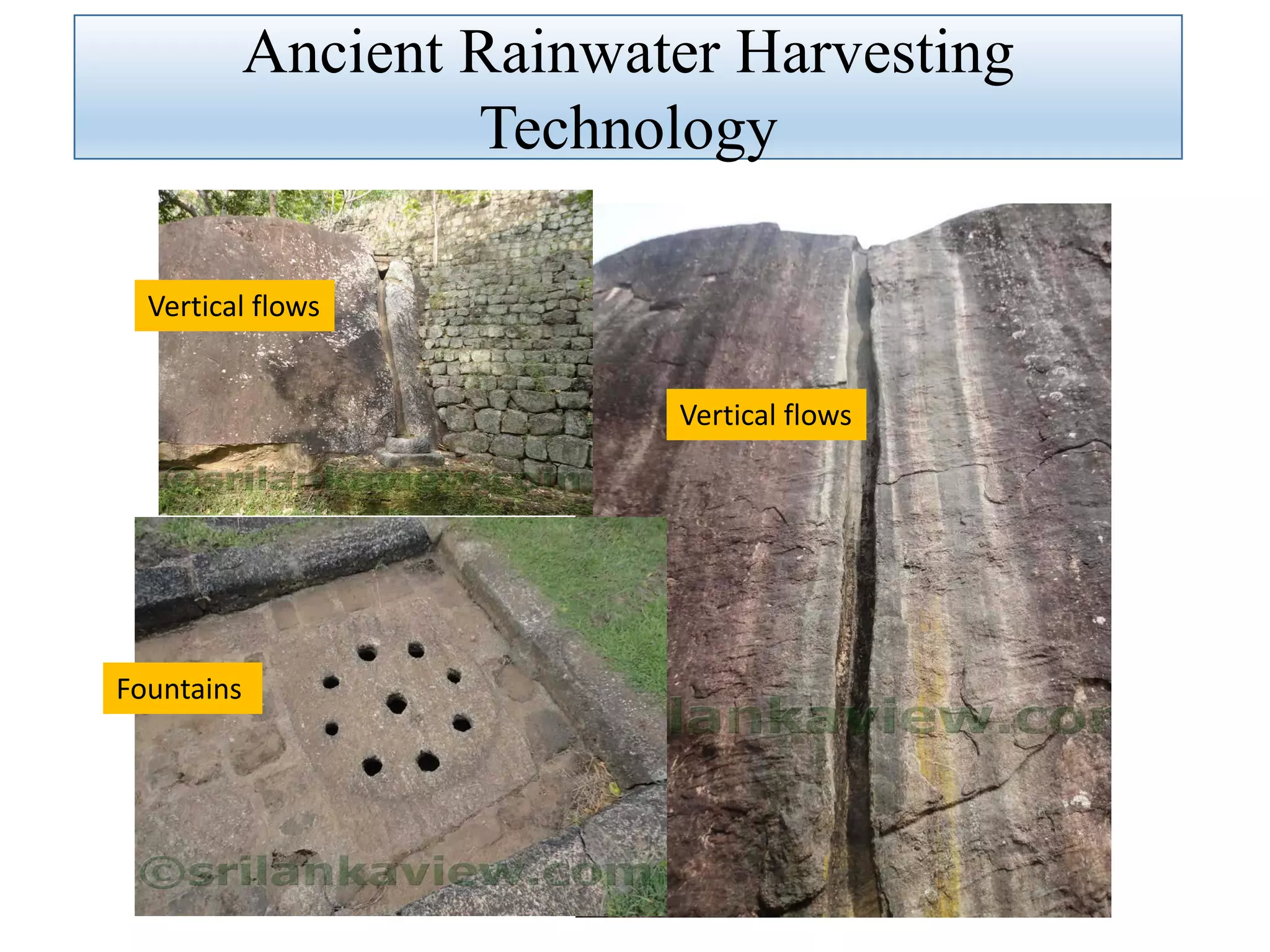
Ancient Rainwater Harvesting
Technology
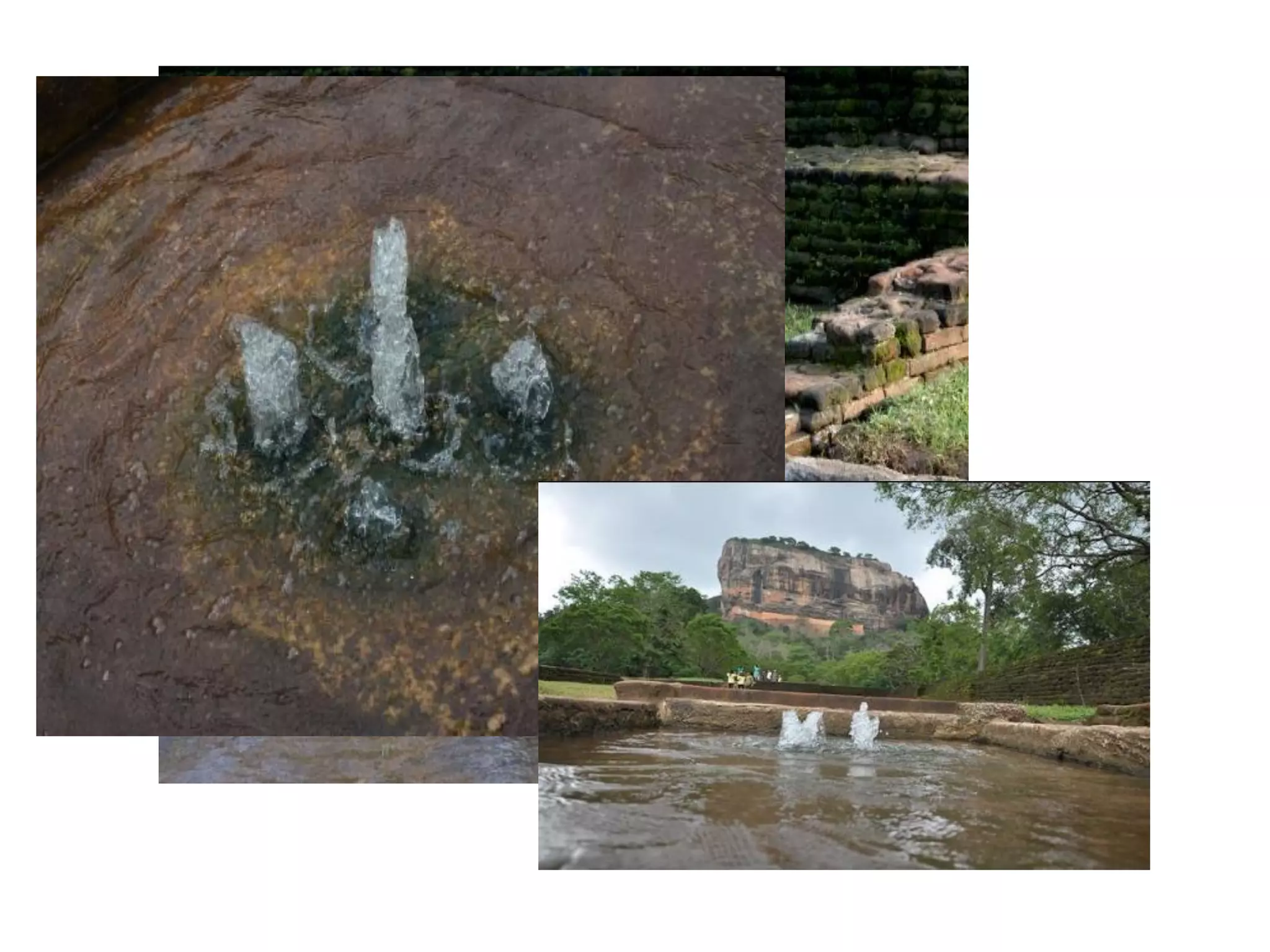
Fountains
Vertical flows
Vertical flows
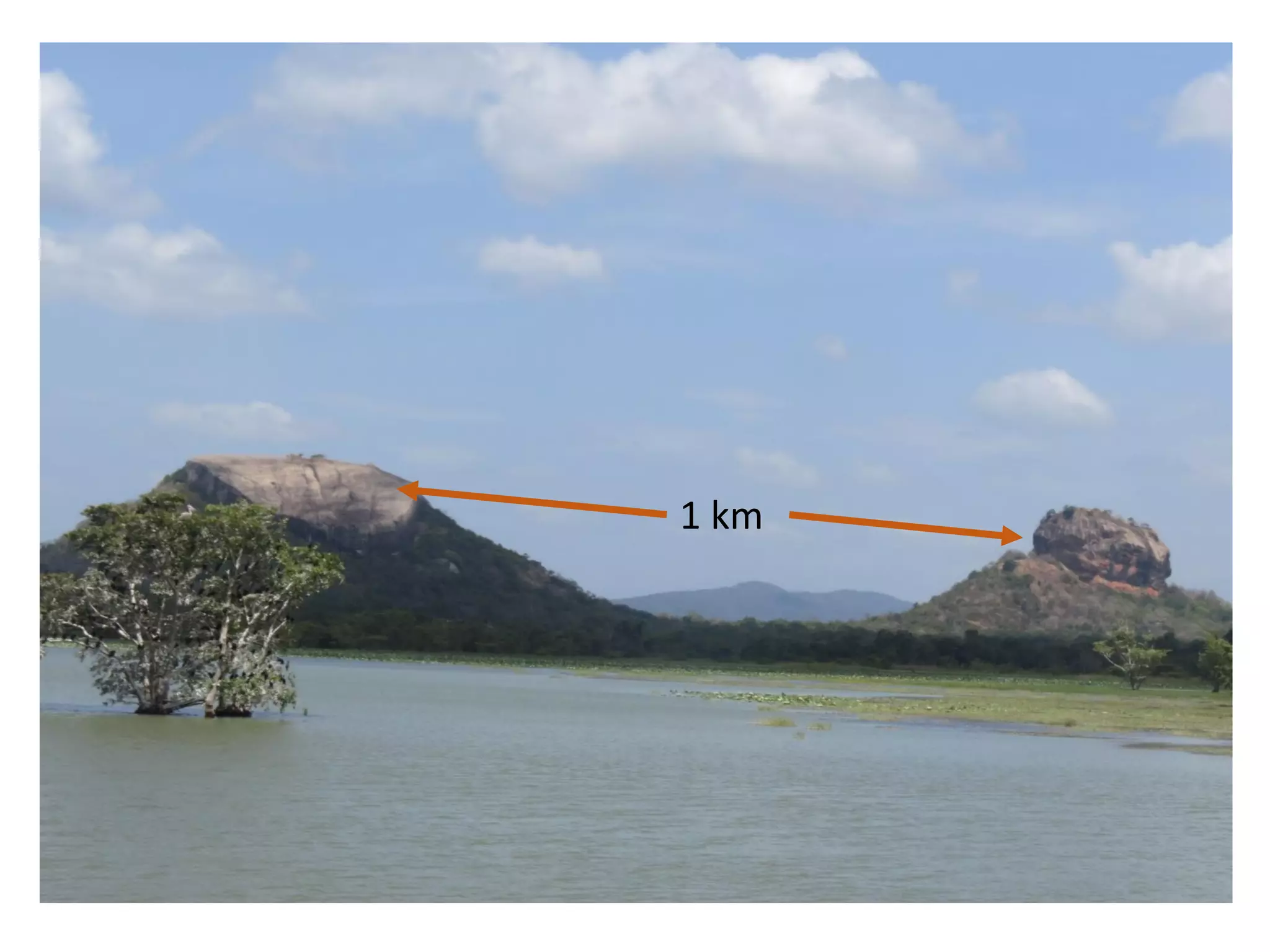
1 km
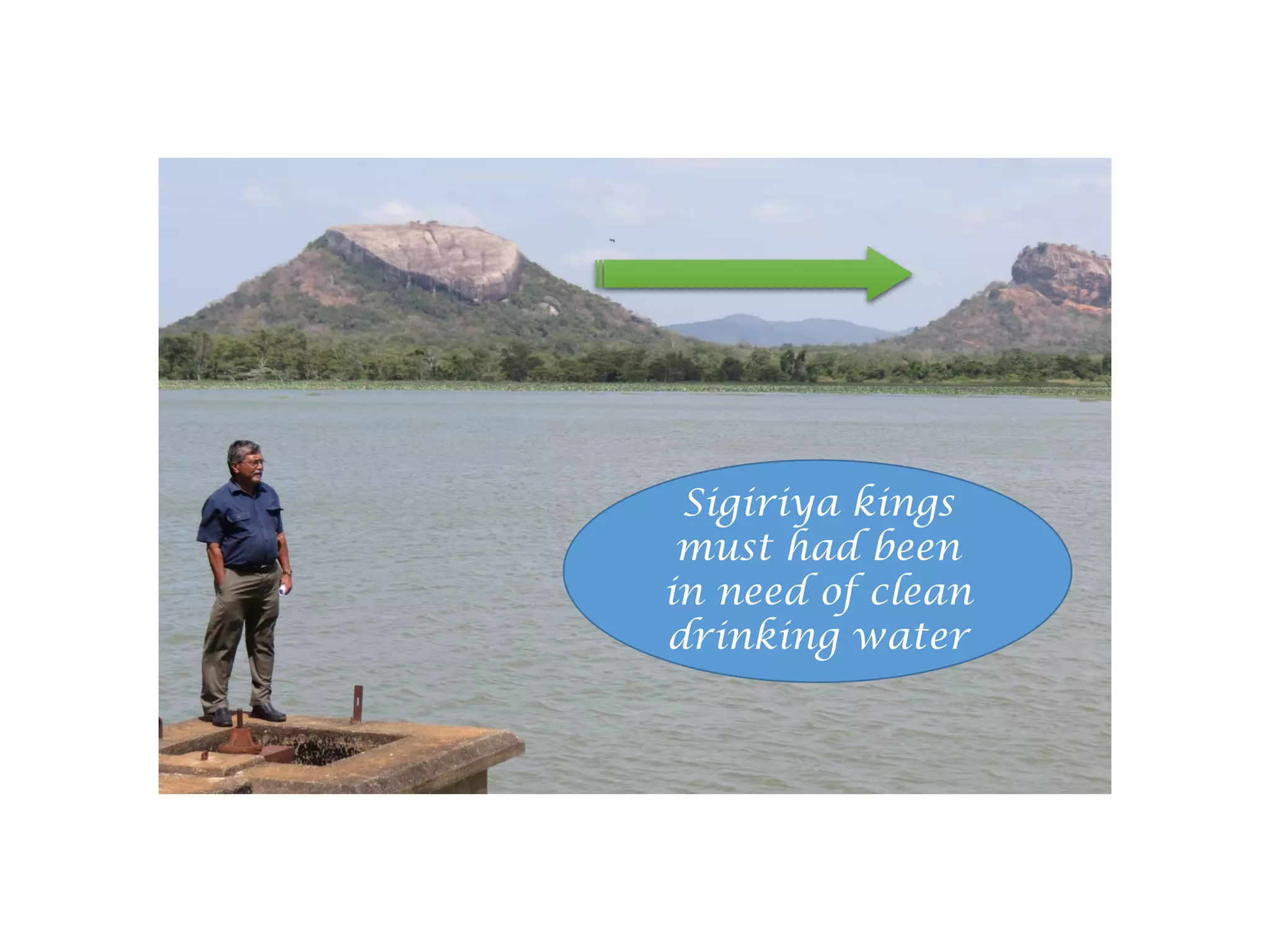
Sigiriya kings
must had been
in need of clean
drinking water
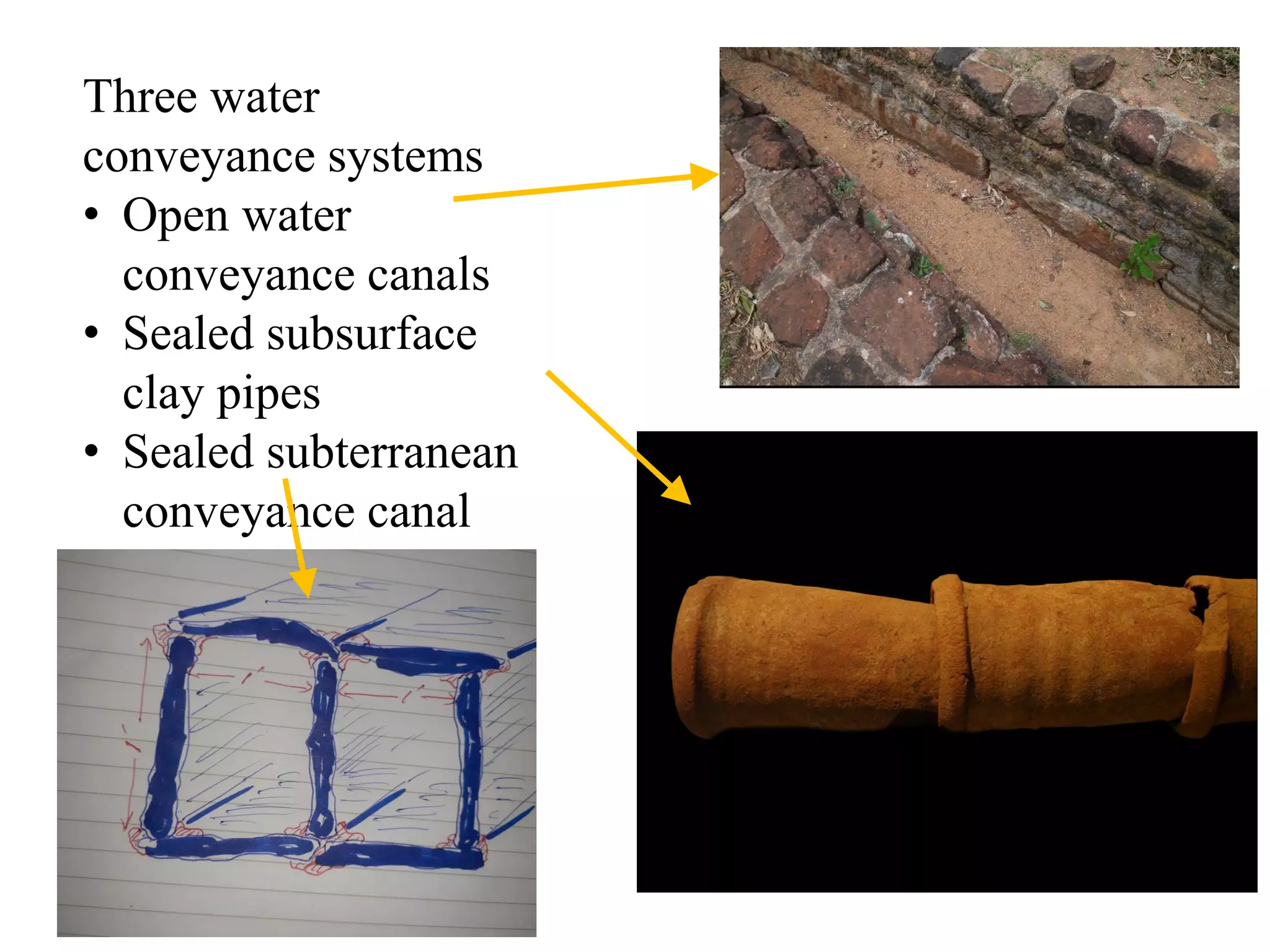
Three water
conveyance systems
• Open water
conveyance canals
• Sealed subsurface
clay pipes
• Sealed subterranean
conveyance canal
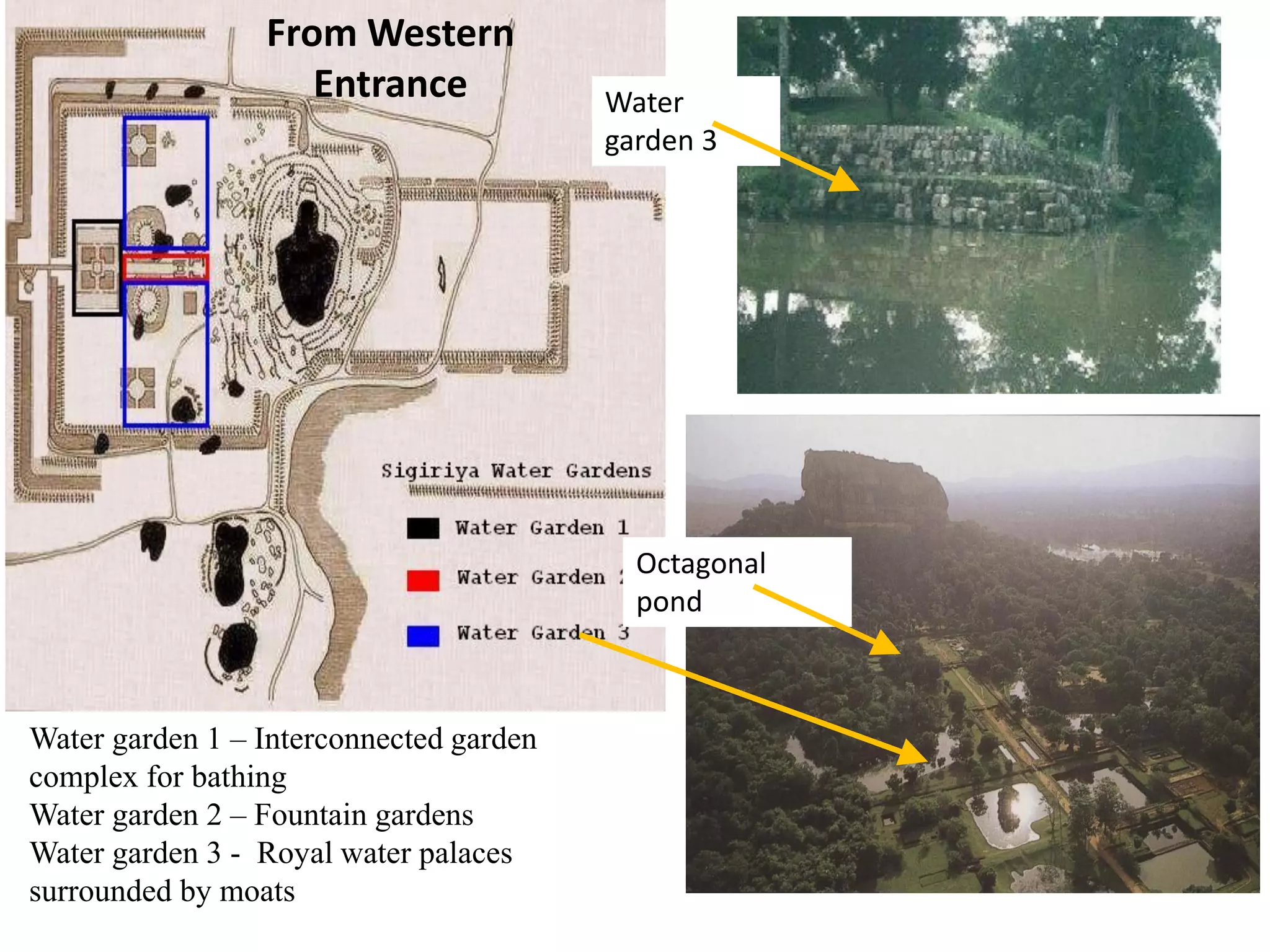
Octagonal
pond
Water garden 1 – Interconnected garden
complex for bathing
Water garden 2 – Fountain gardens
Water garden 3 - Royal water palaces
surrounded by moats
Water
garden 3
From Western
Entrance
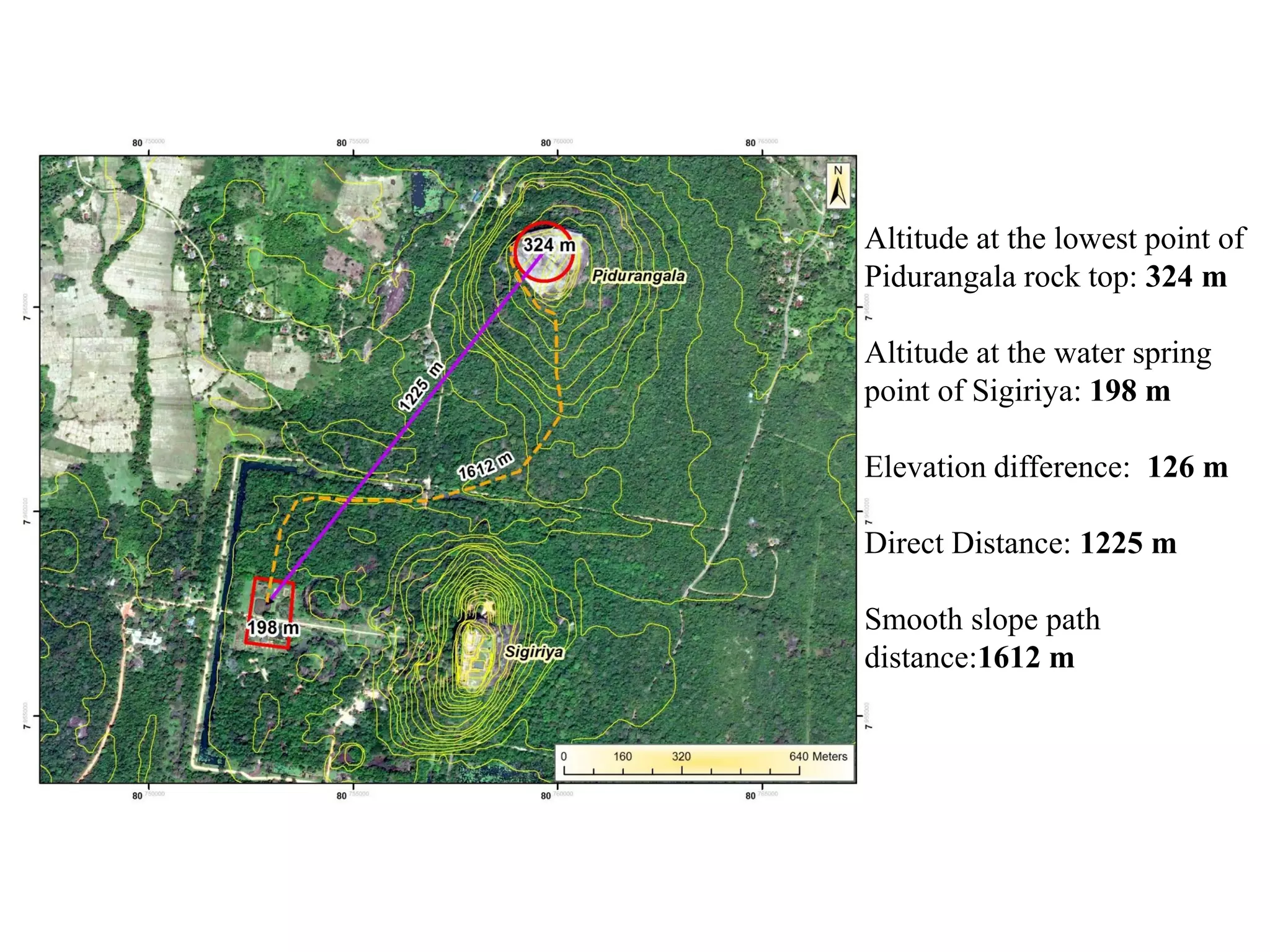
Altitude at the lowest point of
Pidurangala rock top: 324 m
Altitude at the water spring
point of Sigiriya: 198 m
Elevation difference: 126 m
Direct Distance: 1225 m
Smooth slope path
distance:1612 m
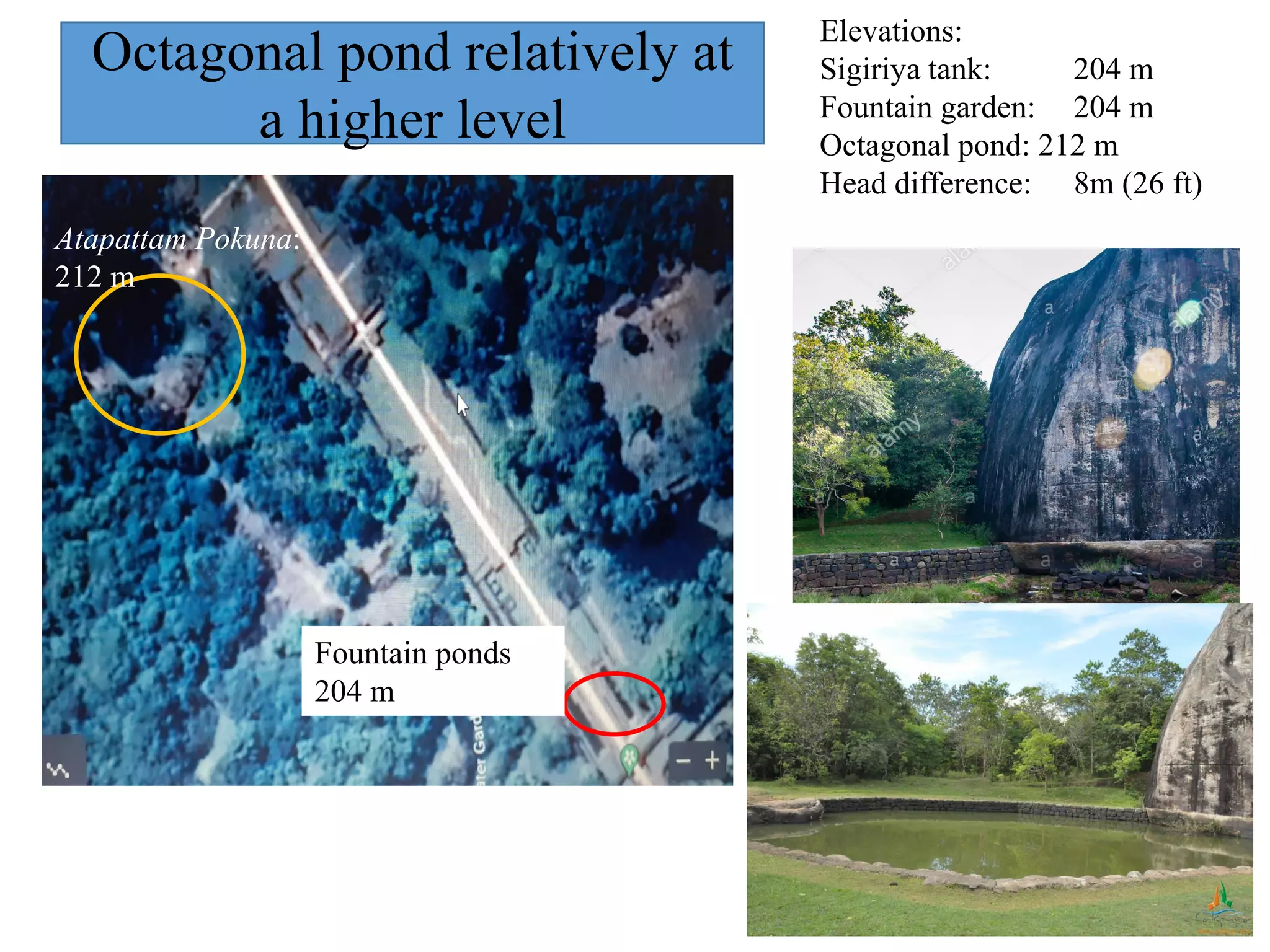
Elevations:
Sigiriya tank: 204 m
Fountain garden: 204 m
Octagonal pond: 212 m
Head difference: 8m (26 ft)
Atapattam Pokuna:
212 m
Fountain ponds
204 m
Octagonal pond relatively at
a higher level
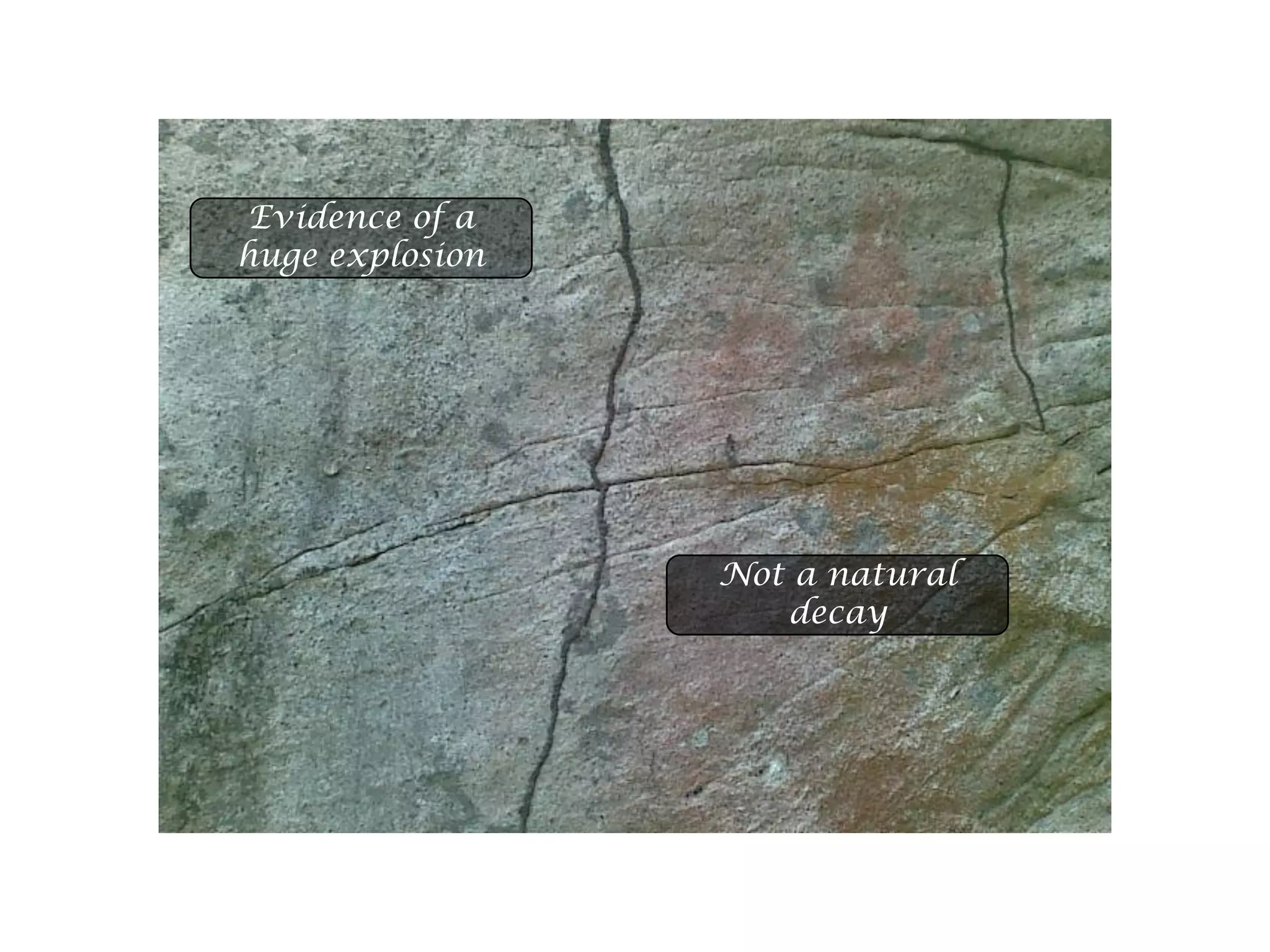
Evidence of a
huge explosion
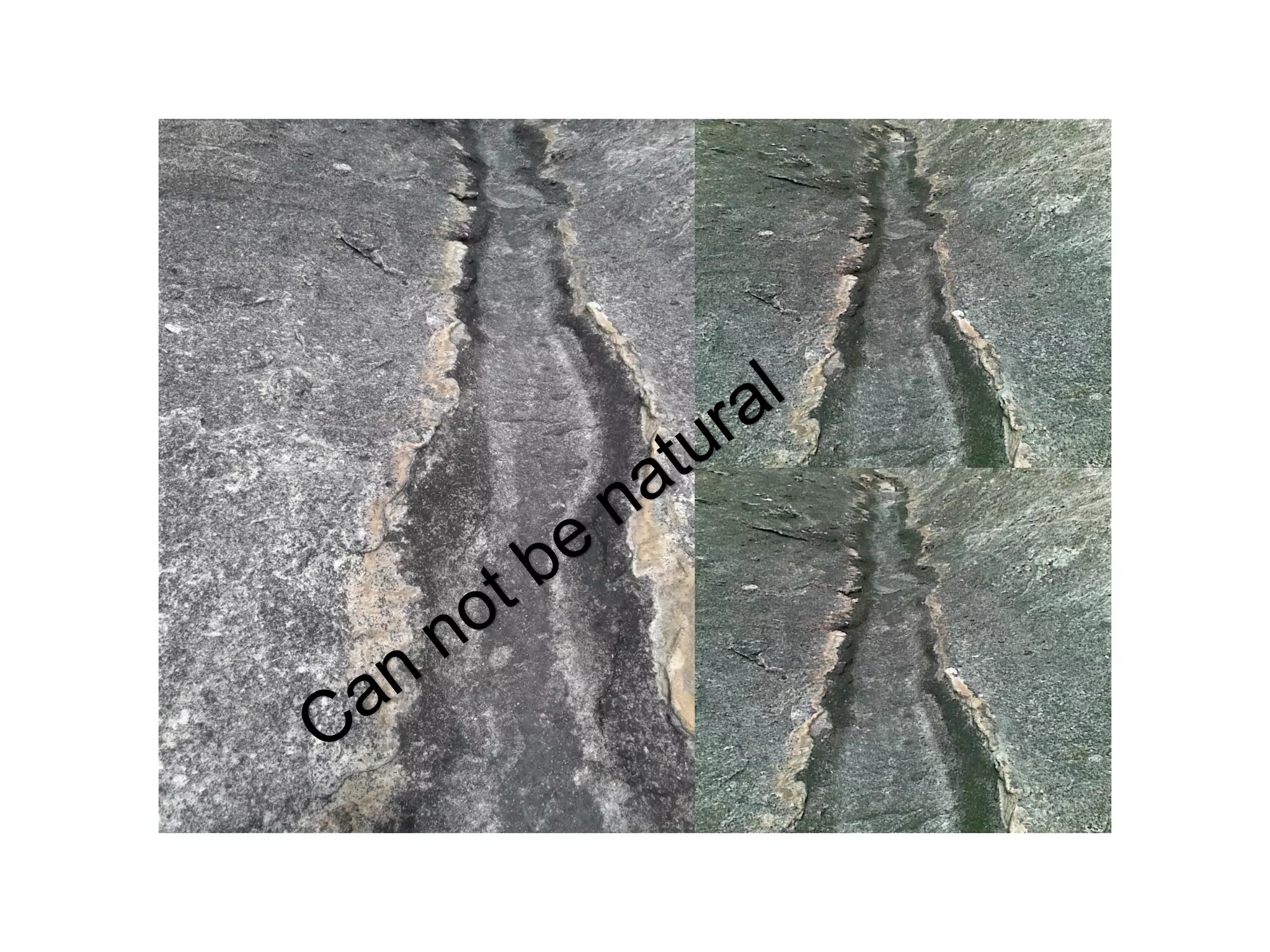
Not a natural
decay
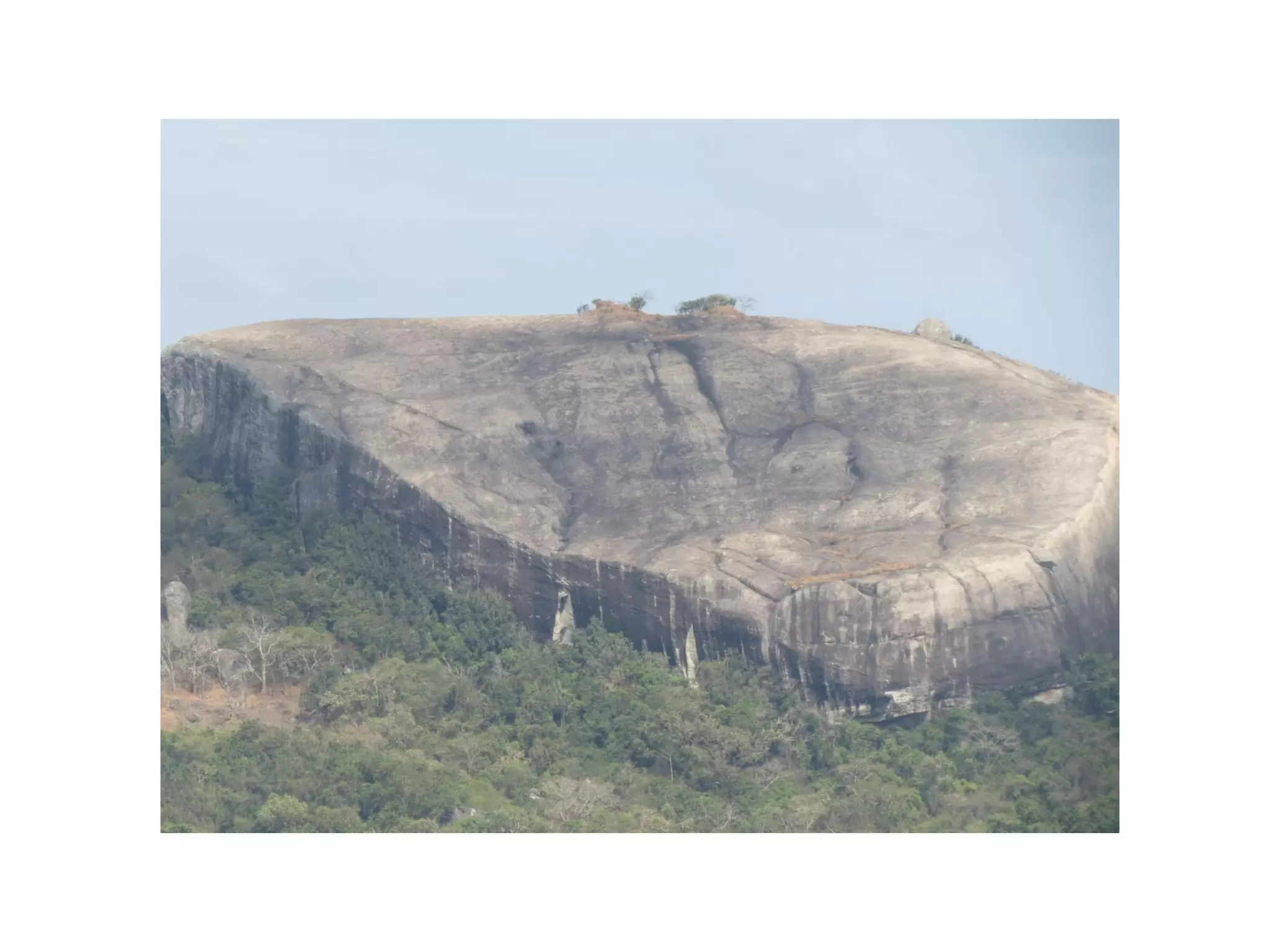
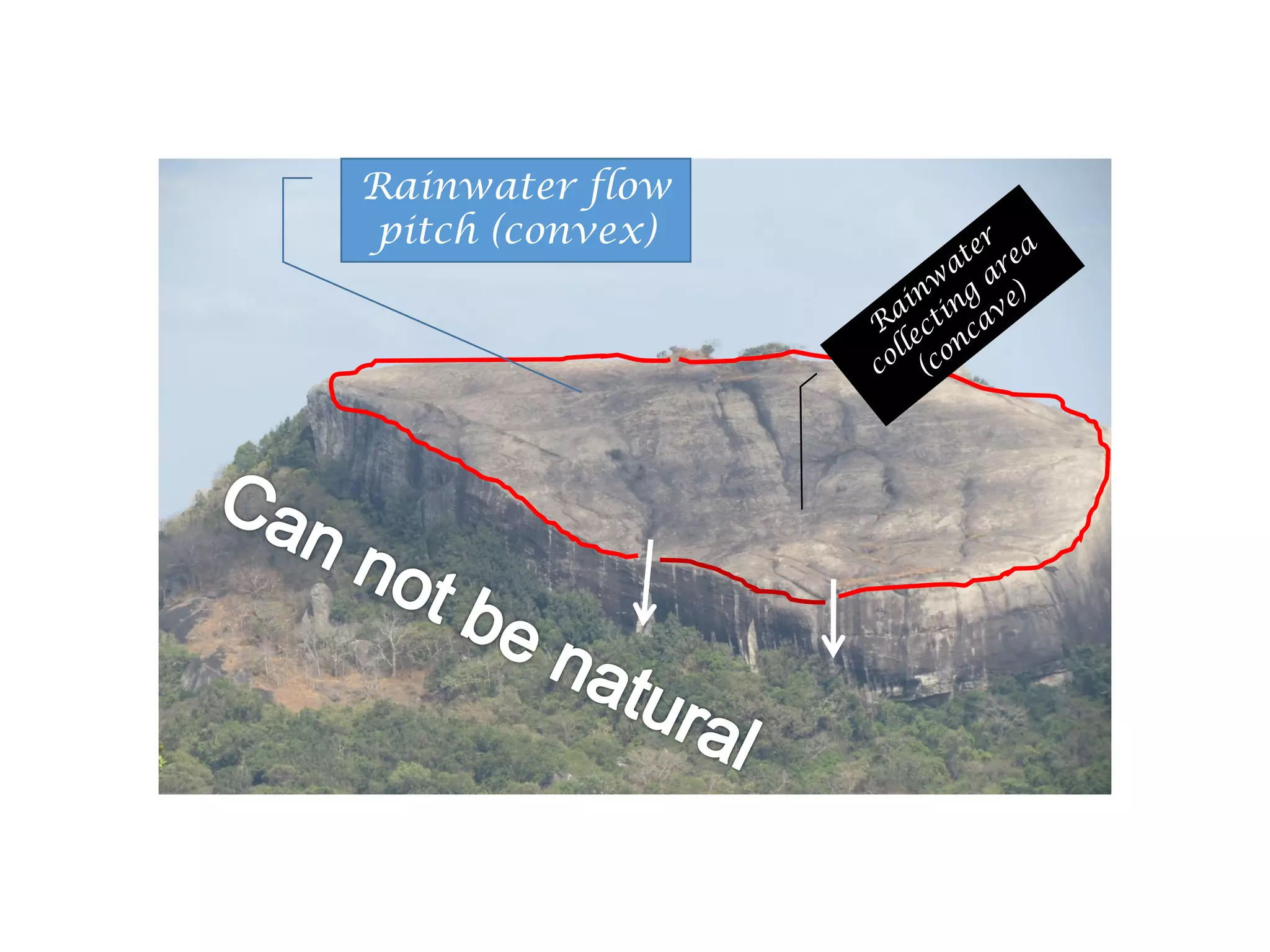
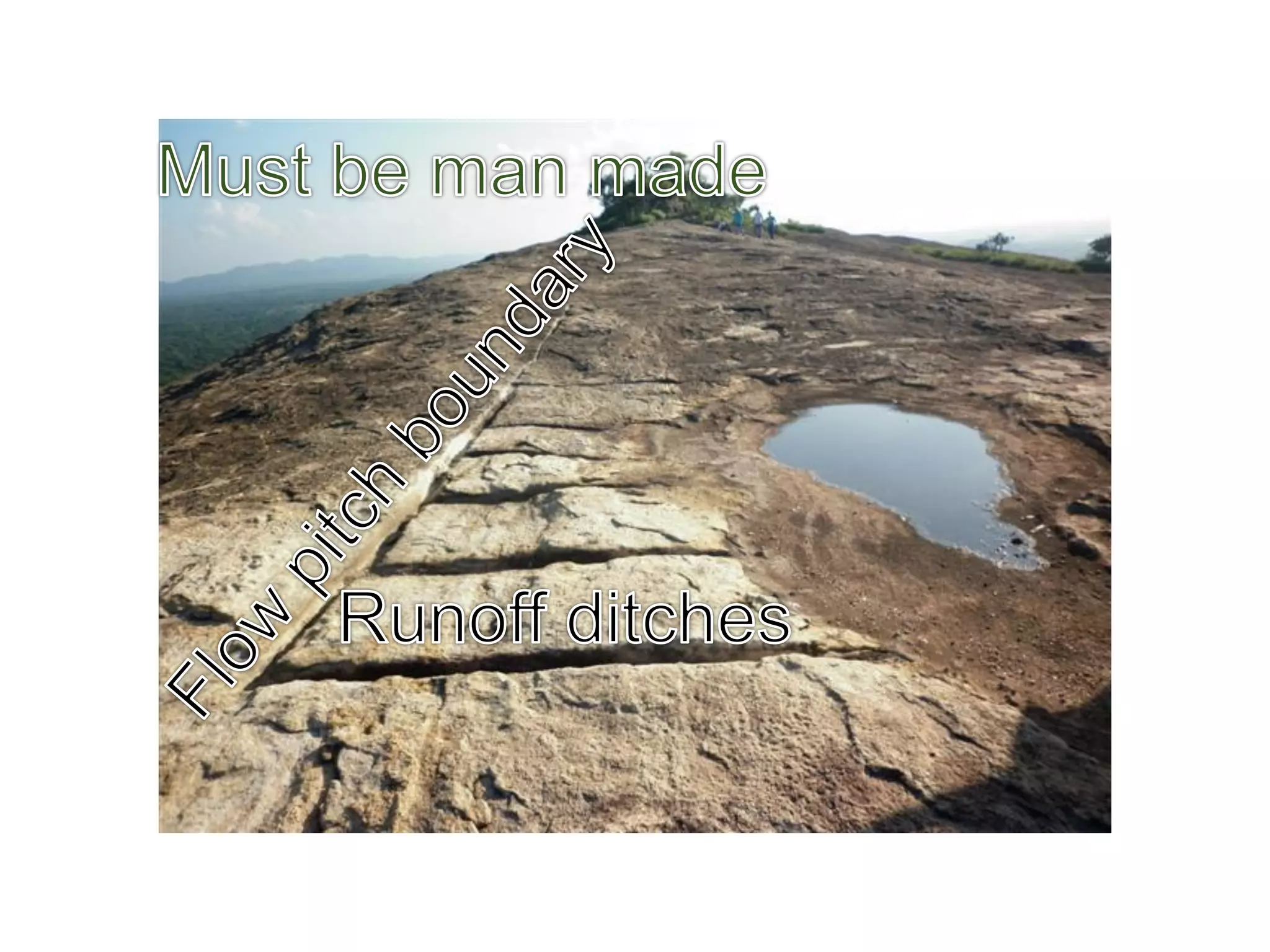
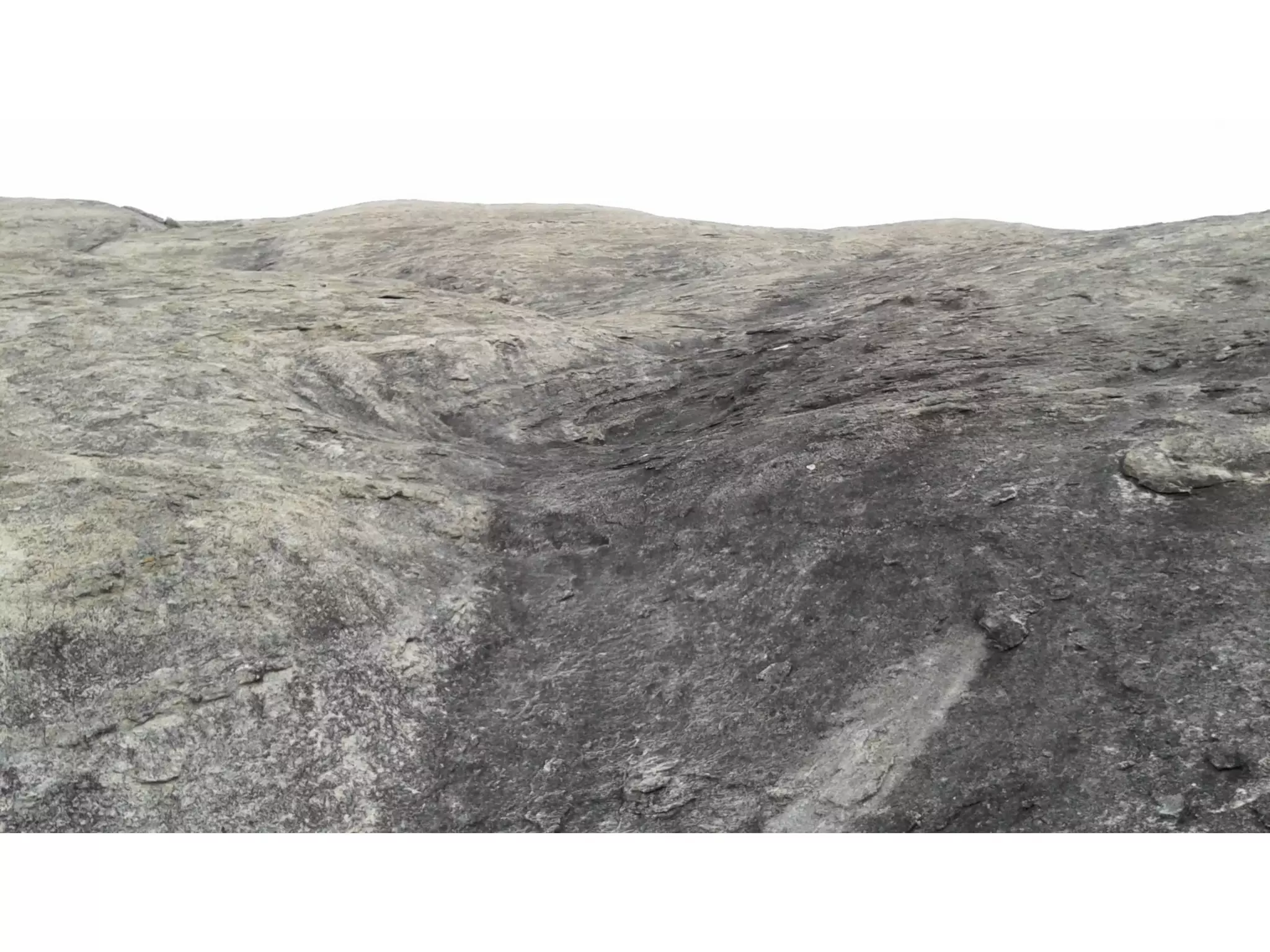
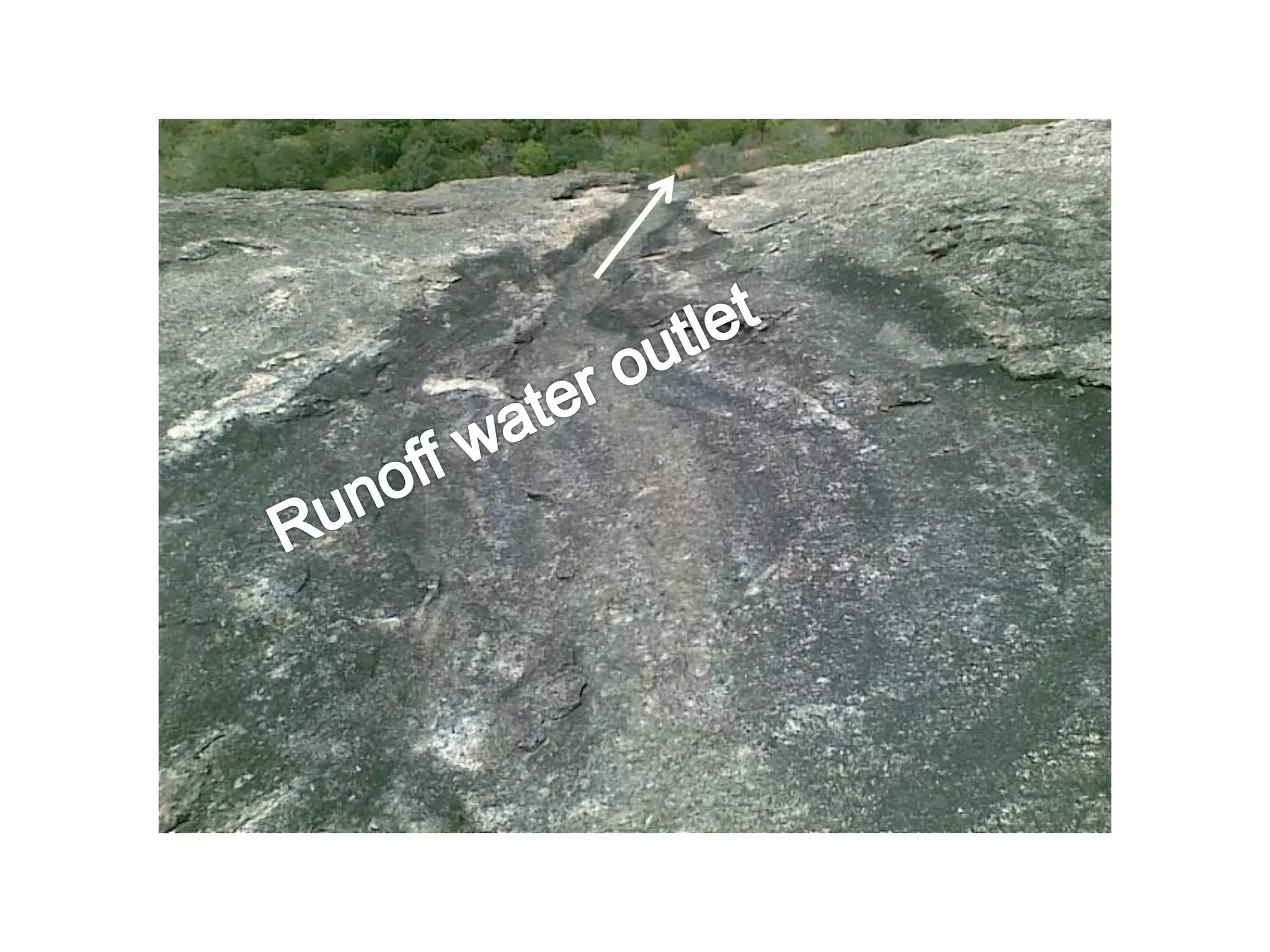
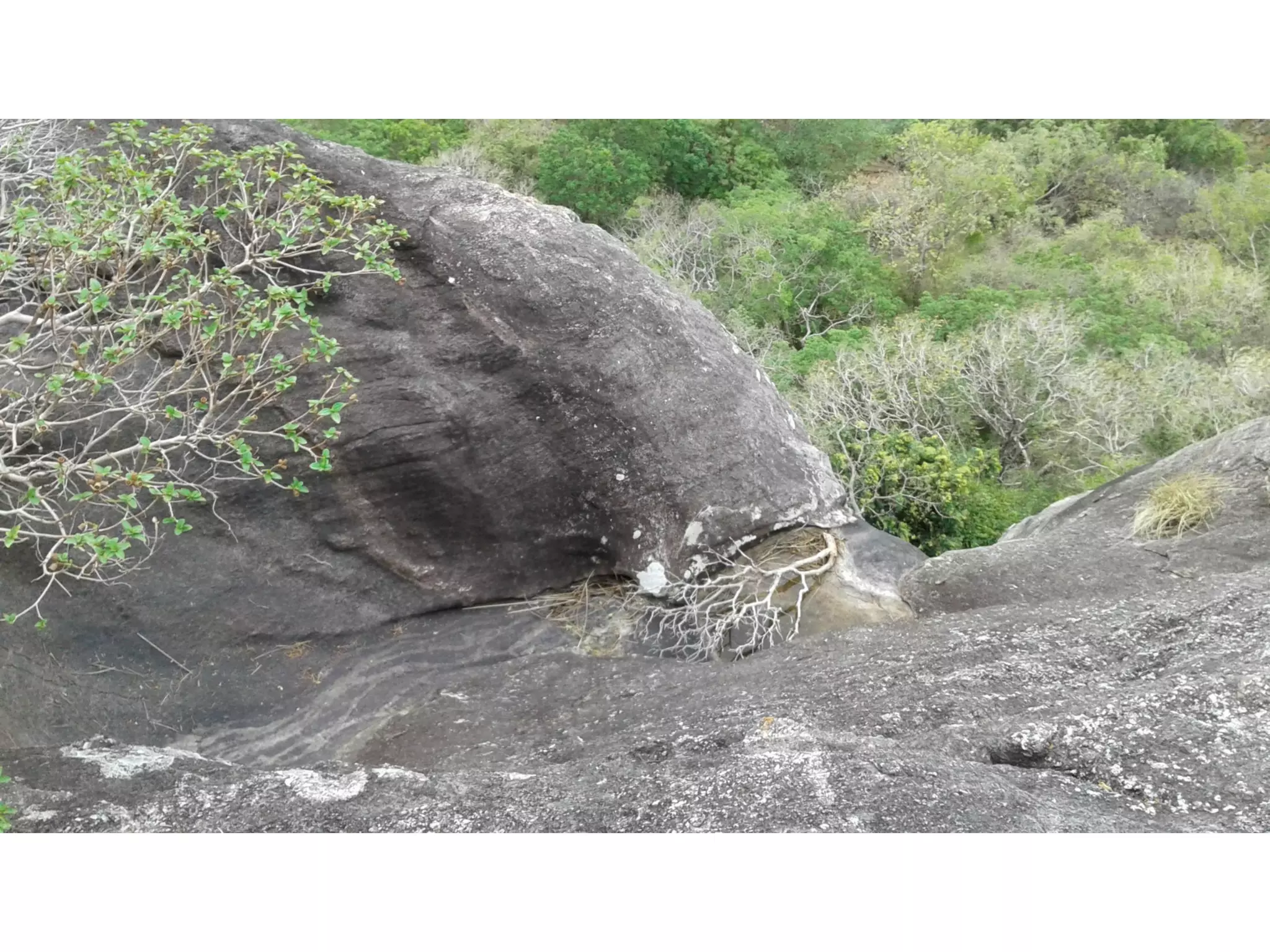
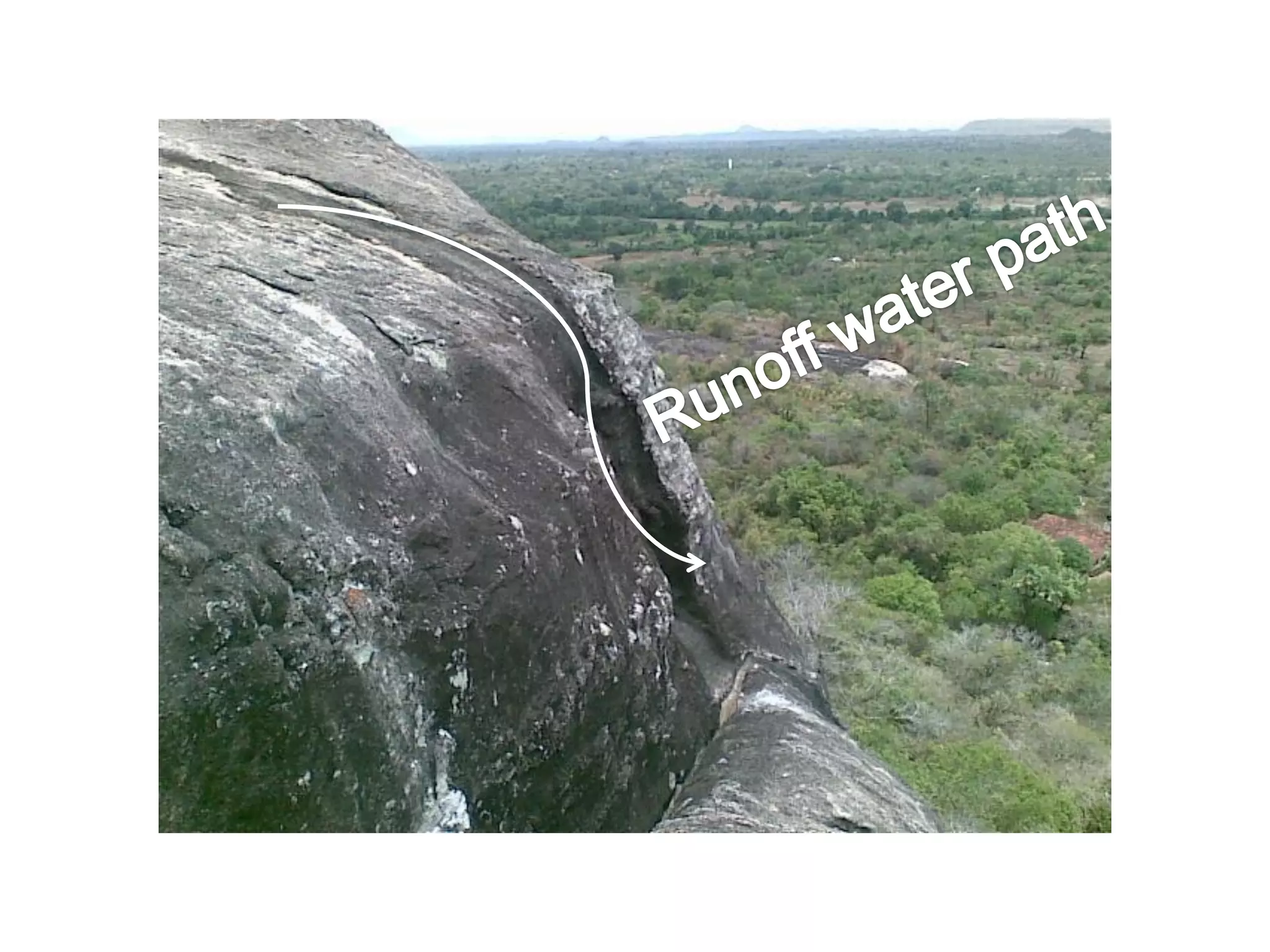
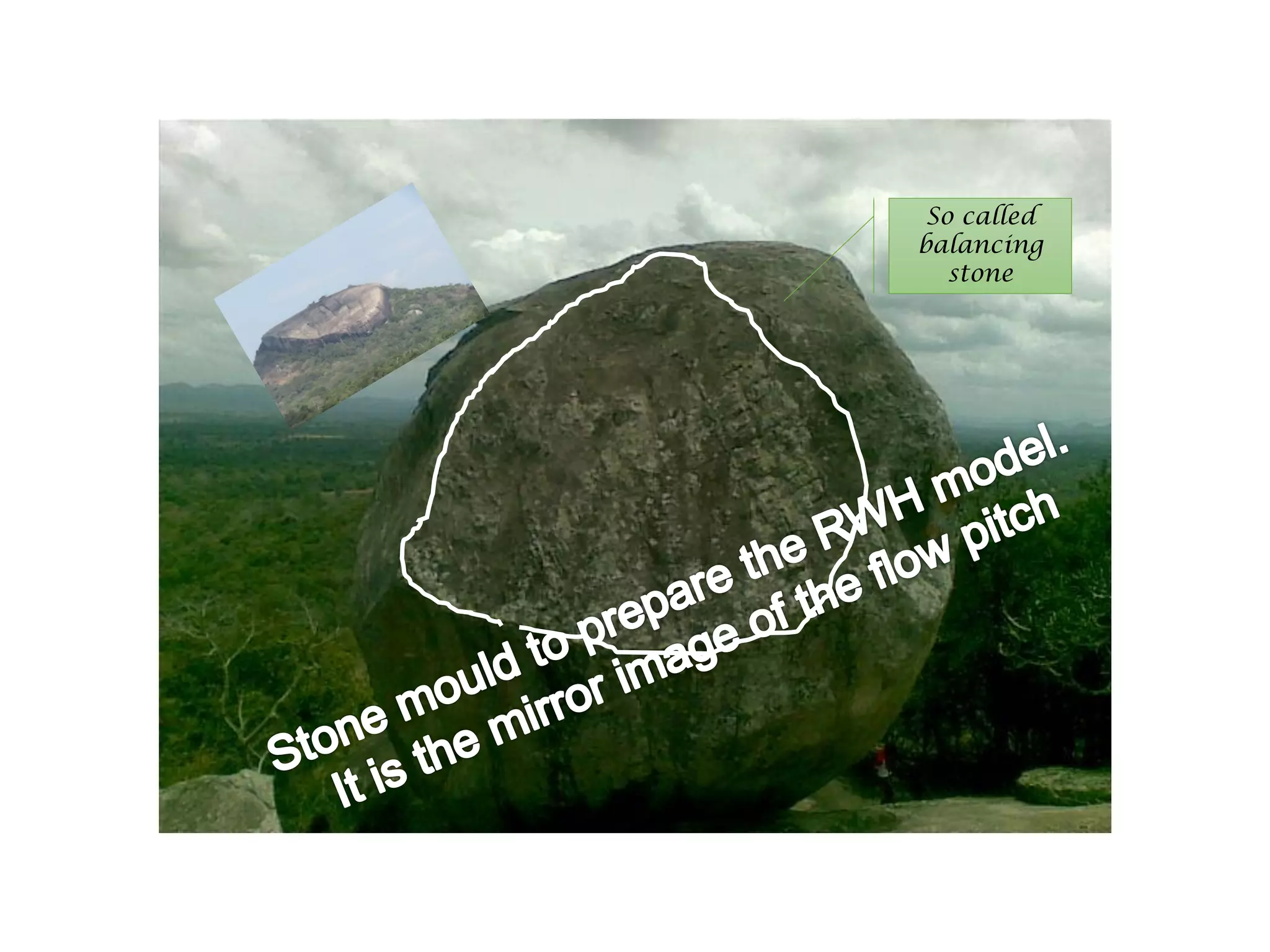
Rainwater flow
pitch (convex)
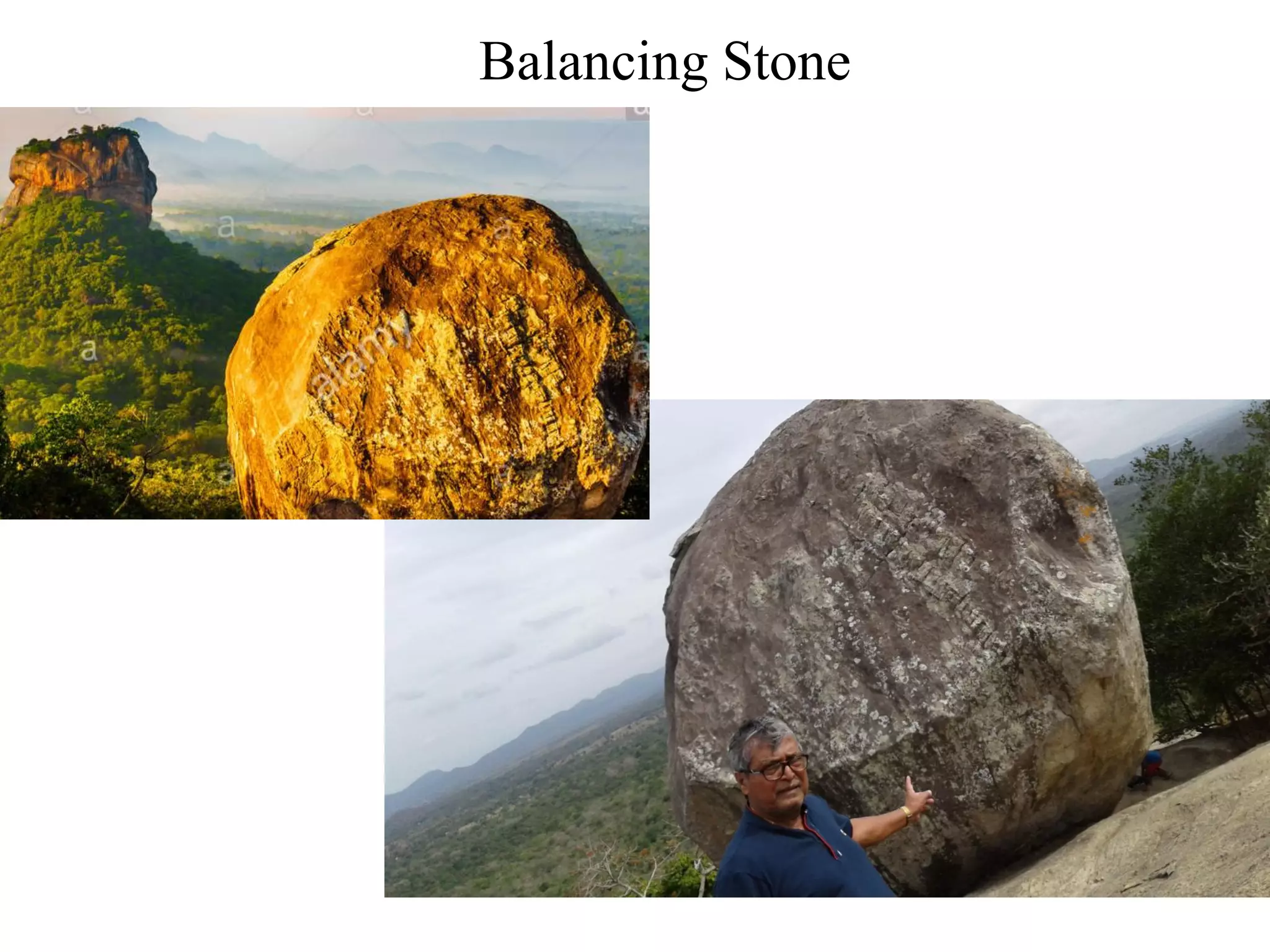
Balancing Stone
So called
balancing
stone
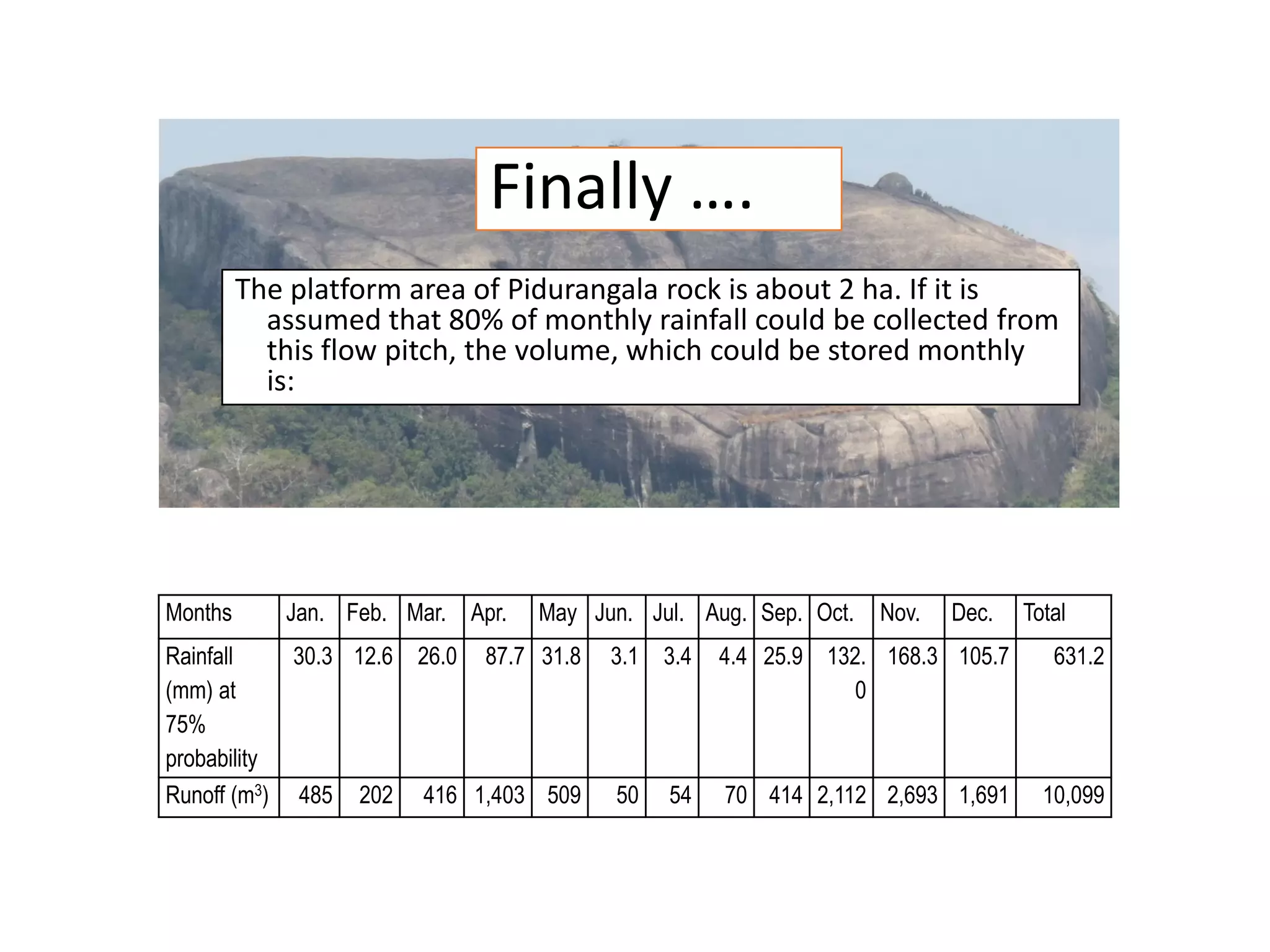
Finally ….
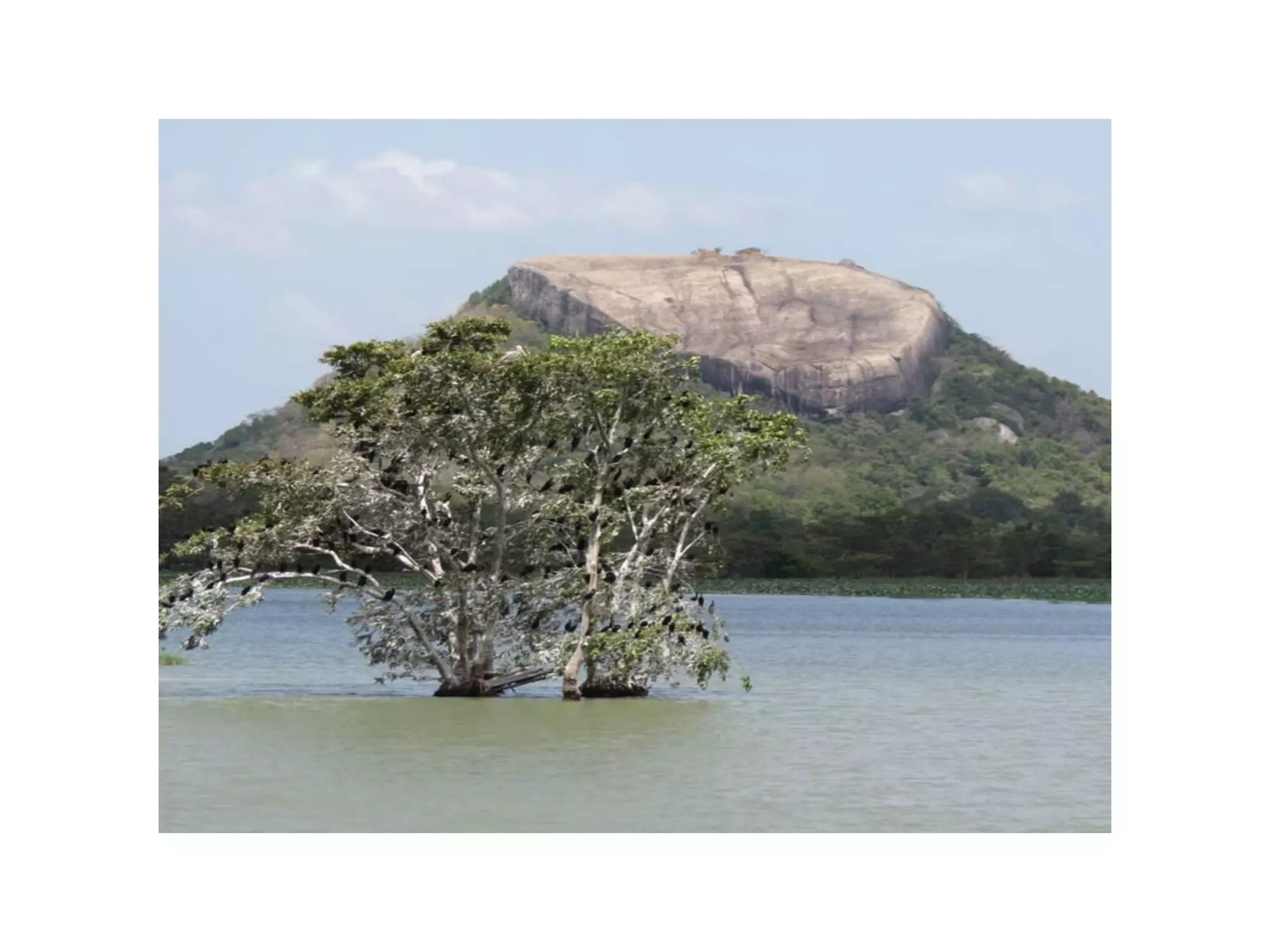
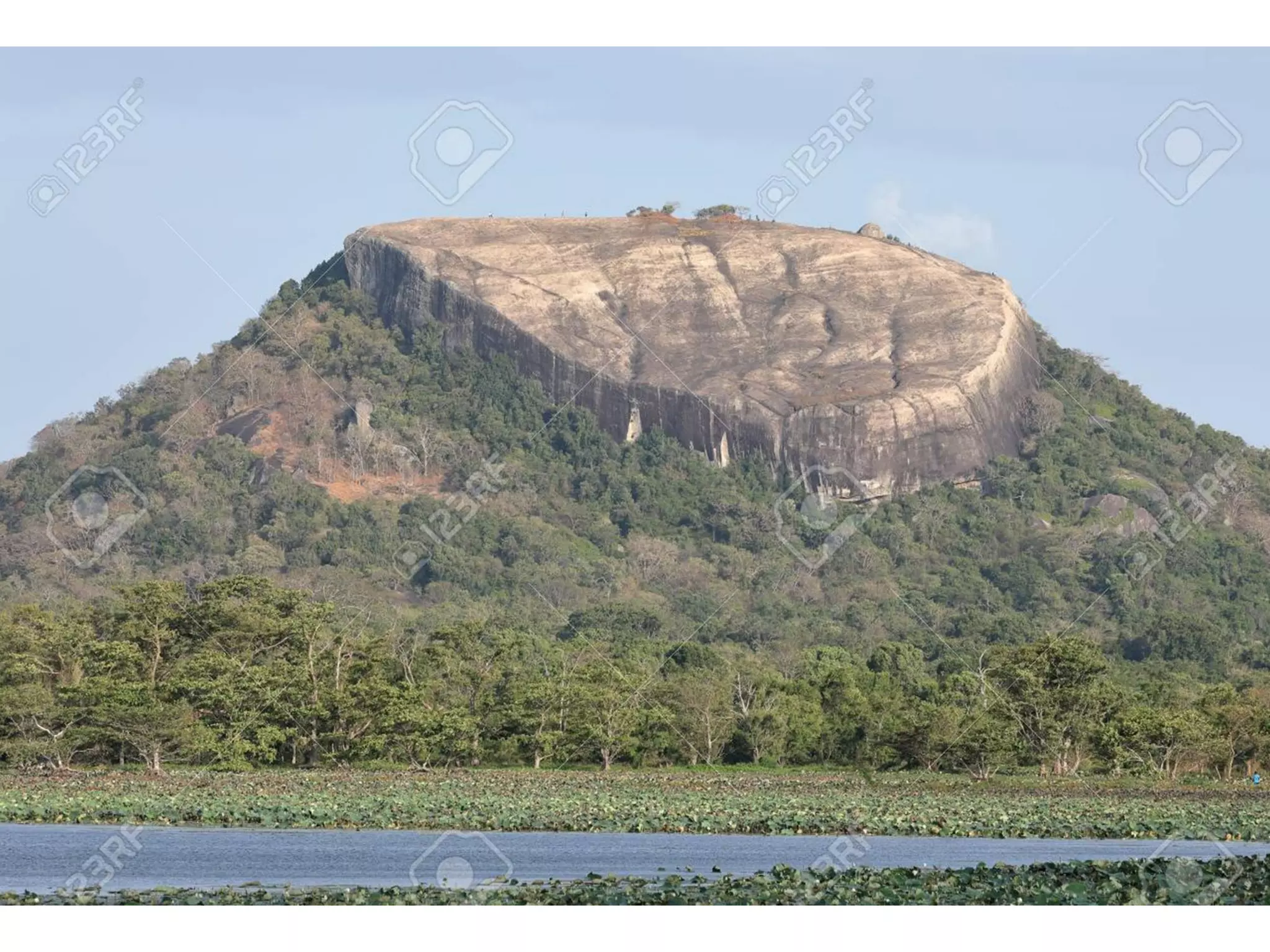
The platform area of Pidurangala rock is about 2 ha. If it is
assumed that 80% of monthly rainfall could be collected from
this flow pitch, the volume, which could be stored monthly
is:
Months Jan. Feb. Mar. Apr. May Jun. Jul. Aug. Sep. Oct. Nov. Dec. Total
Rainfall
(mm) at
75%
probability
30.3 12.6 26.0 87.7 31.8 3.1 3.4 4.4 25.9 132.
0
168.3 105.7 631.2
Runoff (m3) 485 202 416 1,403 509 50 54 70 414 2,112 2,693 1,691 10,099
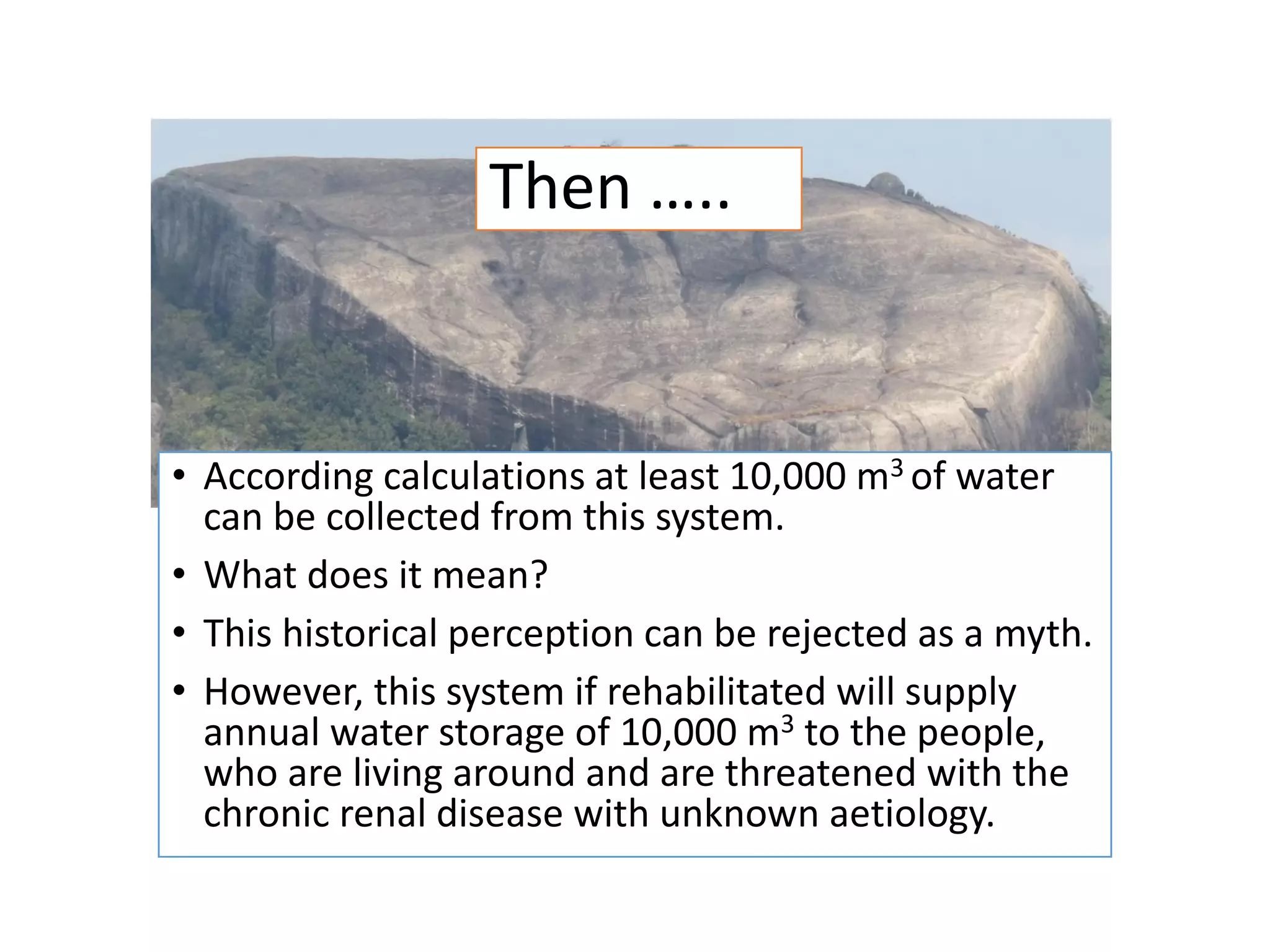
• According calculations at least 10,000 m3 of water
can be collected from this system.
• What does it mean?
• This historical perception can be rejected as a myth.
• However, this system if rehabilitated will supply
annual water storage of 10,000 m3 to the people,
who are living around and are threatened with the
chronic renal disease with unknown aetiology.
Then …..
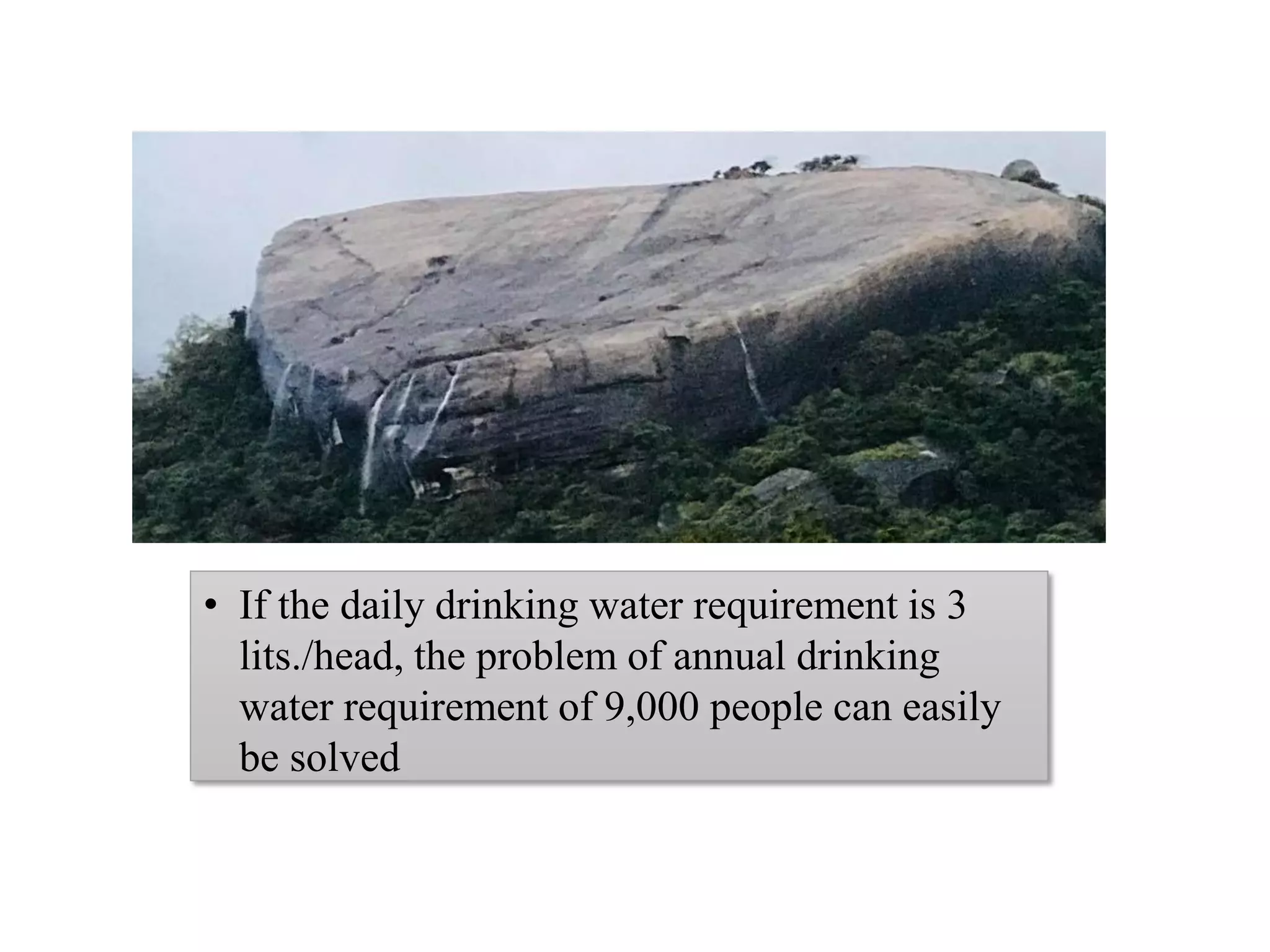
• If the daily drinking water requirement is 3
lits./head, the problem of annual drinking
water requirement of 9,000 people can easily
be solved
Indigenous Water Resources Management – not only
for Irrigation
Water resources management was of multi-
purpose:
• Food production – irrigation;
• Human needs – settlement, drinking
water, bathing, recreation, other domestic
needs;
• Rainwater harvesting systems;
• Existence of the environment (flora,
fauna, environs);
• City planning (Anuradhapura, Sigiriya)
• Parks, landscaping etc. (water springs,
ponds)
• Administrative boundaries
• Natural disaster mitigation (Flood,
drought, cyclone, epidemics)

Lesson 6 - Indigenous Knowledge Systems in Sri Lanka

  • 1.
    Indigenous Knowledge Systems lesson6 - Indigenous Irrigation systems (cascade system, water harvesting concepts) (2hrs) • P.B. Dharmasena • 0777 - 613234, 0717 – 613234 • dharmasenapb@ymail.com , dharmasenapb@gmail.com • Links to publications: https://independent.academia.edu/PunchiBandageDharmasena https://www.researchgate.net/profile/Punchi_Bandage_Dharmasena/contribu tions http://www.slideshare.net/DharmasenaPb https://www.youtube.com/channel/UC_PFqwl0OqsrxH1wTm_jZeg • Course Code: MS 5208 (02:30/00) • Saturday 3.30 pm – 5.30 pm (ZOOM)
  • 2.
    Indigenous Knowledge Systems 2.Fundamental features of Sri Lankan Agriculture; climate, Soil, Genetic resources, agro biodiversity (2 hrs) 3. History and the culture of Sri Lankan agriculture sector development (1 hr) 4. Green revolution and its impact on Sri Lankan traditional agricultural system (biodiversity deterioration, inorganic substances for pest and disease controlling, development of hybrid varieties etc.) (1hr) 5. Indigenous soil management practices (2hrs) 6. Indigenous Irrigation systems (cascade system, water harvesting concepts) (2hrs) 9. Traditional practices for, weather forecasting, plant nutrient supplementing, pest and disease control and indigenous agricultural machines and tools (2hrs) 13. Cultural dimensions of Agricultural rituals in Sri Lanka (1 hr) 14. Climate change and Indigenous Agricultural knowledge in Sri Lanka(1 hr) Total: 12 hours) List of lectures by P.B. Dharmasena
  • 3.
    Indigenous Water ResourcesManagement – not only for Irrigation Water resources management was of multi- purpose: • Food production – irrigation; • Human needs – settlement, drinking water, bathing, recreation, other domestic needs; • Rainwater harvesting systems; • Existence of the environment (flora, fauna, environs); • City planning (Anuradhapura, Sigiriya) • Parks, landscaping etc. (water springs, ponds) • Administrative boundaries • Natural disaster mitigation (Flood, drought, cyclone, epidemics)
  • 4.
    Indigenous Irrigation Systems MasterPlan of Sri Lanka River basin level Inter-river basin level Inter-reservoir level Sub-watershed level Village level Field level
  • 5.
    Prince Vijaya (543–505BC) invaded our country • Sailors entered the country from Alli Rani Harbour for trading • Vijaya also came along Western coastal boarder using NE monsoonal winds passing Alli Rani Harbour to Kudiramalai (Thammenna) • There were 10 regional kings (including the Prince Kuweni ) ruled the country at that time • Prince Vijaya killed most of them with the support of Prince Kuweni • That was the end of 10 kingdoms of Sri Lanka Alli Rani Harbour Kudiramalai
  • 6.
    Kevesastha (Northern) Upulwangiri (KalaOya) Rakungiri (Malwathu Oya) Mahagiri (Samanala mountain area) – Kelani, Kalu, Walawe, Mahaweli Chalaka (Mi Oya) Neelagiri (Modaragam Aru) Kawasthalabha (Yan oya) Dhumaka Kaddeera (Deduru Oya) Indra (Maduru Oya, Mundeni Aru, Gal oya) Agni (Kumbukkan Oya, Menik Ganga, Kirindi Oya River Basin Level Water Governance (3,000 BC)
  • 7.
    Sharing water resourcesin the past (600 BC – 1200 AD) • Dambulu Oya - Malwathu Oya diversion canal (860 AD) • Malwathu Oya - Kanadara Oya diversion canal (860 AD) • Yoda Ela - Nachchduwa feeder canal (540 AD) Mahakanadarawa Nachchaduwa Kalawewa- Balaluwewa Dambulu oya Malwathu oya Kanadara oya Kala Oya Inter-river basin level
  • 8.
    Manewa cascade Mahakanumulla cascade •Single bank canal • It runs along contour • Water is collected from upstream • Water is released to both sides • Canal moves along tank upstream • Tank cascade systems are fed Kalawewa-Thisawewa Giant Canal Inter-river basin level
  • 9.
    – Kalawewa -Thisawewa Yodha Ela (470 AD) – Nachchaduwa - Nuwarawewa feeder canal (290 AD) – Balaluwewa - Siyambalangamuwa feeder canal (290 AD) – Basawakkulama - Maha Vilachchiya feeder canal (470 AD) Kalawewa-Balaluwewa Thisawewa Siyambalangamuwa Nachchaduwa Nuwarawewa Mahavilachchiya Basawakkulama Malwathu oya Thalawa oya Kala oya Sharing water resources in the past (600 BC – 1200 AD) Inter-reservoir level
  • 10.
    Anicuts to divertwater in Deduruoya Basin Stone anicuts (Ex. Sukara Nijjara Amuna)
  • 11.
    Anicuts to divertwater in Deduruoya Basin Timber anicuts (Ex. Kotta Badda Amuna) – King Parakramabahu-1
  • 12.
    Sukara Nijjara Amuna– King Parakramabahu-1
  • 16.
    Thekkama Amuna – Malwathuoyaby King Dhatusena (459-477 AD)
  • 17.
    How did they locateancient reservoirs? Kantale Huruluwewa Minneriya Giritale Parakrama Samudra Maduruoya Mapakadawewa Udawalawa Kalawewa & Balaluwewa 150 m contour
  • 18.
    Network of tanks andstreams No flood and no drought
  • 19.
    Nachchaduwa Kanadarawewa Vilachchiya Kalawewa and Balaluwewa Huruluwewa Main factors: 1.Morphology (landscape) • Lower elevation, • Moderate undulation 2. Rainfall • Bimodality • ~1500 mm/ year 3. Soil and geology • Regolith aquifers • Low infiltration • RBE – LHG Network of tanks and streams in the form of cascades
  • 20.
  • 21.
  • 22.
  • 23.
  • 24.
    Tank cascades are foundin: Northern; North Central; North Western; Uva; and Southern Provinces
  • 25.
    Tank cascades are foundin: Mullaitivu; Vavuniya; Anuradhapura; Trincomalee; Puttalam; Kurunegala; Hambantota; and Monaragala
  • 26.
    Tank cascades are foundat the elevation range of 100-500m amsl
  • 28.
    DL 1b DL1e DL 1f DL 1c DL 1b DL 5 Agro-ecological regions: DL 1b, DL 1d, DL 1e, DL 1f, DL 5 DL 1d
  • 29.
    North and North Centralcascade Zone and North Western cascade Zone are located in the Wanni Complex South and South Eastern Cascade Zone is located in the Vijayan Complex
  • 30.
    Tank cascades are foundmainly on RBE and LHG soils and some on RYP and IBL
  • 31.
    Tank cascades are foundmainly between 800 – 2000 mm isohyets of annual rainfall
  • 32.
    Tank clusters orcascades • A ‘cascade’ is a connected series of tanks organized within a micro- catchment (meso catchment) of the dry zone landscape, storing, conveying and utilizing water from an ephemeral rivulet’. (Madduma Bandara, 1985)
  • 33.
    Cascade defines surfacewater movement alone • Cascade ecology (Ecology is the study of the interactions of living organisms with one another and with their physical environment). • Land (extent covered by cascade catchment) • land use (specific land use systems with natural and agricultural land uses and commons), • Soil properties (changed soil properties due to cultivation, water table and groundwater movement), • Flora (different floral communities and ecosystems), • Fauna (different faunal communities and ecosystems), • Groundwater (water table fluctuation and groundwater movement with chain of surface storages), • Human activities
  • 34.
    New definition ofthe tank cascade system • An ecosystem, where water and land resources are organized within the micro- catchments of the dry zone landscape, providing basic needs to human, floral and faunal communities through water, soil, air and vegetation with human intervention on sustainable basis’ – Dharmasena, 2019
  • 35.
  • 36.
  • 37.
  • 38.
    Traditional Agricultural Practicesin adaptation to climate change • ‘Bethma’ practice during drought periods • It is a practice that temporarily redistributes plots of land among shareholders (paddy landowners) in part of the command area (territory) of a tank (reservoir) during drought periods • ‘Pangu’ method – Regular maintenance to avoid disasters • The tank had to be maintained properly to avoid breach, leak, and excess seepage. Repair and desiltation of tanks and cleaning of canals during dry periods are shared tasks assigned to each farmer proportionately to land ownership. • ‘Kekulama’ if the low rainfall maha is expected • Farmers advance the cultivation time using early seasonal rains whenever they feel that tanks would not get enough water to cultivate the command area. They have the experience that if September (2nd inter-monsoonal) rains are high, the total seasonal rainfall is not adequate to fill the tank. • ‘Thawalu Govithena’ during extremely dry situation • Tank bed cultivation using little rains constructing a main soil bund between deep phase and shallow phase of the tank bed
  • 39.
    Four strata oftank water body Madakaluwa – dead storage area Wewpitiya – deep water area Waangilma – area between FSL and HFL Wewthaula – shallow water area Master bund in Thawulu Govithena to prevent tank sedimentation
  • 40.
  • 42.
  • 43.
    ‘Karahan kote’ fordistribution of irrigation water Q1 for A1 Q2 for A2 Q3 for A3 Q = Q1 + Q2 + Q3
  • 44.
    Giritale Tank -the ancient sluice to which the controlling gateway under the water surface still remains lost
  • 45.
  • 46.
    Rambakan Oya OldIrrigation Canal
  • 47.
    An interlocking jointof the granite ruins of the ancient sluice gate
  • 50.
  • 51.
    Ibbankatuwa pre-historic burialsite Sri Lanka has a recorded history since 543 B.C. Although records are not found of civilizations before 543 B.C., historical facts reveal that a civilization existed even long before from Rawana Times. It's believed that an Expelled prince Vijaya to be the first Aryan King of Sri Lanka. Since then many Kings Ruled Sri Lanka Till 1815.
  • 52.
    Ancient Sluices 1 2 3 6th centuryBC 3rd century BC 459 – 477 AD
  • 55.
    The spill ways Source: “ Ancient Ceylon”, H. Parker, 1910”
  • 56.
    The village tanksluices Source : “Wewa, U.B. Awesadahamy, 2003”
  • 57.
    Ridee Bandille • Asystem of diverting water from perennial water stream without building a dam across the water way.
  • 58.
  • 60.
  • 63.
    Sigiriya kings must hadbeen in need of clean drinking water
  • 64.
    Three water conveyance systems •Open water conveyance canals • Sealed subsurface clay pipes • Sealed subterranean conveyance canal
  • 65.
    Octagonal pond Water garden 1– Interconnected garden complex for bathing Water garden 2 – Fountain gardens Water garden 3 - Royal water palaces surrounded by moats Water garden 3 From Western Entrance
  • 66.
    Altitude at thelowest point of Pidurangala rock top: 324 m Altitude at the water spring point of Sigiriya: 198 m Elevation difference: 126 m Direct Distance: 1225 m Smooth slope path distance:1612 m
  • 67.
    Elevations: Sigiriya tank: 204m Fountain garden: 204 m Octagonal pond: 212 m Head difference: 8m (26 ft) Atapattam Pokuna: 212 m Fountain ponds 204 m Octagonal pond relatively at a higher level
  • 69.
    Evidence of a hugeexplosion Not a natural decay
  • 70.
  • 81.
  • 82.
  • 83.
    Finally …. The platformarea of Pidurangala rock is about 2 ha. If it is assumed that 80% of monthly rainfall could be collected from this flow pitch, the volume, which could be stored monthly is: Months Jan. Feb. Mar. Apr. May Jun. Jul. Aug. Sep. Oct. Nov. Dec. Total Rainfall (mm) at 75% probability 30.3 12.6 26.0 87.7 31.8 3.1 3.4 4.4 25.9 132. 0 168.3 105.7 631.2 Runoff (m3) 485 202 416 1,403 509 50 54 70 414 2,112 2,693 1,691 10,099
  • 84.
    • According calculationsat least 10,000 m3 of water can be collected from this system. • What does it mean? • This historical perception can be rejected as a myth. • However, this system if rehabilitated will supply annual water storage of 10,000 m3 to the people, who are living around and are threatened with the chronic renal disease with unknown aetiology. Then …..
  • 85.
    • If thedaily drinking water requirement is 3 lits./head, the problem of annual drinking water requirement of 9,000 people can easily be solved
  • 86.
    Indigenous Water ResourcesManagement – not only for Irrigation Water resources management was of multi- purpose: • Food production – irrigation; • Human needs – settlement, drinking water, bathing, recreation, other domestic needs; • Rainwater harvesting systems; • Existence of the environment (flora, fauna, environs); • City planning (Anuradhapura, Sigiriya) • Parks, landscaping etc. (water springs, ponds) • Administrative boundaries • Natural disaster mitigation (Flood, drought, cyclone, epidemics)