Download as PDF, PPTX


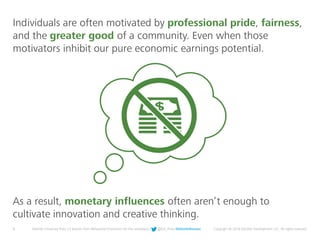
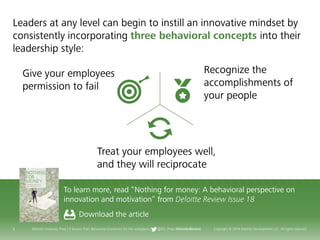

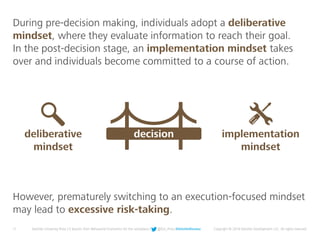
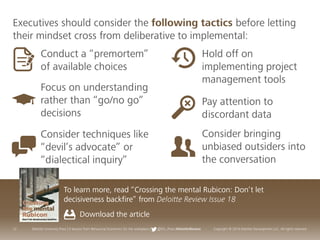

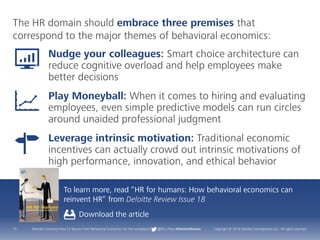

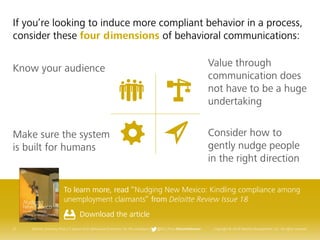

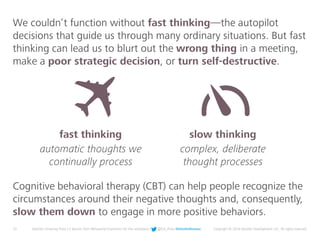
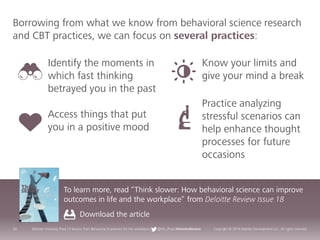
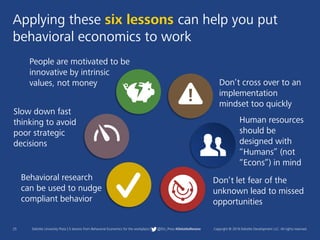





The document outlines five key lessons from behavioral economics that can enhance workplace practices, focusing on intrinsic motivation over monetary incentives, the importance of decision-making processes, and designing HR practices that reflect human psychology. It emphasizes the significance of slowing down fast thinking to avoid poor decisions and the role of effective communication in nudging compliant behavior. Additionally, it highlights the need for organizations to challenge biases and adapt to innovative practices, particularly in the context of emerging technologies like additive manufacturing.


