FETAL
DEVELOPMENT
• Beginning from the ninth month of gestation, the
developing human is called a fetus until birth.
• On the ninth week of gestation, external features are
evident.
• The fetus is capable of moving its, arms, legs, and
head.
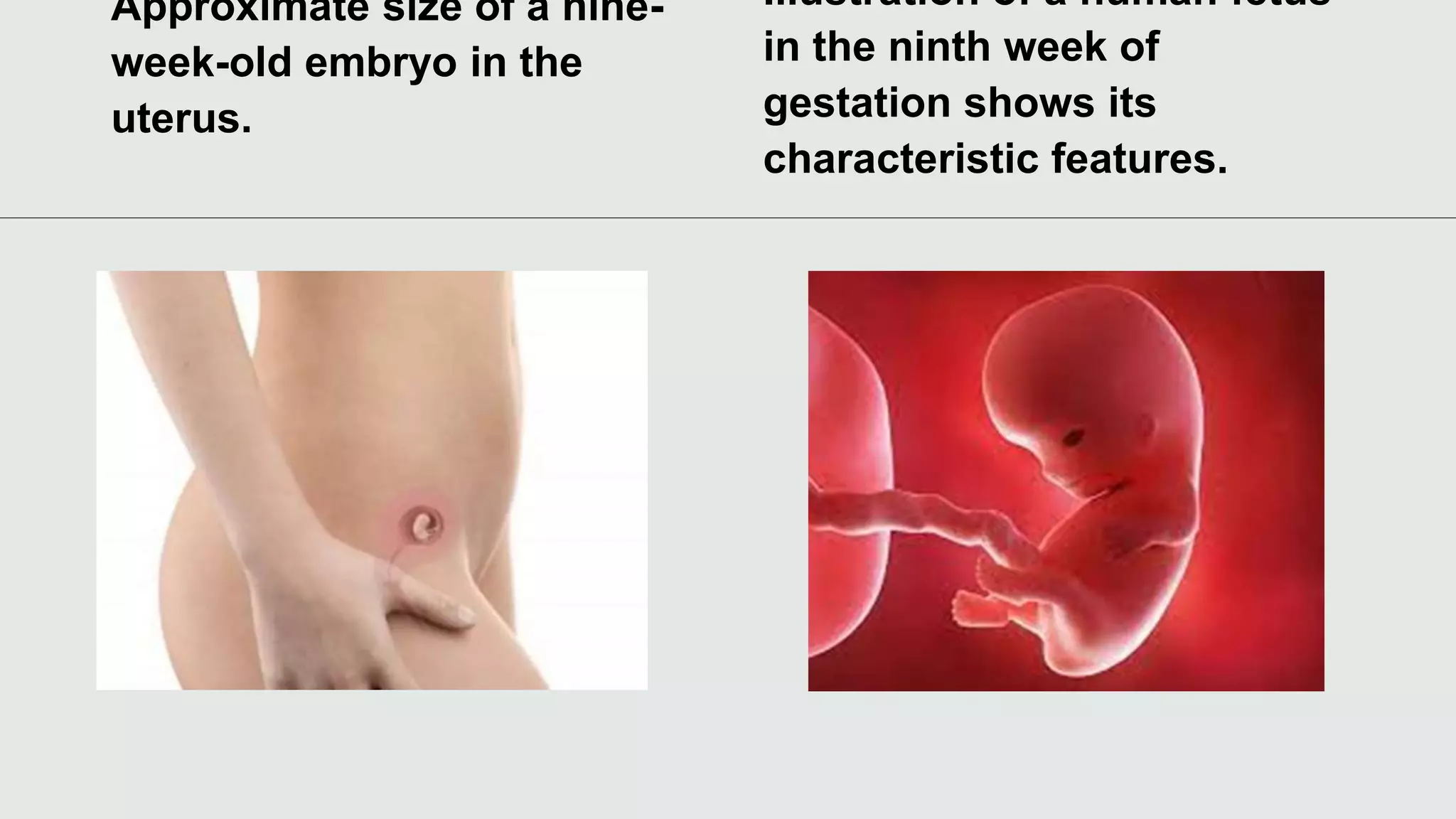
Approximate size of a nine-
week-old embryo in the
uterus.
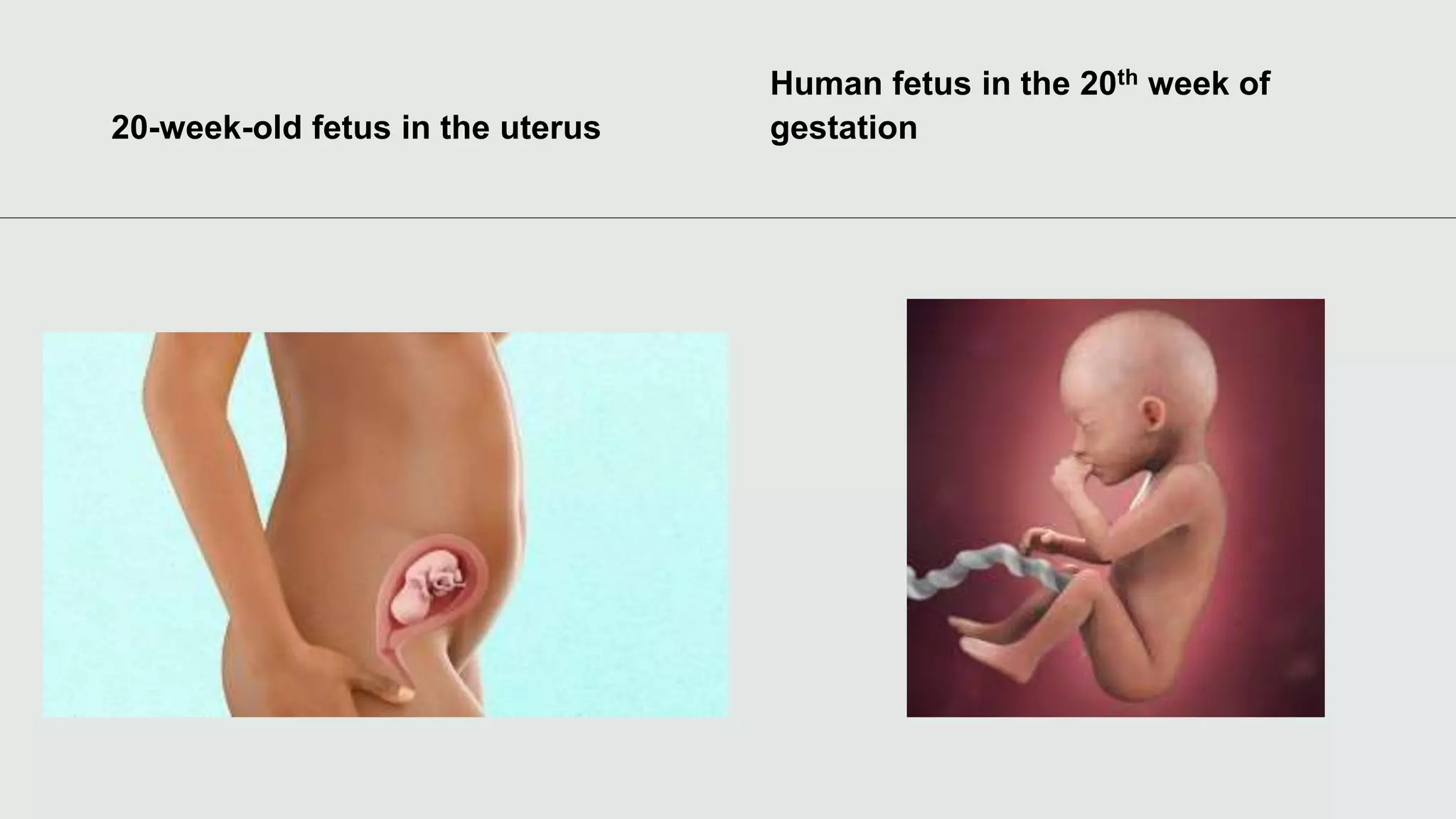
Illustration of a human fetus
in the ninth week of
gestation shows its
characteristic features.
In the 10th to 12th week of gestation, the size of the fetus has more
than doubled. External human features are now more refined.
Approximate size of a 12-week-old
embryo in the uterus Human fetus in the 12th
week of
gestation
In the 13th week to 16th week of gestation, the head of the fetus
becomes more proportion to its body. Facial expressions can be
observed.
16th week old fetus in the uterus
Fetus in the 16th week of
gestation
• In the 17th to 20th week of gestation, the various
organs in the body have reached its relative sizes.
• The mother often observe fetal movements,
especially the kicking of the fetal limbs.
• The fetus may suck its thumb for preparation for
breastfeeding.
• Fine, white hair called lanugo starts to cover the
body of the fetus. It sheds until it disappears
completely.
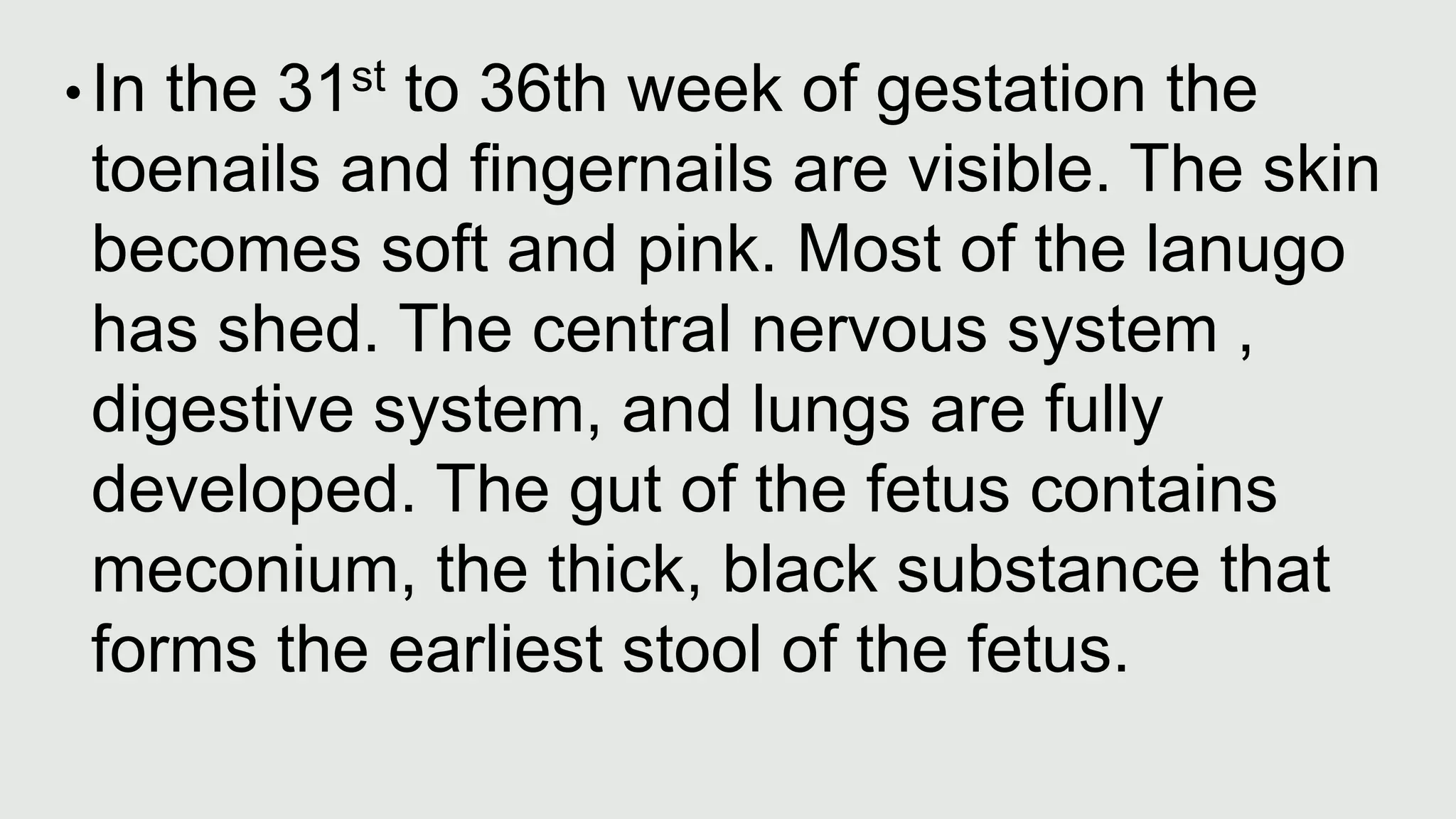
20-week-old fetus in the uterus
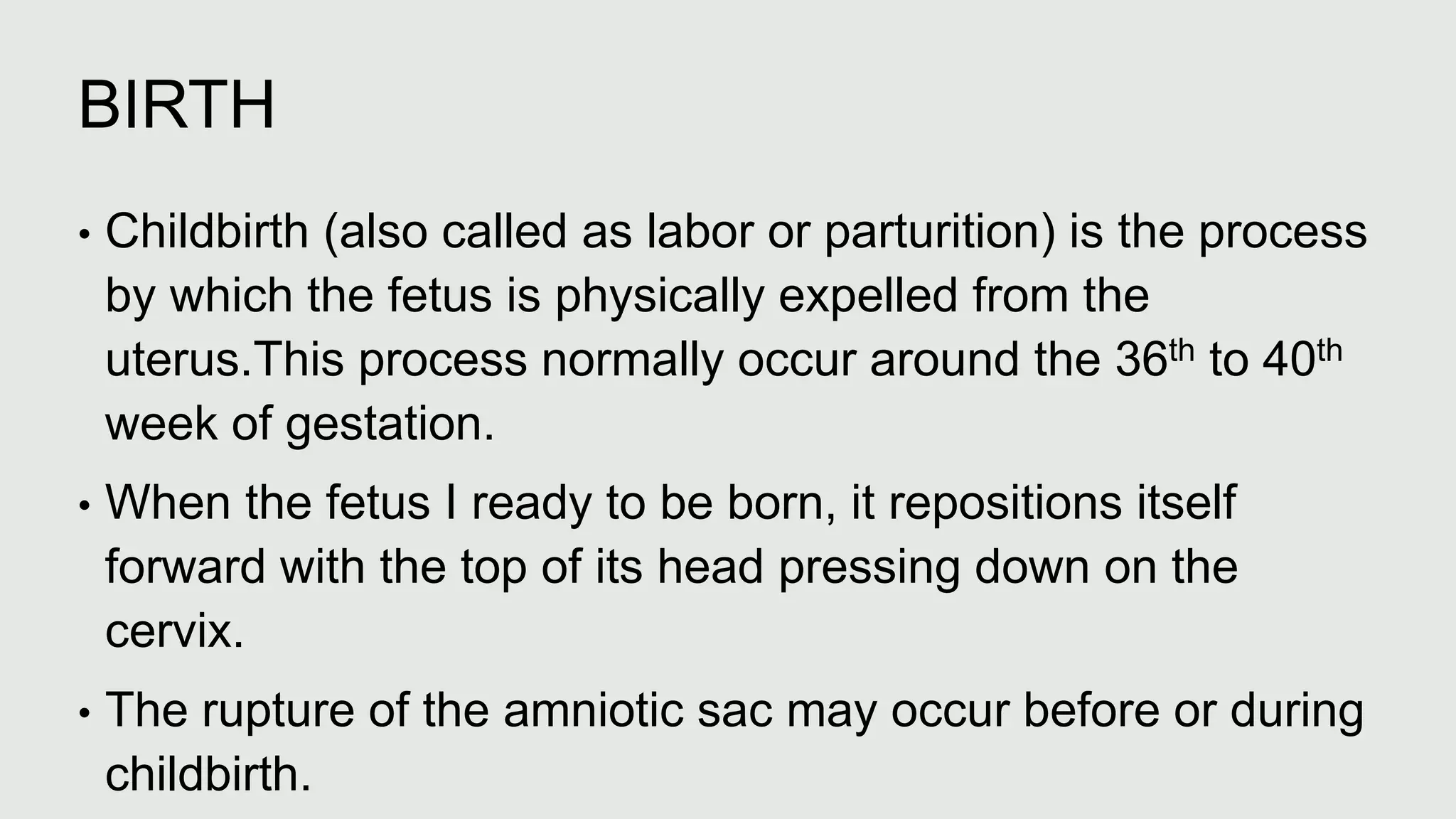
Human fetus in the 20th week of
gestation
By the 20th to 25th week of gestation, the eyelids and the
eyebrows of the fetus begin to form their definitive shape.
25-week-old fetus in the uterus
Human fetus in the 25th week of
gestation
In the 26th to 30th week of gestation, the fetus undergoes weight
gain and takes up most of the space in the uterus.
30-week-old fetus in the
uterus
Human fetus 30th week of
gestation
• In the 31st to 36th week of gestation the
toenails and fingernails are visible. The skin
becomes soft and pink. Most of the lanugo
has shed. The central nervous system ,
digestive system, and lungs are fully
developed. The gut of the fetus contains
meconium, the thick, black substance that
forms the earliest stool of the fetus.
36-week-old fetus in the
uterus Human fetus 36th week of
gestation
BIRTH
• Childbirth (also called as labor or parturition) is the process
by which the fetus is physically expelled from the
uterus.This process normally occur around the 36th to 40th
week of gestation.
• When the fetus I ready to be born, it repositions itself
forward with the top of its head pressing down on the
cervix.
• The rupture of the amniotic sac may occur before or during
childbirth.
3 distinct stages of labor
• DILATION
• EXPULSION
• AFTERBIRTH
DILATION
• The firs stage of labor begins with the onset of
regular contractions of the uterus and concludes
with the full dilation of the cervix. For birth to
progress, the cervix must soften, efface, and
dilate. Considerable evidence shows that the
hormone relaxin ( together with the
prostaglandin), which are released by the ovaries
and placenta relaxes and soften the tissues of the
EXPULSION
• When the cervix is completely dilated, the expulsion
stage commences. During the onset of this stage,
the mother experience overwhelming, irresistible
urge to push. This pushing action causes the fetus
to move down the birth canal, which is a channel
formed by the cervix, vagina, and vulva. This stage
commonly lasts for about 30 to 60 minutes, ending
when the fetus completely passes the birth canal.
AFTERBIRTH
• The last stage of labor is characterized by the
expulsion of the placenta and other fetal
membranes from the uterus. About 15 to 30
minutes after the delivery of the infant, continuous
uterine contraction cause the placenta and its
constituent membranes to be disengaged from the
maternal decidua and to be expelled out of the
• Some childbirth cases are risky. If the mother, fetus, or
both are in danger and vaginal birth is not an option, a
cesarean section may be performed.
• Cesarean section is a surgical procedure in which
incisions are made through the mothers’ uterus to get
the offspring out.
The following are some of the conditions that may lead to
a cesarean section:
• Abnormal position of the fetus
• Abnormal fetal heart rate
• Big fetus
• Complicating medical conditions of the mother such as
diabetes and high blood pressure
• Previous cesarean delivery

FETAL-DEVELOPMENT.pptx

  • 1.
  • 2.
    • Beginning fromthe ninth month of gestation, the developing human is called a fetus until birth. • On the ninth week of gestation, external features are evident. • The fetus is capable of moving its, arms, legs, and head.
  • 3.
    Approximate size ofa nine- week-old embryo in the uterus. Illustration of a human fetus in the ninth week of gestation shows its characteristic features.
  • 4.
    In the 10thto 12th week of gestation, the size of the fetus has more than doubled. External human features are now more refined. Approximate size of a 12-week-old embryo in the uterus Human fetus in the 12th week of gestation
  • 5.
    In the 13thweek to 16th week of gestation, the head of the fetus becomes more proportion to its body. Facial expressions can be observed. 16th week old fetus in the uterus Fetus in the 16th week of gestation
  • 6.
    • In the17th to 20th week of gestation, the various organs in the body have reached its relative sizes. • The mother often observe fetal movements, especially the kicking of the fetal limbs. • The fetus may suck its thumb for preparation for breastfeeding. • Fine, white hair called lanugo starts to cover the body of the fetus. It sheds until it disappears completely.
  • 7.
    20-week-old fetus inthe uterus Human fetus in the 20th week of gestation
  • 8.
    By the 20thto 25th week of gestation, the eyelids and the eyebrows of the fetus begin to form their definitive shape. 25-week-old fetus in the uterus Human fetus in the 25th week of gestation
  • 9.
    In the 26thto 30th week of gestation, the fetus undergoes weight gain and takes up most of the space in the uterus. 30-week-old fetus in the uterus Human fetus 30th week of gestation
  • 10.
    • In the31st to 36th week of gestation the toenails and fingernails are visible. The skin becomes soft and pink. Most of the lanugo has shed. The central nervous system , digestive system, and lungs are fully developed. The gut of the fetus contains meconium, the thick, black substance that forms the earliest stool of the fetus.
  • 11.
    36-week-old fetus inthe uterus Human fetus 36th week of gestation
  • 12.
    BIRTH • Childbirth (alsocalled as labor or parturition) is the process by which the fetus is physically expelled from the uterus.This process normally occur around the 36th to 40th week of gestation. • When the fetus I ready to be born, it repositions itself forward with the top of its head pressing down on the cervix. • The rupture of the amniotic sac may occur before or during childbirth.
  • 13.
    3 distinct stagesof labor • DILATION • EXPULSION • AFTERBIRTH
  • 14.
    DILATION • The firsstage of labor begins with the onset of regular contractions of the uterus and concludes with the full dilation of the cervix. For birth to progress, the cervix must soften, efface, and dilate. Considerable evidence shows that the hormone relaxin ( together with the prostaglandin), which are released by the ovaries and placenta relaxes and soften the tissues of the
  • 15.
    EXPULSION • When thecervix is completely dilated, the expulsion stage commences. During the onset of this stage, the mother experience overwhelming, irresistible urge to push. This pushing action causes the fetus to move down the birth canal, which is a channel formed by the cervix, vagina, and vulva. This stage commonly lasts for about 30 to 60 minutes, ending when the fetus completely passes the birth canal.
  • 16.
    AFTERBIRTH • The laststage of labor is characterized by the expulsion of the placenta and other fetal membranes from the uterus. About 15 to 30 minutes after the delivery of the infant, continuous uterine contraction cause the placenta and its constituent membranes to be disengaged from the maternal decidua and to be expelled out of the
  • 17.
    • Some childbirthcases are risky. If the mother, fetus, or both are in danger and vaginal birth is not an option, a cesarean section may be performed. • Cesarean section is a surgical procedure in which incisions are made through the mothers’ uterus to get the offspring out.
  • 18.
    The following aresome of the conditions that may lead to a cesarean section: • Abnormal position of the fetus • Abnormal fetal heart rate • Big fetus • Complicating medical conditions of the mother such as diabetes and high blood pressure • Previous cesarean delivery