Name- Aarushi Bhatt
PGDM-Marketing
Roll No.- 01
HISTORY
 KIT KAT is now in its 81st year. It was launched in the year 1935 in United Kingdom.
 First manufacture of the four-finger wafer in York. This is then sold in London and the South
East of England as Rowntree's Chocolate Crisp.
 Kit Kat is a global brand name that is stranger to none. Nestle reports that 650 bars of Kit Kat
are consumed every second globally.
 In 2014, Kit Kat was listed as one of Time’s “13 Most Influential Candy Bars of All Time”.
 Kit Kat is also the number one best-selling chocolate in Japan, and the only non-American
brand in America’s list of top 5 chocolate favorites.
The original four-finger bar was
developed after a worker at
Rowntree’s York Factory put a
suggestion in a
recommendation box for a
snack that “a man could take to
work in his pack”. The bar
launched on 29 August 1935,
under the title of Rowntree’s
Chocolate Crisp (priced at 2d),
and was sold in London and
throughout Southern England.
The colour scheme and first
flavour variation to the brand
came in 1942, owing to World
War II, when food shortages
prompted an alteration in the
recipe. The flavour of Kit Kat
was changed to dark chocolate;
the packaging abandoned its
Chocolate Crisp title, and was
adorned in blue. After the war
the title was altered to Kit Kat
and resumed its original milk
recipe and red packaging.
Following on from its success in
the United Kingdom, in the
1940s Kit Kat was exported to
Canada, South Africa, Ireland,
Australia, and New Zealand
In June 1988 Nestlé acquired Kit
Kat through the purchase of
Rowntree’s. This gave Nestlé
global control over the brand,
production and distribution
increased with new facilities in
Japan and manufacturing
operations set up in Malaysia,
India and China.
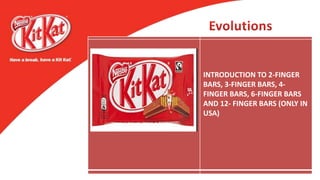
INTRODUCTION TO 2-FINGER
BARS, 3-FINGER BARS, 4-
FINGER BARS, 6-FINGER BARS
AND 12- FINGER BARS (ONLY IN
USA)
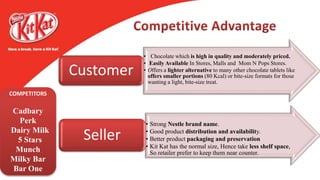
• Chocolate which is high in quality and moderately priced.
• Easily Available In Stores, Malls and Mom N Pops Stores.
• Offers a lighter alternative to many other chocolate tablets like
offers smaller portions (80 Kcal) or bite-size formats for those
wanting a light, bite-size treat.
Customer
• Strong Nestle brand name.
• Good product distribution and availability.
• Better product packaging and preservation
• Kit Kat has the normal size, Hence take less shelf space,
So retailer prefer to keep them near counter.
Seller
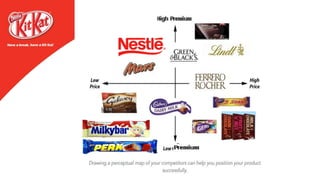
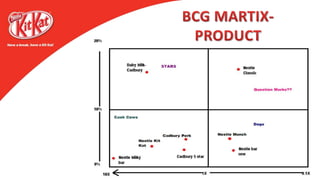
COMPETITORS
Cadbary
Perk
Dairy Milk
5 Stars
Munch
Milky Bar
Bar One
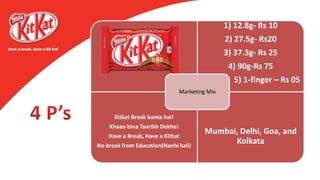
1) 12.8g- Rs 10
2) 27.5g- Rs20
3) 37.3g- Rs 25
4) 90g-Rs 75
5) 1-finger – Rs 05
Kitkat Break banta hai!
Khaao bina Taarikh Dekhe!
Have a Break, Have a Kitkat
No break from Education(Nanhi kali)
Mumbai, Delhi, Goa, and
Kolkata
Marketing Mix
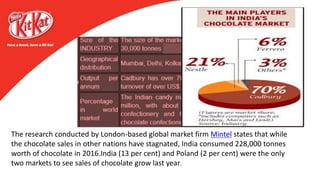
The research conducted by London-based global market firm Mintel states that while
the chocolate sales in other nations have stagnated, India consumed 228,000 tonnes
worth of chocolate in 2016.India (13 per cent) and Poland (2 per cent) were the only
two markets to see sales of chocolate grow last year.
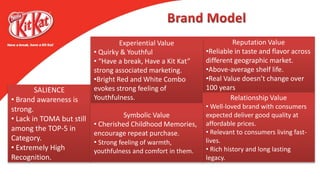
SALIENCE
• Brand awareness is
strong.
• Lack in TOMA but still
among the TOP-5 in
Category.
• Extremely High
Recognition.
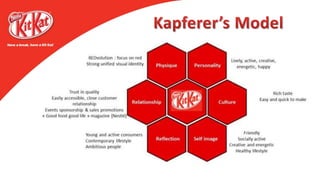
Reputation Value
•Reliable in taste and flavor across
different geographic market.
•Above-average shelf life.
•Real Value doesn’t change over
100 years
Experiential Value
• Quirky & Youthful
• “Have a break, Have a Kit Kat”
strong associated marketing.
•Bright Red and White Combo
evokes strong feeling of
Youthfulness. Relationship Value
• Well-loved brand with consumers
expected deliver good quality at
affordable prices.
• Relevant to consumers living fast-
lives.
• Rich history and long lasting
legacy.
Symbolic Value
• Cherished Childhood Memories,
encourage repeat purchase.
• Strong feeling of warmth,
youthfulness and comfort in them.
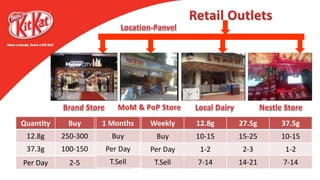
3 Months Single Pack
Buy 350 -450 500-600
Sold 250-300 450-500
Per Day 2-5 6-8
Quantity Buy Per Day
12.8g 250-300 9-10
37.3g 100-150 2-4
1 Months Pack-12.8g
Buy 5-8
Per Day 1-2
T.Sell 30-60
1 Year 37.5 g
Buy 30
Per Week 1-2
T.Sell 20-25
Weekly 12.8g 27.5g 37.5g
Buy 10-15 15-25 10-15
Per Day 1-2 2-3 1-2
T.Sell 7-14 14-21 7-14
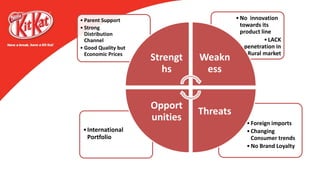
•Foreign imports
•Changing
Consumer trends
•No Brand Loyalty
•International
Portfolio
•No innovation
towards its
product line
•LACK
penetration in
Rural market
• Parent Support
• Strong
Distribution
Channel
• Good Quality but
Economic Prices
Strengt
hs
Weakn
ess
Threats
Opport
unities
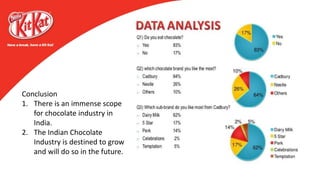
Conclusion
1. There is an immense scope
for chocolate industry in
India.
2. The Indian Chocolate
Industry is destined to grow
and will do so in the future.
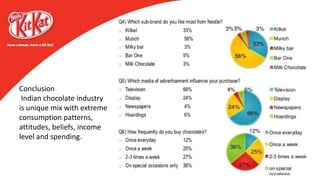
Conclusion
Indian chocolate industry
is unique mix with extreme
consumption patterns,
attitudes, beliefs, income
level and spending.
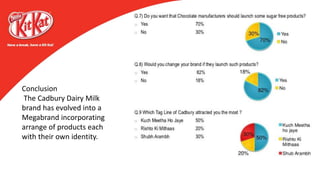
Conclusion
The Cadbury Dairy Milk
brand has evolved into a
Megabrand incorporating
arrange of products each
with their own identity.
KITKAT-Nestle

KITKAT-Nestle

  • 1.
    Name- Aarushi Bhatt PGDM-Marketing RollNo.- 01 HISTORY  KIT KAT is now in its 81st year. It was launched in the year 1935 in United Kingdom.  First manufacture of the four-finger wafer in York. This is then sold in London and the South East of England as Rowntree's Chocolate Crisp.  Kit Kat is a global brand name that is stranger to none. Nestle reports that 650 bars of Kit Kat are consumed every second globally.  In 2014, Kit Kat was listed as one of Time’s “13 Most Influential Candy Bars of All Time”.  Kit Kat is also the number one best-selling chocolate in Japan, and the only non-American brand in America’s list of top 5 chocolate favorites.
  • 2.
    The original four-fingerbar was developed after a worker at Rowntree’s York Factory put a suggestion in a recommendation box for a snack that “a man could take to work in his pack”. The bar launched on 29 August 1935, under the title of Rowntree’s Chocolate Crisp (priced at 2d), and was sold in London and throughout Southern England. The colour scheme and first flavour variation to the brand came in 1942, owing to World War II, when food shortages prompted an alteration in the recipe. The flavour of Kit Kat was changed to dark chocolate; the packaging abandoned its Chocolate Crisp title, and was adorned in blue. After the war the title was altered to Kit Kat and resumed its original milk recipe and red packaging. Following on from its success in the United Kingdom, in the 1940s Kit Kat was exported to Canada, South Africa, Ireland, Australia, and New Zealand In June 1988 Nestlé acquired Kit Kat through the purchase of Rowntree’s. This gave Nestlé global control over the brand, production and distribution increased with new facilities in Japan and manufacturing operations set up in Malaysia, India and China. INTRODUCTION TO 2-FINGER BARS, 3-FINGER BARS, 4- FINGER BARS, 6-FINGER BARS AND 12- FINGER BARS (ONLY IN USA)
  • 3.
    • Chocolate whichis high in quality and moderately priced. • Easily Available In Stores, Malls and Mom N Pops Stores. • Offers a lighter alternative to many other chocolate tablets like offers smaller portions (80 Kcal) or bite-size formats for those wanting a light, bite-size treat. Customer • Strong Nestle brand name. • Good product distribution and availability. • Better product packaging and preservation • Kit Kat has the normal size, Hence take less shelf space, So retailer prefer to keep them near counter. Seller COMPETITORS Cadbary Perk Dairy Milk 5 Stars Munch Milky Bar Bar One
  • 4.
    1) 12.8g- Rs10 2) 27.5g- Rs20 3) 37.3g- Rs 25 4) 90g-Rs 75 5) 1-finger – Rs 05 Kitkat Break banta hai! Khaao bina Taarikh Dekhe! Have a Break, Have a Kitkat No break from Education(Nanhi kali) Mumbai, Delhi, Goa, and Kolkata Marketing Mix
  • 6.
    The research conductedby London-based global market firm Mintel states that while the chocolate sales in other nations have stagnated, India consumed 228,000 tonnes worth of chocolate in 2016.India (13 per cent) and Poland (2 per cent) were the only two markets to see sales of chocolate grow last year.
  • 7.
    SALIENCE • Brand awarenessis strong. • Lack in TOMA but still among the TOP-5 in Category. • Extremely High Recognition. Reputation Value •Reliable in taste and flavor across different geographic market. •Above-average shelf life. •Real Value doesn’t change over 100 years Experiential Value • Quirky & Youthful • “Have a break, Have a Kit Kat” strong associated marketing. •Bright Red and White Combo evokes strong feeling of Youthfulness. Relationship Value • Well-loved brand with consumers expected deliver good quality at affordable prices. • Relevant to consumers living fast- lives. • Rich history and long lasting legacy. Symbolic Value • Cherished Childhood Memories, encourage repeat purchase. • Strong feeling of warmth, youthfulness and comfort in them.
  • 10.
    3 Months SinglePack Buy 350 -450 500-600 Sold 250-300 450-500 Per Day 2-5 6-8 Quantity Buy Per Day 12.8g 250-300 9-10 37.3g 100-150 2-4 1 Months Pack-12.8g Buy 5-8 Per Day 1-2 T.Sell 30-60 1 Year 37.5 g Buy 30 Per Week 1-2 T.Sell 20-25 Weekly 12.8g 27.5g 37.5g Buy 10-15 15-25 10-15 Per Day 1-2 2-3 1-2 T.Sell 7-14 14-21 7-14
  • 14.
    •Foreign imports •Changing Consumer trends •NoBrand Loyalty •International Portfolio •No innovation towards its product line •LACK penetration in Rural market • Parent Support • Strong Distribution Channel • Good Quality but Economic Prices Strengt hs Weakn ess Threats Opport unities
  • 17.
    Conclusion 1. There isan immense scope for chocolate industry in India. 2. The Indian Chocolate Industry is destined to grow and will do so in the future.
  • 18.
    Conclusion Indian chocolate industry isunique mix with extreme consumption patterns, attitudes, beliefs, income level and spending.
  • 19.
    Conclusion The Cadbury DairyMilk brand has evolved into a Megabrand incorporating arrange of products each with their own identity.