From: Kim, Kim & Arora (2021)
GMO Labeling
Policy and
Consumer Choice
From: Kim, Kim & Arora (2021)
Genetically Modified Organism (GMO)
What is a GMO?
• An organism (i.e., plant, animal, or
microorganism) in which the genetic
material (DNA) has been altered.
• Found in about 70% of processed
food.
• e.g., high fructose corn syrup, soy
protein
The GMO Controversy
• Most scientists assert that GMOs are
safe and offer benefits to society.
• Most consumers are skeptical about
the safety of genetically modified
foods.
• Consumers want genetically modified
foods to be labelled immediately.
• Firms worry that greater attention to
GMOs in labeling is misleading.
From: Kim, Kim & Arora (2021)
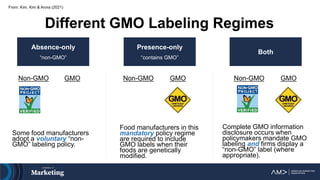
Non-GMO GMO
Absence-only
“non-GMO”
Some food manufacturers
adopt a voluntary “non-
GMO” labeling policy.
Presence-only
“contains GMO”
Food manufacturers in this
mandatory policy regime
are required to include
GMO labels when their
foods are genetically
modified.
Complete GMO information
disclosure occurs when
policymakers mandate GMO
labeling and firms display a
“non-GMO” label (where
appropriate).
Both
Different GMO Labeling Regimes
GMO
Non-GMO GMO
Non-GMO
From: Kim, Kim & Arora (2021)
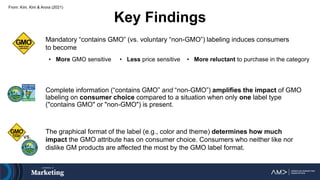
Key Findings
Complete information (“contains GMO” and “non-GMO”) amplifies the impact of GMO
labeling on consumer choice compared to a situation when only one label type
("contains GMO" or "non-GMO") is present.
The graphical format of the label (e.g., color and theme) determines how much
impact the GMO attribute has on consumer choice. Consumers who neither like nor
dislike GM products are affected the most by the GMO label format.
vs.
• More GMO sensitive • Less price sensitive • More reluctant to purchase in the category
Mandatory “contains GMO” (vs. voluntary “non-GMO”) labeling induces consumers
to become
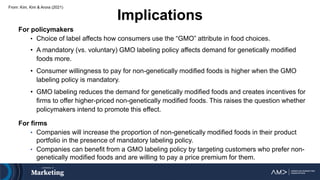
From: Kim, Kim & Arora (2021)
Implications
For policymakers
• Choice of label affects how consumers use the “GMO” attribute in food choices.
• A mandatory (vs. voluntary) GMO labeling policy affects demand for genetically modified
foods more.
• Consumer willingness to pay for non-genetically modified foods is higher when the GMO
labeling policy is mandatory.
• GMO labeling reduces the demand for genetically modified foods and creates incentives for
firms to offer higher-priced non-genetically modified foods. This raises the question whether
policymakers intend to promote this effect.
For firms
• Companies will increase the proportion of non-genetically modified foods in their product
portfolio in the presence of mandatory labeling policy.
• Companies can benefit from a GMO labeling policy by targeting customers who prefer non-
genetically modified foods and are willing to pay a price premium for them.

Kim, Kim & Arora (2021).pptx

  • 1.
    From: Kim, Kim& Arora (2021) GMO Labeling Policy and Consumer Choice
  • 2.
    From: Kim, Kim& Arora (2021) Genetically Modified Organism (GMO) What is a GMO? • An organism (i.e., plant, animal, or microorganism) in which the genetic material (DNA) has been altered. • Found in about 70% of processed food. • e.g., high fructose corn syrup, soy protein The GMO Controversy • Most scientists assert that GMOs are safe and offer benefits to society. • Most consumers are skeptical about the safety of genetically modified foods. • Consumers want genetically modified foods to be labelled immediately. • Firms worry that greater attention to GMOs in labeling is misleading.
  • 3.
    From: Kim, Kim& Arora (2021) Non-GMO GMO Absence-only “non-GMO” Some food manufacturers adopt a voluntary “non- GMO” labeling policy. Presence-only “contains GMO” Food manufacturers in this mandatory policy regime are required to include GMO labels when their foods are genetically modified. Complete GMO information disclosure occurs when policymakers mandate GMO labeling and firms display a “non-GMO” label (where appropriate). Both Different GMO Labeling Regimes GMO Non-GMO GMO Non-GMO
  • 4.
    From: Kim, Kim& Arora (2021) Key Findings Complete information (“contains GMO” and “non-GMO”) amplifies the impact of GMO labeling on consumer choice compared to a situation when only one label type ("contains GMO" or "non-GMO") is present. The graphical format of the label (e.g., color and theme) determines how much impact the GMO attribute has on consumer choice. Consumers who neither like nor dislike GM products are affected the most by the GMO label format. vs. • More GMO sensitive • Less price sensitive • More reluctant to purchase in the category Mandatory “contains GMO” (vs. voluntary “non-GMO”) labeling induces consumers to become
  • 5.
    From: Kim, Kim& Arora (2021) Implications For policymakers • Choice of label affects how consumers use the “GMO” attribute in food choices. • A mandatory (vs. voluntary) GMO labeling policy affects demand for genetically modified foods more. • Consumer willingness to pay for non-genetically modified foods is higher when the GMO labeling policy is mandatory. • GMO labeling reduces the demand for genetically modified foods and creates incentives for firms to offer higher-priced non-genetically modified foods. This raises the question whether policymakers intend to promote this effect. For firms • Companies will increase the proportion of non-genetically modified foods in their product portfolio in the presence of mandatory labeling policy. • Companies can benefit from a GMO labeling policy by targeting customers who prefer non- genetically modified foods and are willing to pay a price premium for them.