by Towfiqur Rahman
(towfiq.eee@gmail.com)
What is a Sub-station?
A substation is a part of an
electrical generation, transmission, and distribution
system, where voltage is transformed from high to low,
or low to high, or many other important functions.
Electric power may flow through several substations
between generating plant and consumer, and may be
changed in voltage in several steps.
Mainly Sub-station is defined as “The
assembly of apparatus used to same some
characteristics (e.g. Voltage, AC to DC, P.F. , Frequency
etc.) of electric supply is called Substation.”
Types of Sub-station


1.
2.
3.
4.

Classified by their main two features.
According to constructional features:Are of four type.
Indoor Sub-station
Outdoor Sub-station
Underground Sub-station
Pole-mounted Sub-station
According to service requirement
features:- Are of six types.

 Transformer Sub-station:- Divided into two
different sub types:-







i. Transmission Sub-station
ii. Distribution Sub-station
Switching Sub-stations
Power factor correction Sub-station
Frequency Changing Sub-station
Converting Sub-station
Industrial Sub-station
Design Considerations
Site Considerations:- Location place, Access road,

present and future load center, existing and future
sources of power etc.
Environmental Considerations:- Weather,
Temperature, Wind, Appearance, Public Safety,
Audible Noise, Electrostatic and Electromagnetic
Effects, Effluent, Ice etc.
Components of a Substation


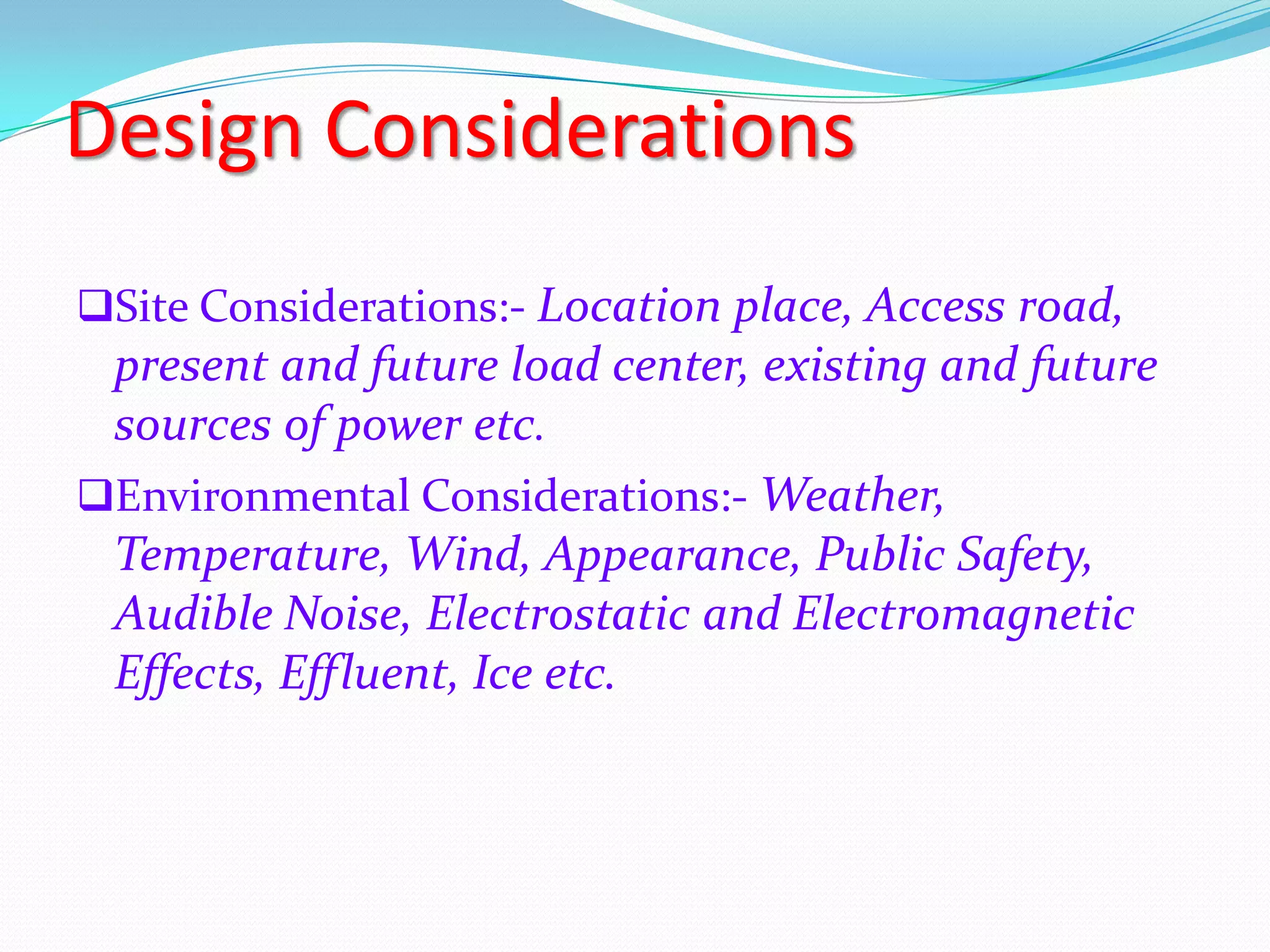
Transformer:- Main
component. It is classified by
two type.
 Power Transformer:A power transformer is
used in a substation to step
up or step down the voltage
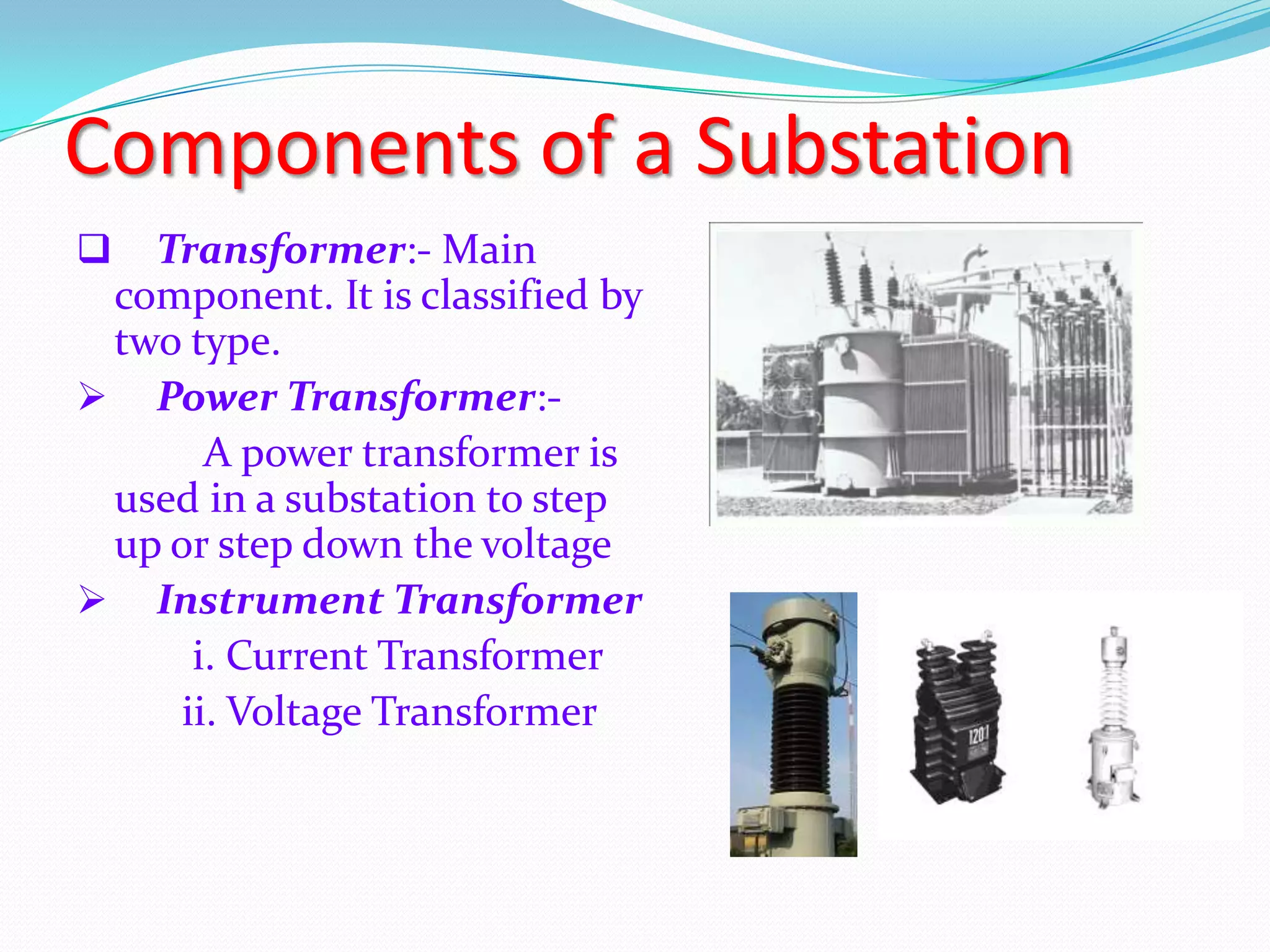
 Instrument Transformer
i. Current Transformer
ii. Voltage Transformer
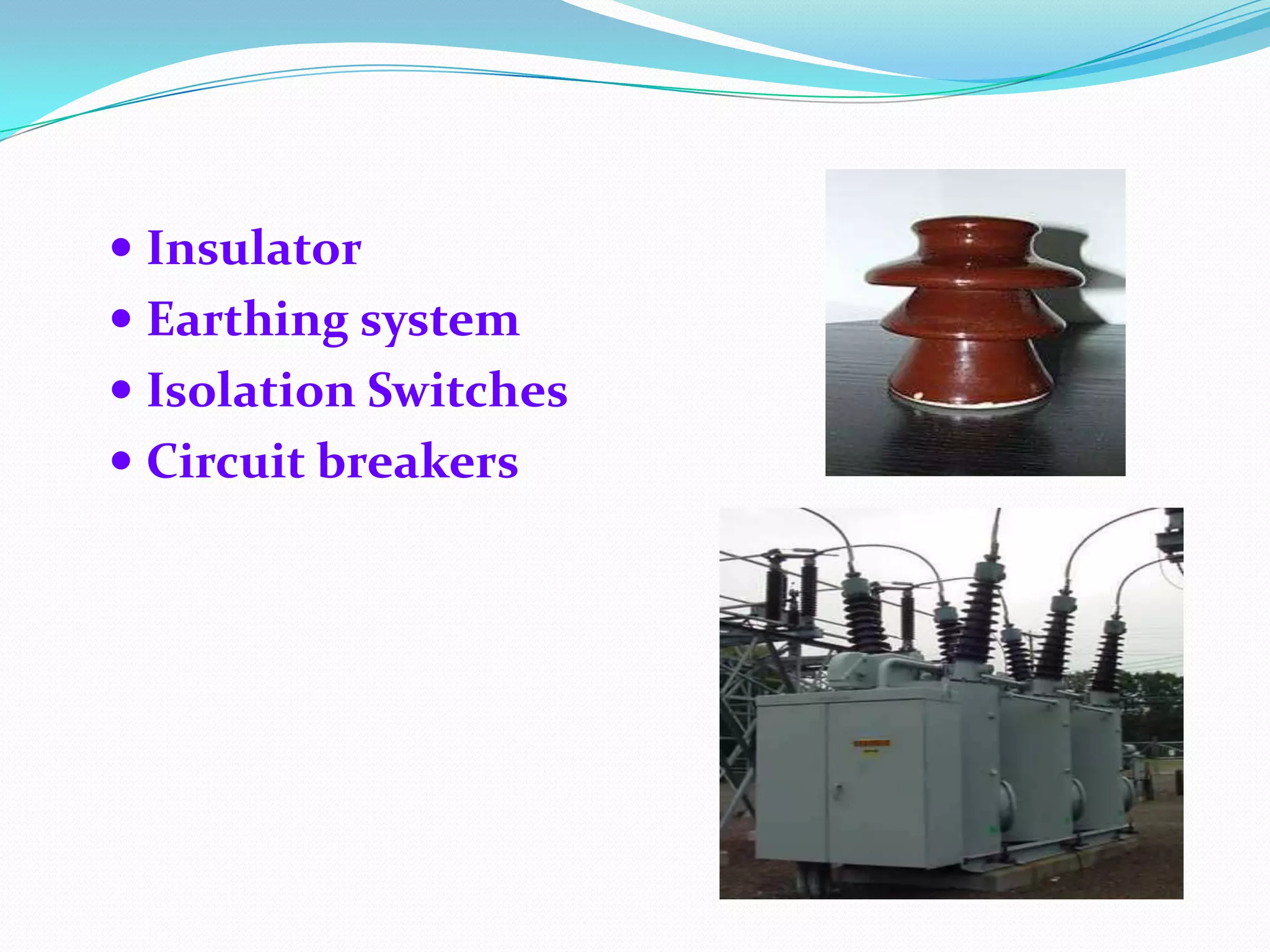
 Insulator

 Earthing system
 Isolation Switches
 Circuit breakers
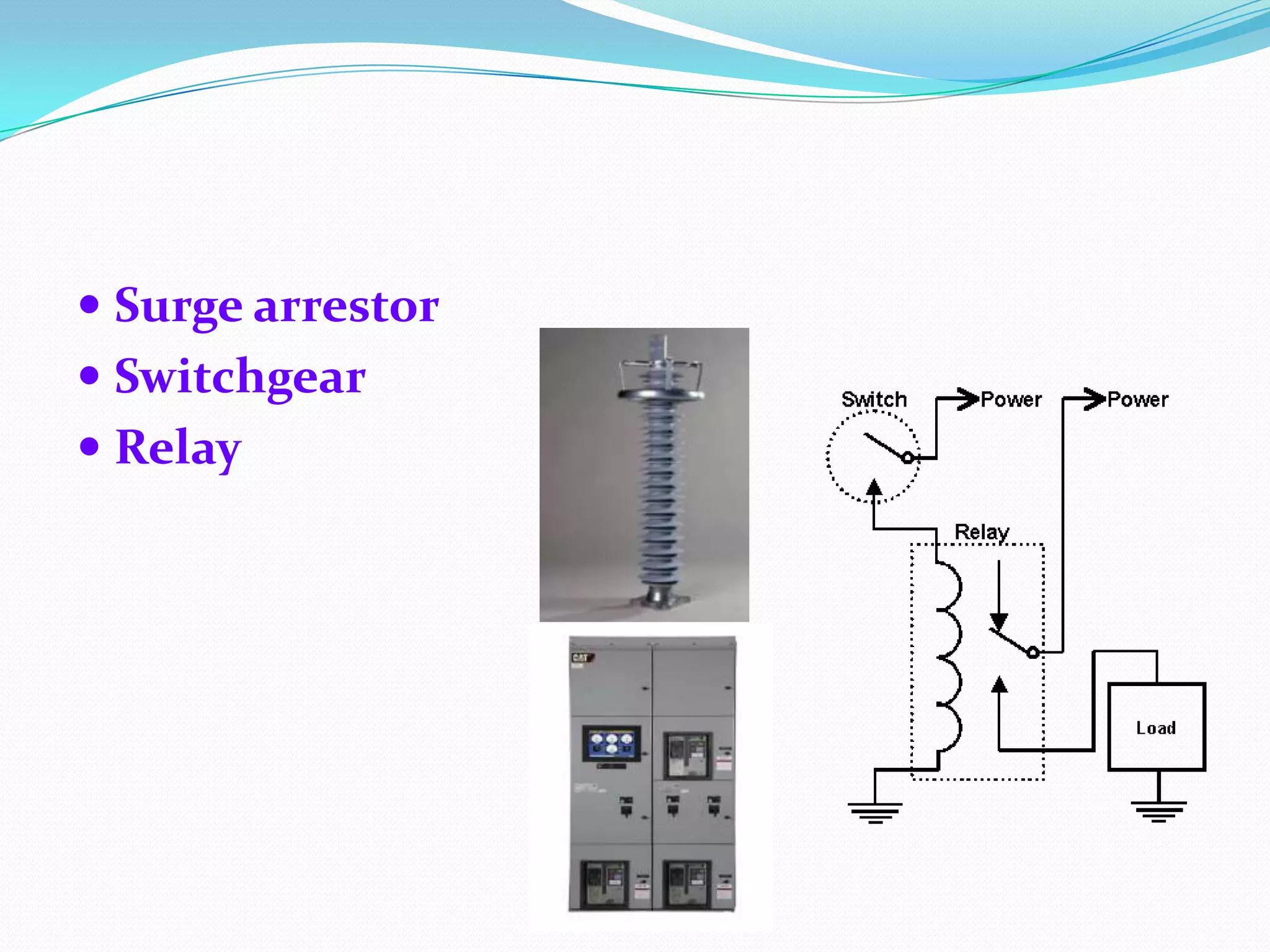
 Surge arrestor
 Switchgear
 Relay
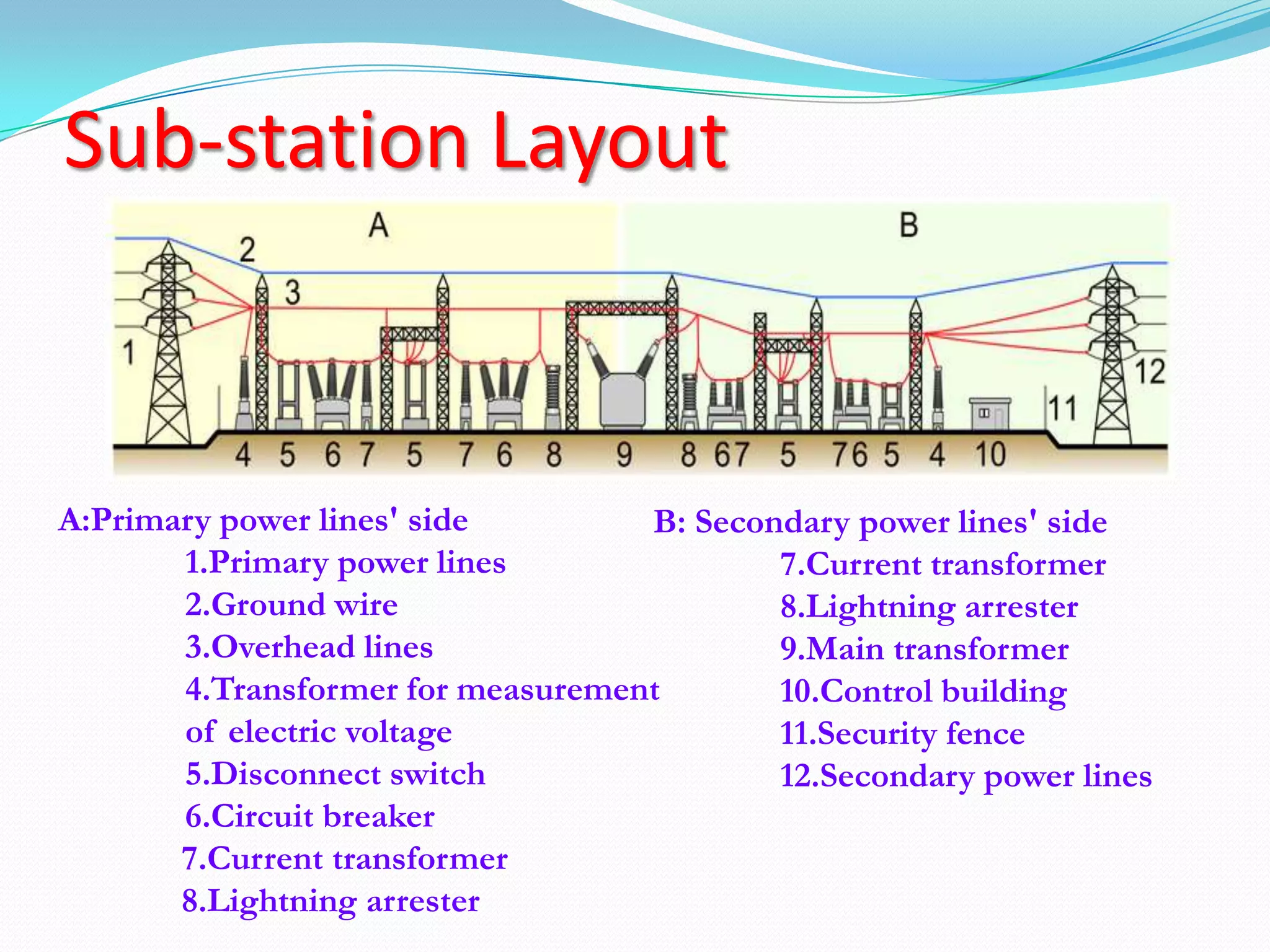
Sub-station Layout

A:Primary power lines' side
B: Secondary power lines' side
1.Primary power lines
7.Current transformer
2.Ground wire
8.Lightning arrester
3.Overhead lines
9.Main transformer
4.Transformer for measurement
10.Control building
of electric voltage
11.Security fence
5.Disconnect switch
12.Secondary power lines
6.Circuit breaker
7.Current transformer
8.Lightning arrester
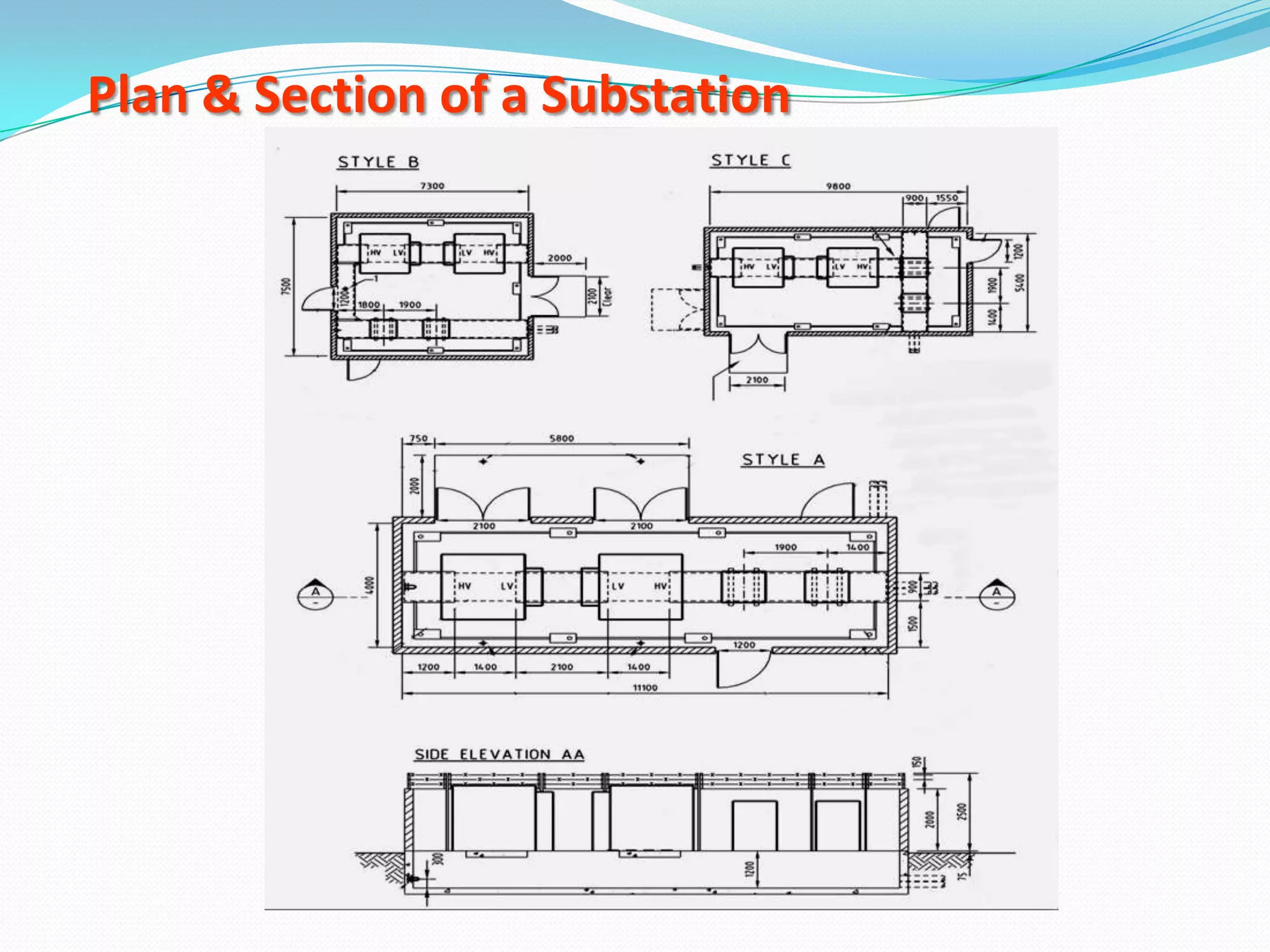
Plan & Section of a Substation

Typical layout of a Sub-Station

  • 1.
  • 2.
    What is aSub-station? A substation is a part of an electrical generation, transmission, and distribution system, where voltage is transformed from high to low, or low to high, or many other important functions. Electric power may flow through several substations between generating plant and consumer, and may be changed in voltage in several steps. Mainly Sub-station is defined as “The assembly of apparatus used to same some characteristics (e.g. Voltage, AC to DC, P.F. , Frequency etc.) of electric supply is called Substation.”
  • 3.
    Types of Sub-station  1. 2. 3. 4. Classifiedby their main two features. According to constructional features:Are of four type. Indoor Sub-station Outdoor Sub-station Underground Sub-station Pole-mounted Sub-station
  • 4.
    According to servicerequirement features:- Are of six types.  Transformer Sub-station:- Divided into two different sub types:-      i. Transmission Sub-station ii. Distribution Sub-station Switching Sub-stations Power factor correction Sub-station Frequency Changing Sub-station Converting Sub-station Industrial Sub-station
  • 5.
    Design Considerations Site Considerations:-Location place, Access road, present and future load center, existing and future sources of power etc. Environmental Considerations:- Weather, Temperature, Wind, Appearance, Public Safety, Audible Noise, Electrostatic and Electromagnetic Effects, Effluent, Ice etc.
  • 6.
    Components of aSubstation  Transformer:- Main component. It is classified by two type.  Power Transformer:A power transformer is used in a substation to step up or step down the voltage  Instrument Transformer i. Current Transformer ii. Voltage Transformer
  • 7.
     Insulator  Earthingsystem  Isolation Switches  Circuit breakers
  • 8.
     Surge arrestor Switchgear  Relay
  • 9.
    Sub-station Layout A:Primary powerlines' side B: Secondary power lines' side 1.Primary power lines 7.Current transformer 2.Ground wire 8.Lightning arrester 3.Overhead lines 9.Main transformer 4.Transformer for measurement 10.Control building of electric voltage 11.Security fence 5.Disconnect switch 12.Secondary power lines 6.Circuit breaker 7.Current transformer 8.Lightning arrester
  • 10.
    Plan & Sectionof a Substation