





The Crowd &
the Library
 The agony and the ecstasy of
 “crowdsourcing” our cultural heritage

                                  Trevor Owens
                                      @tjowens
                                  May 4th, 2012
Two problems with
Crowdsourcing
First Problem:
  the word Crowd
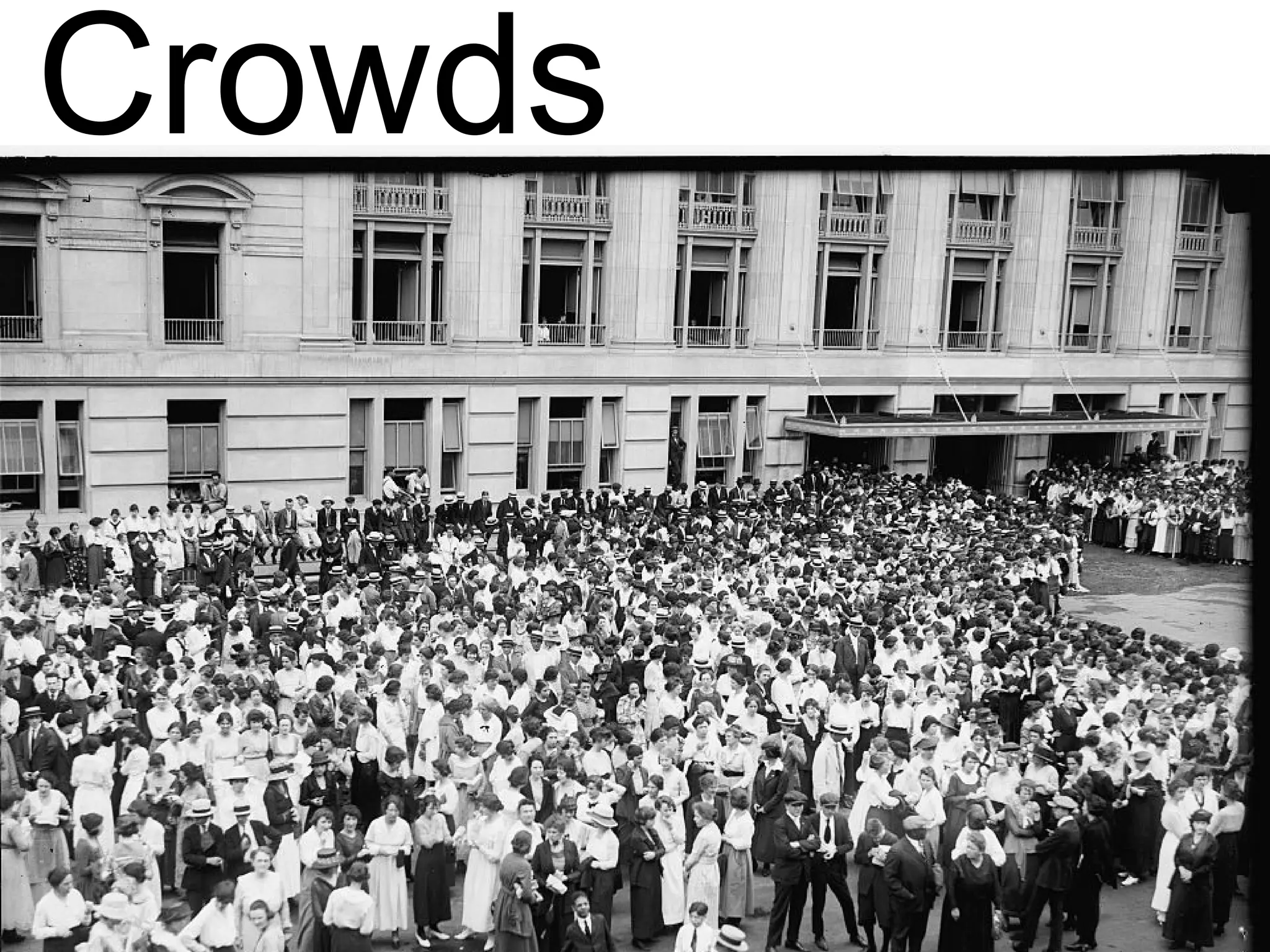
Crowds
Most successful crowdsourcing
projects are not about large
anonymous masses of people.
They are about inviting
participation from relatively
small interested and engaged
members of the public.
Volunteers
These projects can continue a
long standing tradition of
volunteerism and involvement
of citizens in the creation and
continued development of
public goods
Second Problem:
  the term Sourcing
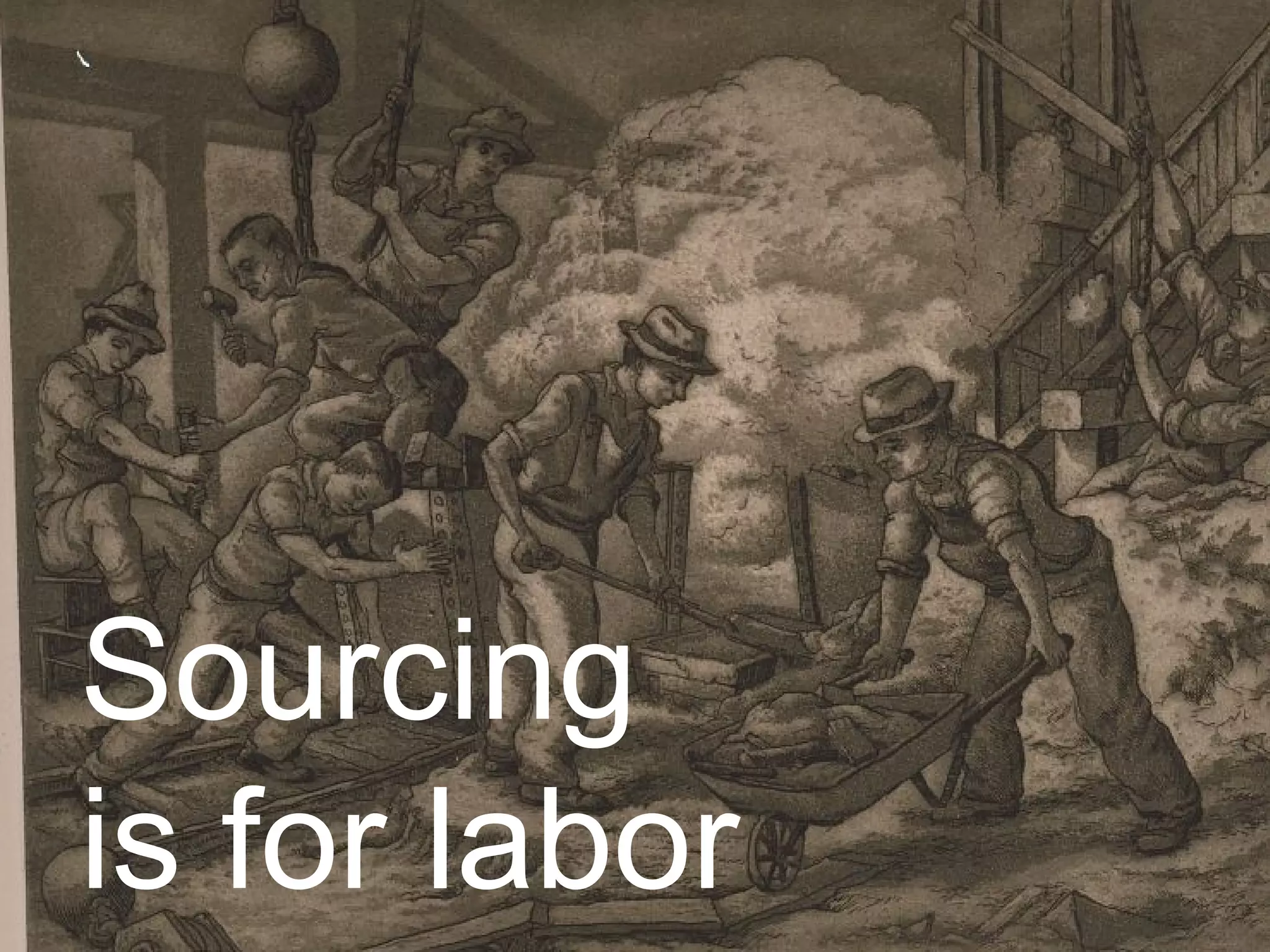
Sourcing
is for labor
“Work consists of whatever a
body is obliged to do.
Play consists of whatever a
body is not obliged to do.”

Mark Twain, The Adventures of Tom Sawyer
A Citizen Scientist, Archivist,
or Journalist is not a labor.
They are Amateurs in the
best possible sense of the
word.
Amateur: (French amateur
"lover of“) a person attached
to a particular pursuit, study,
or science, without pay and
often without formal training.
Still, we are stuck
with the word
crowdsourcing
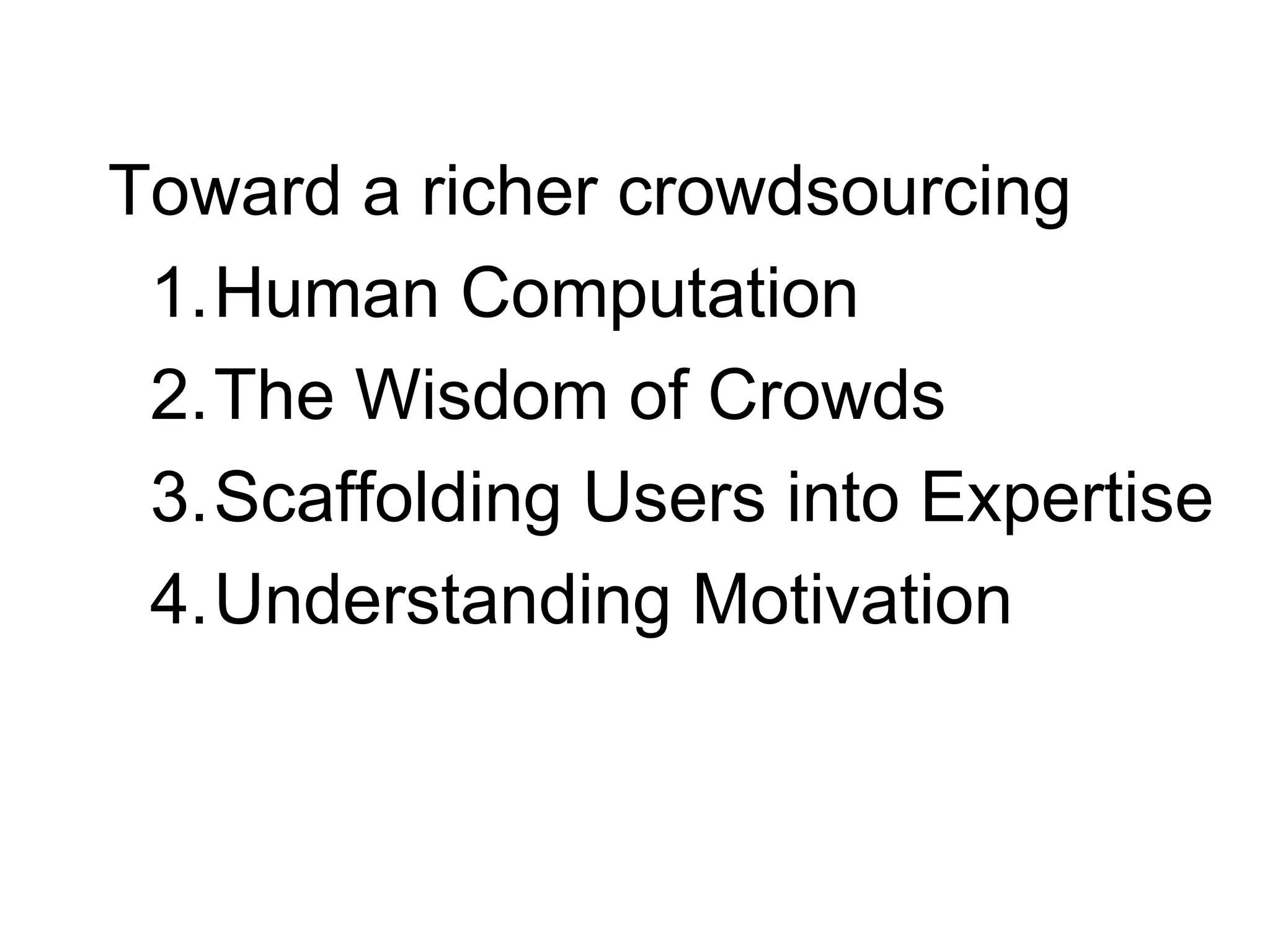
Toward a richer crowdsourcing
 1.Human Computation
 2.The Wisdom of Crowds
 3.Scaffolding Users into Expertise
 4.Understanding Motivation
Human
Computation
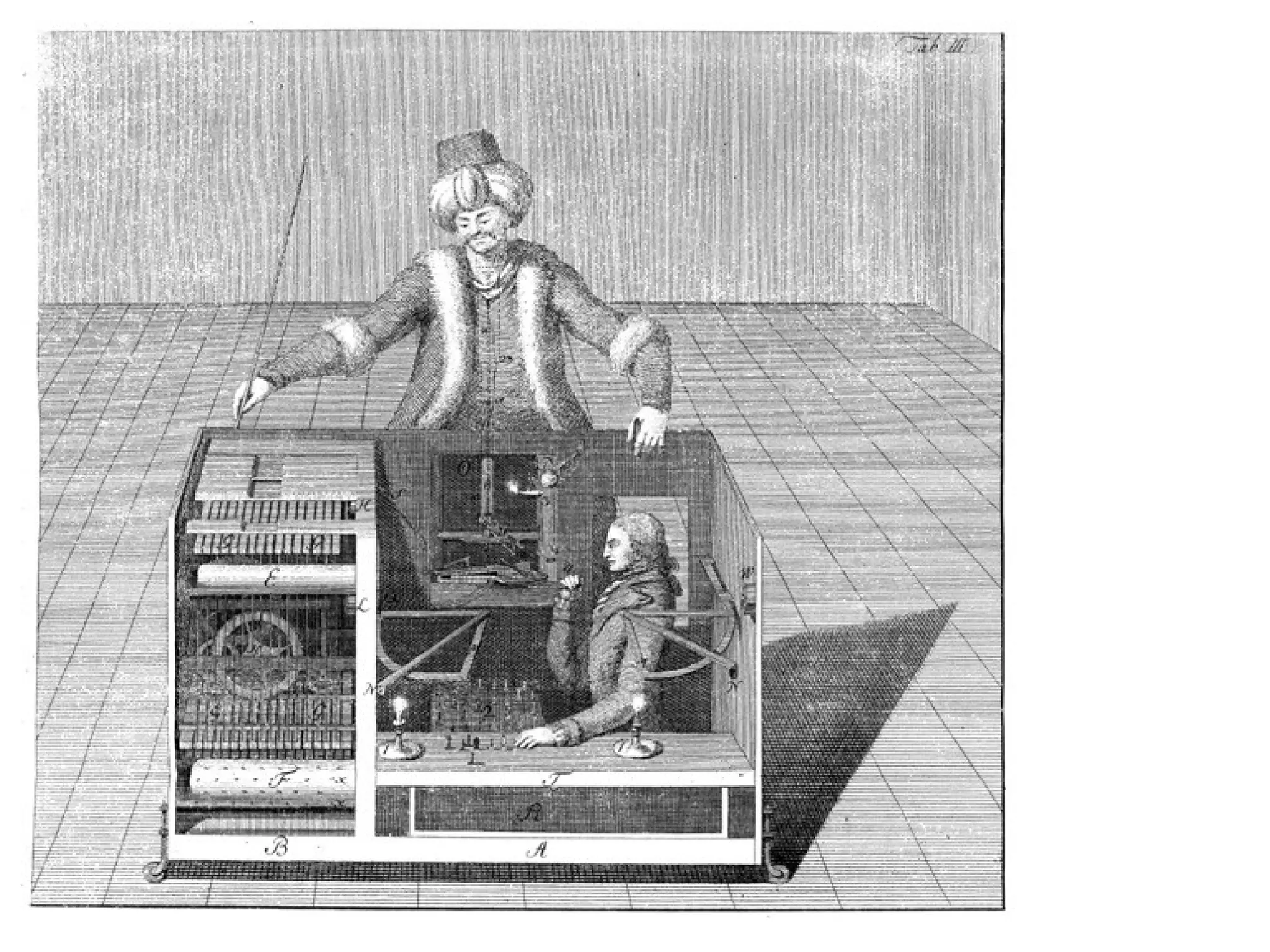
 people as computers.
People can make
judgments that
computers cant.
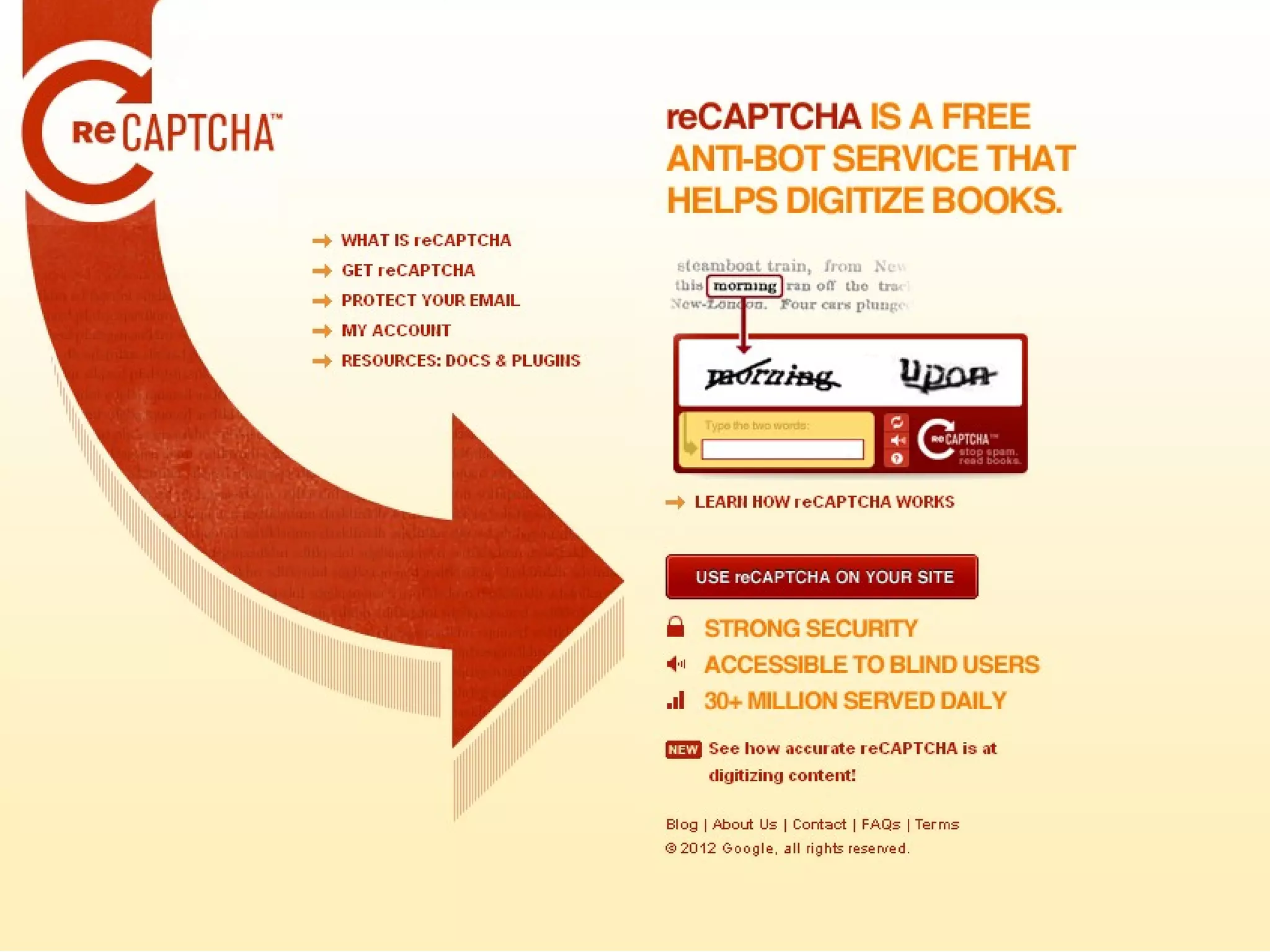
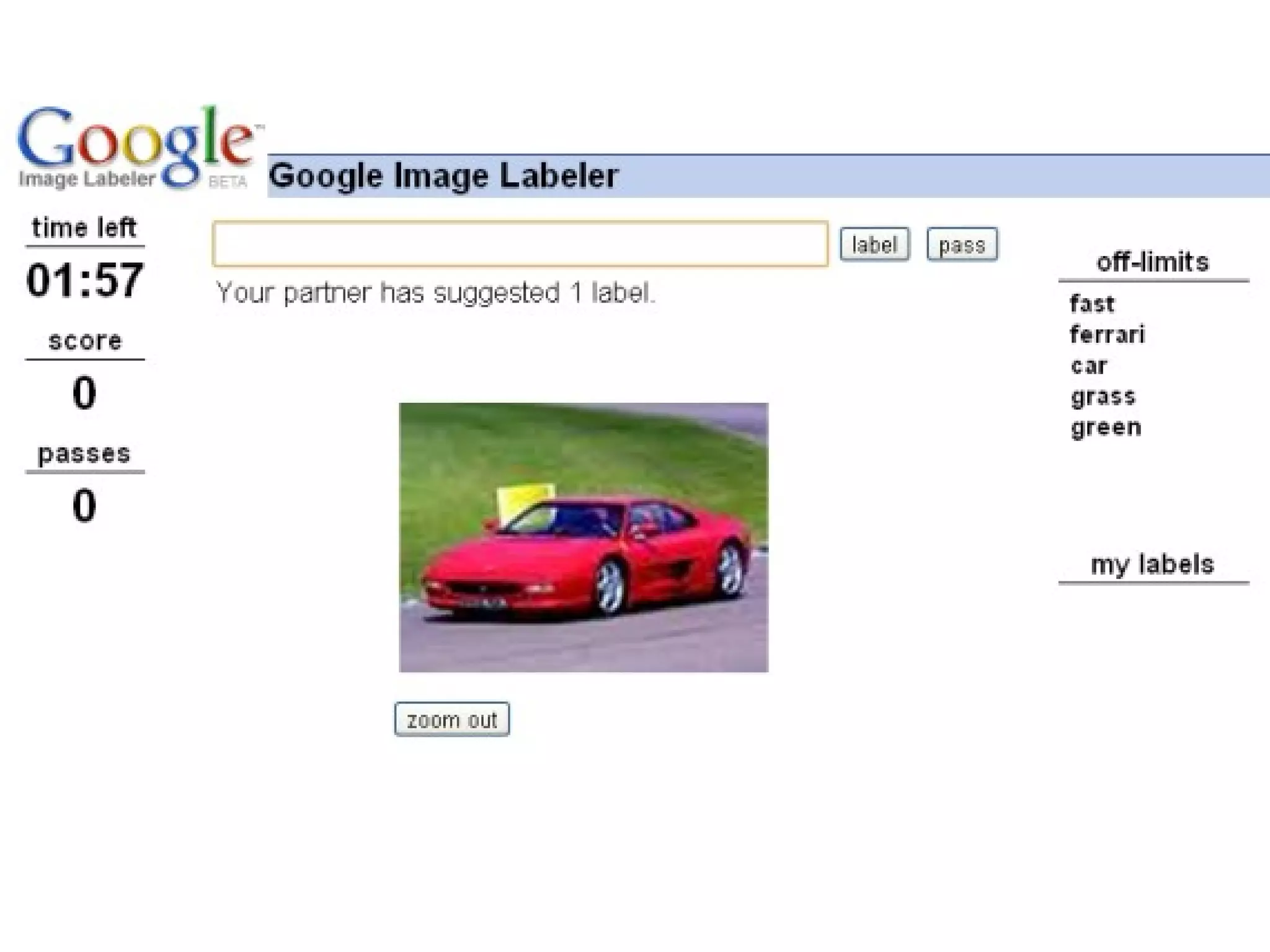
Human computation
sees people as
machines.
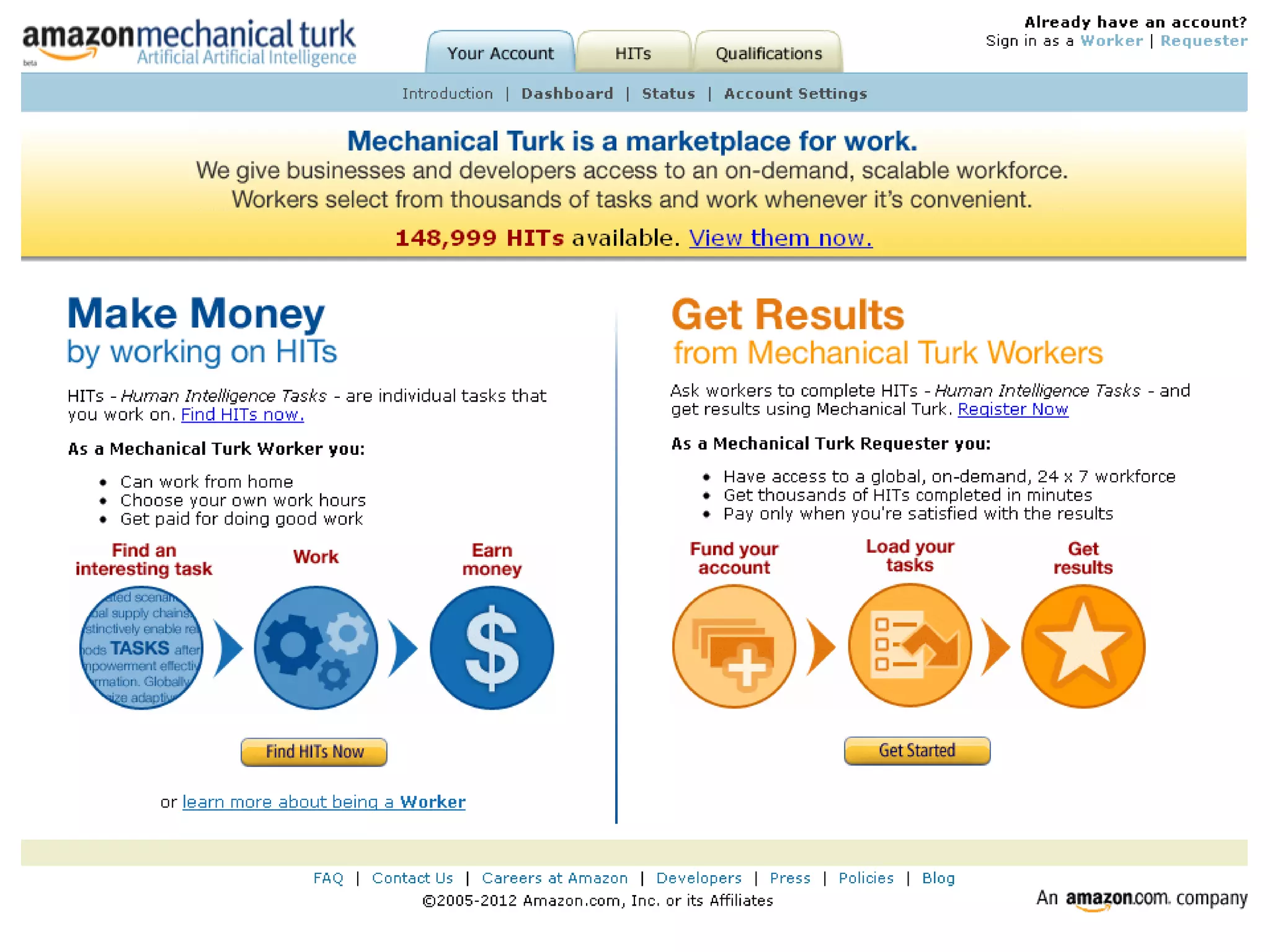
Human competition
is often about labor.
Human computation
is most interesting
when it isn’t about
labor.
Human computation’s
Key Question:
How could we use human
judgment to augment computer
processable information?
Wisdom of Crowds
The question of the web is
   “Why Wasn’t I Consulted”
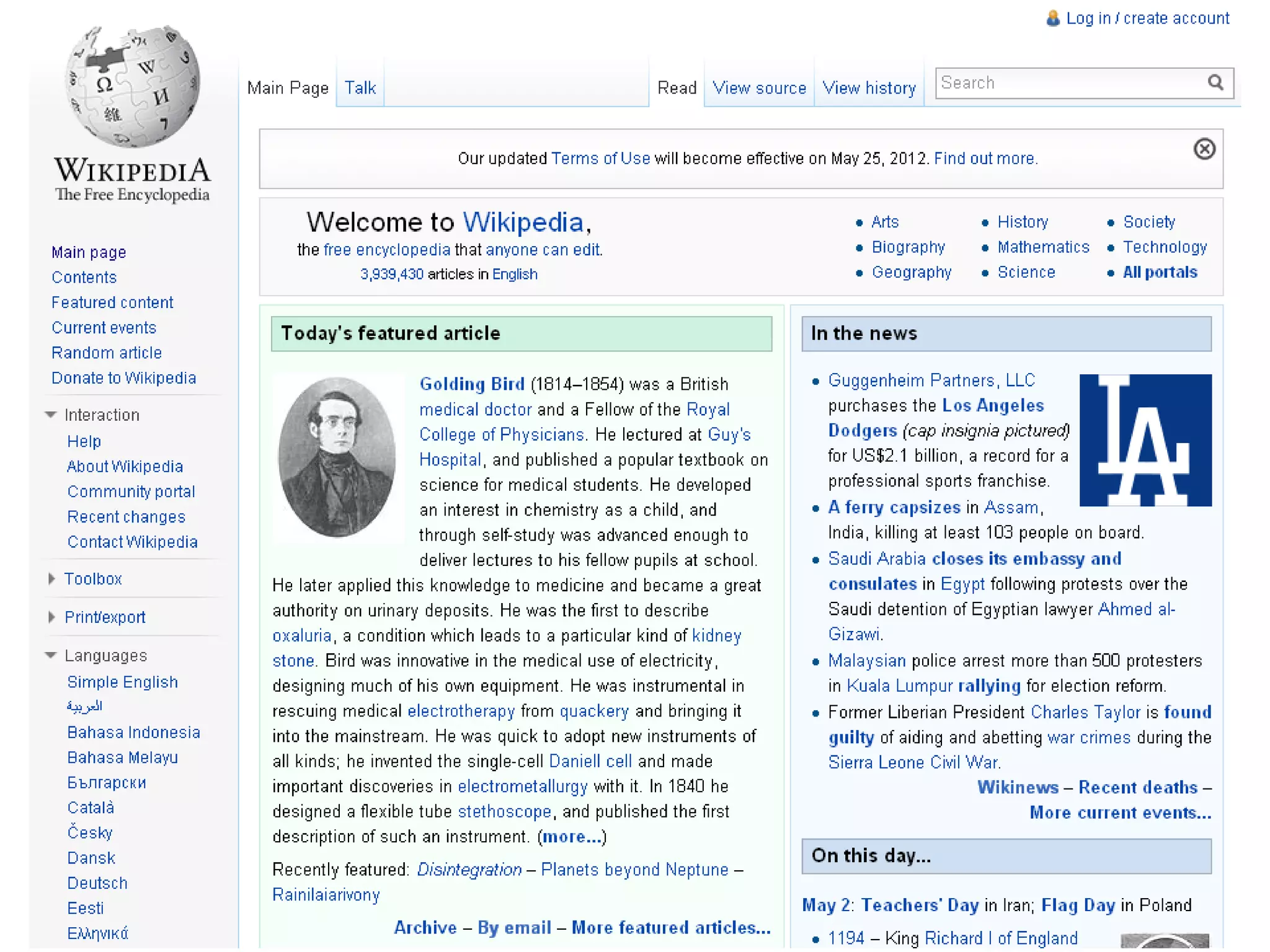
Wikipedia has
nothing to do with
human computation.
Why Wasn’t I Consulted:
is the fundamental question of the web…
Humans have a fundamental need to be
consulted, engaged, to exercise their
knowledge (and thus power), and no
other medium that came before has
been able to tap into that as effectively.
             The Web Is a Customer Service Medium, Paul Ford
If you tap into the human need to be
consulted you can get some interesting
reactions. Here are a few: Wikipedia,
StackOverflow, Hunch,Reddit, MetaFilter,
YouTube, Twitter, StumbleUpon, About,
Quora, Ebay,Yelp, Flickr, IMDB,
Amazon.com, Craigslist, GitHub,
SourceForge, every messageboard or site
with comments, 4Chan, Encyclopedia
Dramatica. Plus the entire Open Source
movement.
            The Web Is a Customer Service Medium, Paul Ford
Wisdom of Crowd’s
Key Question:
How could we empower and
consult with a community of
users?
Scaffolding Users
into expertise
  The right tools for the job
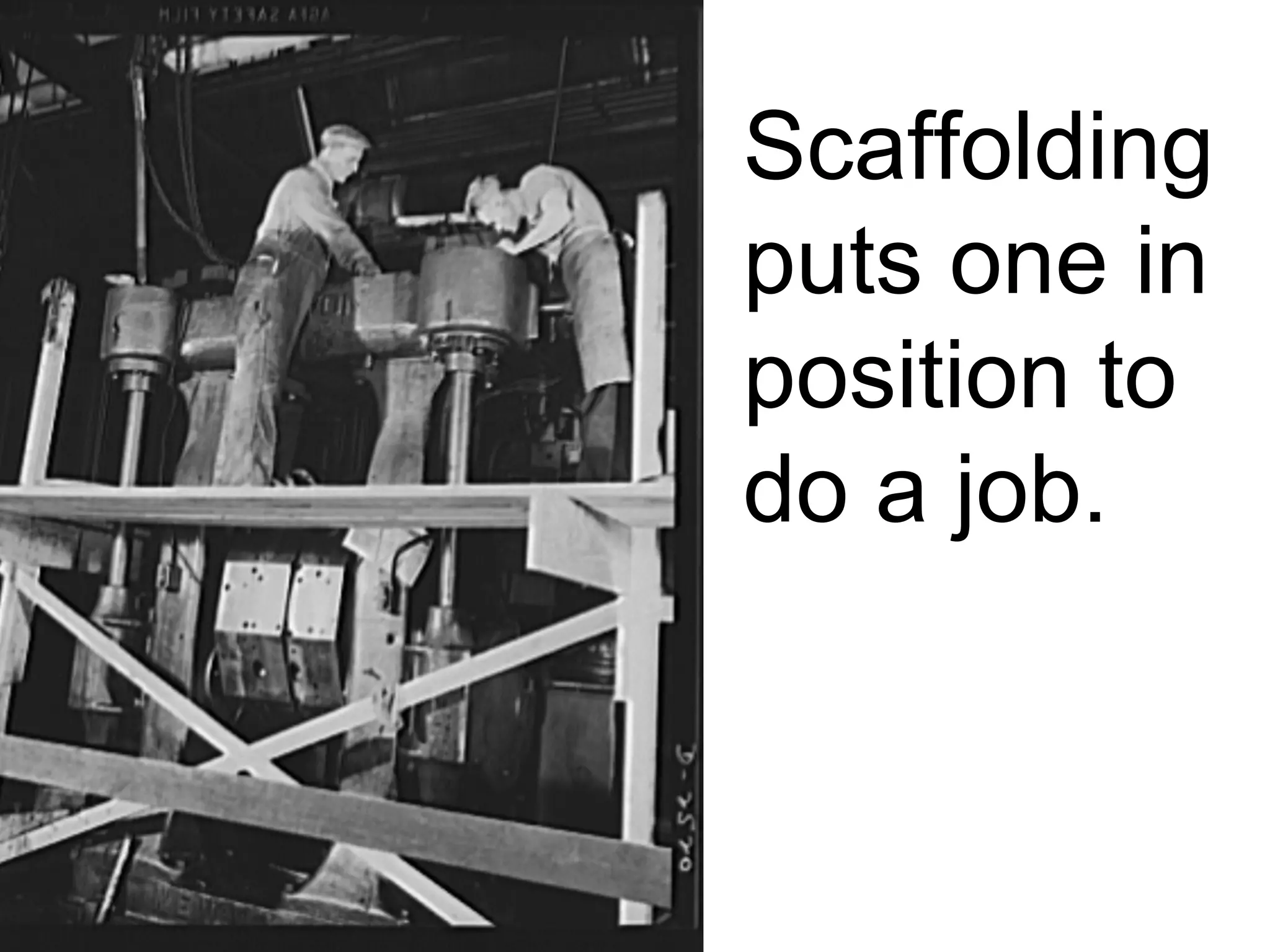
Scaffolding
puts one in
position to
do a job.
Helping someone succeed is
often about getting them the right
tools. All tools can act as
scaffolds to break down a task.
We frequently embed our
expertise inside our tools.
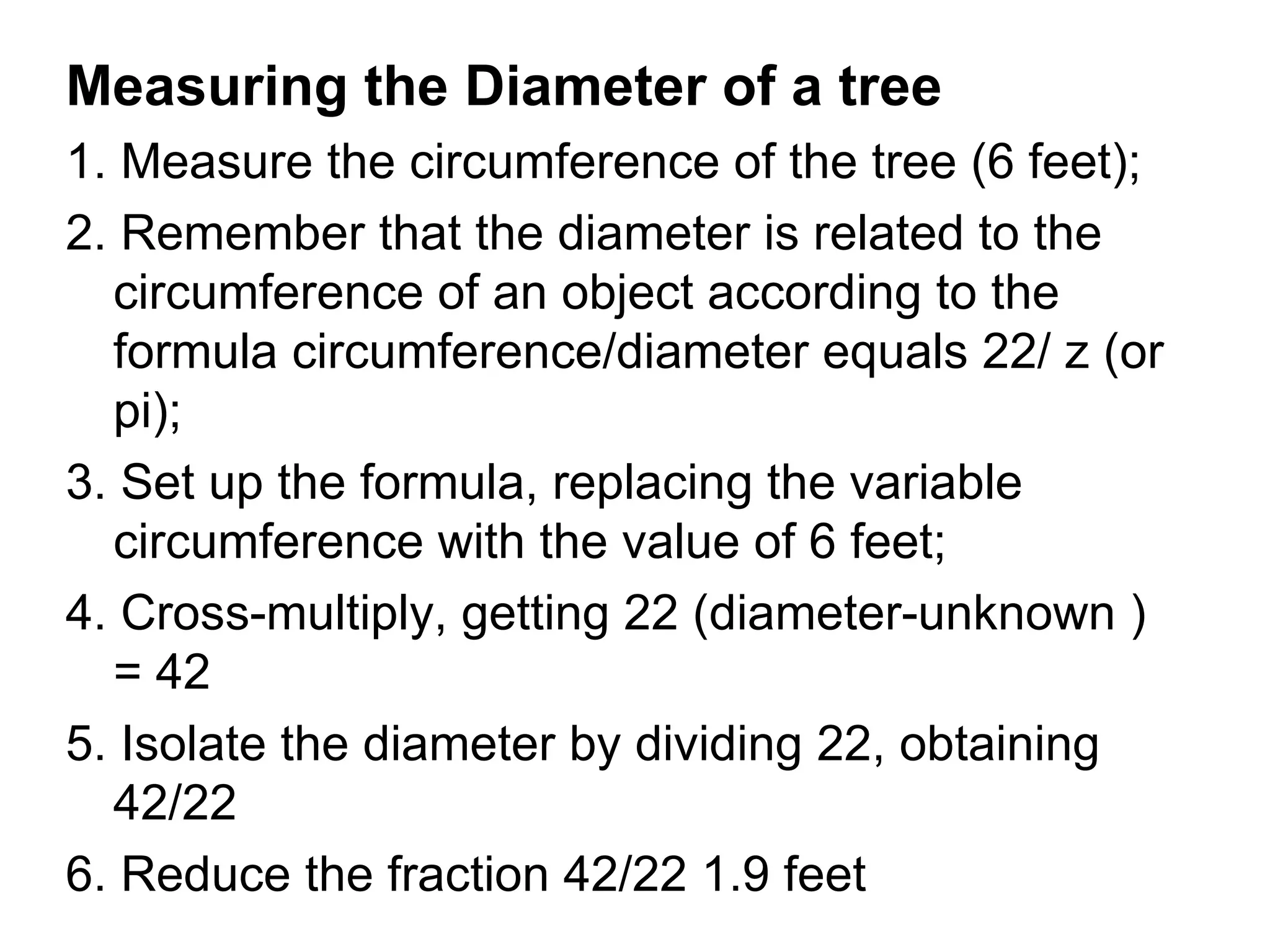
Measuring the Diameter of a tree
1. Measure the circumference of the tree (6 feet);
2. Remember that the diameter is related to the
  circumference of an object according to the
  formula circumference/diameter equals 22/ z (or
  pi);
3. Set up the formula, replacing the variable
  circumference with the value of 6 feet;
4. Cross-multiply, getting 22 (diameter-unknown )
  = 42
5. Isolate the diameter by dividing 22, obtaining
  42/22
6. Reduce the fraction 42/22 1.9 feet
Or…
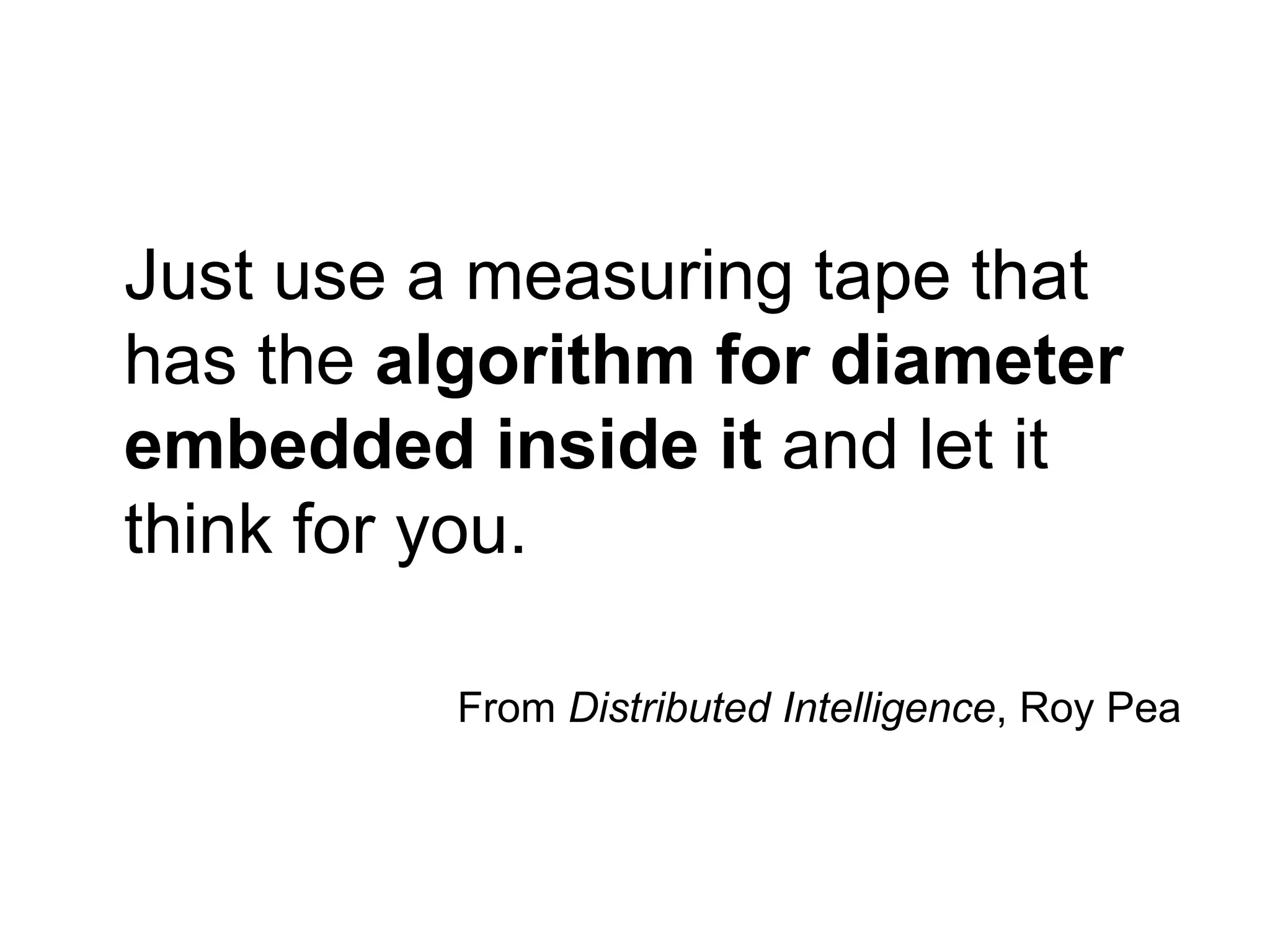
Just use a measuring tape that
has the algorithm for diameter
embedded inside it and let it
think for you.

          From Distributed Intelligence, Roy Pea
All tools can act as scaffolds to
break down a task. We frequently
embed our expertise inside our
tools. For example…
Example:
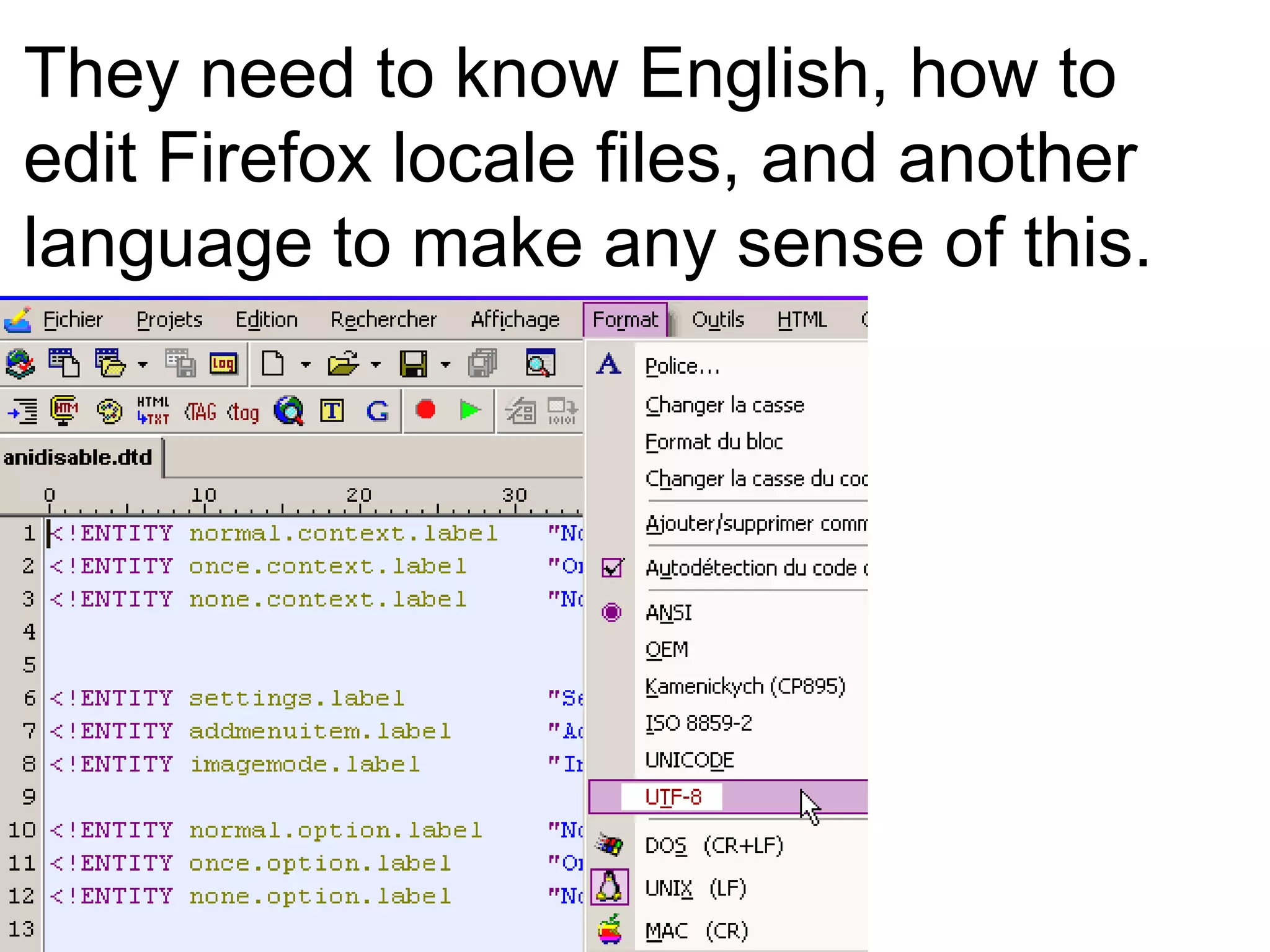
Getting People to Translate a
Firefox Extension is hard.
They need to know English, how to
edit Firefox locale files, and another
language to make any sense of this.
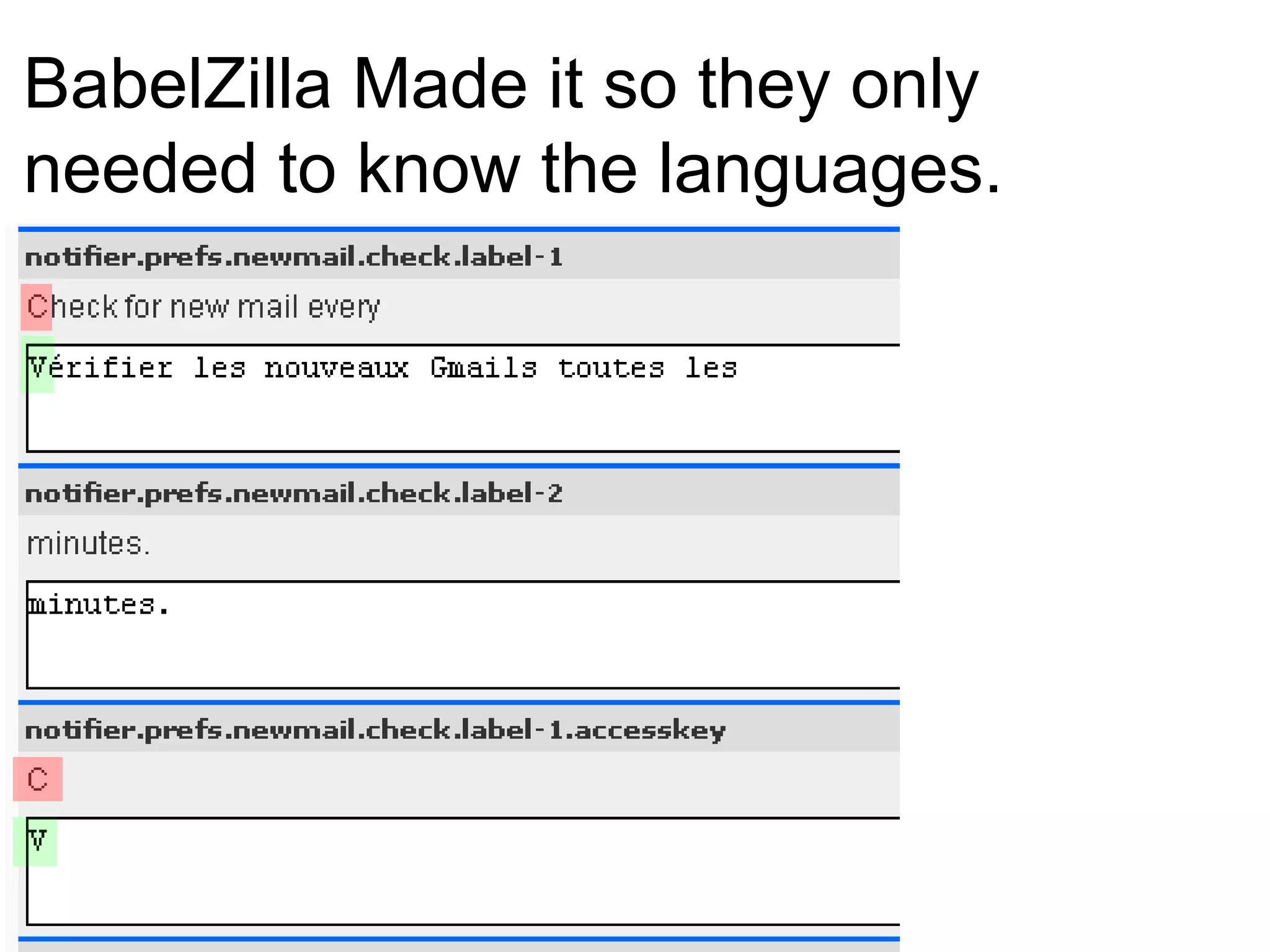
BabelZilla Made it so they only
needed to know the languages.
Scaffolding Users
Key Question:
How can our tools act as
scaffolds to help make the most
of users efforts?
Helping someone succeed is
often about getting them the right
tools. All tools can act as
scaffolds to break down a task.
We frequently embed our
expertise inside our tools.
Motivation
Who would want to do this and
why?
A quick story about motivation
Ben Brumfield runs a range of
crowdsourcing transcription projects.
At one point in a transcription project
he noticed that one of his power
users was slowing down, cutting
back significantly on transcribing
these manuscripts.
The user explained that they had
seen that there weren’t that many
manuscripts left to transcribe.
For this user, the 2-3 hours a day
they spent working on transcriptions
was an important part of their day
that they had decided to deny
themselves some of that
experience.
They needed to ration it out.

They needed to make sure that it
lasted.
After our basic needs are covered, the
things that generally matter most to us
are
Purpose: causes we care for
Identity: things that define us
Meaning: doing things that matter
Belonging: being a part of something
Motivating Users
Key Question:
Whose sense of purpose does
this project connect to? What
identities are involved?
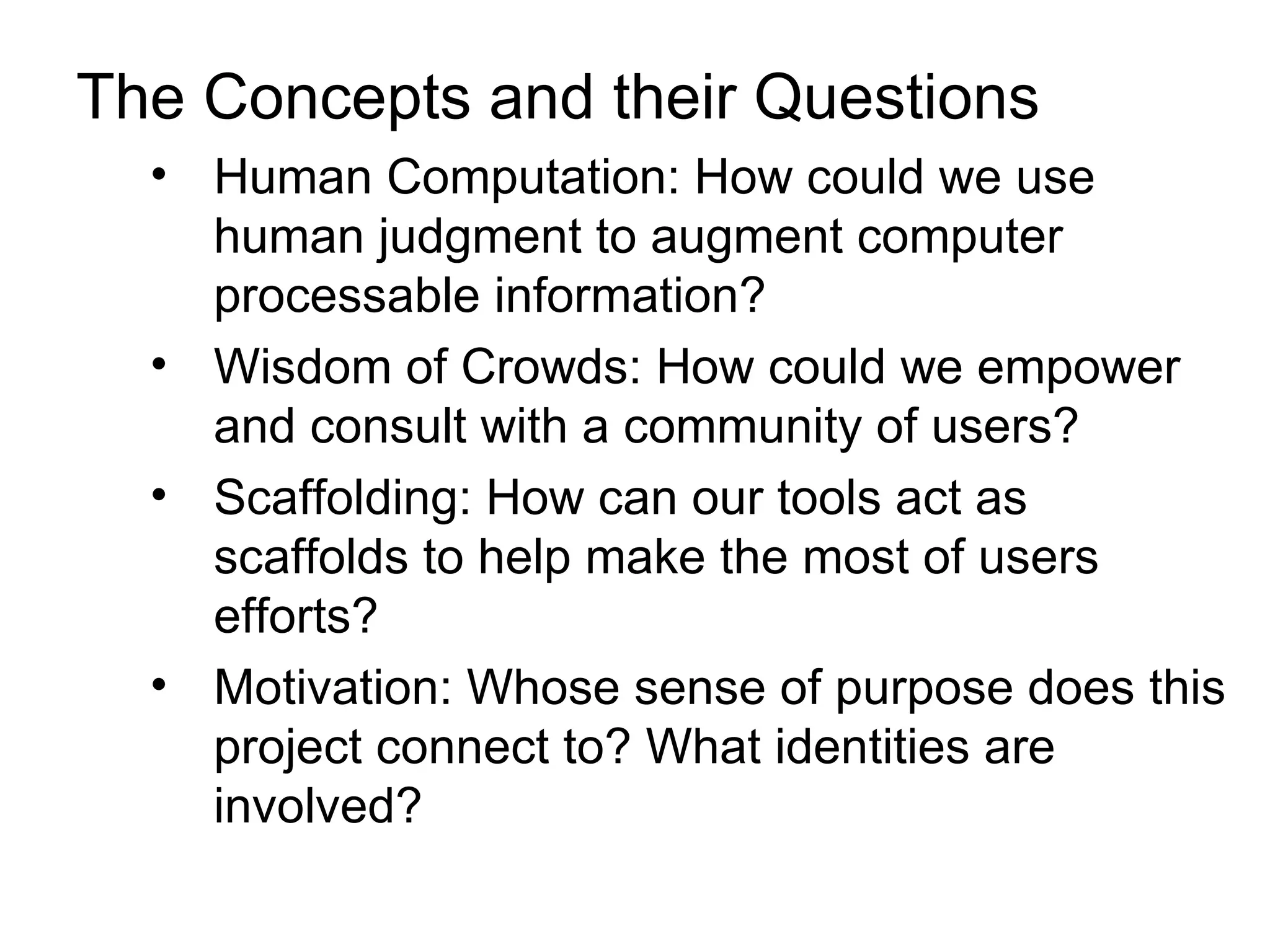
The Concepts and their Questions
  • Human Computation: How could we use
    human judgment to augment computer
    processable information?
  • Wisdom of Crowds: How could we empower
    and consult with a community of users?
  • Scaffolding: How can our tools act as
    scaffolds to help make the most of users
    efforts?
  • Motivation: Whose sense of purpose does this
    project connect to? What identities are
    involved?
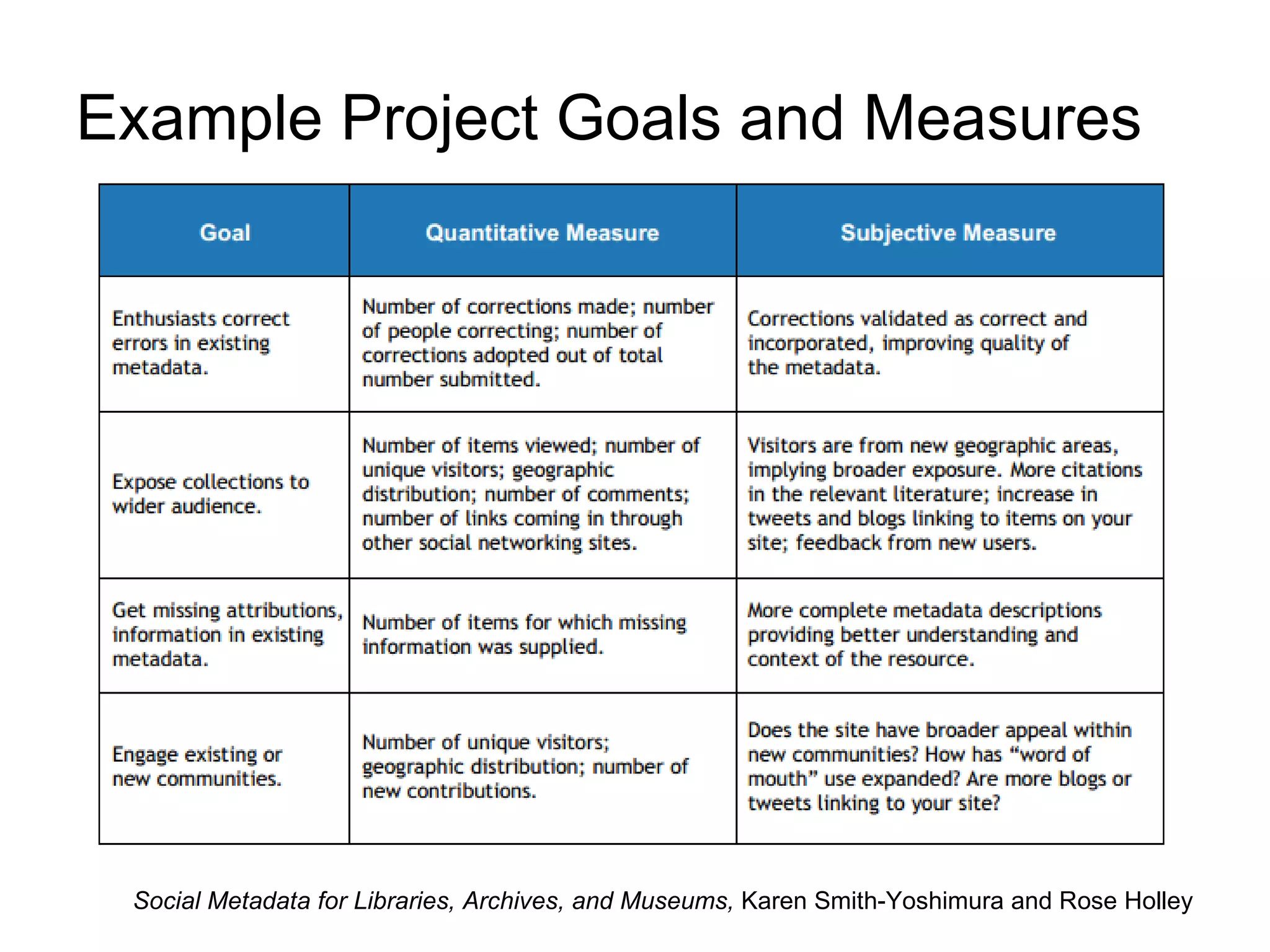
Example Project Goals and Measures


 Social Metadata for Libraries, Archives, and Museums, Karen Smith-Yoshimura and Rose Holley
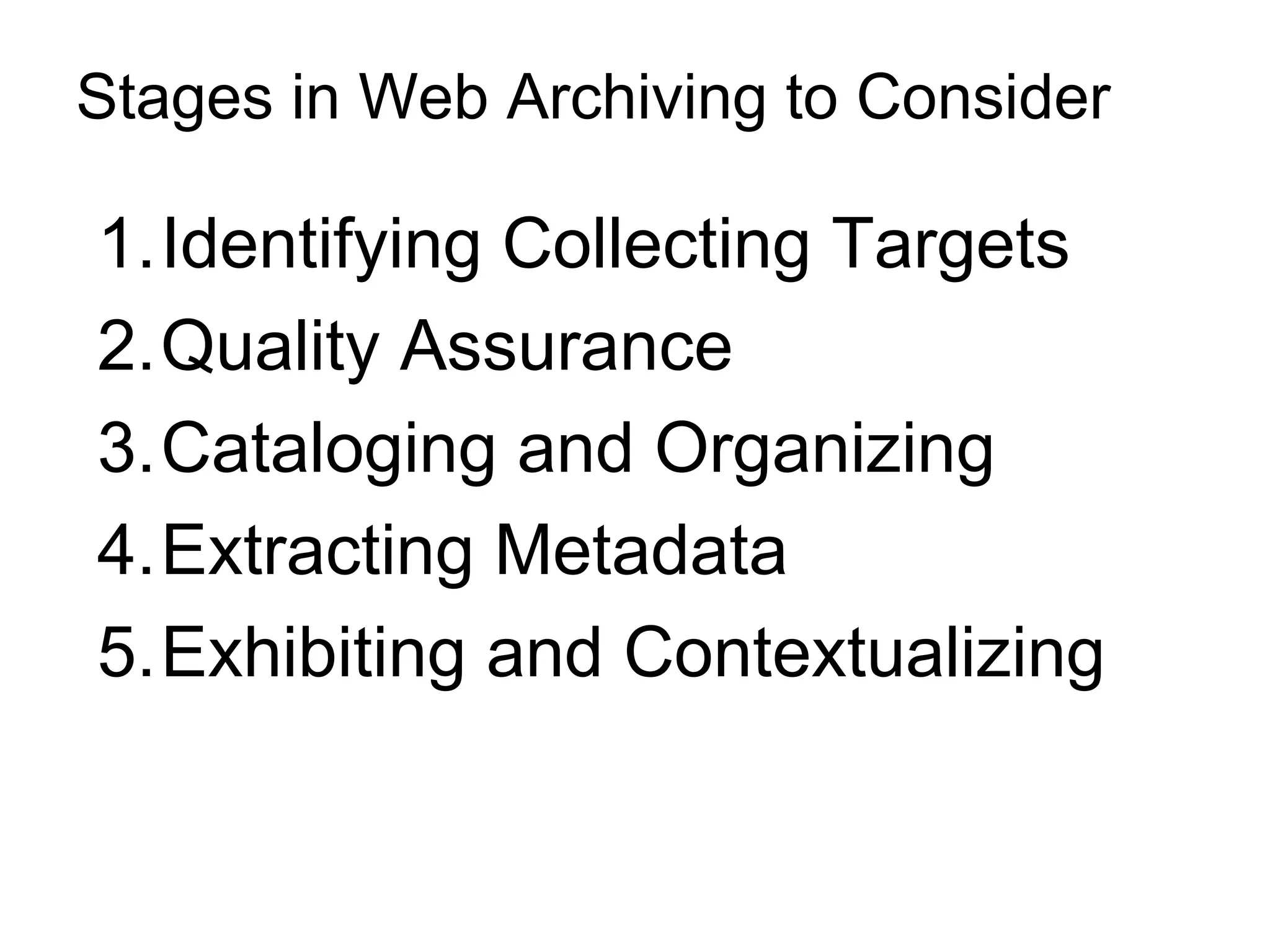
Stages in Web Archiving to Consider

1.Identifying Collecting Targets
2.Quality Assurance
3.Cataloging and Organizing
4.Extracting Metadata
5.Exhibiting and Contextualizing

The crowd and the library

  • 1.
    The Crowd & theLibrary The agony and the ecstasy of “crowdsourcing” our cultural heritage Trevor Owens @tjowens May 4th, 2012
  • 2.
  • 3.
    First Problem: the word Crowd
  • 4.
  • 5.
    Most successful crowdsourcing projectsare not about large anonymous masses of people. They are about inviting participation from relatively small interested and engaged members of the public.
  • 6.
  • 7.
    These projects cancontinue a long standing tradition of volunteerism and involvement of citizens in the creation and continued development of public goods
  • 8.
    Second Problem: the term Sourcing
  • 9.
  • 10.
    “Work consists ofwhatever a body is obliged to do. Play consists of whatever a body is not obliged to do.” Mark Twain, The Adventures of Tom Sawyer
  • 11.
    A Citizen Scientist,Archivist, or Journalist is not a labor. They are Amateurs in the best possible sense of the word.
  • 12.
    Amateur: (French amateur "loverof“) a person attached to a particular pursuit, study, or science, without pay and often without formal training.
  • 13.
    Still, we arestuck with the word crowdsourcing
  • 14.
    Toward a richercrowdsourcing 1.Human Computation 2.The Wisdom of Crowds 3.Scaffolding Users into Expertise 4.Understanding Motivation
  • 15.
  • 16.
    People can make judgmentsthat computers cant.
  • 19.
  • 20.
  • 23.
    Human computation is mostinteresting when it isn’t about labor.
  • 25.
    Human computation’s Key Question: Howcould we use human judgment to augment computer processable information?
  • 26.
    Wisdom of Crowds Thequestion of the web is “Why Wasn’t I Consulted”
  • 27.
    Wikipedia has nothing todo with human computation.
  • 29.
    Why Wasn’t IConsulted: is the fundamental question of the web… Humans have a fundamental need to be consulted, engaged, to exercise their knowledge (and thus power), and no other medium that came before has been able to tap into that as effectively. The Web Is a Customer Service Medium, Paul Ford
  • 30.
    If you tapinto the human need to be consulted you can get some interesting reactions. Here are a few: Wikipedia, StackOverflow, Hunch,Reddit, MetaFilter, YouTube, Twitter, StumbleUpon, About, Quora, Ebay,Yelp, Flickr, IMDB, Amazon.com, Craigslist, GitHub, SourceForge, every messageboard or site with comments, 4Chan, Encyclopedia Dramatica. Plus the entire Open Source movement. The Web Is a Customer Service Medium, Paul Ford
  • 32.
    Wisdom of Crowd’s KeyQuestion: How could we empower and consult with a community of users?
  • 33.
    Scaffolding Users into expertise The right tools for the job
  • 34.
  • 35.
    Helping someone succeedis often about getting them the right tools. All tools can act as scaffolds to break down a task. We frequently embed our expertise inside our tools.
  • 36.
    Measuring the Diameterof a tree 1. Measure the circumference of the tree (6 feet); 2. Remember that the diameter is related to the circumference of an object according to the formula circumference/diameter equals 22/ z (or pi); 3. Set up the formula, replacing the variable circumference with the value of 6 feet; 4. Cross-multiply, getting 22 (diameter-unknown ) = 42 5. Isolate the diameter by dividing 22, obtaining 42/22 6. Reduce the fraction 42/22 1.9 feet
  • 37.
  • 38.
    Just use ameasuring tape that has the algorithm for diameter embedded inside it and let it think for you. From Distributed Intelligence, Roy Pea
  • 40.
    All tools canact as scaffolds to break down a task. We frequently embed our expertise inside our tools. For example…
  • 42.
    Example: Getting People toTranslate a Firefox Extension is hard.
  • 43.
    They need toknow English, how to edit Firefox locale files, and another language to make any sense of this.
  • 44.
    BabelZilla Made itso they only needed to know the languages.
  • 45.
    Scaffolding Users Key Question: Howcan our tools act as scaffolds to help make the most of users efforts?
  • 46.
    Helping someone succeedis often about getting them the right tools. All tools can act as scaffolds to break down a task. We frequently embed our expertise inside our tools.
  • 47.
    Motivation Who would wantto do this and why?
  • 48.
    A quick storyabout motivation
  • 49.
    Ben Brumfield runsa range of crowdsourcing transcription projects. At one point in a transcription project he noticed that one of his power users was slowing down, cutting back significantly on transcribing these manuscripts.
  • 50.
    The user explainedthat they had seen that there weren’t that many manuscripts left to transcribe.
  • 51.
    For this user,the 2-3 hours a day they spent working on transcriptions was an important part of their day that they had decided to deny themselves some of that experience.
  • 52.
    They needed toration it out. They needed to make sure that it lasted.
  • 53.
    After our basicneeds are covered, the things that generally matter most to us are Purpose: causes we care for Identity: things that define us Meaning: doing things that matter Belonging: being a part of something
  • 54.
    Motivating Users Key Question: Whosesense of purpose does this project connect to? What identities are involved?
  • 55.
    The Concepts andtheir Questions • Human Computation: How could we use human judgment to augment computer processable information? • Wisdom of Crowds: How could we empower and consult with a community of users? • Scaffolding: How can our tools act as scaffolds to help make the most of users efforts? • Motivation: Whose sense of purpose does this project connect to? What identities are involved?
  • 56.
    Example Project Goalsand Measures Social Metadata for Libraries, Archives, and Museums, Karen Smith-Yoshimura and Rose Holley
  • 57.
    Stages in WebArchiving to Consider 1.Identifying Collecting Targets 2.Quality Assurance 3.Cataloging and Organizing 4.Extracting Metadata 5.Exhibiting and Contextualizing