Presented by: Dr. Satyajeet Rath
Guided by: Dr. Shantanu Sapru
Date: 28-10-16
Prudence A. Francis et al., N Engl J Med 2015;372:436-46
SOFT Trial
Olivia Pagani et al., N Engl J Med 2014;371:107-18
SOFT + TEXT Trial
Adjuvant Ovarian Supression in Premenopausal
Breast Cancer
Adjuvant Exemestane with Ovarian Supression
in Premenopausal Breast Cancer
Major controversial topics were, and still are:
1. Is Tamoxifen (TAM) alone an optimal treatment?
2. What is the role of ovarian function suppression (OFS)?
3. Is there a place for aromatase inhibitors (AIs)?
4. What is the optimal treatment duration?
Introduction :
• Adjuvant treatment for premenopausal women with ER+/PR+ disease is often a matter of
physician and patient choice
• Current recommendations include treatment with TAM for at least 5 years
• 5 years of TAM reduces the odds of recurrence by 40% when added to adjuvant chemotherapy
• GnRH agonists show similar efficacy to chemotherapy in the absence of TAM in prememopausal
women, but additional benefit from OFS for women who receive 5 years of TAM + adjuvant
chemotherapy is uncertain
• AIs are equi-efficacious to TAM for postmenopausal women with endocrine-responsive breast
cancer
• The value of therapeutic suppression of ovarian Estrogen production in premenopausal women
who receive TAM is uncertain
• In 2003 the International Breast Cancer Study Group (IBCSG) started 3 trials
• SOFT - Suppression of Ovarian Function Trial
• TEXT - Tamoxifen and Exemestane Trial
• PERCHE - Premenopausal Endocrine-Responsive Chemotherapy
• They were designed to answer questions concerning adjuvant treatment for premenopausal
women with endocrine-responsive early breast cancer, what is the role of:
1. Ovarian function suppression (OFS) for women who remain premenopausal and are treated
with TAM?
2. AIs for women treated with OFS?
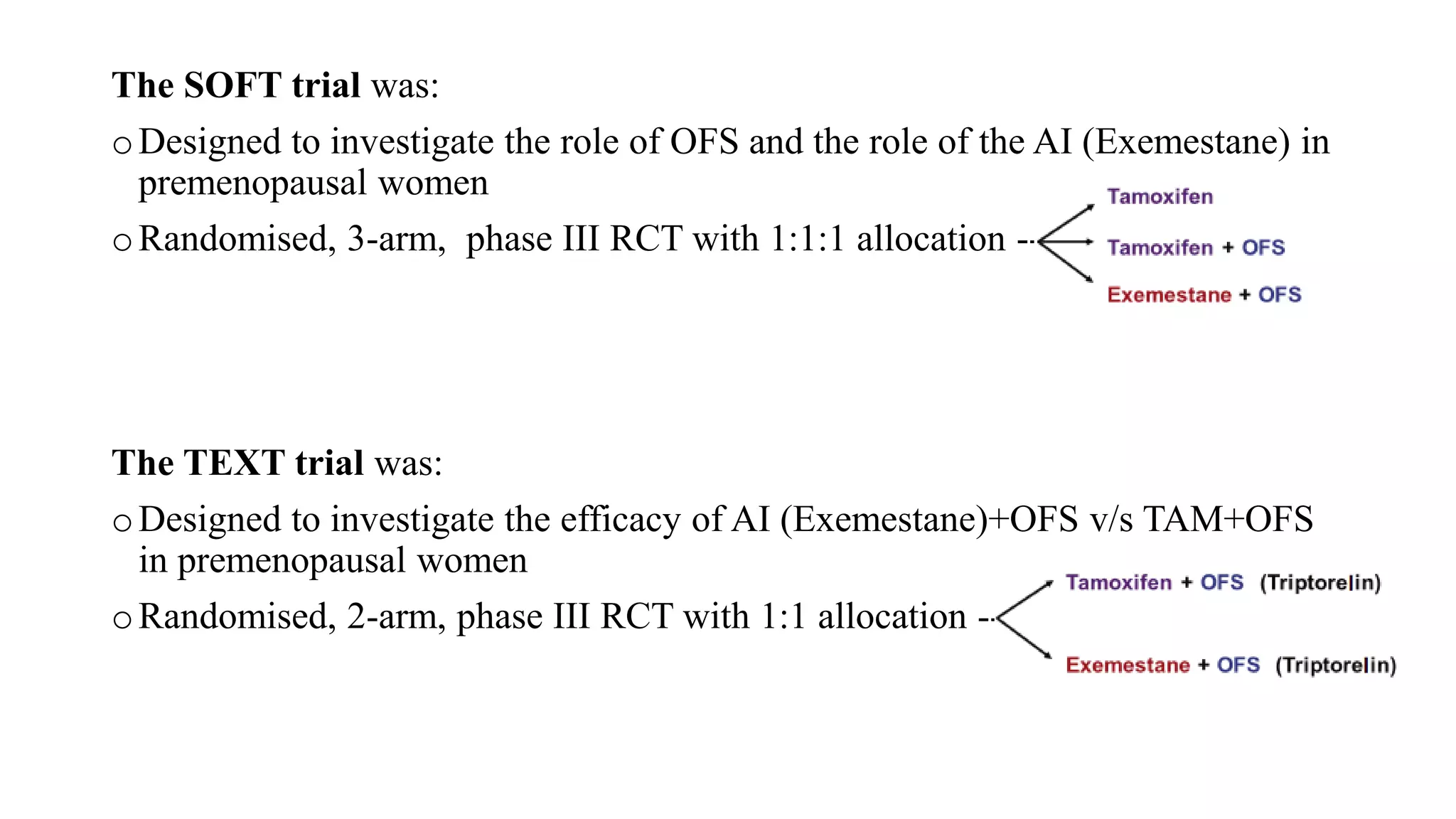
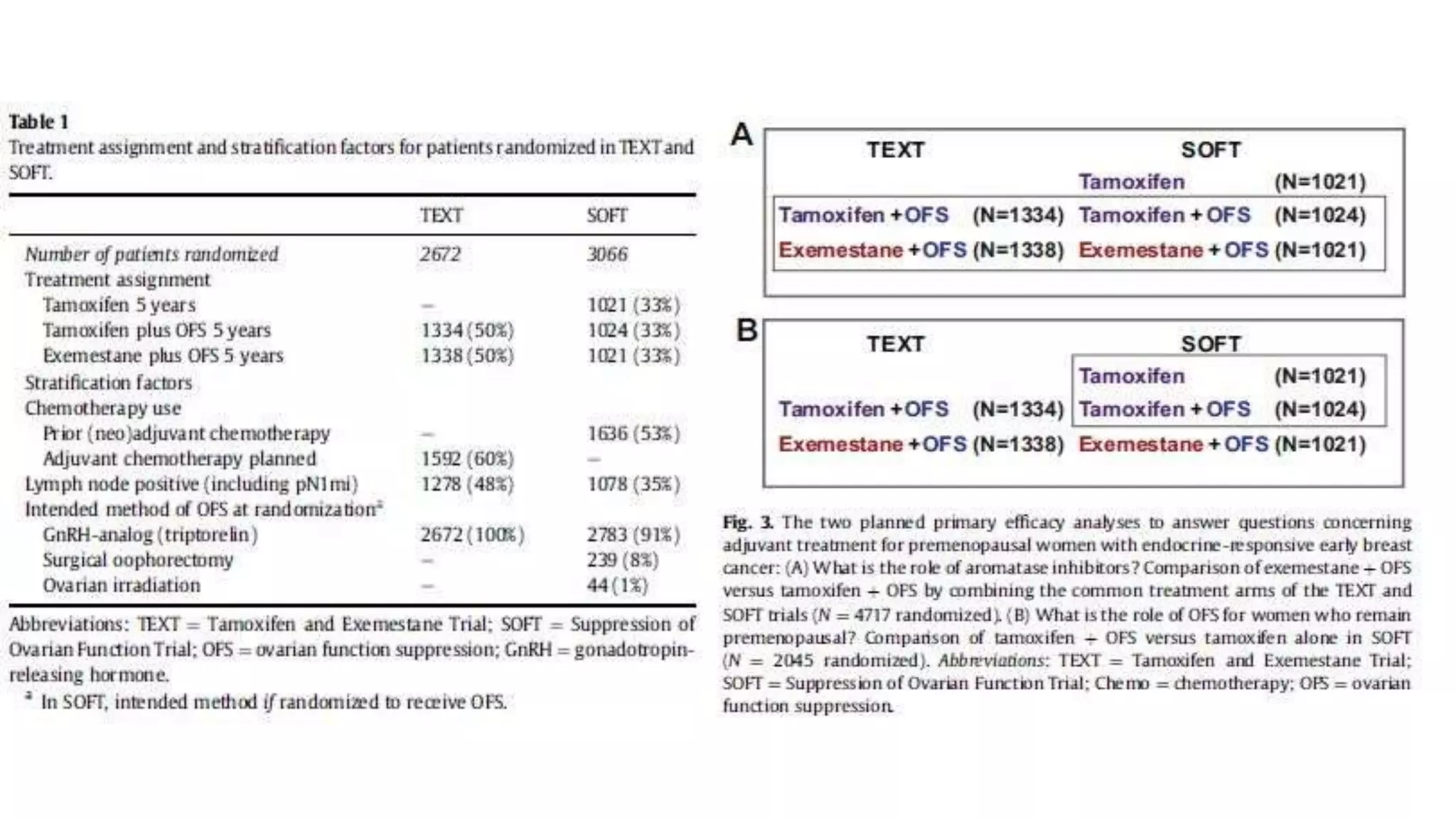
The SOFT trial was:
oDesigned to investigate the role of OFS and the role of the AI (Exemestane) in
premenopausal women
oRandomised, 3-arm, phase III RCT with 1:1:1 allocation --
The TEXT trial was:
oDesigned to investigate the efficacy of AI (Exemestane)+OFS v/s TAM+OFS
in premenopausal women
oRandomised, 2-arm, phase III RCT with 1:1 allocation --
Common to both SOFT & TEXT trials:
o Documented pre-menopausal status (using Estradiol levels)
o Operable breast cancer
o ER/PR +ve tumours (in ≥10% of the cells)
o BCS+RT or MRM±RT
o AxLND, or SLNBx –ve (or microscopically +ve only), or +ve SLNBx foll. by AxLND or Ax RT
Inclusion criteria
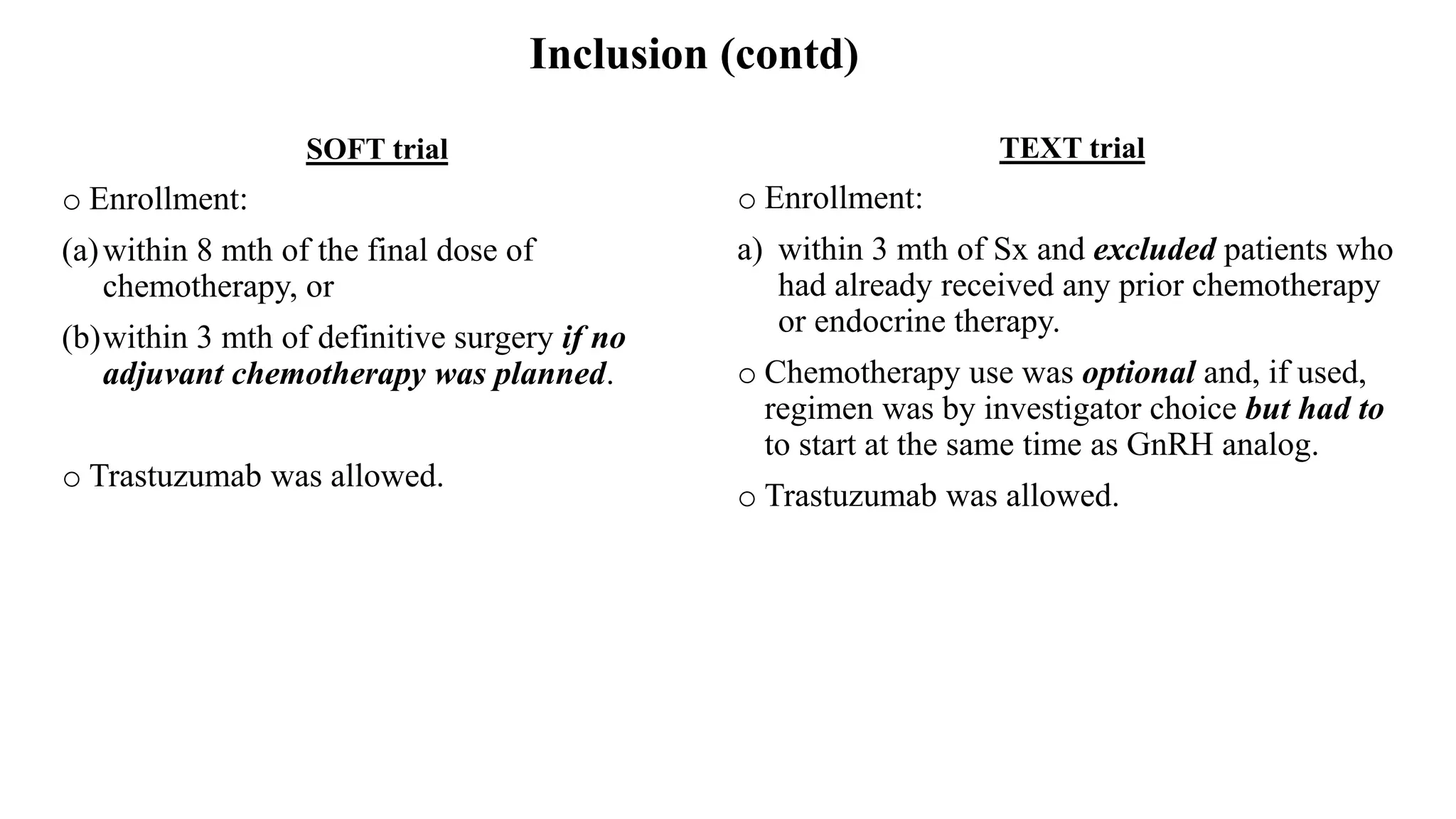
Inclusion (contd)
SOFT trial
o Enrollment:
(a)within 8 mth of the final dose of
chemotherapy, or
(b)within 3 mth of definitive surgery if no
adjuvant chemotherapy was planned.
o Trastuzumab was allowed.
TEXT trial
o Enrollment:
a) within 3 mth of Sx and excluded patients who
had already received any prior chemotherapy
or endocrine therapy.
o Chemotherapy use was optional and, if used,
regimen was by investigator choice but had to
to start at the same time as GnRH analog.
o Trastuzumab was allowed.
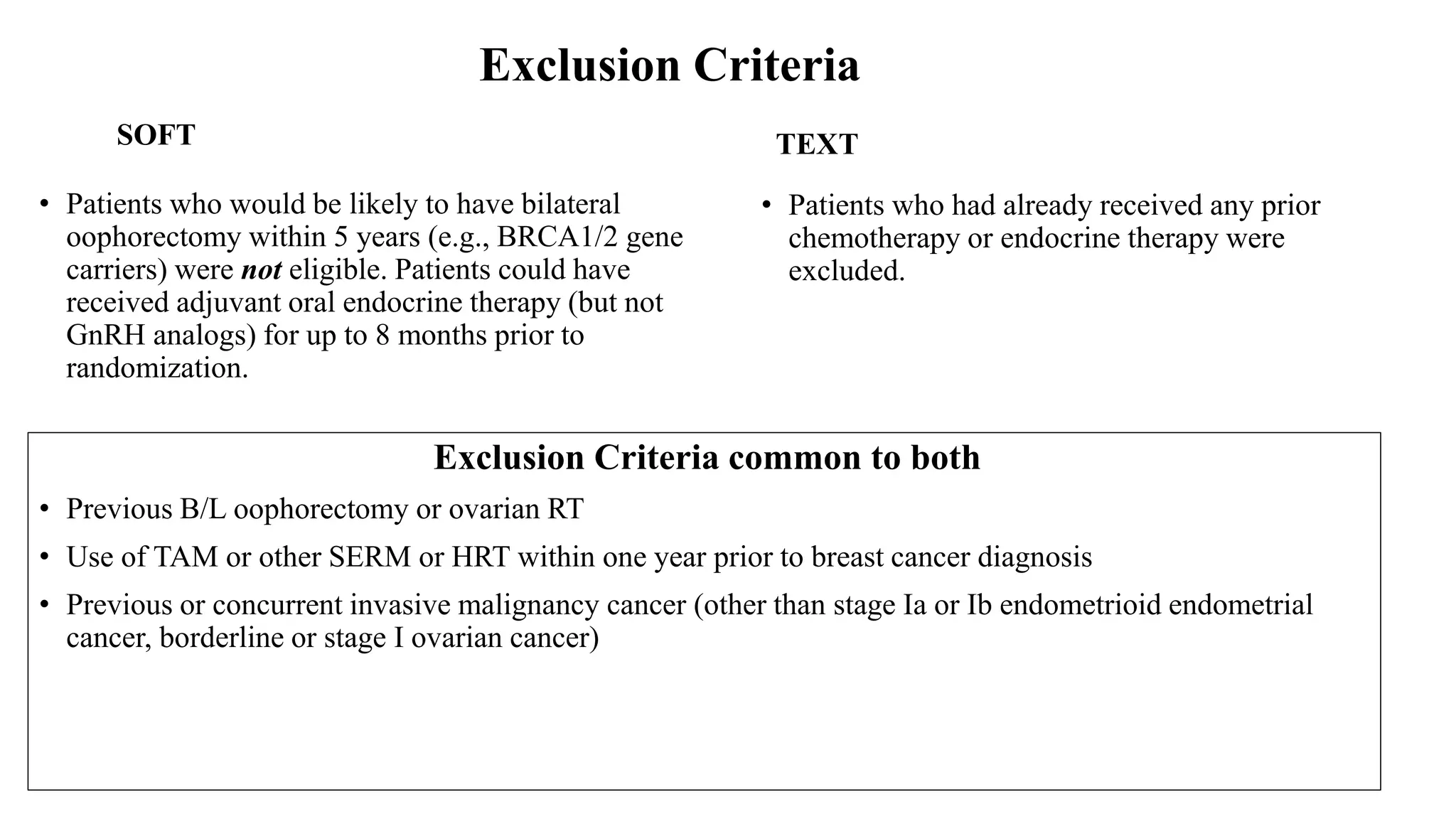
Exclusion Criteria
TEXT
• Patients who would be likely to have bilateral
oophorectomy within 5 years (e.g., BRCA1/2 gene
carriers) were not eligible. Patients could have
received adjuvant oral endocrine therapy (but not
GnRH analogs) for up to 8 months prior to
randomization.
SOFT
• Patients who had already received any prior
chemotherapy or endocrine therapy were
excluded.
Exclusion Criteria common to both
• Previous B/L oophorectomy or ovarian RT
• Use of TAM or other SERM or HRT within one year prior to breast cancer diagnosis
• Previous or concurrent invasive malignancy cancer (other than stage Ia or Ib endometrioid endometrial
cancer, borderline or stage I ovarian cancer)
Further design points
SOFT
• Stratification done by Nodal status, Prior
chemo rcvd or not, and intended OFS method
(GnRH analog, Oophorectomy or RT – by
patient choice)
• Randomized in a 1:1:1 manner to 3 arms:
TAM alone v/s TAM+OFS v/s AI+OFS
• OFS was mandatorily done using GnRH
analog for 6 mth, after which the pt. could
choose to continue with this, or opt for RT or
Sx. OFS was to be done for 5 yrs.
• OFS was started only after pts. had completed
their chemo (within 8 mth of chemo
completion).
• Oral ET (TAM) was permitted even before
randomization.
TEXT
• Stratification done by Nodal status, and
Chemo planned or not (chemo regimen & use
was by investigator choice)
• Randomized in a 1:1 manner to 2 arms:
TAM+OFS v/s AI+OFS
• OFS was mandatorily done using GnRH
analog for 6 mth, after which the pt. could
choose to continue with this, or opt for RT or
Sx. OFS was to be done for 5 yrs.
• OFS started concurrently with Chemo
• Oral ET was to start after adjuvant
chemotherapy was completed, or
approximately 6-8 weeks after initiation of
GnRH analog, whichever was later.
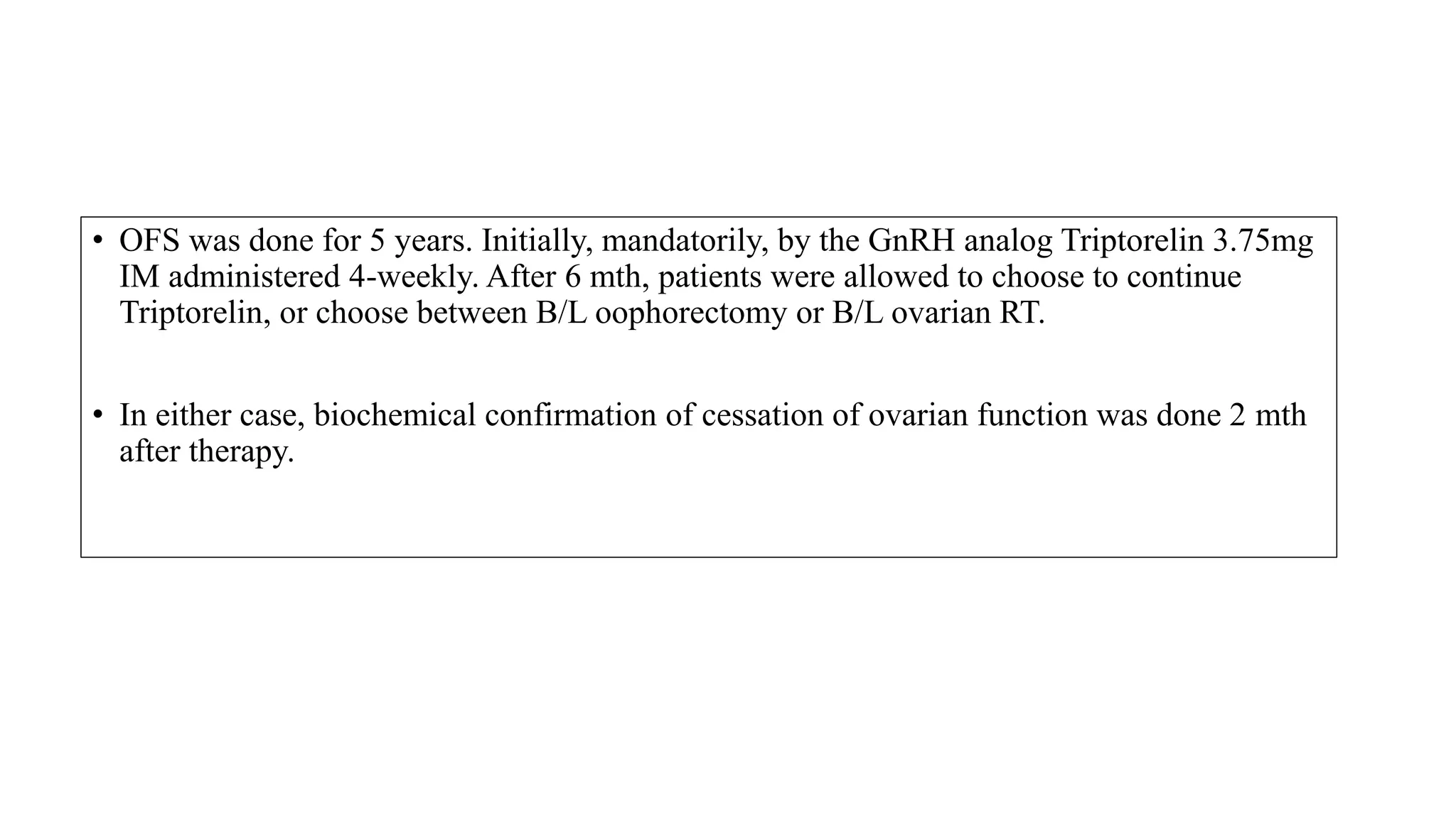
• OFS was done for 5 years. Initially, mandatorily, by the GnRH analog Triptorelin 3.75mg
IM administered 4-weekly. After 6 mth, patients were allowed to choose to continue
Triptorelin, or choose between B/L oophorectomy or B/L ovarian RT.
• In either case, biochemical confirmation of cessation of ovarian function was done 2 mth
after therapy.
Trial Design
Original statistical design :
• Each trial’s statistical design assumed uniform accrual, exponential distribution of
DFS, and two-sided log rank tests with trial wise 0.05-level α-error.
• Each analysis would implement stratified log rank tests and Cox proportional
hazard regression, and Kaplan Meier estimates of the DFS distribution.
• Four interim and the final analysis were planned using O’Brien-Fleming
boundaries.
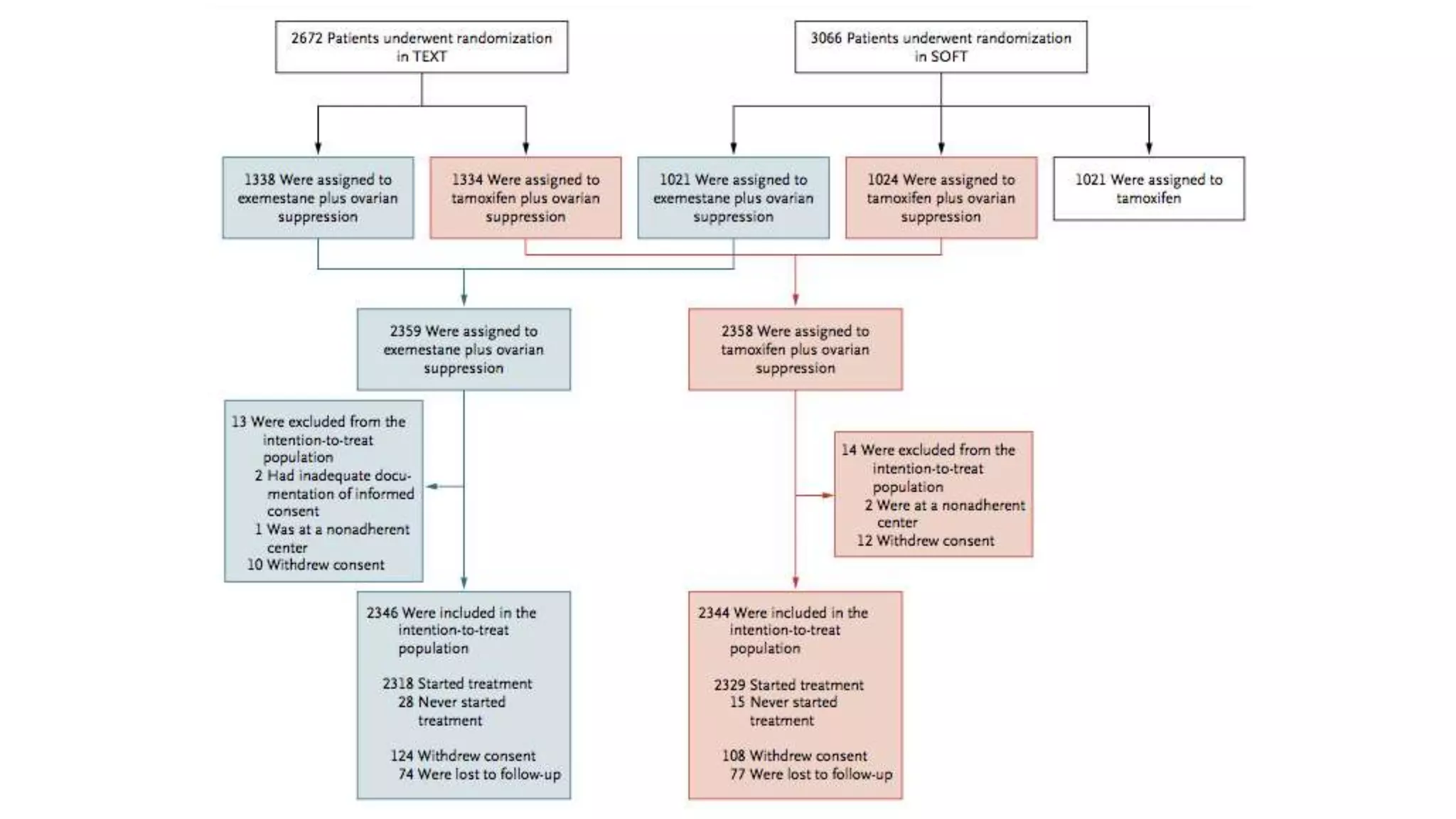
• From the outset, the protocols planned to combine the data of TEXT with the two arms of
SOFT comparing AI+OFS vs TAM+OFS.
• Primary end point of both RCTs was disease-free survival (DFS), defined as the time from
randomization to the first onset of the following events: invasive recurrence at local, regional,
or distant sites; new invasive cancer in the contralateral breast; secondary (non-breast)
malignancy; or death without prior cancer event
• Secondary end points for both included the following:
• Time interval without breast cancer, defined as the time from randomization to the
recurrence of invasive breast cancer (local, regional, or distant) or invasive contralateral
breast cancer;
• Time interval before a recurrence of breast cancer at a distant site, defined as the time
from randomization to the recurrence of breast cancer at a distant site; and
• Overall survival, defined as the time from randomization to death from any cause.
End Points:
SOFT
• Primary end point – DFS
• Secondary end point –
• Interval without breast cancer
• Time interval before recurrence of
breast cancer at a distant site
• Overall survival
SOFT + TEXT
• Primary end point – DFS
• Secondary end point –
• Interval without breast cancer
• Time interval before recurrence of
breast cancer at a distant site
• Overall survival
Derivations of 5-yr DFS estimates
• A 40% reduction in risk of relapse by adding TAM was assumed, resulting in an
estimated 5-year DFS of 67% among patients treated with TAM in the SOFT
control arm.
• A 25% reduction in hazard by adding OFS to TAM (74.1% 5-year DFS) and a
further 25% reduction in the hazard with AI + OFS (79.8% 5-year DFS) were
hypothesized.
Statistical analysis :
TEXT
• Planned enrollment was 2672 patients for
the 2 arms
• The design projected that 4.5 years of
uniform accrual, plus 2.4 years of
additional follow-up would be sufficient
to observe the target of 396 DFS events
to provide 80% power to detect 25%
reduction in hazard with AI + OFS
versus TAM + OFS (hazard ratio (HR) -
0.75; 79.8% vs 74.1% 5-year DFS,
respectively).
SOFT
• Planned enrollment was 3066 patients for
the 3 arms.
• The design projected that 5 years of
uniform accrual, plus 1.9 years of
additional follow-up would be sufficient
to observe the target of 783 DFS events
(522 per pairwise comparison) to have
80% power to detect a 25% reduction in
hazard relative to control 5-year DFS of
67% (HR - 0.75; 74.1% vs 67.0% 5-year
DFS; 2-sided α-0.0167).
Adaptations in the statistical design and analysis plans
1. OFS question : the primary analysis from
SOFT would focus on the unique comparison
of TAM + OFS versus TAM alone, tested at the
two-sided α - 0.05 level .
IBCSG estimated power to be at least 80%, 69%,
52% and 34% to detect 33.5%, 30%, 25% and 20%
reductions in hazard, respectively, with TAM +
OFS.
1. AI question : the primary analysis comparing
AI + OFS versus TAM + OFS would
implement the originally planned combined
analysis of TEXT and SOFT.
The power of such a combined comparison (two-
sided α-0.05 level) would be at least 95%, 84% and
63% to detect a 30%, 25% and 20% reduction in
hazard, respectively, with TAM + OFS.
SOFT - 2014
Prudence A. Francis et al., N Engl J Med 2015;372:436-46.
Results
Adverse events :
Summary – SOFT Trial
SOFT Tamoxifen-OFS Tamoxifen P value
5-yr DFS 86.6% 84.7% 0.10
5-yr OS 96.7% 95.1% 0.13
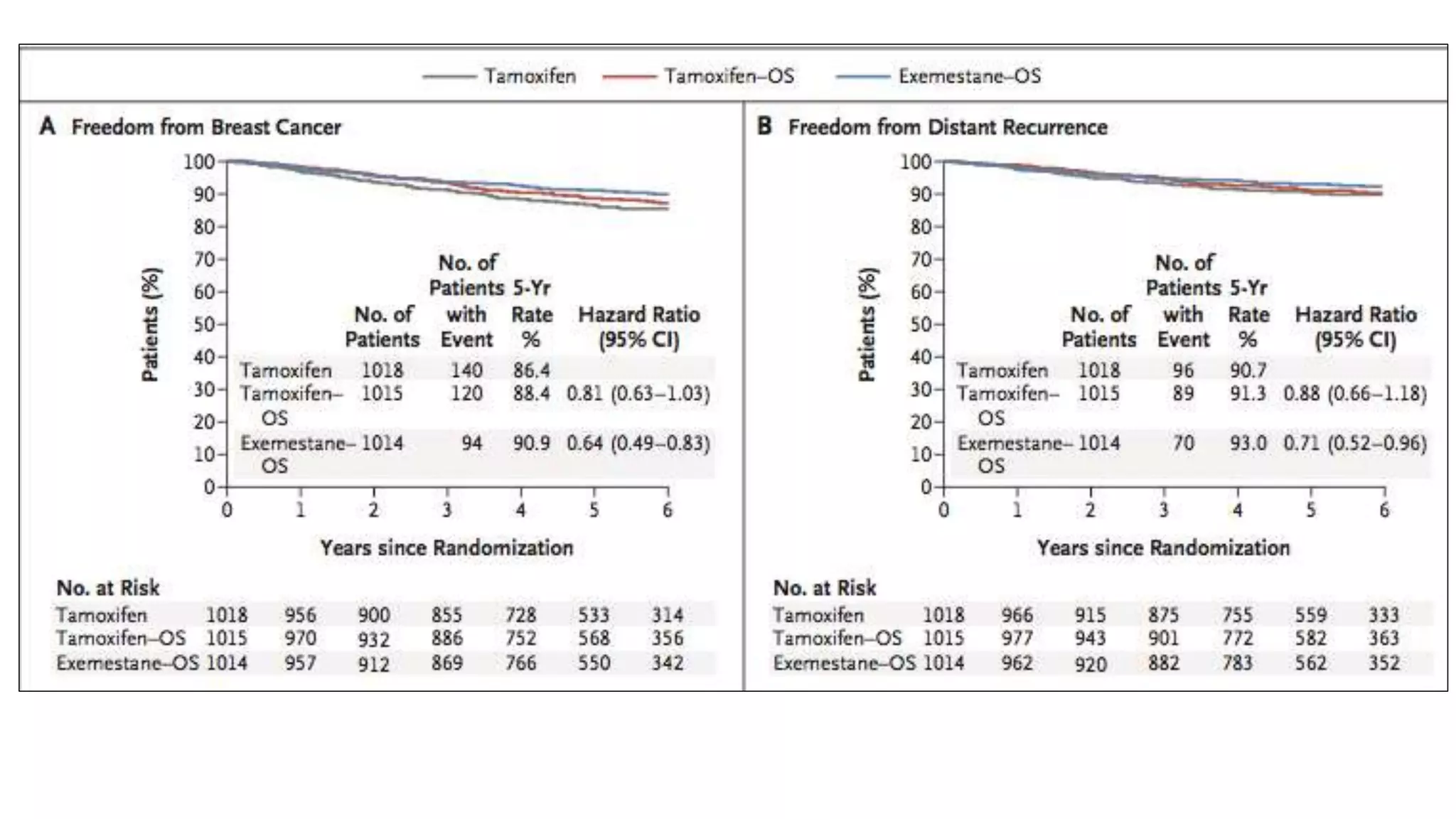
5-yr BC freedom rate 88.4% 86.4% 0.09
• In the low risk subpopulation of patients who did not receive chemotherapy
(predominantly women >40 years, with small, node-negative [N-] tumors of low to
intermediate grade), >95% remained free from BC and without distant recurrences at 5
years with TAM alone. In this cohort of patients TAM alone is very effective and can still
be considered the standard of care.
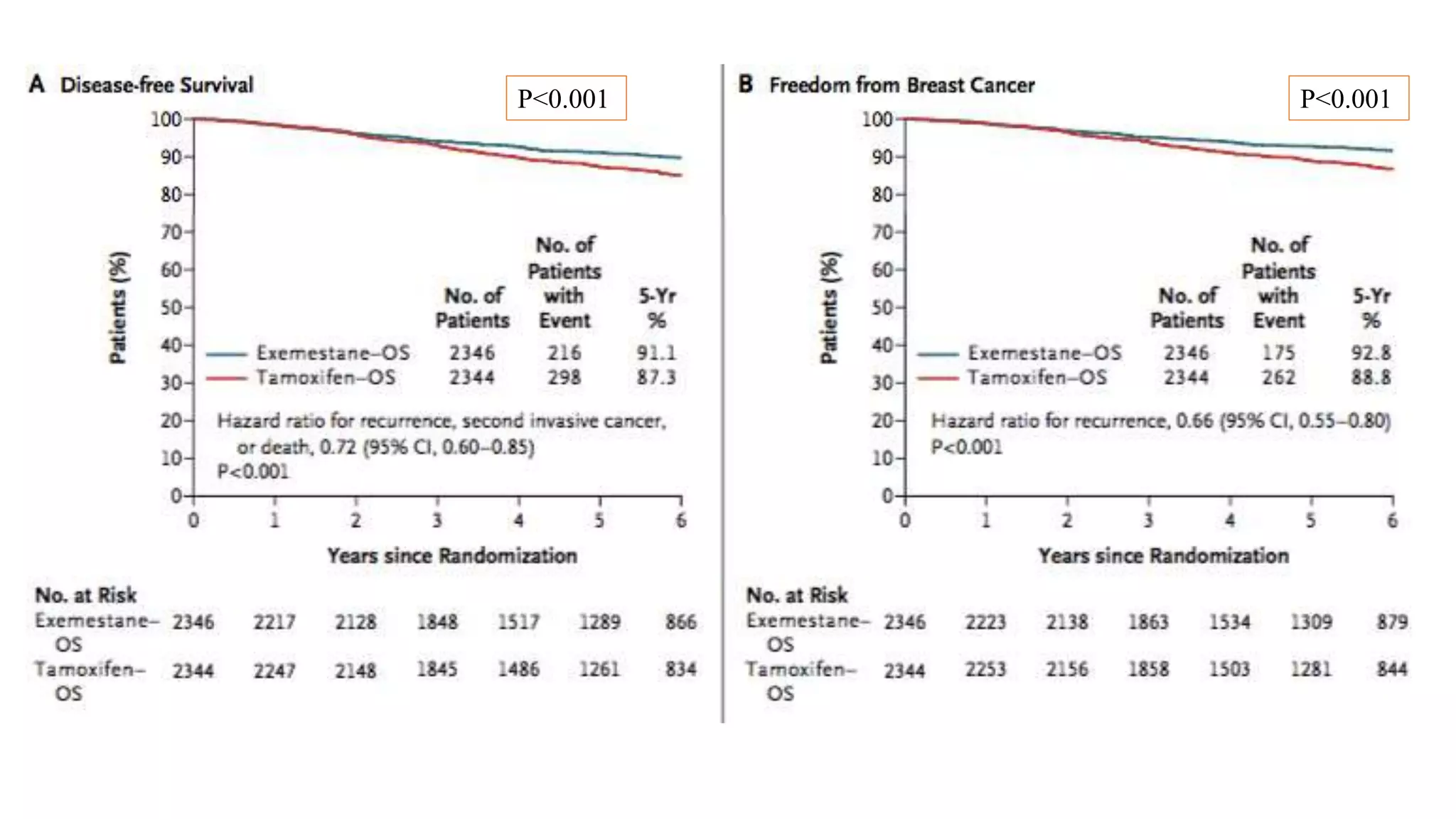
SOFT + TEXT Trial - 2014
Olivia Pagani et al., N Engl J Med 2014;371:107-18.
Results
P<0.001 P<0.001
P=0.02 P=0.37
P<0.0001
TEXT-SOFT combined
analysis
Tamoxifen-OFS Exemestane-OFS P-value
5-yr DFS 87.3% 91.1% P<0.001
5-yr BC free interval 88.8% 92.8% P<0.001
Freedom from recurrence of
breast cancer at a distant site
92% 93.8% P=0.02
5-yr OS 95.9% 96.9% p=0.37
5-yr OS > 95% in both groups, not significantly different according to assignment, but not
considered mature
Selected adverse events of Grade
3 or 4
29.4% 30.6%
• Median follow-up : 68 months
Among patients who received chemotherapy, the absolute improvement in the 5-year BC-free rate with
Exemestane-OFS as compared with tamoxifen- OFS was 5.5% in TEXT and 3.9% in SOFT.
• Median FU – 68 mth
• 60.1% of first events involved distant sites
• 13.6% were second, non-breast, invasive cancer
• Among patients who did not receive chemotherapy and were assigned to receive
Exemestane plus ovarian suppression, 97.6% of the patients in TEXT and 97.5% of those
in SOFT remained free from breast cancer at 5 years
• Recurrence of breast cancer at a distant site was reported in 325 patients (6.9%)
• Among patients who received chemotherapy, the rate of freedom from distant recurrence at
5 years was 2.6 percentage points higher among those who were assigned to AI + OFS than
among those who were assigned to TAM + OFS in TEXT and 3.4 percentage points higher
in SOFT
Side effects
• Exemestane+OFS : Fractures, musculoskeletal symptoms, vaginal dryness,
decreased libido, and dyspareunia were reported more frequently
• Tamoxifen +OFS : thromboembolic events, hot flushes, sweating, and urinary
incontinence more frequent
• Osteoporosis was reported in 13.2% of the patients assigned to Exemestane + OFS
and in 6.4% of those assigned to TAM + OFS
The events of grade 3 or 4 that were reported most frequently were hot flushes, musculoskeletal symptoms,
and hypertension.
Conclusion :
• TAM alone is still the preferred agent in low-risk patients
• OFS should be considered in patients at sufficient risk to deserve adjuvant
chemotherapy and particularly when very young
• When OFS is indicated, AI further improves short-term outcomes
• The 5-year median follow-up and the low event rate are insufficient to assess
whether the significant improvement in DFS with AI+OFS will translate into an
overall survival benefit
Thank You

SOFT & TEXT Trials

  • 1.
    Presented by: Dr.Satyajeet Rath Guided by: Dr. Shantanu Sapru Date: 28-10-16 Prudence A. Francis et al., N Engl J Med 2015;372:436-46 SOFT Trial Olivia Pagani et al., N Engl J Med 2014;371:107-18 SOFT + TEXT Trial Adjuvant Ovarian Supression in Premenopausal Breast Cancer Adjuvant Exemestane with Ovarian Supression in Premenopausal Breast Cancer
  • 2.
    Major controversial topicswere, and still are: 1. Is Tamoxifen (TAM) alone an optimal treatment? 2. What is the role of ovarian function suppression (OFS)? 3. Is there a place for aromatase inhibitors (AIs)? 4. What is the optimal treatment duration?
  • 3.
    Introduction : • Adjuvanttreatment for premenopausal women with ER+/PR+ disease is often a matter of physician and patient choice • Current recommendations include treatment with TAM for at least 5 years • 5 years of TAM reduces the odds of recurrence by 40% when added to adjuvant chemotherapy • GnRH agonists show similar efficacy to chemotherapy in the absence of TAM in prememopausal women, but additional benefit from OFS for women who receive 5 years of TAM + adjuvant chemotherapy is uncertain • AIs are equi-efficacious to TAM for postmenopausal women with endocrine-responsive breast cancer
  • 4.
    • The valueof therapeutic suppression of ovarian Estrogen production in premenopausal women who receive TAM is uncertain • In 2003 the International Breast Cancer Study Group (IBCSG) started 3 trials • SOFT - Suppression of Ovarian Function Trial • TEXT - Tamoxifen and Exemestane Trial • PERCHE - Premenopausal Endocrine-Responsive Chemotherapy • They were designed to answer questions concerning adjuvant treatment for premenopausal women with endocrine-responsive early breast cancer, what is the role of: 1. Ovarian function suppression (OFS) for women who remain premenopausal and are treated with TAM? 2. AIs for women treated with OFS?
  • 5.
    The SOFT trialwas: oDesigned to investigate the role of OFS and the role of the AI (Exemestane) in premenopausal women oRandomised, 3-arm, phase III RCT with 1:1:1 allocation -- The TEXT trial was: oDesigned to investigate the efficacy of AI (Exemestane)+OFS v/s TAM+OFS in premenopausal women oRandomised, 2-arm, phase III RCT with 1:1 allocation --
  • 6.
    Common to bothSOFT & TEXT trials: o Documented pre-menopausal status (using Estradiol levels) o Operable breast cancer o ER/PR +ve tumours (in ≥10% of the cells) o BCS+RT or MRM±RT o AxLND, or SLNBx –ve (or microscopically +ve only), or +ve SLNBx foll. by AxLND or Ax RT Inclusion criteria
  • 7.
    Inclusion (contd) SOFT trial oEnrollment: (a)within 8 mth of the final dose of chemotherapy, or (b)within 3 mth of definitive surgery if no adjuvant chemotherapy was planned. o Trastuzumab was allowed. TEXT trial o Enrollment: a) within 3 mth of Sx and excluded patients who had already received any prior chemotherapy or endocrine therapy. o Chemotherapy use was optional and, if used, regimen was by investigator choice but had to to start at the same time as GnRH analog. o Trastuzumab was allowed.
  • 8.
    Exclusion Criteria TEXT • Patientswho would be likely to have bilateral oophorectomy within 5 years (e.g., BRCA1/2 gene carriers) were not eligible. Patients could have received adjuvant oral endocrine therapy (but not GnRH analogs) for up to 8 months prior to randomization. SOFT • Patients who had already received any prior chemotherapy or endocrine therapy were excluded. Exclusion Criteria common to both • Previous B/L oophorectomy or ovarian RT • Use of TAM or other SERM or HRT within one year prior to breast cancer diagnosis • Previous or concurrent invasive malignancy cancer (other than stage Ia or Ib endometrioid endometrial cancer, borderline or stage I ovarian cancer)
  • 9.
    Further design points SOFT •Stratification done by Nodal status, Prior chemo rcvd or not, and intended OFS method (GnRH analog, Oophorectomy or RT – by patient choice) • Randomized in a 1:1:1 manner to 3 arms: TAM alone v/s TAM+OFS v/s AI+OFS • OFS was mandatorily done using GnRH analog for 6 mth, after which the pt. could choose to continue with this, or opt for RT or Sx. OFS was to be done for 5 yrs. • OFS was started only after pts. had completed their chemo (within 8 mth of chemo completion). • Oral ET (TAM) was permitted even before randomization. TEXT • Stratification done by Nodal status, and Chemo planned or not (chemo regimen & use was by investigator choice) • Randomized in a 1:1 manner to 2 arms: TAM+OFS v/s AI+OFS • OFS was mandatorily done using GnRH analog for 6 mth, after which the pt. could choose to continue with this, or opt for RT or Sx. OFS was to be done for 5 yrs. • OFS started concurrently with Chemo • Oral ET was to start after adjuvant chemotherapy was completed, or approximately 6-8 weeks after initiation of GnRH analog, whichever was later.
  • 10.
    • OFS wasdone for 5 years. Initially, mandatorily, by the GnRH analog Triptorelin 3.75mg IM administered 4-weekly. After 6 mth, patients were allowed to choose to continue Triptorelin, or choose between B/L oophorectomy or B/L ovarian RT. • In either case, biochemical confirmation of cessation of ovarian function was done 2 mth after therapy.
  • 11.
  • 12.
    Original statistical design: • Each trial’s statistical design assumed uniform accrual, exponential distribution of DFS, and two-sided log rank tests with trial wise 0.05-level α-error. • Each analysis would implement stratified log rank tests and Cox proportional hazard regression, and Kaplan Meier estimates of the DFS distribution. • Four interim and the final analysis were planned using O’Brien-Fleming boundaries.
  • 13.
    • From theoutset, the protocols planned to combine the data of TEXT with the two arms of SOFT comparing AI+OFS vs TAM+OFS. • Primary end point of both RCTs was disease-free survival (DFS), defined as the time from randomization to the first onset of the following events: invasive recurrence at local, regional, or distant sites; new invasive cancer in the contralateral breast; secondary (non-breast) malignancy; or death without prior cancer event • Secondary end points for both included the following: • Time interval without breast cancer, defined as the time from randomization to the recurrence of invasive breast cancer (local, regional, or distant) or invasive contralateral breast cancer; • Time interval before a recurrence of breast cancer at a distant site, defined as the time from randomization to the recurrence of breast cancer at a distant site; and • Overall survival, defined as the time from randomization to death from any cause.
  • 14.
    End Points: SOFT • Primaryend point – DFS • Secondary end point – • Interval without breast cancer • Time interval before recurrence of breast cancer at a distant site • Overall survival SOFT + TEXT • Primary end point – DFS • Secondary end point – • Interval without breast cancer • Time interval before recurrence of breast cancer at a distant site • Overall survival
  • 15.
    Derivations of 5-yrDFS estimates • A 40% reduction in risk of relapse by adding TAM was assumed, resulting in an estimated 5-year DFS of 67% among patients treated with TAM in the SOFT control arm. • A 25% reduction in hazard by adding OFS to TAM (74.1% 5-year DFS) and a further 25% reduction in the hazard with AI + OFS (79.8% 5-year DFS) were hypothesized.
  • 16.
    Statistical analysis : TEXT •Planned enrollment was 2672 patients for the 2 arms • The design projected that 4.5 years of uniform accrual, plus 2.4 years of additional follow-up would be sufficient to observe the target of 396 DFS events to provide 80% power to detect 25% reduction in hazard with AI + OFS versus TAM + OFS (hazard ratio (HR) - 0.75; 79.8% vs 74.1% 5-year DFS, respectively). SOFT • Planned enrollment was 3066 patients for the 3 arms. • The design projected that 5 years of uniform accrual, plus 1.9 years of additional follow-up would be sufficient to observe the target of 783 DFS events (522 per pairwise comparison) to have 80% power to detect a 25% reduction in hazard relative to control 5-year DFS of 67% (HR - 0.75; 74.1% vs 67.0% 5-year DFS; 2-sided α-0.0167).
  • 17.
    Adaptations in thestatistical design and analysis plans 1. OFS question : the primary analysis from SOFT would focus on the unique comparison of TAM + OFS versus TAM alone, tested at the two-sided α - 0.05 level . IBCSG estimated power to be at least 80%, 69%, 52% and 34% to detect 33.5%, 30%, 25% and 20% reductions in hazard, respectively, with TAM + OFS. 1. AI question : the primary analysis comparing AI + OFS versus TAM + OFS would implement the originally planned combined analysis of TEXT and SOFT. The power of such a combined comparison (two- sided α-0.05 level) would be at least 95%, 84% and 63% to detect a 30%, 25% and 20% reduction in hazard, respectively, with TAM + OFS.
  • 19.
    SOFT - 2014 PrudenceA. Francis et al., N Engl J Med 2015;372:436-46.
  • 22.
  • 26.
  • 27.
    Summary – SOFTTrial SOFT Tamoxifen-OFS Tamoxifen P value 5-yr DFS 86.6% 84.7% 0.10 5-yr OS 96.7% 95.1% 0.13 5-yr BC freedom rate 88.4% 86.4% 0.09 • In the low risk subpopulation of patients who did not receive chemotherapy (predominantly women >40 years, with small, node-negative [N-] tumors of low to intermediate grade), >95% remained free from BC and without distant recurrences at 5 years with TAM alone. In this cohort of patients TAM alone is very effective and can still be considered the standard of care.
  • 28.
    SOFT + TEXTTrial - 2014 Olivia Pagani et al., N Engl J Med 2014;371:107-18.
  • 31.
  • 32.
  • 33.
  • 34.
  • 35.
    TEXT-SOFT combined analysis Tamoxifen-OFS Exemestane-OFSP-value 5-yr DFS 87.3% 91.1% P<0.001 5-yr BC free interval 88.8% 92.8% P<0.001 Freedom from recurrence of breast cancer at a distant site 92% 93.8% P=0.02 5-yr OS 95.9% 96.9% p=0.37 5-yr OS > 95% in both groups, not significantly different according to assignment, but not considered mature Selected adverse events of Grade 3 or 4 29.4% 30.6% • Median follow-up : 68 months Among patients who received chemotherapy, the absolute improvement in the 5-year BC-free rate with Exemestane-OFS as compared with tamoxifen- OFS was 5.5% in TEXT and 3.9% in SOFT.
  • 36.
    • Median FU– 68 mth • 60.1% of first events involved distant sites • 13.6% were second, non-breast, invasive cancer • Among patients who did not receive chemotherapy and were assigned to receive Exemestane plus ovarian suppression, 97.6% of the patients in TEXT and 97.5% of those in SOFT remained free from breast cancer at 5 years • Recurrence of breast cancer at a distant site was reported in 325 patients (6.9%) • Among patients who received chemotherapy, the rate of freedom from distant recurrence at 5 years was 2.6 percentage points higher among those who were assigned to AI + OFS than among those who were assigned to TAM + OFS in TEXT and 3.4 percentage points higher in SOFT
  • 37.
    Side effects • Exemestane+OFS: Fractures, musculoskeletal symptoms, vaginal dryness, decreased libido, and dyspareunia were reported more frequently • Tamoxifen +OFS : thromboembolic events, hot flushes, sweating, and urinary incontinence more frequent • Osteoporosis was reported in 13.2% of the patients assigned to Exemestane + OFS and in 6.4% of those assigned to TAM + OFS
  • 38.
    The events ofgrade 3 or 4 that were reported most frequently were hot flushes, musculoskeletal symptoms, and hypertension.
  • 39.
    Conclusion : • TAMalone is still the preferred agent in low-risk patients • OFS should be considered in patients at sufficient risk to deserve adjuvant chemotherapy and particularly when very young • When OFS is indicated, AI further improves short-term outcomes • The 5-year median follow-up and the low event rate are insufficient to assess whether the significant improvement in DFS with AI+OFS will translate into an overall survival benefit
  • 40.