Message Mapping
                 OMRON

                June 2012


       Patrice Cloutier
1.   Introduction
2.   Context … and challenges
3.   Understanding what's behind a message map
4.   Preparing a message map
5.   Delivering the message map


Today’s presentation
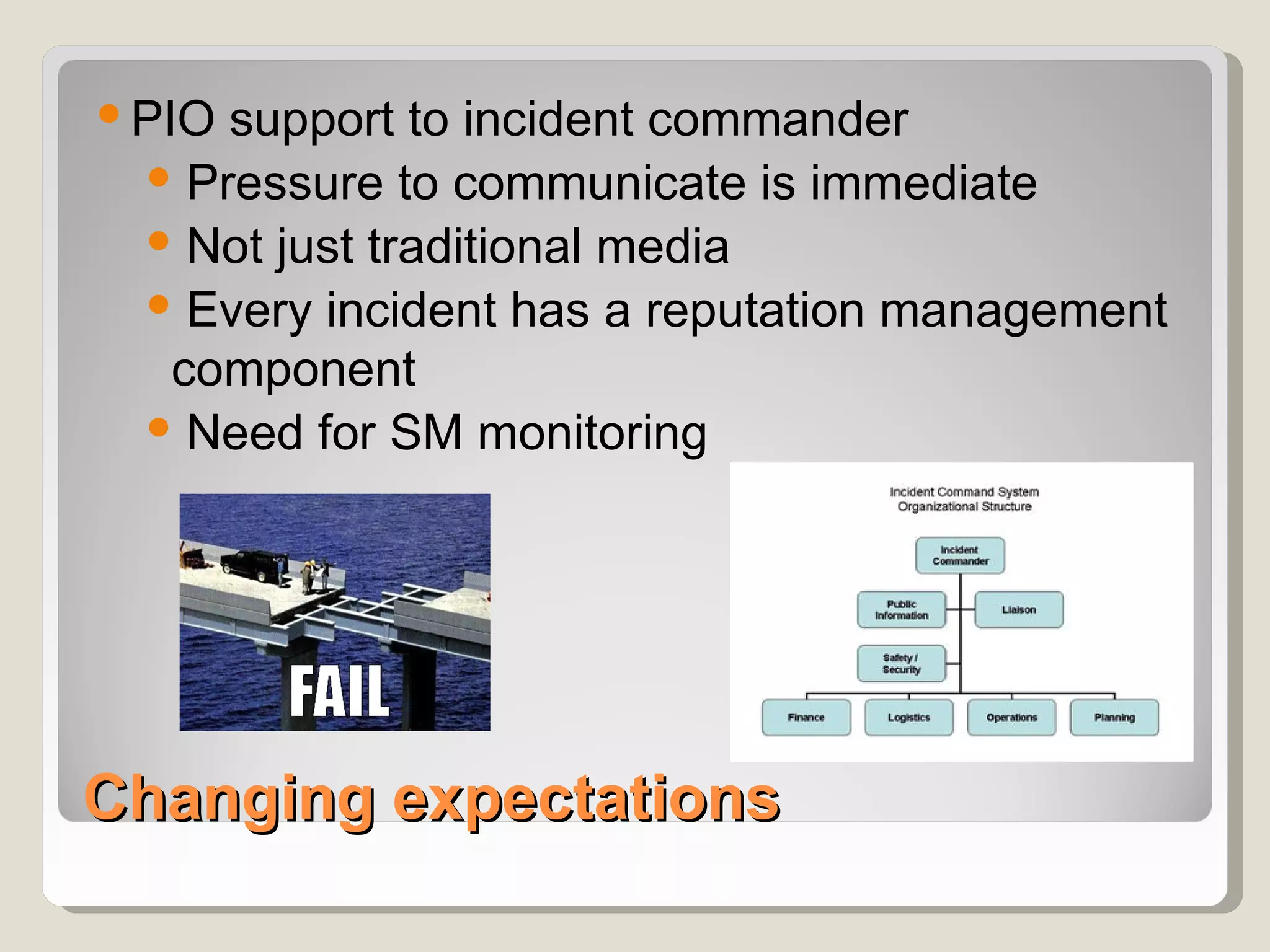
 PIO support to incident commander
   Pressure to communicate is immediate
   Not just traditional media
   Every incident has a reputation management
    component
   Need for SM monitoring


Changing expectations
What is emergency information?
 What our audiences need to know to protect
  themselves, their families, property and the
  environment.
 What we need to communicate to help ensure
  our audiences will adopt the right behaviour
  during a crisis or emergency.
 Also important: presenting your organization’s
  response to an incident under the best possible
  light.

Introduction
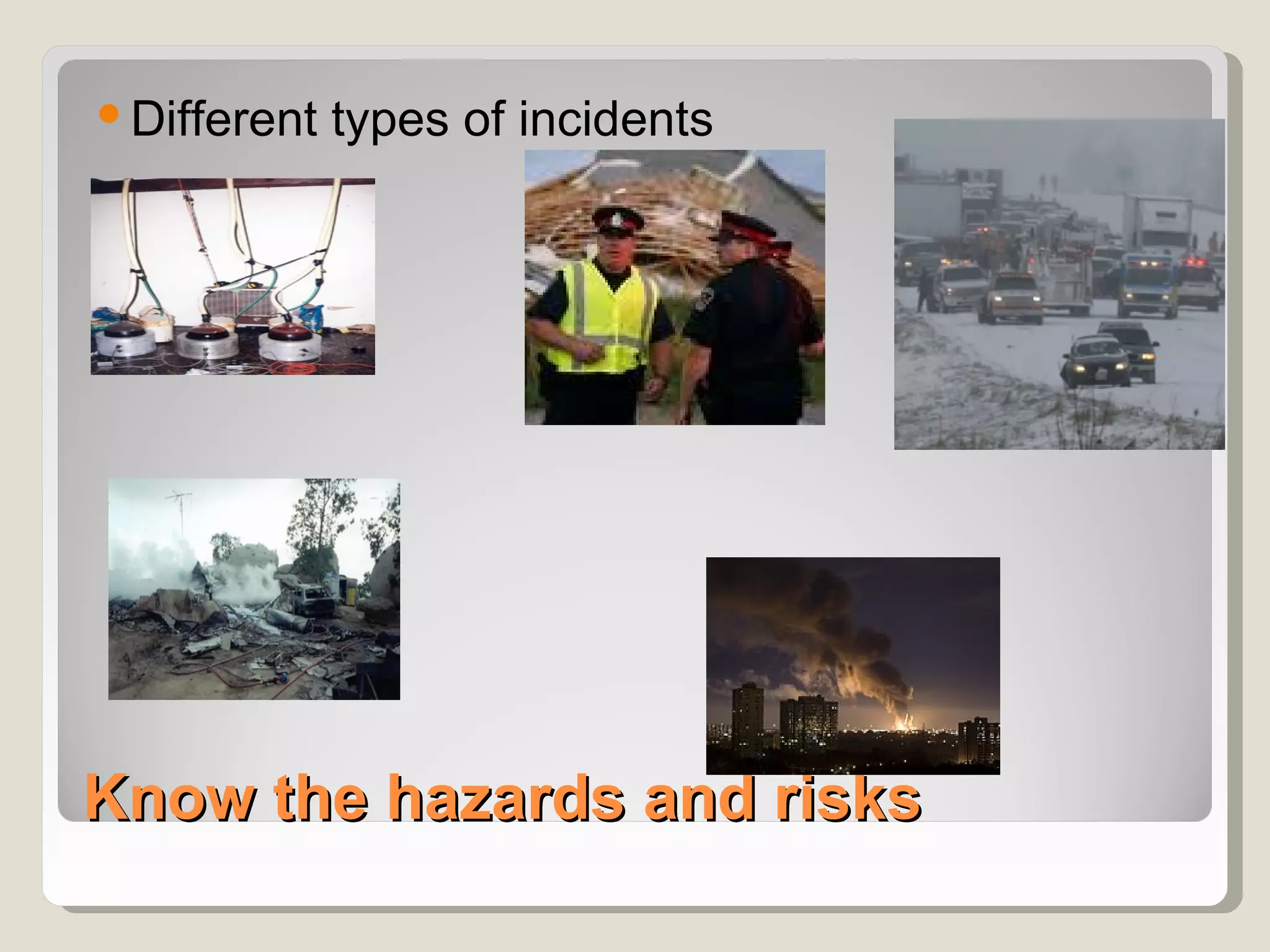
 Different types of incidents


Know the hazards and risks
The Social Media revolution


               Where are
                 you?
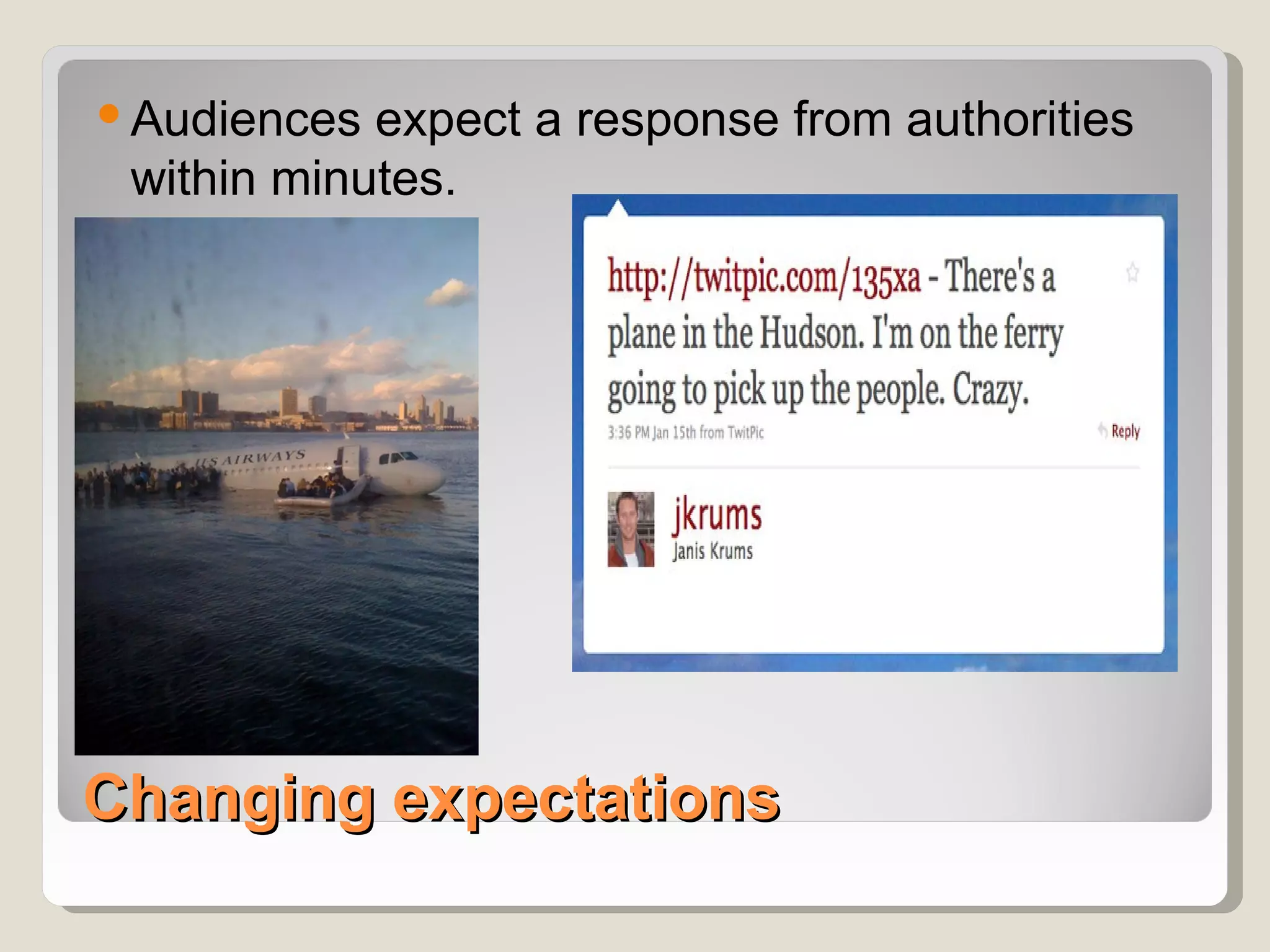
 Audiences expect a response from authorities
  within minutes.


Changing expectations
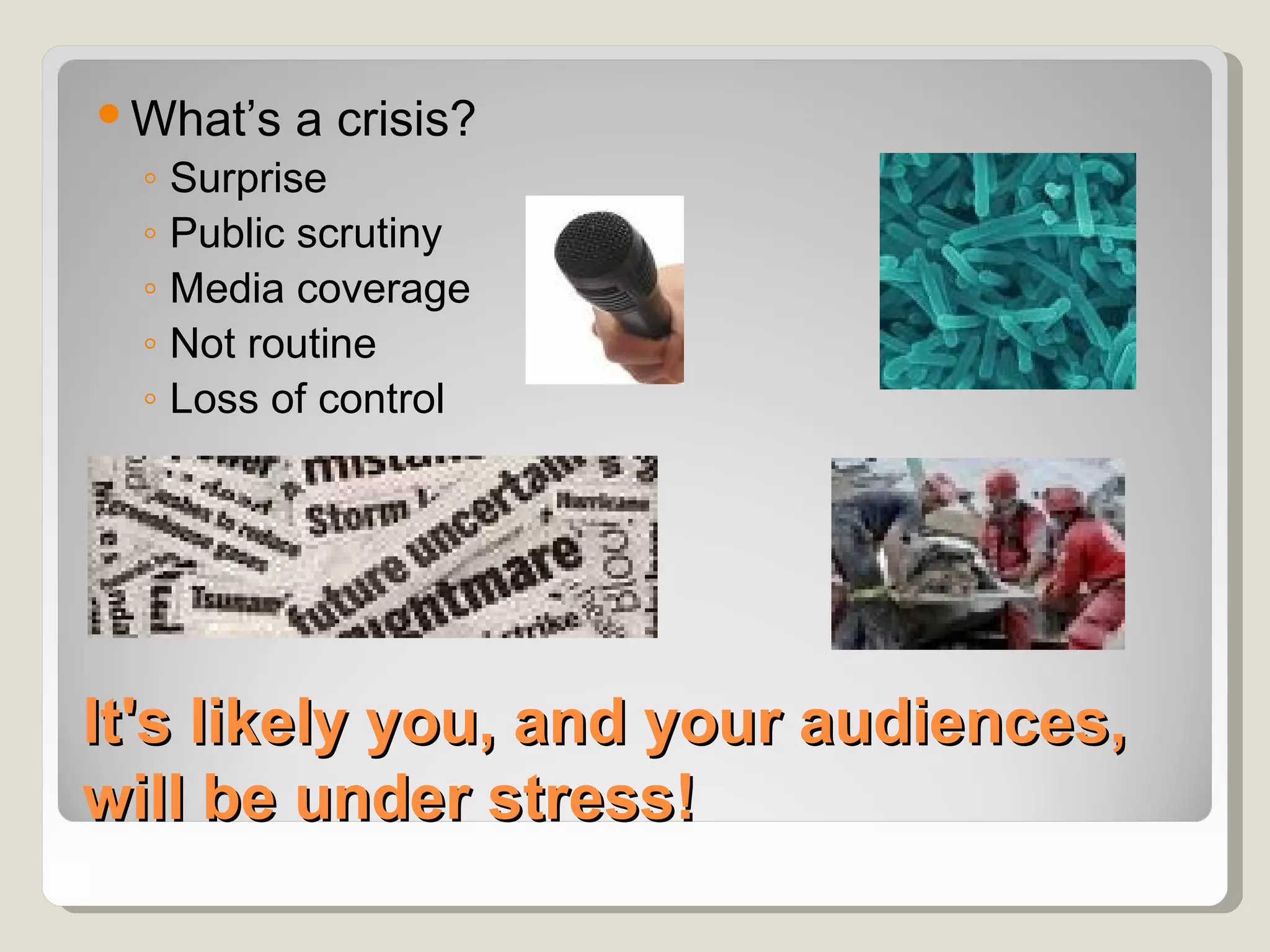
 What’s a crisis?
  ◦ Surprise
  ◦ Public scrutiny
  ◦ Media coverage
  ◦ Not routine
  ◦ Loss of control


It's likely you, and your audiences,
will be under stress!
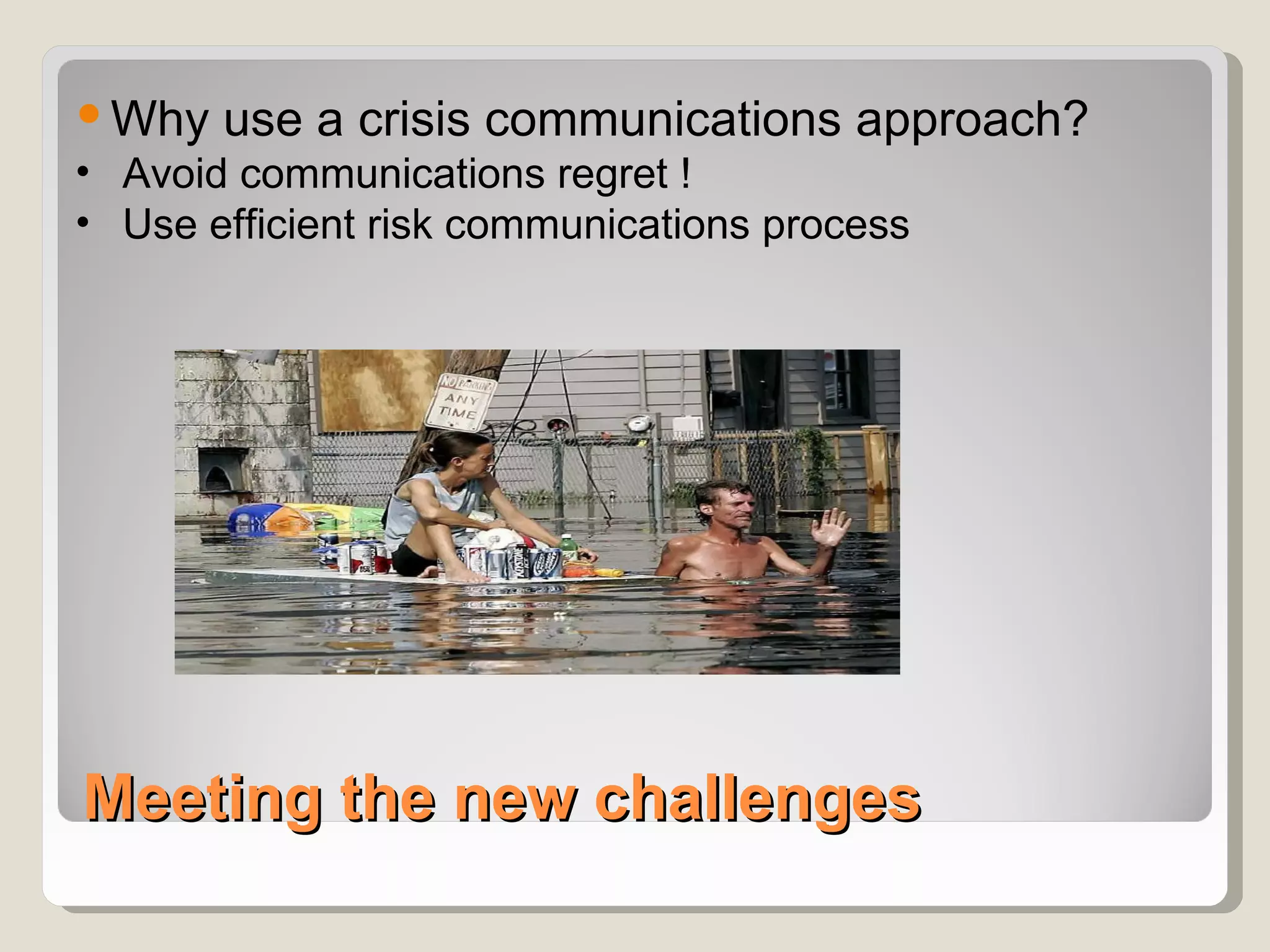
 Why use a crisis communications approach?
• Avoid communications regret !
• Use efficient risk communications process


Meeting the new challenges
 Why use a crisis communications approach?
• It’s about speed … and occupying the public space


• To meet the challenge … need the five Ps
   • Procedures
   • People
   • Preparation
   • Practice
   • Platforms

Meeting the new challenges
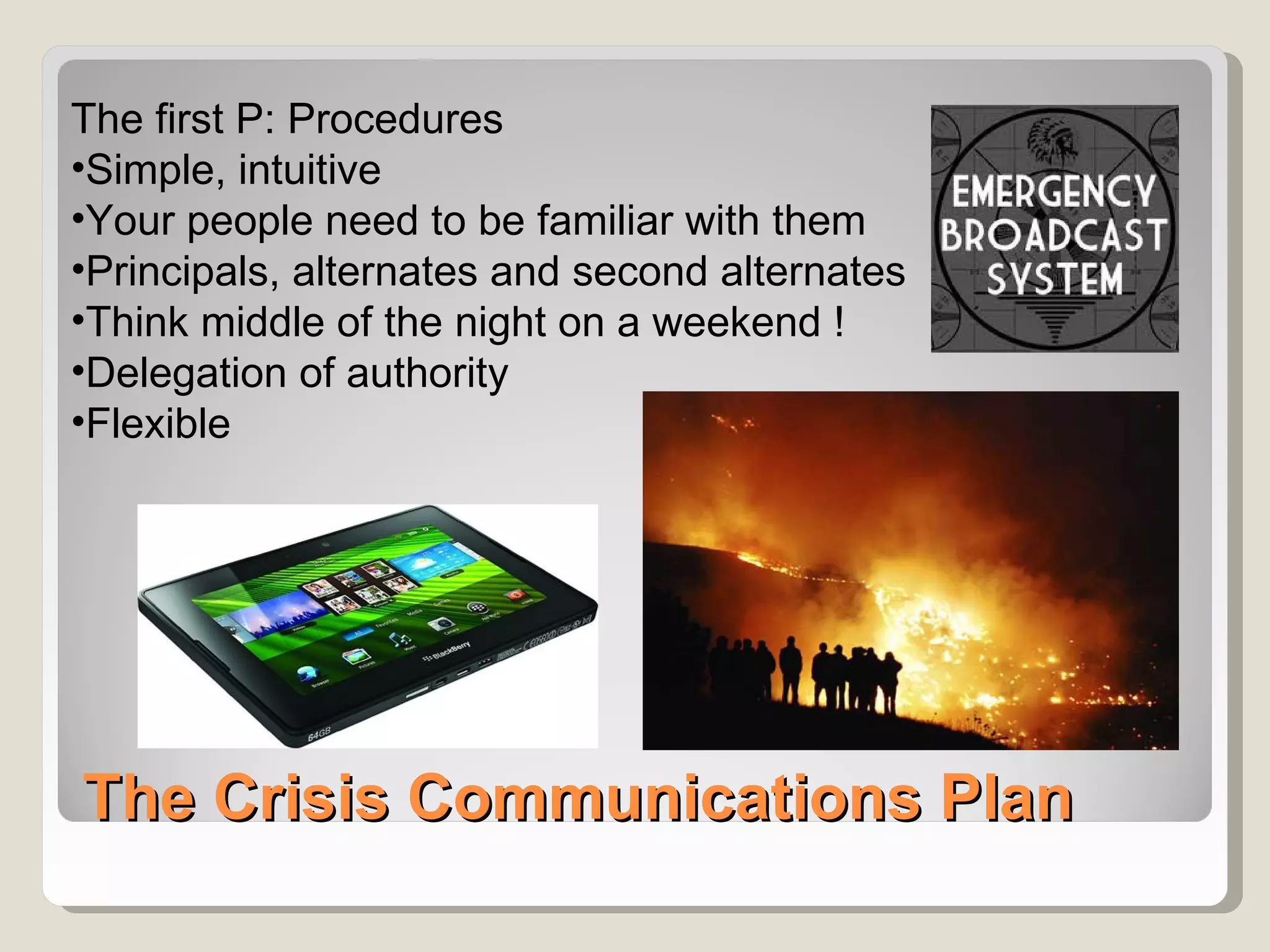
The first P: Procedures
•Simple, intuitive
•Your people need to be familiar with them
•Principals, alternates and second alternates
•Think middle of the night on a weekend !
•Delegation of authority
•Flexible


The Crisis Communications Plan
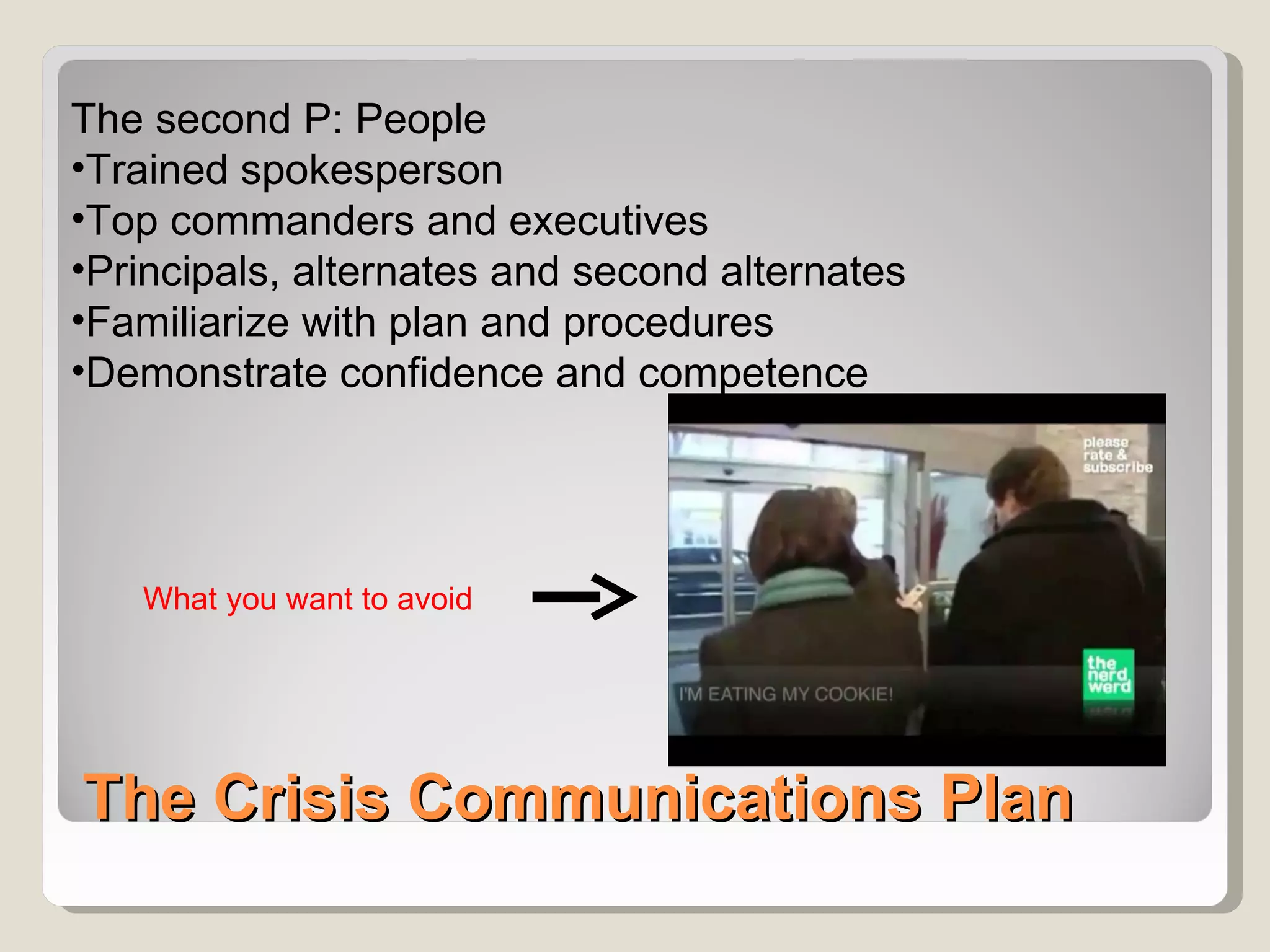
The second P: People
•Trained spokesperson
•Top commanders and executives
•Principals, alternates and second alternates
•Familiarize with plan and procedures
•Demonstrate confidence and competence


   What you want to avoid


The Crisis Communications Plan
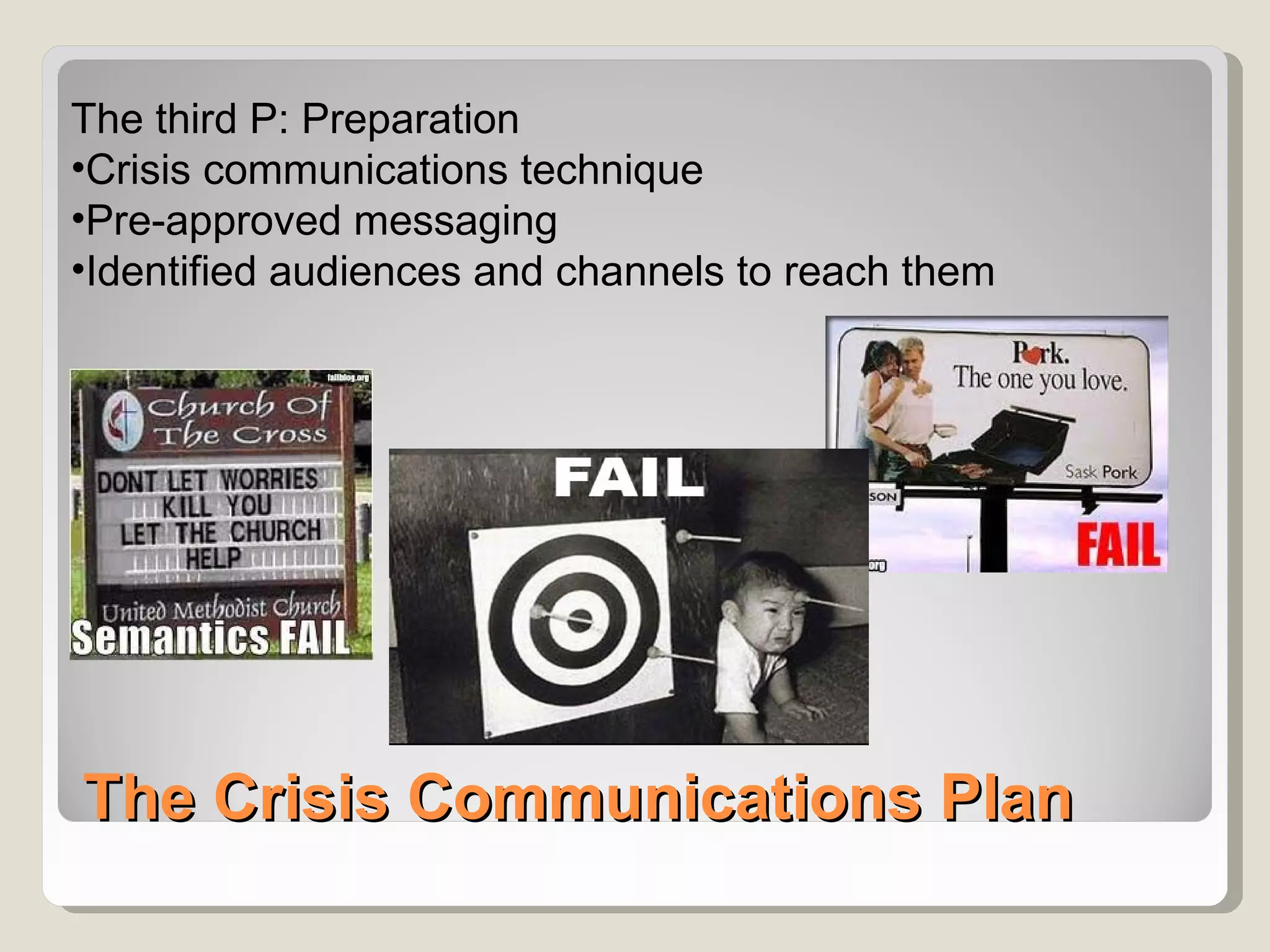
The third P: Preparation
•Crisis communications technique
•Pre-approved messaging
•Identified audiences and channels to reach them


The Crisis Communications Plan
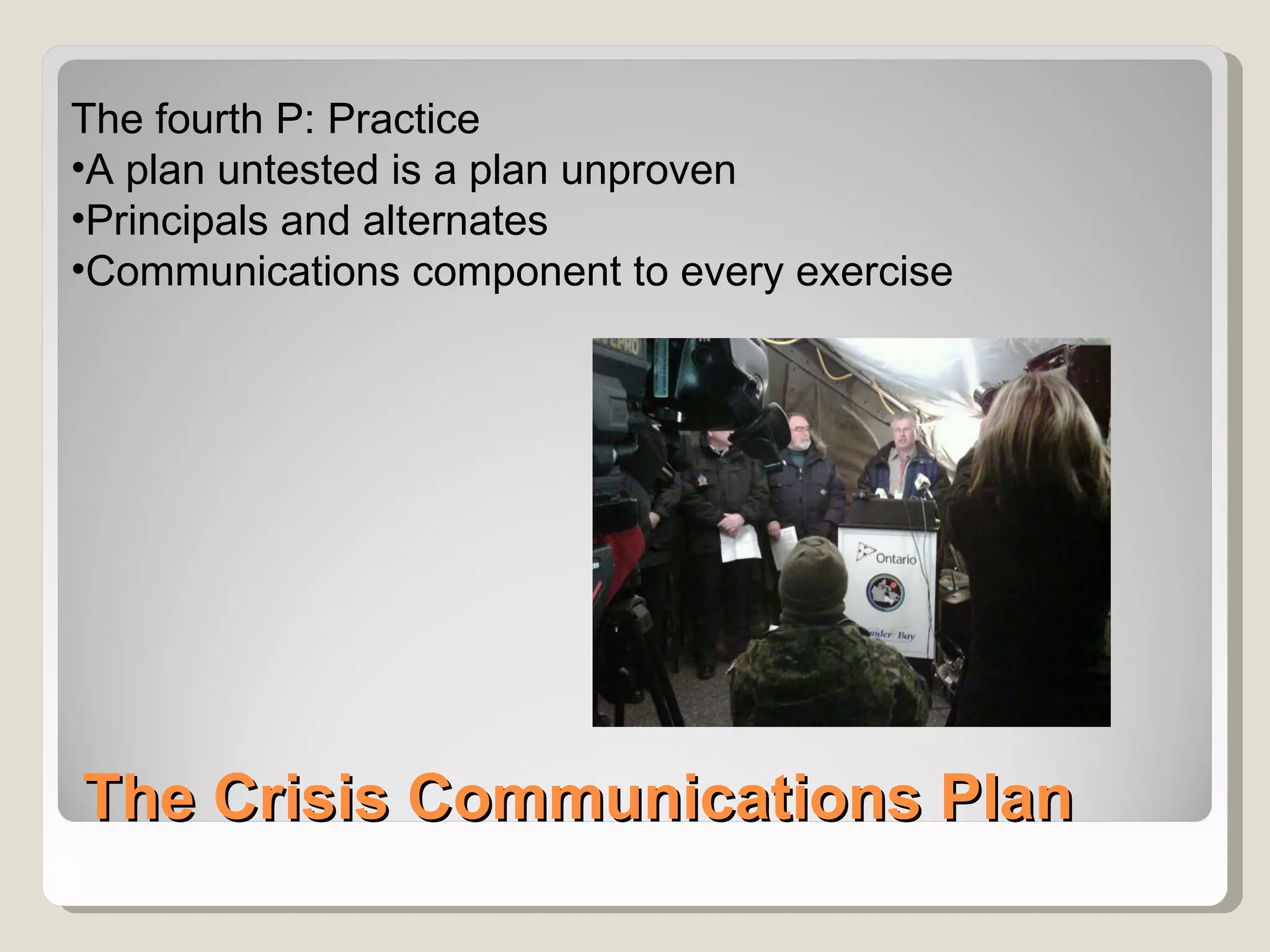
The fourth P: Practice
•A plan untested is a plan unproven
•Principals and alternates
•Communications component to every exercise


The Crisis Communications Plan
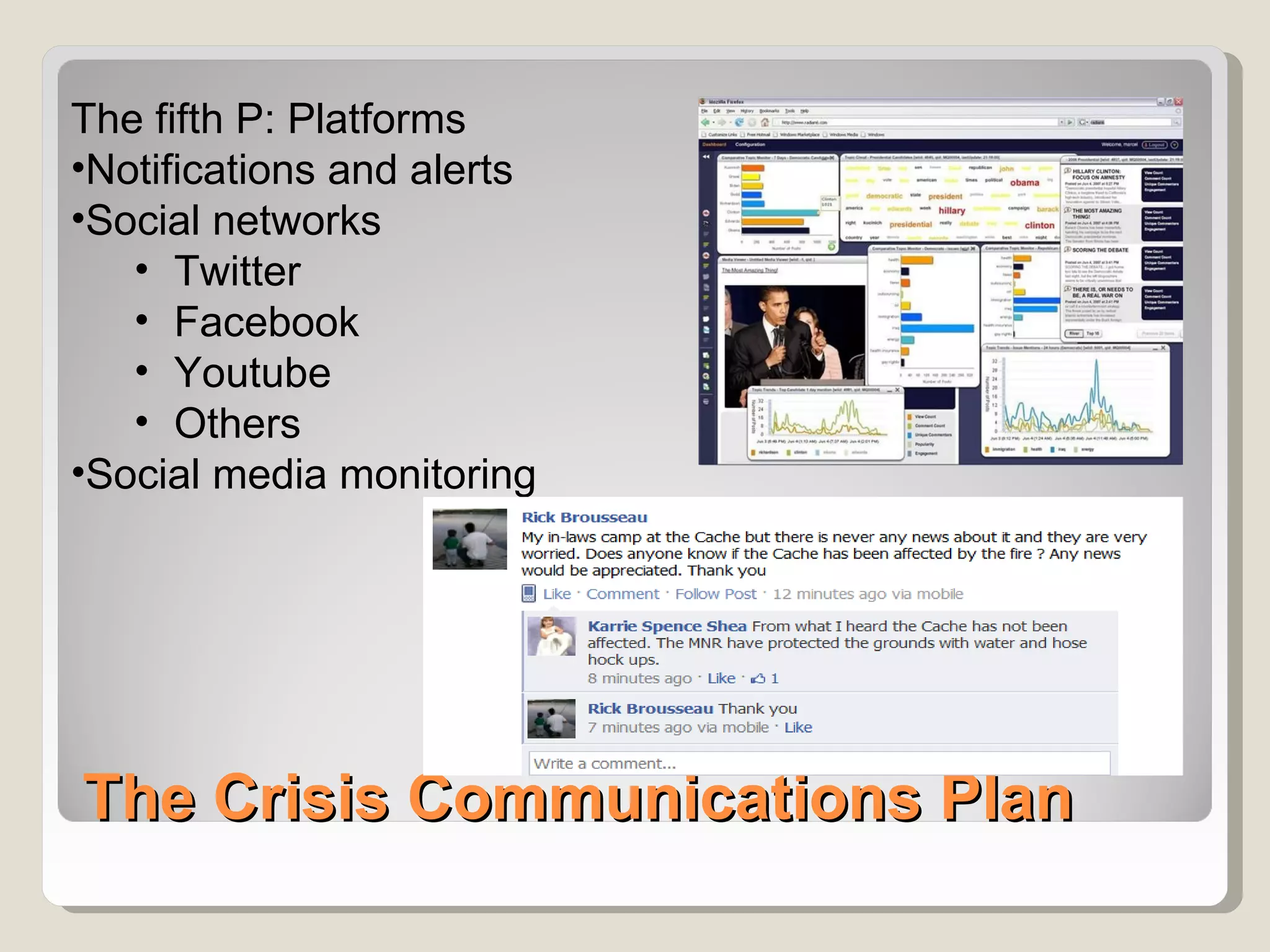
The fifth P: Platforms
•Notifications and alerts
•Social networks
   • Twitter
   • Facebook
   • Youtube
   • Others
•Social media monitoring


The Crisis Communications Plan
Message Mapping
 Crisis communications technique
  developed by Dr. Vincent Covelo from
  New York.
 Advised Mayor Giuliani prior to 9-11
 Successful communications response
  using message mapping
  ◦ Message maps pre-approved
  ◦ Trained people
  ◦ Lots of prior exercises
 Message mapping
• Science-based … on target messaging
• Based on difference in brain functions/processes during
  a crisis as opposed to routine situations
• Easy to use …. Visual representation
• Anticipate issues and questions and develop key
  messages ahead of time


Message Mapping
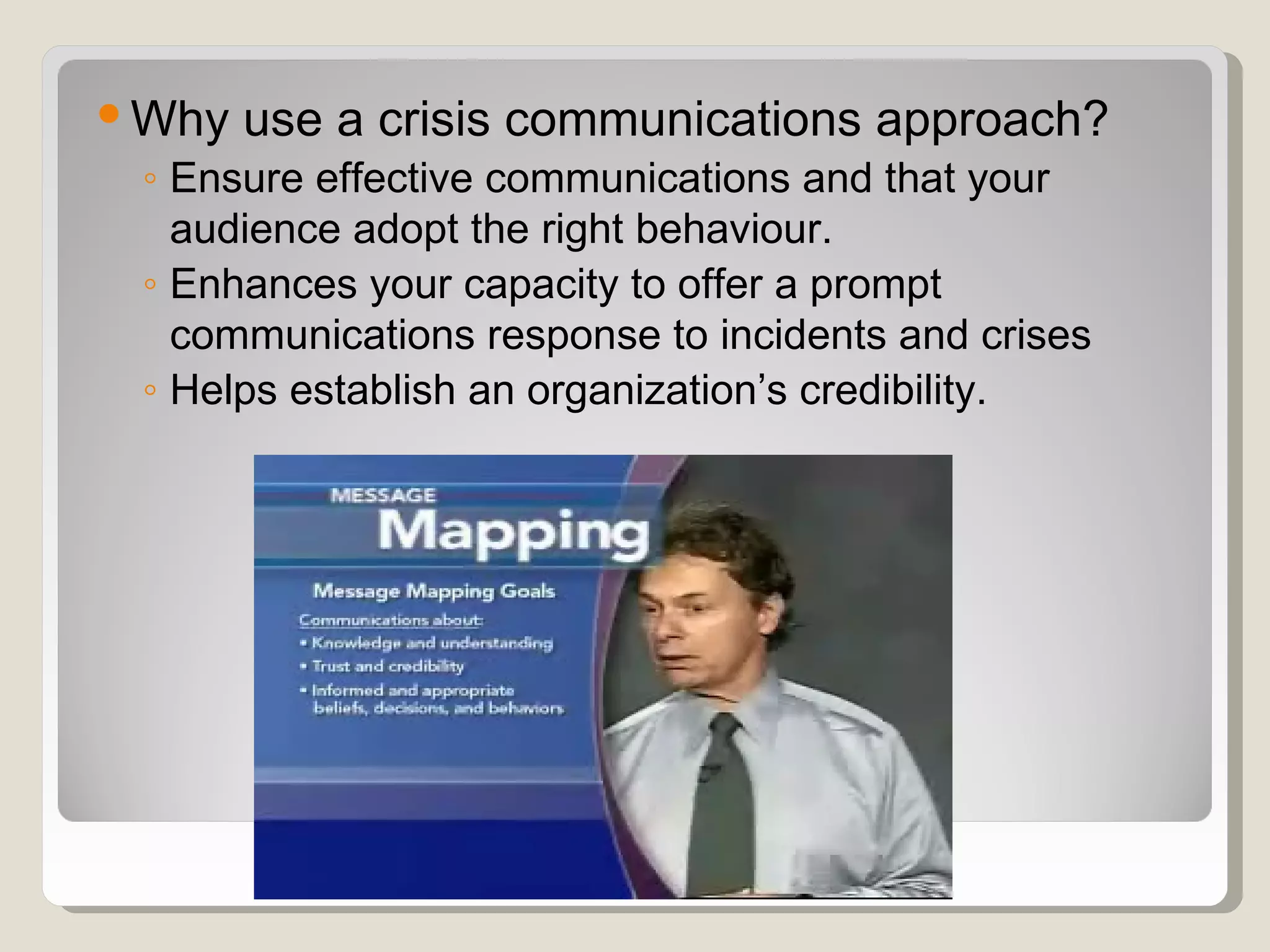
 Why use a crisis communications approach?
  ◦ Ensure effective communications and that your
    audience adopt the right behaviour.
  ◦ Enhances your capacity to offer a prompt
    communications response to incidents and crises
  ◦ Helps establish an organization’s credibility.
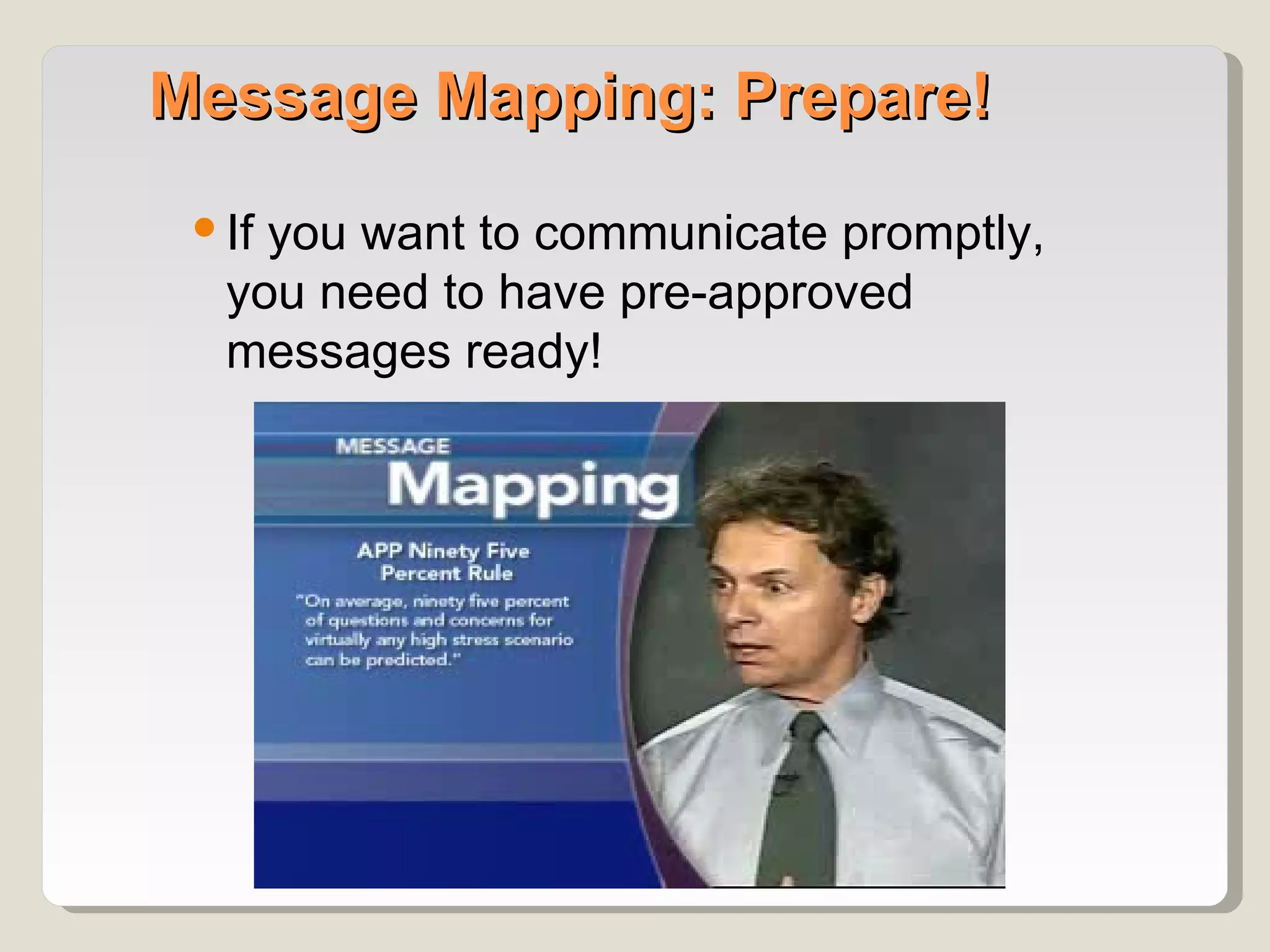
Message Mapping: Prepare!

  If you want to communicate promptly,
   you need to have pre-approved
   messages ready!
How your prepare the message
maps … Routine vs Crisis

To be heard, you need to craft the
right messages!


       Routine …                     Crisis …
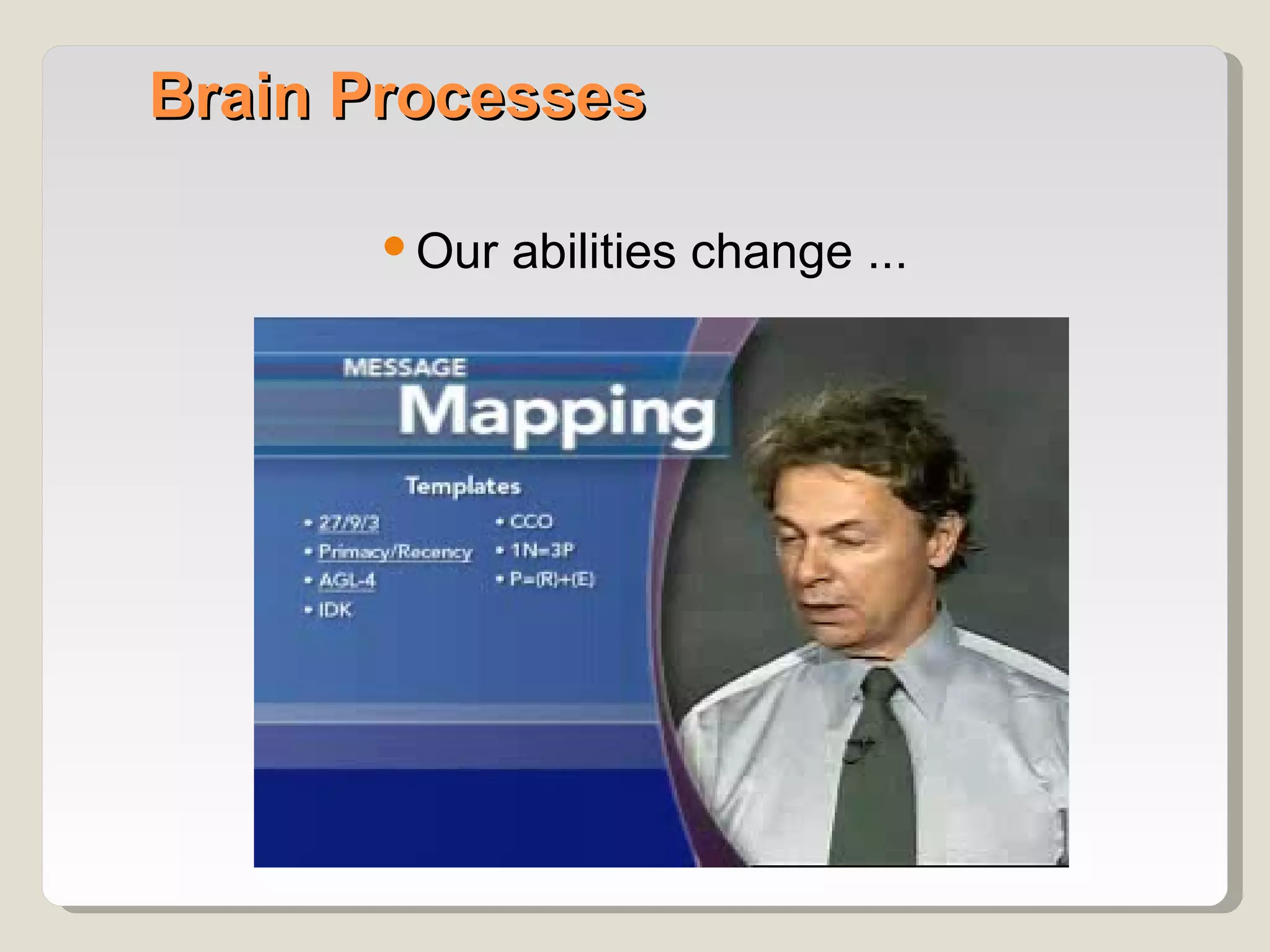
Brain Processes

       Our abilities change ...
Brain Processes

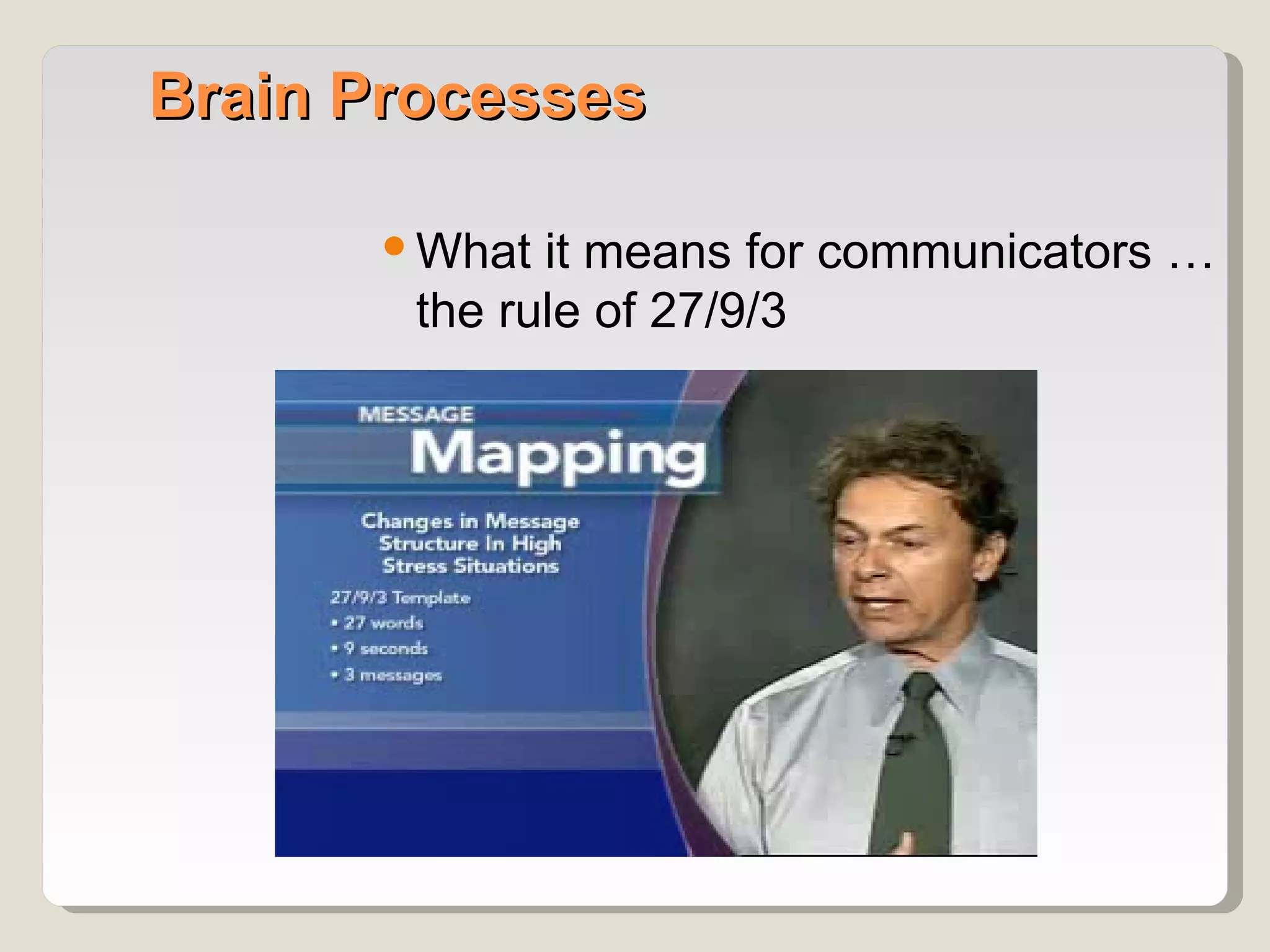
       What it means for communicators …
        the rule of 27/9/3
The rule of 3 (cont’d)
• 27/9/3 model: a critical tool
   • Based on rule of 3: three key messages each with
     three supporting messages or key facts
   • Easy to visualize and share for multiple purposes …
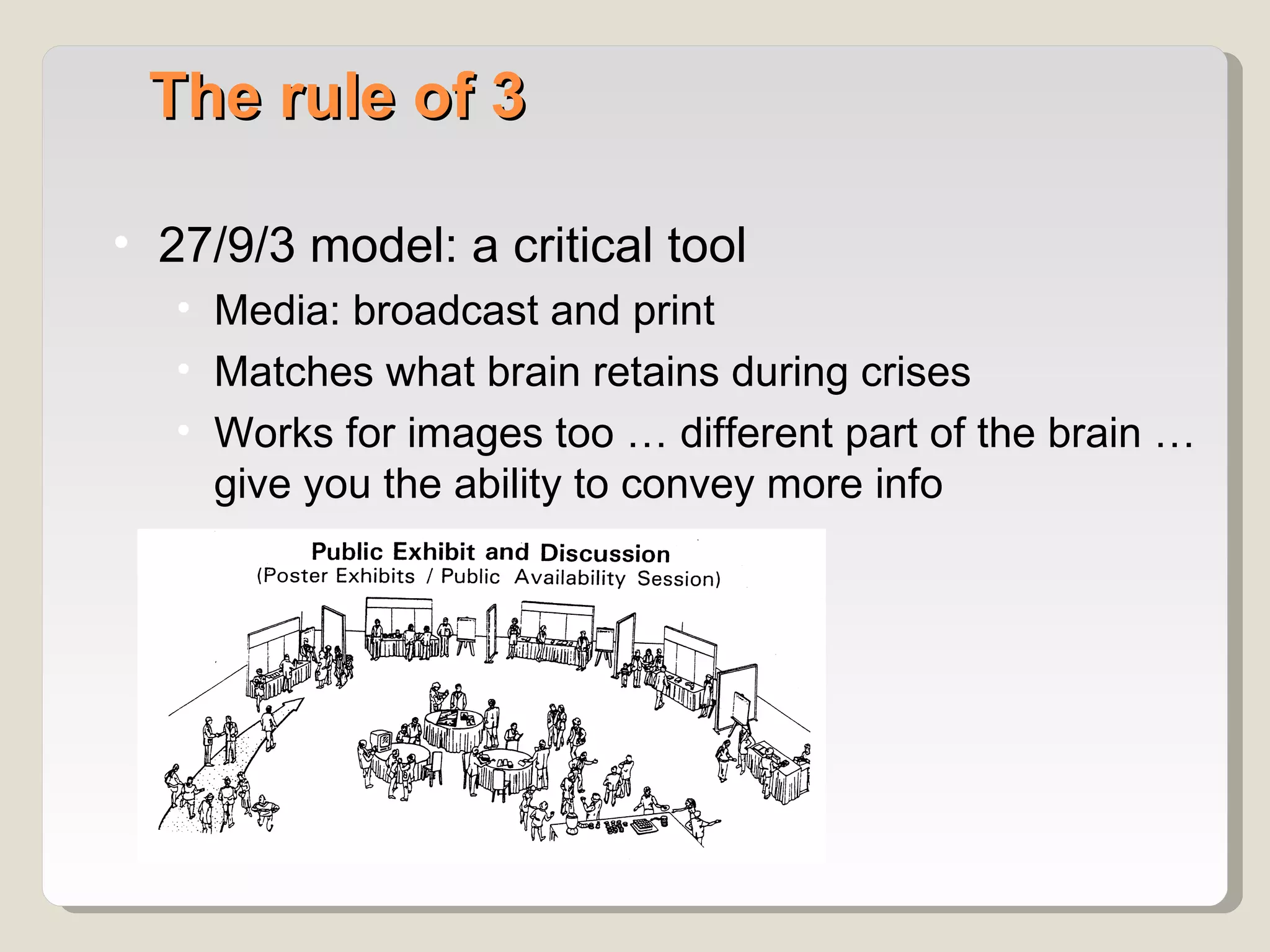
The rule of 3

• 27/9/3 model: a critical tool
   • Media: broadcast and print
   • Matches what brain retains during crises
   • Works for images too … different part of the brain …
     give you the ability to convey more info
Changes in cognitive abilities
   • What’s also important?
     • The order of your messages …
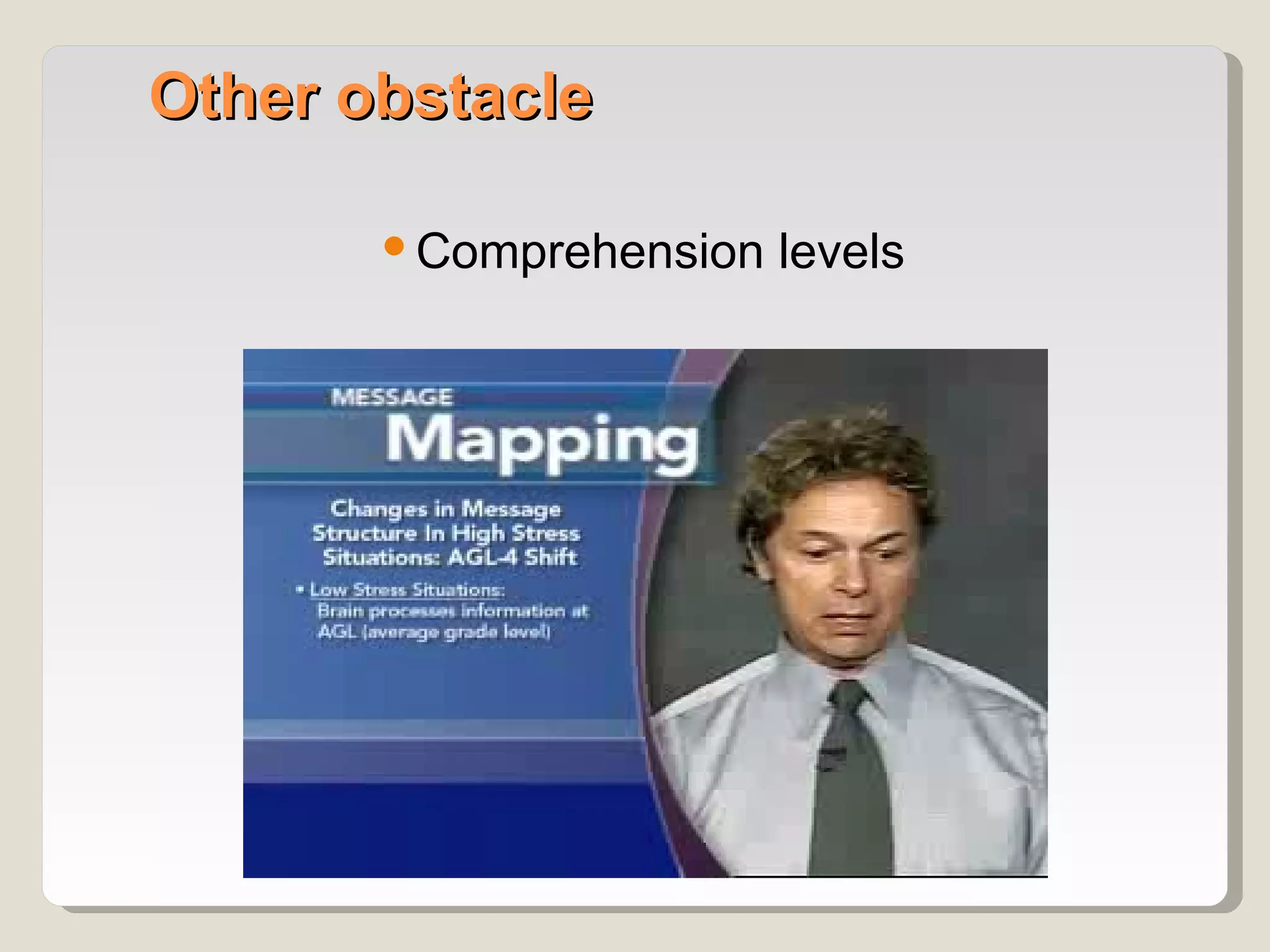
Other obstacle

        Comprehension levels
How you craft a message map
•The order of your messages …
• Impact on how you craft and deliver a message map ...
• Level of comprehension ... we normally write for grade
6-8 level .... during a crisis, you need to adjust your
language/vocabulary to grade two or three level ...


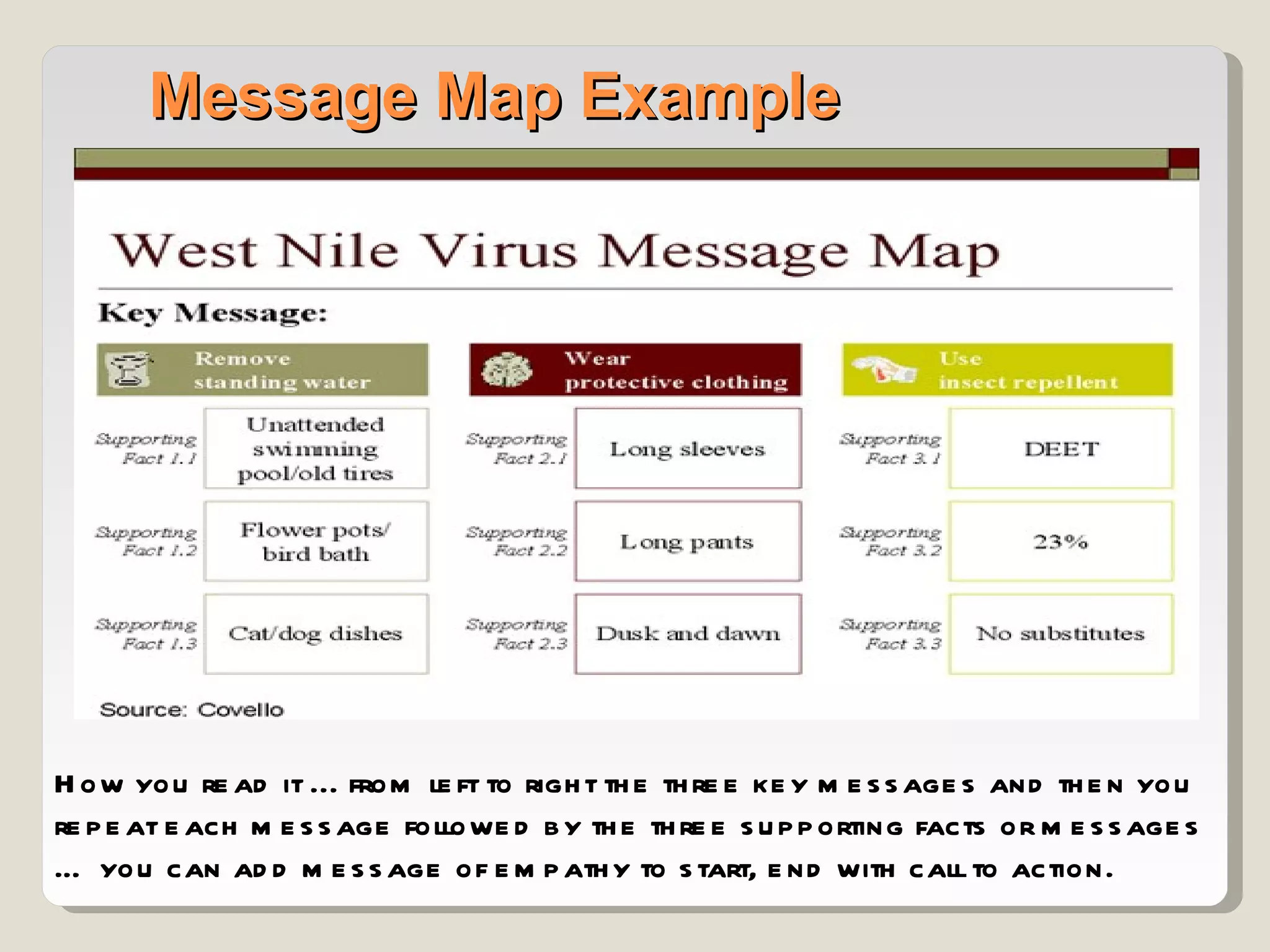
Here's what a message map looks
like then
Message Map Example


H ow you re ad it ... from le ft to righ t th e th re e ke y m e s s age s and th e n you
re p e at e ach m e s s age followe d b y th e th re e s u p p orting facts or m e s s age s
… you can ad d m e s s age of e m p ath y to s tart, e nd with call to action.
Message Map Example
Delivery
      • Verbal vs non-verbal
           • Things are totally reversed.
           • Routine: 75% verbal and 25 % non-verbal
           • Crisis: 75% non-verbal and 25% verbal
      • What’s also important? Show poise!
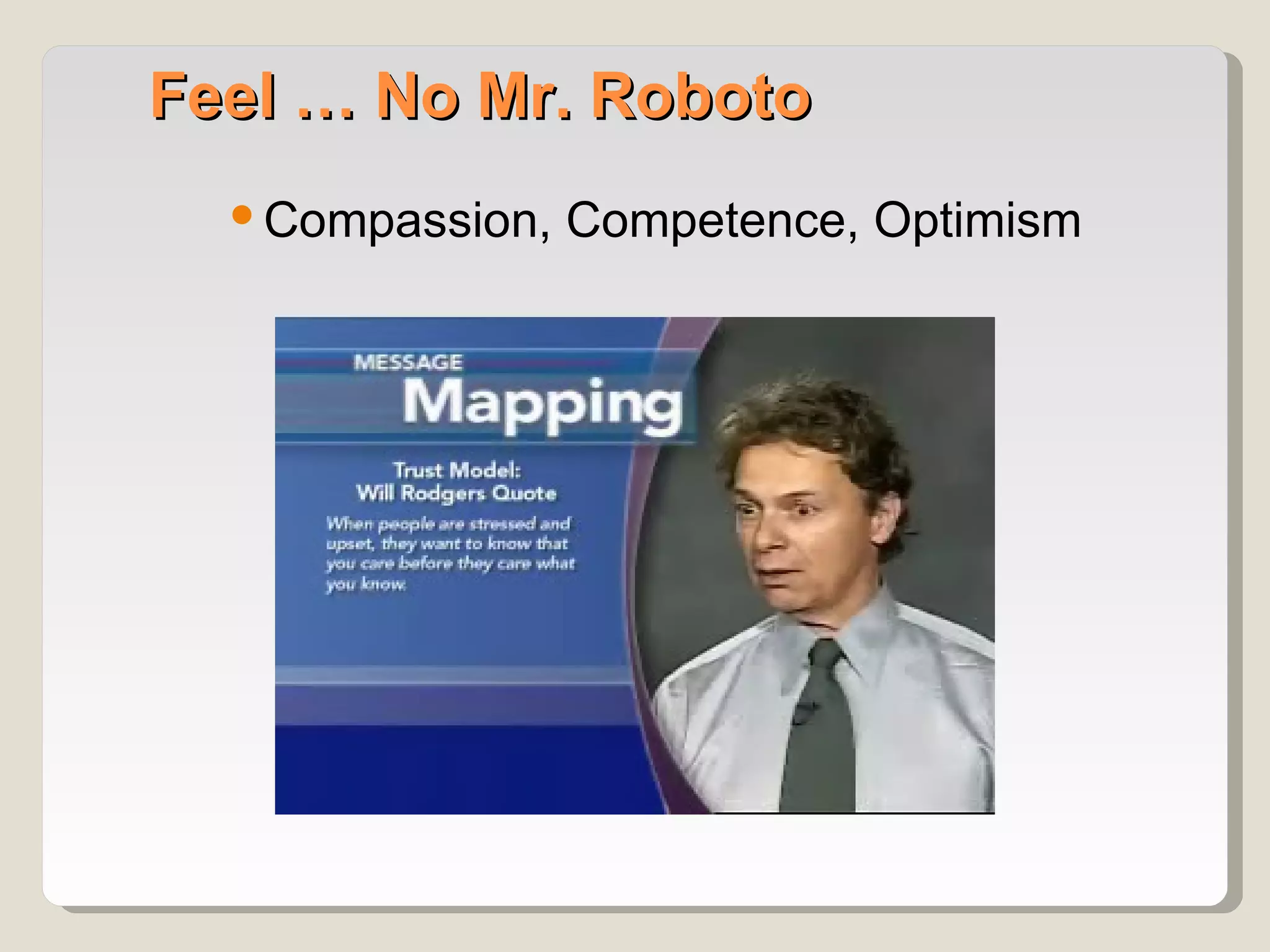
Feel … No Mr. Roboto
   Compassion, Competence, Optimism
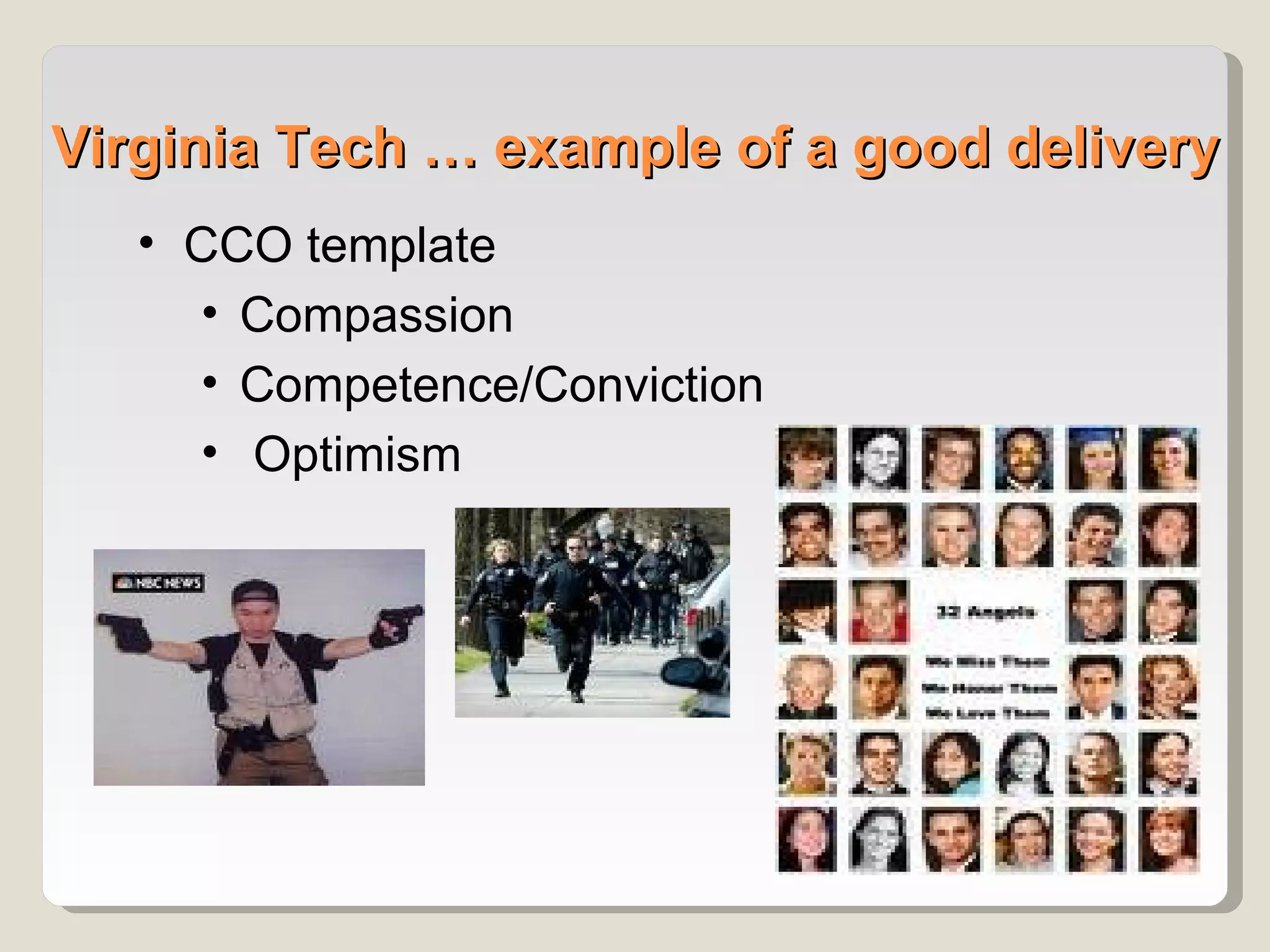
Virginia Tech … example of a good delivery
   • CCO template
     • Compassion
     • Competence/Conviction
     • Optimism
Delivery
• We will recover ...
• Continue to invent the future at Virginia
  Tech, through our tears and blood.
• Words matter and how you express them
A textbook case

               May    August  January 
               2008   2008    2009

Good opinion   74%    57%     88%

Bad opinion       7   34       7
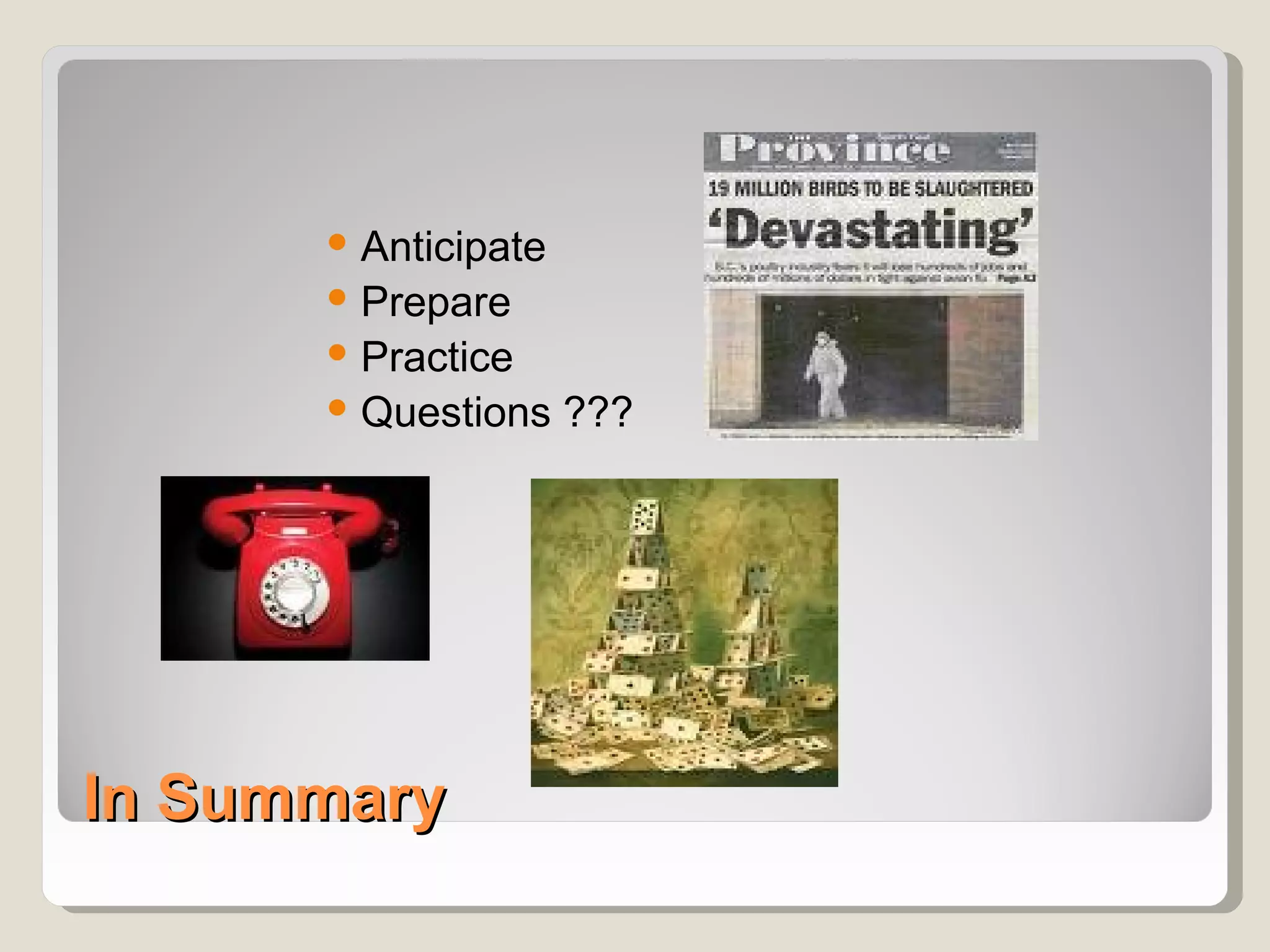
 Anticipate
       Prepare
       Practice
       Questions ???


In Summary

Omron

  • 1.
    Message Mapping OMRON June 2012 Patrice Cloutier
  • 2.
    1. Introduction 2. Context … and challenges 3. Understanding what's behind a message map 4. Preparing a message map 5. Delivering the message map Today’s presentation
  • 3.
     PIO supportto incident commander  Pressure to communicate is immediate  Not just traditional media  Every incident has a reputation management component  Need for SM monitoring Changing expectations
  • 4.
    What is emergencyinformation?  What our audiences need to know to protect themselves, their families, property and the environment.  What we need to communicate to help ensure our audiences will adopt the right behaviour during a crisis or emergency.  Also important: presenting your organization’s response to an incident under the best possible light. Introduction
  • 5.
     Different typesof incidents Know the hazards and risks
  • 6.
    The Social Mediarevolution Where are you?
  • 7.
     Audiences expecta response from authorities within minutes. Changing expectations
  • 8.
     What’s acrisis? ◦ Surprise ◦ Public scrutiny ◦ Media coverage ◦ Not routine ◦ Loss of control It's likely you, and your audiences, will be under stress!
  • 9.
     Why usea crisis communications approach? • Avoid communications regret ! • Use efficient risk communications process Meeting the new challenges
  • 10.
     Why usea crisis communications approach? • It’s about speed … and occupying the public space • To meet the challenge … need the five Ps • Procedures • People • Preparation • Practice • Platforms Meeting the new challenges
  • 11.
    The first P:Procedures •Simple, intuitive •Your people need to be familiar with them •Principals, alternates and second alternates •Think middle of the night on a weekend ! •Delegation of authority •Flexible The Crisis Communications Plan
  • 12.
    The second P:People •Trained spokesperson •Top commanders and executives •Principals, alternates and second alternates •Familiarize with plan and procedures •Demonstrate confidence and competence What you want to avoid The Crisis Communications Plan
  • 13.
    The third P:Preparation •Crisis communications technique •Pre-approved messaging •Identified audiences and channels to reach them The Crisis Communications Plan
  • 14.
    The fourth P:Practice •A plan untested is a plan unproven •Principals and alternates •Communications component to every exercise The Crisis Communications Plan
  • 15.
    The fifth P:Platforms •Notifications and alerts •Social networks • Twitter • Facebook • Youtube • Others •Social media monitoring The Crisis Communications Plan
  • 16.
    Message Mapping  Crisiscommunications technique developed by Dr. Vincent Covelo from New York.  Advised Mayor Giuliani prior to 9-11  Successful communications response using message mapping ◦ Message maps pre-approved ◦ Trained people ◦ Lots of prior exercises
  • 17.
     Message mapping •Science-based … on target messaging • Based on difference in brain functions/processes during a crisis as opposed to routine situations • Easy to use …. Visual representation • Anticipate issues and questions and develop key messages ahead of time Message Mapping
  • 18.
     Why usea crisis communications approach? ◦ Ensure effective communications and that your audience adopt the right behaviour. ◦ Enhances your capacity to offer a prompt communications response to incidents and crises ◦ Helps establish an organization’s credibility.
  • 19.
    Message Mapping: Prepare!  If you want to communicate promptly, you need to have pre-approved messages ready!
  • 20.
    How your preparethe message maps … Routine vs Crisis To be heard, you need to craft the right messages! Routine … Crisis …
  • 21.
    Brain Processes  Our abilities change ...
  • 22.
    Brain Processes  What it means for communicators … the rule of 27/9/3
  • 23.
    The rule of3 (cont’d) • 27/9/3 model: a critical tool • Based on rule of 3: three key messages each with three supporting messages or key facts • Easy to visualize and share for multiple purposes …
  • 24.
    The rule of3 • 27/9/3 model: a critical tool • Media: broadcast and print • Matches what brain retains during crises • Works for images too … different part of the brain … give you the ability to convey more info
  • 25.
    Changes in cognitiveabilities • What’s also important? • The order of your messages …
  • 26.
    Other obstacle  Comprehension levels
  • 27.
    How you crafta message map •The order of your messages … • Impact on how you craft and deliver a message map ... • Level of comprehension ... we normally write for grade 6-8 level .... during a crisis, you need to adjust your language/vocabulary to grade two or three level ... Here's what a message map looks like then
  • 28.
    Message Map Example How you re ad it ... from le ft to righ t th e th re e ke y m e s s age s and th e n you re p e at e ach m e s s age followe d b y th e th re e s u p p orting facts or m e s s age s … you can ad d m e s s age of e m p ath y to s tart, e nd with call to action.
  • 29.
  • 30.
    Delivery • Verbal vs non-verbal • Things are totally reversed. • Routine: 75% verbal and 25 % non-verbal • Crisis: 75% non-verbal and 25% verbal • What’s also important? Show poise!
  • 31.
    Feel … NoMr. Roboto  Compassion, Competence, Optimism
  • 32.
    Virginia Tech …example of a good delivery • CCO template • Compassion • Competence/Conviction • Optimism
  • 33.
    Delivery • We willrecover ... • Continue to invent the future at Virginia Tech, through our tears and blood. • Words matter and how you express them
  • 34.
    A textbook case   May  August  January  2008 2008 2009 Good opinion 74% 57% 88% Bad opinion    7 34  7
  • 35.
     Anticipate  Prepare  Practice  Questions ??? In Summary

Editor's Notes

  • #3 Here’s a brief overview of what we’ll cover today … Don’t hesitate to interrupt me !
  • #4 authorities criticized for waiting hours to respond to incidents … pressure is increasing: US Airways took heat for waiting for 13 minutes to put out information after one of its planes landed in the Hudson River in New York.
  • #5 Two perspective: from our audiences and from our own.
  • #6 Everyone armed with a phone/camera Twitter used extensively during the Mumbai crisis … 80 messages from witnesses every 5 seconds ! + blogs from hostages ! Pix and tweets seconds and minutes after Sunrise propane explosion/ People in their kitchen as fire approaches acting as “news gatherers” …
  • #7 People can now share their own experience directly with each other … and information … a challenge. now at least one third of our audience does not get its information from traditional media: print, TV or radio
  • #8 authorities criticized for waiting hours to respond to incidents … pressure is increasing: US Airways took heat for waiting for 13 minutes to put out information after one of its planes landed in the Hudson River in New York.
  • #9 Forget the normal way you do things … Can’t think the same way or say things the same way … Because your audience WILL NOT think the same way they normally do !
  • #10 A communications response to a crisis must be: immediate … occupy the public space … because of social media being out there with relevant, accurate information within minutes will go a long way to establish your voice as one of authority … people will then look for you !
  • #11 A communications response to a crisis must be: immediate … occupy the public space … because of social media being out there with relevant, accurate information within minutes will go a long way to establish your voice as one of authority … people will then look for you !
  • #12 A communications response to a crisis must be: immediate … occupy the public space … because of social media being out there with relevant, accurate information within minutes will go a long way to establish your voice as one of authority … people will then look for you !
  • #13 A communications response to a crisis must be: immediate … occupy the public space … because of social media being out there with relevant, accurate information within minutes will go a long way to establish your voice as one of authority … people will then look for you !
  • #14 A communications response to a crisis must be: immediate … occupy the public space … because of social media being out there with relevant, accurate information within minutes will go a long way to establish your voice as one of authority … people will then look for you !
  • #15 A communications response to a crisis must be: immediate … occupy the public space … because of social media being out there with relevant, accurate information within minutes will go a long way to establish your voice as one of authority … people will then look for you !
  • #16 A communications response to a crisis must be: immediate … occupy the public space … because of social media being out there with relevant, accurate information within minutes will go a long way to establish your voice as one of authority … people will then look for you !
  • #18 Proven record … lots of scientific evidence and research behind it. Used by many large government organizations involved in emergency response/management. Based on differences in how our brains process information in routine situations and during a crisis or stressful times. Let me explain …
  • #19 A communications response to a crisis must be: immediate … occupy the public space … because of social media being out there with relevant, accurate information within minutes will go a long way to establish your voice as one of authority … people will then look for you !
  • #20 Let me explain … Can we afford to wait hours before we talk to the media or our audiences? Or wait hours for approval of a news release?
  • #21 Brains turn mushy … diminished ability to process and retain info
  • #22 Why should we continue to do things in the normal way … when our message won’t be heard ?
  • #23 That’s a critical piece … Whole way to structure our messages.
  • #24 Media clips: about 9 seconds North American: 3 words/second Three quotes/key messages in print stories
  • #25 Media clips: about 9 seconds North American: 3 words/second Three quotes/key messages in print stories
  • #26 If it works in a crisis situation and is easy to process … why not use the same process for communicating for special events … such as the G8?
  • #27 Normally in the OPS we write for about grade 8 level … papers, usually between grade 6 (sun) and grade 8 (star/globe) … academic paper: much higher … During crisis: write for grade 2 or 3 to ensure right comprehension No jargon, no technical terms
  • #28 If it works in a crisis situation and is easy to process … why not use the same process for communicating for special events … such as the G8?
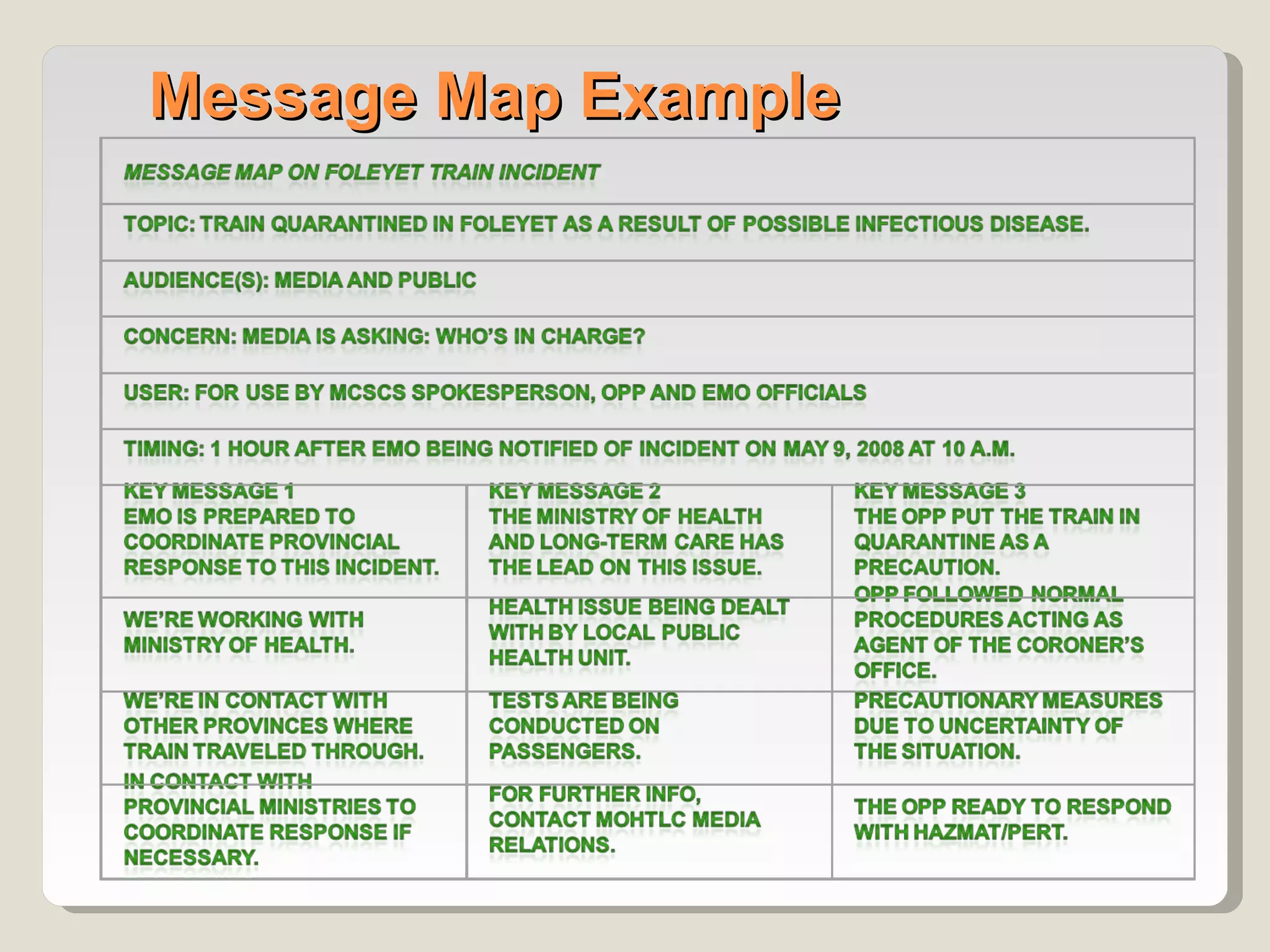
  • #29 Foleyet train in quarantine Possible bio threat Here’s how we handled it
  • #30 Foleyet train in quarantine Possible bio threat Here’s how we handled it
  • #31 Perception is reality
  • #32 “ I feel your pain” … Establish emotional connection if possible …
  • #33 Perception is reality
  • #34 Perception is reality
  • #35 Crisis communications nowadays closely linked with reputation management …
  • #36 Prepare message maps on all your hazards … risk-specific communications Ensure you have trained spokespeople exercise key crisis communications components regularly … as part of exercise program crises will happen … are you prepared?