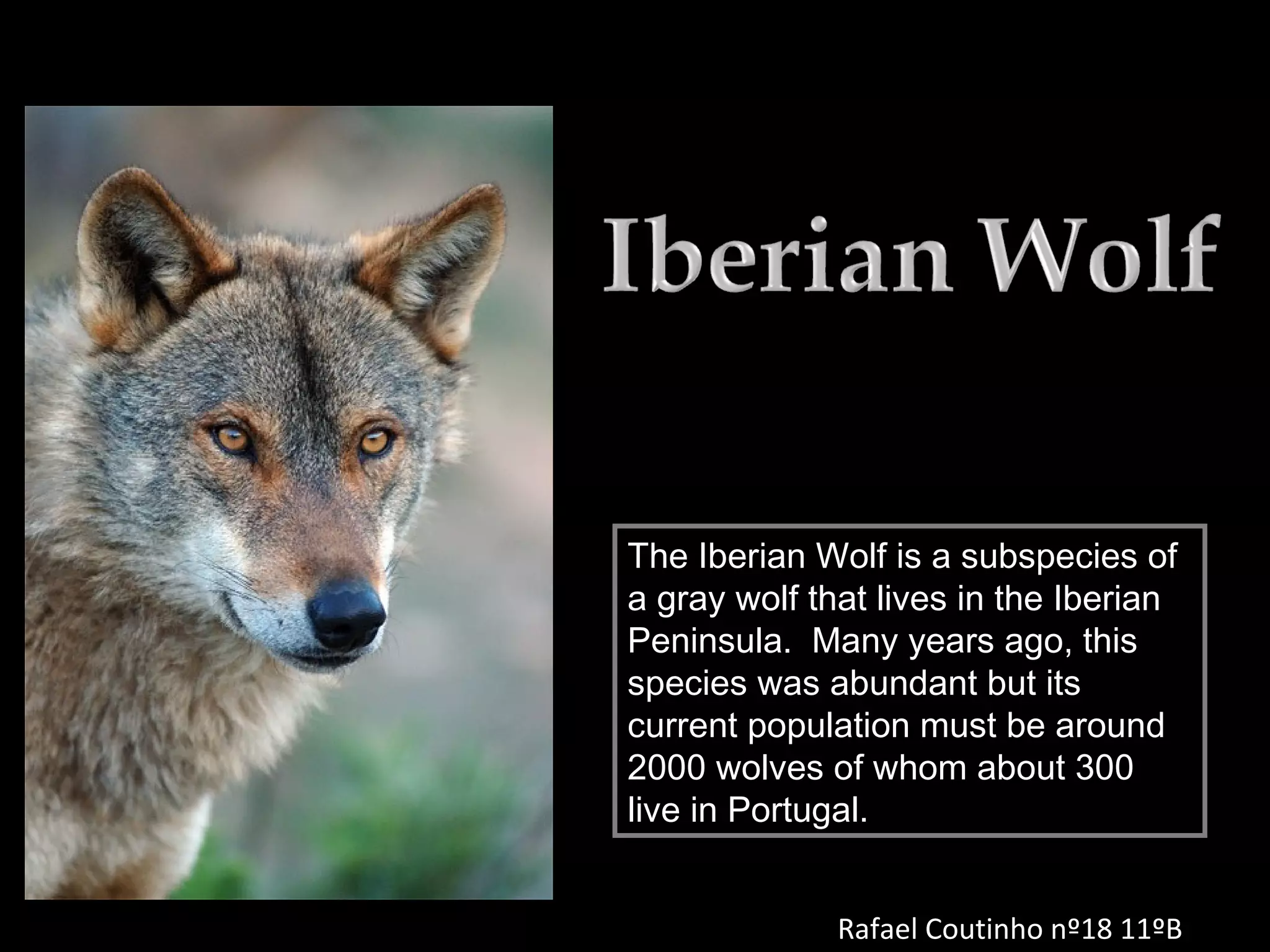
The Iberian Wolf is a subspecies of
a gray wolf that lives in the Iberian
Peninsula. Many years ago, this
species was abundant but its
current population must be around
2000 wolves of whom about 300
live in Portugal.
Rafael Coutinho nº18 11ºB
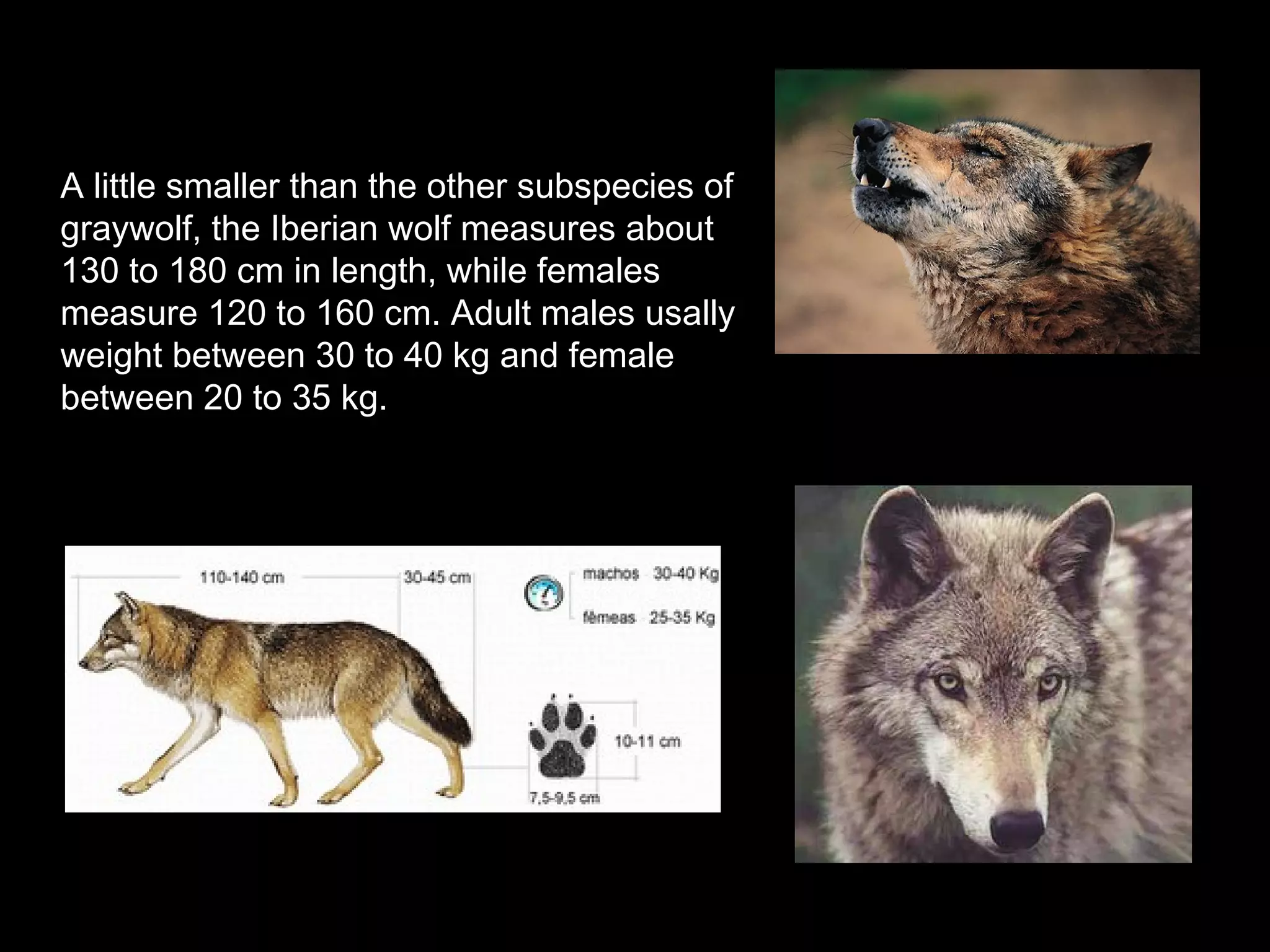
A little smaller than the other subspecies of
graywolf, the Iberian wolf measures about
130 to 180 cm in length, while females
measure 120 to 160 cm. Adult males usally
weight between 30 to 40 kg and female
between 20 to 35 kg.
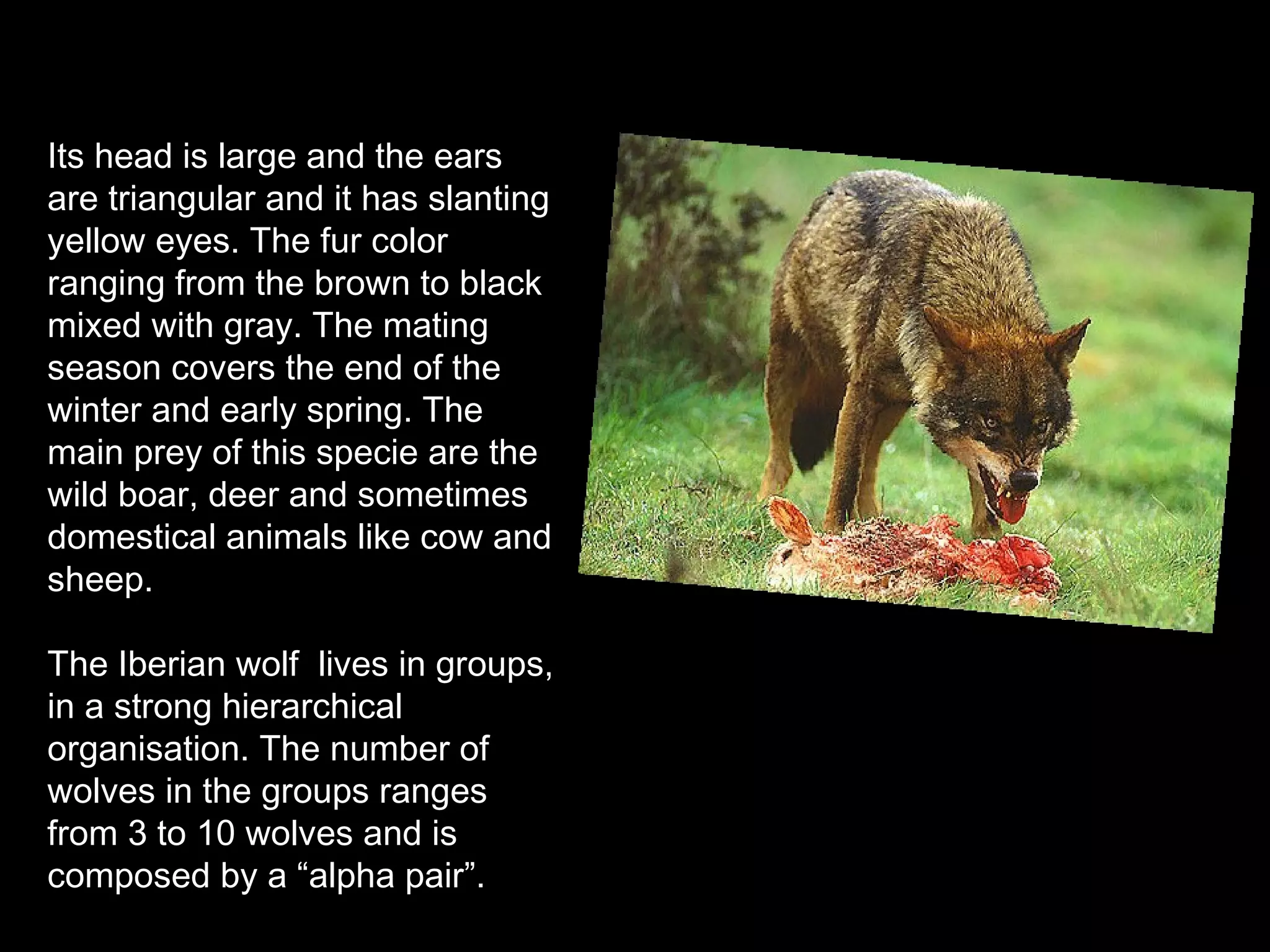
Its head is large and the ears
are triangular and it has slanting
yellow eyes. The fur color
ranging from the brown to black
mixed with gray. The mating
season covers the end of the
winter and early spring. The
main prey of this specie are the
wild boar, deer and sometimes
domestical animals like cow and
sheep.
The Iberian wolf lives in groups,
in a strong hierarchical
organisation. The number of
wolves in the groups ranges
from 3 to 10 wolves and is
composed by a “alpha pair”.
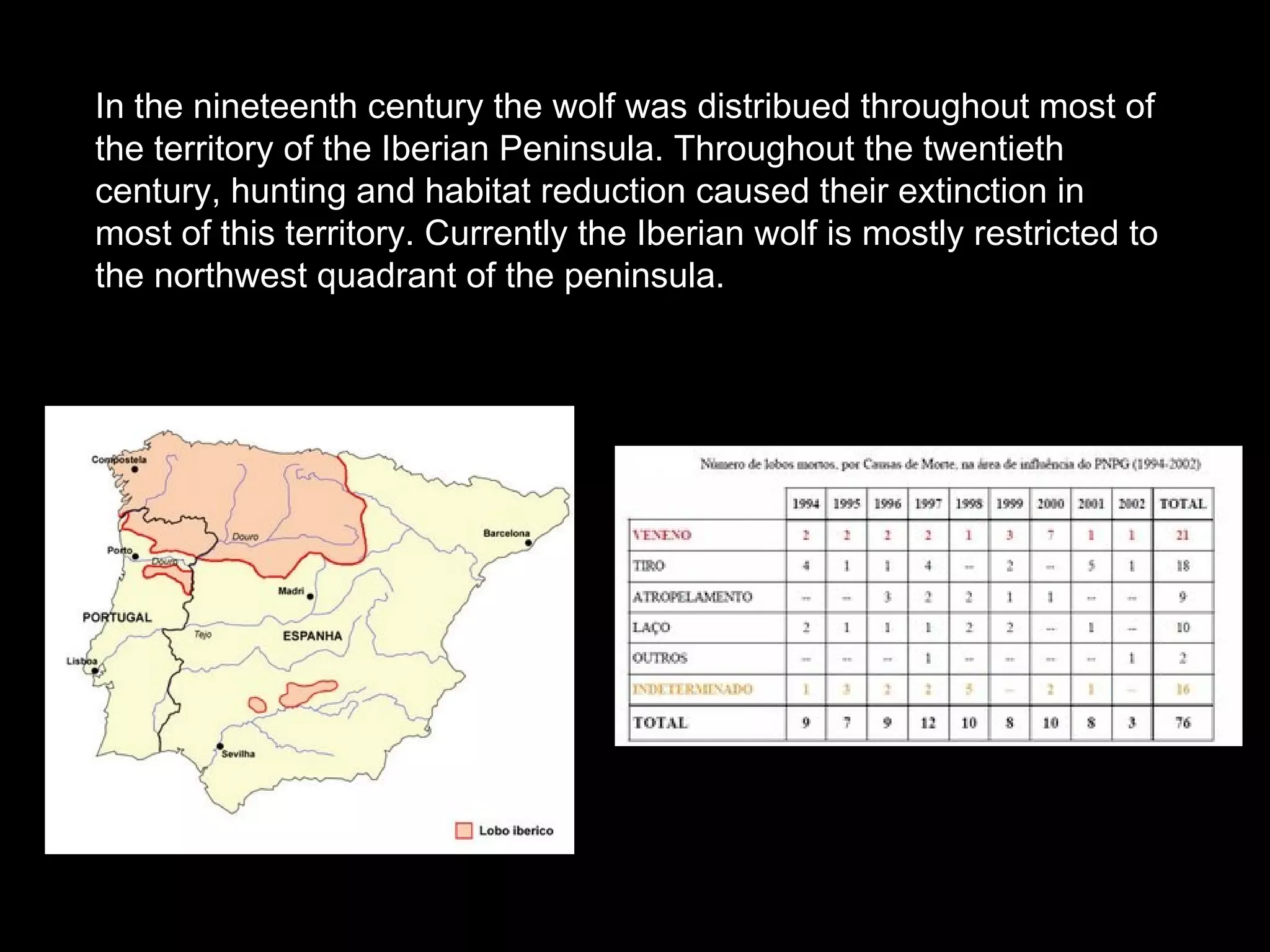
In the nineteenth century the wolf was distribued throughout most of
the territory of the Iberian Peninsula. Throughout the twentieth
century, hunting and habitat reduction caused their extinction in
most of this territory. Currently the Iberian wolf is mostly restricted to
the northwest quadrant of the peninsula.
The
End
The
End

Rafael Coutinho, nº 18, 11º B

  • 1.
    The Iberian Wolfis a subspecies of a gray wolf that lives in the Iberian Peninsula. Many years ago, this species was abundant but its current population must be around 2000 wolves of whom about 300 live in Portugal. Rafael Coutinho nº18 11ºB
  • 2.
    A little smallerthan the other subspecies of graywolf, the Iberian wolf measures about 130 to 180 cm in length, while females measure 120 to 160 cm. Adult males usally weight between 30 to 40 kg and female between 20 to 35 kg.
  • 3.
    Its head islarge and the ears are triangular and it has slanting yellow eyes. The fur color ranging from the brown to black mixed with gray. The mating season covers the end of the winter and early spring. The main prey of this specie are the wild boar, deer and sometimes domestical animals like cow and sheep. The Iberian wolf lives in groups, in a strong hierarchical organisation. The number of wolves in the groups ranges from 3 to 10 wolves and is composed by a “alpha pair”.
  • 4.
    In the nineteenthcentury the wolf was distribued throughout most of the territory of the Iberian Peninsula. Throughout the twentieth century, hunting and habitat reduction caused their extinction in most of this territory. Currently the Iberian wolf is mostly restricted to the northwest quadrant of the peninsula.
  • 5.
  • 6.