Design & Engineering
BE-102
Naseel Ibnu Azeez.M.P
Asst. Professor,
MEA-Engineering College,
Perinthalmanna.
Email: naseel@live.com
Module-6
Definition
internet of things (iot) is an integrated part of future internet and could
be defined as a dynamic global network infrastructure with self
configuring capabilities based on standard and interoperable
communication protocols where physical and virtual ‘things’ have
identities, physical attributes, and virtual personalities and use intelligent
interfaces, and are seamlessly integrated into the information network.
CISCO'S PREVISION
In 2008 the number of things connected
to the Internet was greater than the
people living on Earth.
Within 2020 the number of things
connected to the Internet will be about
50 billion.
Features
• Univocally identifiable and addressable objects
• Artificial Intelligence
• Architecture
• Geo-Localization
• Size Considerations
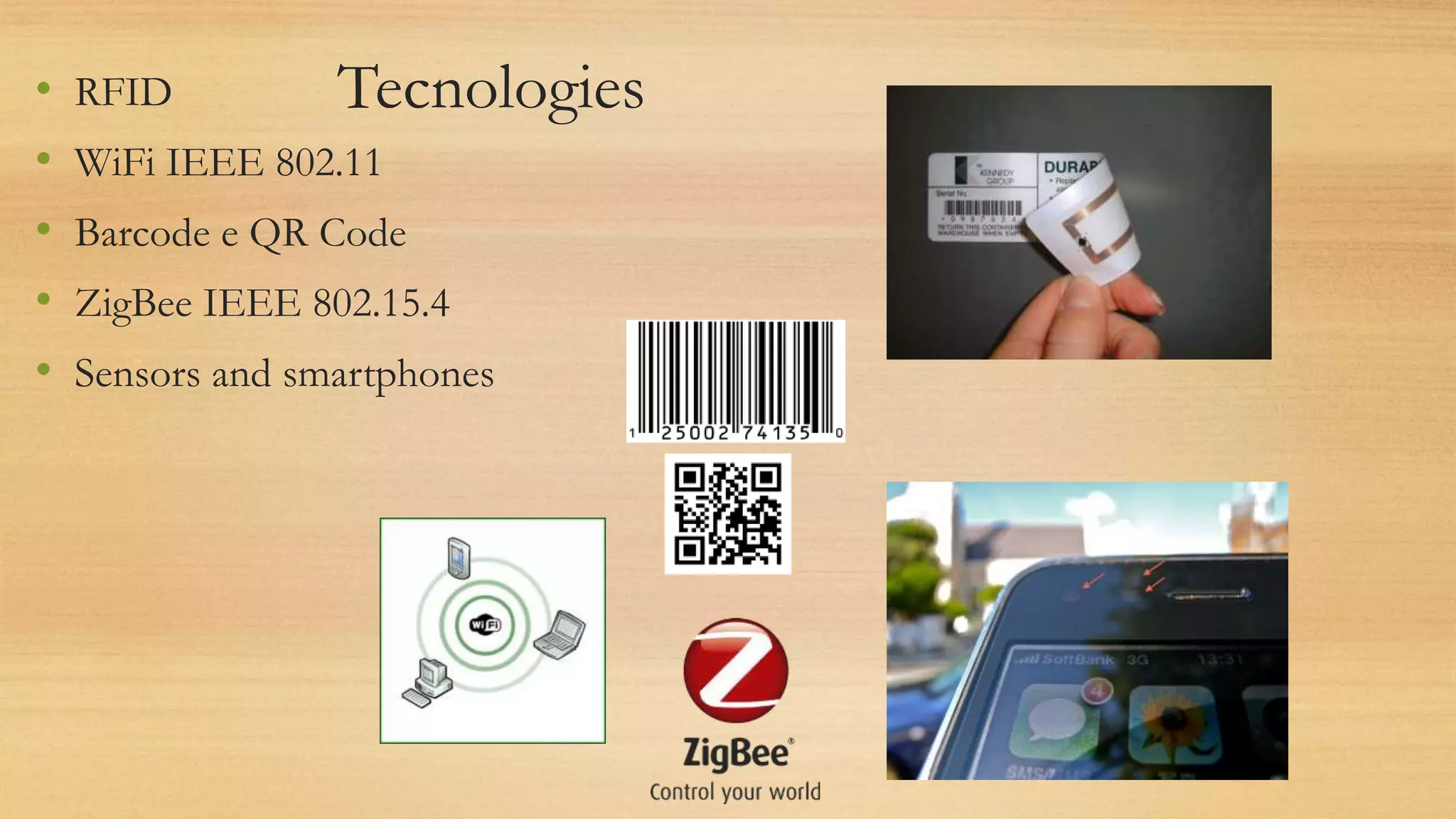
Tecnologies• RFID
• WiFi IEEE 802.11
• Barcode e QR Code
• ZigBee IEEE 802.15.4
• Sensors and smartphones
Intelligent & autonomous products
The ability to learn or understand things or to deal with new or difficult situations
Intelligence has been defined in many different ways including one's capacity for logic, abstract
thought, understanding, self-awareness, communication, learning, emotional knowledge, memory,
planning, creativity and problem solving. It can be more generally described as the ability to
perceive information, and retain it as knowledge to be applied towards adaptive behaviors within
an environment
Artificial intelligence (AI) is the intelligence exhibited by machines or software
• Google Car (Video)
Intellectual Property rights (IPR)
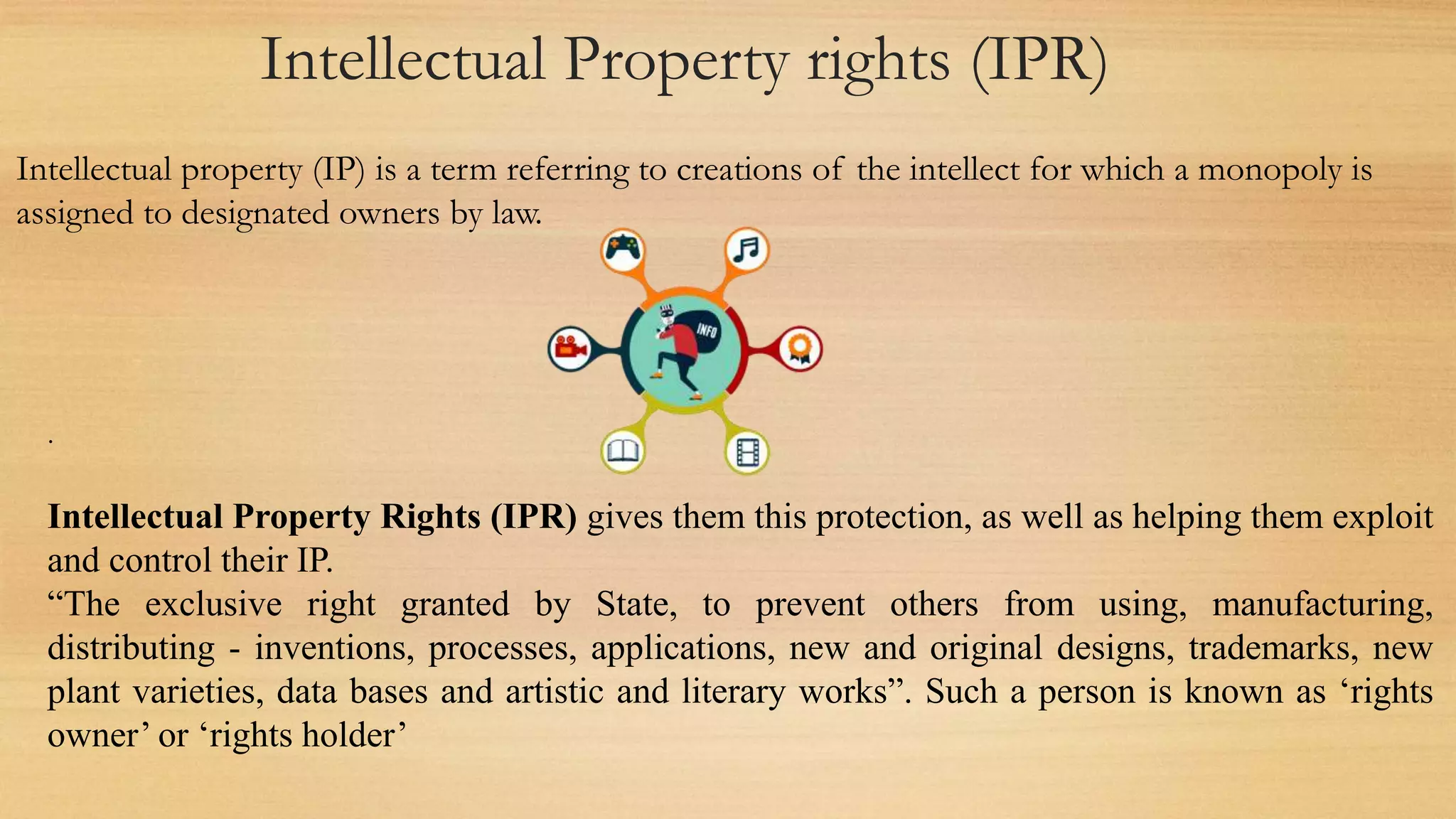
Intellectual property (IP) is a term referring to creations of the intellect for which a monopoly is
assigned to designated owners by law.
.
Intellectual Property Rights (IPR) gives them this protection, as well as helping them exploit
and control their IP.
“The exclusive right granted by State, to prevent others from using, manufacturing,
distributing - inventions, processes, applications, new and original designs, trademarks, new
plant varieties, data bases and artistic and literary works”. Such a person is known as ‘rights
owner’ or ‘rights holder’
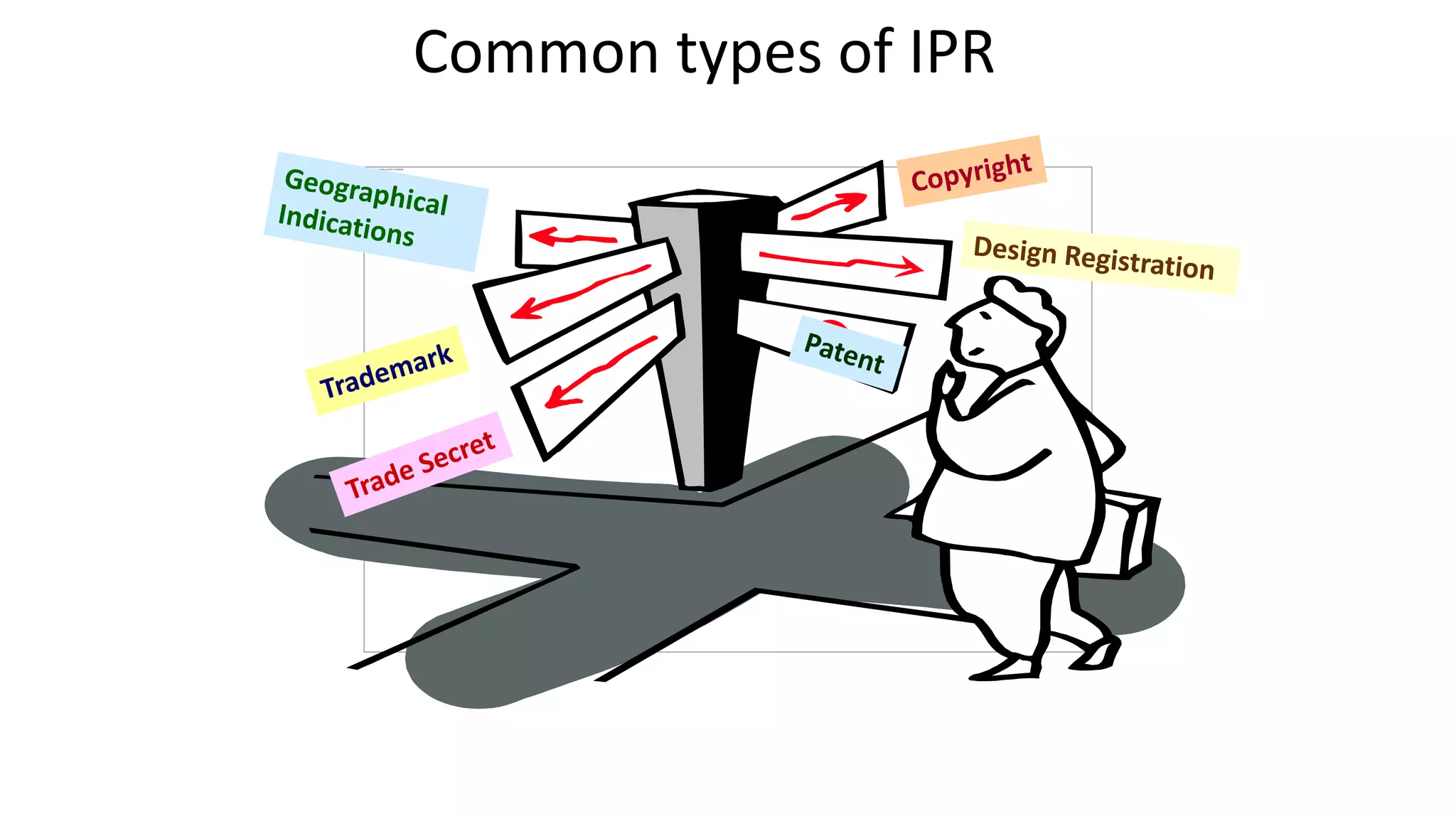
Common types of IPR
Industrial Design
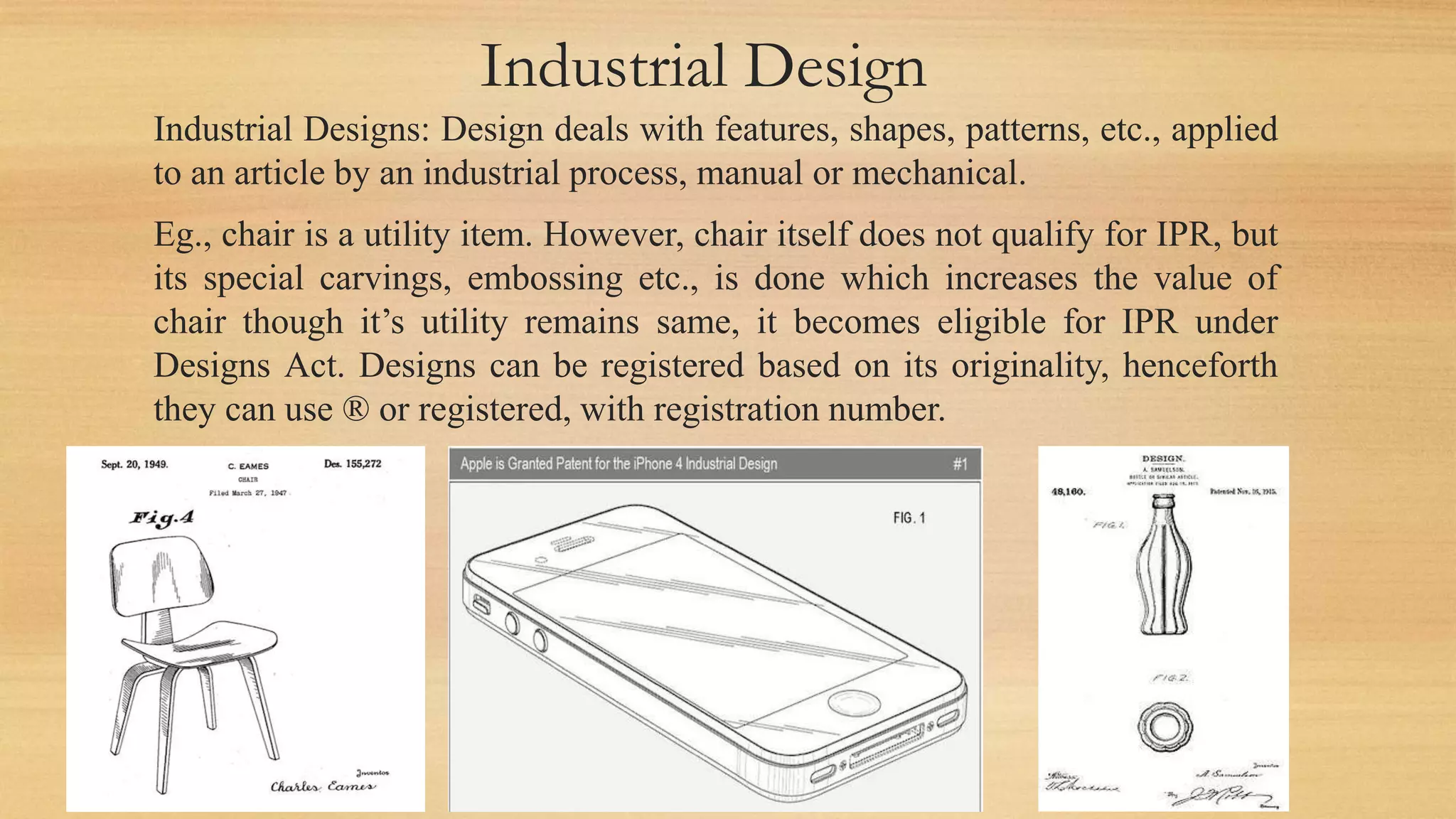
Industrial Designs: Design deals with features, shapes, patterns, etc., applied
to an article by an industrial process, manual or mechanical.
Eg., chair is a utility item. However, chair itself does not qualify for IPR, but
its special carvings, embossing etc., is done which increases the value of
chair though it’s utility remains same, it becomes eligible for IPR under
Designs Act. Designs can be registered based on its originality, henceforth
they can use ® or registered, with registration number.
Patents
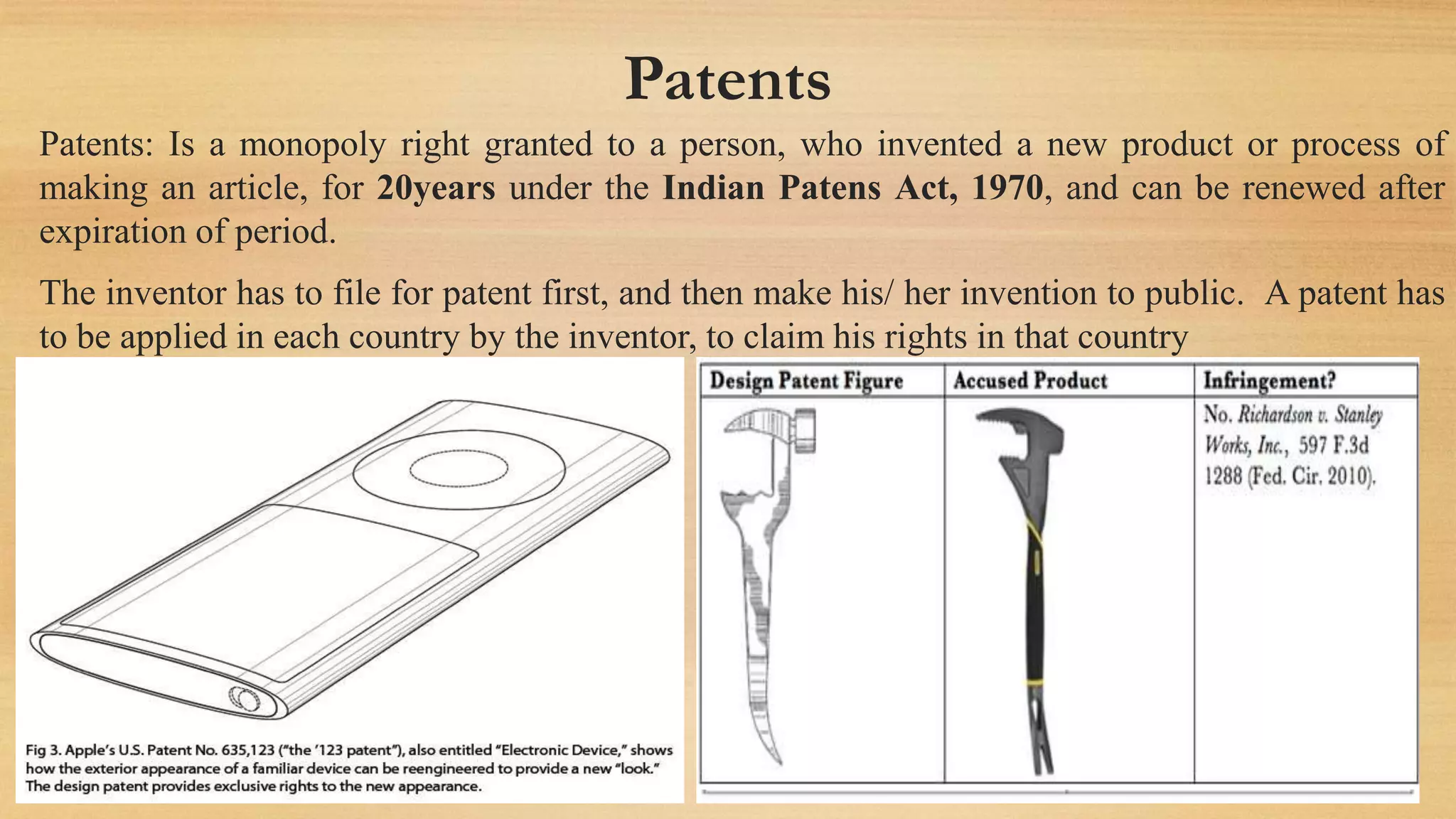
Patents: Is a monopoly right granted to a person, who invented a new product or process of
making an article, for 20years under the Indian Patens Act, 1970, and can be renewed after
expiration of period.
The inventor has to file for patent first, and then make his/ her invention to public. A patent has
to be applied in each country by the inventor, to claim his rights in that country
Trademarks
Trademarks: Trademark can be a word, name, brand, symbol, label etc., used by a company to
create a unique identity for their product. Trademark can be registered, and then use ™ ®.
The registration validity is for 7 years and renewable after expiry. In India, it is governed by
the Trade and Merchandise Marks Act, 1958, which came into force on 25th Nov., 1959.
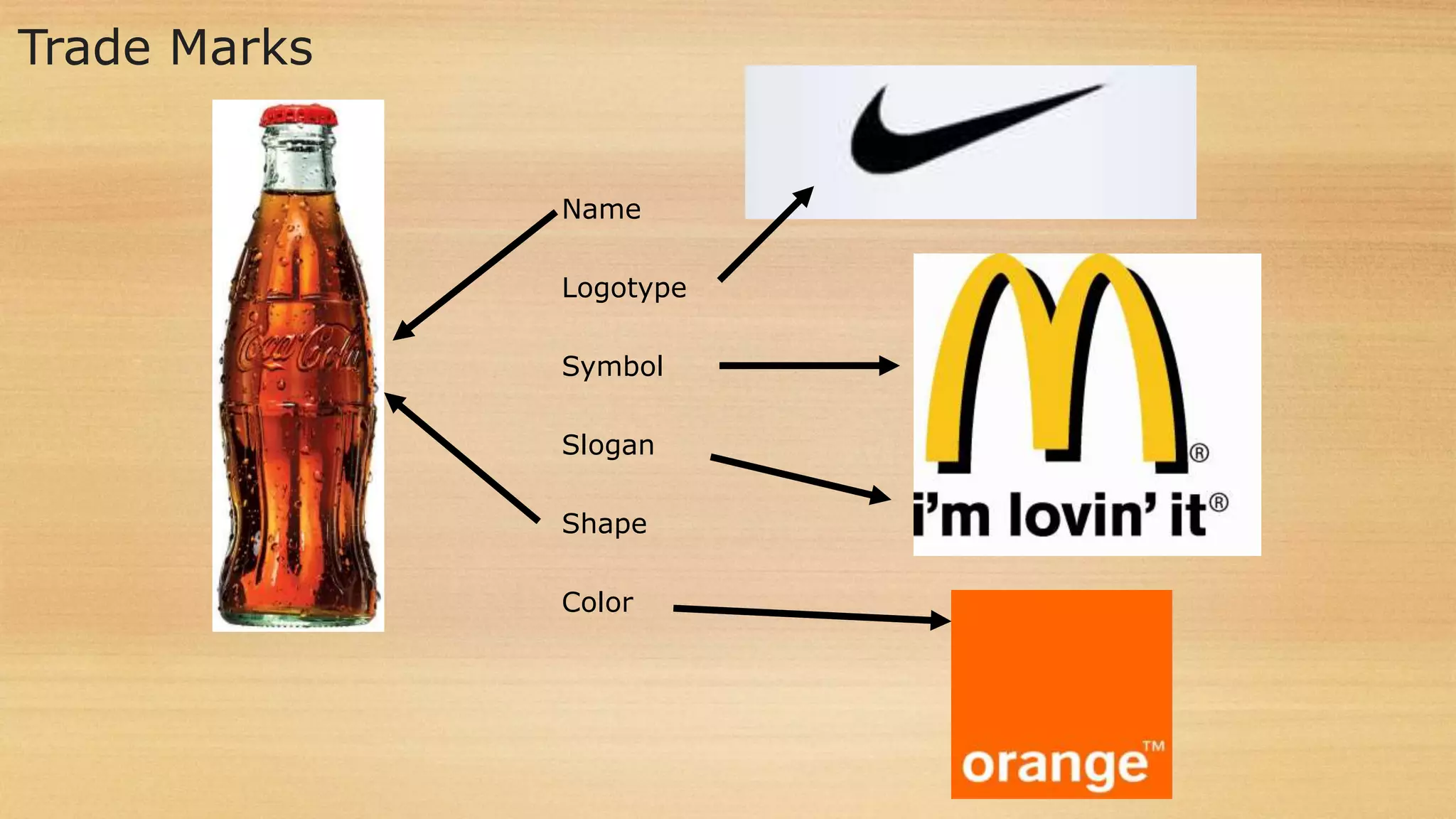
Trade Marks
Name
Logotype
Symbol
Slogan
Shape
Color
Trade Secrets
A trade secret is a formula, practice, process, design, instrument, pattern, commercial method, or
compilation of information which is not generally known or reasonably ascertainable by others,
and by which a business can obtain an economic advantage over competitors or customers.
 a formula for a sports drink
 survey methods used by professional pollsters
 recipes
 a new invention for which a patent application has not yet been filed
 marketing strategies
 manufacturing techniques
 computer algorithms
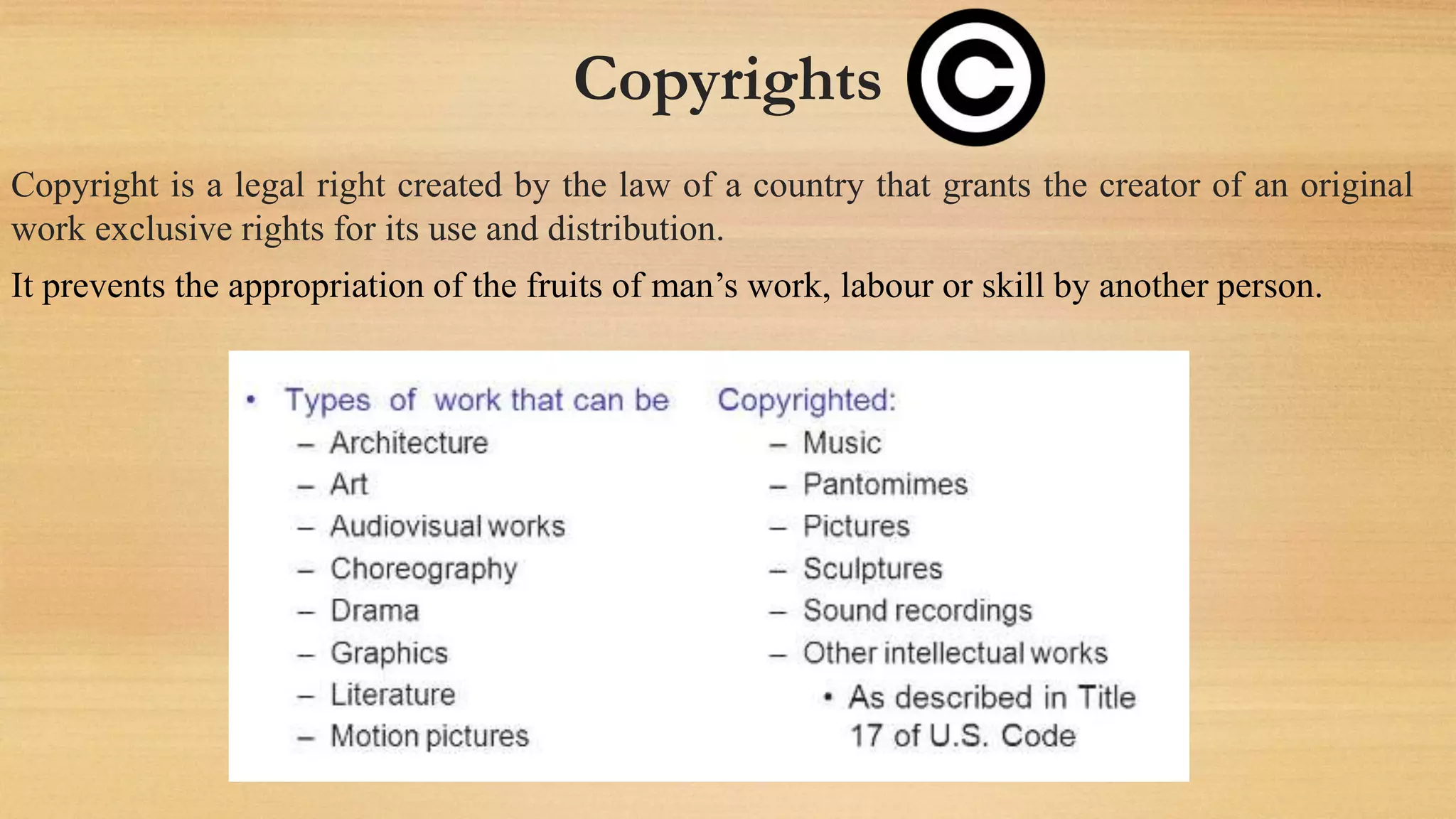
Copyrights
Copyright is a legal right created by the law of a country that grants the creator of an original
work exclusive rights for its use and distribution.
It prevents the appropriation of the fruits of man’s work, labour or skill by another person.
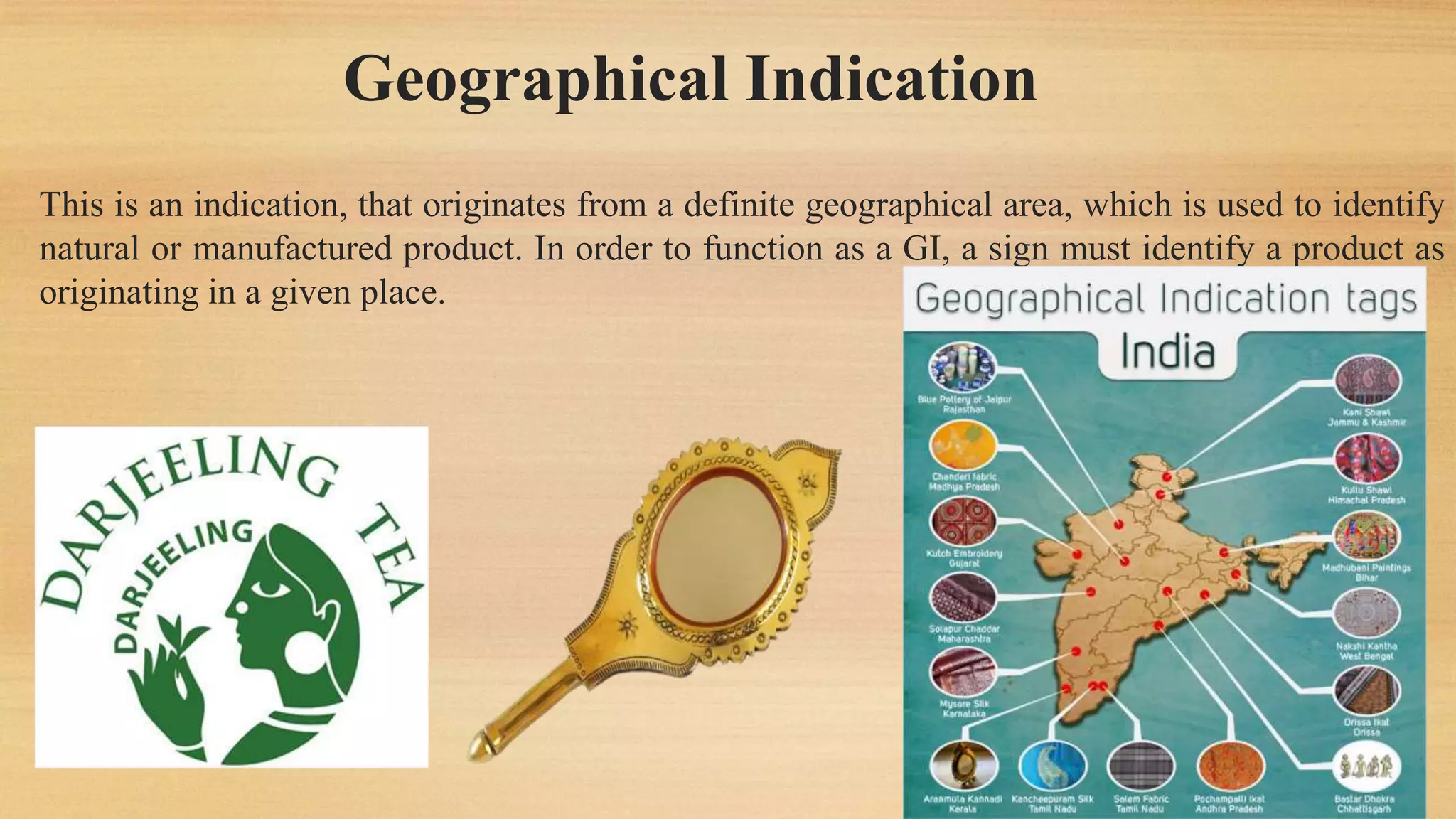
Geographical Indication
This is an indication, that originates from a definite geographical area, which is used to identify
natural or manufactured product. In order to function as a GI, a sign must identify a product as
originating in a given place.
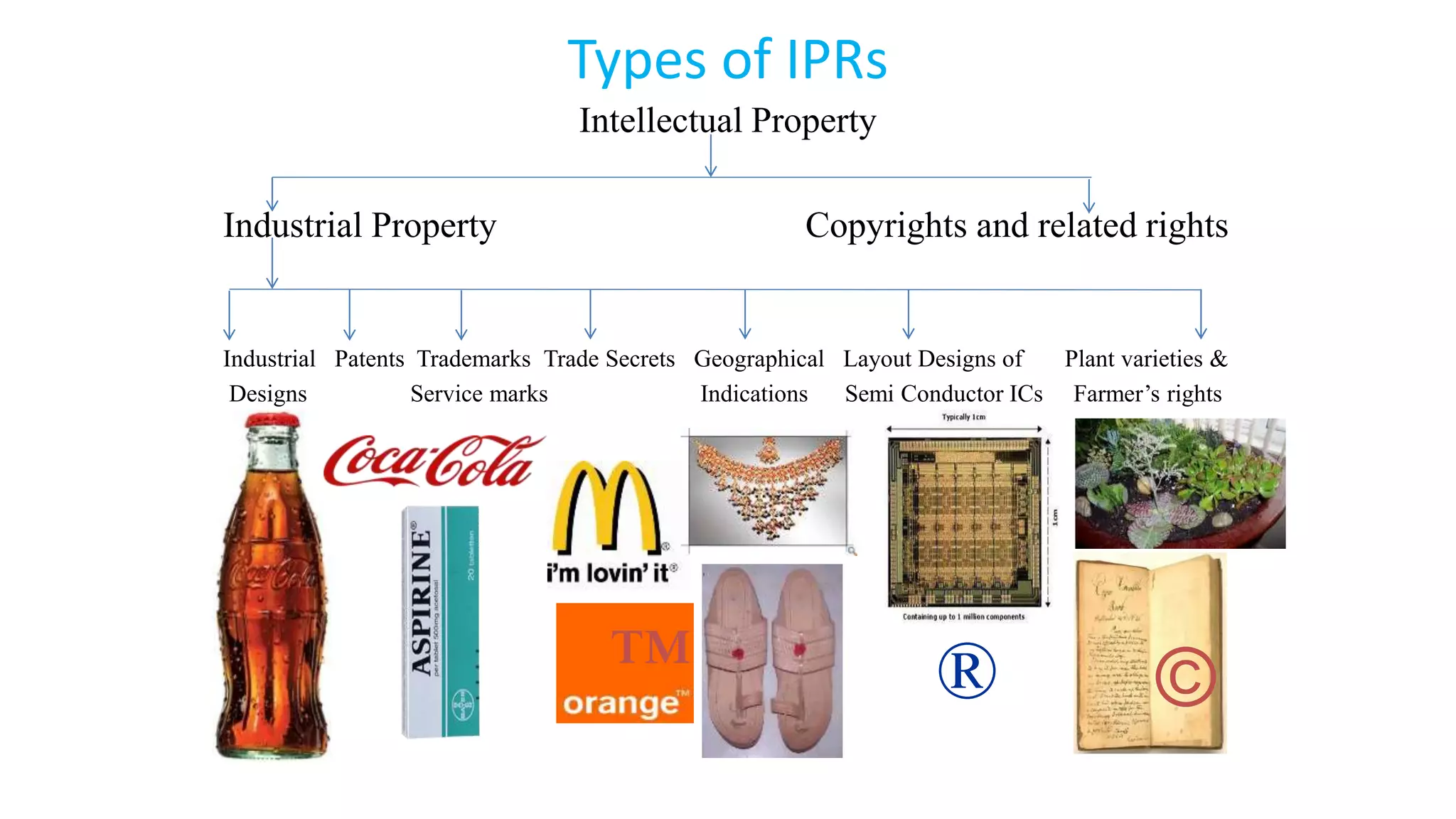
Types of IPRs
Intellectual Property
Industrial Property Copyrights and related rights
Industrial Patents Trademarks Trade Secrets Geographical Layout Designs of Plant varieties &
Designs Service marks Indications Semi Conductor ICs Farmer’s rights
® ©™
Product Liability
Product liability is the area of law in which manufacturers, distributors, suppliers,
retailers, and others who make products available to the public are held
responsible for the injuries those products cause. Although the word
"product" has broad connotations, product liability as an area of law is
traditionally limited to products in the form of tangible personal property.
Design Defects - Present in a product from the beginning, even before it is
manufactured, in that something in the design of the product is inherently
unsafe.
Manufacturing Defects - Those that occur in the course of a product's
manufacture or assembly.
Marketing Defects - Flaws in the way a product is marketed, such as improper
labelling, insufficient instructions, or inadequate safety warnings
www.slideshare.net/naseelazeeniya

Design and Engineering-Module-6: Internet of Things, IPR, Product Liability

  • 1.
    Design & Engineering BE-102 NaseelIbnu Azeez.M.P Asst. Professor, MEA-Engineering College, Perinthalmanna. Email: naseel@live.com Module-6
  • 3.
    Definition internet of things(iot) is an integrated part of future internet and could be defined as a dynamic global network infrastructure with self configuring capabilities based on standard and interoperable communication protocols where physical and virtual ‘things’ have identities, physical attributes, and virtual personalities and use intelligent interfaces, and are seamlessly integrated into the information network.
  • 4.
    CISCO'S PREVISION In 2008the number of things connected to the Internet was greater than the people living on Earth. Within 2020 the number of things connected to the Internet will be about 50 billion.
  • 5.
    Features • Univocally identifiableand addressable objects • Artificial Intelligence • Architecture • Geo-Localization • Size Considerations
  • 6.
    Tecnologies• RFID • WiFiIEEE 802.11 • Barcode e QR Code • ZigBee IEEE 802.15.4 • Sensors and smartphones
  • 7.
    Intelligent & autonomousproducts The ability to learn or understand things or to deal with new or difficult situations Intelligence has been defined in many different ways including one's capacity for logic, abstract thought, understanding, self-awareness, communication, learning, emotional knowledge, memory, planning, creativity and problem solving. It can be more generally described as the ability to perceive information, and retain it as knowledge to be applied towards adaptive behaviors within an environment Artificial intelligence (AI) is the intelligence exhibited by machines or software
  • 8.
  • 9.
    Intellectual Property rights(IPR) Intellectual property (IP) is a term referring to creations of the intellect for which a monopoly is assigned to designated owners by law. . Intellectual Property Rights (IPR) gives them this protection, as well as helping them exploit and control their IP. “The exclusive right granted by State, to prevent others from using, manufacturing, distributing - inventions, processes, applications, new and original designs, trademarks, new plant varieties, data bases and artistic and literary works”. Such a person is known as ‘rights owner’ or ‘rights holder’
  • 10.
  • 11.
    Industrial Design Industrial Designs:Design deals with features, shapes, patterns, etc., applied to an article by an industrial process, manual or mechanical. Eg., chair is a utility item. However, chair itself does not qualify for IPR, but its special carvings, embossing etc., is done which increases the value of chair though it’s utility remains same, it becomes eligible for IPR under Designs Act. Designs can be registered based on its originality, henceforth they can use ® or registered, with registration number.
  • 12.
    Patents Patents: Is amonopoly right granted to a person, who invented a new product or process of making an article, for 20years under the Indian Patens Act, 1970, and can be renewed after expiration of period. The inventor has to file for patent first, and then make his/ her invention to public. A patent has to be applied in each country by the inventor, to claim his rights in that country
  • 13.
    Trademarks Trademarks: Trademark canbe a word, name, brand, symbol, label etc., used by a company to create a unique identity for their product. Trademark can be registered, and then use ™ ®. The registration validity is for 7 years and renewable after expiry. In India, it is governed by the Trade and Merchandise Marks Act, 1958, which came into force on 25th Nov., 1959.
  • 14.
  • 15.
    Trade Secrets A tradesecret is a formula, practice, process, design, instrument, pattern, commercial method, or compilation of information which is not generally known or reasonably ascertainable by others, and by which a business can obtain an economic advantage over competitors or customers.  a formula for a sports drink  survey methods used by professional pollsters  recipes  a new invention for which a patent application has not yet been filed  marketing strategies  manufacturing techniques  computer algorithms
  • 16.
    Copyrights Copyright is alegal right created by the law of a country that grants the creator of an original work exclusive rights for its use and distribution. It prevents the appropriation of the fruits of man’s work, labour or skill by another person.
  • 17.
    Geographical Indication This isan indication, that originates from a definite geographical area, which is used to identify natural or manufactured product. In order to function as a GI, a sign must identify a product as originating in a given place.
  • 18.
    Types of IPRs IntellectualProperty Industrial Property Copyrights and related rights Industrial Patents Trademarks Trade Secrets Geographical Layout Designs of Plant varieties & Designs Service marks Indications Semi Conductor ICs Farmer’s rights ® ©™
  • 19.
    Product Liability Product liabilityis the area of law in which manufacturers, distributors, suppliers, retailers, and others who make products available to the public are held responsible for the injuries those products cause. Although the word "product" has broad connotations, product liability as an area of law is traditionally limited to products in the form of tangible personal property. Design Defects - Present in a product from the beginning, even before it is manufactured, in that something in the design of the product is inherently unsafe. Manufacturing Defects - Those that occur in the course of a product's manufacture or assembly. Marketing Defects - Flaws in the way a product is marketed, such as improper labelling, insufficient instructions, or inadequate safety warnings
  • 20.