Downloaded 35 times
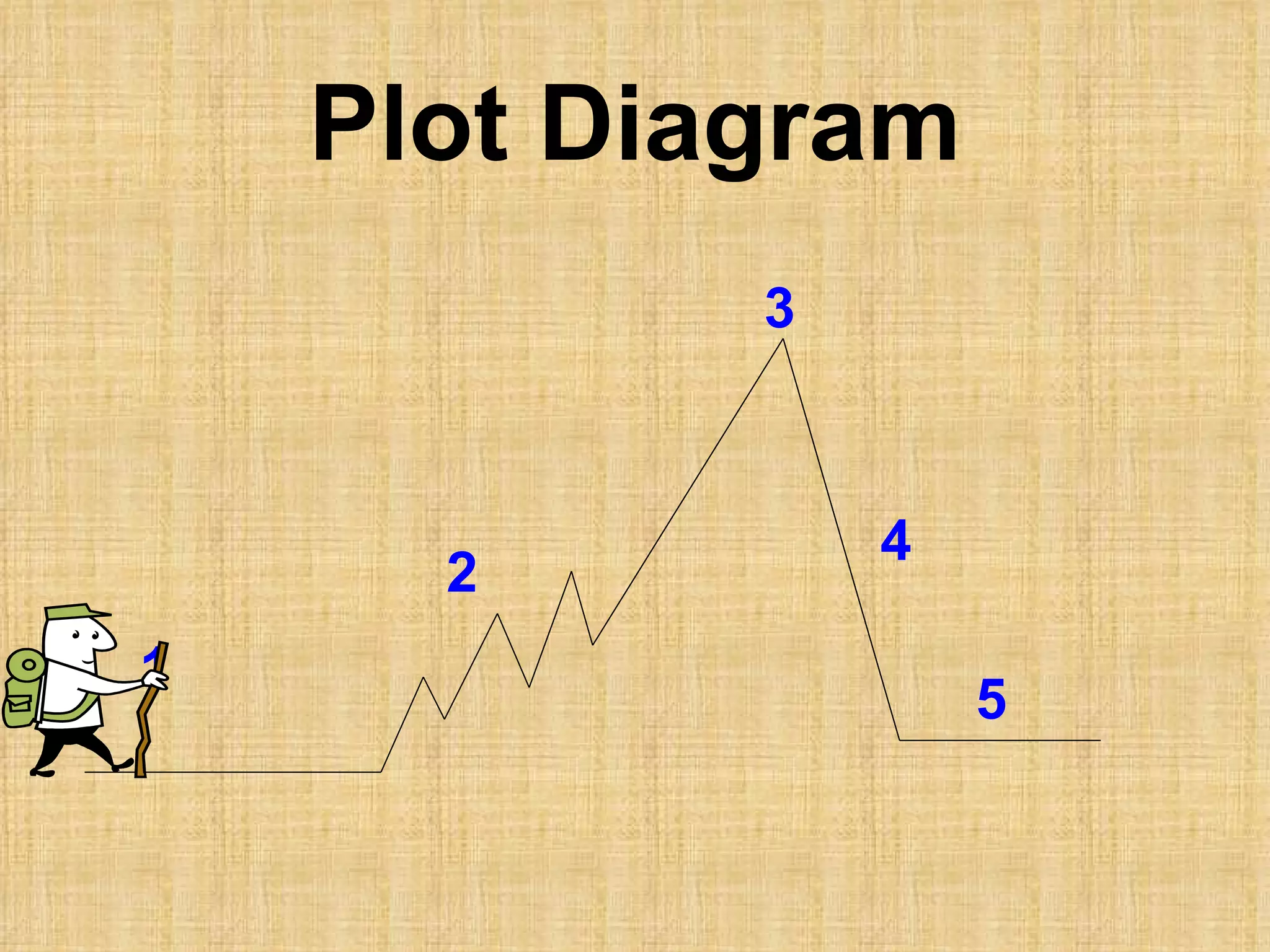
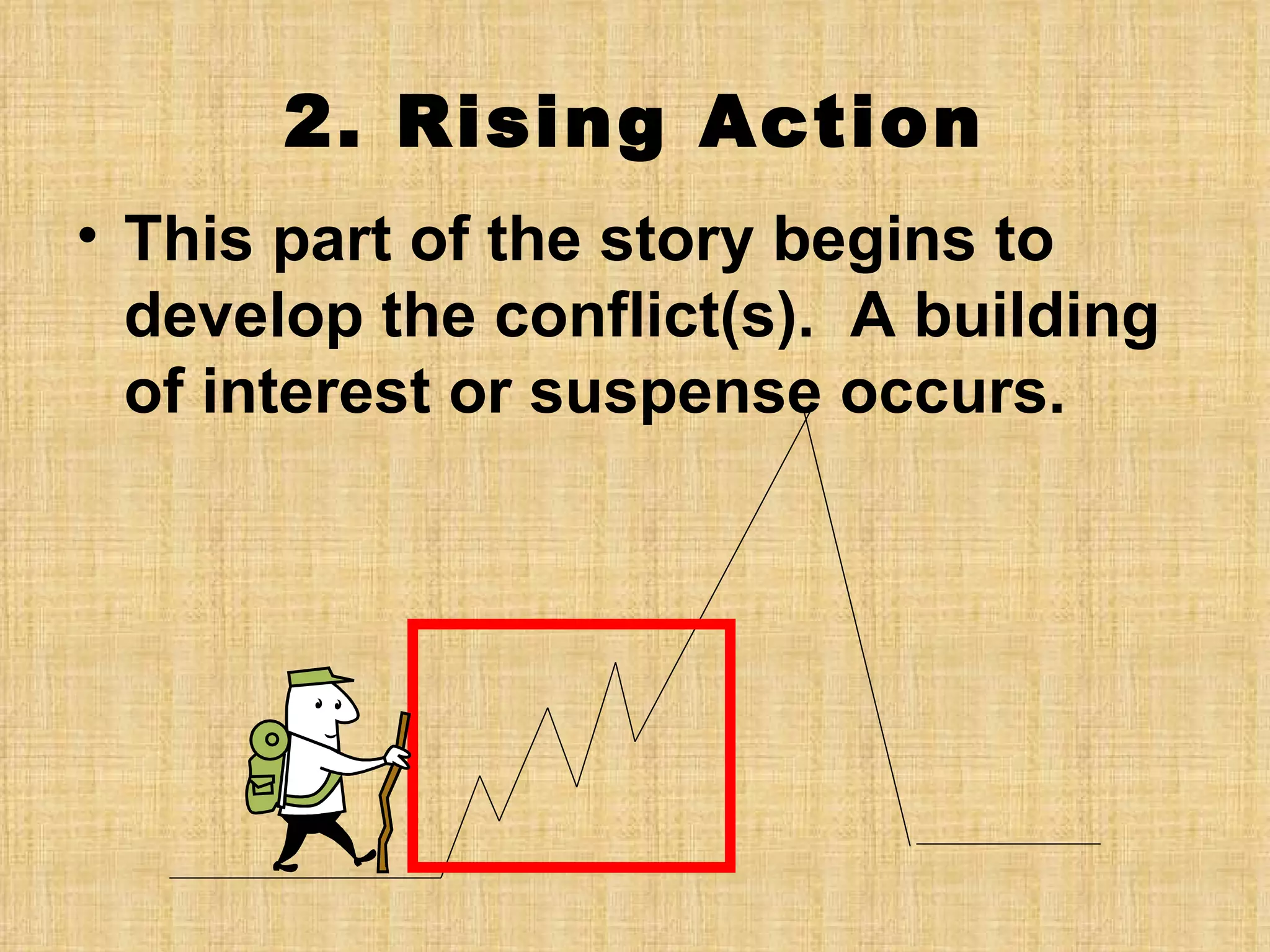
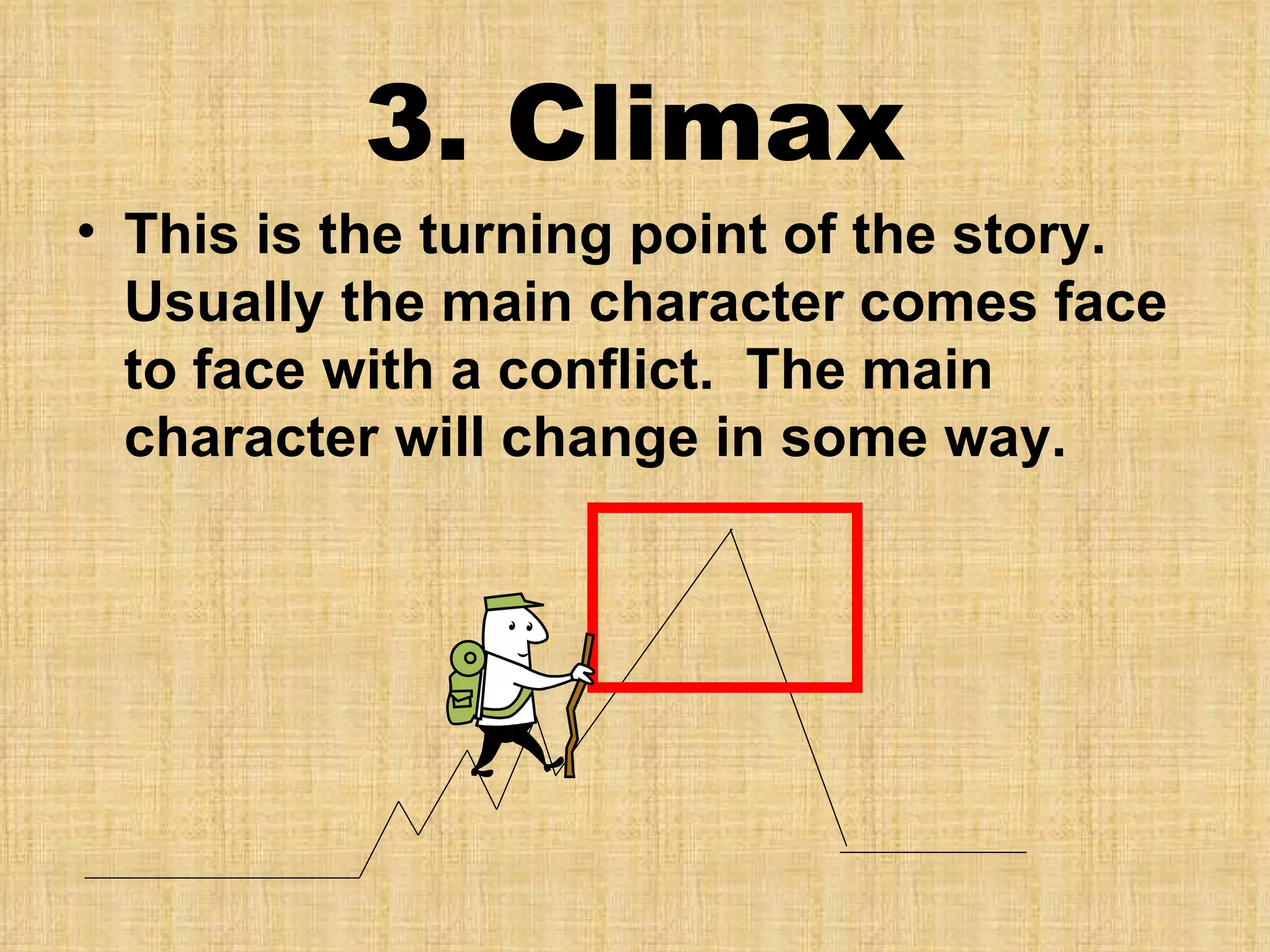
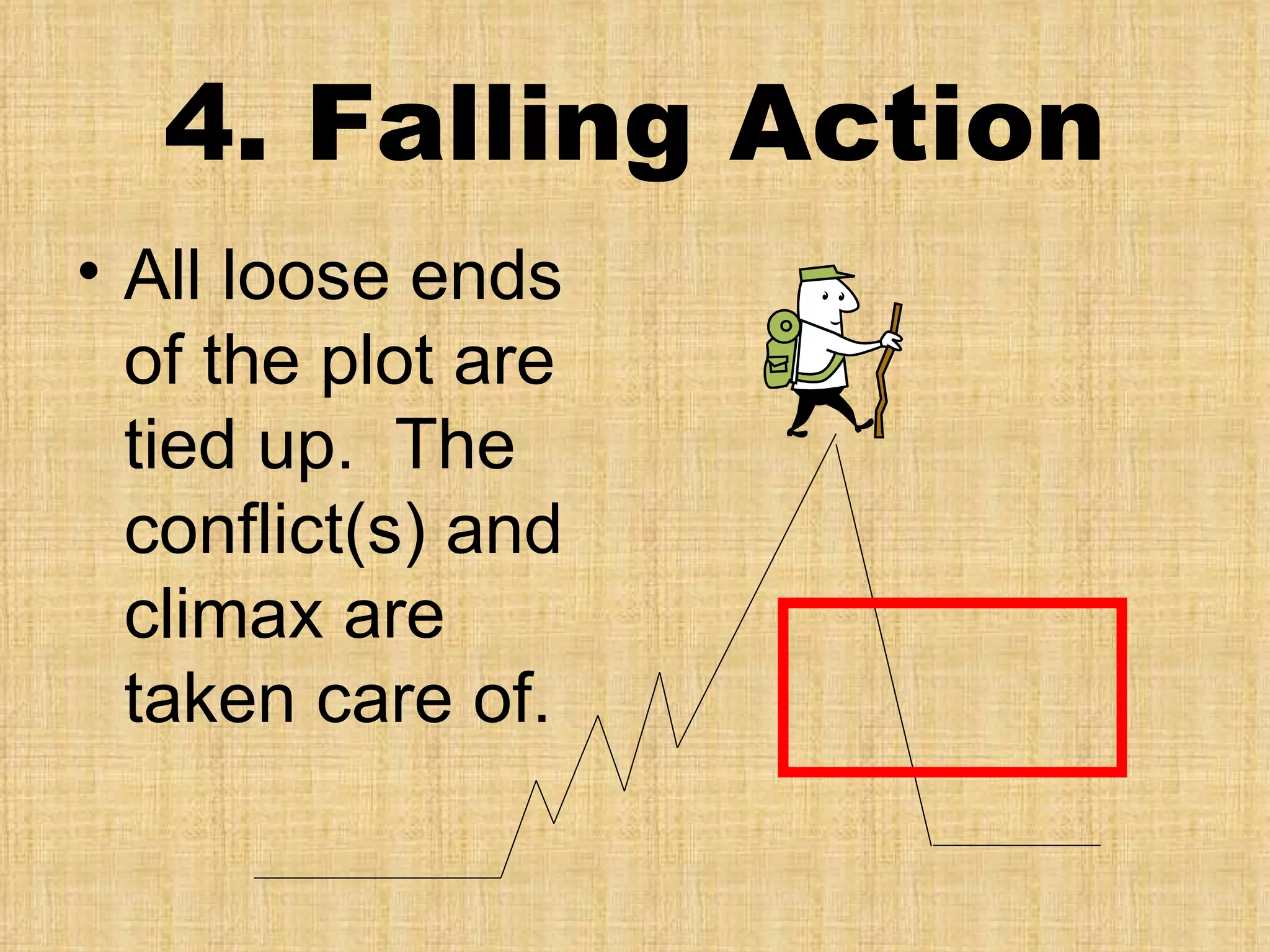
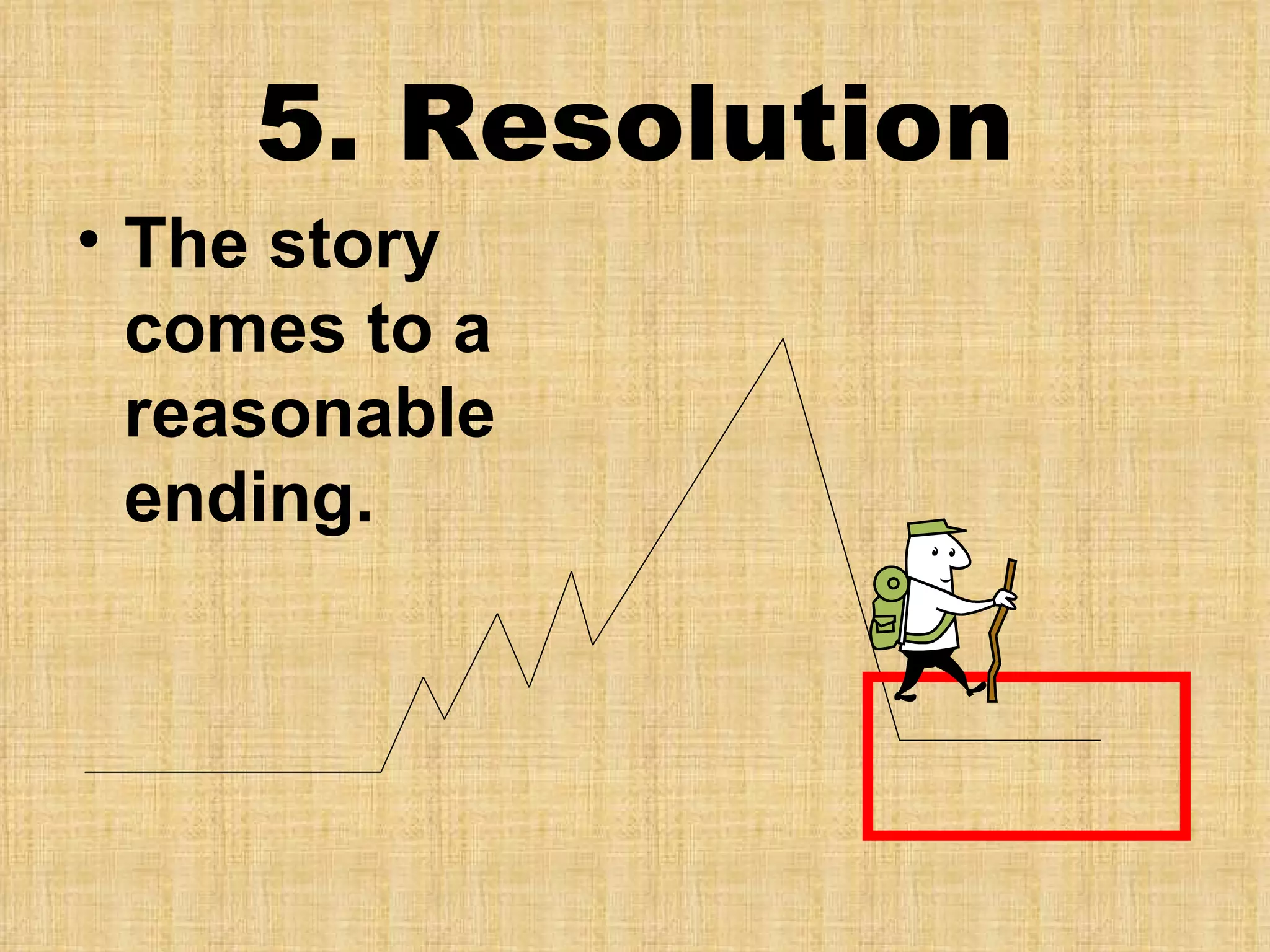
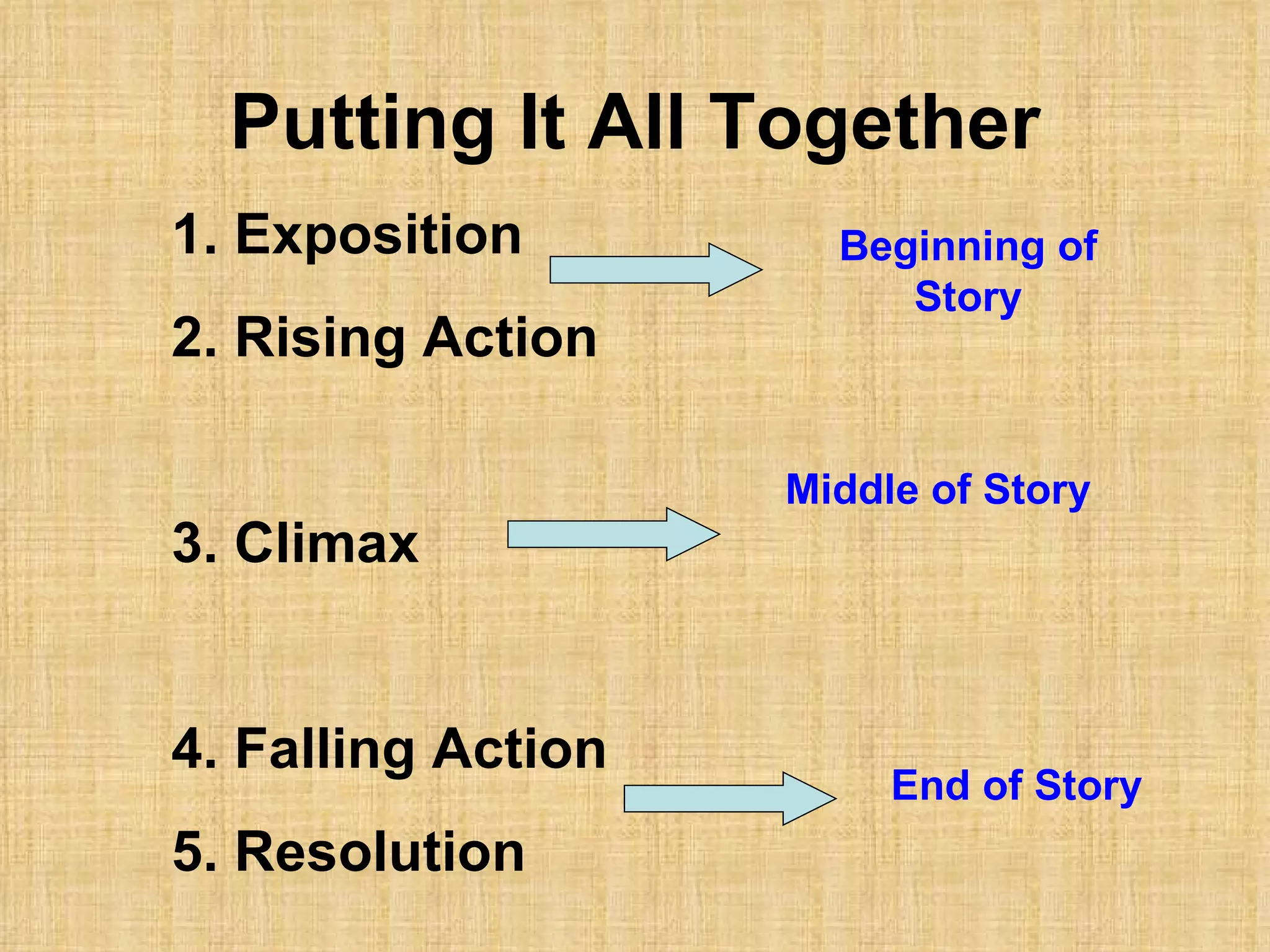
The document outlines the 5 key elements of a plot diagram: 1) Exposition introduces the characters, setting, and main conflict. 2) Rising Action develops the conflict(s) and builds suspense. 3) Climax is the turning point where the protagonist faces the central conflict. 4) Falling Action resolves loose ends from the climax. 5) Resolution provides a reasonable ending that ties the story together. These five elements - exposition, rising action, climax, falling action, and resolution - make up the basic pattern of events in a narrative from beginning to end.
Introduction to plot elements and diagram representation highlighting the organized sequence of events.
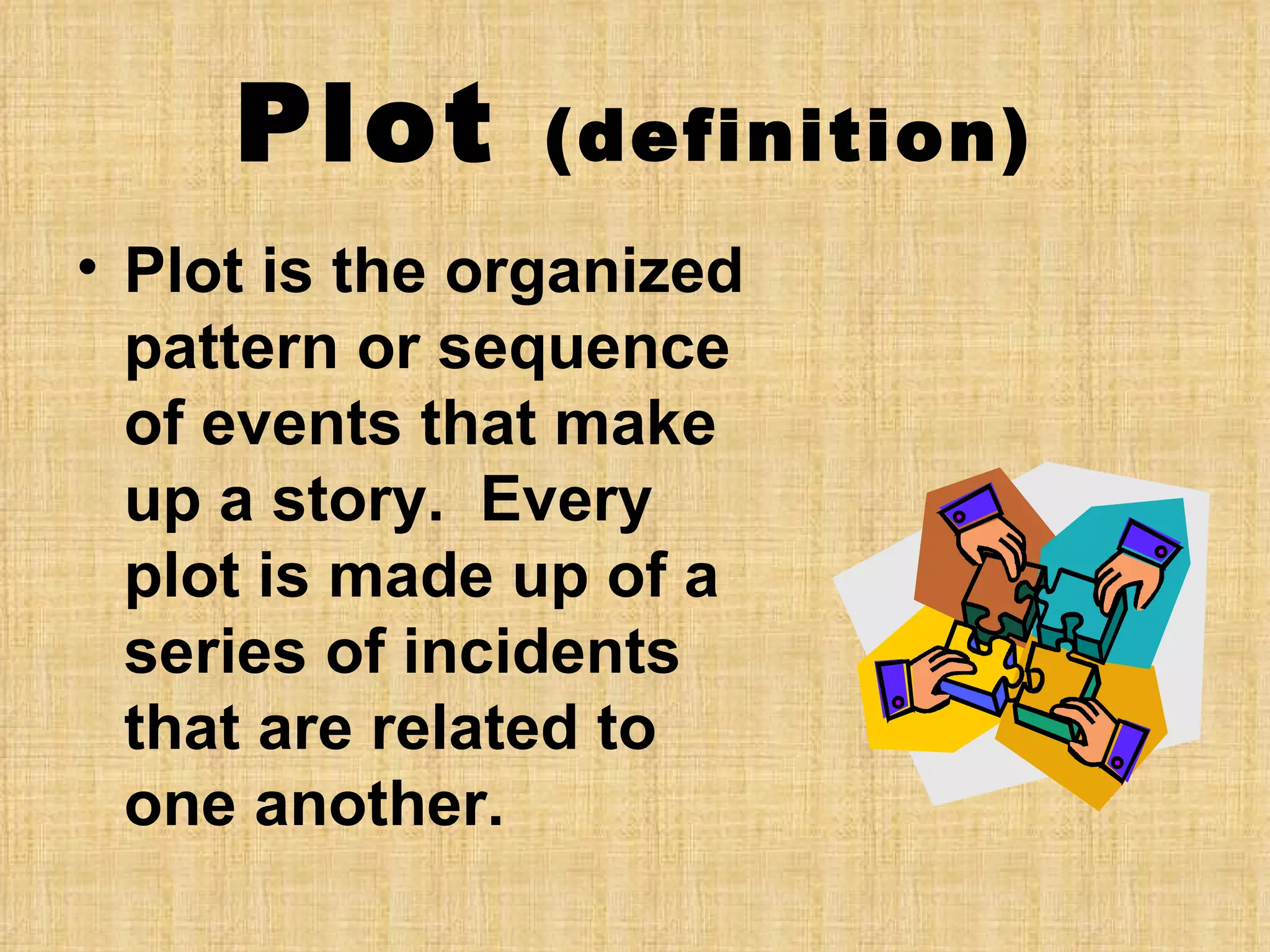
Plot is defined as the organized pattern or sequence of events in a story, linking incidents together.
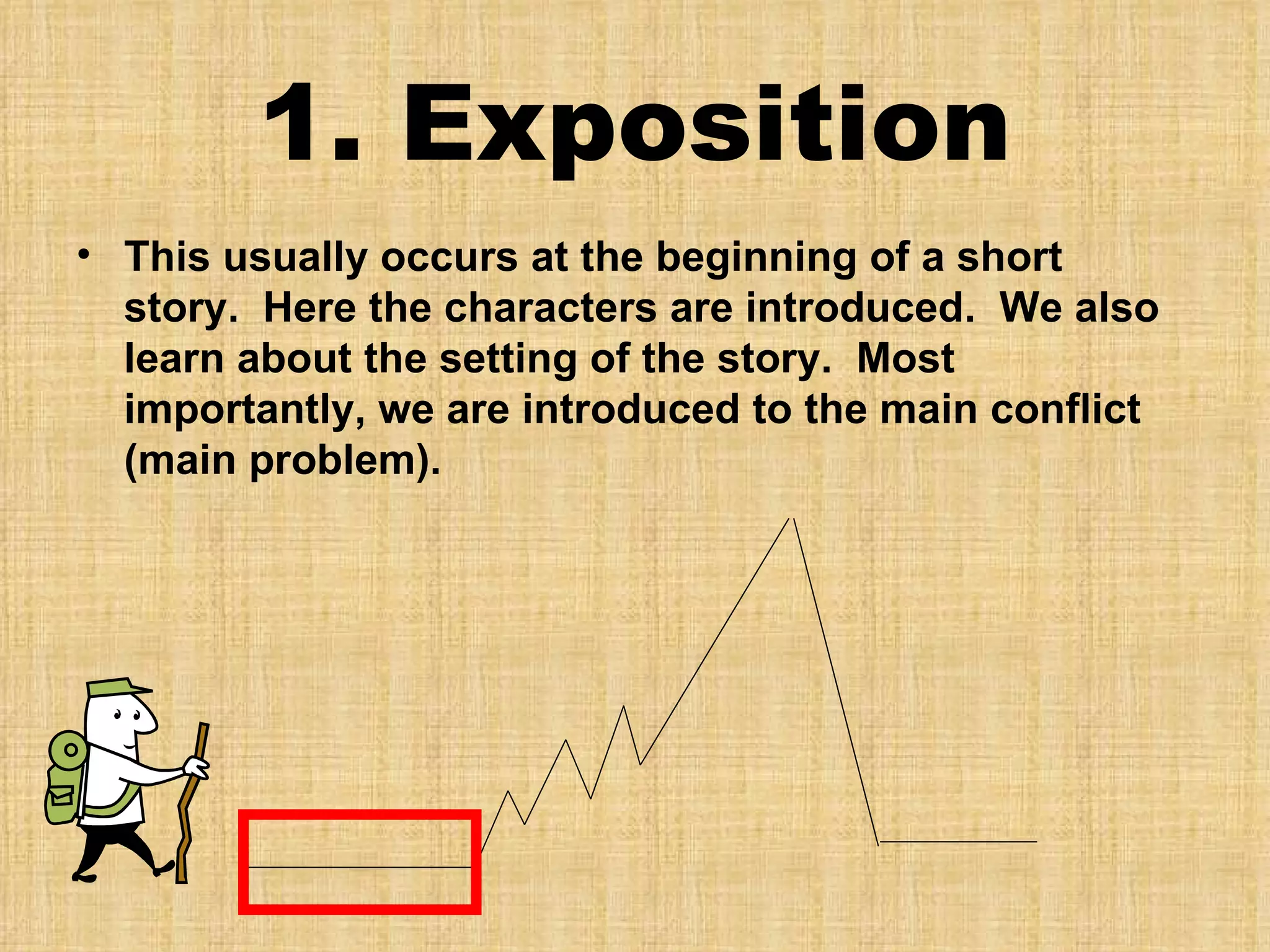
The exposition introduces characters, setting, and the main conflict of the story, setting the stage for events.
The rising action develops conflicts and builds suspense, leading to a more engaging narrative.
The climax represents the story's turning point where the main character confronts the conflict.
The falling action ties up loose ends of the plot and addresses the conflict and climax.
The resolution provides a reasonable ending to the story, concluding the narrative.
A recap of the plot structure, summarizing exposition, rising action, climax, falling action, and resolution.


![Elements of a plot diagram]](https://cdn.slidesharecdn.com/ss_thumbnails/elementsofaplotdiagram-140129054333-phpapp02-thumbnail.jpg?width=640&height=640&fit=bounds)
![Elements of a plot diagram]](https://cdn.slidesharecdn.com/ss_thumbnails/elementsofaplotdiagram-140208143221-phpapp01-thumbnail.jpg?width=640&height=640&fit=bounds)


![Elements of a plot diagram]](https://cdn.slidesharecdn.com/ss_thumbnails/elementsofaplotdiagram-131008082955-phpapp02-thumbnail.jpg?width=640&height=640&fit=bounds)


![Elements of a plot diagram]](https://cdn.slidesharecdn.com/ss_thumbnails/elementsofaplotdiagram-130625092741-phpapp01-thumbnail.jpg?width=640&height=640&fit=bounds)

![Elements of a plot diagram] 2](https://cdn.slidesharecdn.com/ss_thumbnails/elementsofaplotdiagram-2-130910094524-phpapp02-thumbnail.jpg?width=640&height=640&fit=bounds)
![Elements of a plot diagram]](https://cdn.slidesharecdn.com/ss_thumbnails/elementsofaplotdiagram-140824133939-phpapp01-thumbnail.jpg?width=640&height=640&fit=bounds)


![Elements of a plot diagram]](https://cdn.slidesharecdn.com/ss_thumbnails/elementsofaplotdiagram-120819201106-phpapp02-thumbnail.jpg?width=640&height=640&fit=bounds)


