Learning Space Rating System
Malcolm Brown
mbrown@educause.edu
“If you can’t measure it, you can’t manage it.”
Peter Drucker
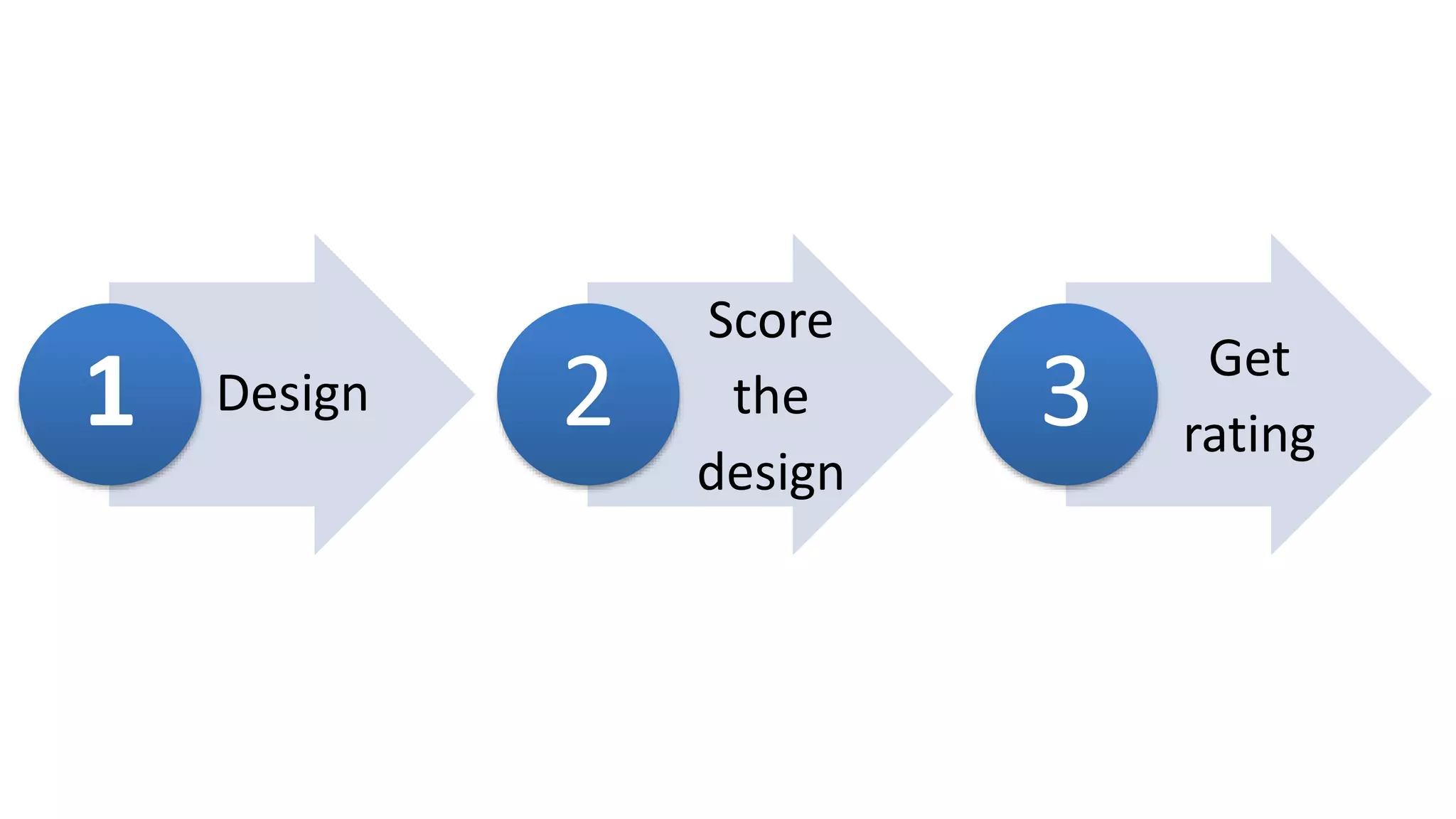
Design1
Score
the
design
2 Get
rating3
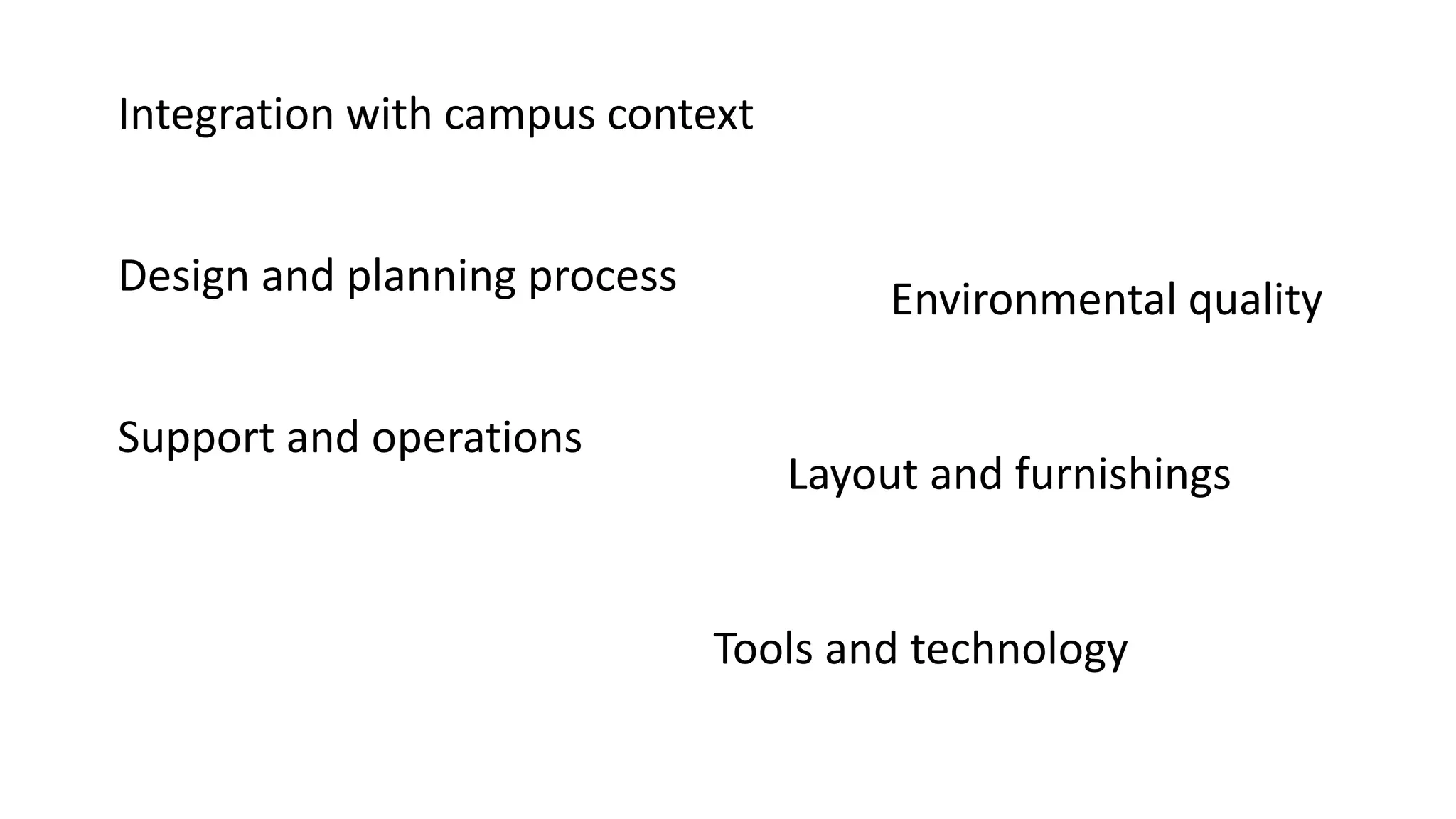
Integration with campus context
Design and planning process
Support and operations
Environmental quality
Layout and furnishings
Tools and technology
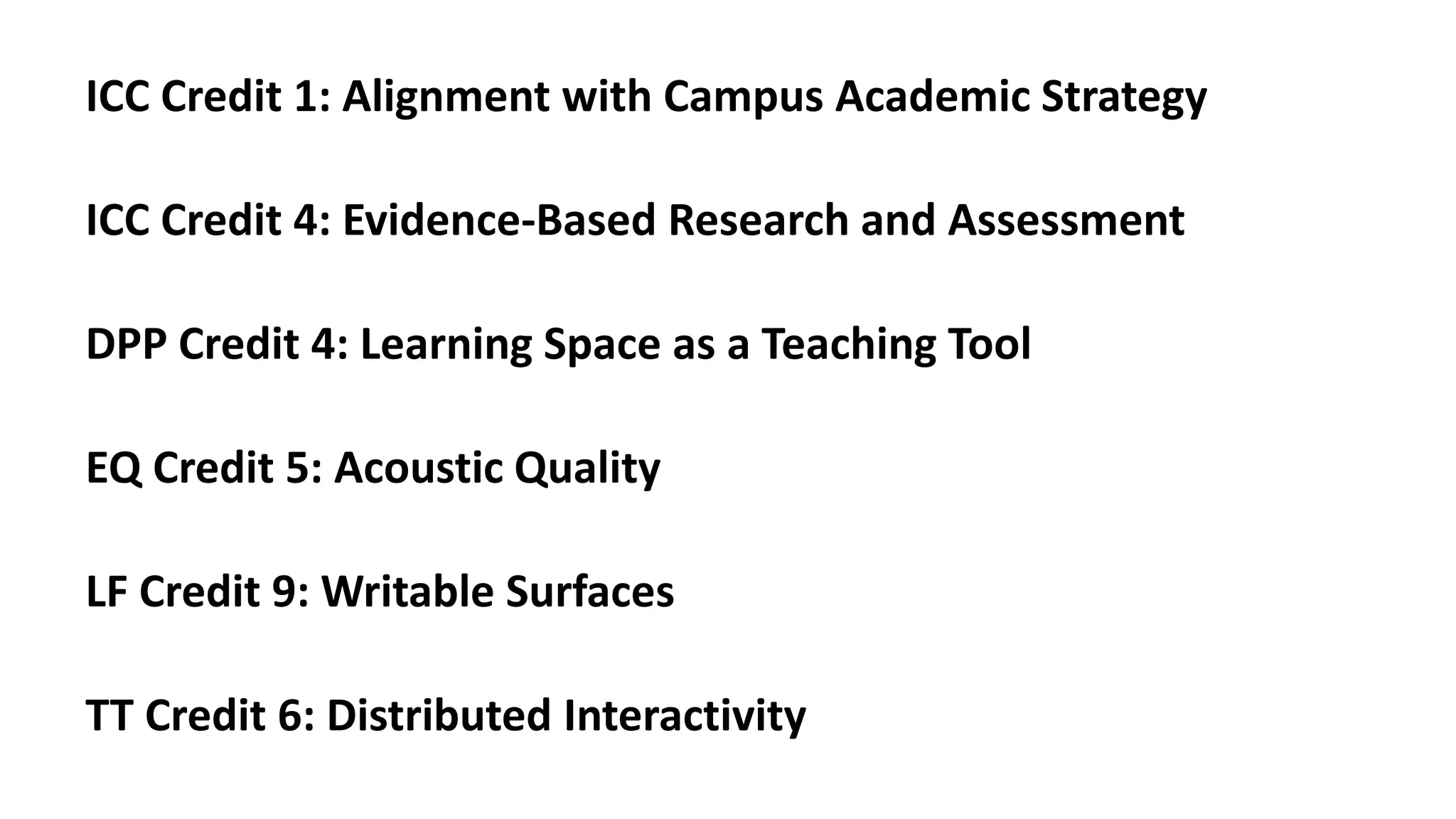
ICC Credit 1: Alignment with Campus Academic Strategy
ICC Credit 4: Evidence-Based Research and Assessment
DPP Credit 4: Learning Space as a Teaching Tool
EQ Credit 5: Acoustic Quality
LF Credit 9: Writable Surfaces
TT Credit 6: Distributed Interactivity
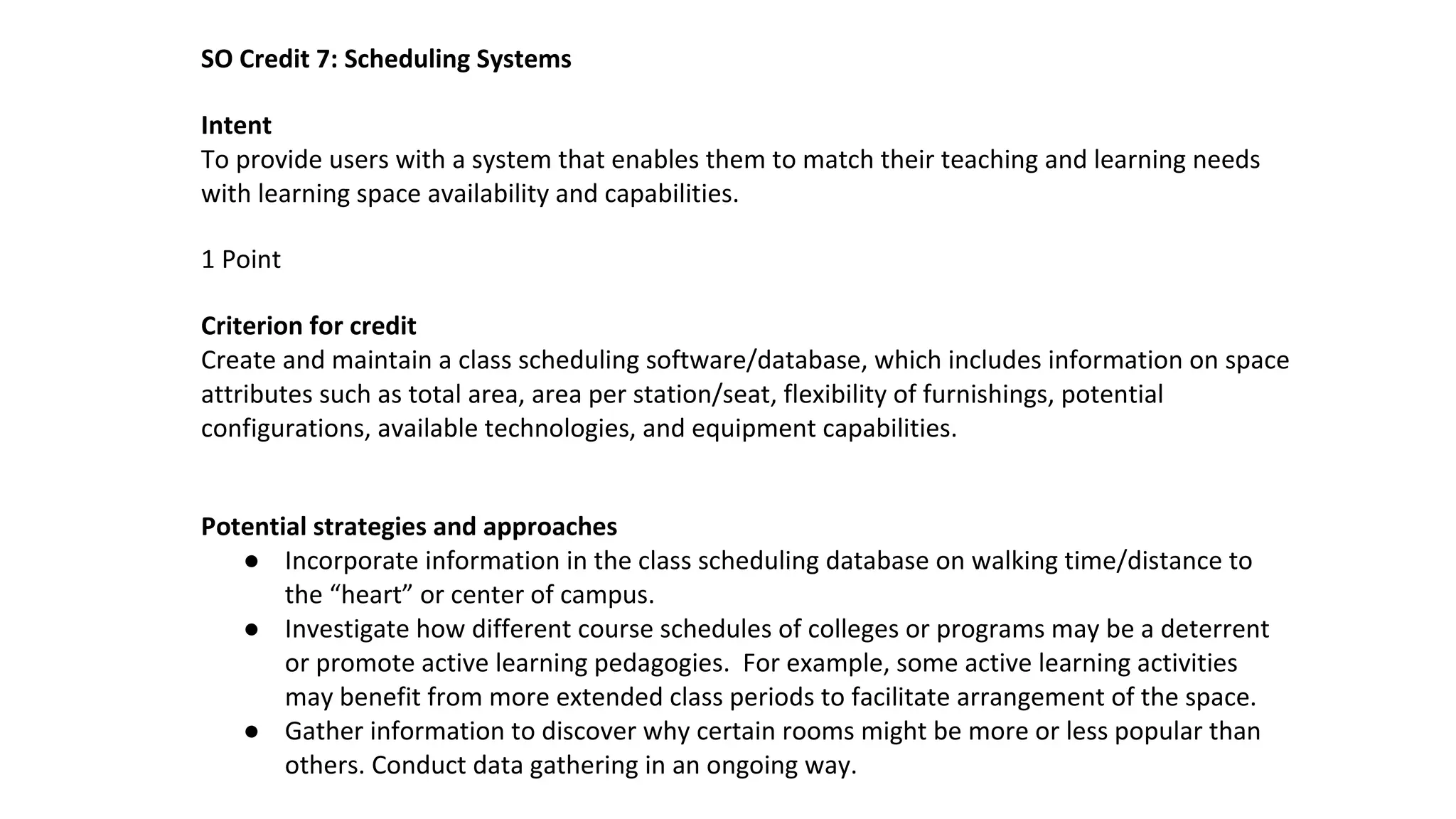
SO Credit 7: Scheduling Systems
Intent
To provide users with a system that enables them to match their teaching and learning needs
with learning space availability and capabilities.
1 Point
Criterion for credit
Create and maintain a class scheduling software/database, which includes information on space
attributes such as total area, area per station/seat, flexibility of furnishings, potential
configurations, available technologies, and equipment capabilities.
Potential strategies and approaches
● Incorporate information in the class scheduling database on walking time/distance to
the “heart” or center of campus.
● Investigate how different course schedules of colleges or programs may be a deterrent
or promote active learning pedagogies. For example, some active learning activities
may benefit from more extended class periods to facilitate arrangement of the space.
● Gather information to discover why certain rooms might be more or less popular than
others. Conduct data gathering in an ongoing way.
SO Credit 7: Scheduling Systems
Intent
To provide users with a system that enables them to match their teaching and learning needs
with learning space availability and capabilities.
1 Point
Criterion for credit
Create and maintain a class scheduling software/database, which includes information on space
attributes such as total area, area per station/seat, flexibility of furnishings, potential
configurations, available technologies, and equipment capabilities.
Potential strategies and approaches
● Incorporate information in the class scheduling database on walking time/distance to
the “heart” or center of campus.
● Investigate how different course schedules of colleges or programs may be a deterrent
or promote active learning pedagogies. For example, some active learning activities
may benefit from more extended class periods to facilitate arrangement of the space.
● Gather information to discover why certain rooms might be more or less popular than
others. Conduct data gathering in an ongoing way.
Emerging Learning Design 2014 Ignite session Learning Space Rating System

Emerging Learning Design 2014 Ignite session Learning Space Rating System

  • 1.
    Learning Space RatingSystem Malcolm Brown mbrown@educause.edu
  • 4.
    “If you can’tmeasure it, you can’t manage it.” Peter Drucker
  • 14.
  • 15.
    Integration with campuscontext Design and planning process Support and operations Environmental quality Layout and furnishings Tools and technology
  • 16.
    ICC Credit 1:Alignment with Campus Academic Strategy ICC Credit 4: Evidence-Based Research and Assessment DPP Credit 4: Learning Space as a Teaching Tool EQ Credit 5: Acoustic Quality LF Credit 9: Writable Surfaces TT Credit 6: Distributed Interactivity
  • 17.
    SO Credit 7:Scheduling Systems Intent To provide users with a system that enables them to match their teaching and learning needs with learning space availability and capabilities. 1 Point Criterion for credit Create and maintain a class scheduling software/database, which includes information on space attributes such as total area, area per station/seat, flexibility of furnishings, potential configurations, available technologies, and equipment capabilities. Potential strategies and approaches ● Incorporate information in the class scheduling database on walking time/distance to the “heart” or center of campus. ● Investigate how different course schedules of colleges or programs may be a deterrent or promote active learning pedagogies. For example, some active learning activities may benefit from more extended class periods to facilitate arrangement of the space. ● Gather information to discover why certain rooms might be more or less popular than others. Conduct data gathering in an ongoing way.
  • 18.
    SO Credit 7:Scheduling Systems Intent To provide users with a system that enables them to match their teaching and learning needs with learning space availability and capabilities. 1 Point Criterion for credit Create and maintain a class scheduling software/database, which includes information on space attributes such as total area, area per station/seat, flexibility of furnishings, potential configurations, available technologies, and equipment capabilities. Potential strategies and approaches ● Incorporate information in the class scheduling database on walking time/distance to the “heart” or center of campus. ● Investigate how different course schedules of colleges or programs may be a deterrent or promote active learning pedagogies. For example, some active learning activities may benefit from more extended class periods to facilitate arrangement of the space. ● Gather information to discover why certain rooms might be more or less popular than others. Conduct data gathering in an ongoing way.