Our framework
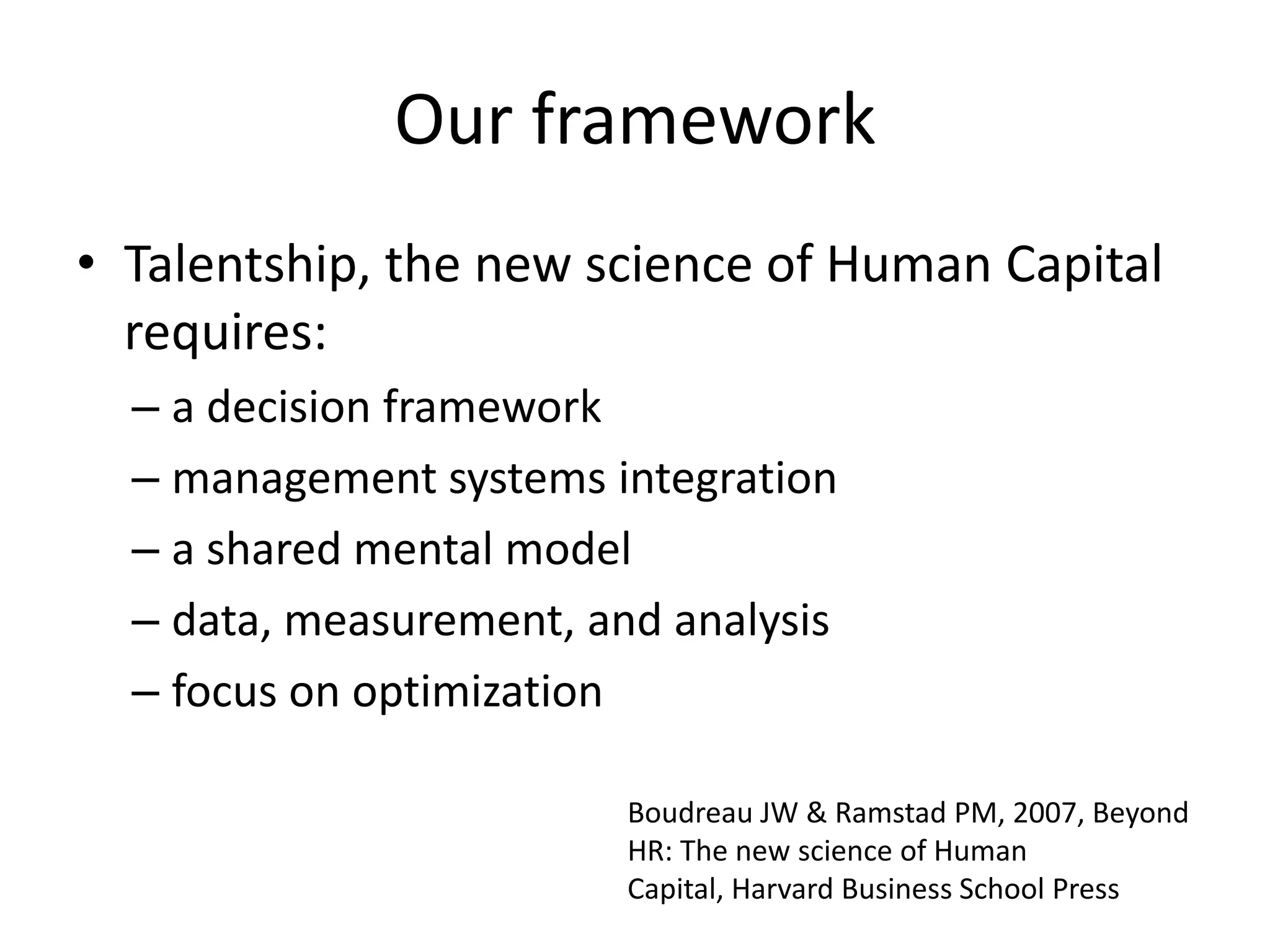
• Talentship, the new science of Human Capital
  requires:
  – a decision framework
  – management systems integration
  – a shared mental model
  – data, measurement, and analysis
  – focus on optimization

                         Boudreau JW & Ramstad PM, 2007, Beyond
                         HR: The new science of Human
                         Capital, Harvard Business School Press
From the framework to the learning
              experience
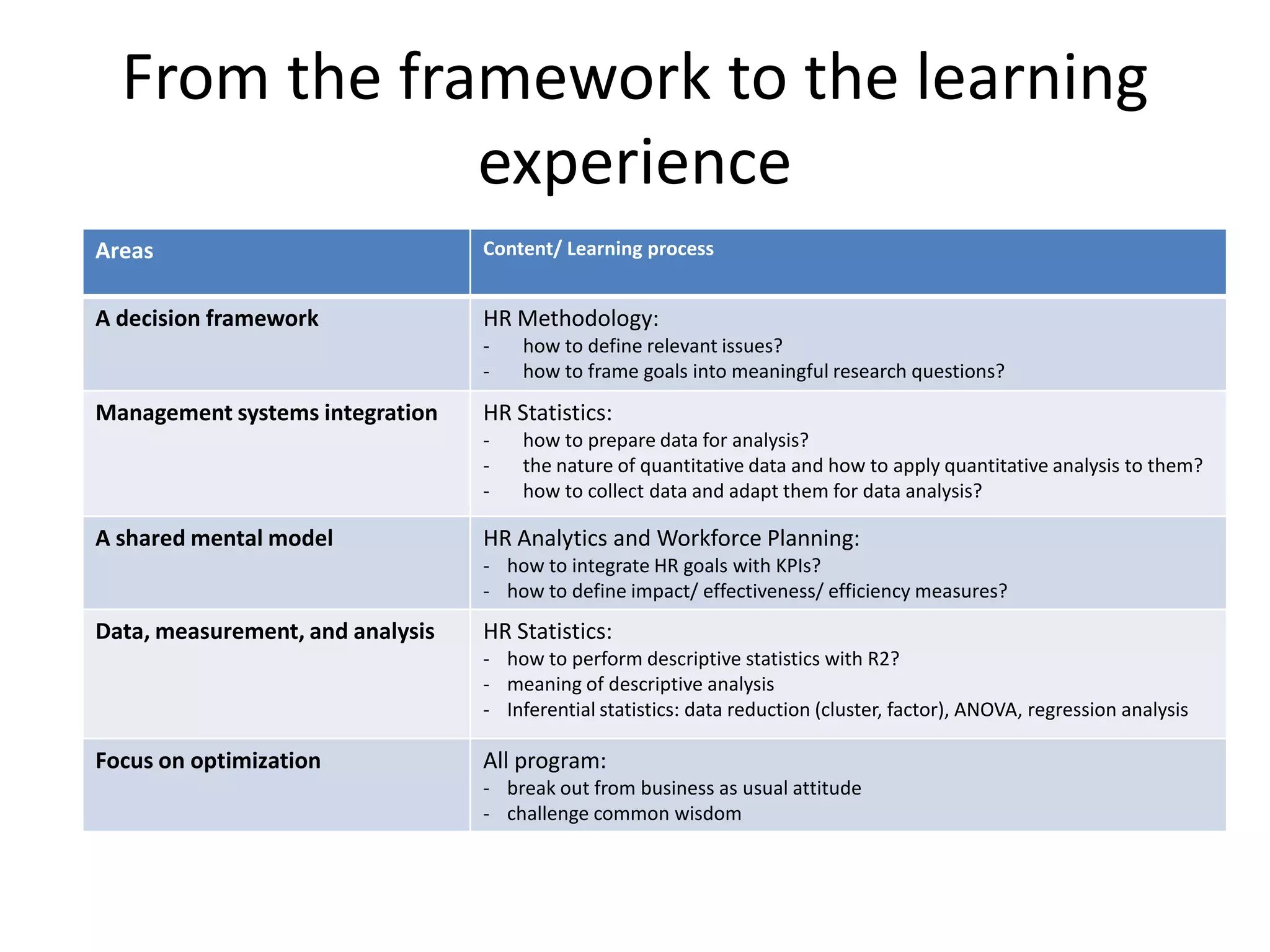
Areas                             Content/ Learning process


A decision framework              HR Methodology:
                                  -   how to define relevant issues?
                                  -   how to frame goals into meaningful research questions?

Management systems integration    HR Statistics:
                                  -   how to prepare data for analysis?
                                  -   the nature of quantitative data and how to apply quantitative analysis to them?
                                  -   how to collect data and adapt them for data analysis?

A shared mental model             HR Analytics and Workforce Planning:
                                  - how to integrate HR goals with KPIs?
                                  - how to define impact/ effectiveness/ efficiency measures?
Data, measurement, and analysis   HR Statistics:
                                  - how to perform descriptive statistics with R2?
                                  - meaning of descriptive analysis
                                  - Inferential statistics: data reduction (cluster, factor), ANOVA, regression analysis

Focus on optimization             All program:
                                  - break out from business as usual attitude
                                  - challenge common wisdom
The model for a new HR
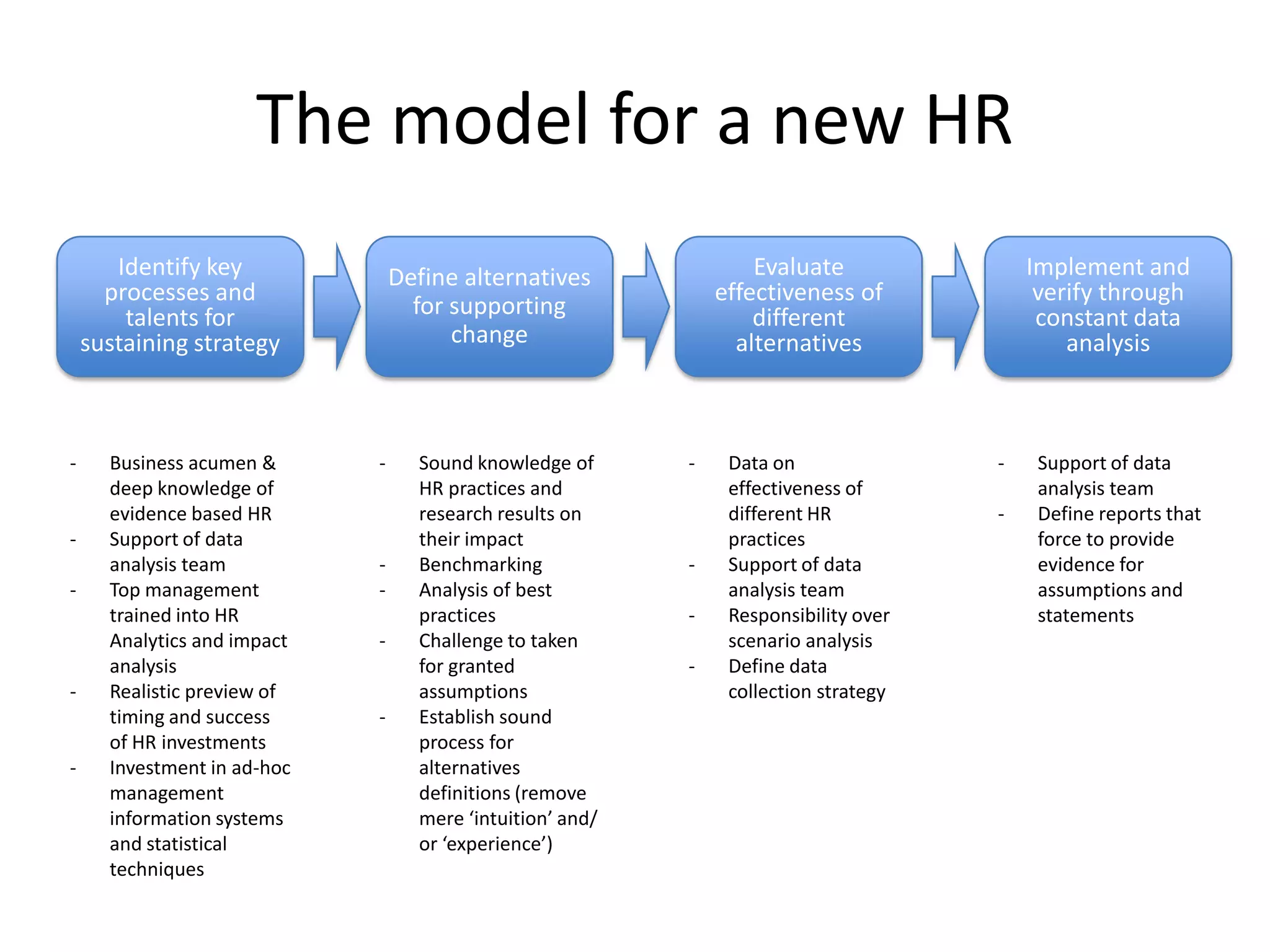
       Identify key              Define alternatives               Evaluate               Implement and
      processes and                                            effectiveness of            verify through
        talents for                for supporting                  different               constant data
    sustaining strategy                change                    alternatives                 analysis


-     Business acumen &      -     Sound knowledge of      -    Data on               -    Support of data
      deep knowledge of            HR practices and             effectiveness of           analysis team
      evidence based HR            research results on          different HR          -    Define reports that
-     Support of data              their impact                 practices                  force to provide
      analysis team          -     Benchmarking            -    Support of data            evidence for
-     Top management         -     Analysis of best             analysis team              assumptions and
      trained into HR              practices               -    Responsibility over        statements
      Analytics and impact   -     Challenge to taken           scenario analysis
      analysis                     for granted             -    Define data
-     Realistic preview of         assumptions                  collection strategy
      timing and success     -     Establish sound
      of HR investments            process for
-     Investment in ad-hoc         alternatives
      management                   definitions (remove
      information systems          mere ‘intuition’ and/
      and statistical              or ‘experience’)
      techniques
Challenges
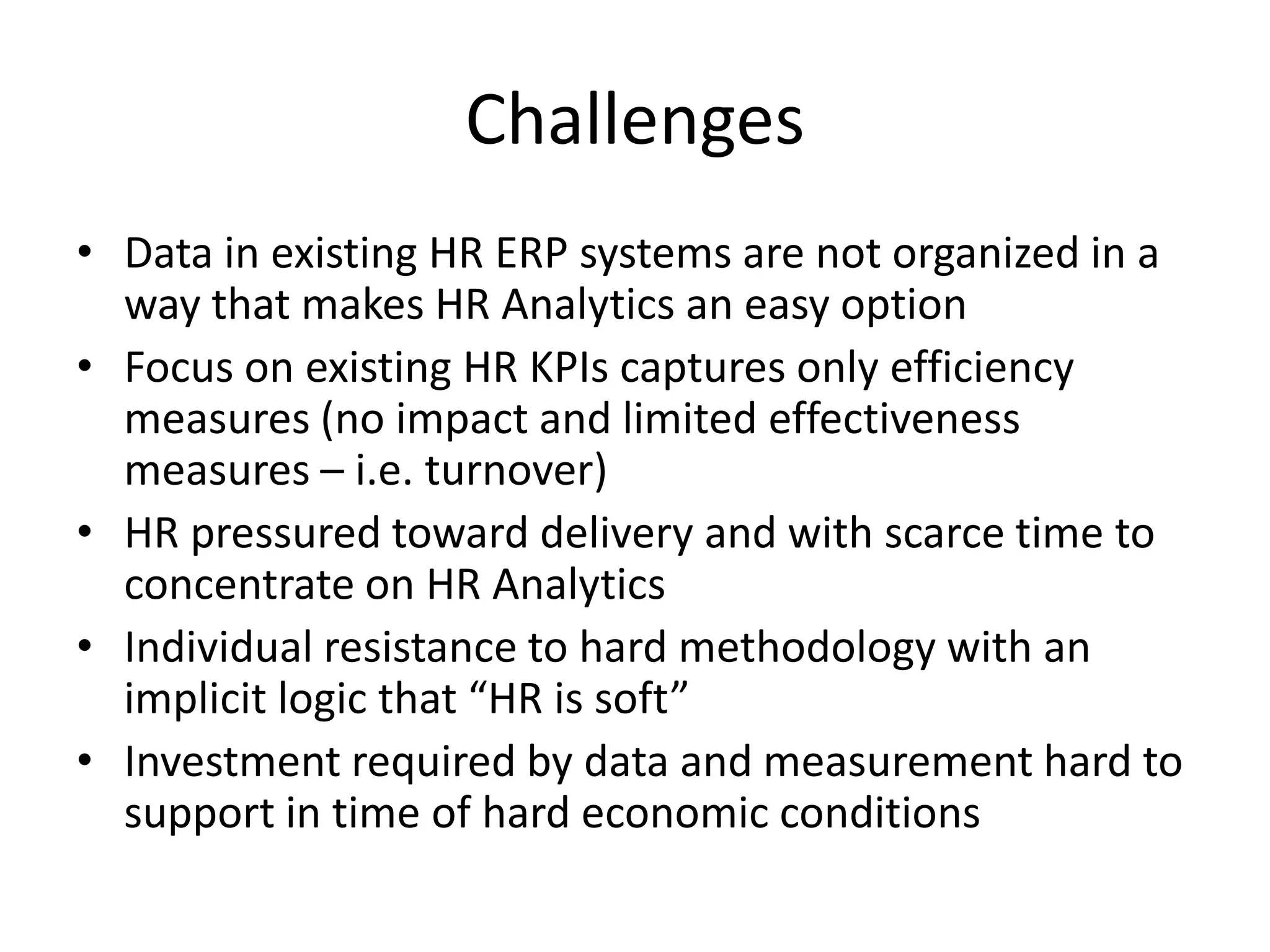
• Data in existing HR ERP systems are not organized in a
  way that makes HR Analytics an easy option
• Focus on existing HR KPIs captures only efficiency
  measures (no impact and limited effectiveness
  measures – i.e. turnover)
• HR pressured toward delivery and with scarce time to
  concentrate on HR Analytics
• Individual resistance to hard methodology with an
  implicit logic that “HR is soft”
• Investment required by data and measurement hard to
  support in time of hard economic conditions
What is missing?
• Consistent with Boudreau and Ramstad, to go
  beyond HR asks for a change in attitude by top/
  line managers: evidence-based decision making is
  not for finance and marketing alone
• Strategic HRMs need to invest in training top/
  line managers in recognizing how to measure
  human resources contribution
• HR KPIs are a ‘golden cage’: useful to support our
  request for resources, but unable to provide
  evidence of our impact

Framework hr analytics

  • 1.
    Our framework • Talentship,the new science of Human Capital requires: – a decision framework – management systems integration – a shared mental model – data, measurement, and analysis – focus on optimization Boudreau JW & Ramstad PM, 2007, Beyond HR: The new science of Human Capital, Harvard Business School Press
  • 2.
    From the frameworkto the learning experience Areas Content/ Learning process A decision framework HR Methodology: - how to define relevant issues? - how to frame goals into meaningful research questions? Management systems integration HR Statistics: - how to prepare data for analysis? - the nature of quantitative data and how to apply quantitative analysis to them? - how to collect data and adapt them for data analysis? A shared mental model HR Analytics and Workforce Planning: - how to integrate HR goals with KPIs? - how to define impact/ effectiveness/ efficiency measures? Data, measurement, and analysis HR Statistics: - how to perform descriptive statistics with R2? - meaning of descriptive analysis - Inferential statistics: data reduction (cluster, factor), ANOVA, regression analysis Focus on optimization All program: - break out from business as usual attitude - challenge common wisdom
  • 3.
    The model fora new HR Identify key Define alternatives Evaluate Implement and processes and effectiveness of verify through talents for for supporting different constant data sustaining strategy change alternatives analysis - Business acumen & - Sound knowledge of - Data on - Support of data deep knowledge of HR practices and effectiveness of analysis team evidence based HR research results on different HR - Define reports that - Support of data their impact practices force to provide analysis team - Benchmarking - Support of data evidence for - Top management - Analysis of best analysis team assumptions and trained into HR practices - Responsibility over statements Analytics and impact - Challenge to taken scenario analysis analysis for granted - Define data - Realistic preview of assumptions collection strategy timing and success - Establish sound of HR investments process for - Investment in ad-hoc alternatives management definitions (remove information systems mere ‘intuition’ and/ and statistical or ‘experience’) techniques
  • 4.
    Challenges • Data inexisting HR ERP systems are not organized in a way that makes HR Analytics an easy option • Focus on existing HR KPIs captures only efficiency measures (no impact and limited effectiveness measures – i.e. turnover) • HR pressured toward delivery and with scarce time to concentrate on HR Analytics • Individual resistance to hard methodology with an implicit logic that “HR is soft” • Investment required by data and measurement hard to support in time of hard economic conditions
  • 5.
    What is missing? •Consistent with Boudreau and Ramstad, to go beyond HR asks for a change in attitude by top/ line managers: evidence-based decision making is not for finance and marketing alone • Strategic HRMs need to invest in training top/ line managers in recognizing how to measure human resources contribution • HR KPIs are a ‘golden cage’: useful to support our request for resources, but unable to provide evidence of our impact