Laura Debenham
Asperger’s Syndrome
"People with autism spend more time
doing things they are not good at than
anyone else."
Toni Atwood
Definition
Asperger’s Syndrome (AS) is a developmental
disability that is defined by impairments in social
relationships, verbal and nonverbal communication,
and by restrictive, repetitive patterns of behaviors,
interests, and activities.
Background
 Identified in 1944 by Hans Asperger.
(Austria)
 Brought to the attention of the
English-speaking world in 1980 by Dr.
Lorna Wing.
 Was not added to the Diagnostic and
Statistics Manual of the American
Psychiatric Association until 1994.
 “Autism’s Shadow”
Causes
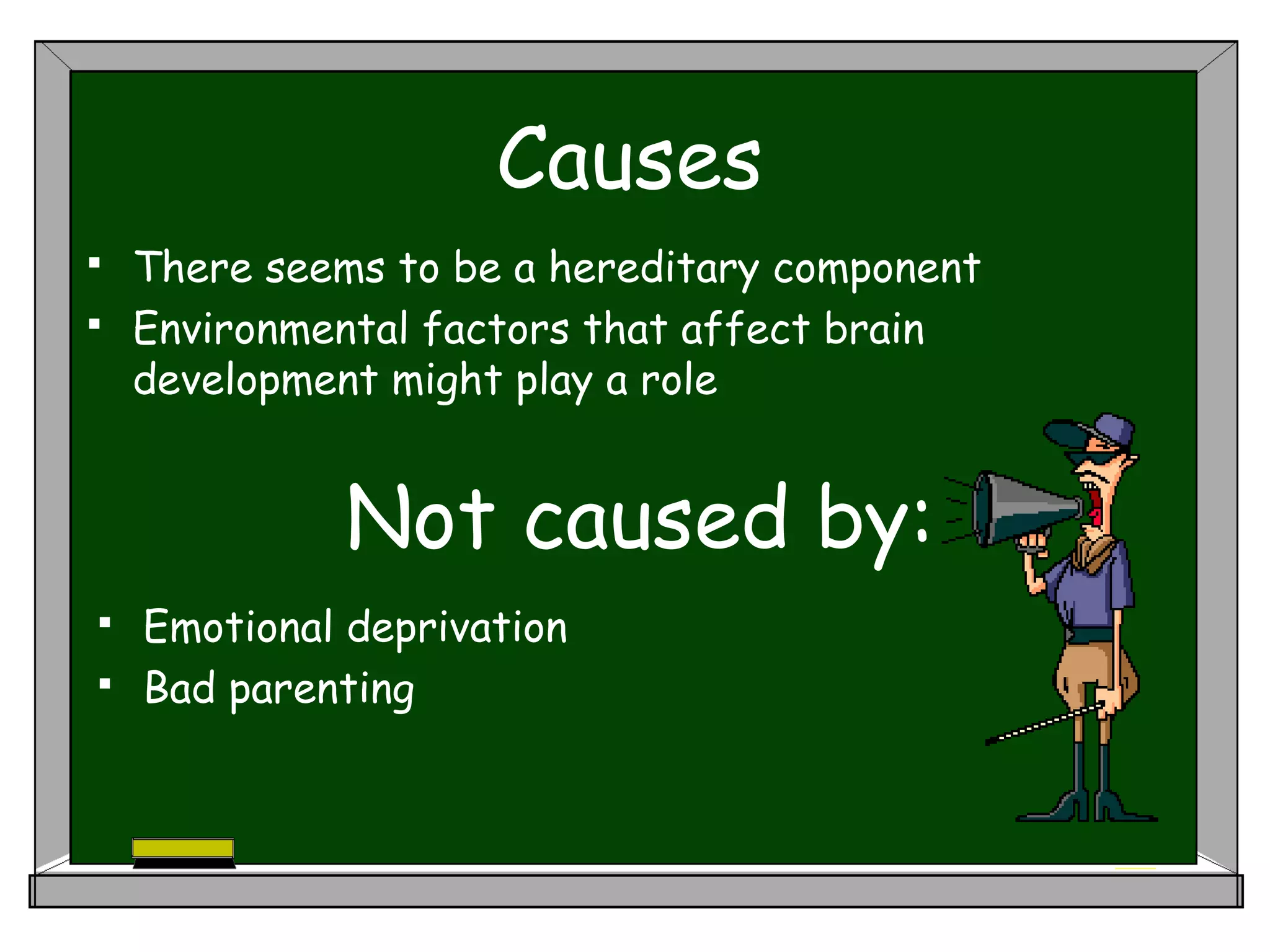
 There seems to be a hereditary component
 Environmental factors that affect brain
development might play a role
Not caused by:
 Emotional deprivation
 Bad parenting
Incidence Rates
 48 out every 10,000 children
(Kadesjo, Gillberg, & Nagberg, 1999)
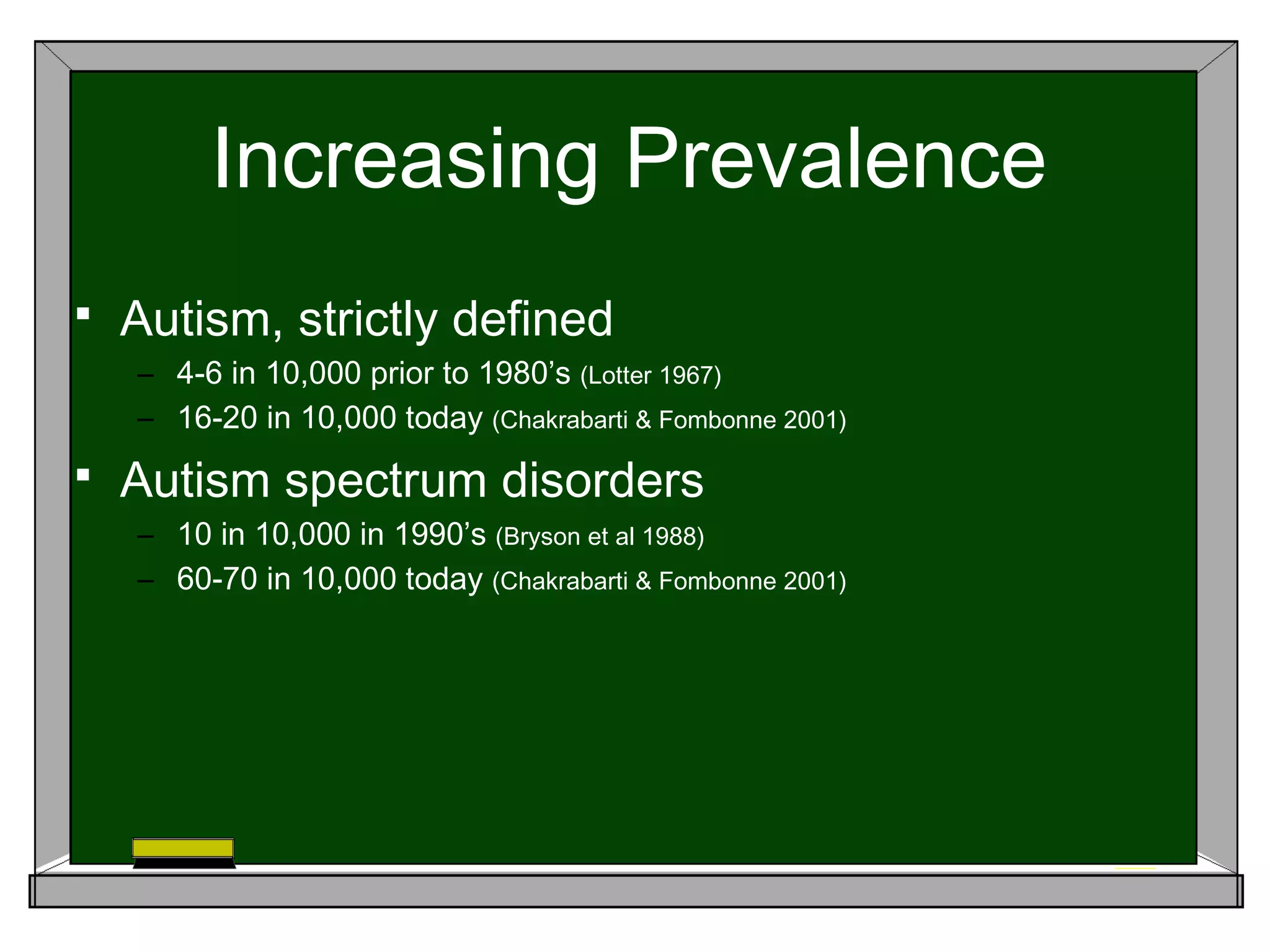
Increasing Prevalence
 Autism, strictly defined
– 4-6 in 10,000 prior to 1980’s (Lotter 1967)
– 16-20 in 10,000 today (Chakrabarti & Fombonne 2001)
 Autism spectrum disorders
– 10 in 10,000 in 1990’s (Bryson et al 1988)
– 60-70 in 10,000 today (Chakrabarti & Fombonne 2001)
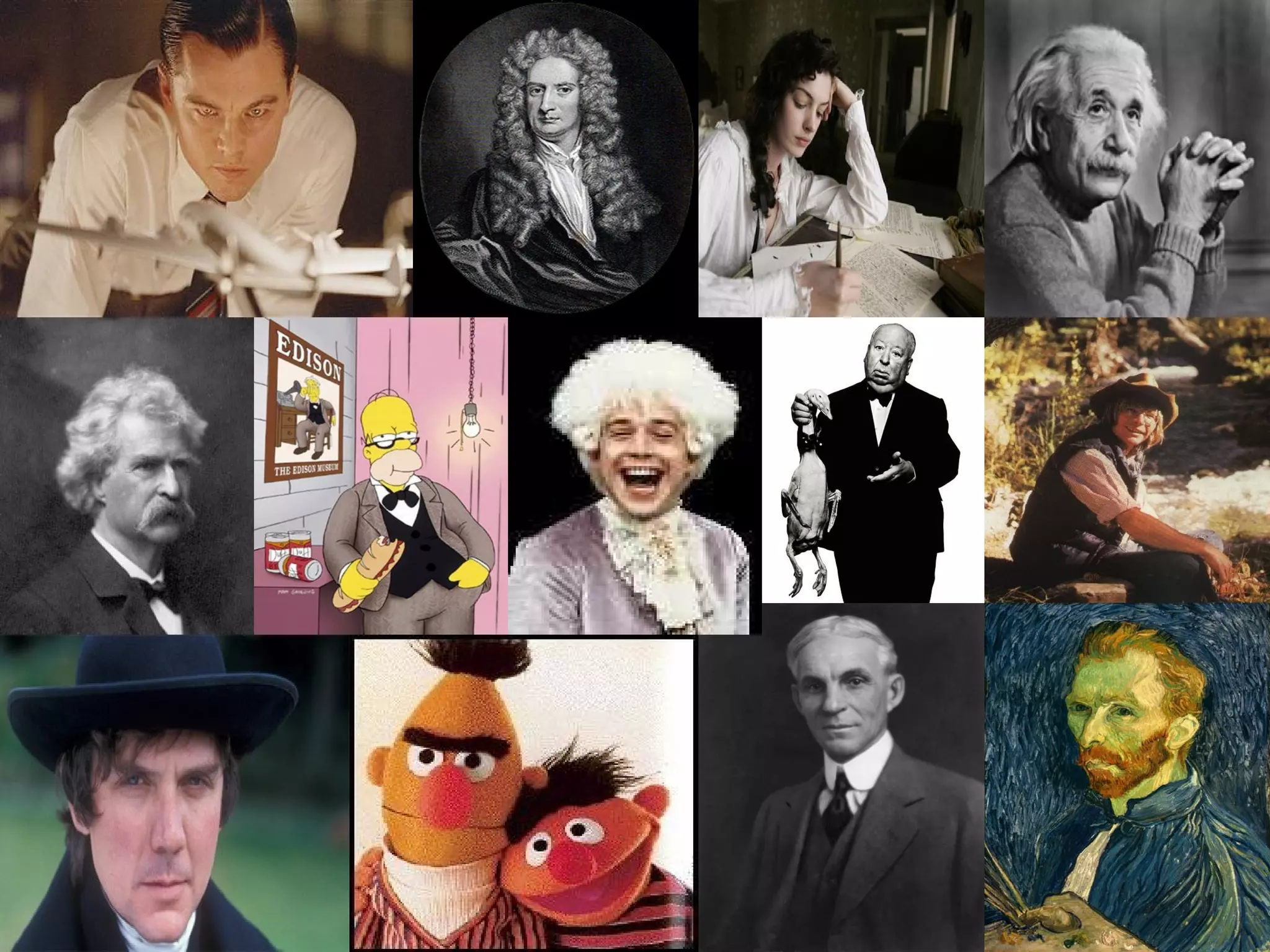
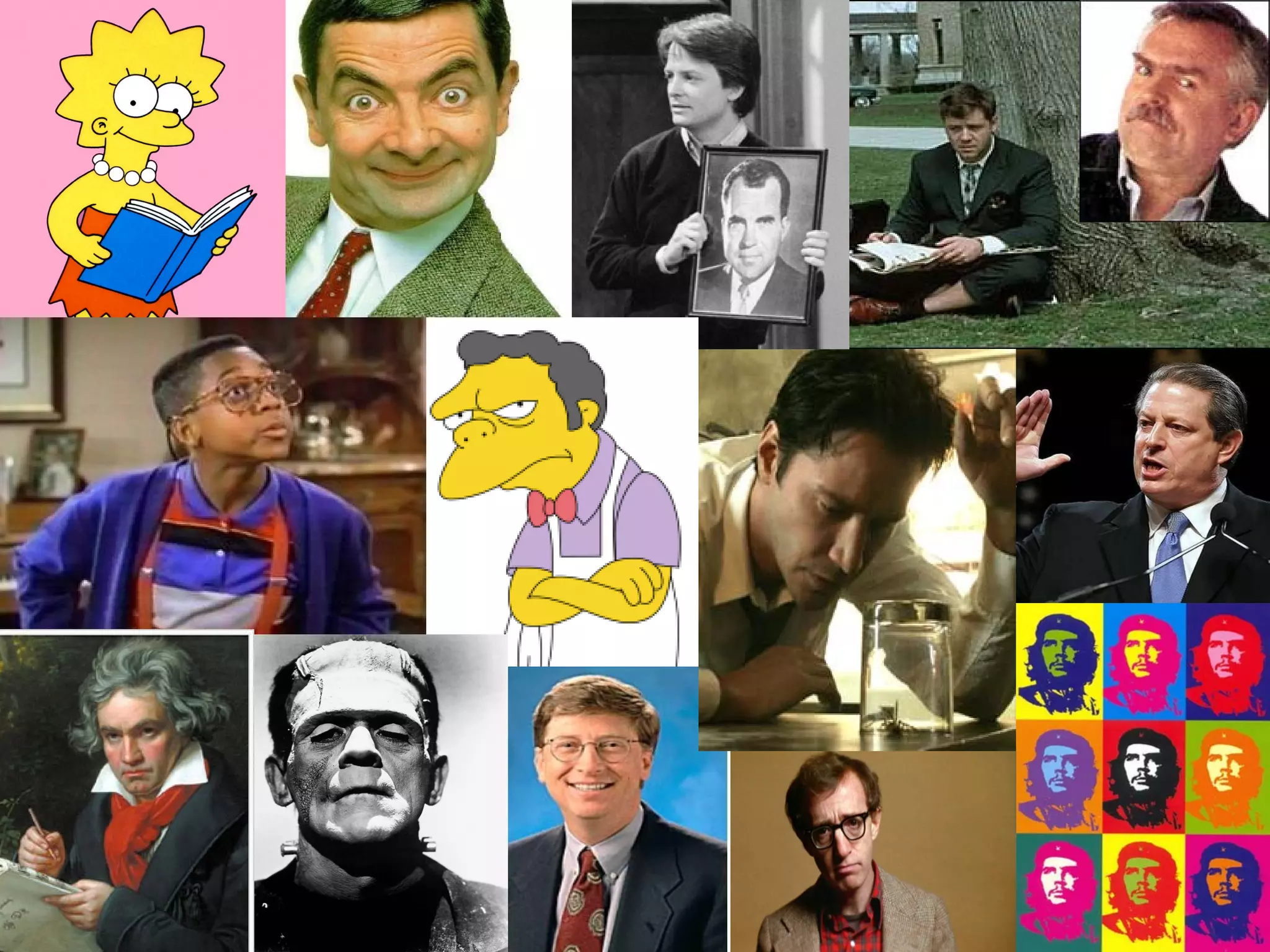
Famous Aspies...
 • Albert Einstein
 • Henry Ford
 • Thomas Edison
 • Thomas Jefferson
 • Wolfgang Amadeus Mozart
 • Isaac Newton
 • Henry Thoreau
 • Mark Twain
 • Vincent Van Gogh
 • John Denver
 • Alfred Hitchcock
 • Howard Hughes
 Andy Warhol
 Woody Allen
 Bill Gates
 Al Gore
 John Nash
 Keanu Reeves
 Alex P. Keaton
 Cliff Clavin from Cheers
 Lisa Simpson and Moe from Mo's tavern
 Mr Bean
 Steve Urkel
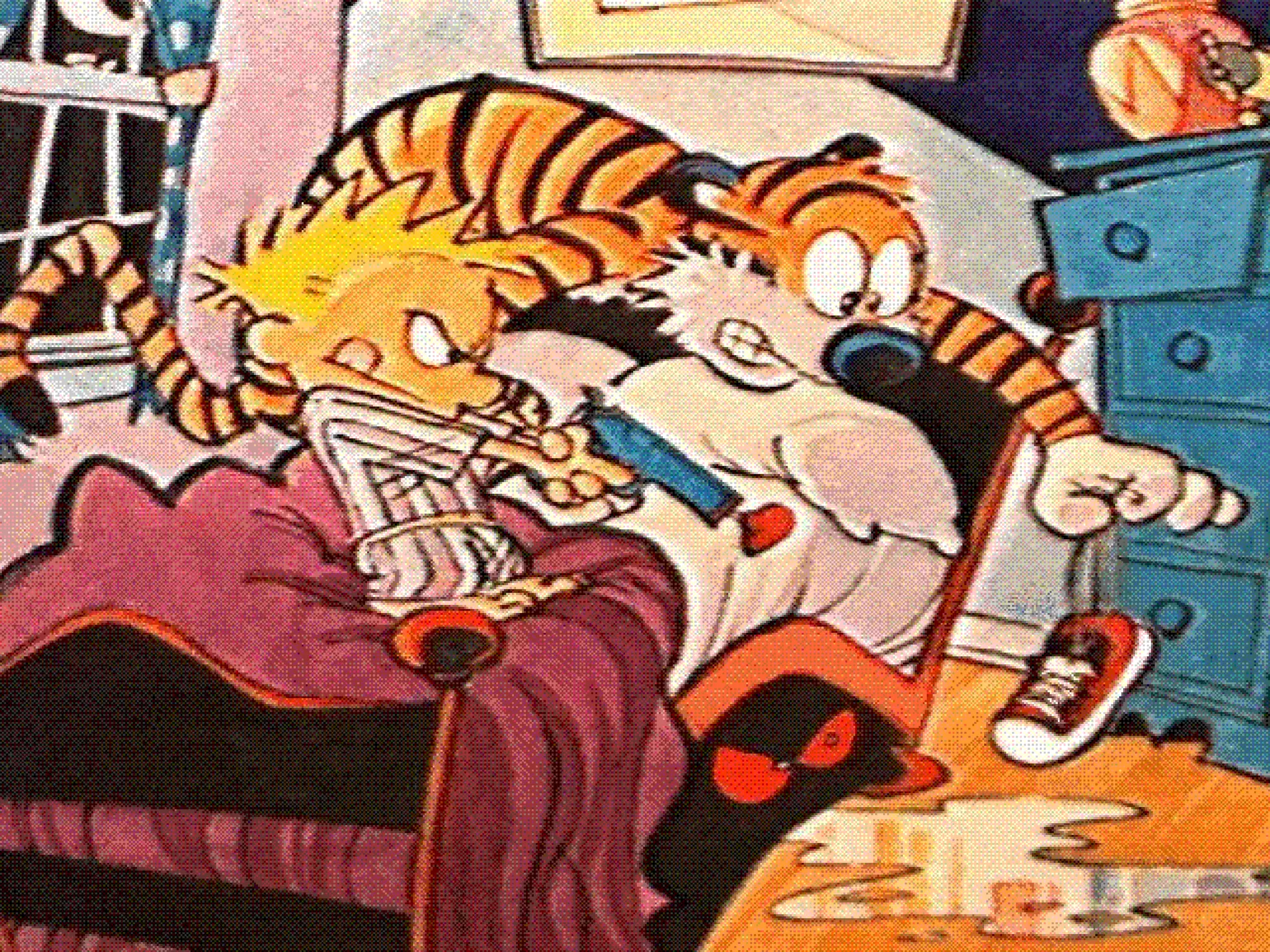
 Calvin of Calvin and Hobbes
 Frankenstein's Monster
 Ludwig van Beethoven
 Andy Warhol
 Woody Allen
 Bill Gates
 Al Gore
 John Nash
 Keanu Reeves
 Alex P. Keaton
 Cliff Clavin from Cheers
 Lisa Simpson and Moe from Mo's tavern
 Mr Bean
 Steve Urkel
 Calvin of Calvin and Hobbes
 Frankenstein's Monster
 Ludwig van Beethoven
 Andy Warhol
 Woody Allen
 Bill Gates
 Al Gore
 John Nash
 Keanu Reeves
 Alex P. Keaton
 Cliff Clavin from Cheers
 Lisa Simpson and Moe from Mo's tavern
 Mr Bean
 Steve Urkel
 Calvin of Calvin and Hobbes
 Frankenstein's Monster
 Ludwig van Beethoven
 Andy Warhol
 Woody Allen
 Bill Gates
 Al Gore
 John Nash
 Keanu Reeves
 Alex P. Keaton
 Cliff Clavin from Cheers
 Lisa Simpson and Moe from Mo's tavern
 Mr Bean
 Steve Urkel
 Calvin of Calvin and Hobbes
 Frankenstein's Monster
 Ludwig van Beethoven
Think S P E N C E R
 S Sensory Sensitivities
 P Pragmatic Language Skills Impaired
 E Emotional Connection
 N Narrow Interest Range
 C Clumsiness with Motor Skills
 E Environment that is Predictable
 R Rigidity of Thought
S Sensory Sensitivities
 Don't excuse it or make the child feel bad about feeling
bad
 Intense or under reactive to a sensation
 Clothing
 Slight bump by another
 Florescent lights
 Hug = squeeze
P Pragmatic Skills Impaired
 They see language as a way to share information
 They want to receive information correctly, sussincly and
without emotion.
 May use diologue from pop culture to communicate
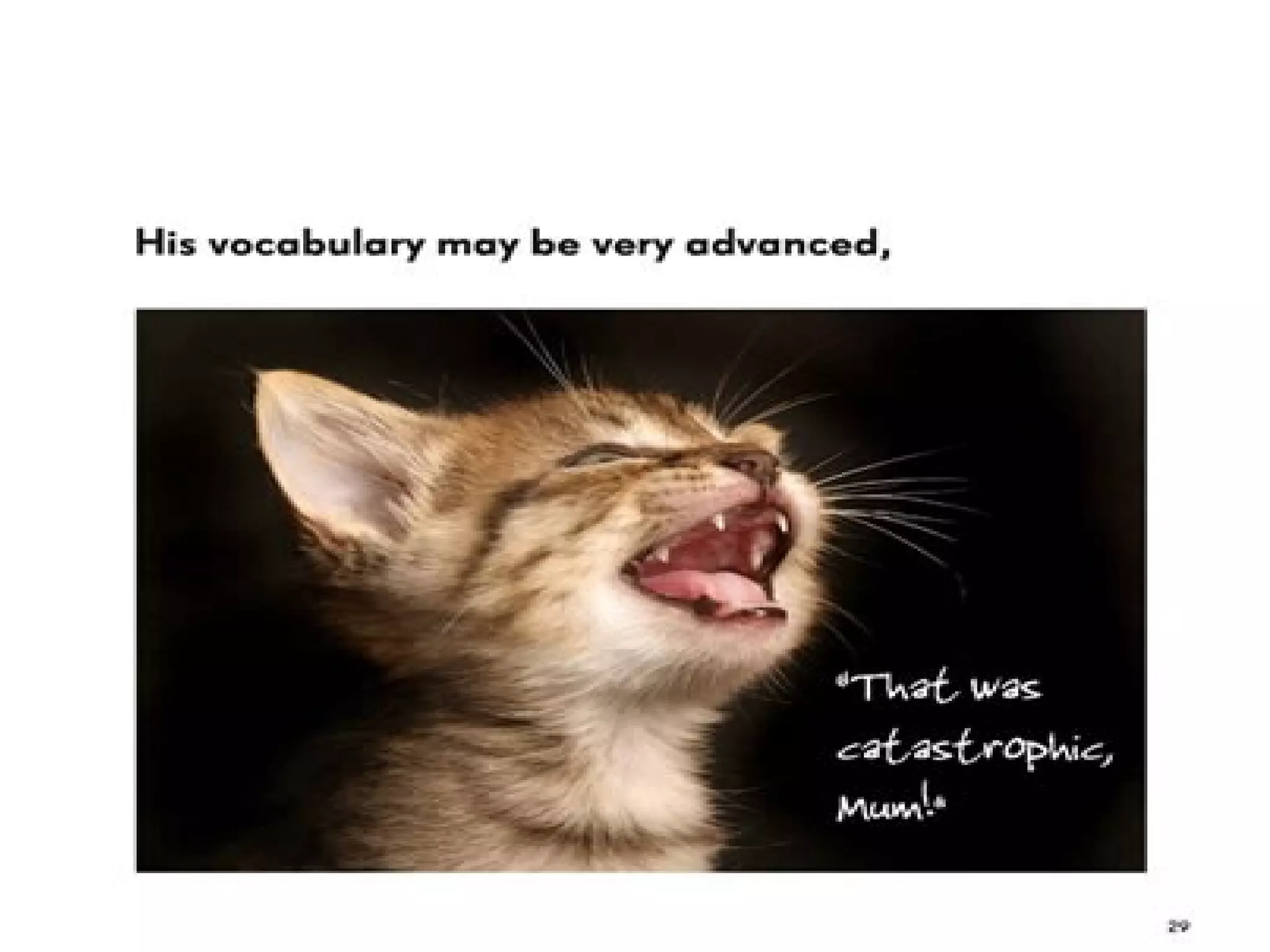
 They have a profound interest in words.
 Challenge him to memorize
 Provide music, theater and nonfiction books
E Emotional Connection
Impaired
 He was not born with the “sixth” sense.
 Since you cannot teach him to emote, appeal to other
senses.
 Conversation turn-taking
 Perspective taking
 They can be overly dependent on care-giver
 Point out how he slips up
 Explain what others are doing socially
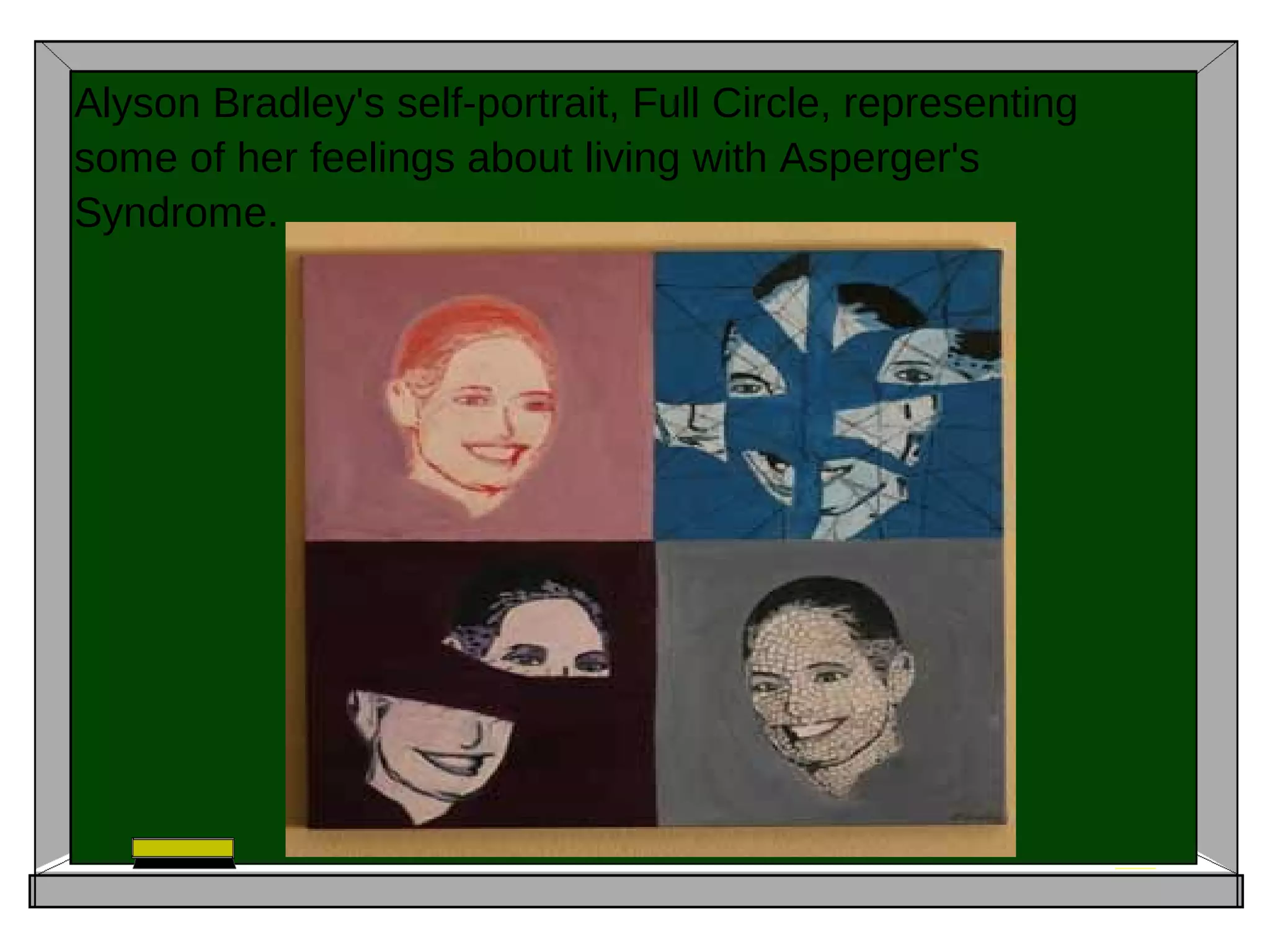
Alyson Bradley's self-portrait, Full Circle, representing
some of her feelings about living with Asperger's
Syndrome.
N Narrow Interest Range
 Few interests but they dominate
 Special interest
 Encourage reading
 Use his special interest to teach social skills
 An enriched environment will encourage broadening of
the interest range
 Protect him. Be aware of the special dangers of early
sexuality.
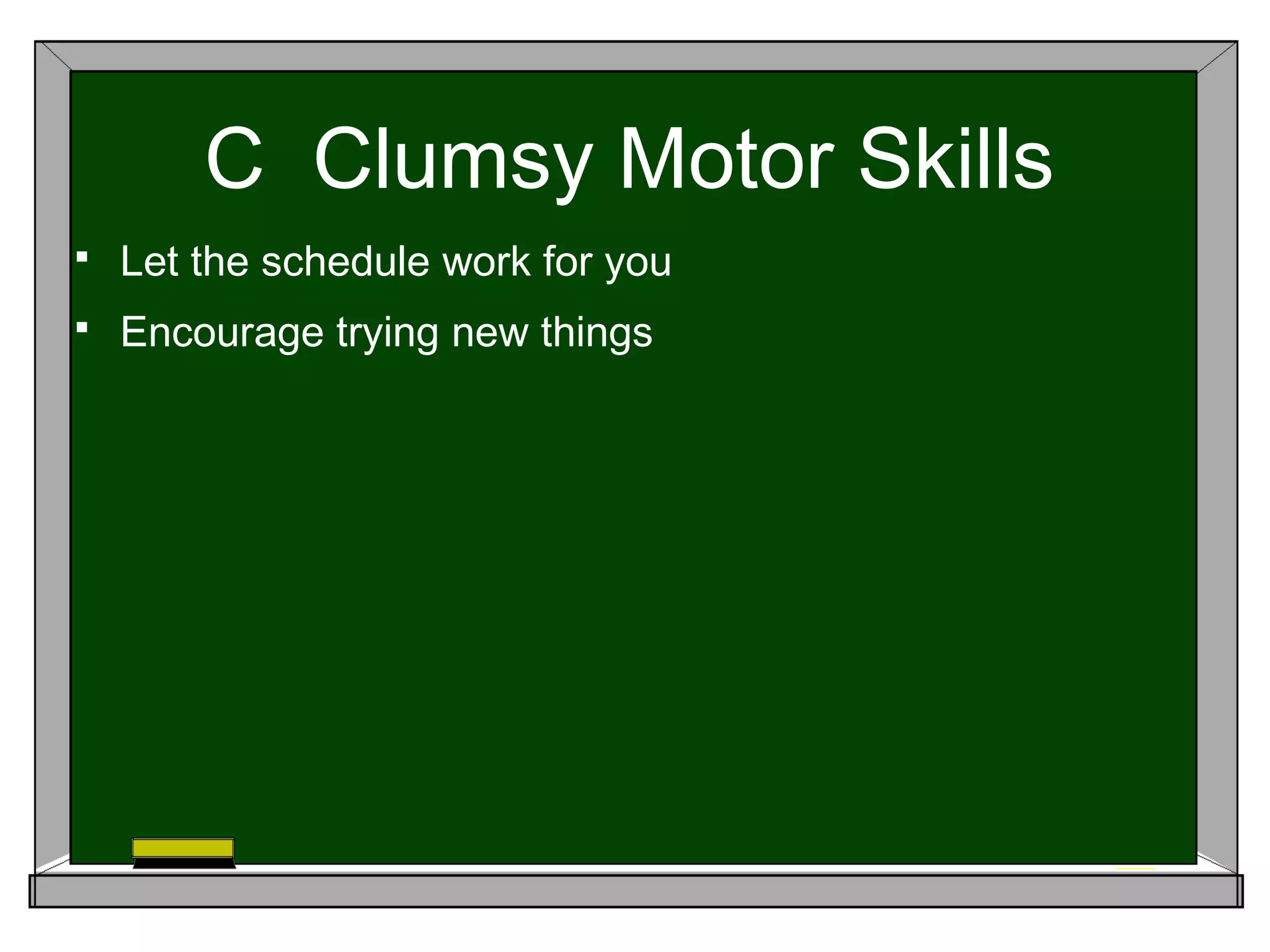
C Clumsy Motor Skills
 Let the schedule work for you
 Encourage trying new things
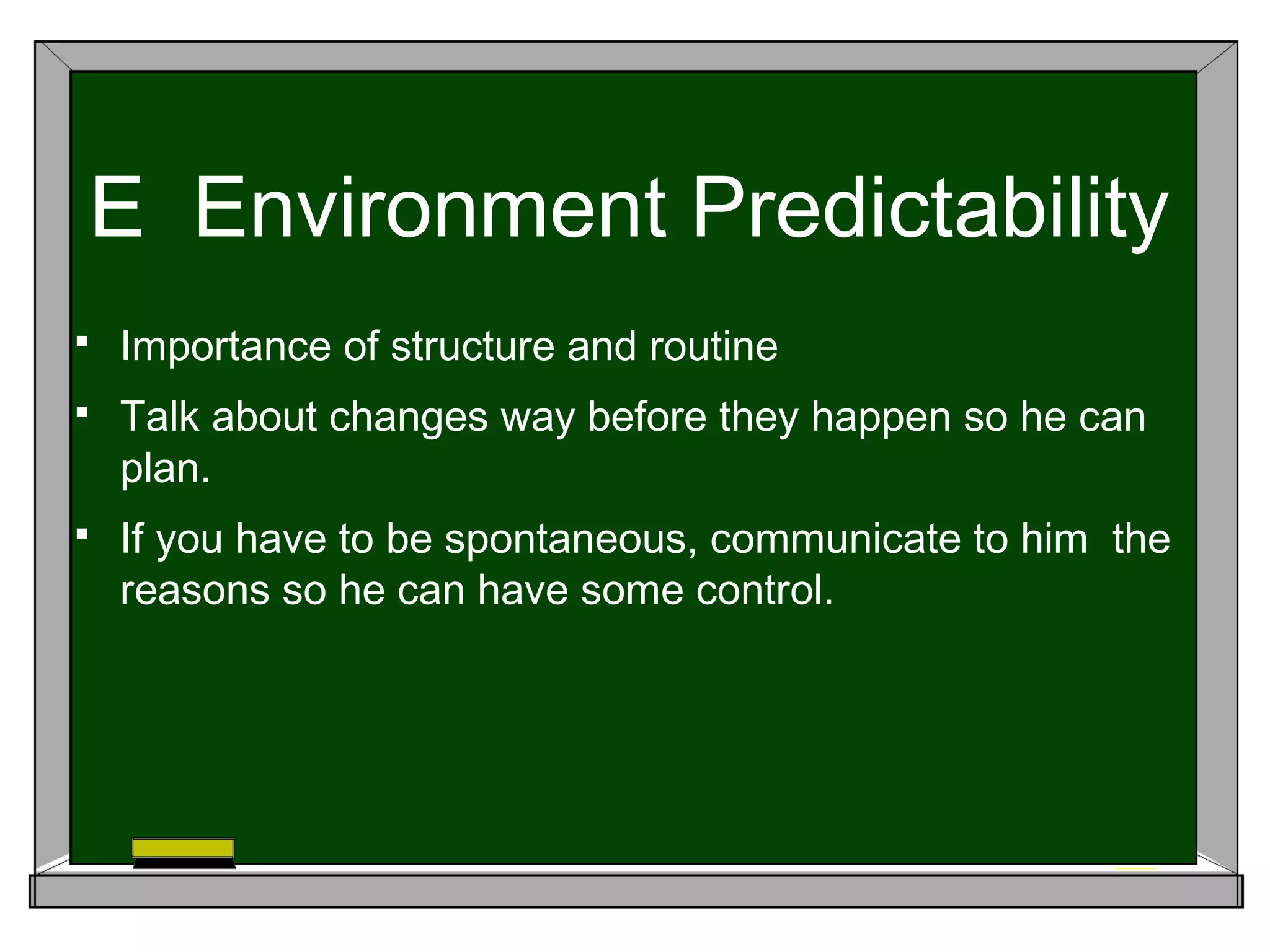
E Environment Predictability
 Importance of structure and routine
 Talk about changes way before they happen so he can
plan.
 If you have to be spontaneous, communicate to him the
reasons so he can have some control.
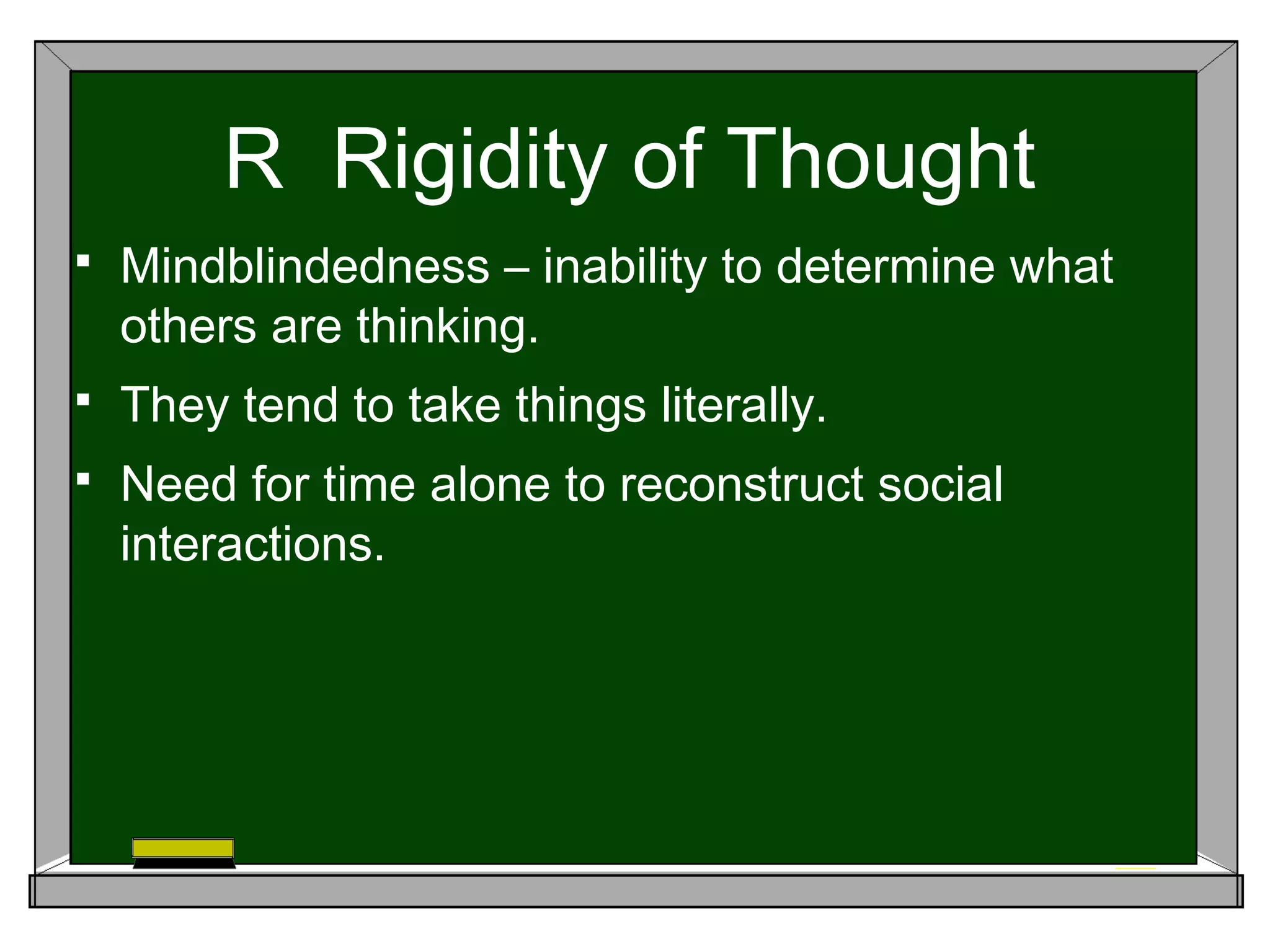
R Rigidity of Thought
 Mindblindedness – inability to determine what
others are thinking.
 They tend to take things literally.
 Need for time alone to reconstruct social
interactions.
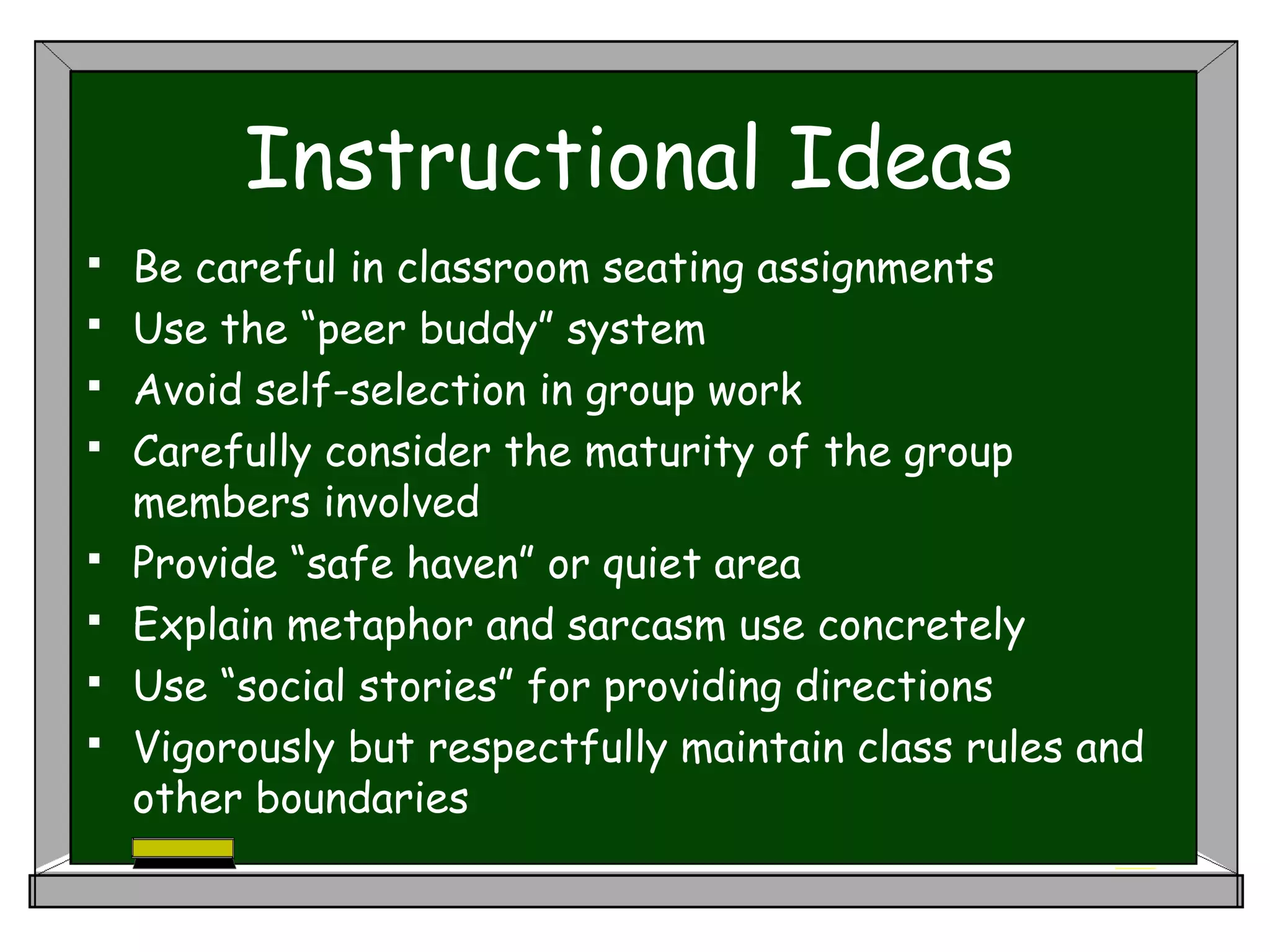
Instructional Ideas
 Be careful in classroom seating assignments
 Use the “peer buddy” system
 Avoid self-selection in group work
 Carefully consider the maturity of the group
members involved
 Provide “safe haven” or quiet area
 Explain metaphor and sarcasm use concretely
 Use “social stories” for providing directions
 Vigorously but respectfully maintain class rules and
other boundaries
Other treatments
 Parent education and training
 Social skills training
 Language therapy
 Sensory integration training for younger children,
usually performed by an occupational therapist, in
which a child is desensitized to stimuli to which he is
overly sensitive
 Psychotherapy or behavioral/cognitive therapy for
older children
Technology
 Visuals
 Graphics
 Models, manipulatives
 Computers
 The Internet
Resources continued
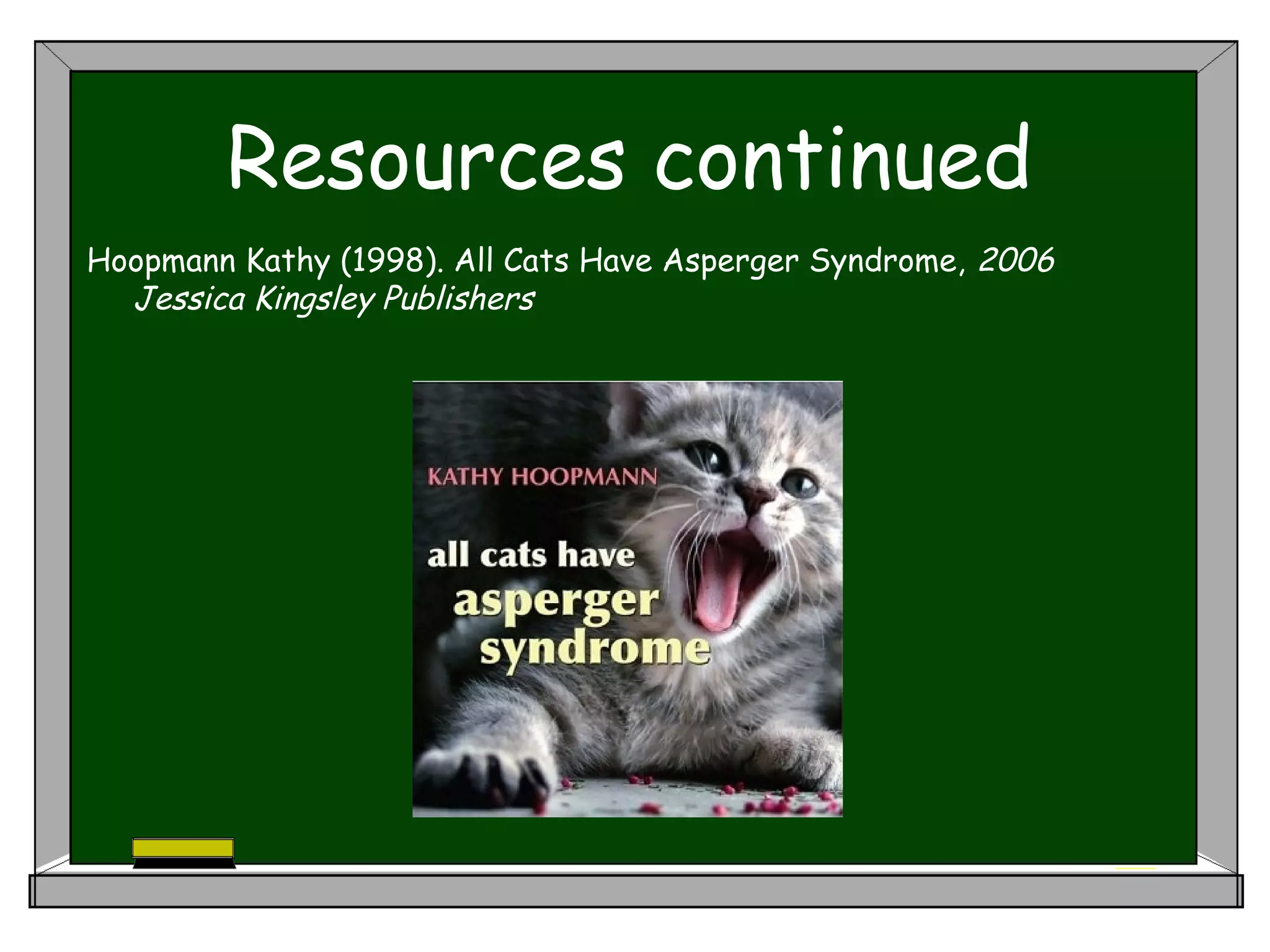
Hoopmann Kathy (1998). All Cats Have Asperger Syndrome, 2006
Jessica Kingsley Publishers
Resources continued
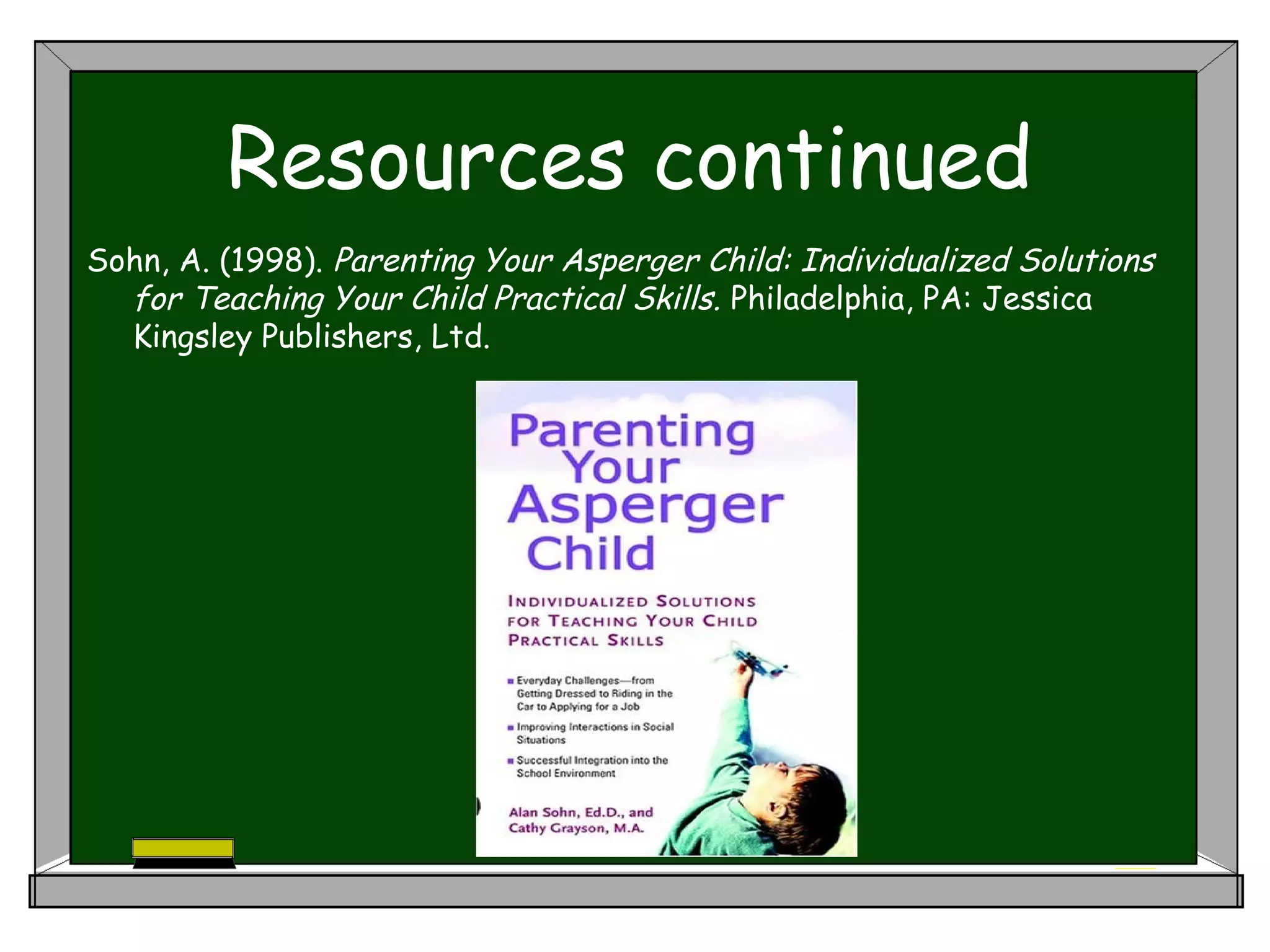
Sohn, A. (1998). Parenting Your Asperger Child: Individualized Solutions
for Teaching Your Child Practical Skills. Philadelphia, PA: Jessica
Kingsley Publishers, Ltd.
Resources continued
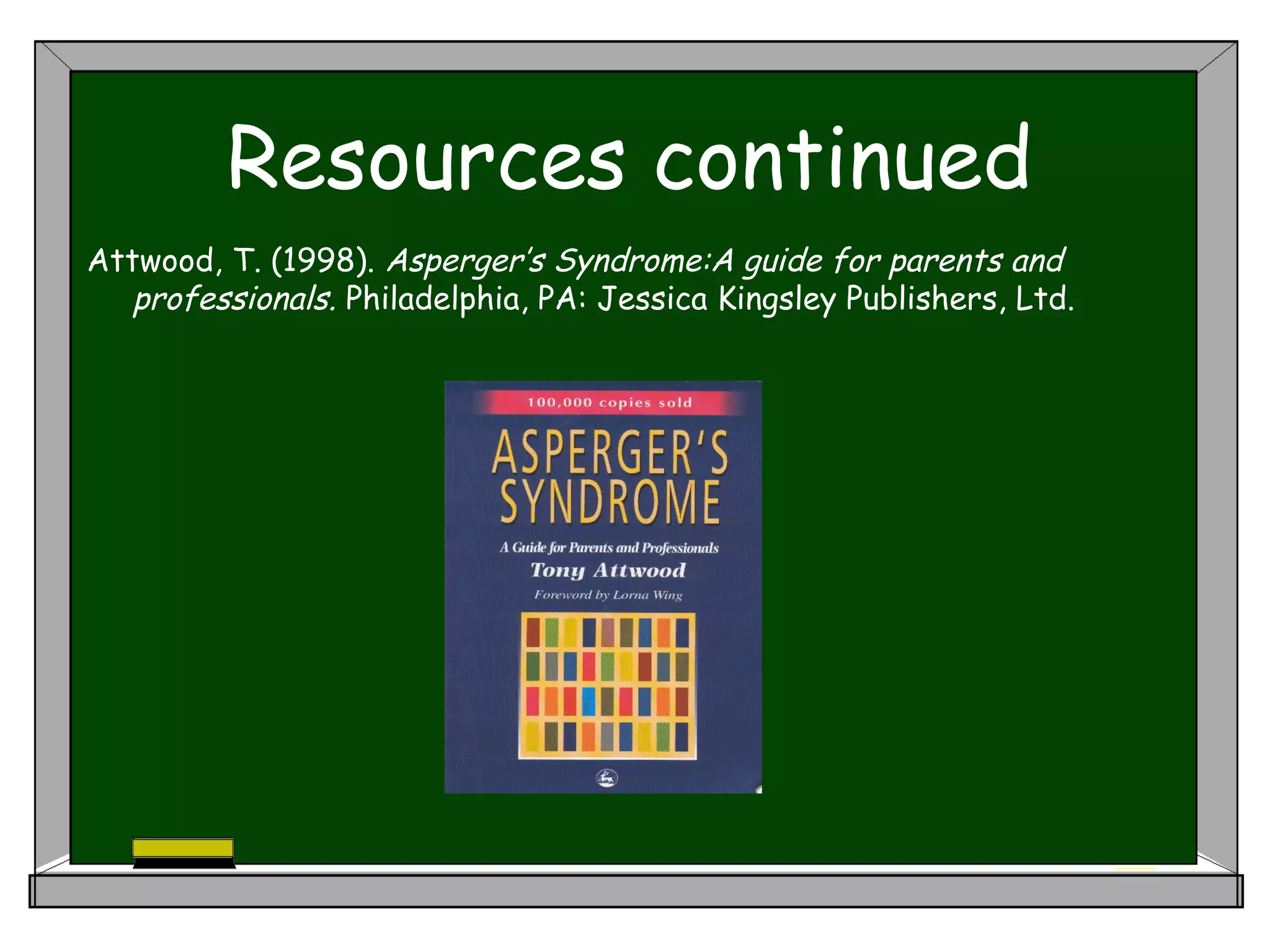
Attwood, T. (1998). Asperger’s Syndrome:A guide for parents and
professionals. Philadelphia, PA: Jessica Kingsley Publishers, Ltd.

Asperger S Presentation

  • 1.
  • 2.
    "People with autismspend more time doing things they are not good at than anyone else." Toni Atwood
  • 3.
    Definition Asperger’s Syndrome (AS)is a developmental disability that is defined by impairments in social relationships, verbal and nonverbal communication, and by restrictive, repetitive patterns of behaviors, interests, and activities.
  • 4.
    Background  Identified in1944 by Hans Asperger. (Austria)  Brought to the attention of the English-speaking world in 1980 by Dr. Lorna Wing.  Was not added to the Diagnostic and Statistics Manual of the American Psychiatric Association until 1994.  “Autism’s Shadow”
  • 5.
    Causes  There seemsto be a hereditary component  Environmental factors that affect brain development might play a role Not caused by:  Emotional deprivation  Bad parenting
  • 6.
    Incidence Rates  48out every 10,000 children (Kadesjo, Gillberg, & Nagberg, 1999)
  • 7.
    Increasing Prevalence  Autism,strictly defined – 4-6 in 10,000 prior to 1980’s (Lotter 1967) – 16-20 in 10,000 today (Chakrabarti & Fombonne 2001)  Autism spectrum disorders – 10 in 10,000 in 1990’s (Bryson et al 1988) – 60-70 in 10,000 today (Chakrabarti & Fombonne 2001)
  • 8.
    Famous Aspies...  •Albert Einstein  • Henry Ford  • Thomas Edison  • Thomas Jefferson  • Wolfgang Amadeus Mozart  • Isaac Newton  • Henry Thoreau  • Mark Twain  • Vincent Van Gogh  • John Denver  • Alfred Hitchcock  • Howard Hughes
  • 9.
     Andy Warhol Woody Allen  Bill Gates  Al Gore  John Nash  Keanu Reeves  Alex P. Keaton  Cliff Clavin from Cheers  Lisa Simpson and Moe from Mo's tavern  Mr Bean  Steve Urkel  Calvin of Calvin and Hobbes  Frankenstein's Monster  Ludwig van Beethoven  Andy Warhol  Woody Allen  Bill Gates  Al Gore  John Nash  Keanu Reeves  Alex P. Keaton  Cliff Clavin from Cheers  Lisa Simpson and Moe from Mo's tavern  Mr Bean  Steve Urkel  Calvin of Calvin and Hobbes  Frankenstein's Monster  Ludwig van Beethoven  Andy Warhol  Woody Allen  Bill Gates  Al Gore  John Nash  Keanu Reeves  Alex P. Keaton  Cliff Clavin from Cheers  Lisa Simpson and Moe from Mo's tavern  Mr Bean  Steve Urkel  Calvin of Calvin and Hobbes  Frankenstein's Monster  Ludwig van Beethoven  Andy Warhol  Woody Allen  Bill Gates  Al Gore  John Nash  Keanu Reeves  Alex P. Keaton  Cliff Clavin from Cheers  Lisa Simpson and Moe from Mo's tavern  Mr Bean  Steve Urkel  Calvin of Calvin and Hobbes  Frankenstein's Monster  Ludwig van Beethoven
  • 10.
    Think S PE N C E R  S Sensory Sensitivities  P Pragmatic Language Skills Impaired  E Emotional Connection  N Narrow Interest Range  C Clumsiness with Motor Skills  E Environment that is Predictable  R Rigidity of Thought
  • 12.
    S Sensory Sensitivities Don't excuse it or make the child feel bad about feeling bad  Intense or under reactive to a sensation  Clothing  Slight bump by another  Florescent lights  Hug = squeeze
  • 13.
    P Pragmatic SkillsImpaired  They see language as a way to share information  They want to receive information correctly, sussincly and without emotion.  May use diologue from pop culture to communicate  They have a profound interest in words.  Challenge him to memorize  Provide music, theater and nonfiction books
  • 14.
    E Emotional Connection Impaired He was not born with the “sixth” sense.  Since you cannot teach him to emote, appeal to other senses.  Conversation turn-taking  Perspective taking  They can be overly dependent on care-giver  Point out how he slips up  Explain what others are doing socially
  • 15.
    Alyson Bradley's self-portrait,Full Circle, representing some of her feelings about living with Asperger's Syndrome.
  • 16.
    N Narrow InterestRange  Few interests but they dominate  Special interest  Encourage reading  Use his special interest to teach social skills  An enriched environment will encourage broadening of the interest range  Protect him. Be aware of the special dangers of early sexuality.
  • 17.
    C Clumsy MotorSkills  Let the schedule work for you  Encourage trying new things
  • 18.
    E Environment Predictability Importance of structure and routine  Talk about changes way before they happen so he can plan.  If you have to be spontaneous, communicate to him the reasons so he can have some control.
  • 19.
    R Rigidity ofThought  Mindblindedness – inability to determine what others are thinking.  They tend to take things literally.  Need for time alone to reconstruct social interactions.
  • 20.
    Instructional Ideas  Becareful in classroom seating assignments  Use the “peer buddy” system  Avoid self-selection in group work  Carefully consider the maturity of the group members involved  Provide “safe haven” or quiet area  Explain metaphor and sarcasm use concretely  Use “social stories” for providing directions  Vigorously but respectfully maintain class rules and other boundaries
  • 23.
    Other treatments  Parenteducation and training  Social skills training  Language therapy  Sensory integration training for younger children, usually performed by an occupational therapist, in which a child is desensitized to stimuli to which he is overly sensitive  Psychotherapy or behavioral/cognitive therapy for older children
  • 24.
    Technology  Visuals  Graphics Models, manipulatives  Computers  The Internet
  • 25.
    Resources continued Hoopmann Kathy(1998). All Cats Have Asperger Syndrome, 2006 Jessica Kingsley Publishers
  • 26.
    Resources continued Sohn, A.(1998). Parenting Your Asperger Child: Individualized Solutions for Teaching Your Child Practical Skills. Philadelphia, PA: Jessica Kingsley Publishers, Ltd.
  • 27.
    Resources continued Attwood, T.(1998). Asperger’s Syndrome:A guide for parents and professionals. Philadelphia, PA: Jessica Kingsley Publishers, Ltd.