From EBLIP to Assessment
Lorie Kloda
McGill University
Assessment Librarian
EBLIP 7
July 18, 2013
1
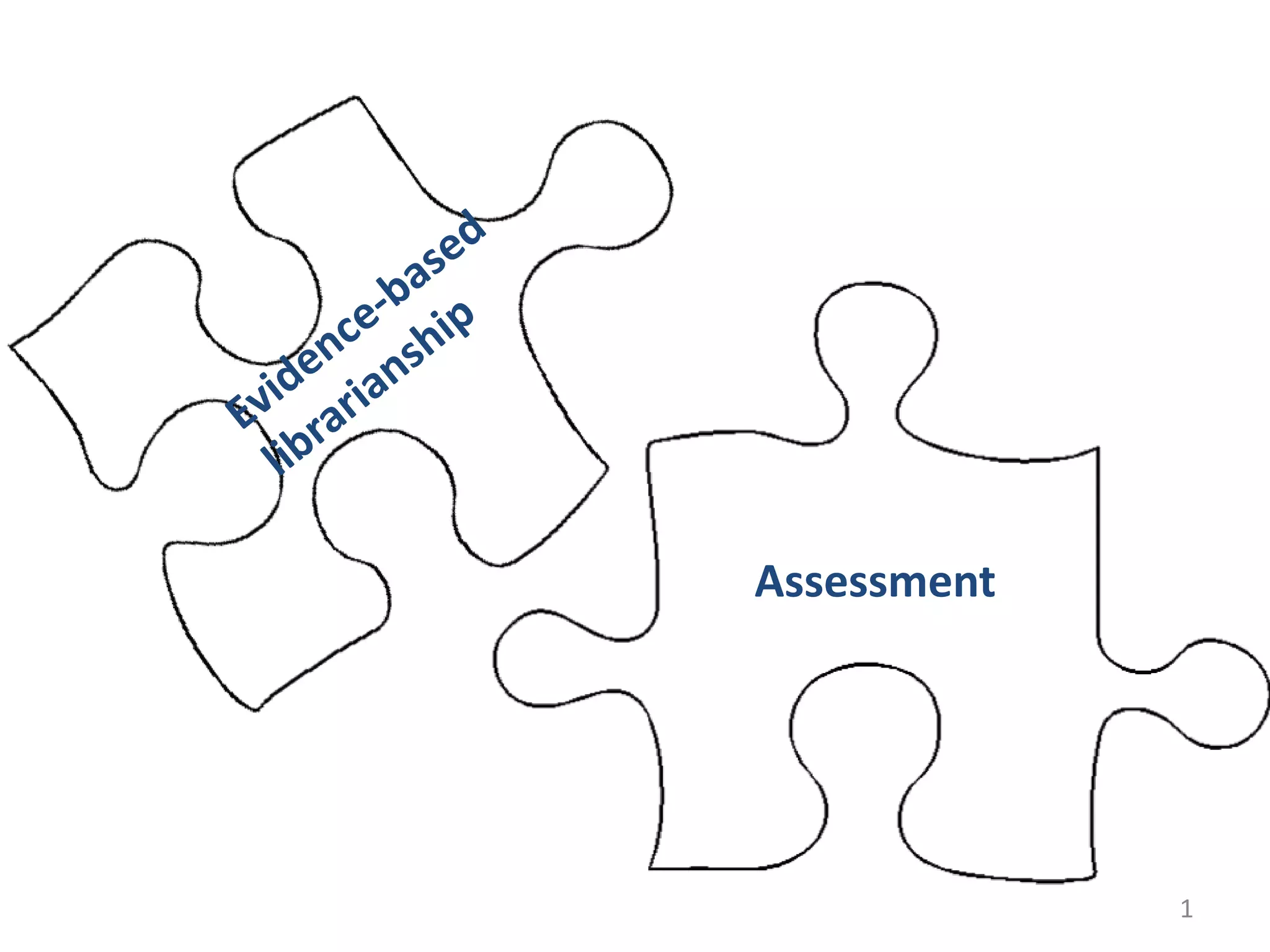
Assessment
Two Solitudes?
Are these separate movements
within librarianship forming
theoretical bridges? Is some sort of
merger, fusion or takeover
in the future?
Ryan, P. (2006). EBL and library assessment: Two
solitudes? Evidence Based Library and Information
Practice, 1(4), 77–80.
“
”
2
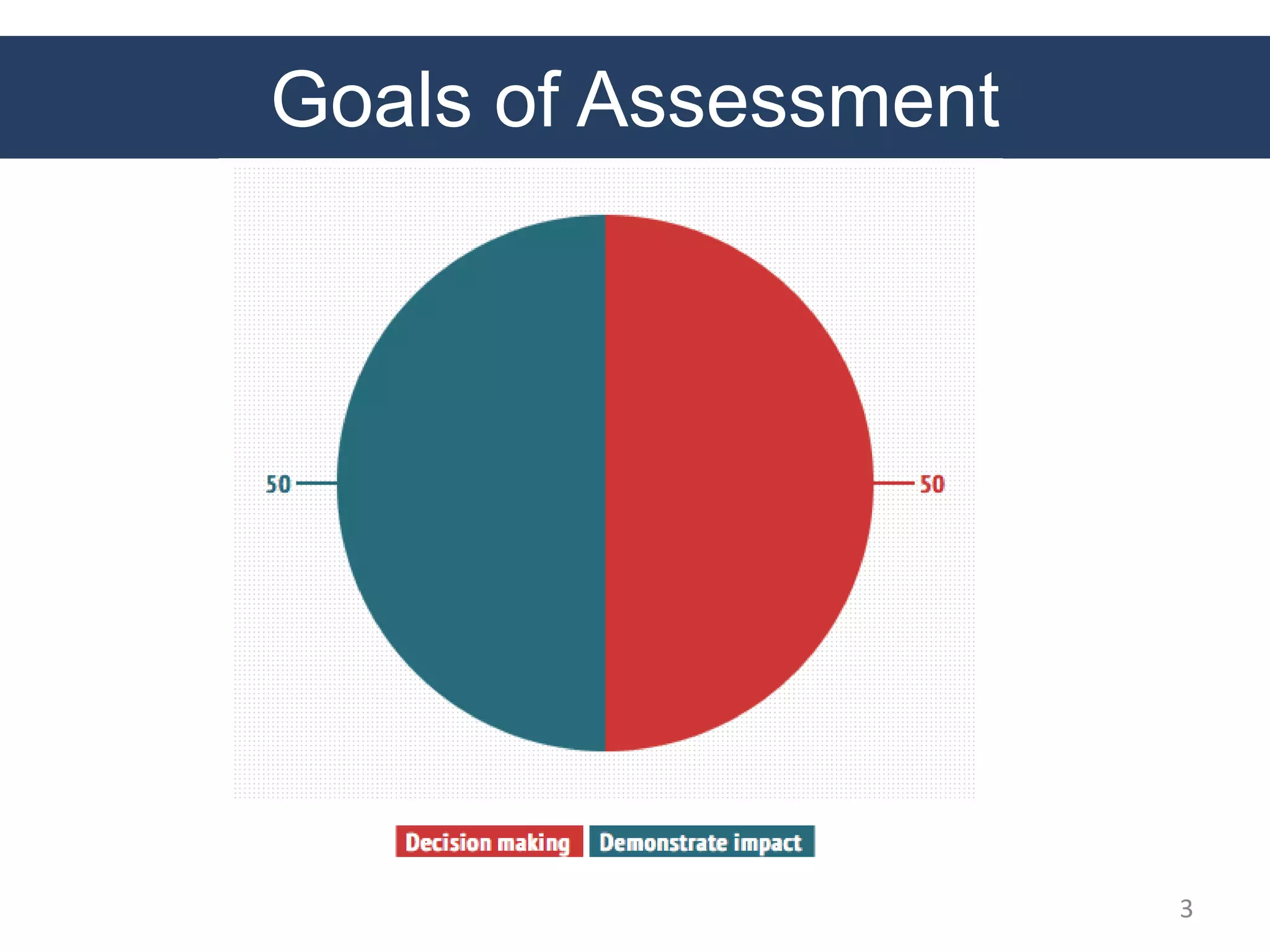
Goals of Assessment
3
4
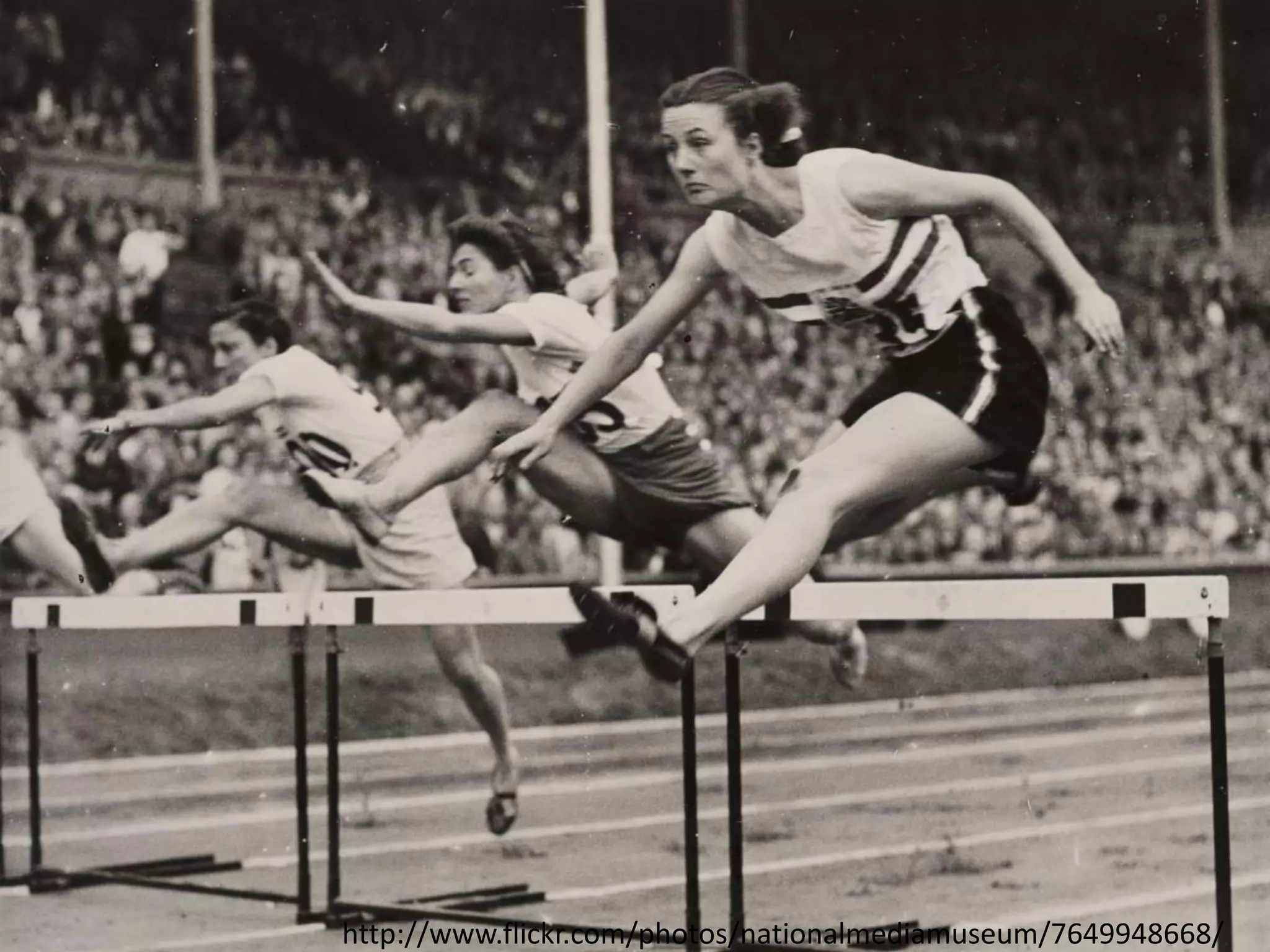
http://www.flickr.com/photos/nationalmediamuseum/7649948668/
5
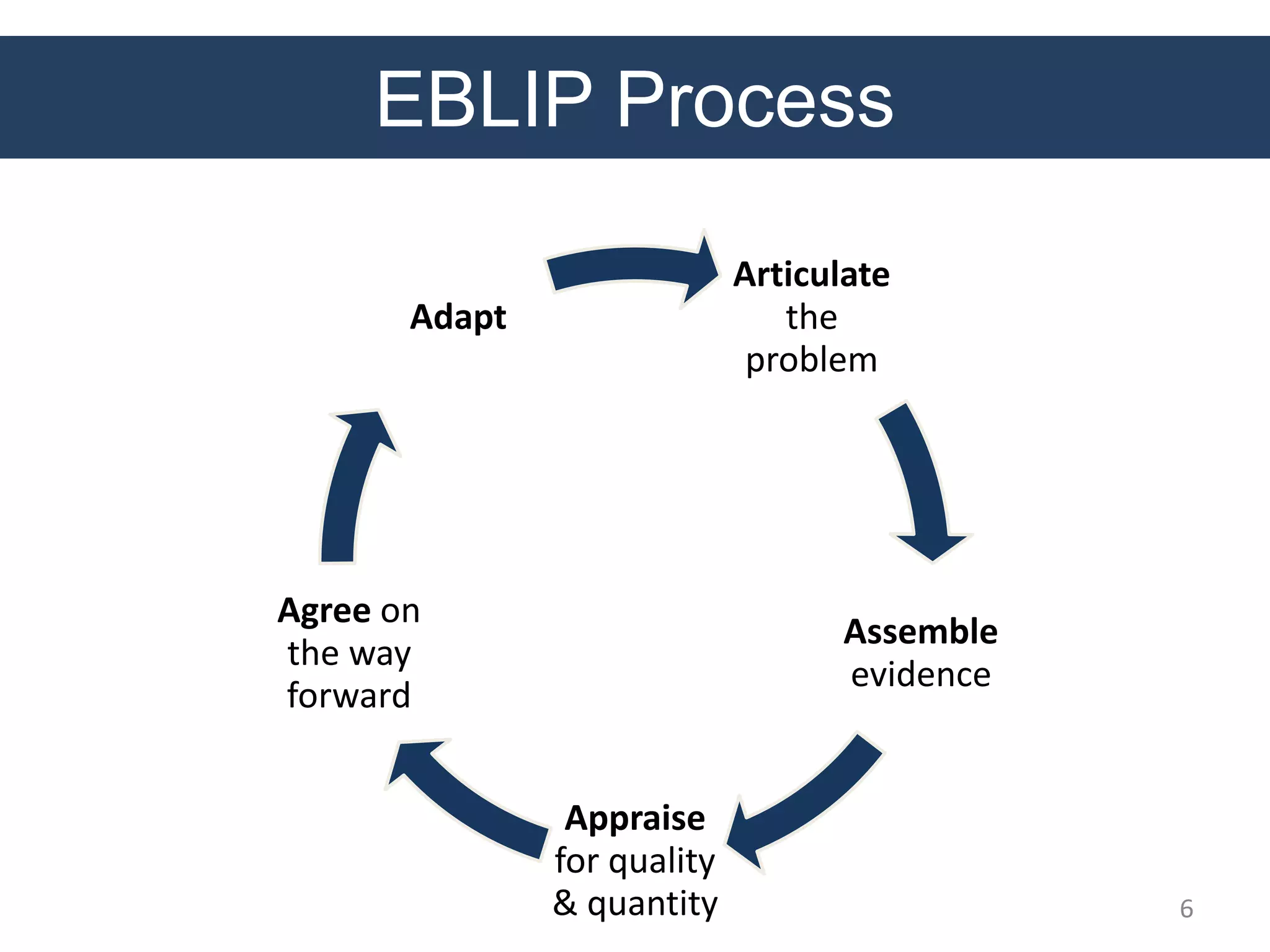
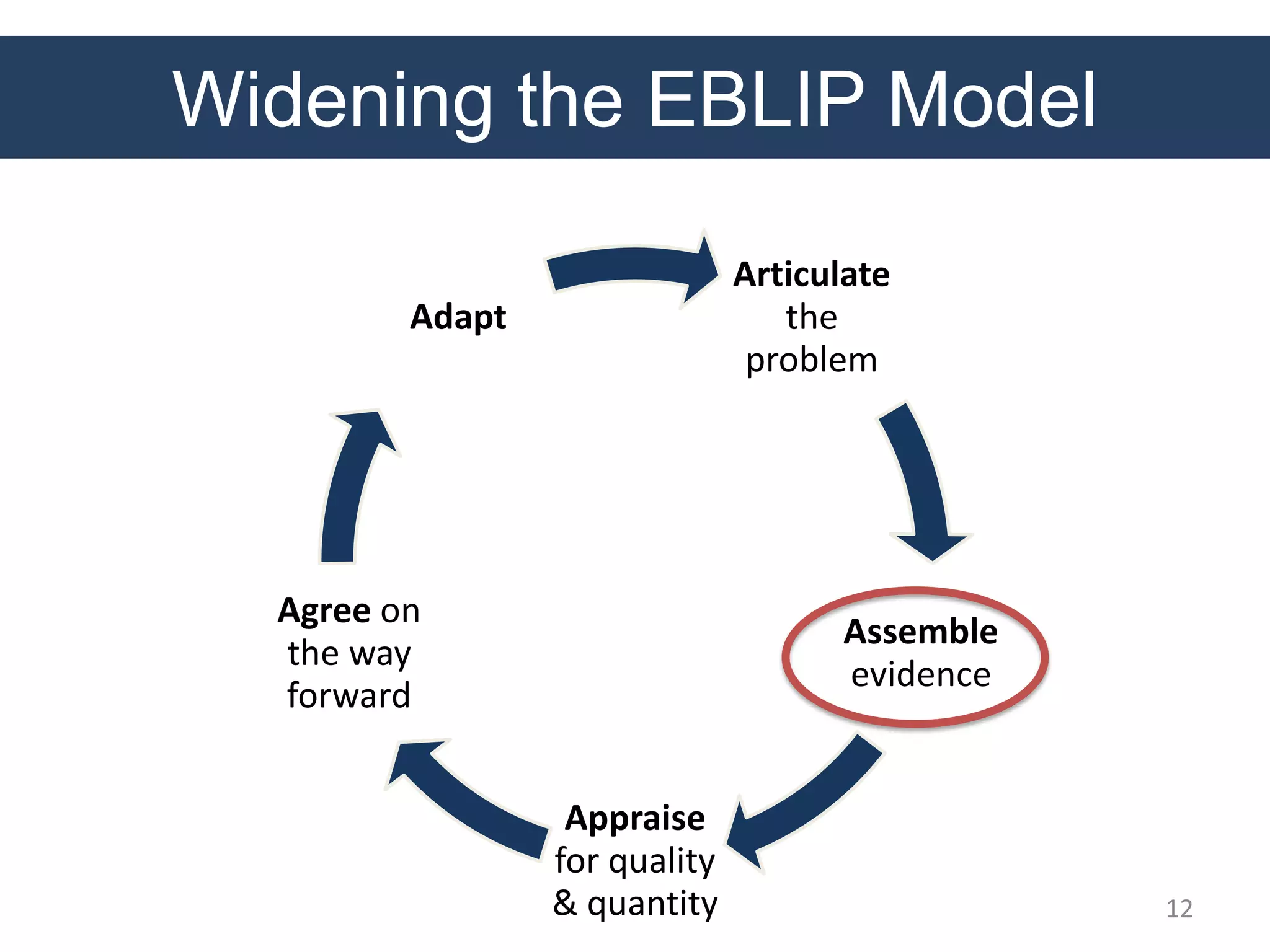
EBLIP Process
Articulate
the
problem
Assemble
evidence
Appraise
for quality
& quantity
Agree on
the way
forward
Adapt
6
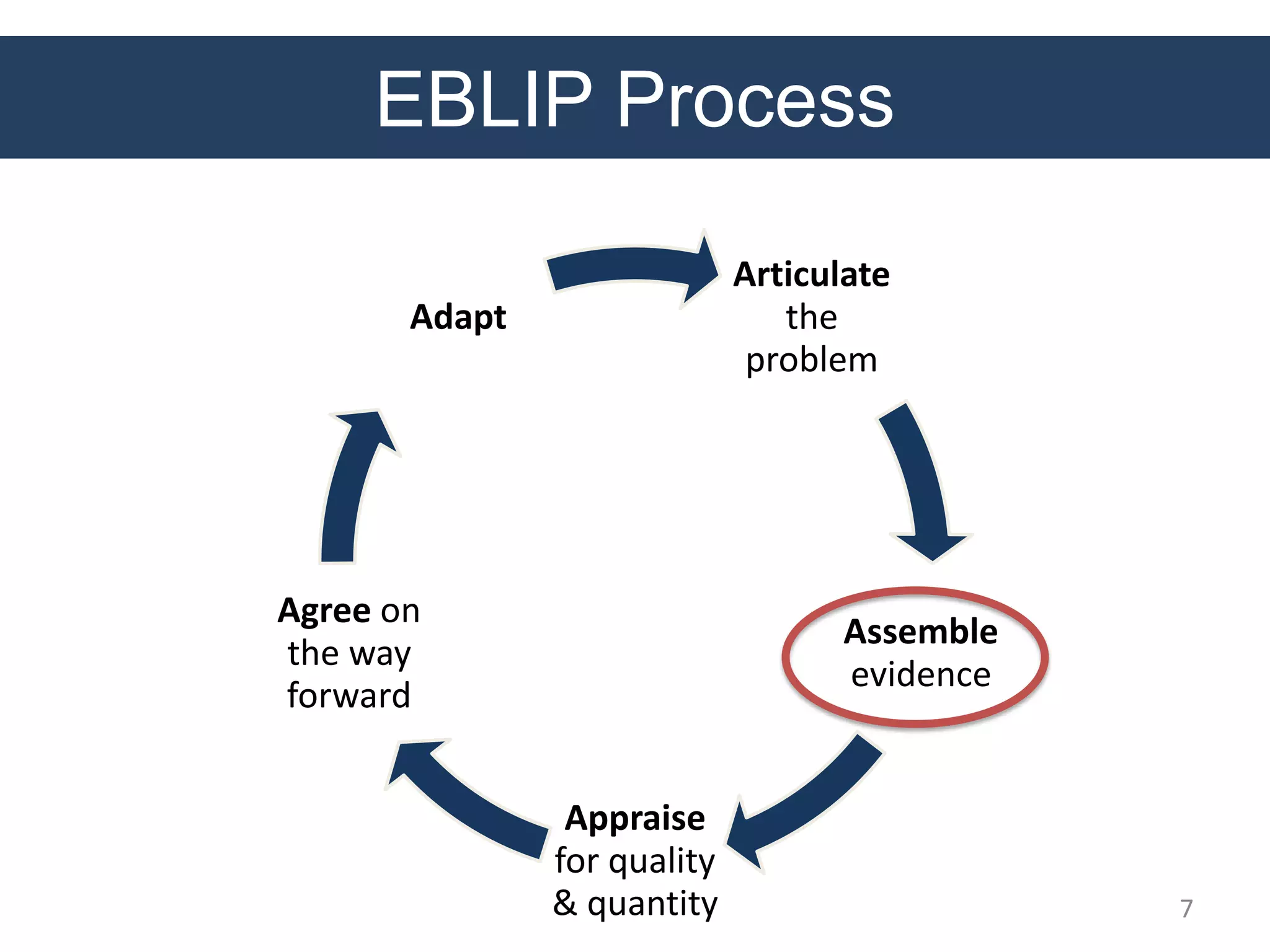
EBLIP Process
Articulate
the
problem
Assemble
evidence
Appraise
for quality
& quantity
Agree on
the way
forward
Adapt
7
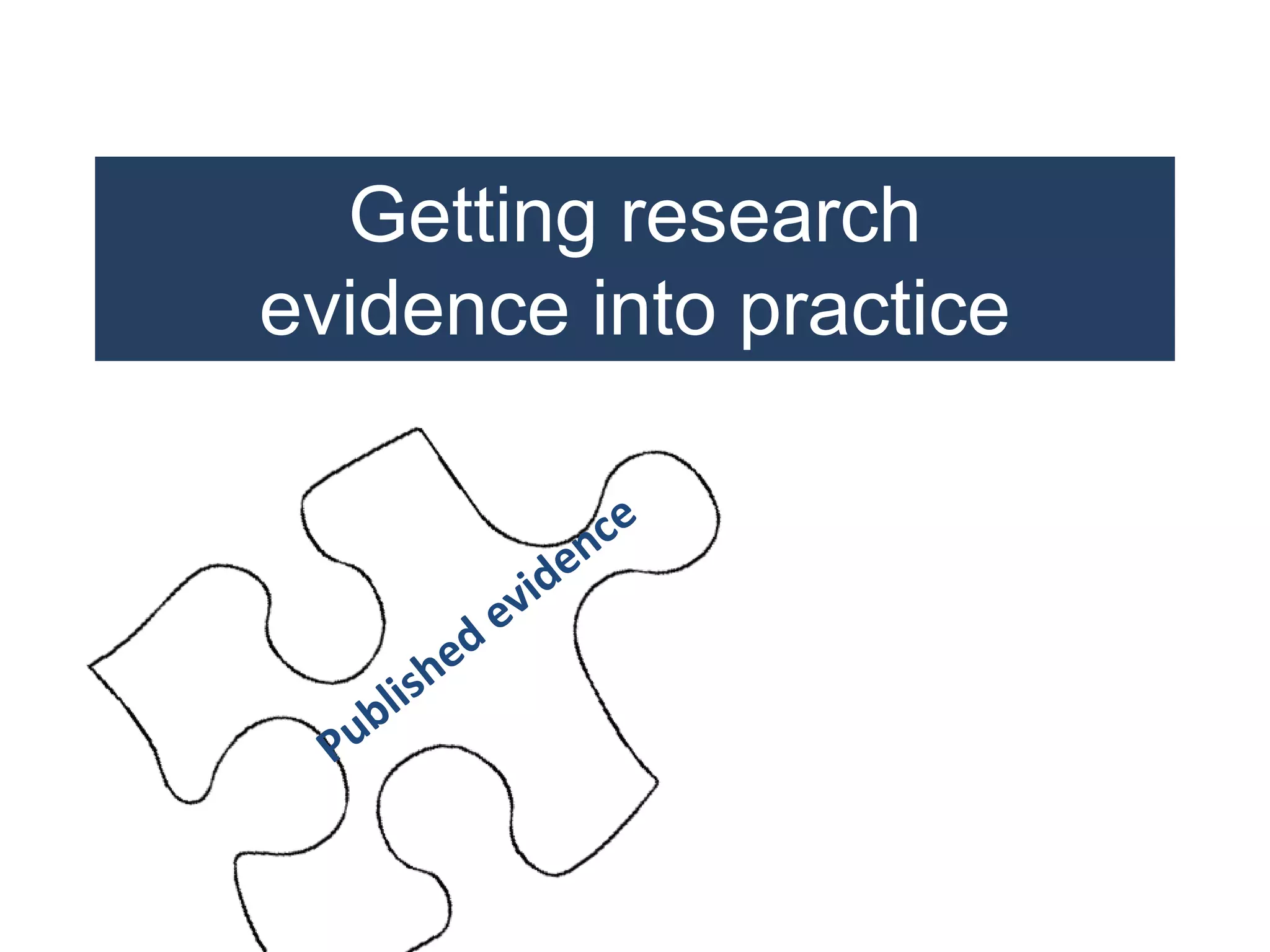
Getting research
evidence into practice
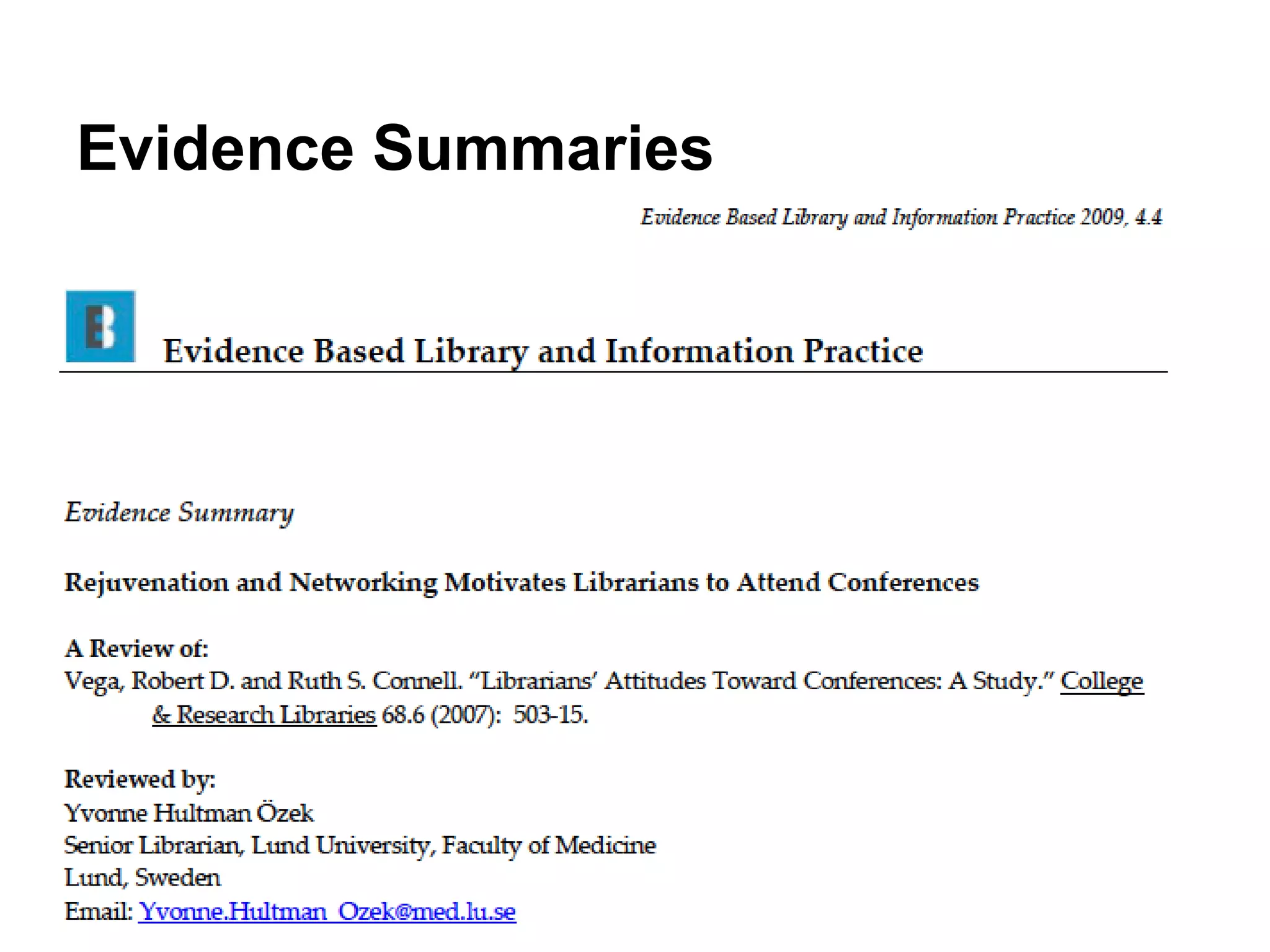
Evidence Summaries
10
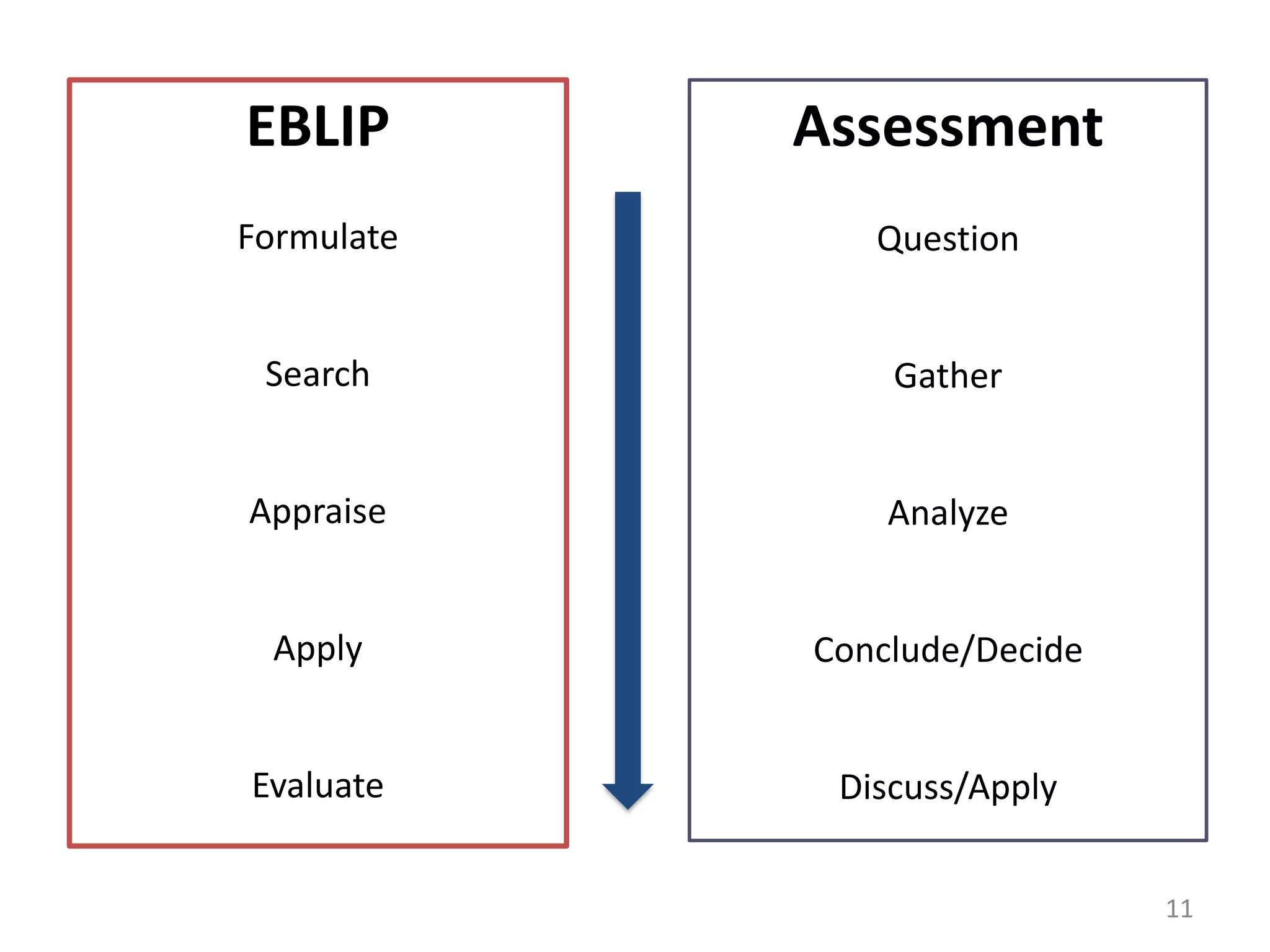
EBLIP
Formulate
Search
Appraise
Apply
Evaluate
Assessment
Question
Gather
Analyze
Conclude/Decide
Discuss/Apply
11
Widening the EBLIP Model
Articulate
the
problem
Assemble
evidence
Appraise
for quality
& quantity
Agree on
the way
forward
Adapt
12
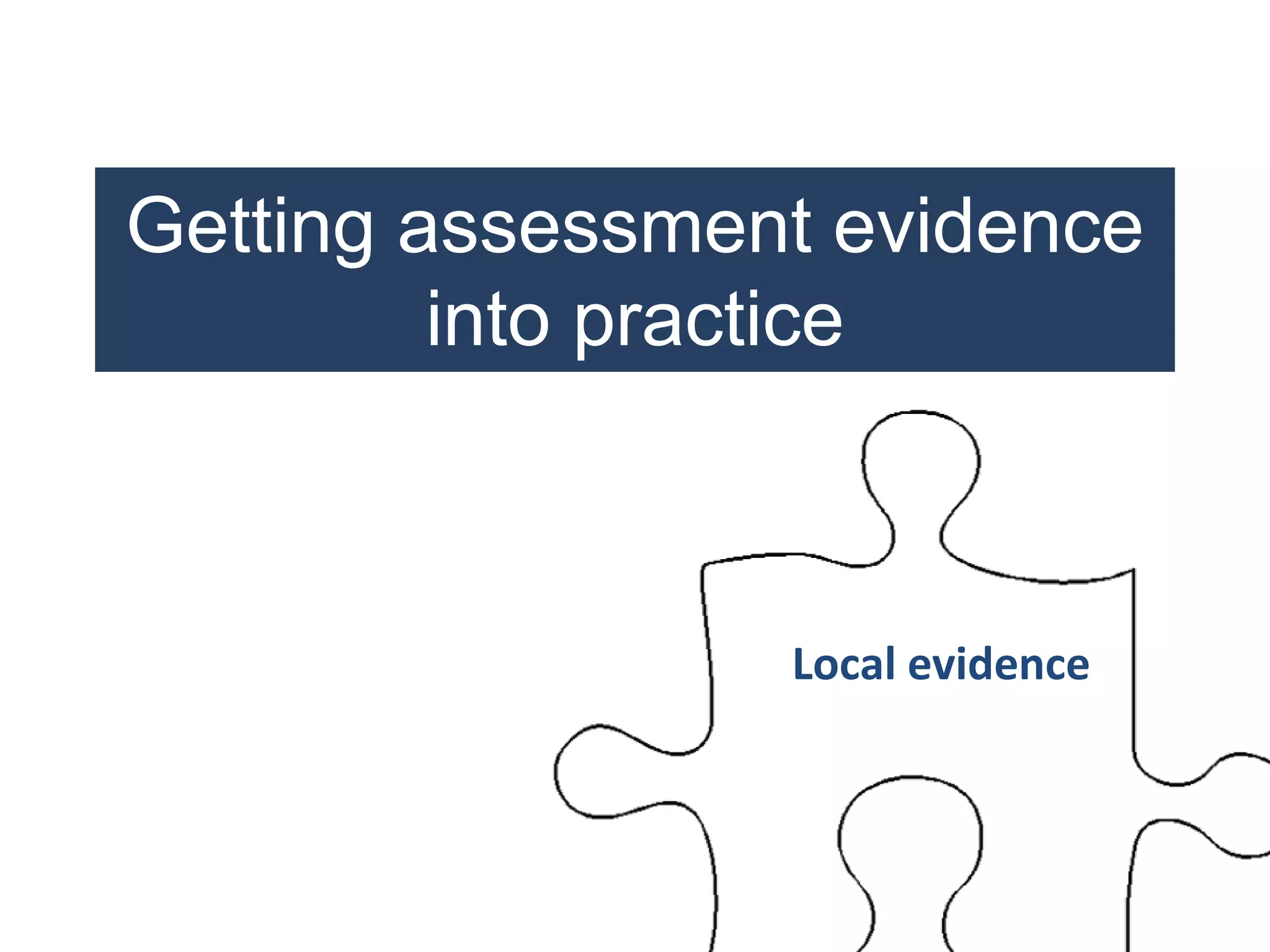
Getting assessment evidence
into practice
Local evidence
14
15
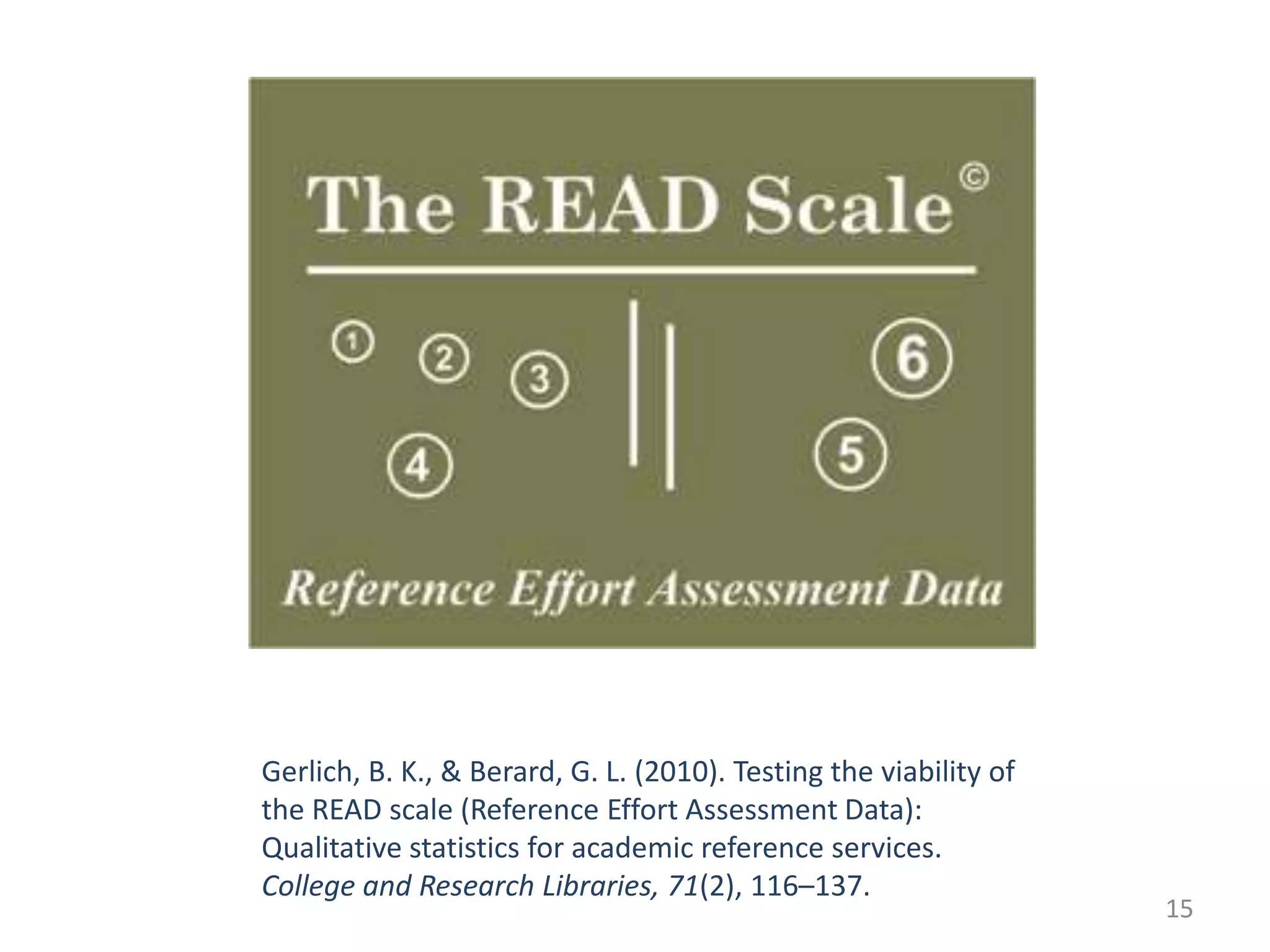
Gerlich, B. K., & Berard, G. L. (2010). Testing the viability of
the READ scale (Reference Effort Assessment Data):
Qualitative statistics for academic reference services.
College and Research Libraries, 71(2), 116–137.
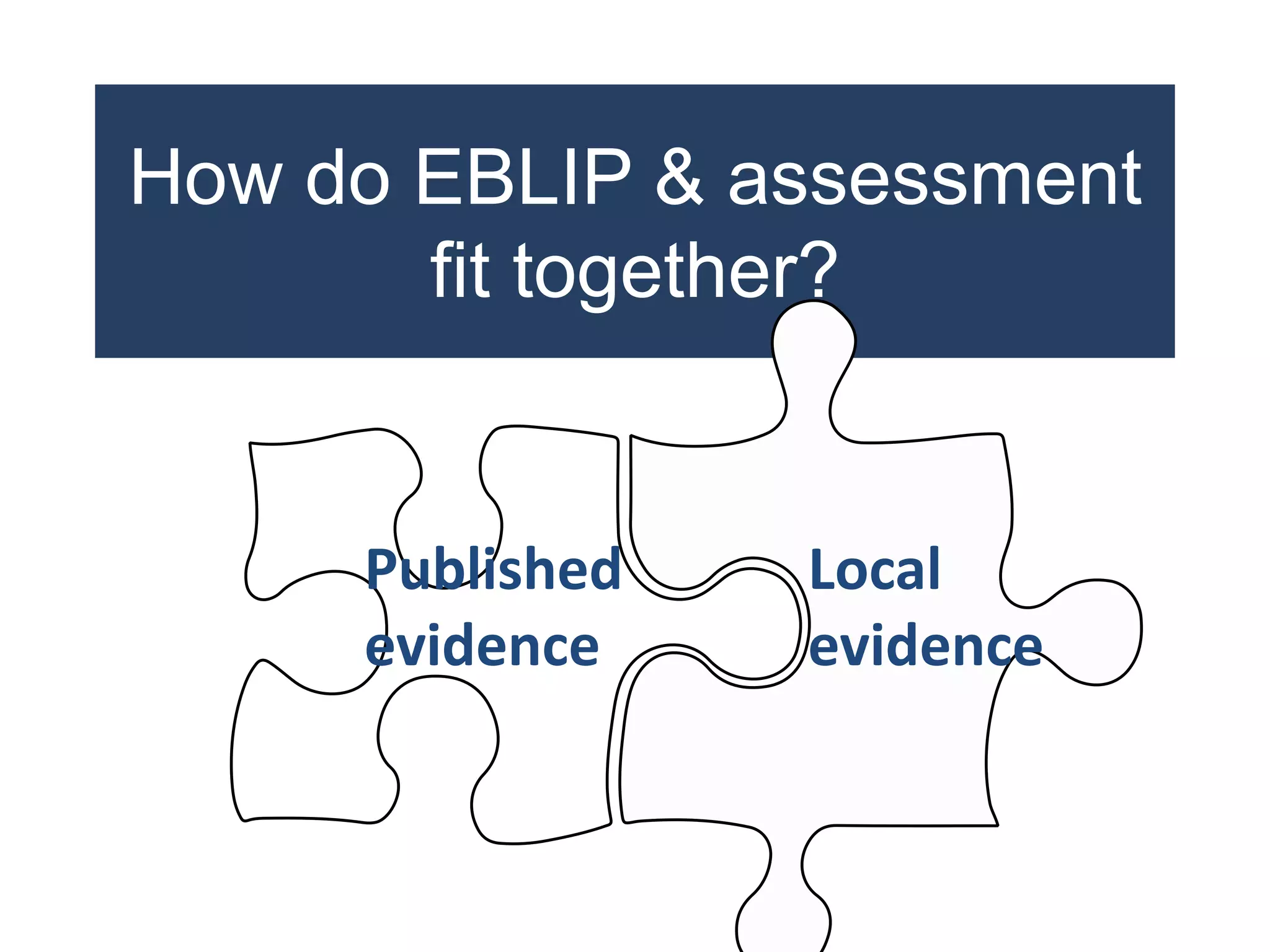
How do EBLIP & assessment
fit together?
Published
evidence
Local
evidence
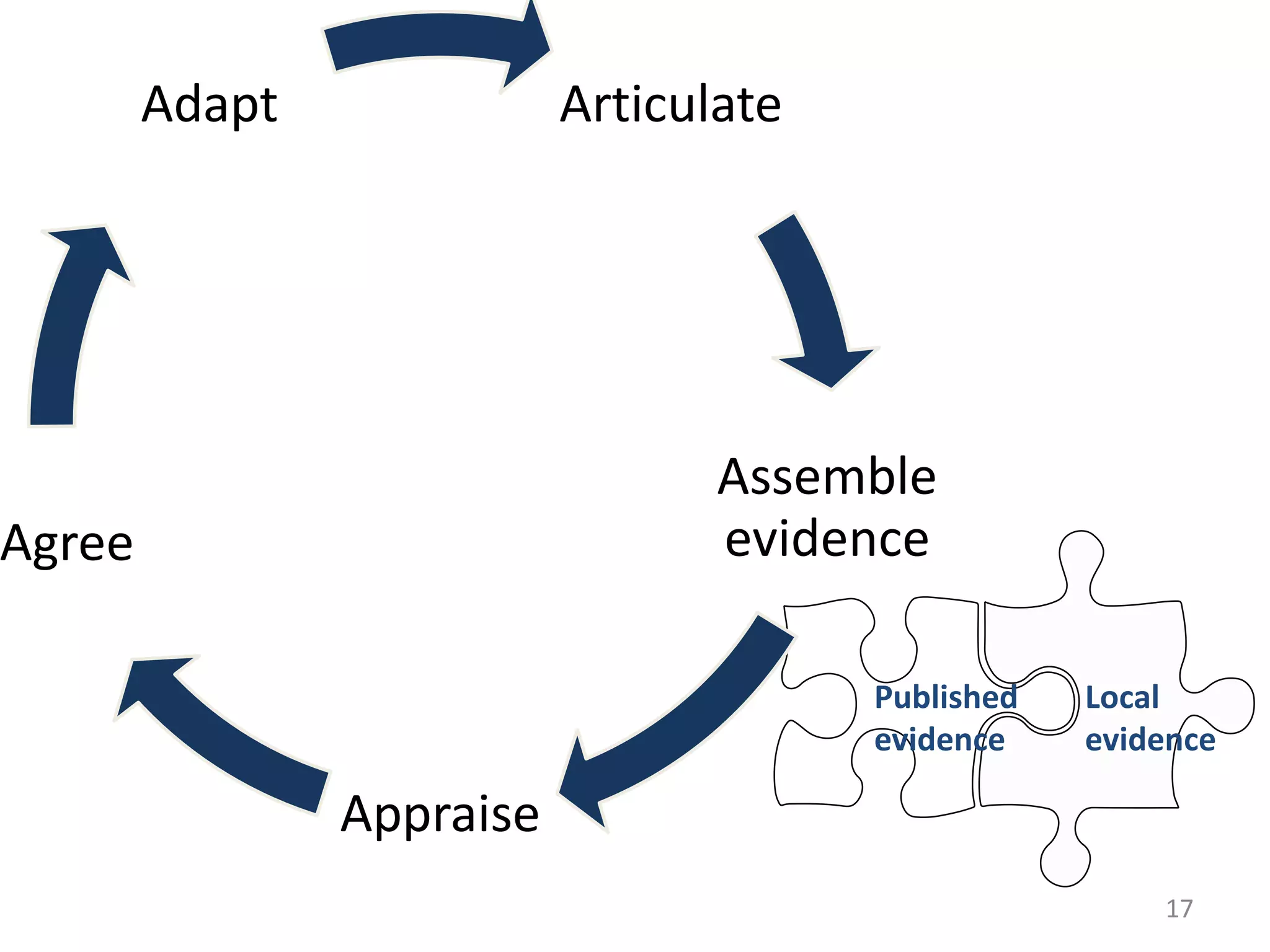
17
Published
evidence
Local
evidence
Articulate
Assemble
evidence
Appraise
Agree
Adapt
A culture of assessment is an organizational
environment in which decisions are based on
facts, research, and analysis, and where services
are planned and delivered in ways that
maximize positive outcomes and impacts for
customers and stakeholders.
Lakos, A., Phipps, S., & Wilson, B. Defining a ‘Culture of
Assessment.’ (1998–2002),
http://www.library.ucla.edu/yrl/reference/aalakos/assessment/C
ulAssessToolkit/ Assessdef3-new.doc
“
”
18
Contact
lorie.kloda@mcgill.ca
@loriekloda
@eblip
slideshare.net/lkloda

From EBLIP to Assessment