Analyzing GenresWeek 4
AgendaConducting genre analysisDiscussing Getting Personal by Irene tylorBrainstorming Language awareness projects
Willi saysWhen you write an personal essay, the writer is the only person who knows the facts and points he wants the audience to understand. So he needs to make clear what are his points and he needs to make the reader feel comfortable because you don't want to waste the readers time.
Anthony saysWhen writing a personal essay, you are the only person who knows the point that is trying to be made. In order to make the information clearly understandable, you need to provide enough detail and support. You want to make your writing interesting and helpful enough to make the reader feel like reading your text is worth their time and effort.
RosettaThe point of a personal is that you, the writer, are the only person that can get the point you are trying to make across. When writing a personal essay you have to find ways to get the readers attention because you do not want them to say after reading it, "why did I just read this?". As a writer its your responbilty to pick a topic that you do not mind in depth with. I also learned that a personal essay should also make the reader feel comfortable.
Dimond says…Taylor shows how to write for yourself while still being conscious of your audience. By giving examples from her writing experiences, she lets the reader know that writing is mainly about being vulnerable especially when writing a personal essay.
Tuomas says…M. Irene Taylor's article "Getting Personal" gave advice for writing a personal essay. In her opinion, the personal essay comes from your thoughts and you must be willing to commit yourself completely. You have to take a risk, tell your own thoughts about issue and also have to trust yourself. Those are the principles to write a personal essay. Essay isn't a personal if you are unable to explore it in depth. Aftering reading a personal essay, one should feel it was worth it to read the text.
Nicole says…From reading "Getting Personal" I learned that you have to want to "dig deep" and really put your feelings out there to be able to write a personal essay. If you just list events it becomes more of a narrative. You must meet the expectations of your readers, so that they feel like it was worth their time to read what you had to say
Genre AnalysisWhat’s the difference between reading a genre  critically and critiquing genre?Why is it important to critique genres?See the student critique of wedding invitations. Distinguish the parts that perform a critical reading of the genre and the parts that perform a critique of the genre. Tell us the difference by giving examples.
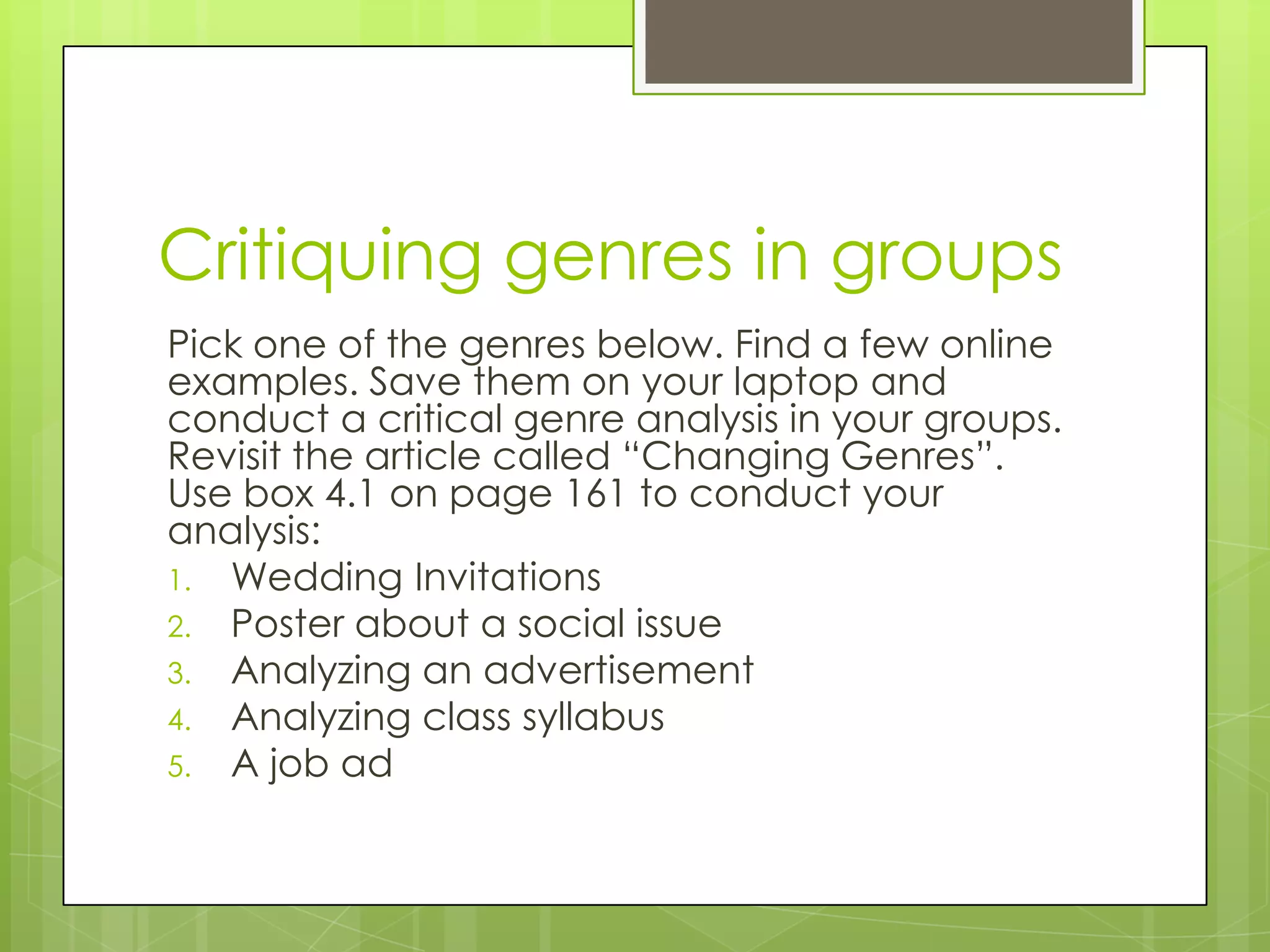
Critiquing genres in groupsPick one of the genres below. Find a few online examples. Save them on your laptop and conduct a critical genre analysis in your groups. Revisit the article called “Changing Genres”. Use box 4.1 on page 161 to conduct your analysis:Wedding InvitationsPoster about a social issueAnalyzing an advertisement Analyzing class syllabusA job ad
Irene’s Getting PersonalCompose an email message to Irene explaining:Your favorite three points that Irene makes in her essay called “Getting Personal.”  Why do you like the points she makes about personal writing? How do you relate to her views? How do you think her essay help you become a better writer in your Language awareness project?
BrainstormingWhat are some of the project ideas you came up with?
AgendaGenre analysis homework sharingDiscussing your language awareness projects Information literacyInterviewing Homework
Asking for helphttp://lgdata.s3-website-us-east-1.amazonaws.com/docs/755/279742/AskingForHelp.swf
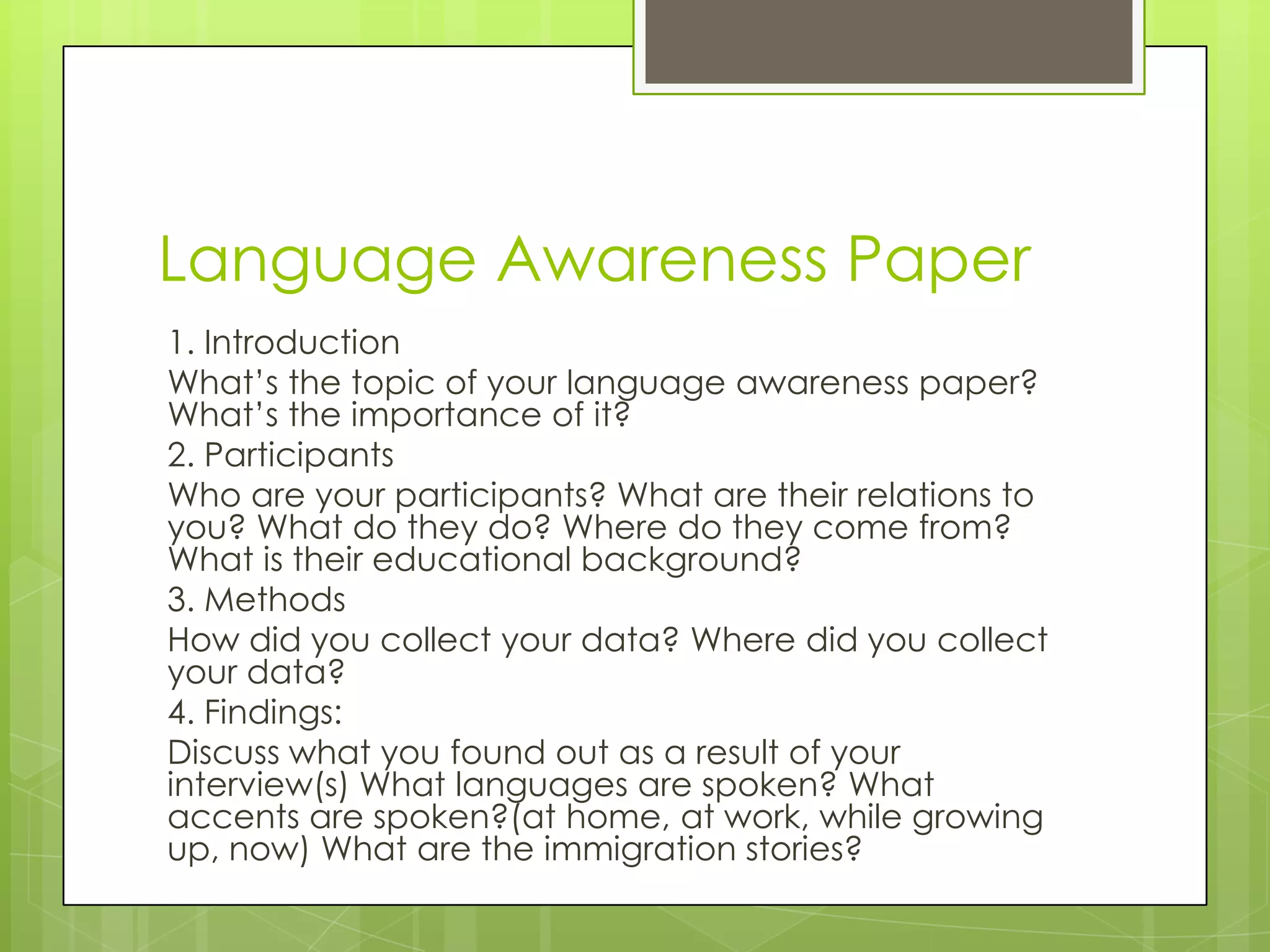
Language Awareness Paper1. IntroductionWhat’s the topic of your language awareness paper? What’s the importance of it?2. ParticipantsWho are your participants? What are their relations to you? What do they do? Where do they come from? What is their educational background?3. MethodsHow did you collect your data? Where did you collect your data? 4. Findings:Discuss what you found out as a result of your interview(s) What languages are spoken? What accents are spoken?(at home, at work, while growing up, now) What are the immigration stories?
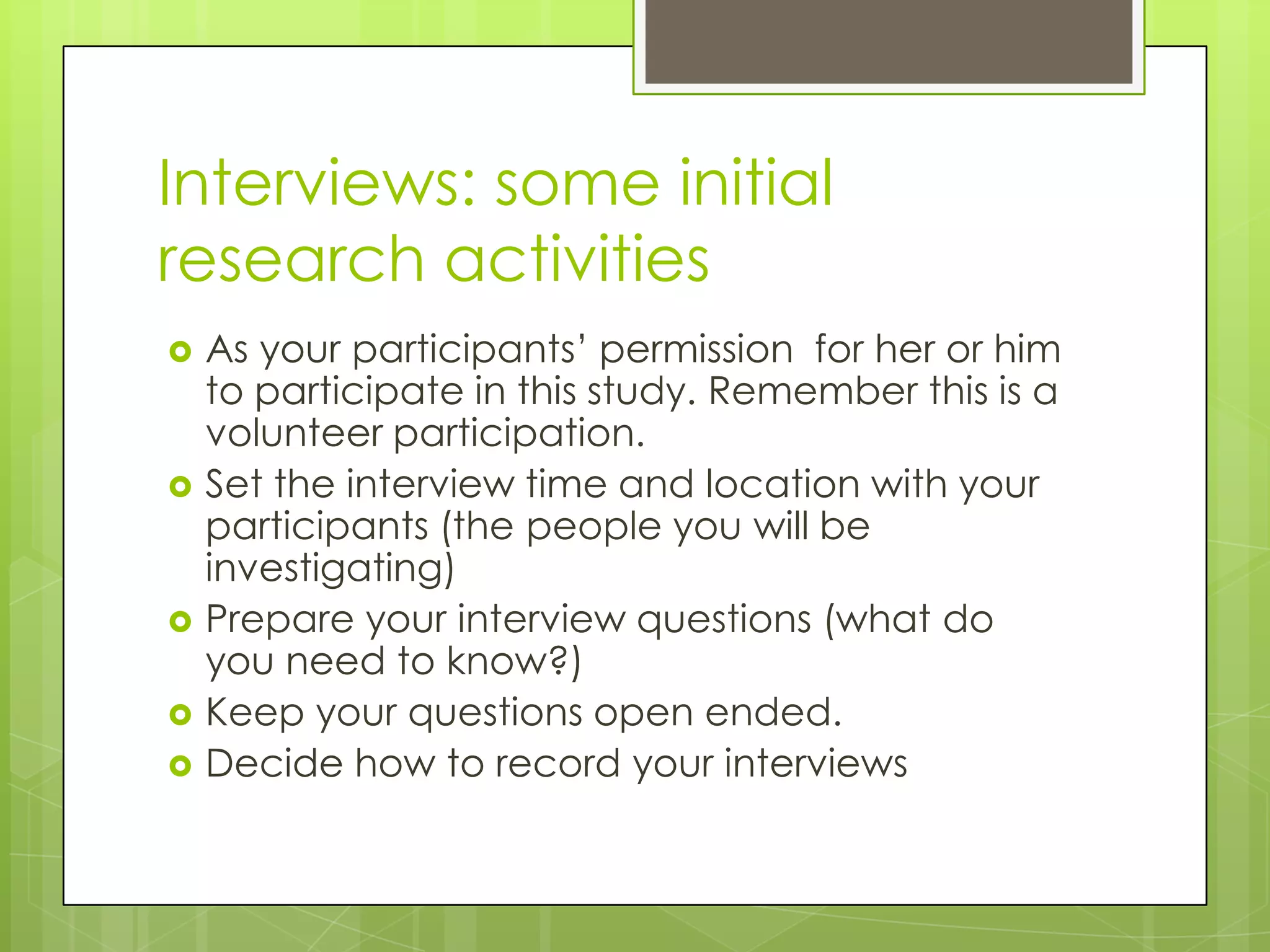
Interviews: some initial research activities As your participants’ permission  for her or him to participate in this study. Remember this is a volunteer participation. Set the interview time and location with your participants (the people you will be investigating)Prepare your interview questions (what do you need to know?)Keep your questions open ended.Decide how to record your interviews
Living sources (Curious Researcher)“Most people no matter who they are love the attention of an interviewer, no matter who she is, particularly if what’s being discussed facilitates them both” (p.99)
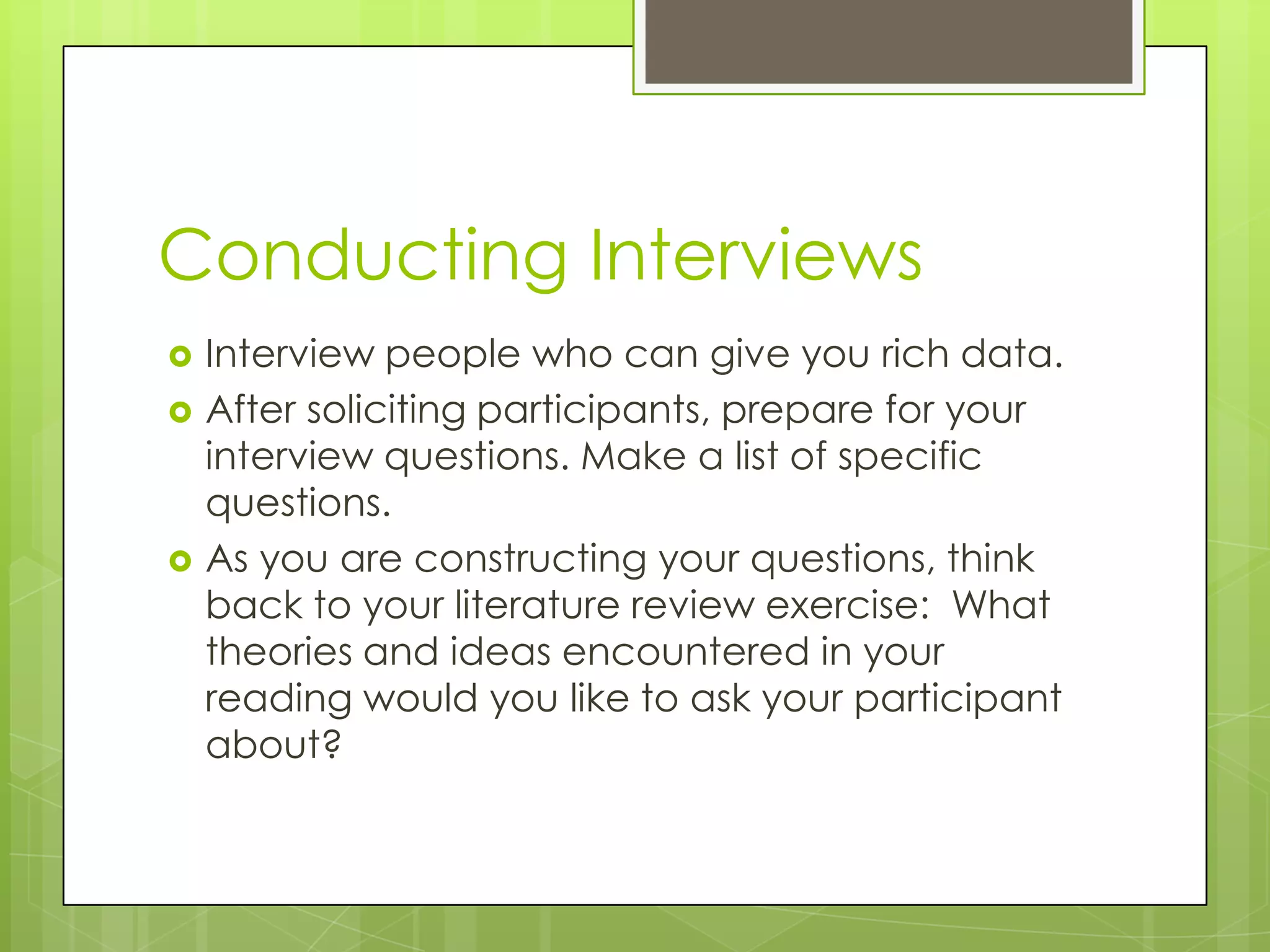
Conducting InterviewsInterview people who can give you rich data.After soliciting participants, prepare for your interview questions. Make a list of specific questions.As you are constructing your questions, think back to your literature review exercise:  What theories and ideas encountered in your reading would you like to ask your participant about?
Question categories	Opening questionsCould you please describe…?Can you tell me about…?Please discuss…I am interested in….What can you tell me about this subject?Follow-up QuestionsReally? How so? Can you elaborate on X point?Probing QuestionsCan you tell me more about…? Could you please give me an example…?
Soliciting participantsBegin looking for participantsAsk their permission to be a part of your study. Describe your studyDescribe the purposeGive your participants some information about the background.Schedule your InterviewsBegin your interviews (USE A DIGITAL RECORDER TO RECORD YOUR INTERVIEWS)
Class Activity on Interview Find out more about your classmates’ language(s)—both in the family and his/her larger community.Come up with at least 5 polished questions that can best answer this large research questionConduct a 5 minutes long interview.After your interview,  write one paragraph about your participant’s views/experiences on spring break.
HomeworkConduct your interviews. Make sure you record your interviews or take abundant notes.Find more information about the languages spoken 1) from your family 2) from an outside source.
Agenda
Information Literacy for your writing projects http://lgdata.s3-website-us-east-1.amazonaws.com/docs/755/274247/Intro_GenEd.swf

101 week 4

  • 1.
  • 2.
    AgendaConducting genre analysisDiscussingGetting Personal by Irene tylorBrainstorming Language awareness projects
  • 3.
    Willi saysWhen youwrite an personal essay, the writer is the only person who knows the facts and points he wants the audience to understand. So he needs to make clear what are his points and he needs to make the reader feel comfortable because you don't want to waste the readers time.
  • 4.
    Anthony saysWhen writinga personal essay, you are the only person who knows the point that is trying to be made. In order to make the information clearly understandable, you need to provide enough detail and support. You want to make your writing interesting and helpful enough to make the reader feel like reading your text is worth their time and effort.
  • 5.
    RosettaThe point ofa personal is that you, the writer, are the only person that can get the point you are trying to make across. When writing a personal essay you have to find ways to get the readers attention because you do not want them to say after reading it, "why did I just read this?". As a writer its your responbilty to pick a topic that you do not mind in depth with. I also learned that a personal essay should also make the reader feel comfortable.
  • 6.
    Dimond says…Taylor showshow to write for yourself while still being conscious of your audience. By giving examples from her writing experiences, she lets the reader know that writing is mainly about being vulnerable especially when writing a personal essay.
  • 7.
    Tuomas says…M. IreneTaylor's article "Getting Personal" gave advice for writing a personal essay. In her opinion, the personal essay comes from your thoughts and you must be willing to commit yourself completely. You have to take a risk, tell your own thoughts about issue and also have to trust yourself. Those are the principles to write a personal essay. Essay isn't a personal if you are unable to explore it in depth. Aftering reading a personal essay, one should feel it was worth it to read the text.
  • 8.
    Nicole says…From reading"Getting Personal" I learned that you have to want to "dig deep" and really put your feelings out there to be able to write a personal essay. If you just list events it becomes more of a narrative. You must meet the expectations of your readers, so that they feel like it was worth their time to read what you had to say
  • 9.
    Genre AnalysisWhat’s thedifference between reading a genre critically and critiquing genre?Why is it important to critique genres?See the student critique of wedding invitations. Distinguish the parts that perform a critical reading of the genre and the parts that perform a critique of the genre. Tell us the difference by giving examples.
  • 10.
    Critiquing genres ingroupsPick one of the genres below. Find a few online examples. Save them on your laptop and conduct a critical genre analysis in your groups. Revisit the article called “Changing Genres”. Use box 4.1 on page 161 to conduct your analysis:Wedding InvitationsPoster about a social issueAnalyzing an advertisement Analyzing class syllabusA job ad
  • 11.
    Irene’s Getting PersonalComposean email message to Irene explaining:Your favorite three points that Irene makes in her essay called “Getting Personal.” Why do you like the points she makes about personal writing? How do you relate to her views? How do you think her essay help you become a better writer in your Language awareness project?
  • 12.
    BrainstormingWhat are someof the project ideas you came up with?
  • 13.
    AgendaGenre analysis homeworksharingDiscussing your language awareness projects Information literacyInterviewing Homework
  • 14.
  • 15.
    Language Awareness Paper1.IntroductionWhat’s the topic of your language awareness paper? What’s the importance of it?2. ParticipantsWho are your participants? What are their relations to you? What do they do? Where do they come from? What is their educational background?3. MethodsHow did you collect your data? Where did you collect your data? 4. Findings:Discuss what you found out as a result of your interview(s) What languages are spoken? What accents are spoken?(at home, at work, while growing up, now) What are the immigration stories?
  • 16.
    Interviews: some initialresearch activities As your participants’ permission for her or him to participate in this study. Remember this is a volunteer participation. Set the interview time and location with your participants (the people you will be investigating)Prepare your interview questions (what do you need to know?)Keep your questions open ended.Decide how to record your interviews
  • 17.
    Living sources (CuriousResearcher)“Most people no matter who they are love the attention of an interviewer, no matter who she is, particularly if what’s being discussed facilitates them both” (p.99)
  • 18.
    Conducting InterviewsInterview peoplewho can give you rich data.After soliciting participants, prepare for your interview questions. Make a list of specific questions.As you are constructing your questions, think back to your literature review exercise: What theories and ideas encountered in your reading would you like to ask your participant about?
  • 19.
    Question categories Opening questionsCouldyou please describe…?Can you tell me about…?Please discuss…I am interested in….What can you tell me about this subject?Follow-up QuestionsReally? How so? Can you elaborate on X point?Probing QuestionsCan you tell me more about…? Could you please give me an example…?
  • 20.
    Soliciting participantsBegin lookingfor participantsAsk their permission to be a part of your study. Describe your studyDescribe the purposeGive your participants some information about the background.Schedule your InterviewsBegin your interviews (USE A DIGITAL RECORDER TO RECORD YOUR INTERVIEWS)
  • 21.
    Class Activity onInterview Find out more about your classmates’ language(s)—both in the family and his/her larger community.Come up with at least 5 polished questions that can best answer this large research questionConduct a 5 minutes long interview.After your interview, write one paragraph about your participant’s views/experiences on spring break.
  • 22.
    HomeworkConduct your interviews.Make sure you record your interviews or take abundant notes.Find more information about the languages spoken 1) from your family 2) from an outside source.
  • 23.
  • 24.
    Information Literacy foryour writing projects http://lgdata.s3-website-us-east-1.amazonaws.com/docs/755/274247/Intro_GenEd.swf