Theme
What is Theme? 
The main idea or underlying 
meaning of a literary work. 
A theme may be stated or 
implied. 
Theme differs from the subject or 
topic of a literary work in that it 
involves a statement or opinion 
about the topic.
Major and Minor Themes 
Themes may be major or minor. 
A major theme is an idea the 
author returns to time and again. 
It becomes one of the most 
important ideas in the story. 
Minor themes are ideas that 
may appear from time to time.
Subject of a Work vs. Its Theme 
The subject is the topic on which 
an author has chosen to write. 
The theme, however, makes 
some statement about or 
expresses some opinion on that 
topic. 
For example, the subject of a 
story might be war while the 
theme might be the idea that war 
is useless.
Ways to Express a Theme 
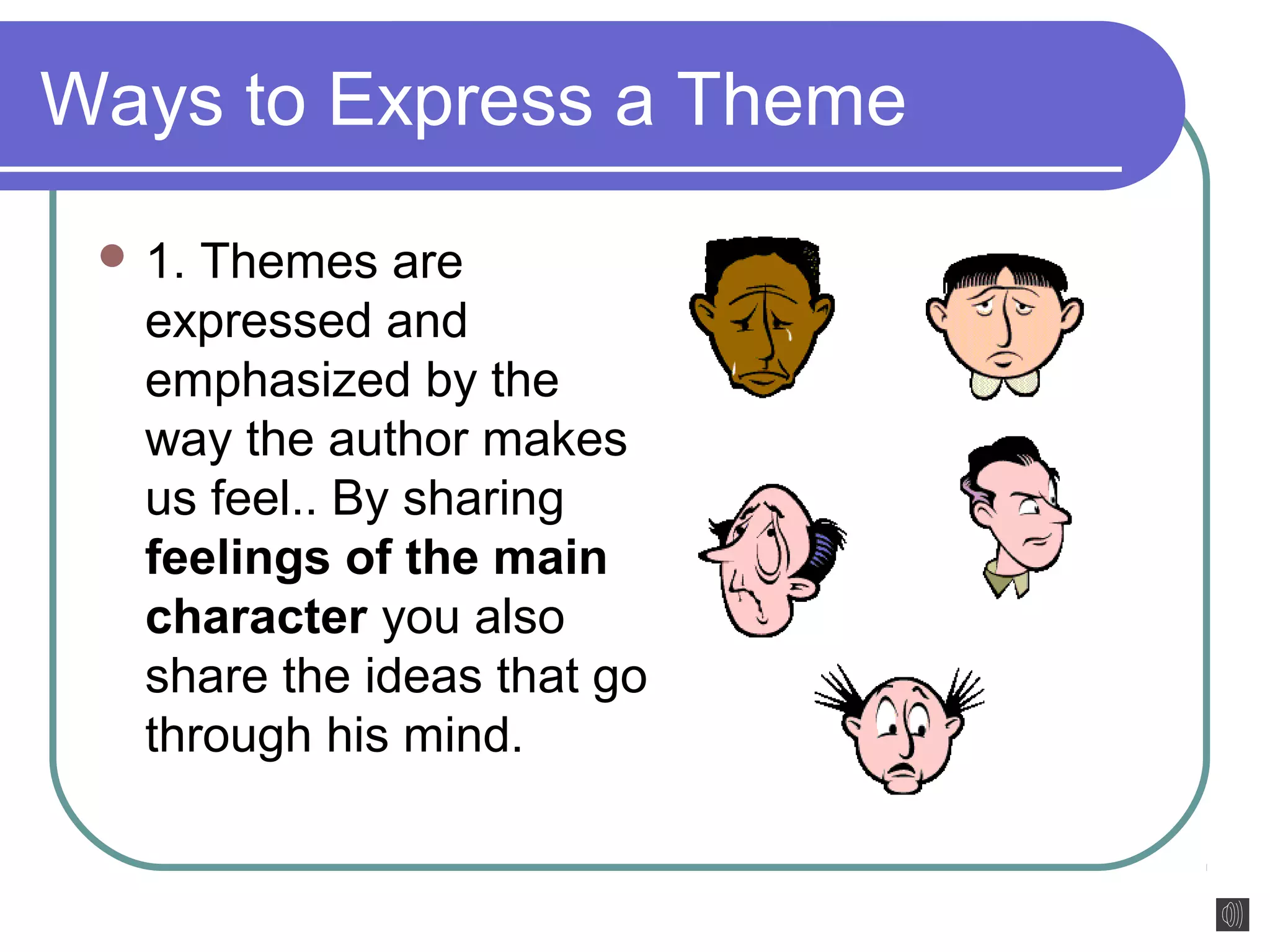
1. Themes are 
expressed and 
emphasized by the 
way the author makes 
us feel.. By sharing 
feelings of the main 
character you also 
share the ideas that go 
through his mind.
Ways to Express a Theme 
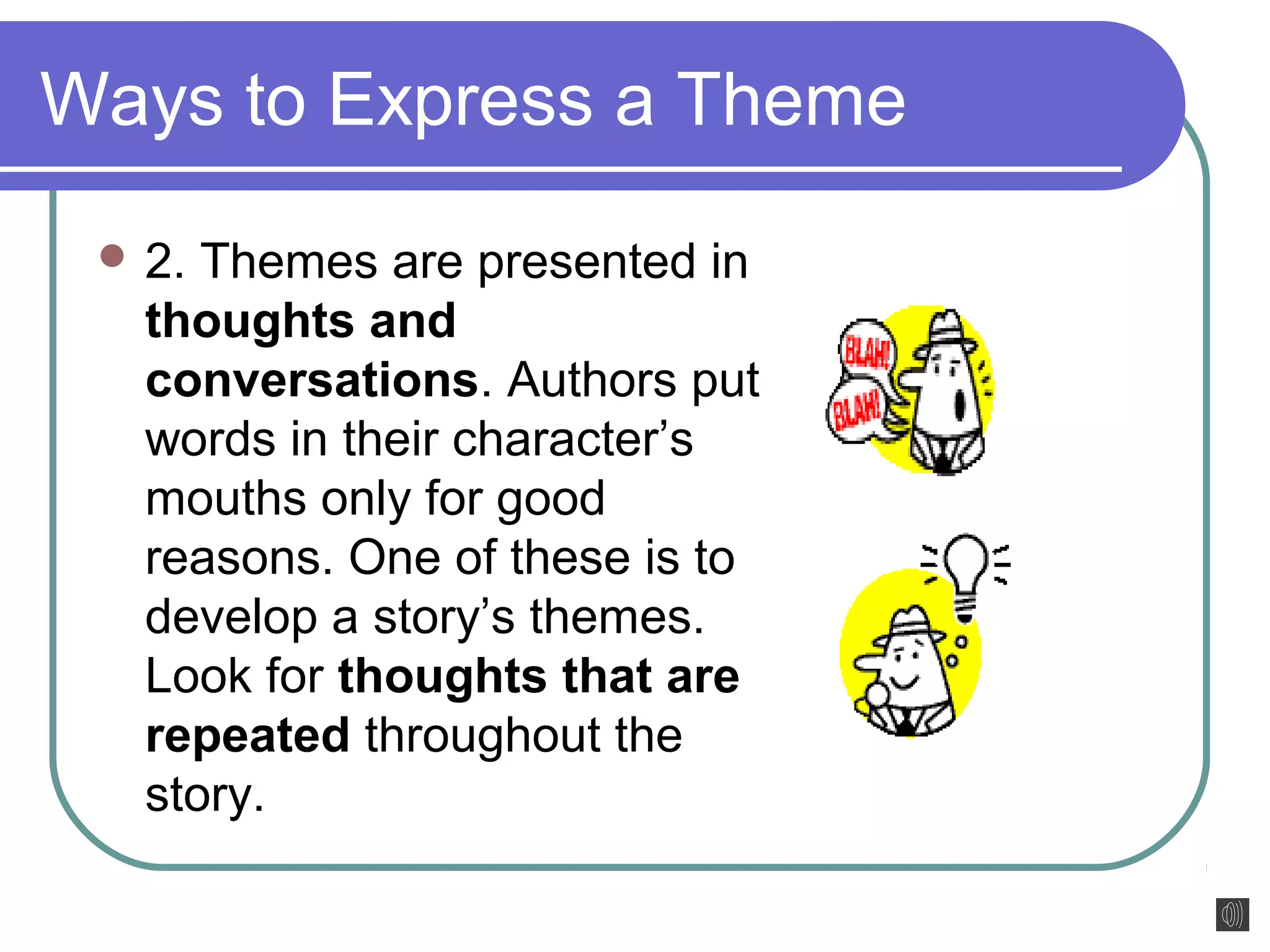
2. Themes are presented in 
thoughts and 
conversations. Authors put 
words in their character’s 
mouths only for good 
reasons. One of these is to 
develop a story’s themes. 
Look for thoughts that are 
repeated throughout the 
story.
Ways to Express a Theme 
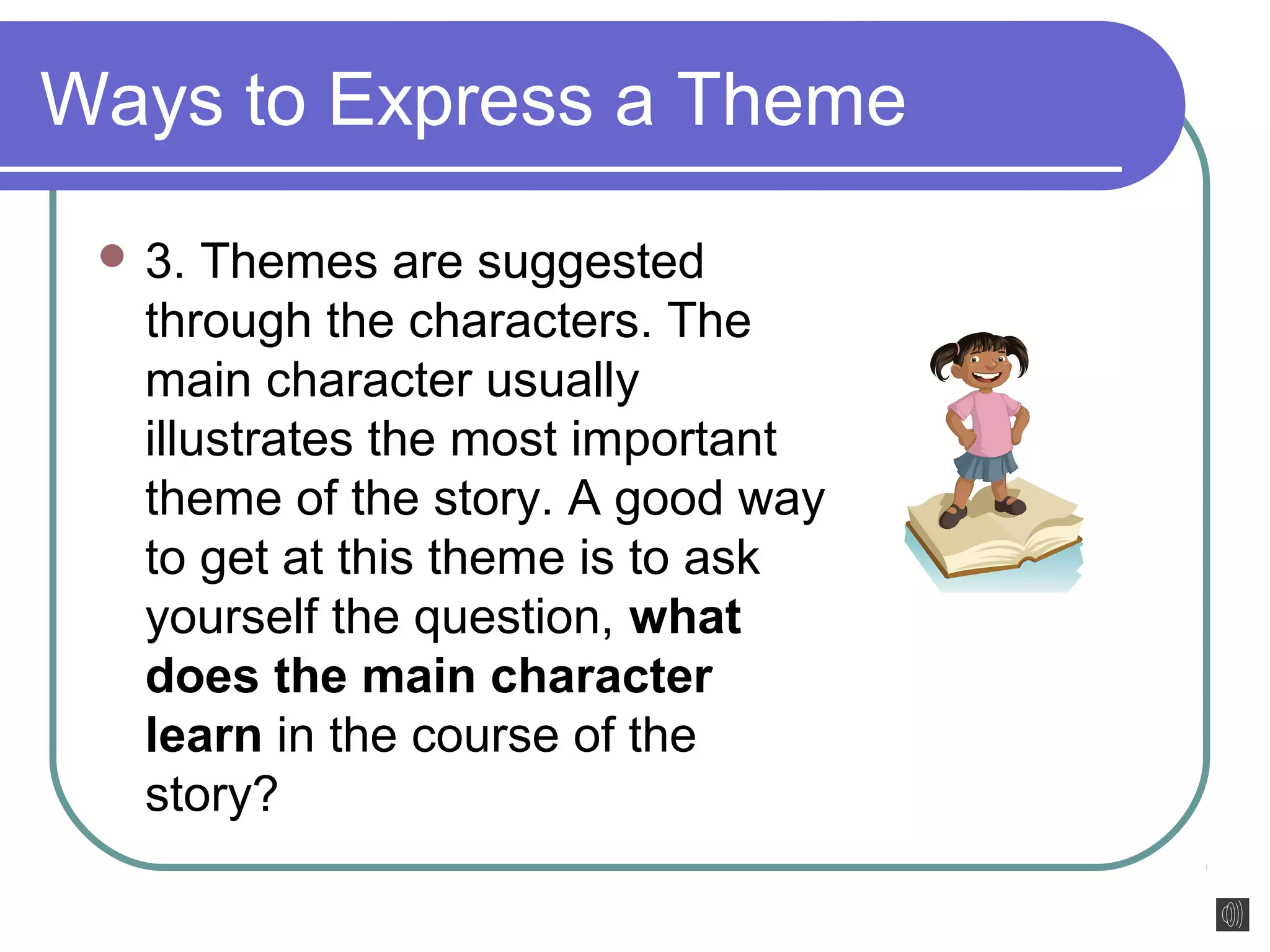
3. Themes are suggested 
through the characters. The 
main character usually 
illustrates the most important 
theme of the story. A good way 
to get at this theme is to ask 
yourself the question, what 
does the main character 
learn in the course of the 
story?
Ways to Express a Theme 
4. The actions or events in 
the story are used to suggest 
theme. People naturally 
express ideas and feelings 
through their actions. One 
thing authors think about is 
what an action will "say". In 
other words, how will the 
action express an idea or 
theme?
Examples of Themes 
Revenge 
Love 
Family 
Friendship 
Acceptance
Examples of Themes 
Revenge 
Love 
Family 
Friendship 
Acceptance

What is theme

  • 1.
  • 2.
    What is Theme? The main idea or underlying meaning of a literary work. A theme may be stated or implied. Theme differs from the subject or topic of a literary work in that it involves a statement or opinion about the topic.
  • 3.
    Major and MinorThemes Themes may be major or minor. A major theme is an idea the author returns to time and again. It becomes one of the most important ideas in the story. Minor themes are ideas that may appear from time to time.
  • 4.
    Subject of aWork vs. Its Theme The subject is the topic on which an author has chosen to write. The theme, however, makes some statement about or expresses some opinion on that topic. For example, the subject of a story might be war while the theme might be the idea that war is useless.
  • 5.
    Ways to Expressa Theme 1. Themes are expressed and emphasized by the way the author makes us feel.. By sharing feelings of the main character you also share the ideas that go through his mind.
  • 6.
    Ways to Expressa Theme 2. Themes are presented in thoughts and conversations. Authors put words in their character’s mouths only for good reasons. One of these is to develop a story’s themes. Look for thoughts that are repeated throughout the story.
  • 7.
    Ways to Expressa Theme 3. Themes are suggested through the characters. The main character usually illustrates the most important theme of the story. A good way to get at this theme is to ask yourself the question, what does the main character learn in the course of the story?
  • 8.
    Ways to Expressa Theme 4. The actions or events in the story are used to suggest theme. People naturally express ideas and feelings through their actions. One thing authors think about is what an action will "say". In other words, how will the action express an idea or theme?
  • 9.
    Examples of Themes Revenge Love Family Friendship Acceptance
  • 10.
    Examples of Themes Revenge Love Family Friendship Acceptance