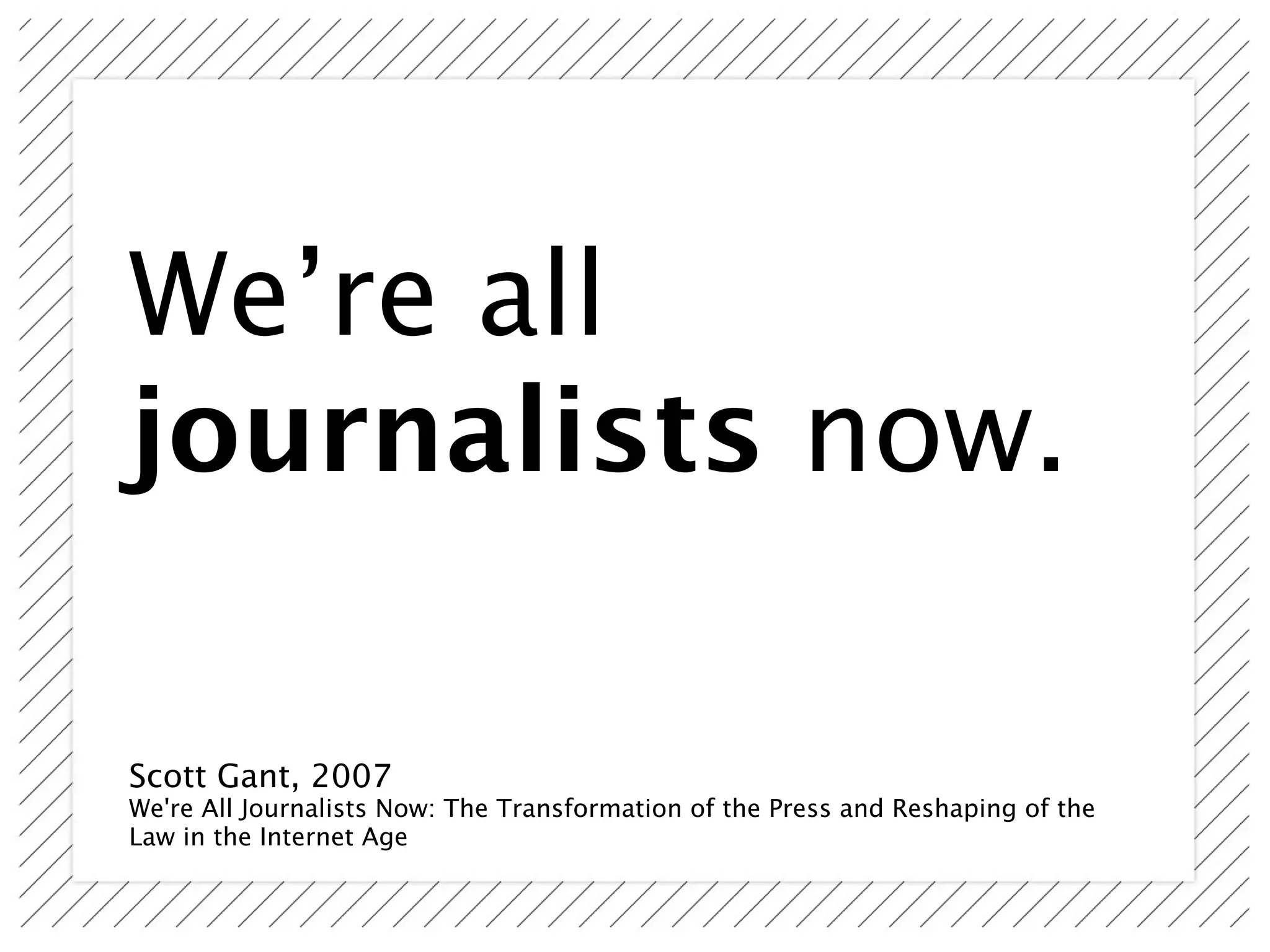
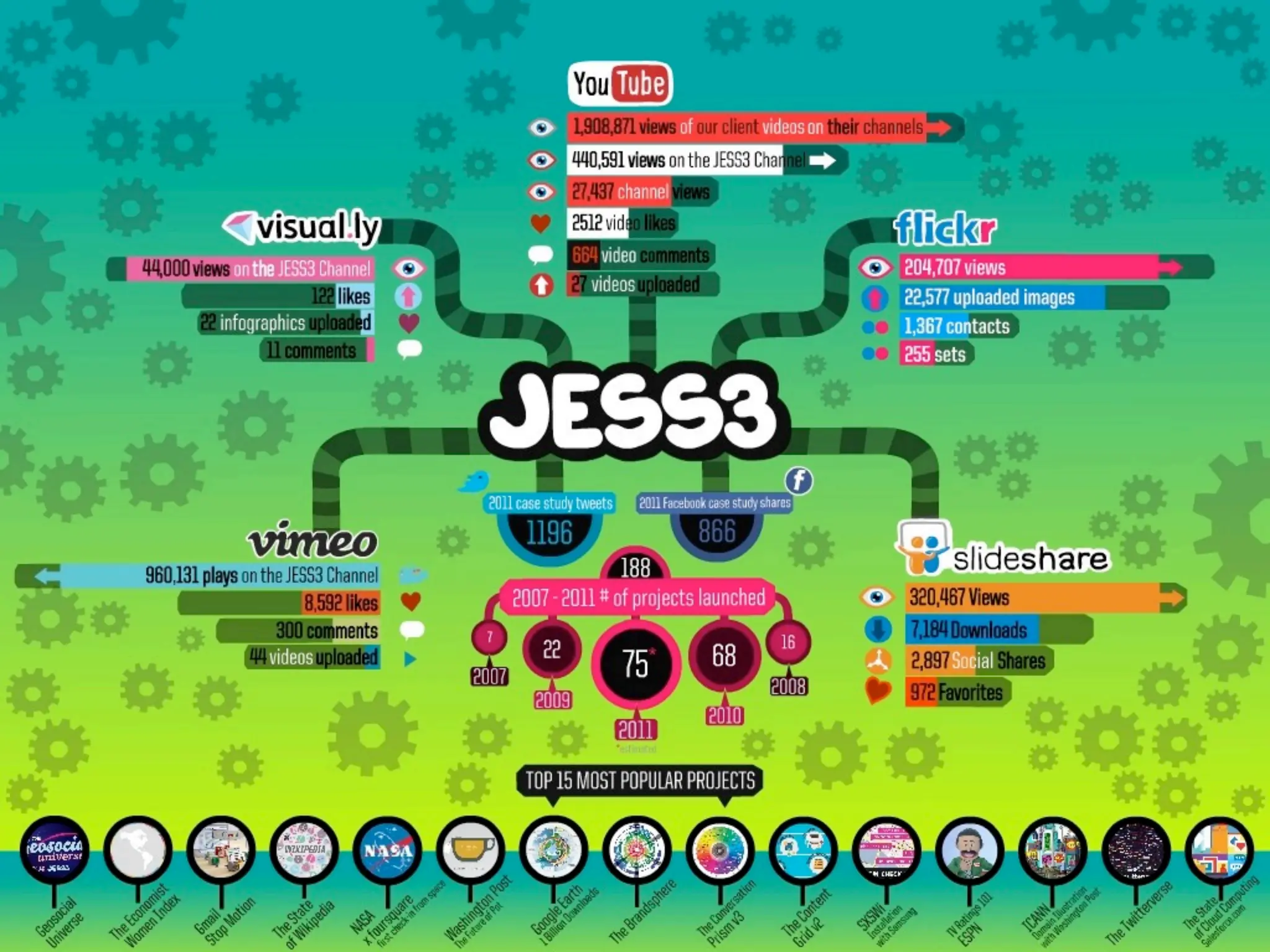
Weโ€™re all
journalists now.

Scott Gant, 2007
We're All Journalists Now: The Transformation of the Press and Reshaping of the
Law in the Internet Age
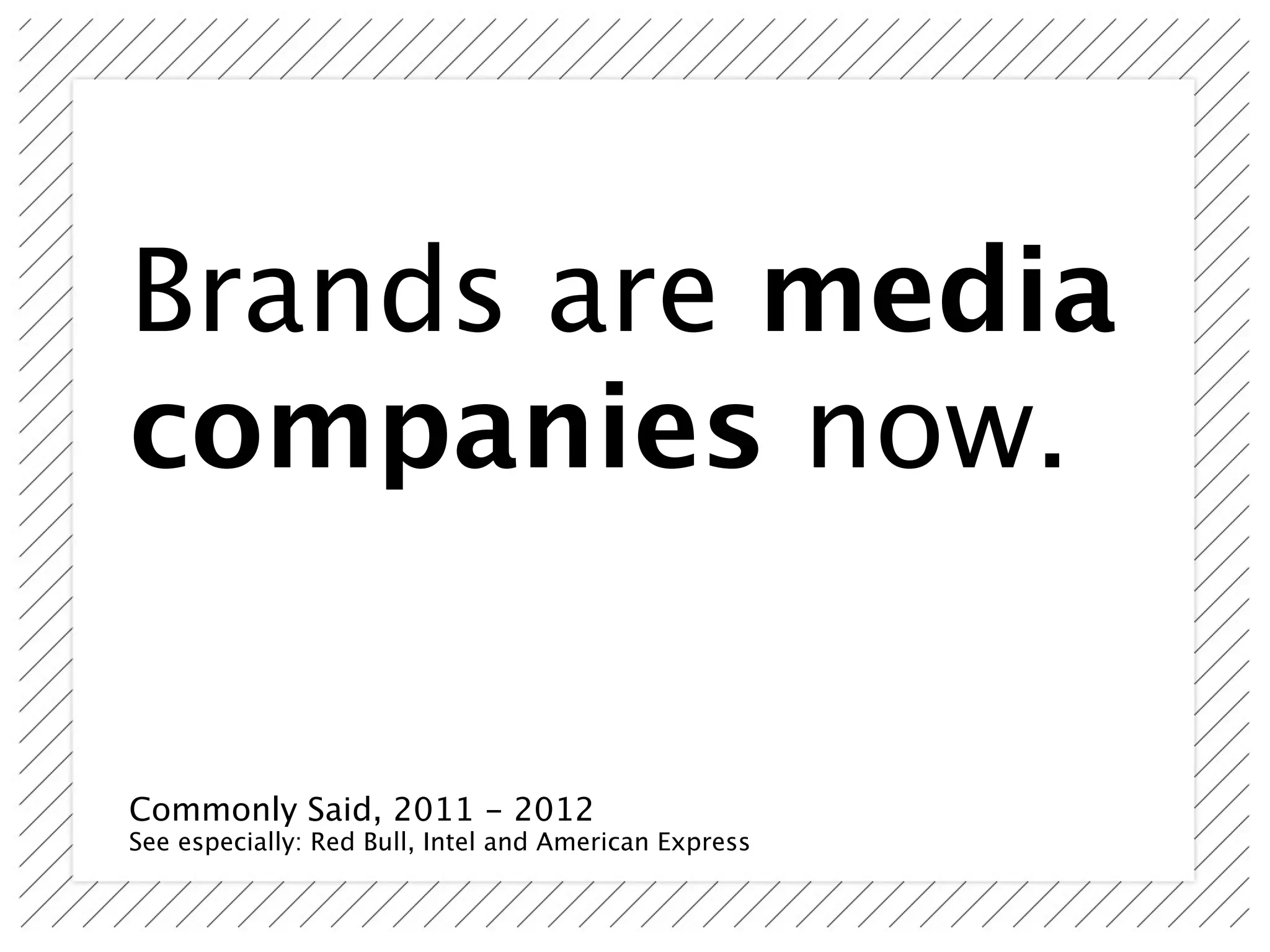
Brands are media
companies now.

Commonly Said, 2011 - 2012
See especially: Red Bull, Intel and American Express

Weโ€™re all
publishing
companies now.
Takes the concept of journalism
And adds process, volume and scale
The devil is in the details.
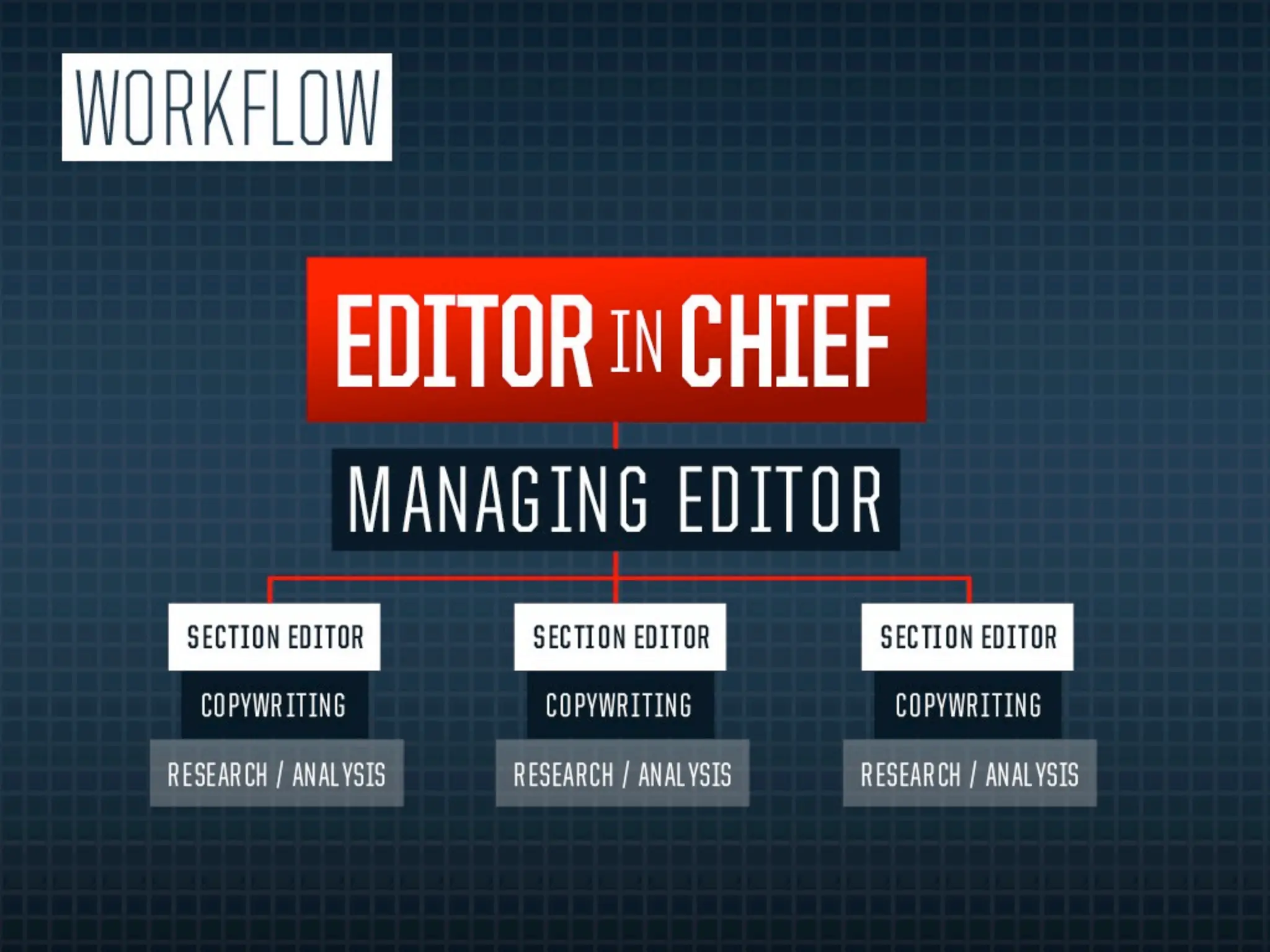
Brands arenโ€™t set up to be
publishers. They donโ€™t
necessarily understand the
editorial process or have the
stomach for the length of time
it takes to build an audience.

Josh Sternberg, Digiday
January 25, 2012
Today and throughout
the Mediabistro Social
Media Boot Camp
experience, we are
going to help you
overcome these
challenges.
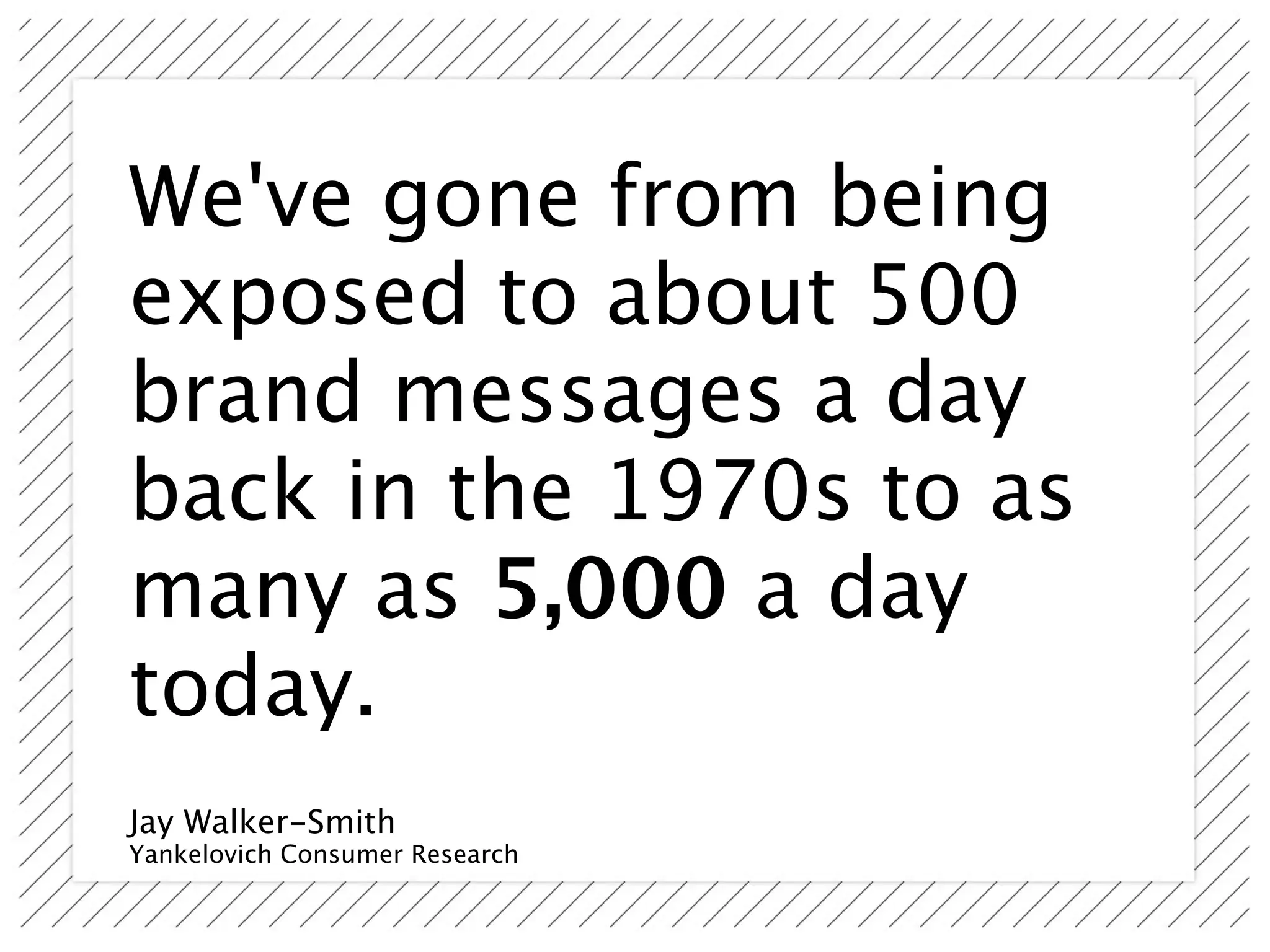
We've gone from being
exposed to about 500
brand messages a day
back in the 1970s to as
many as 5,000 a day
today.
Jay Walker-Smith
Yankelovich Consumer Research
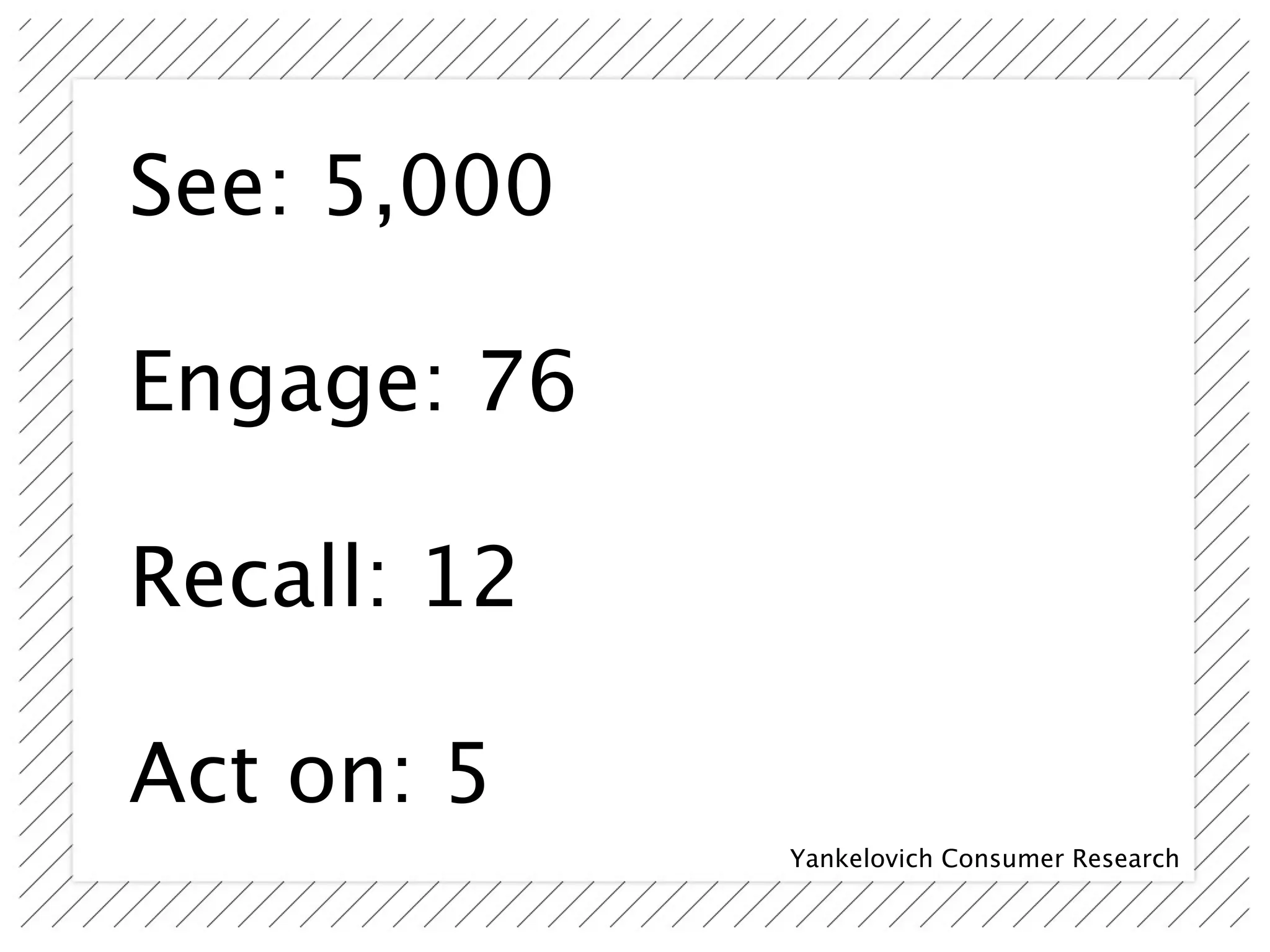
See: 5,000

Engage: 76

Recall: 12

Act on: 5
             Yankelovich Consumer Research
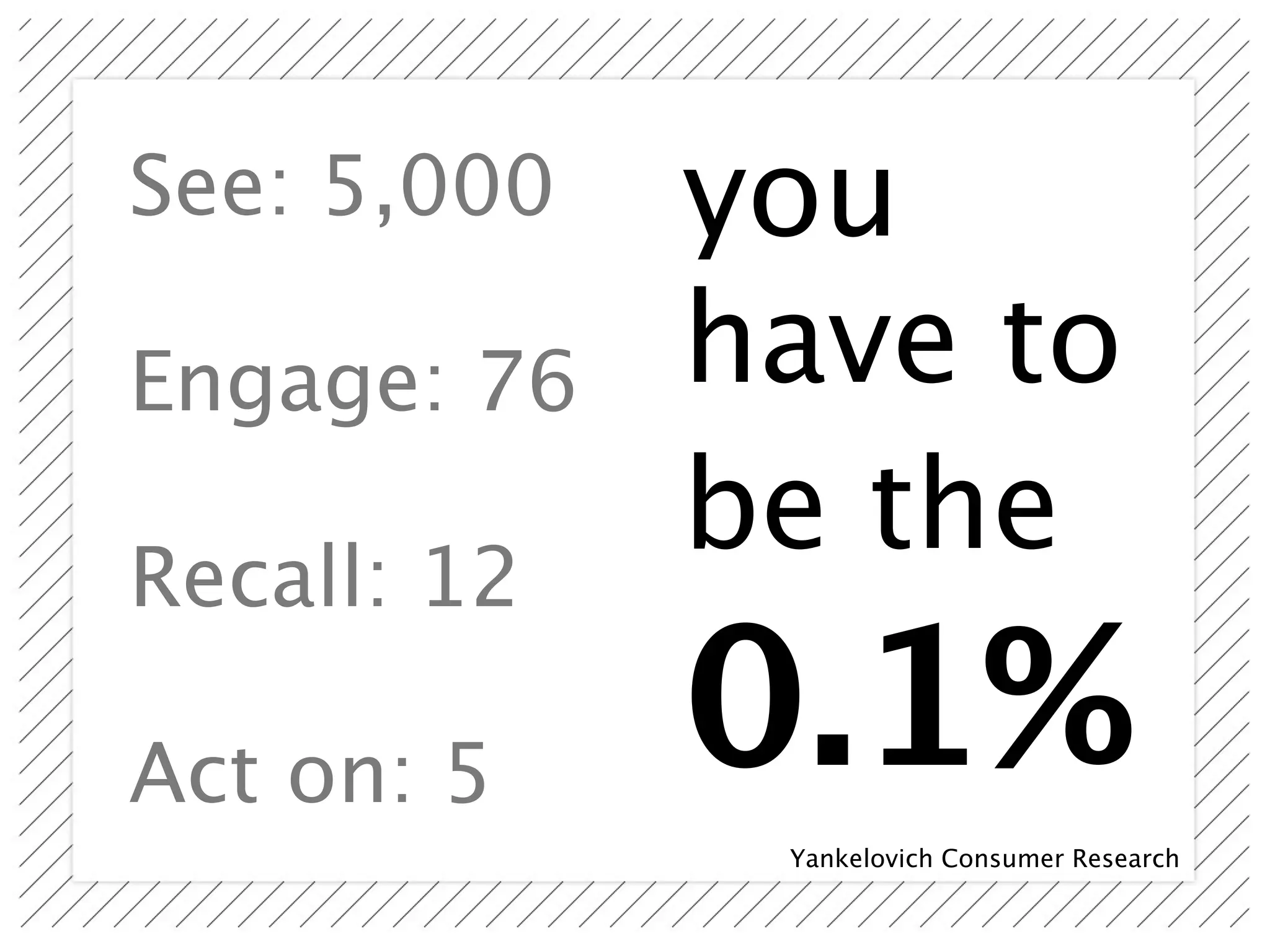
See: 5,000   you
Engage: 76   have to
Recall: 12
             be the

Act on: 5    0.1%
              Yankelovich Consumer Research
You have to create
breakthrough content
to be noticed.
How? Follow the right
processes and
formulae.
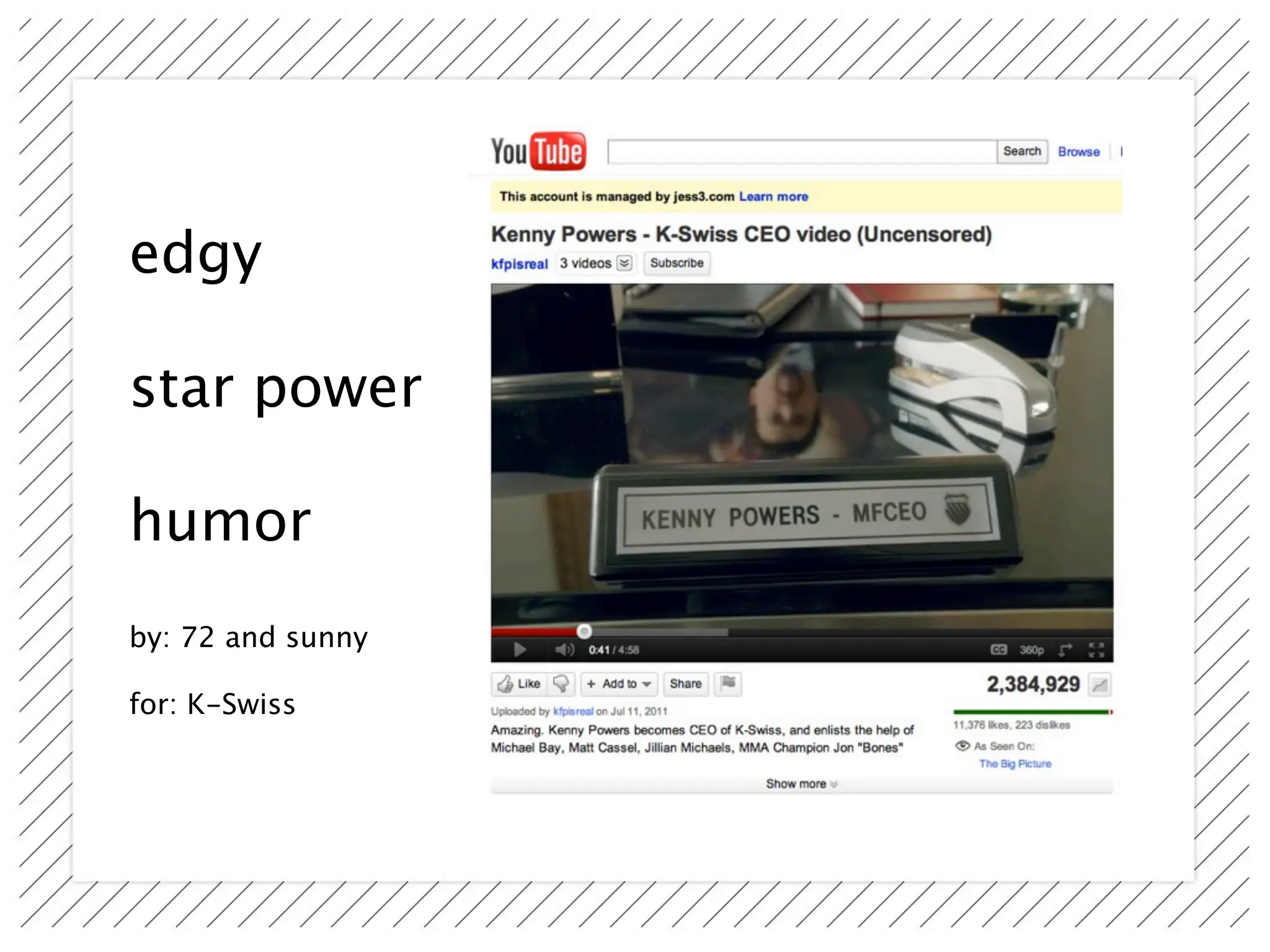
edgy

star power

humor
by: 72 and sunny

for: K-Swiss
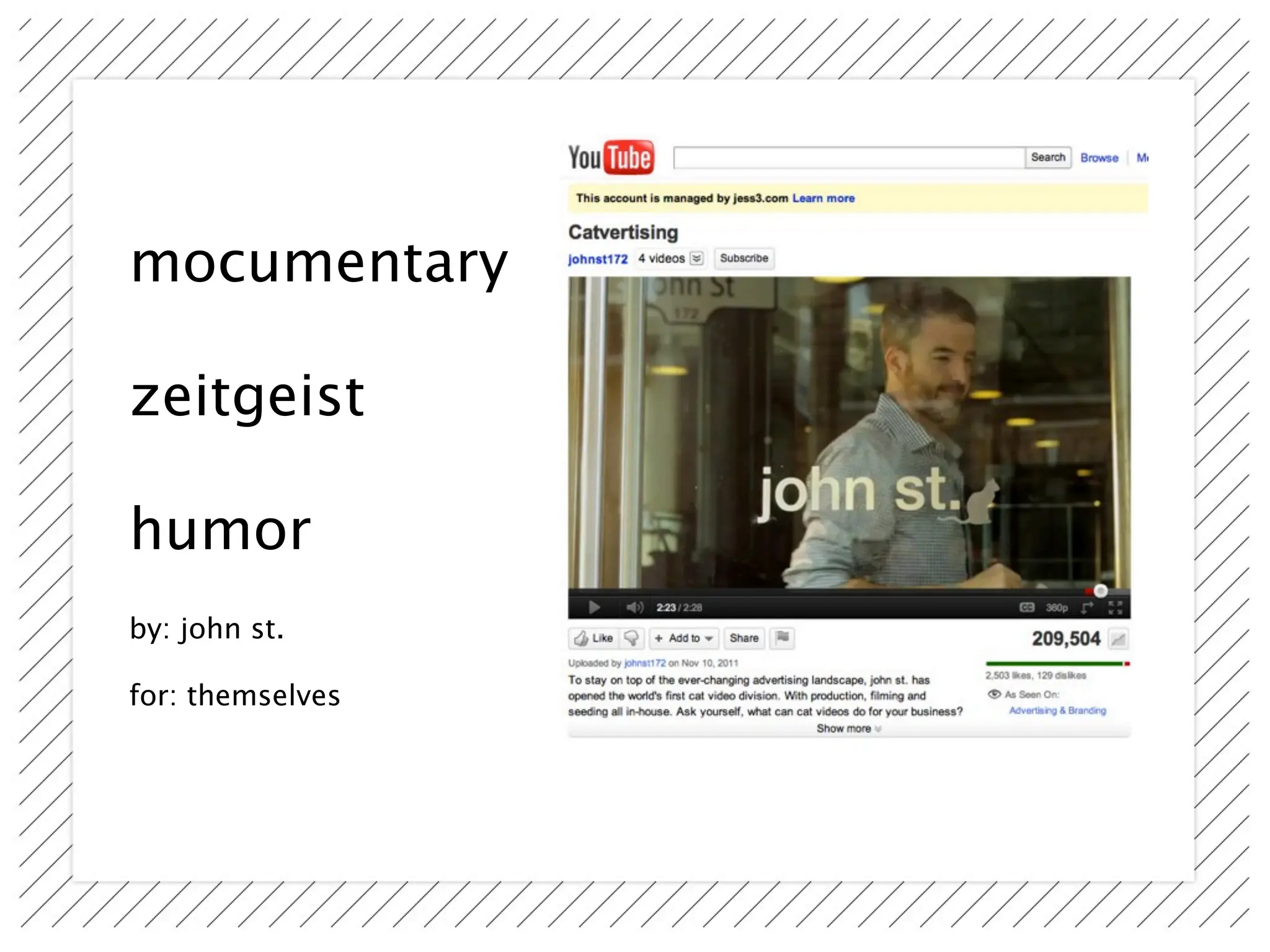
mocumentary

zeitgeist

humor
by: john st.

for: themselves
You have to create
work that provides
value to be shared.
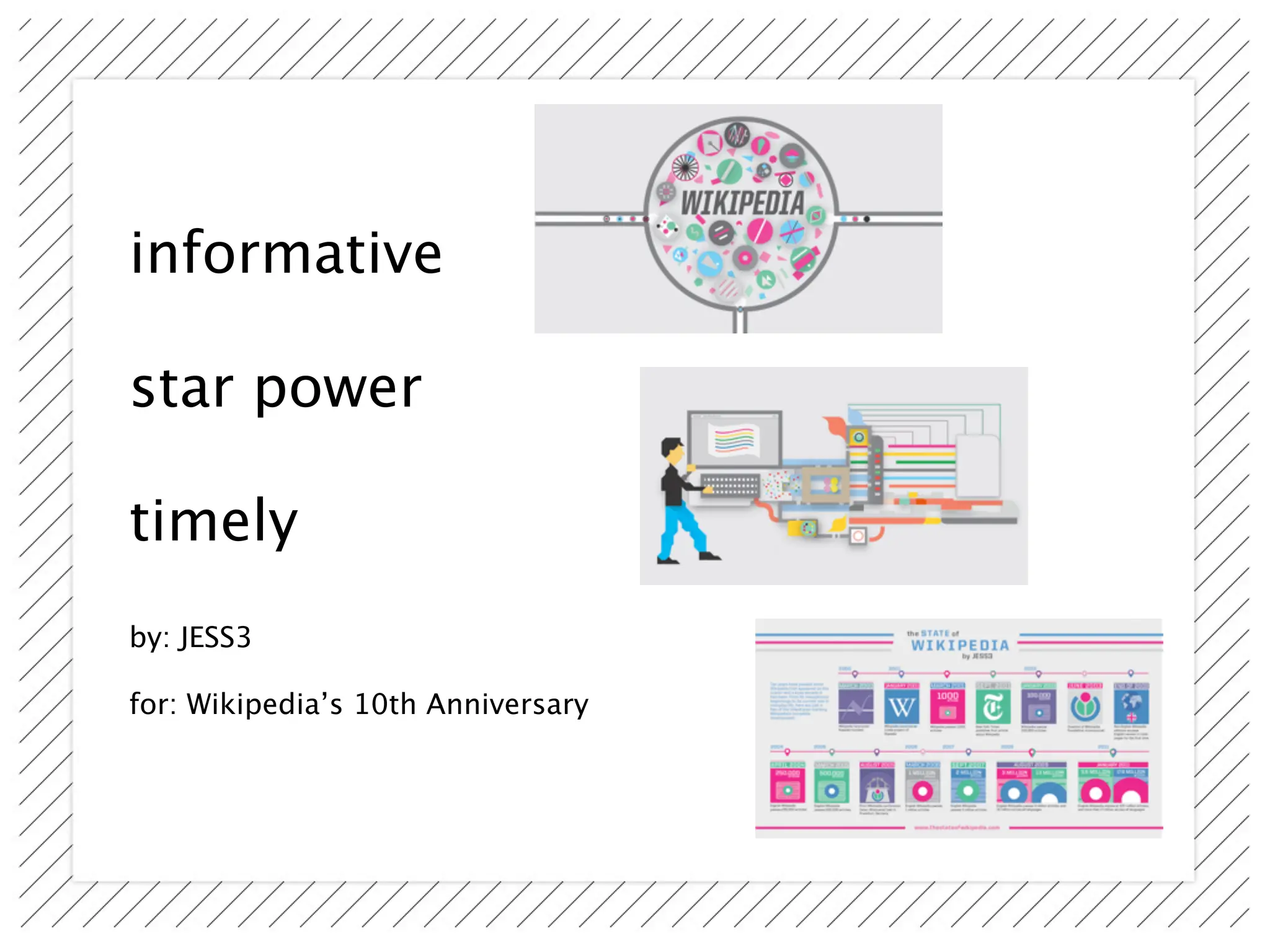
informative

star power

timely
by: JESS3

for: Wikipediaโ€™s 10th Anniversary
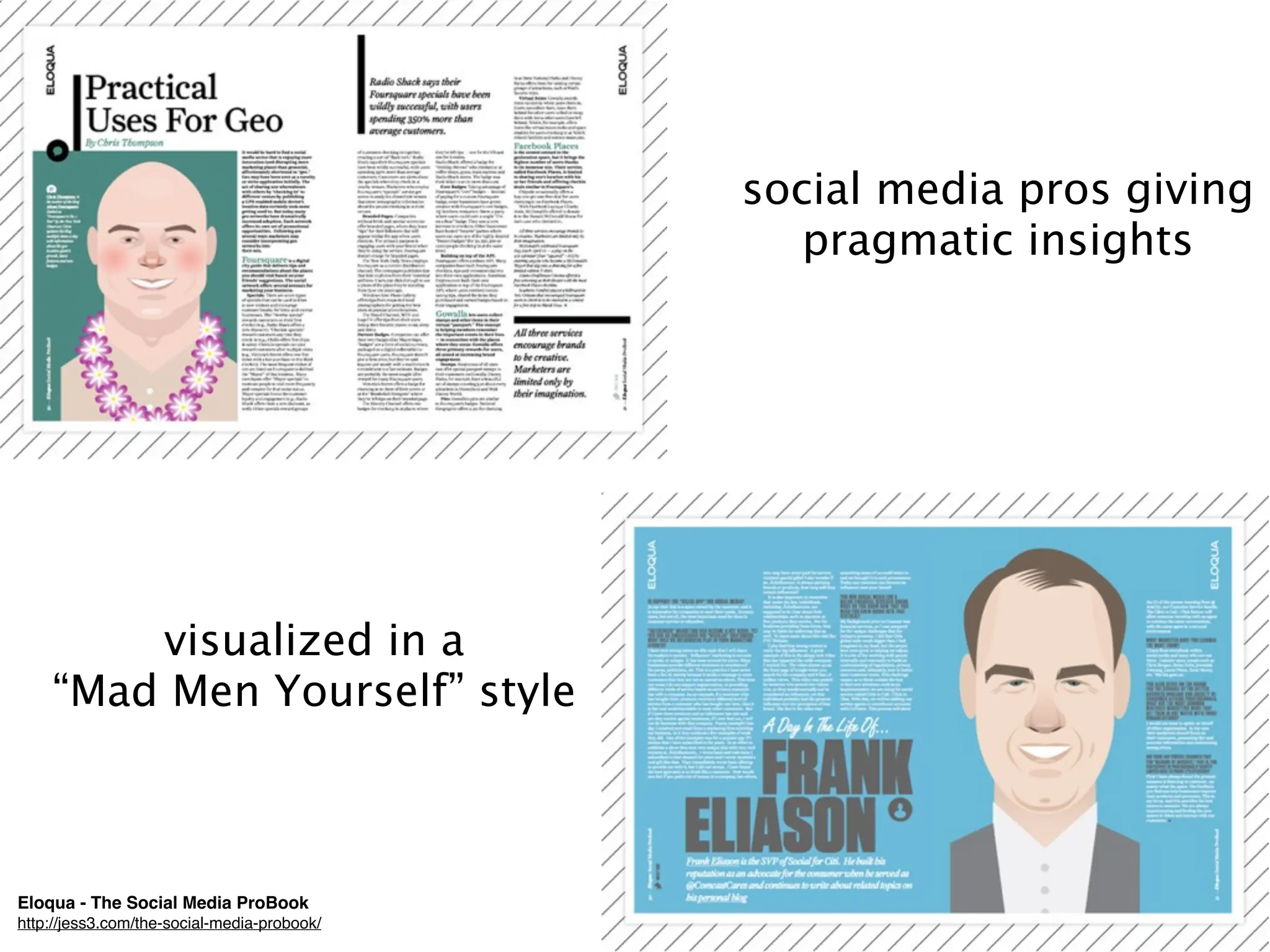
social media pros giving
                                                pragmatic insights


        visualized in a
    โ€œMad Men Yourselfโ€ style


Eloqua - The Social Media ProBook
http://jess3.com/the-social-media-probook/
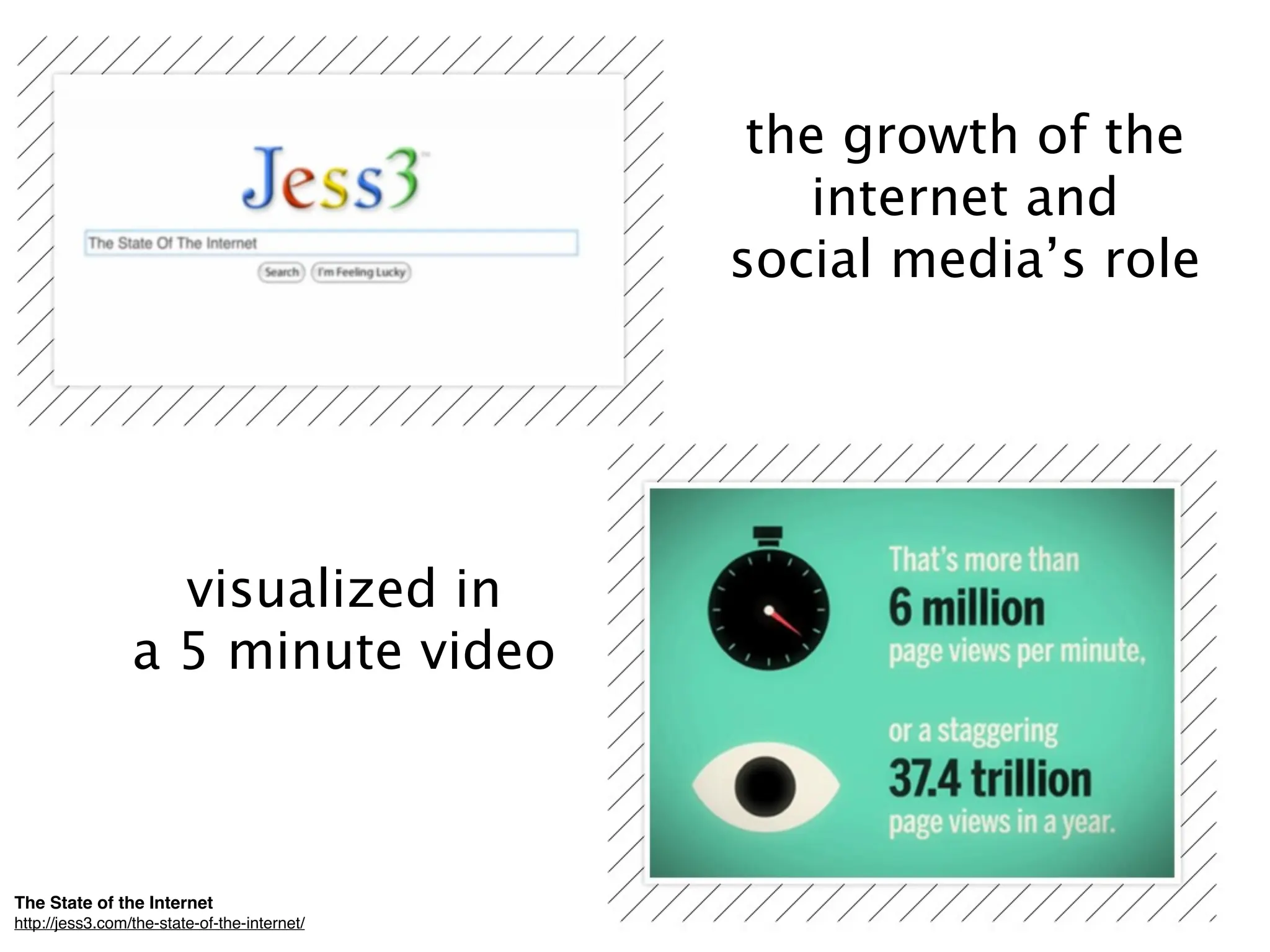
the growth of the
                                                 internet and
                                              social mediaโ€™s role


                   visualized in
                 a 5 minute video


The State of the Internet
http://jess3.com/the-state-of-the-internet/
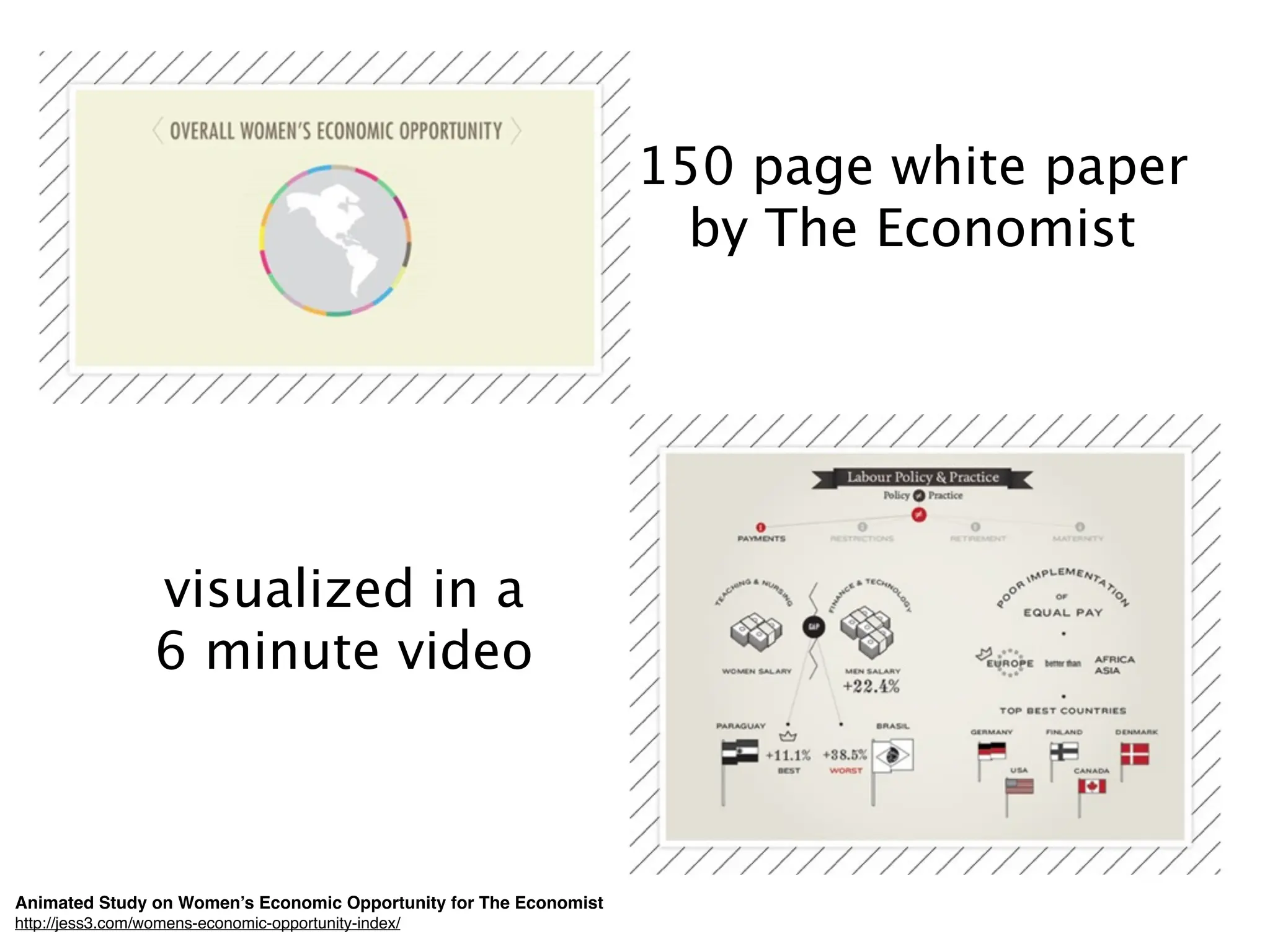
150 page white paper
                                                                     by The Economist


                  visualized in a
                  6 minute video


Animated Study on Womenโ€™s Economic Opportunity for The Economist
http://jess3.com/womens-economic-opportunity-index/
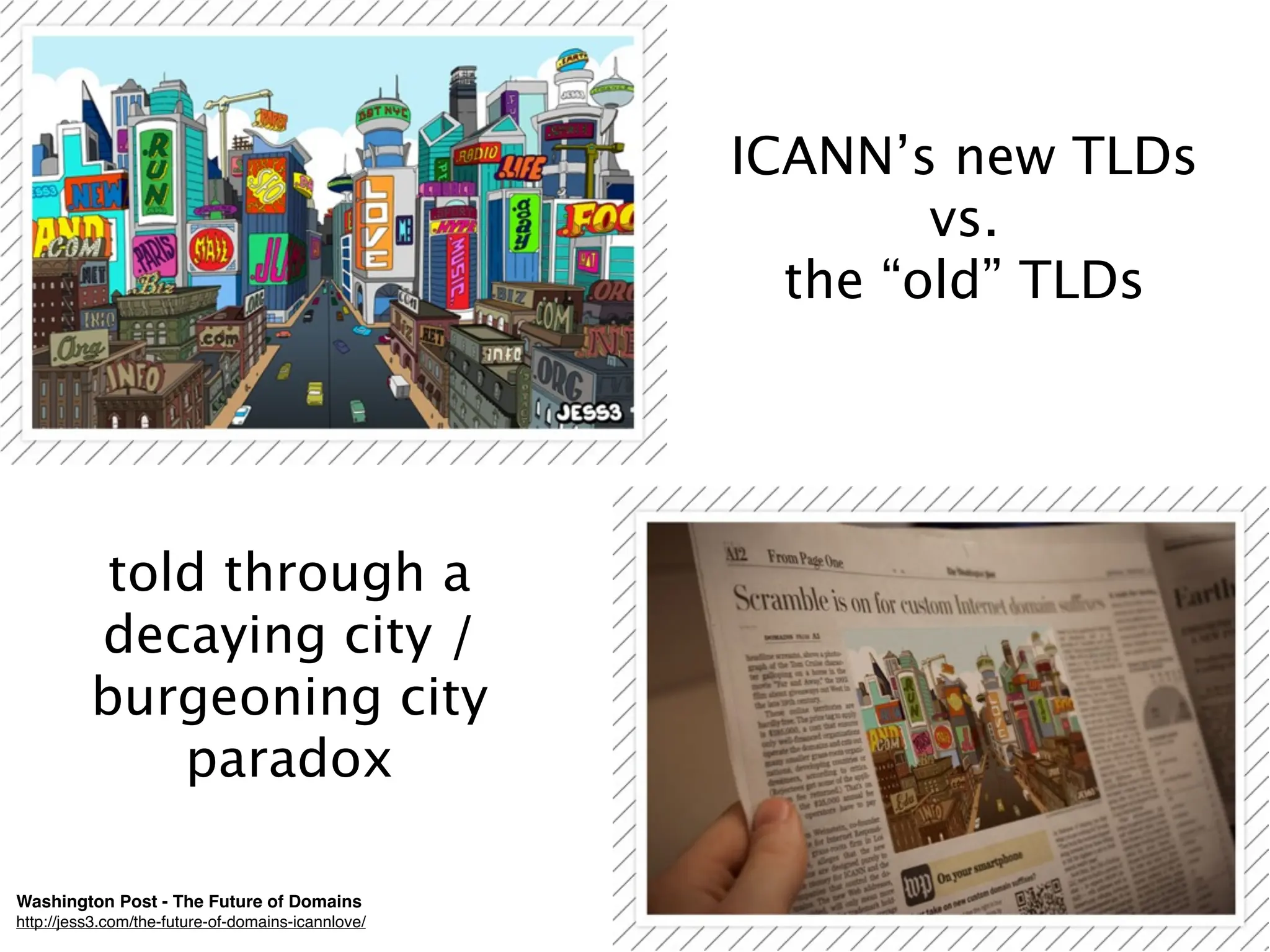
ICANNโ€™s new TLDs
                                                            vs.
                                                      the โ€œoldโ€ TLDs


           told through a
          decaying city /
          burgeoning city
              paradox

Washington Post - The Future of Domains
http://jess3.com/the-future-of-domains-icannlove/
Creating compelling
content has become
a necessity for
brands.
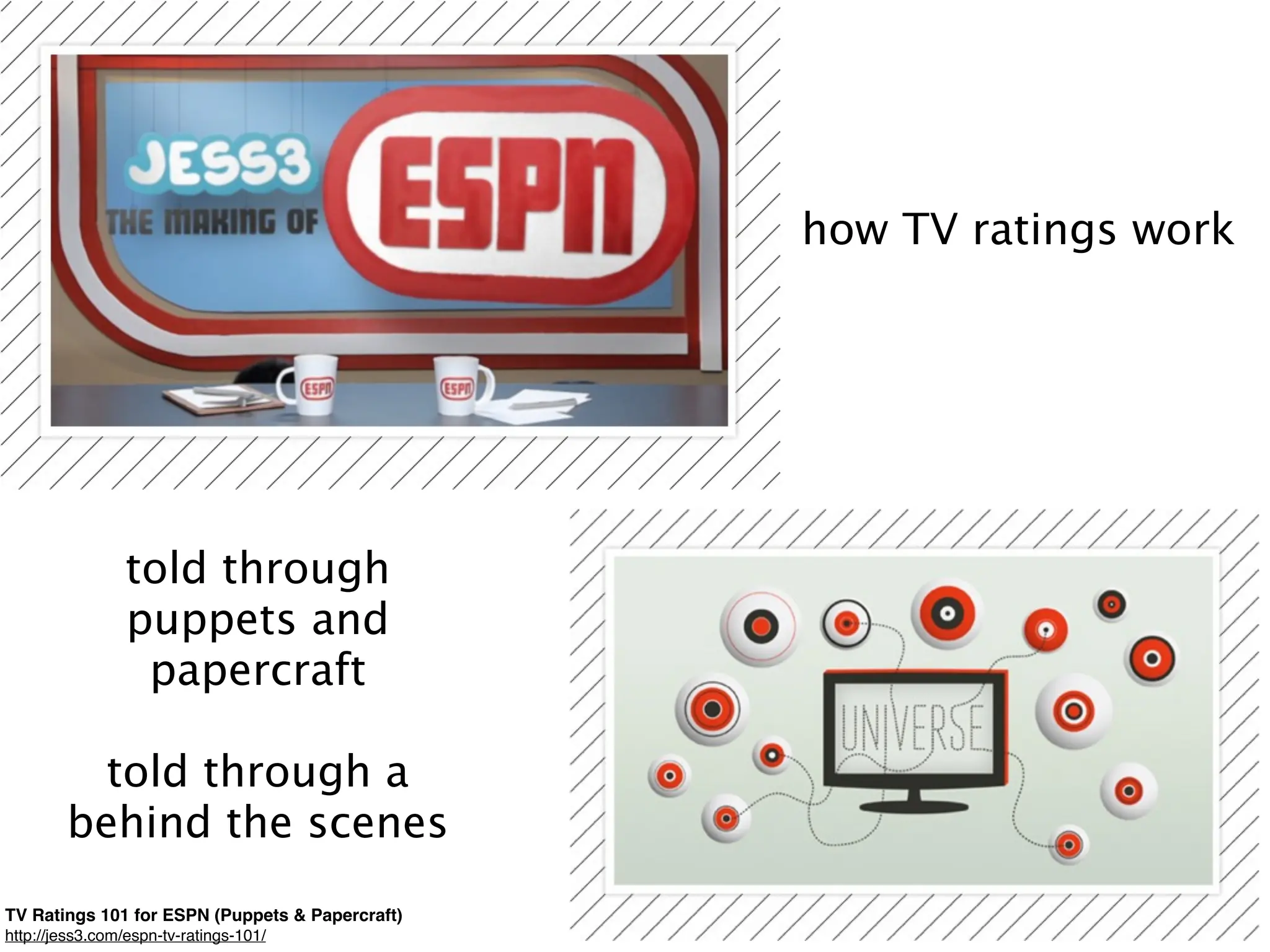
how TV ratings work


                 told through
                 puppets and
                  papercraft

          told through a
        behind the scenes
TV Ratings 101 for ESPN (Puppets & Papercraft)
http://jess3.com/espn-tv-ratings-101/
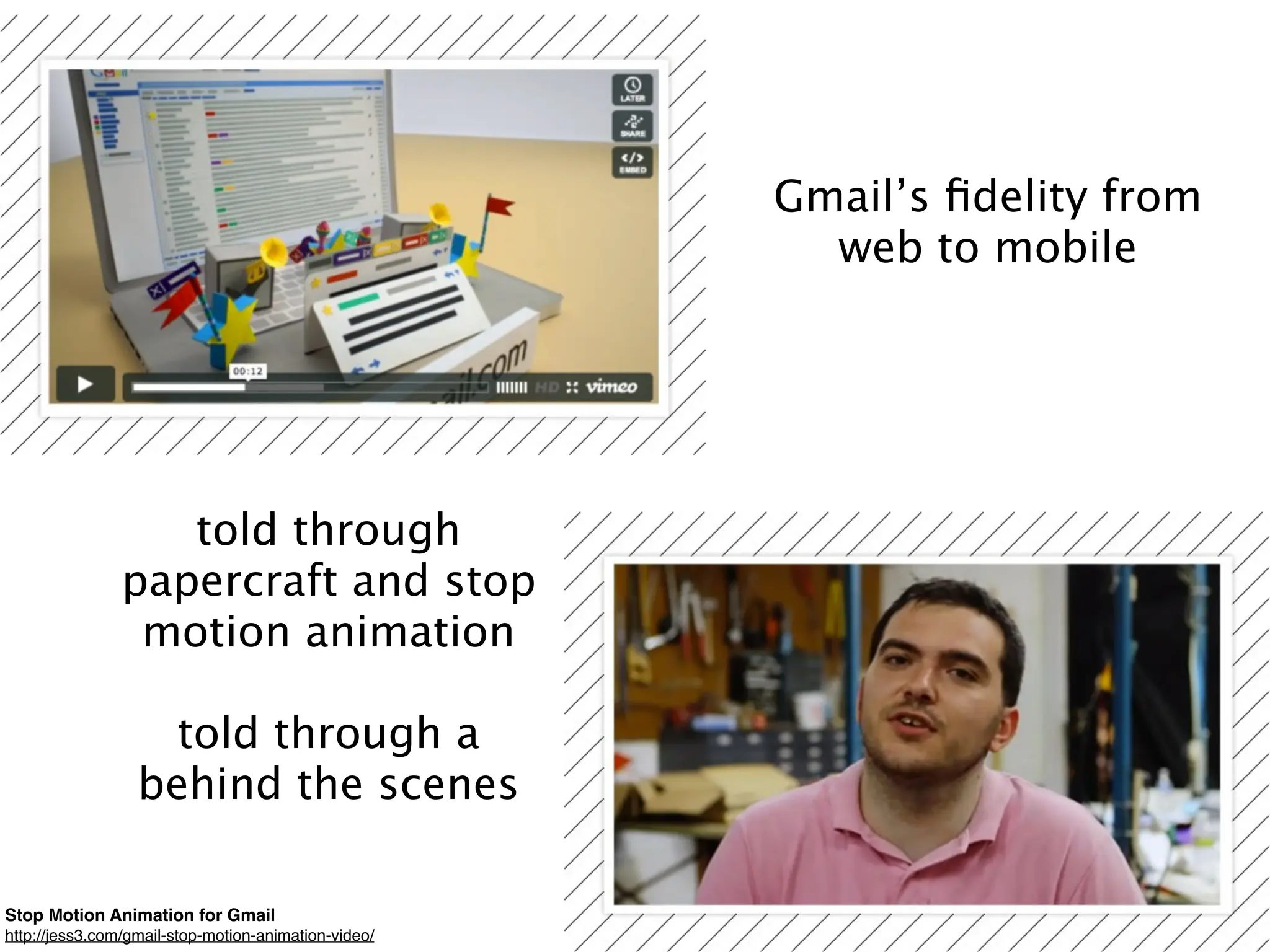
Gmailโ€™s ๏ฌdelity from
                                                        web to mobile


                   told through
                papercraft and stop
                 motion animation

                    told through a
                  behind the scenes

Stop Motion Animation for Gmail
http://jess3.com/gmail-stop-motion-animation-video/
Creating content for
brands is a delicate
balance between
business objectives,
creativity & user goals.
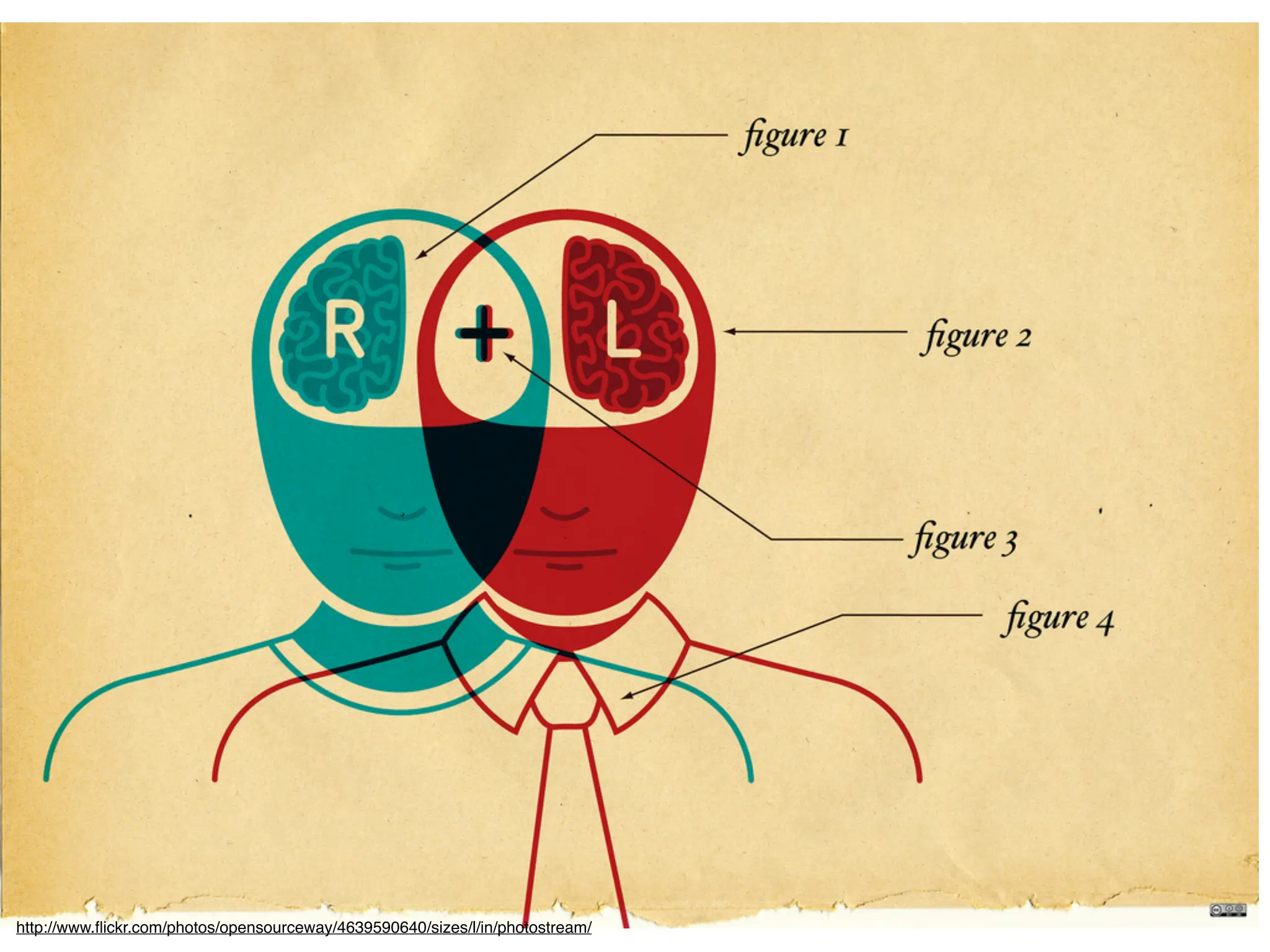
http://www.๏ฌ‚ickr.com/photos/opensourceway/4639590640/sizes/l/in/photostream/
The only important
thing about design is
how it relates to
people.
Victor Papanek
Design for the Real World: Human Ecology and Social Change (1971)
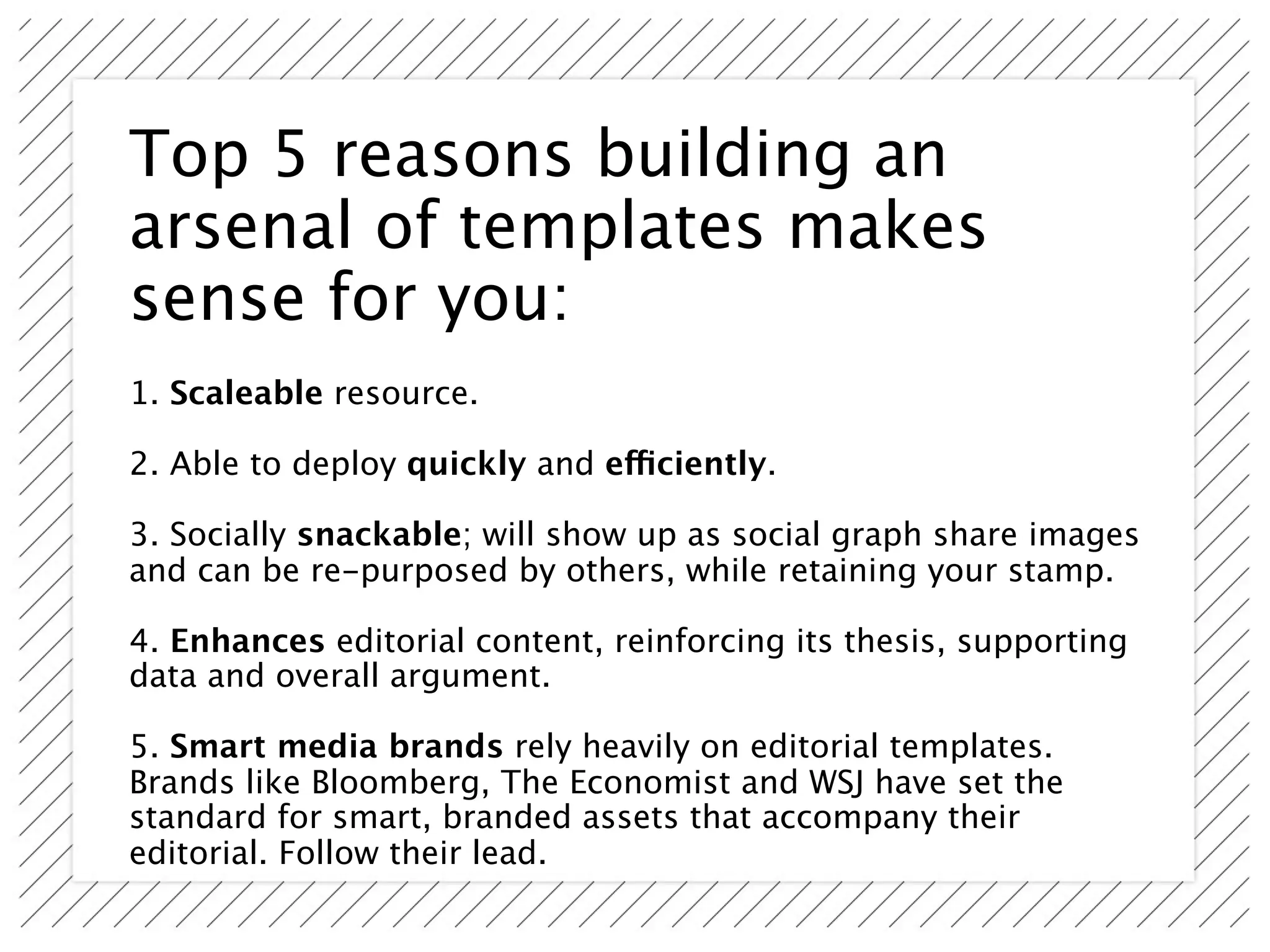
Top 5 reasons building an
arsenal of templates makes
sense for you:
1. Scaleable resource.

2. Able to deploy quickly and efficiently.

3. Socially snackable; will show up as social graph share images
and can be re-purposed by others, while retaining your stamp.

4. Enhances editorial content, reinforcing its thesis, supporting
data and overall argument.

5. Smart media brands rely heavily on editorial templates.
Brands like Bloomberg, The Economist and WSJ have set the
standard for smart, branded assets that accompany their
editorial. Follow their lead.
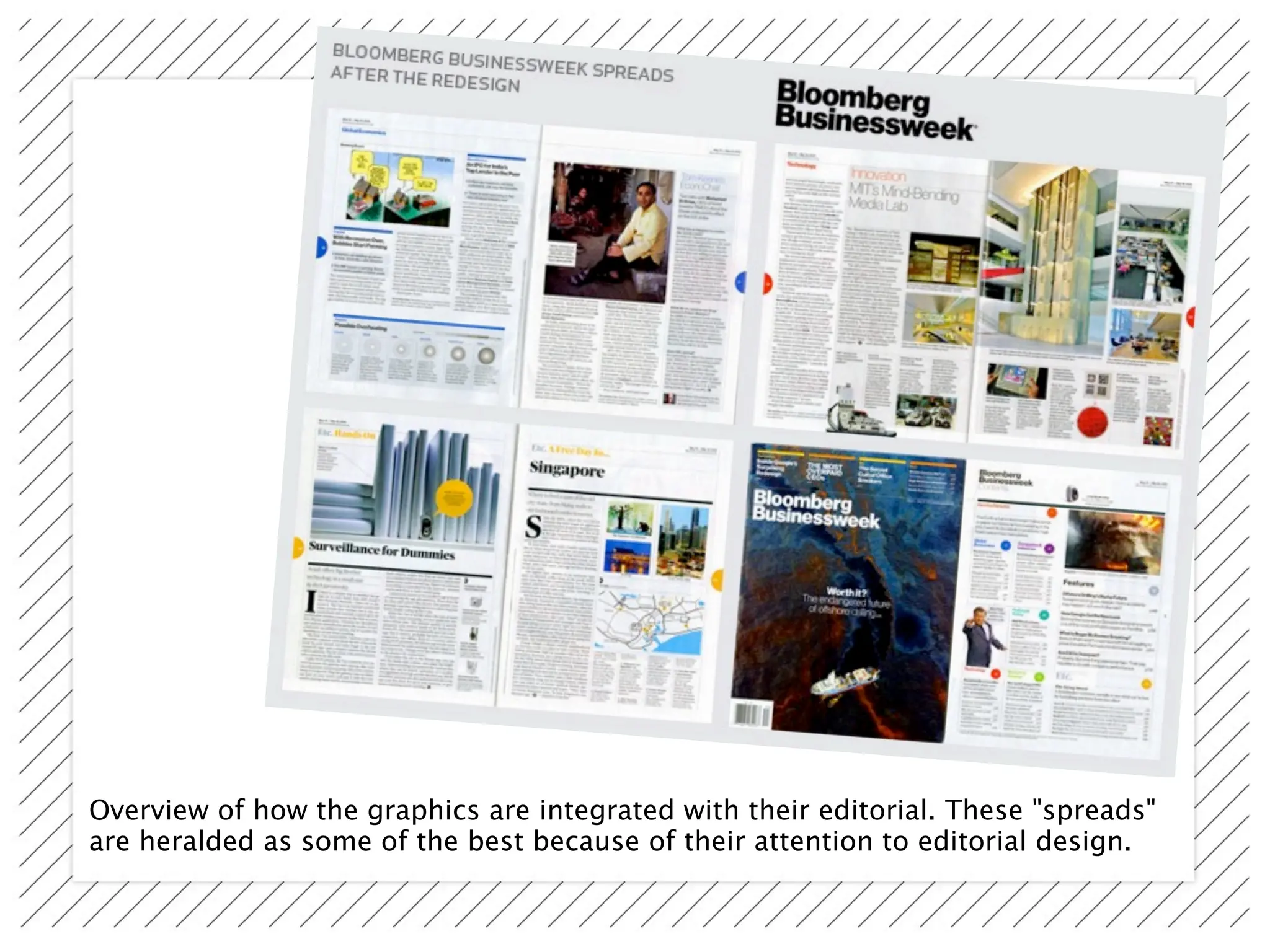
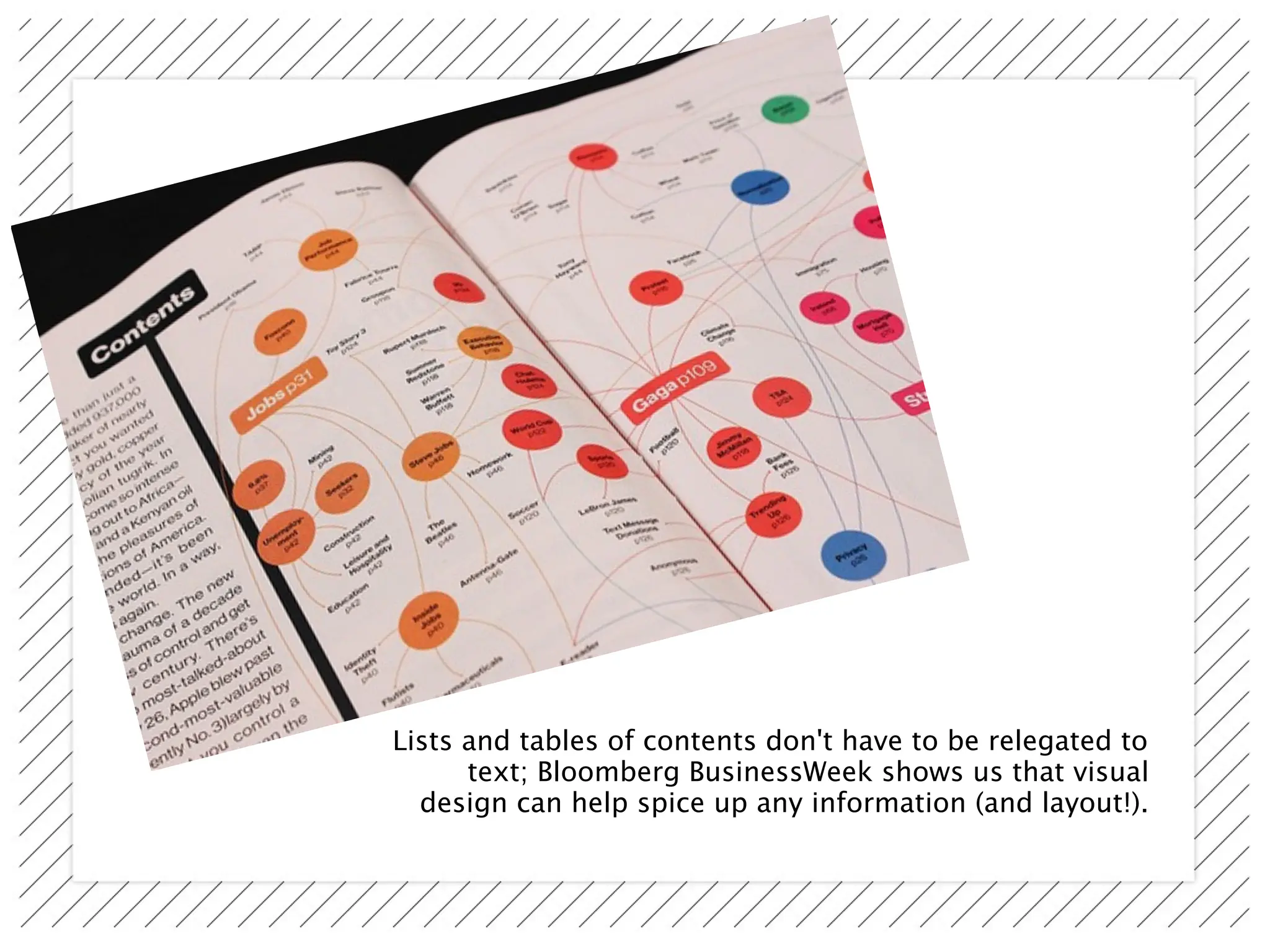
Overview of how the graphics are integrated with their editorial. These "spreads"
are heralded as some of the best because of their attention to editorial design.
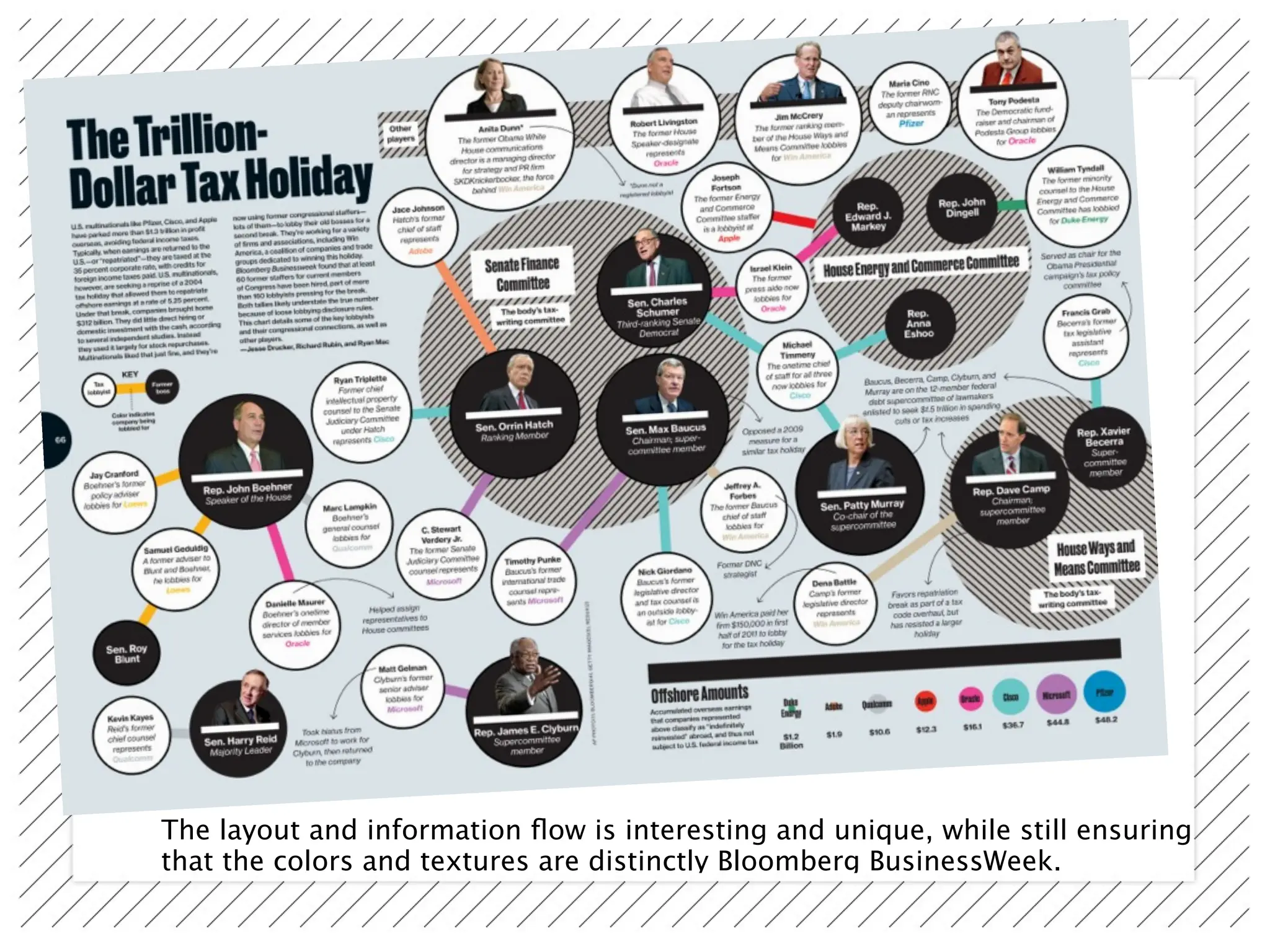
The layout and information ๏ฌ‚ow is interesting and unique, while still ensuring
that the colors and textures are distinctly Bloomberg BusinessWeek.
Lists and tables of contents don't have to be relegated to
      text; Bloomberg BusinessWeek shows us that visual
  design can help spice up any information (and layout!).
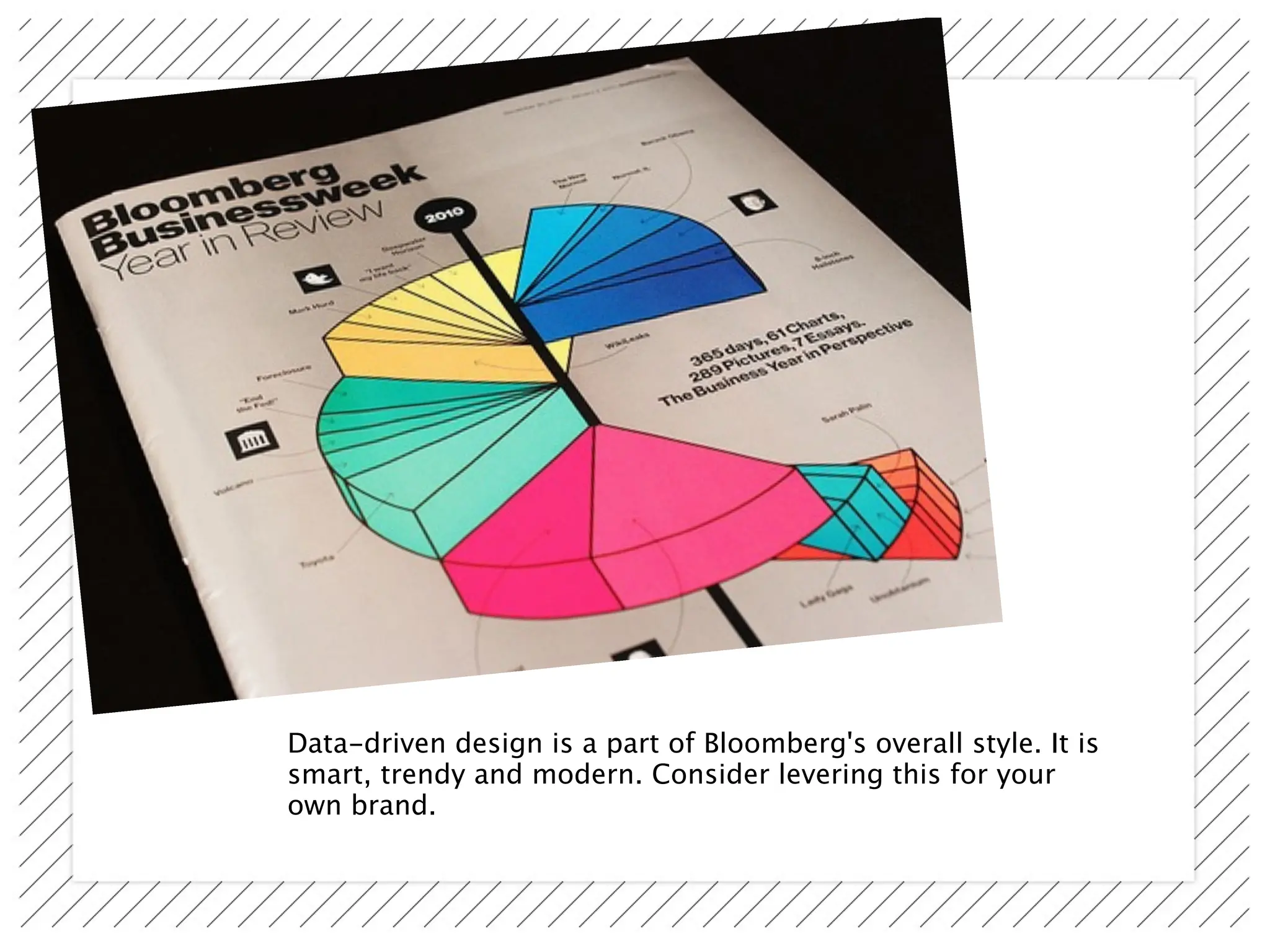
Data-driven design is a part of Bloomberg's overall style. It is
smart, trendy and modern. Consider levering this for your
own brand.
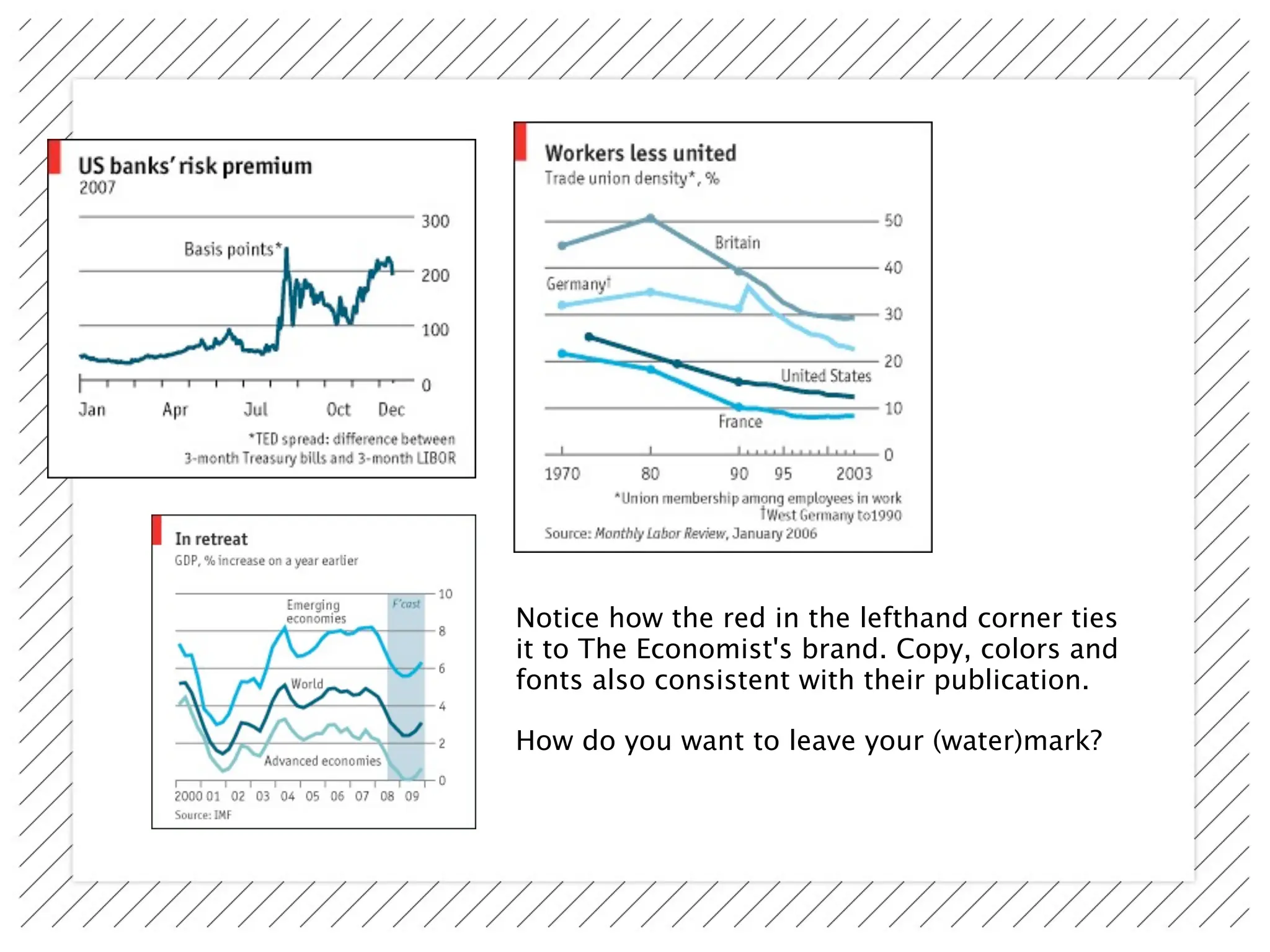
Notice how the red in the lefthand corner ties
it to The Economist's brand. Copy, colors and
fonts also consistent with their publication.

How do you want to leave your (water)mark?
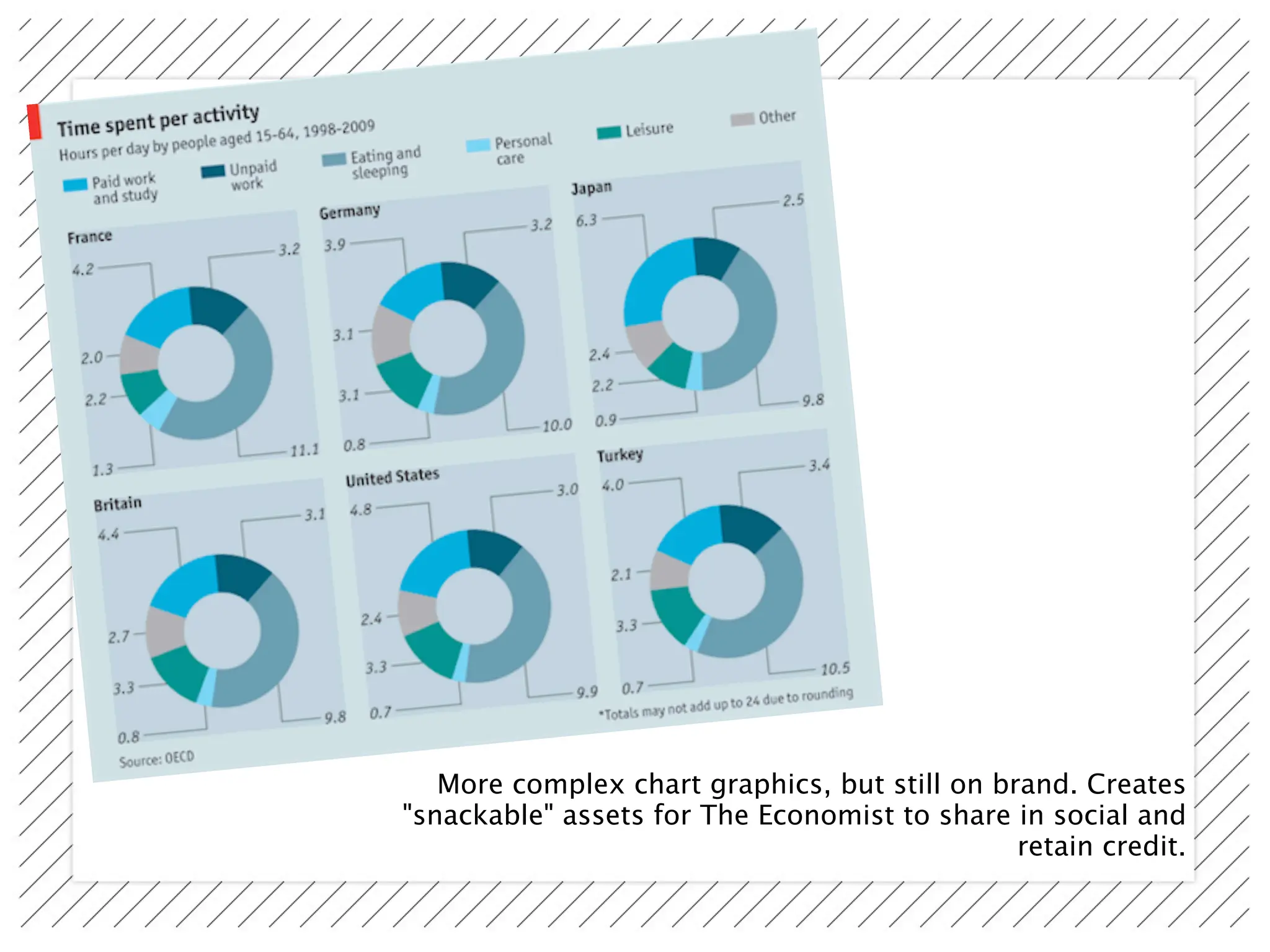
More complex chart graphics, but still on brand. Creates
"snackable" assets for The Economist to share in social and
                                               retain credit.
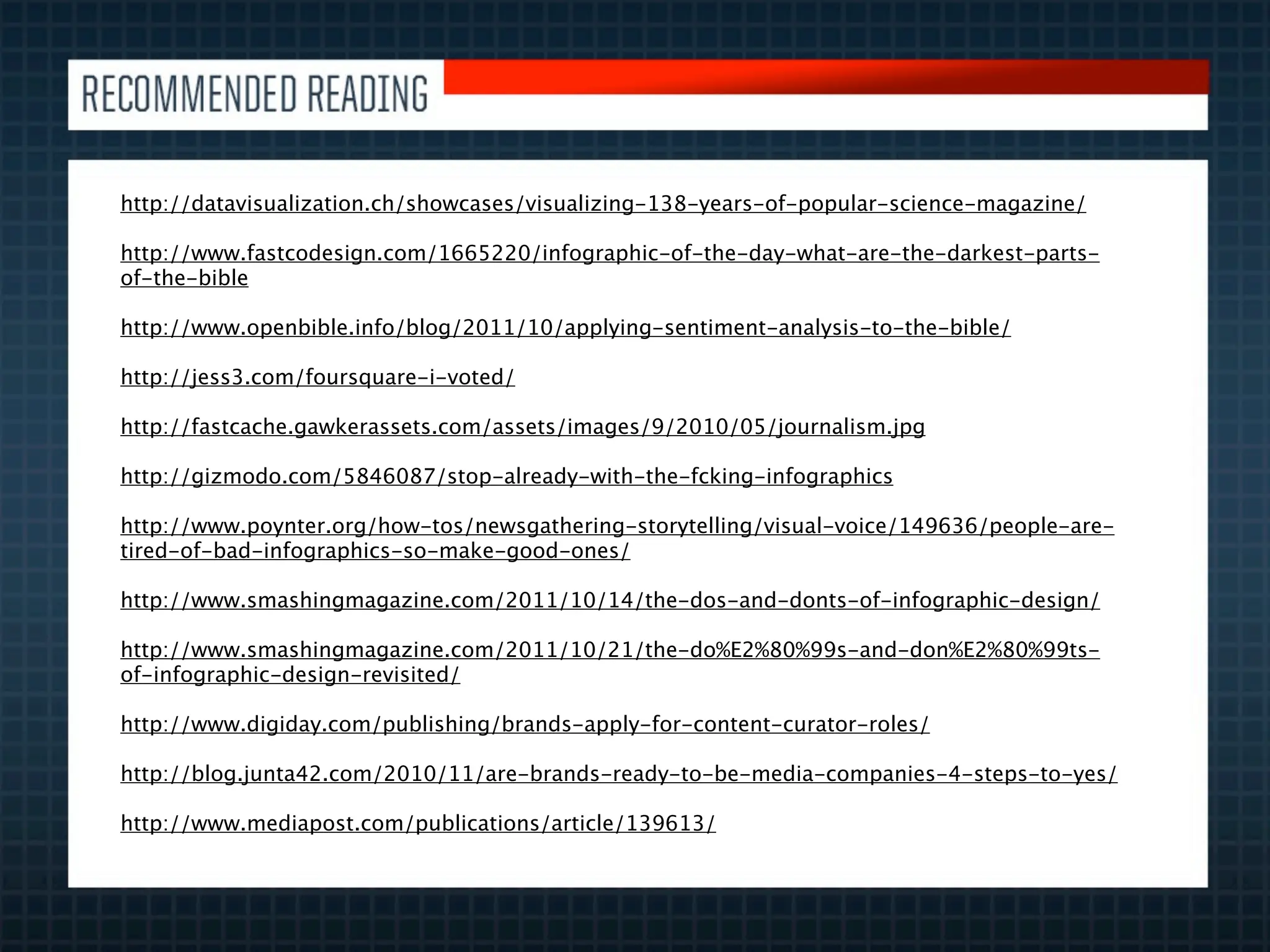
http://datavisualization.ch/showcases/visualizing-138-years-of-popular-science-magazine/

http://www.fastcodesign.com/1665220/infographic-of-the-day-what-are-the-darkest-parts-
of-the-bible

http://www.openbible.info/blog/2011/10/applying-sentiment-analysis-to-the-bible/

http://jess3.com/foursquare-i-voted/

http://fastcache.gawkerassets.com/assets/images/9/2010/05/journalism.jpg

http://gizmodo.com/5846087/stop-already-with-the-fcking-infographics

http://www.poynter.org/how-tos/newsgathering-storytelling/visual-voice/149636/people-are-
tired-of-bad-infographics-so-make-good-ones/

http://www.smashingmagazine.com/2011/10/14/the-dos-and-donts-of-infographic-design/

http://www.smashingmagazine.com/2011/10/21/the-do%E2%80%99s-and-don%E2%80%99ts-
of-infographic-design-revisited/

http://www.digiday.com/publishing/brands-apply-for-content-curator-roles/

http://blog.junta42.com/2010/11/are-brands-ready-to-be-media-companies-4-steps-to-yes/

http://www.mediapost.com/publications/article/139613/
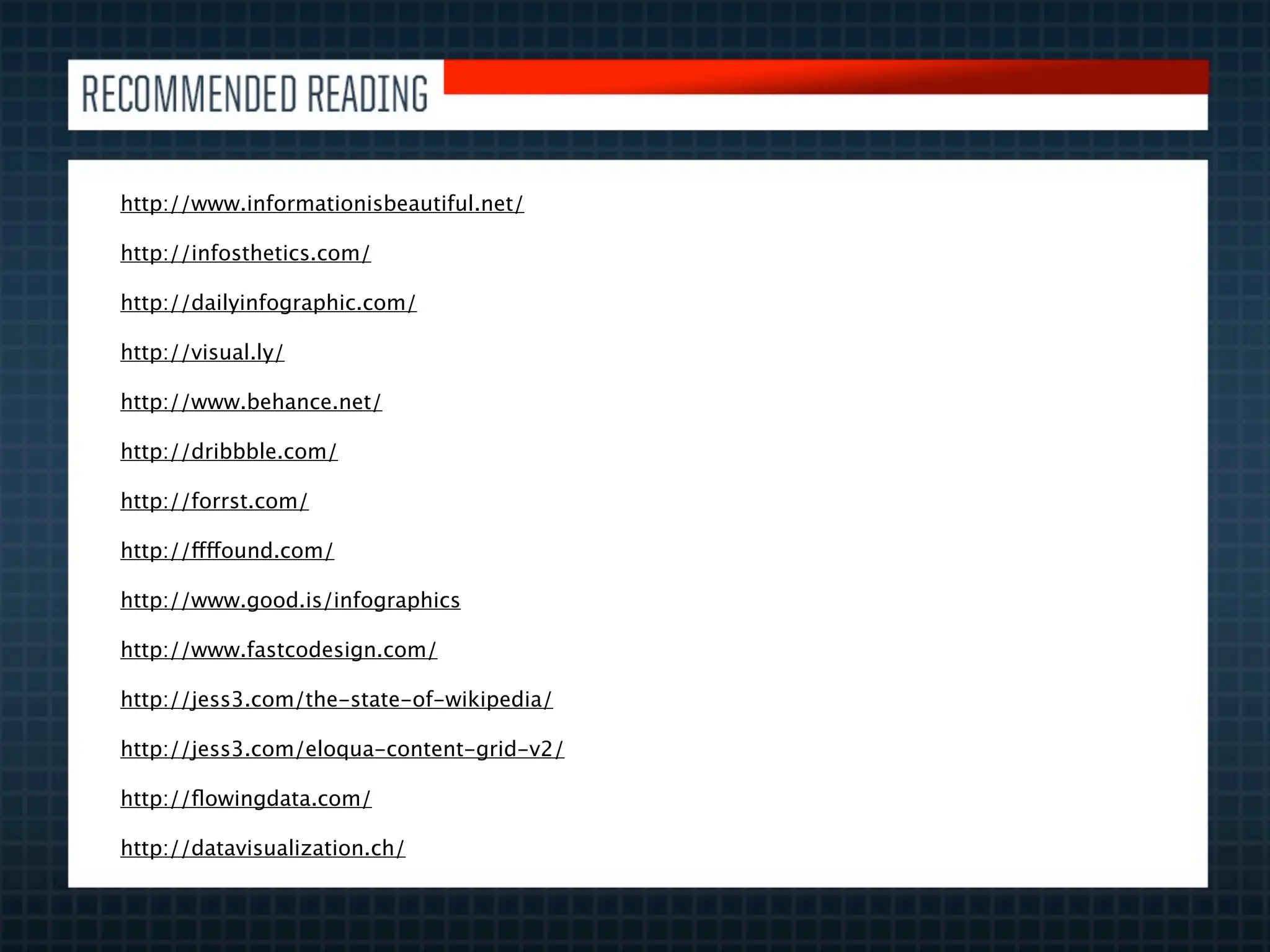
http://www.informationisbeautiful.net/

http://infosthetics.com/

http://dailyinfographic.com/

http://visual.ly/

http://www.behance.net/

http://dribbble.com/

http://forrst.com/

http://ffffound.com/

http://www.good.is/infographics

http://www.fastcodesign.com/

http://jess3.com/the-state-of-wikipedia/

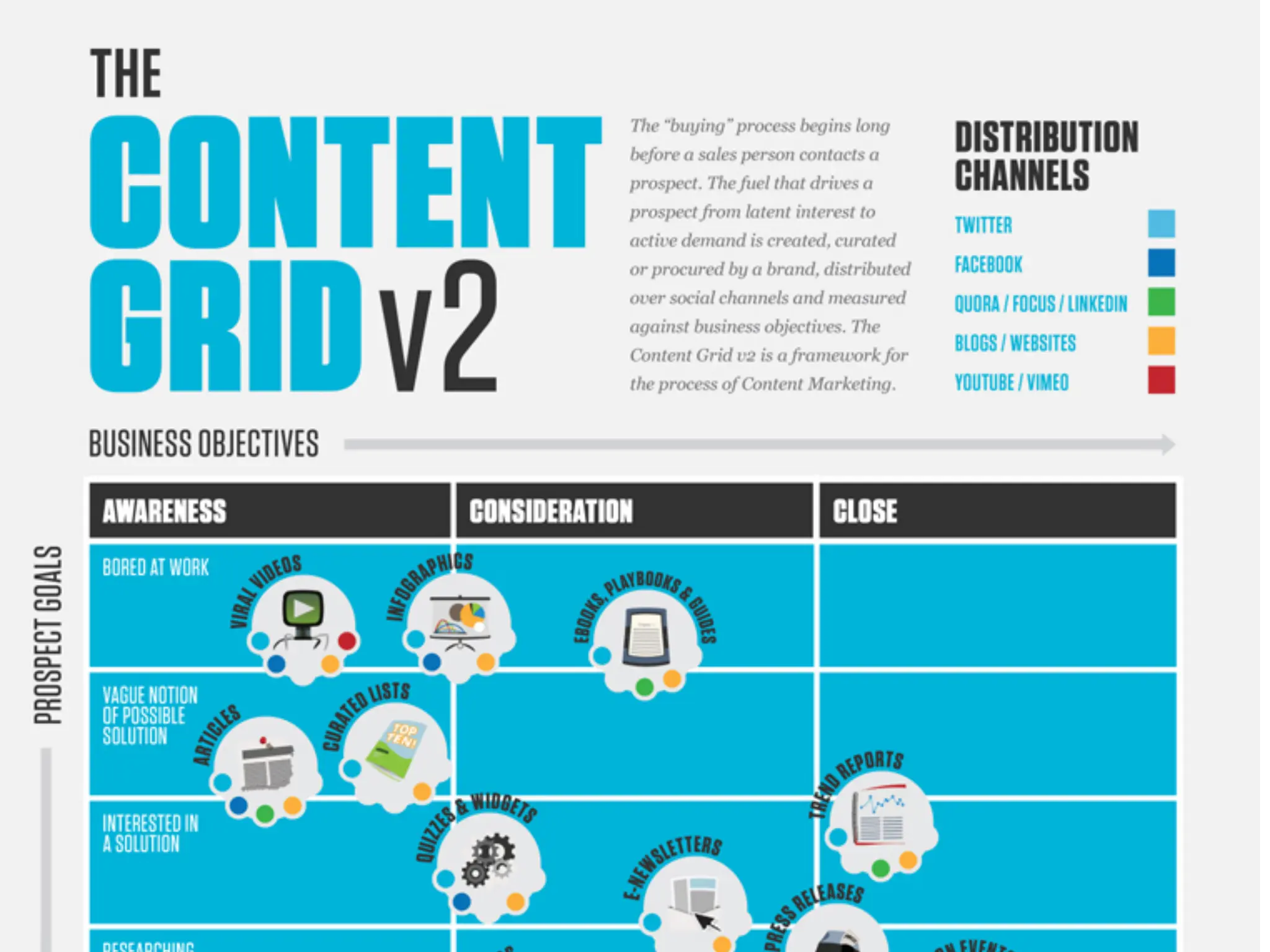
http://jess3.com/eloqua-content-grid-v2/

http://๏ฌ‚owingdata.com/

http://datavisualization.ch/
Big Data: The Next Frontier for Innovation, Competition and Productivity
http://www.mckinsey.com/mgi/publications/big_data/pdfs/MGI_big_data_full_report.pdf

New Ways to Exploit Raw Data May Bring Surge of Innovation, a Study Says
http://www.nytimes.com/2011/05/13/technology/13data.html?_r=2

For Todayโ€™s Graduate, Just One Word: Statistics
http://www.nytimes.com/2009/08/06/technology/06stats.html

Creative Internet by Google Creative Labs
http://bit.ly/creativeinternet

Have You Restructured for Global Success?
http://hbr.org/2011/10/have-you-restructured-for-global-success/ar/1

How Much Data Will Humans Create & Store This Year? [INFOGRAPHIC]
http://mashable.com/2011/06/28/data-infographic/

FFunction - What is Data Visualization
http://blog.ffctn.com/what-is-data-visualization

Hal Varian on how the Web challenges managers
http://www.mckinseyquarterly.com/Hal_Varian_on_how_the_Web_challenges_managers_2286

Eric Schmidt: Every 2 Days We Create As Much Information As We Did Up To 2003
http://techcrunch.com/2010/08/04/schmidt-data/

The Practitioner's Guide to Creating Content Like a Publisher