Emerging Learning Technologies: Blackboard and Beyondhttp://www.youtube.com/watch?v=dGCJ46vyR9oFacilitators: Catherine Paul & Emily Renoe, UBC
IntroductionsFacilitator Bios: Emily + CatherineIntroduce yourself to your colleagues next to you:What does emerging learning technologies mean to you?Why should you care about emerging learning technologies?
DiscussionsWhat Emerging Technologies (ETs) are you currently using in your courses? Remember ETs can be anything…. i.e.Abacus? Crayons? Social media tools like Twitter? Facebook?
Our TimelineIntroductions – 20 minDiscussions and definitions – 40 minCase Studies (tool demo) – 45 minGroup Activity – 45 minSharing and wrap-up – 30 minutes
ObjectivesUpon completion of this workshop, participants will:Reflect upon the results of using learning technology in instruction and consider ways to adapt lessons accordinglyBe able to discuss advantages and disadvantages and prospects of using learning technology in your teaching practiceConsider ways of incorporating learning technology  into your Blackboard or other CMS course.Learn one thing that you didn't expect to learn.
What are Learning Technologies?A few definitions:…learning technologies encompasses information and instructional technology, as well as communications tools, applications and systems that support learning. –educauseLearning technology- also known variously as e-learning, instructional technology and educational technology, is the use of technology to support the learning process. – educause
Resources Horizon Report - UK JISC – Joint Information Systems Committee - UK
Use of Learning Technologies in Higher Ed NowUsing collaborative learning technologies (Web 2.0) leads to development of a new sense of communities of interest and networks, and also of a clear notion of boundaries in web space.Advice and guidance is available to institutions, but there is no blueprint for implementation of Web 2.0 technologies, and each is currently deciding its own pathDeployment of learning technologies is in no way systematic and the drive is principally bottom up, coming from the professional interest and enthusiasm of individual members of staff 
What is Blackboard?Learning Management System (LMS) resources for students to access online.
PDFs, powerpoint, video, audio, and other applications are created outside of Blackboard Blackboard is a tool that allows faculty to add and added into Blackboard courses for students to enhance teaching and learning efforts.How can I use Blackboard?Deliver “hybrid” courses
Simultaneously face-2-face and have a web-presence
Deliver fully online courses
Distance learning coursesBenefits to LearnersExtend faculty-student interaction opportunities
Learners can explore subjects in greater depth
Learners can study the material on their own time
Learning not bound by the “physical” classroomHow Can I Use Blackboard?Post course content, syllabus, videos and more
Communicate using announcements, email and online discussions
Assess student learning with online quizzes and homework assignments
Gradebook
Link to external web content Pros and Cons of BBWhat do you think the advantages/disadvantages of using BB are?“Many of the benefits of institutional learning can now be enhanced using social media.”  - Educause presentation 2009
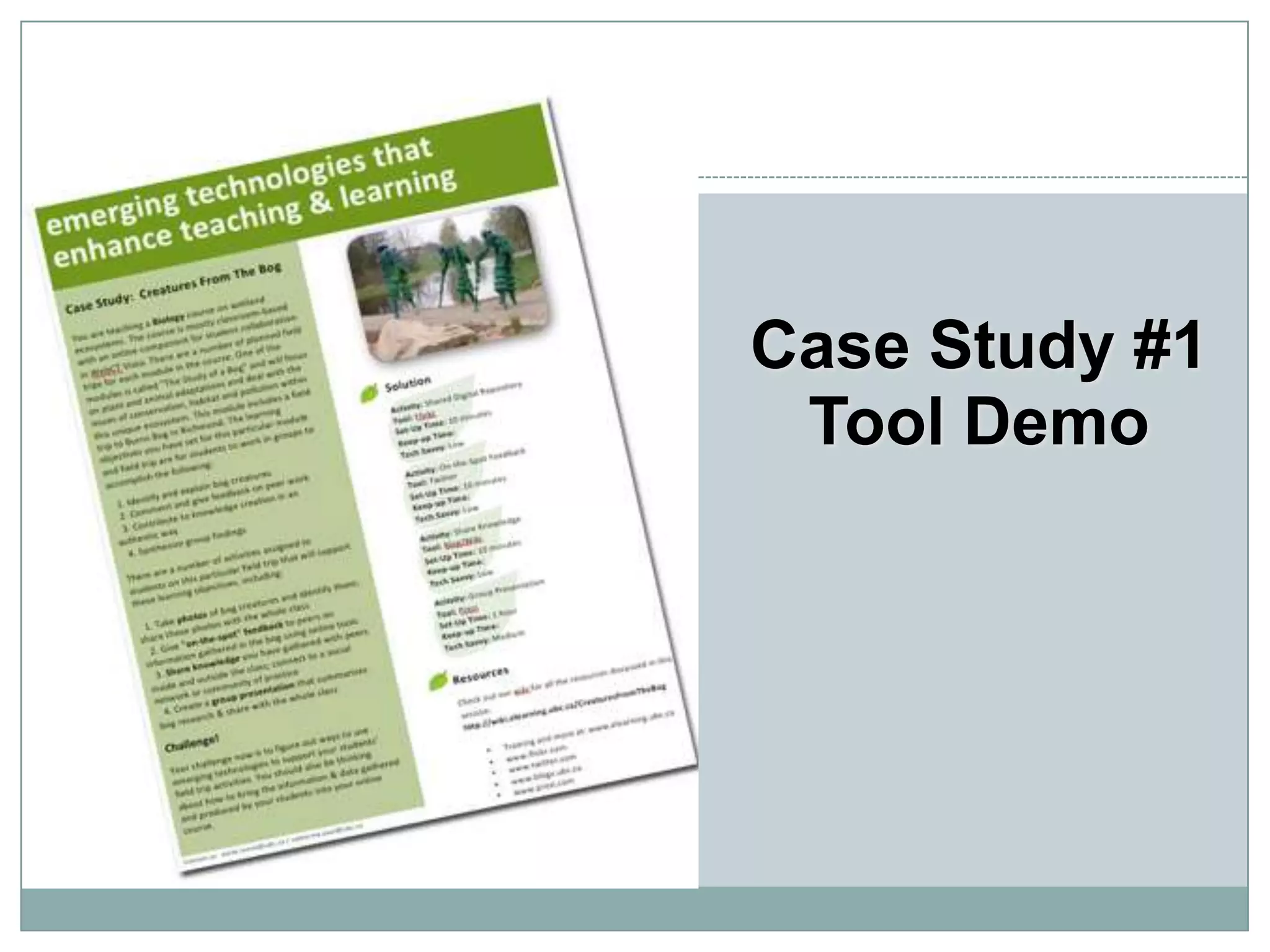
Case Study #1 Tool Demo
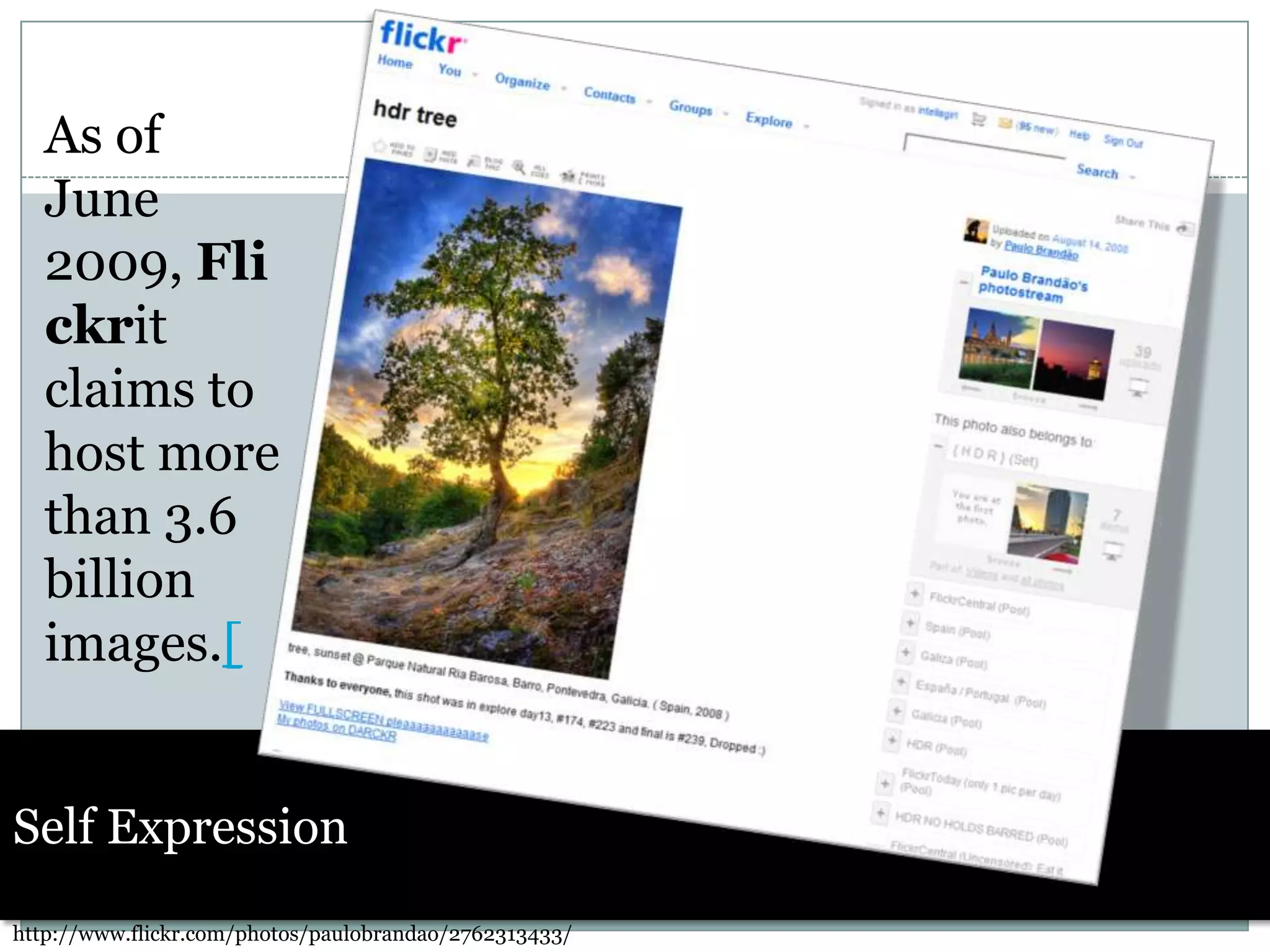
As of June 2009, Flickrit claims to host more than 3.6 billion images.[Self Expressionhttp://www.flickr.com/photos/paulobrandao/2762313433/
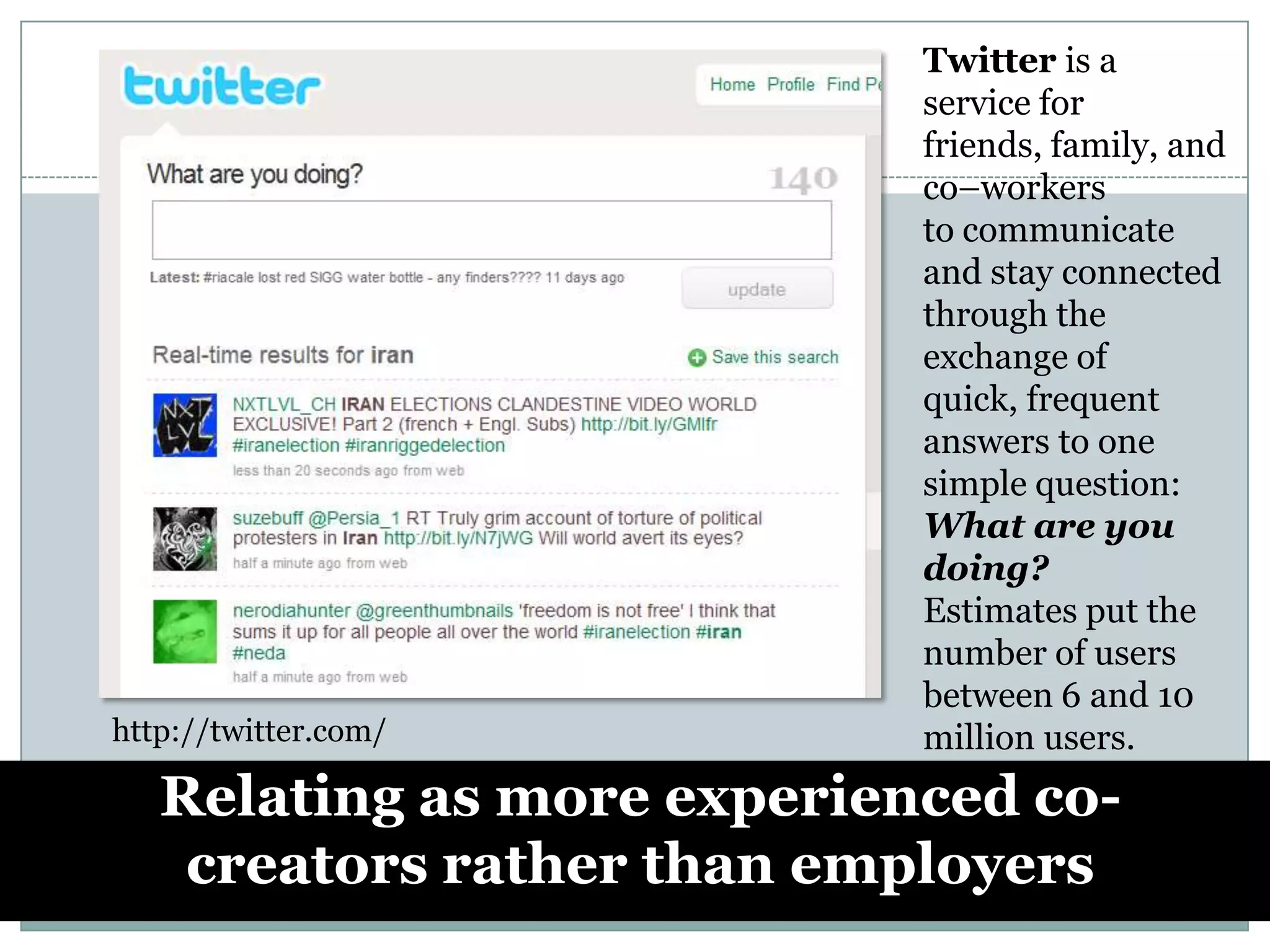
Twitter is a service for friends, family, and co–workers to communicate and stay connected through the exchange of quick, frequent answers to one simple question: What are you doing?Estimates put the number of users between 6 and 10 million users.http://twitter.com/Relating as more experienced co-creators rather than employers
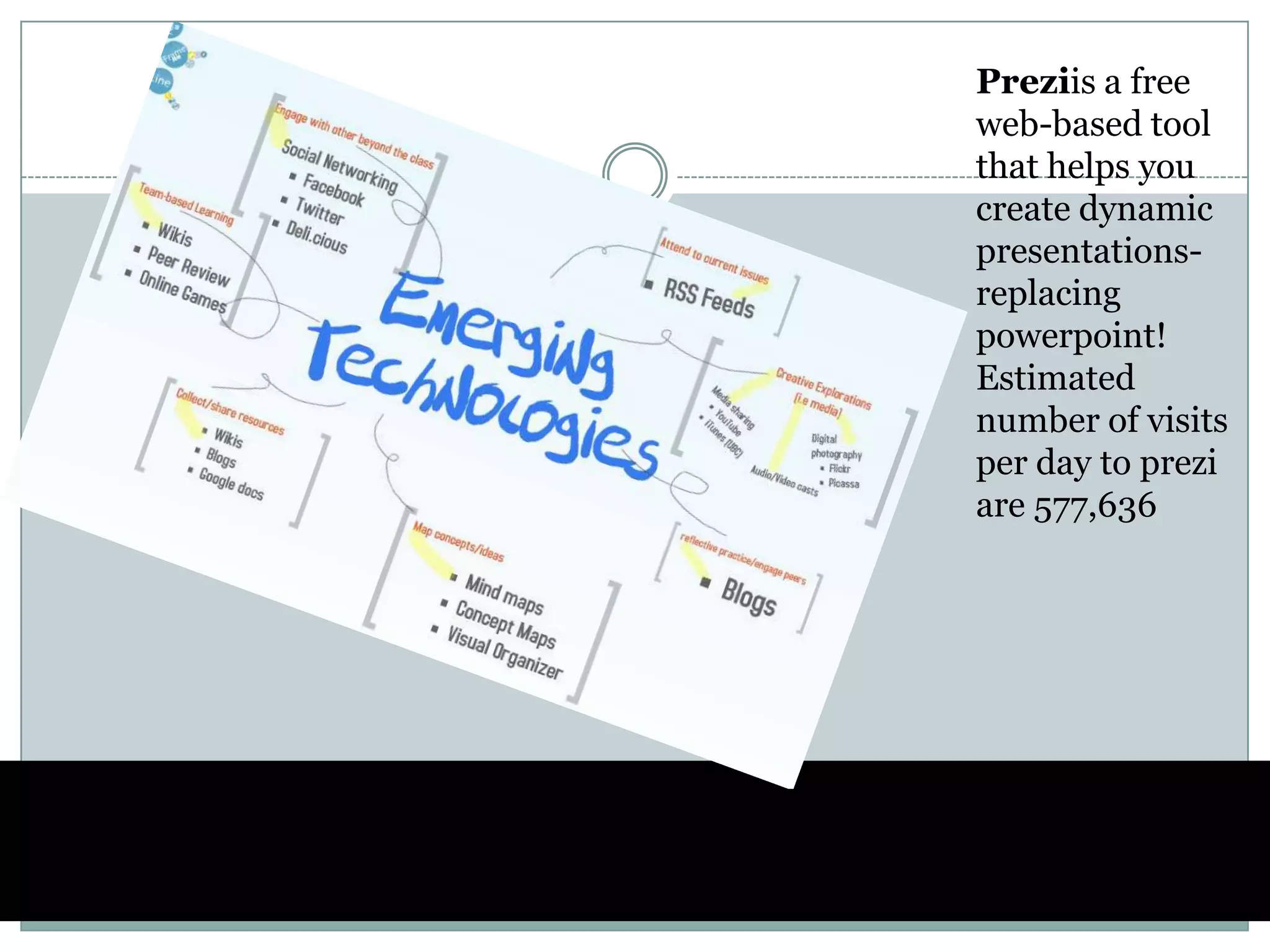
Preziis a free web-based tool  that helps you create dynamic presentations- replacing powerpoint! Estimated number of visits per day to prezi are 577,636
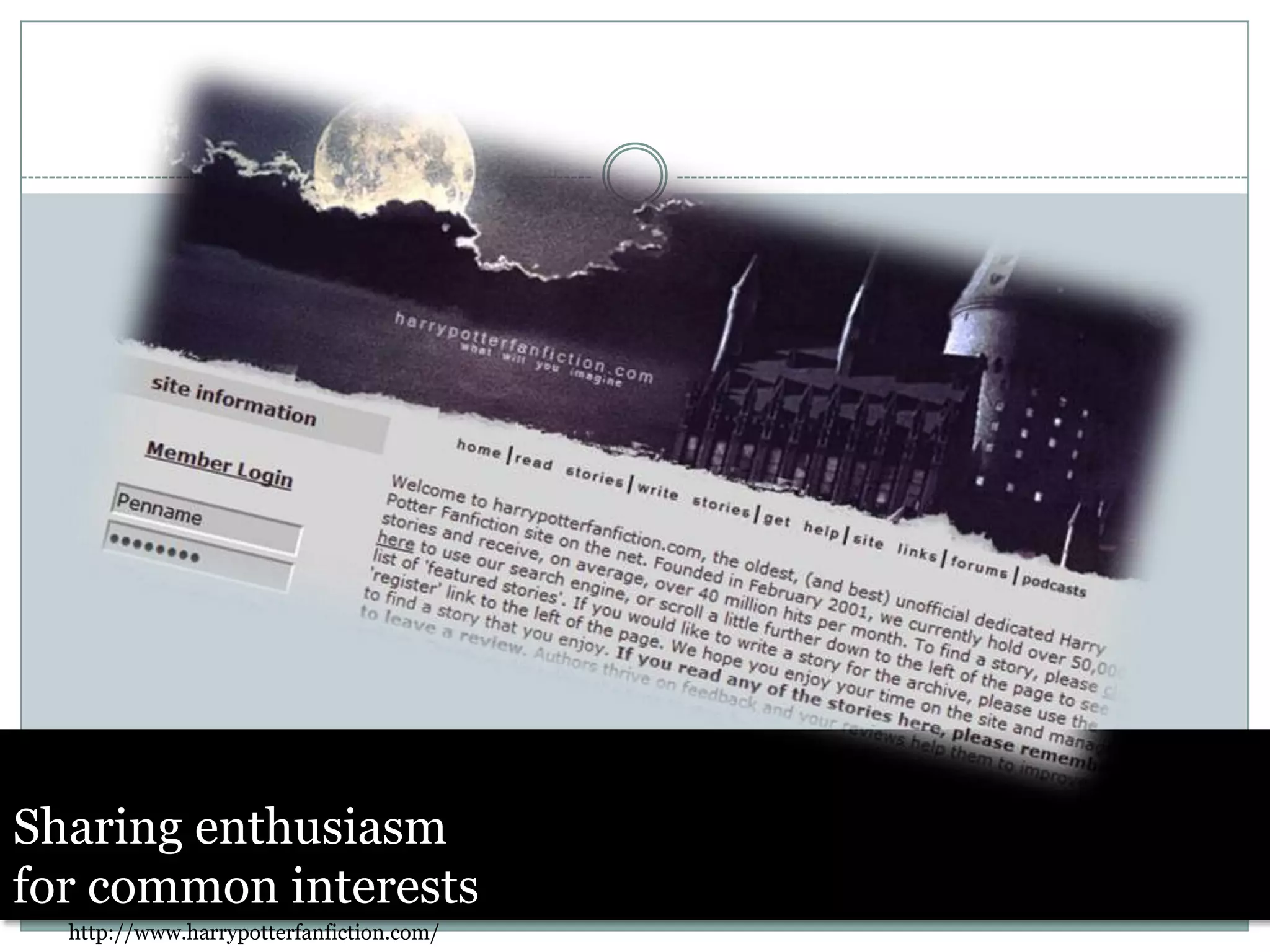
Sharing enthusiasm for common interestshttp://www.harrypotterfanfiction.com/
ContactsCatherine Paul catherine.paul@ubc.caTwitter catherinepaulFacebook: catherine.paul@gmail.comEmily Renoe   emily.renoe@ubc.caTwitter: emilyrFacebook: emilyrenoehttp://wiki.ubc.ca/EmergingTech
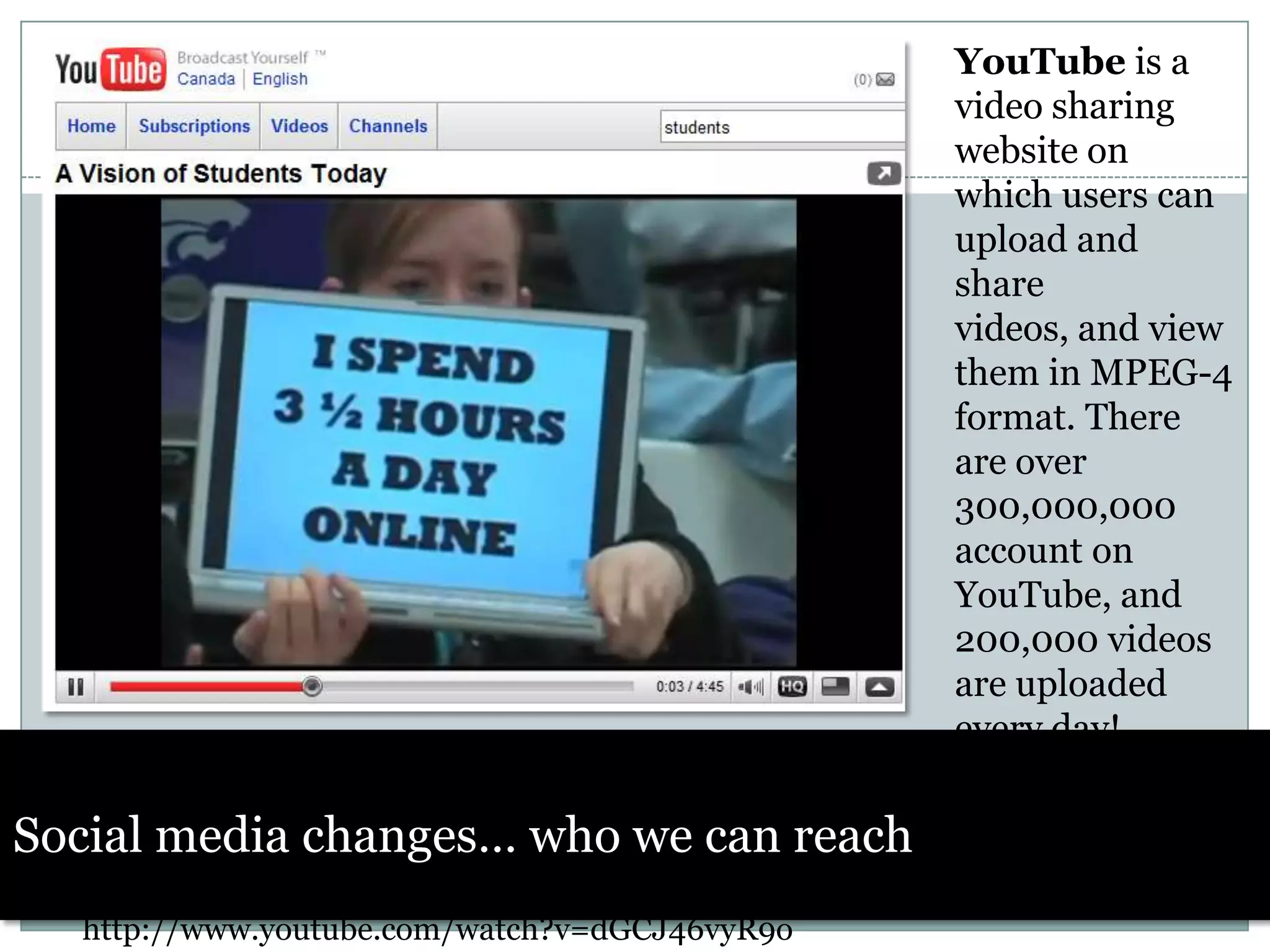
YouTube is a video sharing website on which users can upload and share videos, and view them in MPEG-4 format. There are over 300,000,000 account on YouTube, and 200,000 videos are uploaded every day! Social media changes… who we can reachhttp://www.youtube.com/watch?v=dGCJ46vyR9o

Emerging Learning Spaces: Blackboard and Beyond

  • 1.
    Emerging Learning Technologies:Blackboard and Beyondhttp://www.youtube.com/watch?v=dGCJ46vyR9oFacilitators: Catherine Paul & Emily Renoe, UBC
  • 2.
    IntroductionsFacilitator Bios: Emily+ CatherineIntroduce yourself to your colleagues next to you:What does emerging learning technologies mean to you?Why should you care about emerging learning technologies?
  • 3.
    DiscussionsWhat Emerging Technologies(ETs) are you currently using in your courses? Remember ETs can be anything…. i.e.Abacus? Crayons? Social media tools like Twitter? Facebook?
  • 4.
    Our TimelineIntroductions –20 minDiscussions and definitions – 40 minCase Studies (tool demo) – 45 minGroup Activity – 45 minSharing and wrap-up – 30 minutes
  • 5.
    ObjectivesUpon completion ofthis workshop, participants will:Reflect upon the results of using learning technology in instruction and consider ways to adapt lessons accordinglyBe able to discuss advantages and disadvantages and prospects of using learning technology in your teaching practiceConsider ways of incorporating learning technology  into your Blackboard or other CMS course.Learn one thing that you didn't expect to learn.
  • 6.
    What are LearningTechnologies?A few definitions:…learning technologies encompasses information and instructional technology, as well as communications tools, applications and systems that support learning. –educauseLearning technology- also known variously as e-learning, instructional technology and educational technology, is the use of technology to support the learning process. – educause
  • 7.
    Resources Horizon Report- UK JISC – Joint Information Systems Committee - UK
  • 8.
    Use of LearningTechnologies in Higher Ed NowUsing collaborative learning technologies (Web 2.0) leads to development of a new sense of communities of interest and networks, and also of a clear notion of boundaries in web space.Advice and guidance is available to institutions, but there is no blueprint for implementation of Web 2.0 technologies, and each is currently deciding its own pathDeployment of learning technologies is in no way systematic and the drive is principally bottom up, coming from the professional interest and enthusiasm of individual members of staff 
  • 9.
    What is Blackboard?LearningManagement System (LMS) resources for students to access online.
  • 10.
    PDFs, powerpoint, video,audio, and other applications are created outside of Blackboard Blackboard is a tool that allows faculty to add and added into Blackboard courses for students to enhance teaching and learning efforts.How can I use Blackboard?Deliver “hybrid” courses
  • 11.
  • 12.
  • 13.
    Distance learning coursesBenefitsto LearnersExtend faculty-student interaction opportunities
  • 14.
    Learners can exploresubjects in greater depth
  • 15.
    Learners can studythe material on their own time
  • 16.
    Learning not boundby the “physical” classroomHow Can I Use Blackboard?Post course content, syllabus, videos and more
  • 17.
    Communicate using announcements,email and online discussions
  • 18.
    Assess student learningwith online quizzes and homework assignments
  • 19.
  • 20.
    Link to externalweb content Pros and Cons of BBWhat do you think the advantages/disadvantages of using BB are?“Many of the benefits of institutional learning can now be enhanced using social media.” - Educause presentation 2009
  • 21.
    Case Study #1Tool Demo
  • 22.
    As of June2009, Flickrit claims to host more than 3.6 billion images.[Self Expressionhttp://www.flickr.com/photos/paulobrandao/2762313433/
  • 23.
    Twitter is aservice for friends, family, and co–workers to communicate and stay connected through the exchange of quick, frequent answers to one simple question: What are you doing?Estimates put the number of users between 6 and 10 million users.http://twitter.com/Relating as more experienced co-creators rather than employers
  • 24.
    Preziis a freeweb-based tool that helps you create dynamic presentations- replacing powerpoint! Estimated number of visits per day to prezi are 577,636
  • 25.
    Sharing enthusiasm forcommon interestshttp://www.harrypotterfanfiction.com/
  • 26.
    ContactsCatherine Paul catherine.paul@ubc.caTwittercatherinepaulFacebook: catherine.paul@gmail.comEmily Renoe emily.renoe@ubc.caTwitter: emilyrFacebook: emilyrenoehttp://wiki.ubc.ca/EmergingTech
  • 27.
    YouTube is avideo sharing website on which users can upload and share videos, and view them in MPEG-4 format. There are over 300,000,000 account on YouTube, and 200,000 videos are uploaded every day! Social media changes… who we can reachhttp://www.youtube.com/watch?v=dGCJ46vyR9o
  • 28.
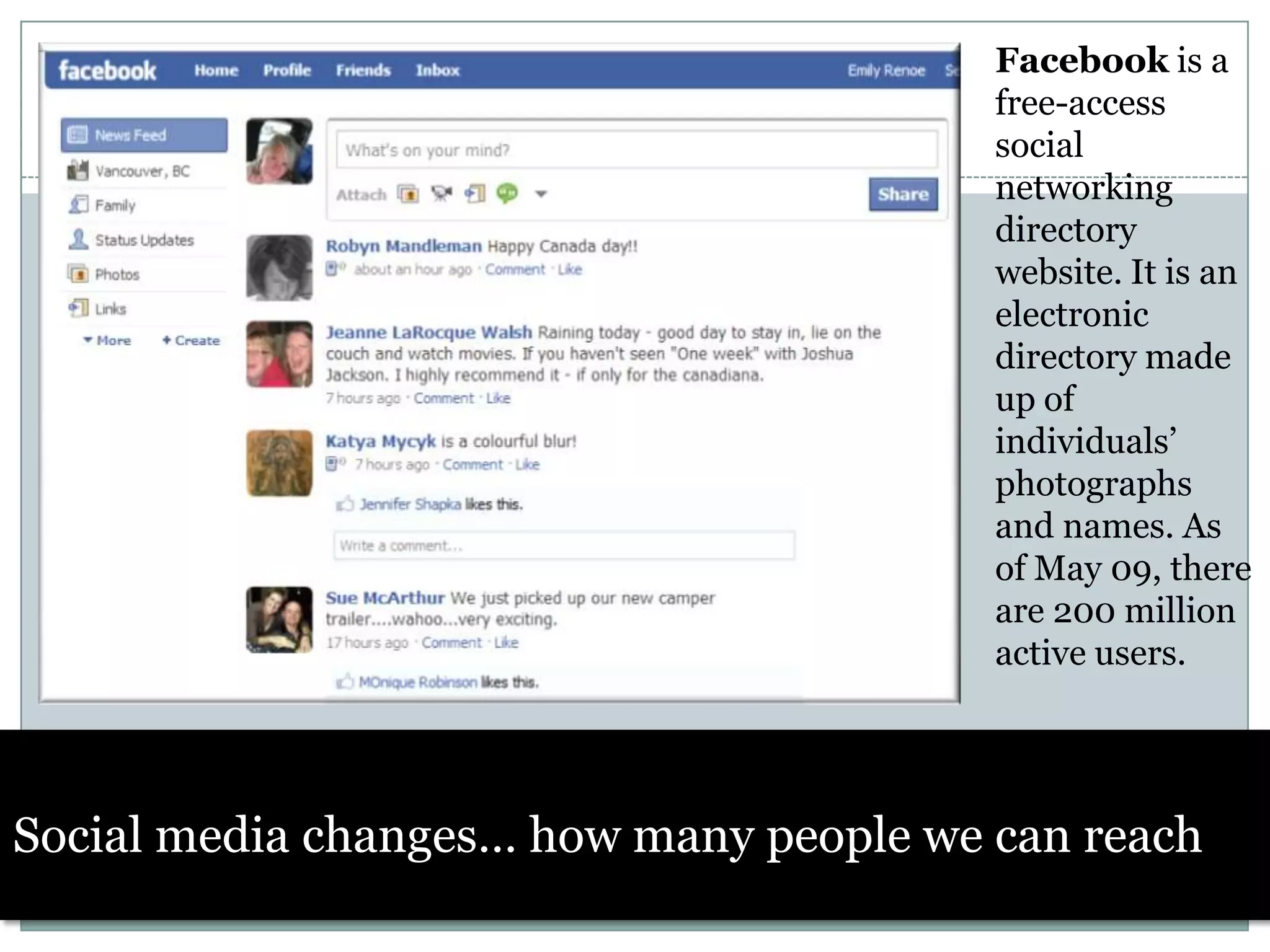
    Facebook is afree-access social networking directory website. It is an electronic directory made up of individuals’ photographs and names. As of May 09, there are 200 million active users.Social media changes… how many people we can reach
  • 29.
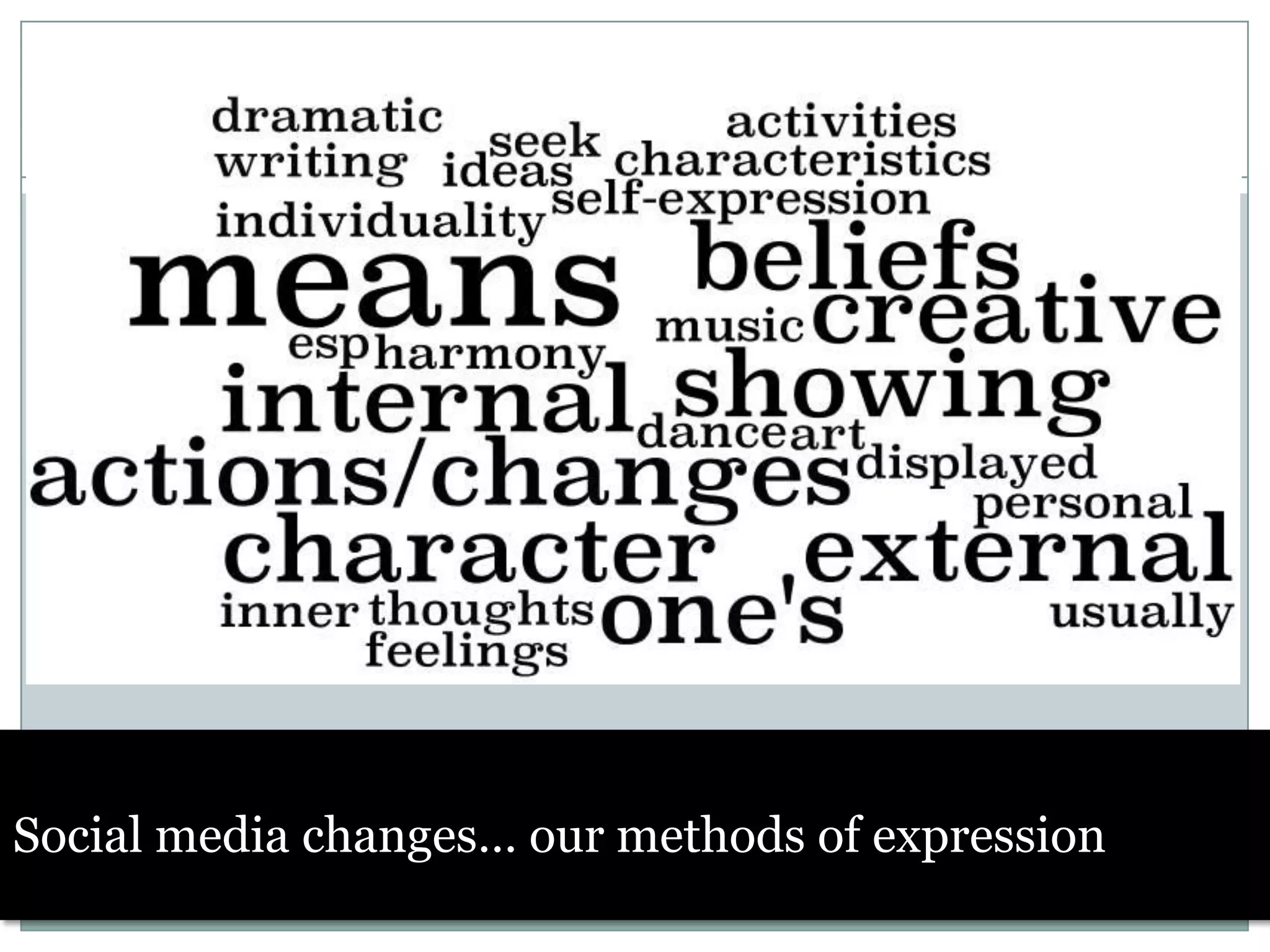
    Social media changes…our methods of expression
  • 30.
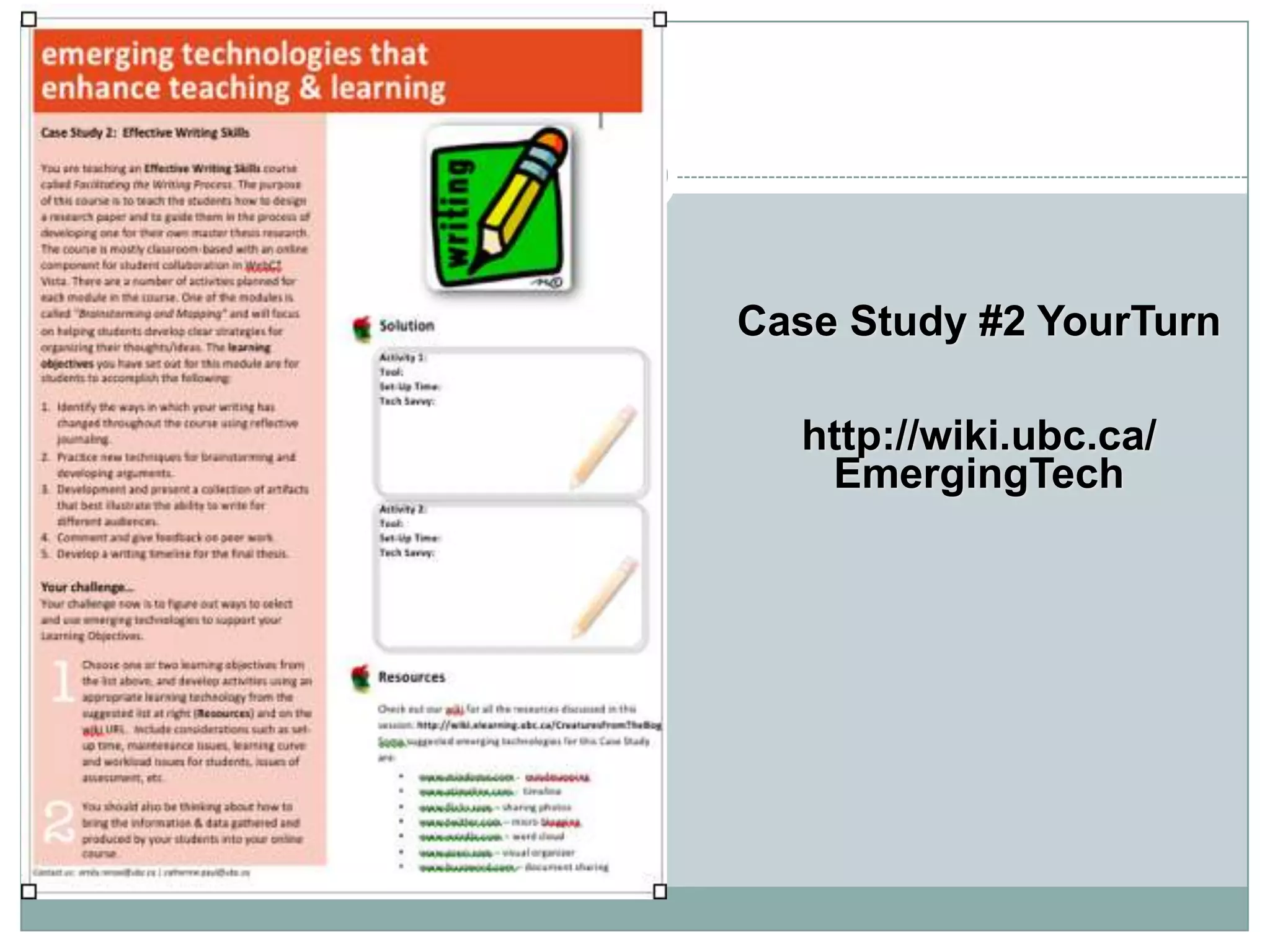
    Case Study #2YourTurnhttp://wiki.ubc.ca/EmergingTech
  • 31.
    Sharing & WrapUp Group ActivityDebriefing- Show Your StuffObjectivesUpon completion of this workshop, participants will:Reflect upon the results of using learning technology in instruction and consider ways to adapt lessons accordinglyBe able to discuss advantages and disadvantages and prospects of using learning technology in your teaching practiceConsider ways of incorporating learning technology  into your Blackboard or other CMS course.Learn one thing that you didn't expect to learn.
  • 32.
    Sharing & WrapUpA Vision of Today’s Student videowww.youtube.com