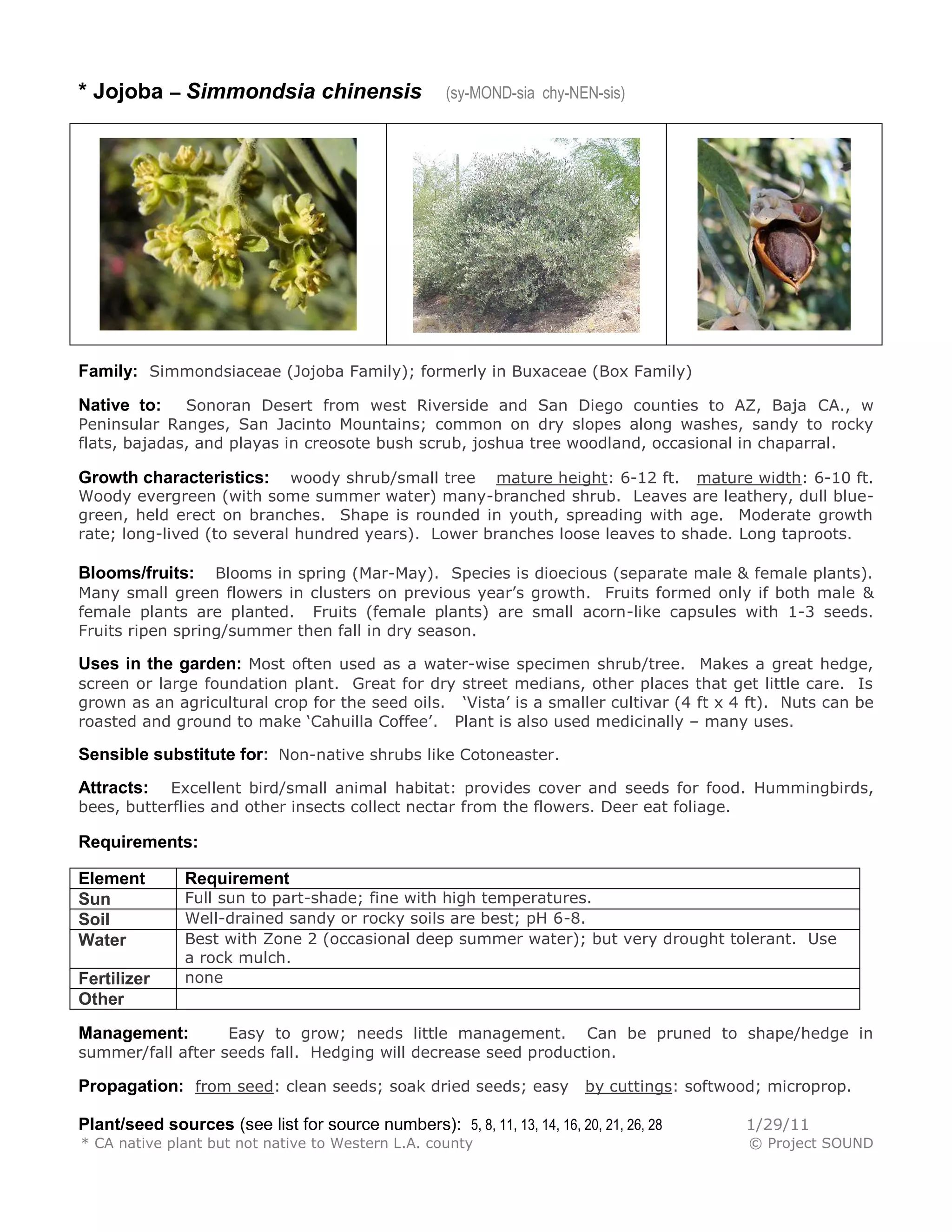
* Jojoba – Simmondsia chinensis

(sy-MOND-sia chy-NEN-sis)

Family: Simmondsiaceae (Jojoba Family); formerly in Buxaceae (Box Family)
Sonoran Desert from west Riverside and San Diego counties to AZ, Baja CA., w
Peninsular Ranges, San Jacinto Mountains; common on dry slopes along washes, sandy to rocky
flats, bajadas, and playas in creosote bush scrub, joshua tree woodland, occasional in chaparral.

Native to:

woody shrub/small tree mature height: 6-12 ft. mature width: 6-10 ft.
Woody evergreen (with some summer water) many-branched shrub. Leaves are leathery, dull bluegreen, held erect on branches. Shape is rounded in youth, spreading with age. Moderate growth
rate; long-lived (to several hundred years). Lower branches loose leaves to shade. Long taproots.

Growth characteristics:

Blooms in spring (Mar-May). Species is dioecious (separate male & female plants).
Many small green flowers in clusters on previous year’s growth. Fruits formed only if both male &
female plants are planted. Fruits (female plants) are small acorn-like capsules with 1-3 seeds.
Fruits ripen spring/summer then fall in dry season.

Blooms/fruits:

Uses in the garden: Most often used as a water-wise specimen shrub/tree. Makes a great hedge,
screen or large foundation plant. Great for dry street medians, other places that get little care. Is
grown as an agricultural crop for the seed oils. ‘Vista’ is a smaller cultivar (4 ft x 4 ft). Nuts can be
roasted and ground to make ‘Cahuilla Coffee’. Plant is also used medicinally – many uses.

Sensible substitute for: Non-native shrubs like Cotoneaster.
Excellent bird/small animal habitat: provides cover and seeds for food. Hummingbirds,
bees, butterflies and other insects collect nectar from the flowers. Deer eat foliage.

Attracts:

Requirements:
Element
Sun
Soil
Water
Fertilizer
Other

Requirement

Full sun to part-shade; fine with high temperatures.
Well-drained sandy or rocky soils are best; pH 6-8.
Best with Zone 2 (occasional deep summer water); but very drought tolerant. Use
a rock mulch.
none

Easy to grow; needs little management. Can be pruned to shape/hedge in
summer/fall after seeds fall. Hedging will decrease seed production.

Management:

Propagation: from seed: clean seeds; soak dried seeds; easy by cuttings: softwood; microprop.
Plant/seed sources (see list for source numbers): 5, 8, 11, 13, 14, 16, 20, 21, 26, 28

1/29/11

* CA native plant but not native to Western L.A. county

© Project SOUND

Simmondsia chinensis

  • 1.
    * Jojoba –Simmondsia chinensis (sy-MOND-sia chy-NEN-sis) Family: Simmondsiaceae (Jojoba Family); formerly in Buxaceae (Box Family) Sonoran Desert from west Riverside and San Diego counties to AZ, Baja CA., w Peninsular Ranges, San Jacinto Mountains; common on dry slopes along washes, sandy to rocky flats, bajadas, and playas in creosote bush scrub, joshua tree woodland, occasional in chaparral. Native to: woody shrub/small tree mature height: 6-12 ft. mature width: 6-10 ft. Woody evergreen (with some summer water) many-branched shrub. Leaves are leathery, dull bluegreen, held erect on branches. Shape is rounded in youth, spreading with age. Moderate growth rate; long-lived (to several hundred years). Lower branches loose leaves to shade. Long taproots. Growth characteristics: Blooms in spring (Mar-May). Species is dioecious (separate male & female plants). Many small green flowers in clusters on previous year’s growth. Fruits formed only if both male & female plants are planted. Fruits (female plants) are small acorn-like capsules with 1-3 seeds. Fruits ripen spring/summer then fall in dry season. Blooms/fruits: Uses in the garden: Most often used as a water-wise specimen shrub/tree. Makes a great hedge, screen or large foundation plant. Great for dry street medians, other places that get little care. Is grown as an agricultural crop for the seed oils. ‘Vista’ is a smaller cultivar (4 ft x 4 ft). Nuts can be roasted and ground to make ‘Cahuilla Coffee’. Plant is also used medicinally – many uses. Sensible substitute for: Non-native shrubs like Cotoneaster. Excellent bird/small animal habitat: provides cover and seeds for food. Hummingbirds, bees, butterflies and other insects collect nectar from the flowers. Deer eat foliage. Attracts: Requirements: Element Sun Soil Water Fertilizer Other Requirement Full sun to part-shade; fine with high temperatures. Well-drained sandy or rocky soils are best; pH 6-8. Best with Zone 2 (occasional deep summer water); but very drought tolerant. Use a rock mulch. none Easy to grow; needs little management. Can be pruned to shape/hedge in summer/fall after seeds fall. Hedging will decrease seed production. Management: Propagation: from seed: clean seeds; soak dried seeds; easy by cuttings: softwood; microprop. Plant/seed sources (see list for source numbers): 5, 8, 11, 13, 14, 16, 20, 21, 26, 28 1/29/11 * CA native plant but not native to Western L.A. county © Project SOUND