1 
Dr. Charlotte Streck 
8 July 2011 
1Incentives and Benefits for Climate Change Mitigation for Smallholder Farmers
2 
Agriculture is special… 
–Caters for basic needs 
–Agriculture is directly affected by climate change 
–Site and context specific 
–Source and sink of carbon 
–Adaptation and mitigation intrinsically linked 
–Complex links between trade, food security, and climate change 
–Close relation to emissions from forestry 
–Agriculture can generate multiple benefits for food security, adaptation, mitigation and development 
Climate Focus, July 8Charlotte Streck
3 
Introduction: Climate-Smart AgricultureFood Security 
DevelopmentAdaptation 
Mitigation 
Climate Smart Agriculture10-12% 18%* 
Agricultural 
Emissions 
Forestry Emissions* Includes land-use change
4 
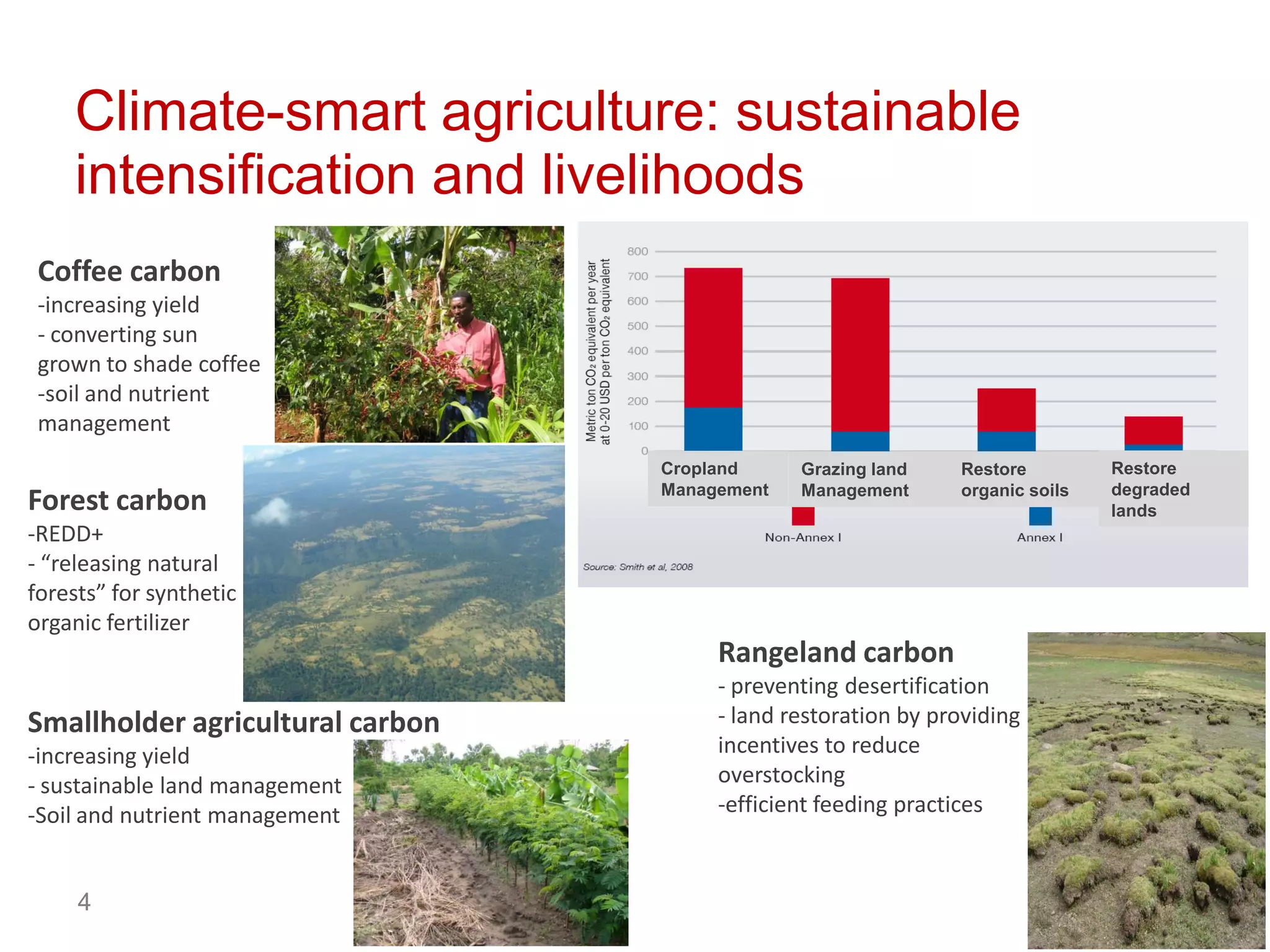
Climate-smart agriculture: sustainable intensification and livelihoodsCropland ManagementGrazing land Management 
Restore organic soilsRestore degraded landsCoffee carbon 
-increasing yield 
-converting sun grown to shade coffee-soil and nutrient management 
Forest carbon 
-REDD+ -“releasing natural forests” for synthetic or organic fertilizer 
Smallholder agricultural carbon-increasing yield-sustainable land management-Soil and nutrient managementRangeland carbon-preventing desertification 
-land restoration by providing incentives to reduce overstocking 
-efficient feeding practices
5 
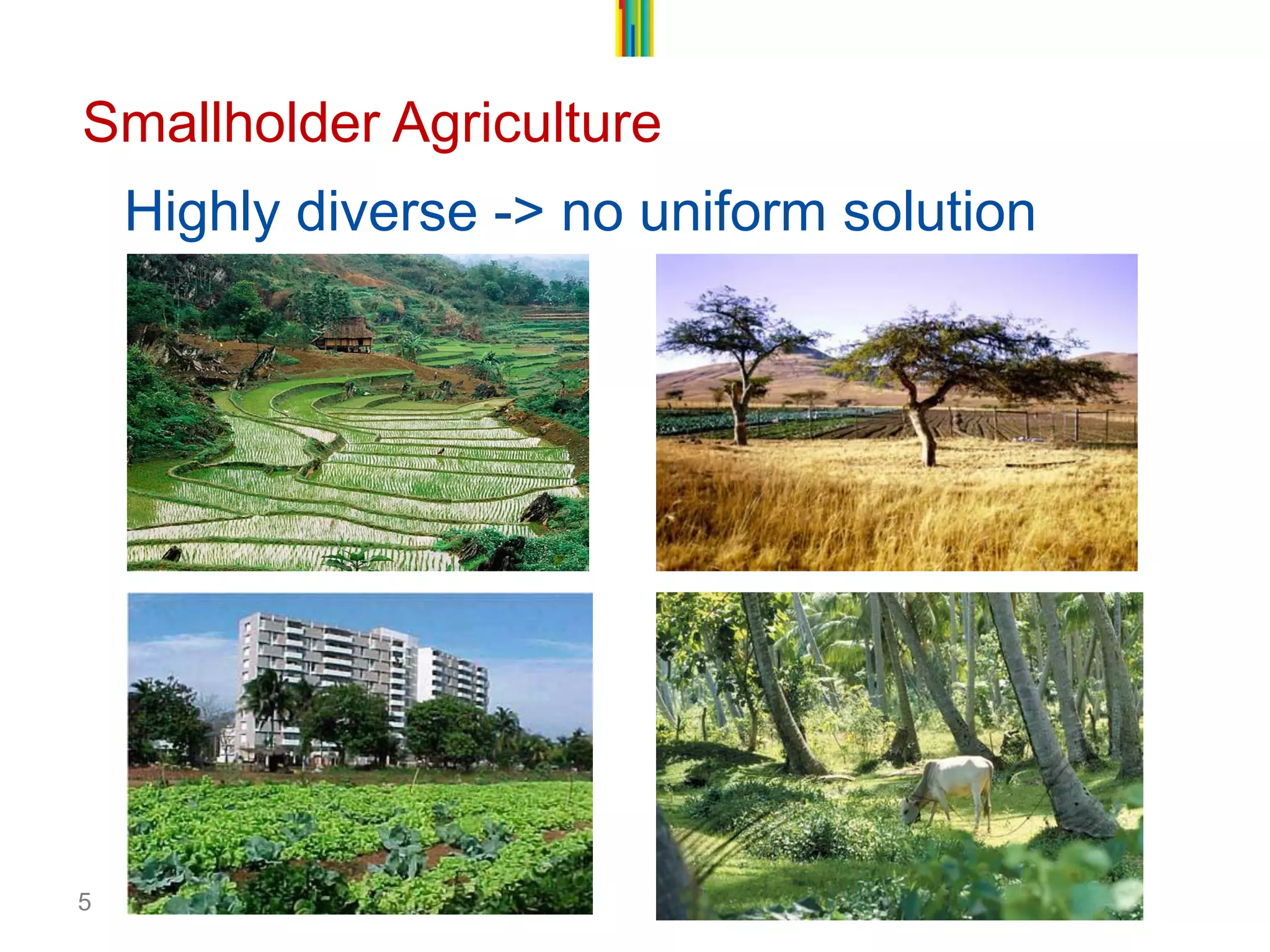
Smallholder Agriculture 
Highly diverse -> no uniform solution
6Removing Barriers to Implementing CSA 
-CSA must provide net benefit to farmer 
-Farmer must be able to overcome barriers to implementation 
Financial 
Social/Institutional 
Technological 
Lack of assetsand savings 
Poorly functioning markets 
Lack of technical expertise 
Little access to credit 
No or limited market access 
Lack of baseline data 
Lack of infrastructureand equipment 
Limited marketing information or understanding 
Existing resource degradation 
Little access to insurance 
Weak tenure security
7Overcoming Investment BarriersDirect Financial Incentives 
•PES Schemes 
•Carbon Markets 
•CreditRisk-sharing Mechanisms 
•Insurance 
•Crop-based 
•Index-based 
Private Sector Investment 
•Public-Private Partnerships 
•Labeling & Certification
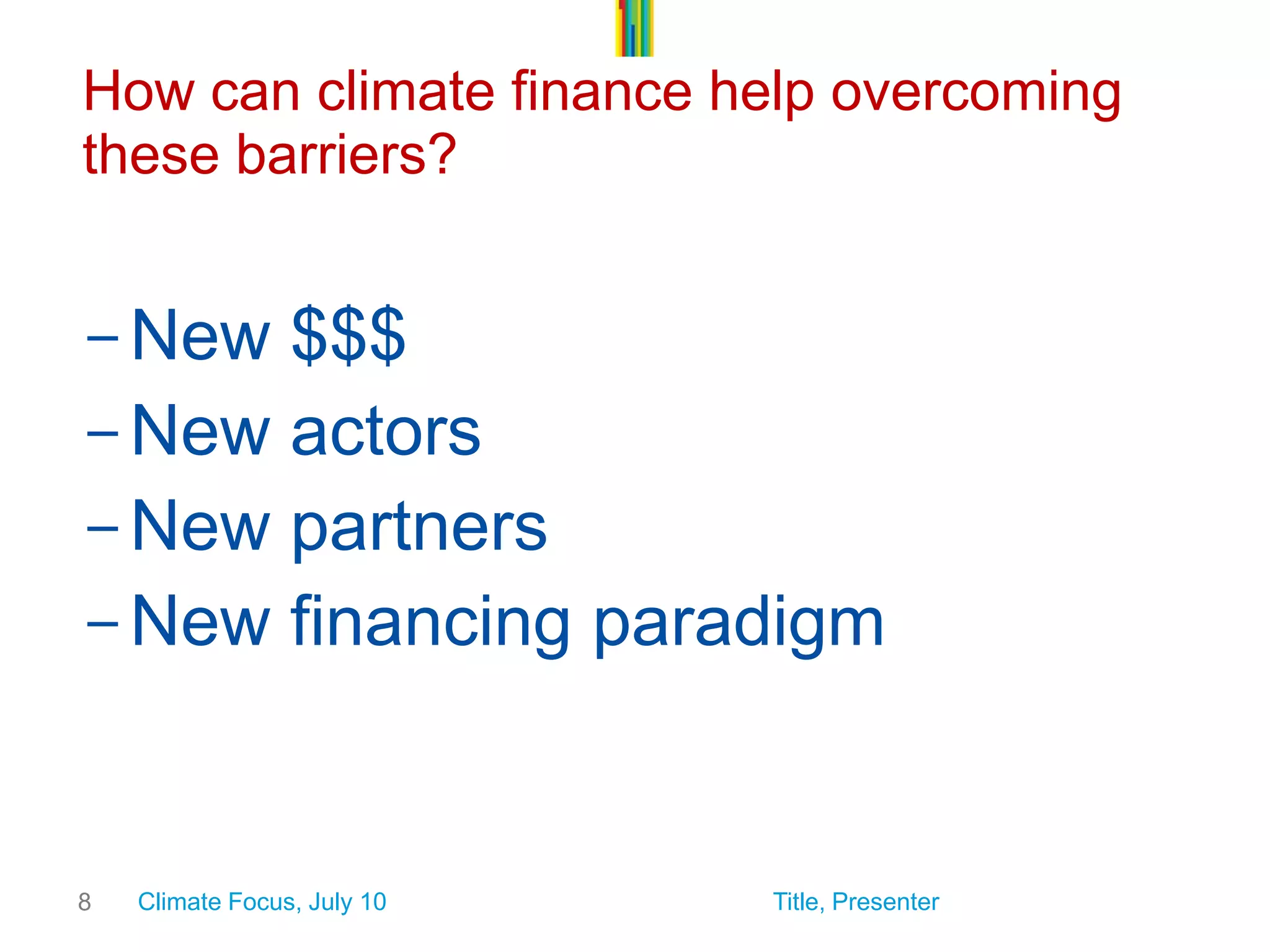
8How can climate finance help overcoming these barriers? 
-New $$$ 
-New actors 
-New partners 
-New financing paradigm 
Climate Focus, July 10Title, Presenter
9Climate Focus, July 8Charlotte Streck
10 
Climate Finance (Mitigation) Project based (CDM type) Project based (programmatic/landscape level) 
Landscape level / sectoral(market based, fund based) NAMA crediting path (fund/market based) NAMA support path (fund based)
11Risks and Opportunities of Climate Finance 
CDM type 
PoA/ 
landscape 
Sectoral/ market 
NAMA (crediting) 
NAMA 
(support) 
Ultimate beneficiary 
Farmer –beneficiary 
Level of change 
Incentives on the project level 
Incentives for changes at the landscape level 
Policy change 
Incentives for the gov to adopt PoMs (can involve project incentives) 
Policy change 
Policy change 
Enabling activities 
Contractual partner 
Project owner 
Aggregator 
Govmnt 
Govmnt 
Govmnt 
Finance 
Ex post 
Directly to the farmer 
Ex post 
To be distributed by aggregator 
Ex post 
To be distributed by gov 
Ex post 
To be distributed by gov 
Ex ante 
To be distributed by gov 
MRV 
Project level 
Project level but standardized 
Sector (MRV, high tier) 
Sector (possibly lower tier) 
Policy level MRV
12A basket of approaches 
NAMA support pathPoA/landscape level projectsDemon- strationactivitiesFund based finance (can be market linked) Market financeNAMA support finance: 
•Allows govs to access climate finance 
•Can support ag extension systems 
•Advance finance possible (farmer level subsidies) 
Market finance: 
•Demonstration activities 
•Voluntary market PoA/landscape level interventions
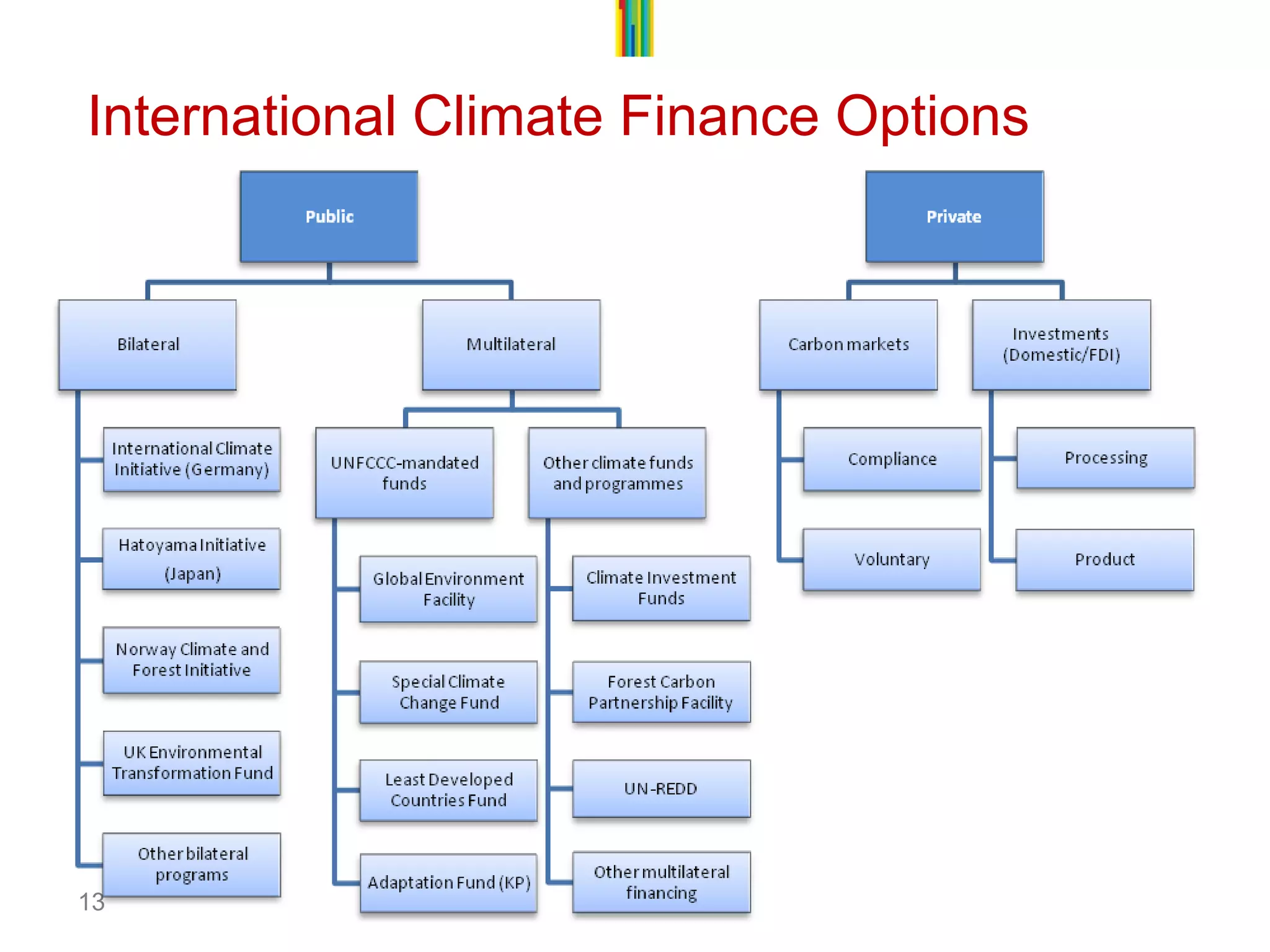
13International Climate Finance Options
14Implementation Phases1stphase: Readiness 
•Activity: Strategy development, capacity building, training 
•Goal: Build knowledge and ownership in the government and among stakeholders 
•Finance: High proportion of public finance. 2ndphase: Demonstration 
•Activity: Project scaling and limited commercialization; consolidate project and financing institutions. 
•Goal: Prove and expand project, program and policy concepts; attract private capital to agricultural communities; build supply chains 
•Finance: Large but falling fraction of public finance. 3rdphase: Scaling up 
•Activity: Direct private capital into landscape-scale activities; integrate agpolicies in Low Carbon Development Strategies 
•Goal: Scaling up of CSA practices, full implementation 
•Finance: Most investment from private sources; Ongoing public finance for certain infrastructure and services.
15Climate Finance & Smallholder SupportFinance 
•Context Specific 
•Tailored and targeted to where it can be most effective 
•e.g. ex-ante vs. ex-post paymentsInstitutions 
•Utilize existing structures in innovative arrangements 
•Improve coordination across institutions and financial sources 
•Need to identify coordinating body, recipients, & delivery mechanismMRV 
•UNFCCC National Inventories and Reporting 
•Growth of Life Cycle Analysis (LCA) 
•Role of NAMAs
16 
Example 
Climate-smart agricultural finance 
facility (CAFF) 
An initiative supported by the Rockefeller Foundation 
Presented by Charlotte Streck, ClimateFocus & 
Timm Tennigkeit, Eduard Merger UNIQUE forestry consultants
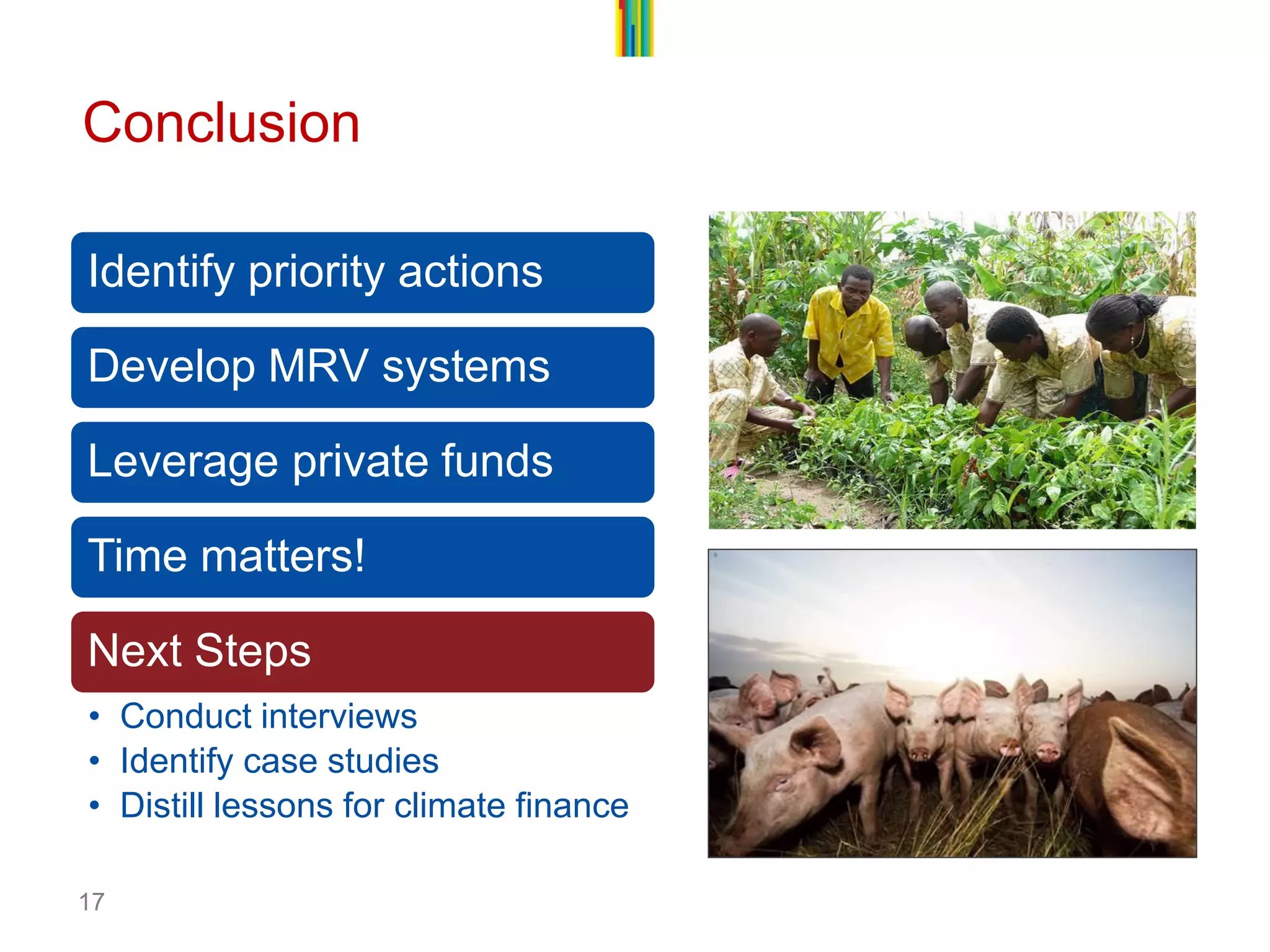
17ConclusionIdentify priority actionsDevelop MRV systemsLeverage private fundsTime matters! Next Steps 
•Conduct interviews 
•Identify case studies 
•Distill lessons for climate finance
18 
-Thank you! 
Climate Focus, July 8Title, PresenterCharlotte Streck

Streck c creating incentives and benefits july 2011

  • 1.
    1 Dr. CharlotteStreck 8 July 2011 1Incentives and Benefits for Climate Change Mitigation for Smallholder Farmers
  • 2.
    2 Agriculture isspecial… –Caters for basic needs –Agriculture is directly affected by climate change –Site and context specific –Source and sink of carbon –Adaptation and mitigation intrinsically linked –Complex links between trade, food security, and climate change –Close relation to emissions from forestry –Agriculture can generate multiple benefits for food security, adaptation, mitigation and development Climate Focus, July 8Charlotte Streck
  • 3.
    3 Introduction: Climate-SmartAgricultureFood Security DevelopmentAdaptation Mitigation Climate Smart Agriculture10-12% 18%* Agricultural Emissions Forestry Emissions* Includes land-use change
  • 4.
    4 Climate-smart agriculture:sustainable intensification and livelihoodsCropland ManagementGrazing land Management Restore organic soilsRestore degraded landsCoffee carbon -increasing yield -converting sun grown to shade coffee-soil and nutrient management Forest carbon -REDD+ -“releasing natural forests” for synthetic or organic fertilizer Smallholder agricultural carbon-increasing yield-sustainable land management-Soil and nutrient managementRangeland carbon-preventing desertification -land restoration by providing incentives to reduce overstocking -efficient feeding practices
  • 5.
    5 Smallholder Agriculture Highly diverse -> no uniform solution
  • 6.
    6Removing Barriers toImplementing CSA -CSA must provide net benefit to farmer -Farmer must be able to overcome barriers to implementation Financial Social/Institutional Technological Lack of assetsand savings Poorly functioning markets Lack of technical expertise Little access to credit No or limited market access Lack of baseline data Lack of infrastructureand equipment Limited marketing information or understanding Existing resource degradation Little access to insurance Weak tenure security
  • 7.
    7Overcoming Investment BarriersDirectFinancial Incentives •PES Schemes •Carbon Markets •CreditRisk-sharing Mechanisms •Insurance •Crop-based •Index-based Private Sector Investment •Public-Private Partnerships •Labeling & Certification
  • 8.
    8How can climatefinance help overcoming these barriers? -New $$$ -New actors -New partners -New financing paradigm Climate Focus, July 10Title, Presenter
  • 9.
    9Climate Focus, July8Charlotte Streck
  • 10.
    10 Climate Finance(Mitigation) Project based (CDM type) Project based (programmatic/landscape level) Landscape level / sectoral(market based, fund based) NAMA crediting path (fund/market based) NAMA support path (fund based)
  • 11.
    11Risks and Opportunitiesof Climate Finance CDM type PoA/ landscape Sectoral/ market NAMA (crediting) NAMA (support) Ultimate beneficiary Farmer –beneficiary Level of change Incentives on the project level Incentives for changes at the landscape level Policy change Incentives for the gov to adopt PoMs (can involve project incentives) Policy change Policy change Enabling activities Contractual partner Project owner Aggregator Govmnt Govmnt Govmnt Finance Ex post Directly to the farmer Ex post To be distributed by aggregator Ex post To be distributed by gov Ex post To be distributed by gov Ex ante To be distributed by gov MRV Project level Project level but standardized Sector (MRV, high tier) Sector (possibly lower tier) Policy level MRV
  • 12.
    12A basket ofapproaches NAMA support pathPoA/landscape level projectsDemon- strationactivitiesFund based finance (can be market linked) Market financeNAMA support finance: •Allows govs to access climate finance •Can support ag extension systems •Advance finance possible (farmer level subsidies) Market finance: •Demonstration activities •Voluntary market PoA/landscape level interventions
  • 13.
  • 14.
    14Implementation Phases1stphase: Readiness •Activity: Strategy development, capacity building, training •Goal: Build knowledge and ownership in the government and among stakeholders •Finance: High proportion of public finance. 2ndphase: Demonstration •Activity: Project scaling and limited commercialization; consolidate project and financing institutions. •Goal: Prove and expand project, program and policy concepts; attract private capital to agricultural communities; build supply chains •Finance: Large but falling fraction of public finance. 3rdphase: Scaling up •Activity: Direct private capital into landscape-scale activities; integrate agpolicies in Low Carbon Development Strategies •Goal: Scaling up of CSA practices, full implementation •Finance: Most investment from private sources; Ongoing public finance for certain infrastructure and services.
  • 15.
    15Climate Finance &Smallholder SupportFinance •Context Specific •Tailored and targeted to where it can be most effective •e.g. ex-ante vs. ex-post paymentsInstitutions •Utilize existing structures in innovative arrangements •Improve coordination across institutions and financial sources •Need to identify coordinating body, recipients, & delivery mechanismMRV •UNFCCC National Inventories and Reporting •Growth of Life Cycle Analysis (LCA) •Role of NAMAs
  • 16.
    16 Example Climate-smartagricultural finance facility (CAFF) An initiative supported by the Rockefeller Foundation Presented by Charlotte Streck, ClimateFocus & Timm Tennigkeit, Eduard Merger UNIQUE forestry consultants
  • 17.
    17ConclusionIdentify priority actionsDevelopMRV systemsLeverage private fundsTime matters! Next Steps •Conduct interviews •Identify case studies •Distill lessons for climate finance
  • 18.
    18 -Thank you! Climate Focus, July 8Title, PresenterCharlotte Streck