Applying the Mitigation Hierarchy for
Linear Infrastructure
1
Jan-Willem van Bochove
African Conference for Linear Infrastructure and Ecology
Skukuza, Kruger NP, 12th March, 2019
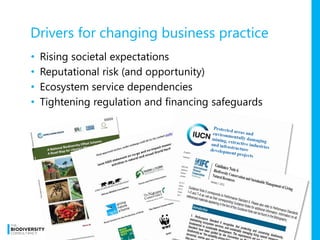
Drivers for changing business practice
• Rising societal expectations
• Reputational risk (and opportunity)
• Ecosystem service dependencies
• Tightening regulation and financing safeguards
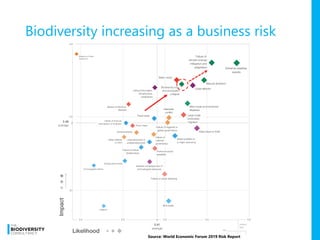
Source: World Economic Forum 2019 Risk Report
Biodiversity increasing as a business risk
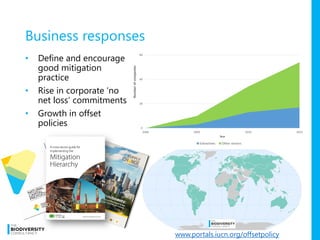
Business responses
• Define and encourage
good mitigation
practice
• Rise in corporate ‘no
net loss’ commitments
• Growth in offset
policies
4
www.portals.iucn.org/offsetpolicy
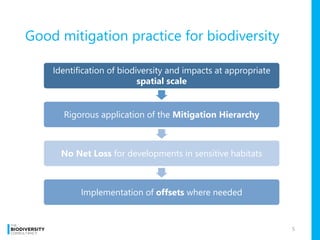
Good mitigation practice for biodiversity
5
Identification of biodiversity and impacts at appropriate
spatial scale
Rigorous application of the Mitigation Hierarchy
No Net Loss for developments in sensitive habitats
Implementation of offsets where needed
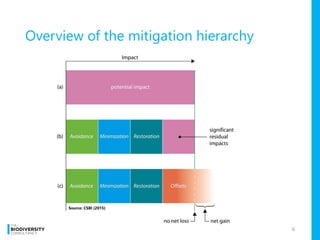
Overview of the mitigation hierarchy
6
Source: CSBI (2015)
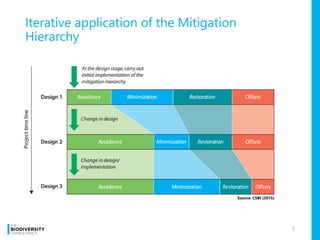
Iterative application of the Mitigation
Hierarchy
7
Source: CSBI (2015)
Identification of appropriate unit of analysis
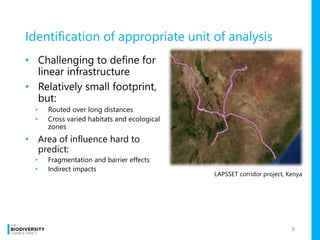
• Challenging to define for
linear infrastructure
• Relatively small footprint,
but:
• Routed over long distances
• Cross varied habitats and ecological
zones
• Area of influence hard to
predict:
• Fragmentation and barrier effects
• Indirect impacts
8
LAPSSET corridor project, Kenya
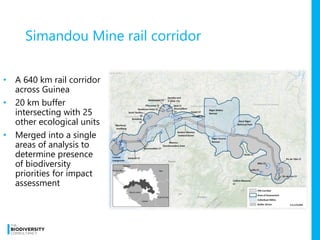
Simandou Mine rail corridor
• A 640 km rail corridor
across Guinea
• 20 km buffer
intersecting with 25
other ecological units
• Merged into a single
areas of analysis to
determine presence
of biodiversity
priorities for impact
assessment
Avoiding impacts
• Project and infrastructure siting
• Avoiding need for linear infrastructure
• Re-routing of linear infrastructure
• Using existing corridors
• Temporal avoidance
• Moratoriums on road transport at night
• Restricting construction during sensitive
periods
10
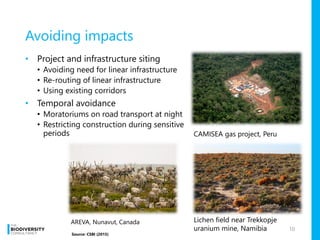
CAMISEA gas project, Peru
Lichen field near Trekkopje
uranium mine, Namibia
AREVA, Nunavut, Canada
Source: CSBI (2015)
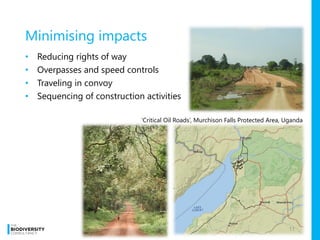
‘Critical Oil Roads’, Murchison Falls Protected Area, Uganda
Minimising impacts
11
• Reducing rights of way
• Overpasses and speed controls
• Traveling in convoy
• Sequencing of construction activities
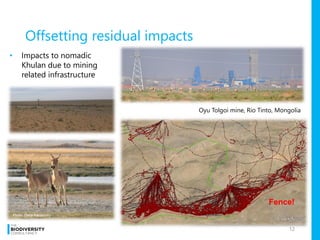
Offsetting residual impacts
12
Oyu Tolgoi mine, Rio Tinto, Mongolia
• Impacts to nomadic
Khulan due to mining
related infrastructure
Fence!
Photo: Petra Kaczensky
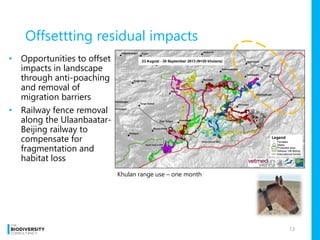
Offsettting residual impacts
• Opportunities to offset
impacts in landscape
through anti-poaching
and removal of
migration barriers
• Railway fence removal
along the Ulaanbaatar-
Beijing railway to
compensate for
fragmentation and
habitat loss
13
Photo: Petra Kaczensky
Khulan range use – one month
Thank you!
14
www.thebiodiversityconsultancy.com

Applying the Mitigation Hierarchy for Linear Infrastructure

  • 1.
    Applying the MitigationHierarchy for Linear Infrastructure 1 Jan-Willem van Bochove African Conference for Linear Infrastructure and Ecology Skukuza, Kruger NP, 12th March, 2019
  • 2.
    Drivers for changingbusiness practice • Rising societal expectations • Reputational risk (and opportunity) • Ecosystem service dependencies • Tightening regulation and financing safeguards
  • 3.
    Source: World EconomicForum 2019 Risk Report Biodiversity increasing as a business risk
  • 4.
    Business responses • Defineand encourage good mitigation practice • Rise in corporate ‘no net loss’ commitments • Growth in offset policies 4 www.portals.iucn.org/offsetpolicy
  • 5.
    Good mitigation practicefor biodiversity 5 Identification of biodiversity and impacts at appropriate spatial scale Rigorous application of the Mitigation Hierarchy No Net Loss for developments in sensitive habitats Implementation of offsets where needed
  • 6.
    Overview of themitigation hierarchy 6 Source: CSBI (2015)
  • 7.
    Iterative application ofthe Mitigation Hierarchy 7 Source: CSBI (2015)
  • 8.
    Identification of appropriateunit of analysis • Challenging to define for linear infrastructure • Relatively small footprint, but: • Routed over long distances • Cross varied habitats and ecological zones • Area of influence hard to predict: • Fragmentation and barrier effects • Indirect impacts 8 LAPSSET corridor project, Kenya
  • 9.
    Simandou Mine railcorridor • A 640 km rail corridor across Guinea • 20 km buffer intersecting with 25 other ecological units • Merged into a single areas of analysis to determine presence of biodiversity priorities for impact assessment
  • 10.
    Avoiding impacts • Projectand infrastructure siting • Avoiding need for linear infrastructure • Re-routing of linear infrastructure • Using existing corridors • Temporal avoidance • Moratoriums on road transport at night • Restricting construction during sensitive periods 10 CAMISEA gas project, Peru Lichen field near Trekkopje uranium mine, Namibia AREVA, Nunavut, Canada Source: CSBI (2015)
  • 11.
    ‘Critical Oil Roads’,Murchison Falls Protected Area, Uganda Minimising impacts 11 • Reducing rights of way • Overpasses and speed controls • Traveling in convoy • Sequencing of construction activities
  • 12.
    Offsetting residual impacts 12 OyuTolgoi mine, Rio Tinto, Mongolia • Impacts to nomadic Khulan due to mining related infrastructure Fence! Photo: Petra Kaczensky
  • 13.
    Offsettting residual impacts •Opportunities to offset impacts in landscape through anti-poaching and removal of migration barriers • Railway fence removal along the Ulaanbaatar- Beijing railway to compensate for fragmentation and habitat loss 13 Photo: Petra Kaczensky Khulan range use – one month
  • 14.