LINKED DATA IN
LIBRARIES OR:
HOW I LEARNED TO
STOP WORRYING AND
LOVE THE WEB
WHAT IS LINKED DATA?
USING THE WEB TO
CONNECT DATA
SIMILAR TO HOW IT
CONNECTS PAGES

• ―Linked Data is simply about using the web to create typed
  links between data from different sources.‖ –Christian Bizer,
  Tom Heath, and Tim Berners-Lee, ―Linked Data—The Story So
  Far‖
• Connections between data are understandable by computer
  programs
• Data is sharable, extensible, and reusable.
TIM BERNERS-LEE’S
FOUR RULES
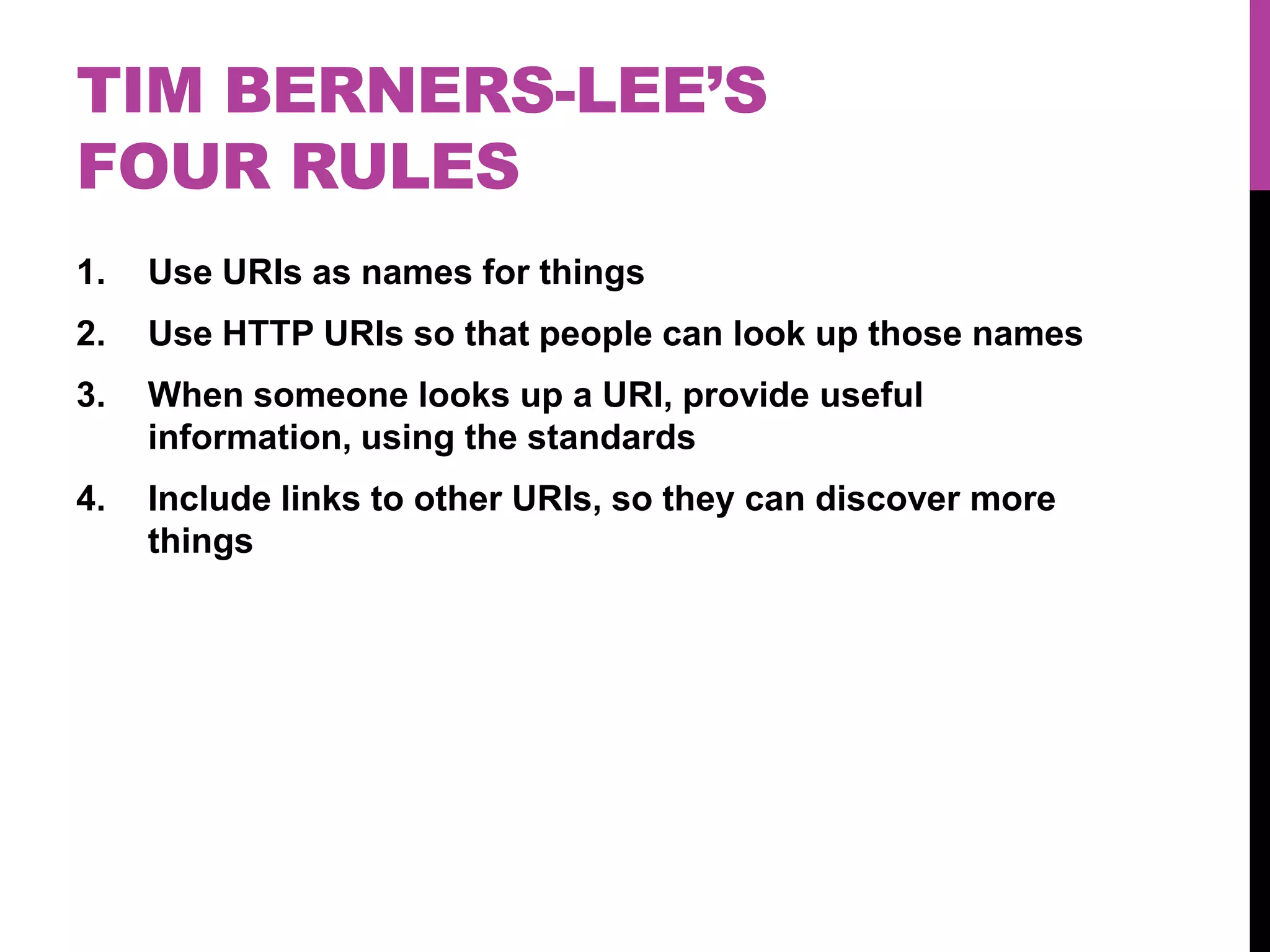
1.   Use URIs as names for things
2.   Use HTTP URIs so that people can look up those names
3.   When someone looks up a URI, provide useful
     information, using the standards
4.   Include links to other URIs, so they can discover more
     things
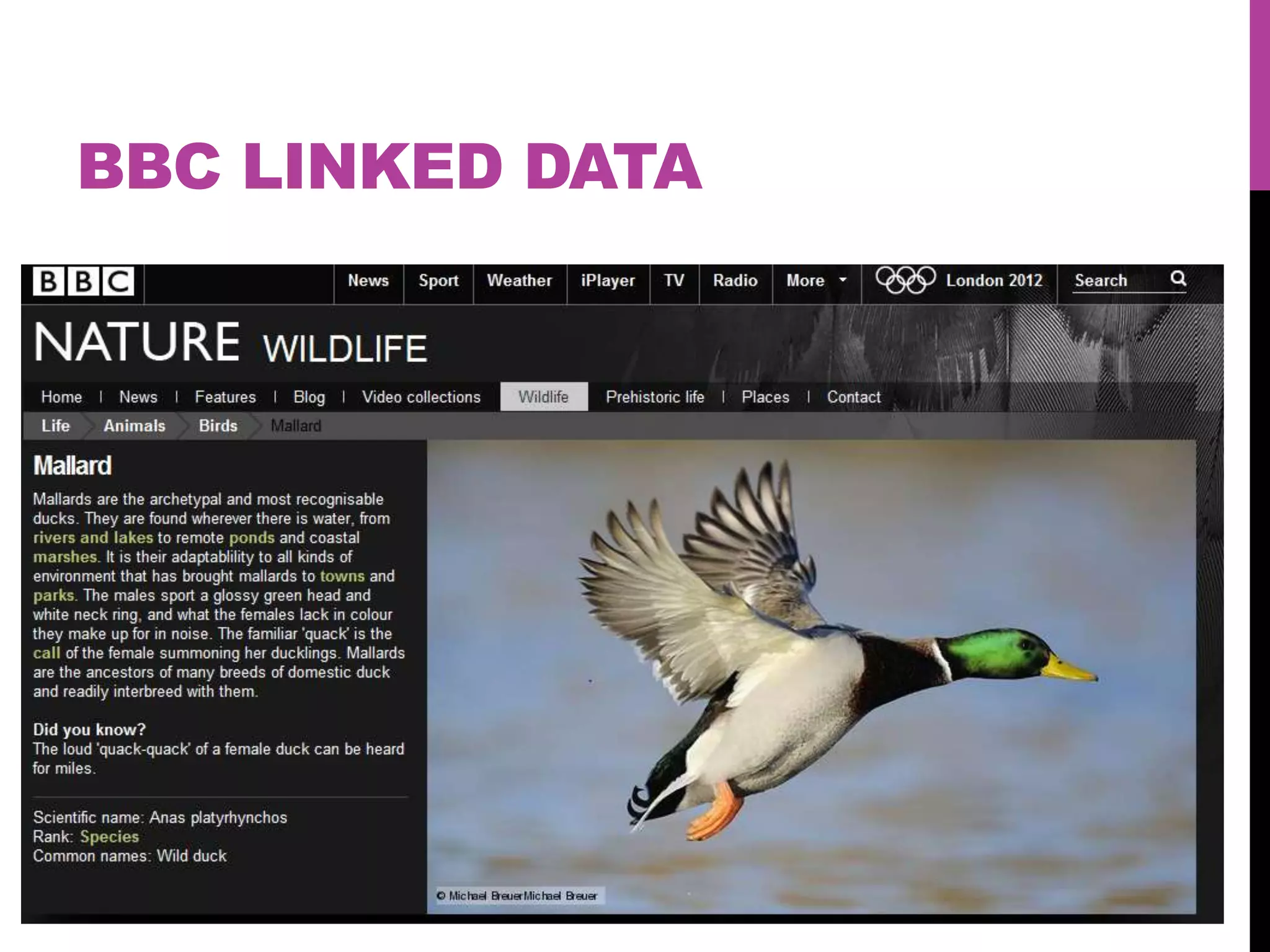
BBC LINKED DATA
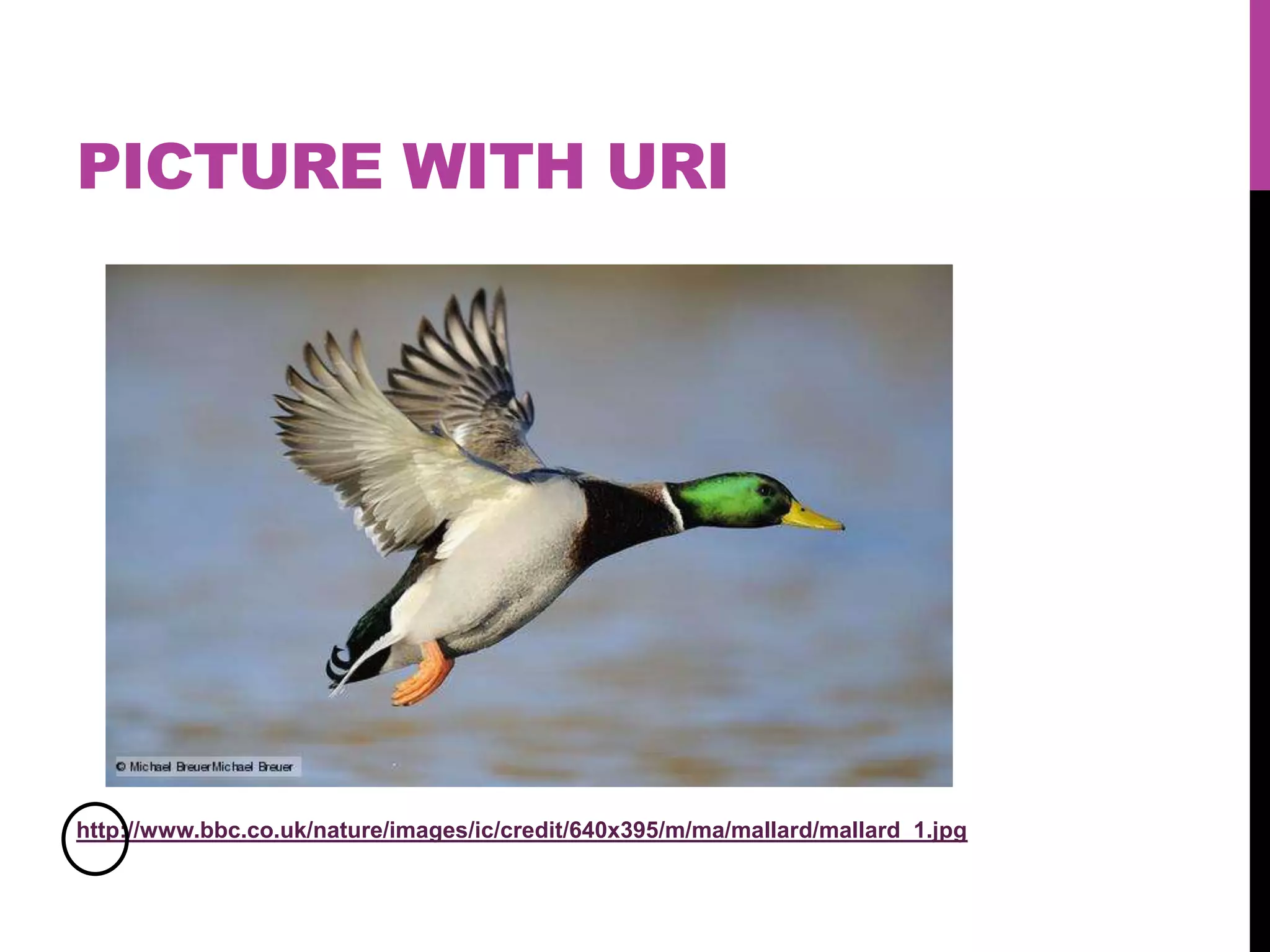
PICTURE WITH URI


http://www.bbc.co.uk/nature/images/ic/credit/640x395/m/ma/mallard/mallard_1.jpg
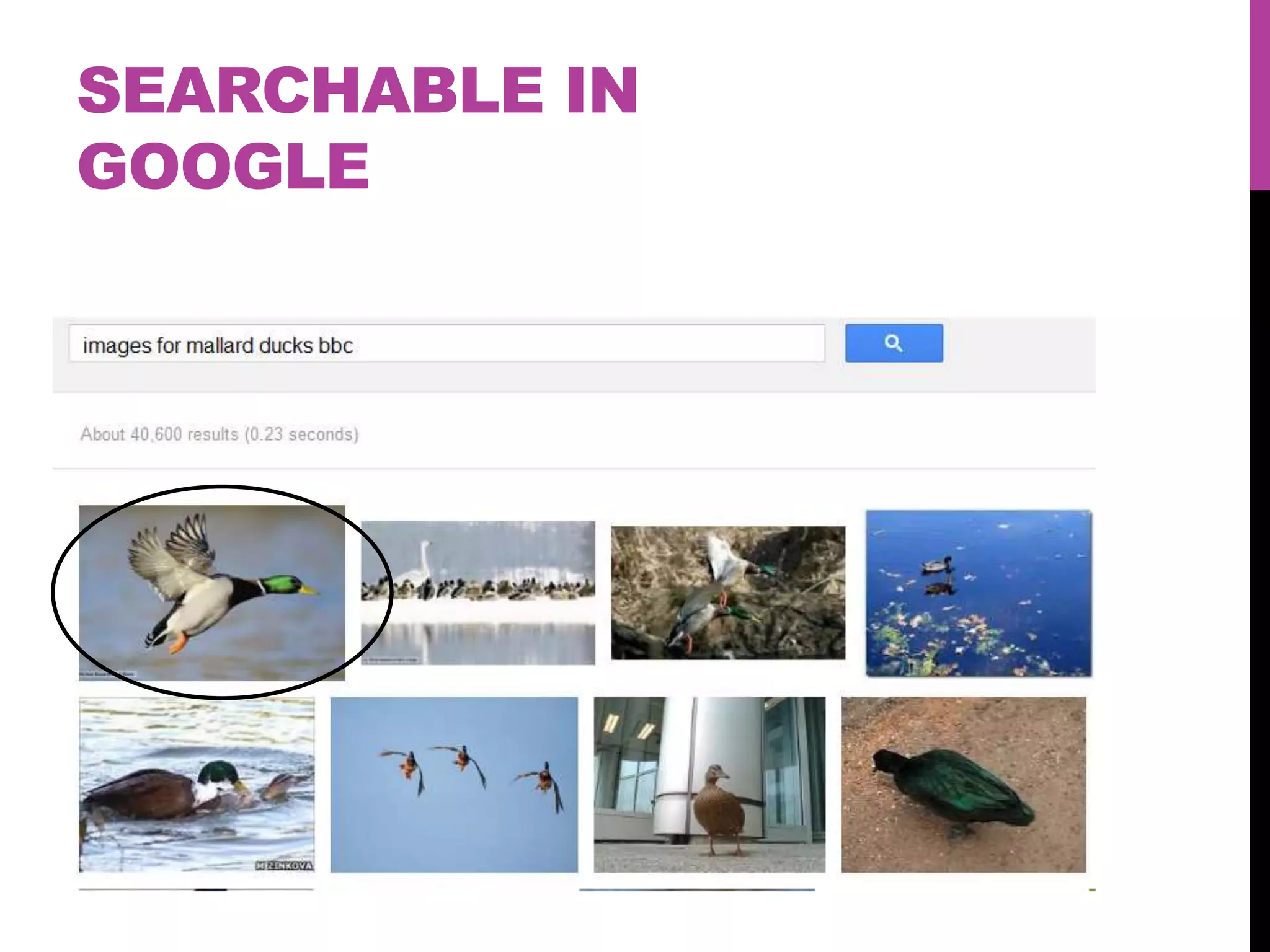
SEARCHABLE IN
GOOGLE
RDF:
RESOURCE DESCRIPTION
FRAMEWORK


• The main standard of linked data
• RDF is a data model that expresses connections in the
  form of ―triples‖
• Model, not schema (expressing RDF often done in XML)
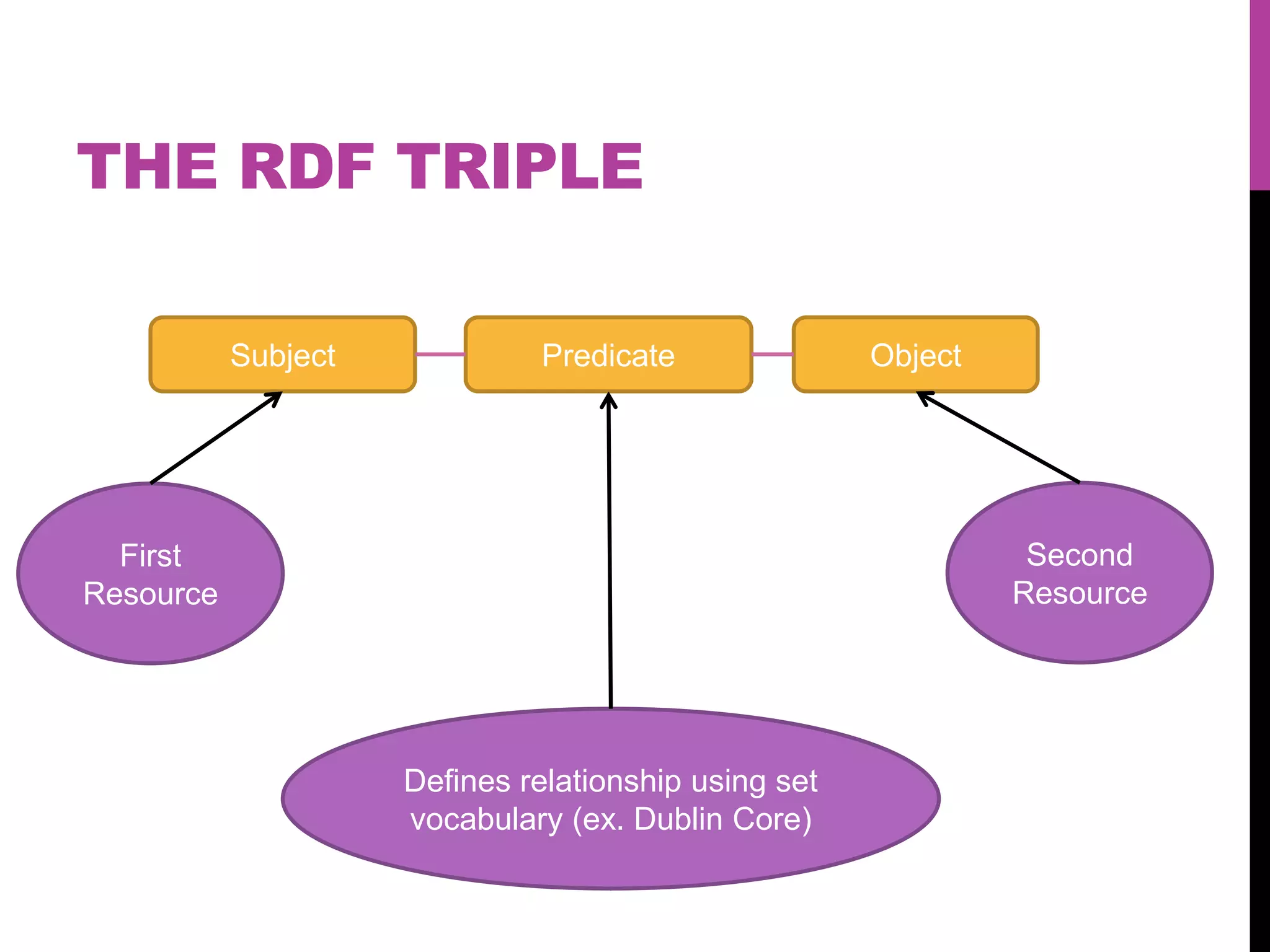
THE RDF TRIPLE

           Subject            Predicate               Object


  First                                                         Second
Resource                                                       Resource


                     Defines relationship using set
                     vocabulary (ex. Dublin Core)
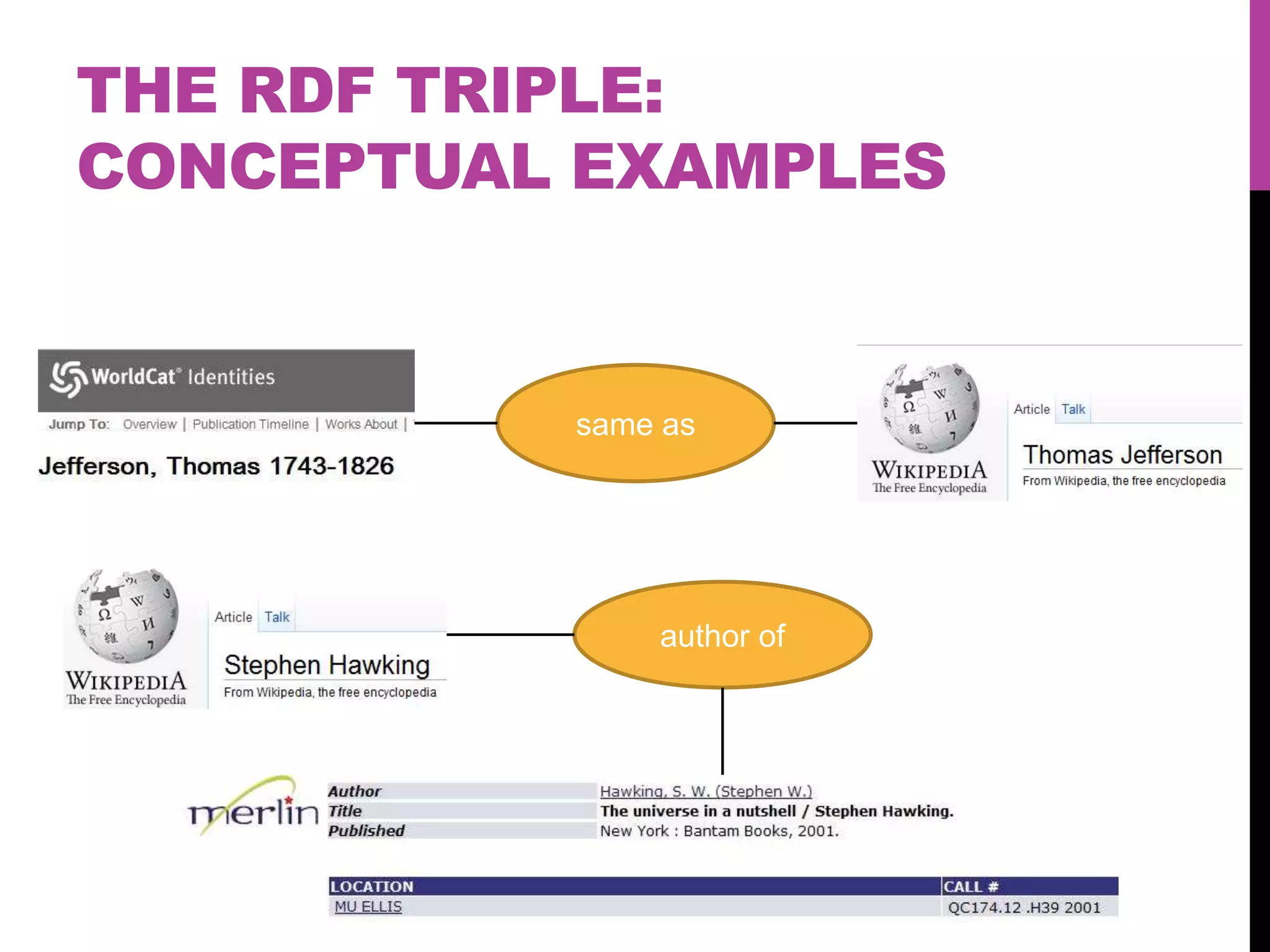
THE RDF TRIPLE:
CONCEPTUAL EXAMPLES


          same as


              author of
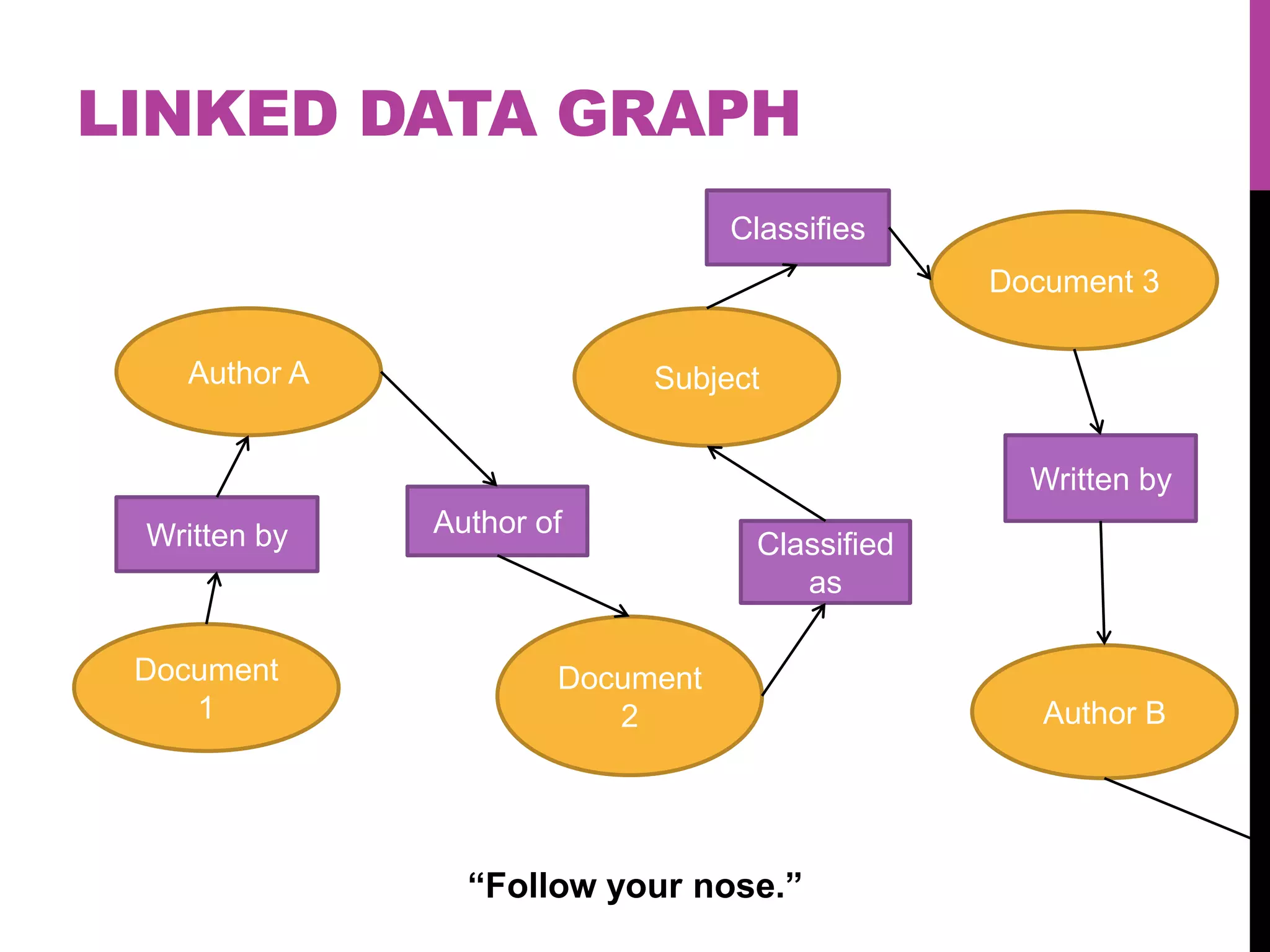
LINKED DATA GRAPH
                                 Classifies
                                               Document 3

   Author A                Subject


                                                 Written by
 Written by   Author of
                                  Classified
                                     as

 Document             Document
    1                    2                        Author B


                ―Follow your nose.‖
WHAT CAN LINKED DATA DO
FOR LIBRARIES? (A LOT)
UNLOCK LIBRARY DATA
• Transforms library data so that it is of the web
• Becomes easily searchable
• Libraries can integrate outside data into what they already
  have
• Anyone can reuse library data to create their own
  applications
EXAMPLE: CONTROLLED
VOCABULARIES
• Create URIs for each word in a controlled vocabulary
• Creates method for classifying and cataloging web
  resources that can easily be used by libraries and others
• Library of Congress has released LCSH as linked data,
  and OCLC has a modified version of LCSH called FAST as
  linked data
CATALOG COMPLEX
RELATIONSHIPS
• Linked Data is flexible enough to express entity-
  relationship relationships such as FRBR/FRAD that MARC
  struggles with
• Oslo Public Library Pode project
   • Define relationships between different manifestations of a
     work
   • Allow patrons to either request any version a work or a
     specific manifestation
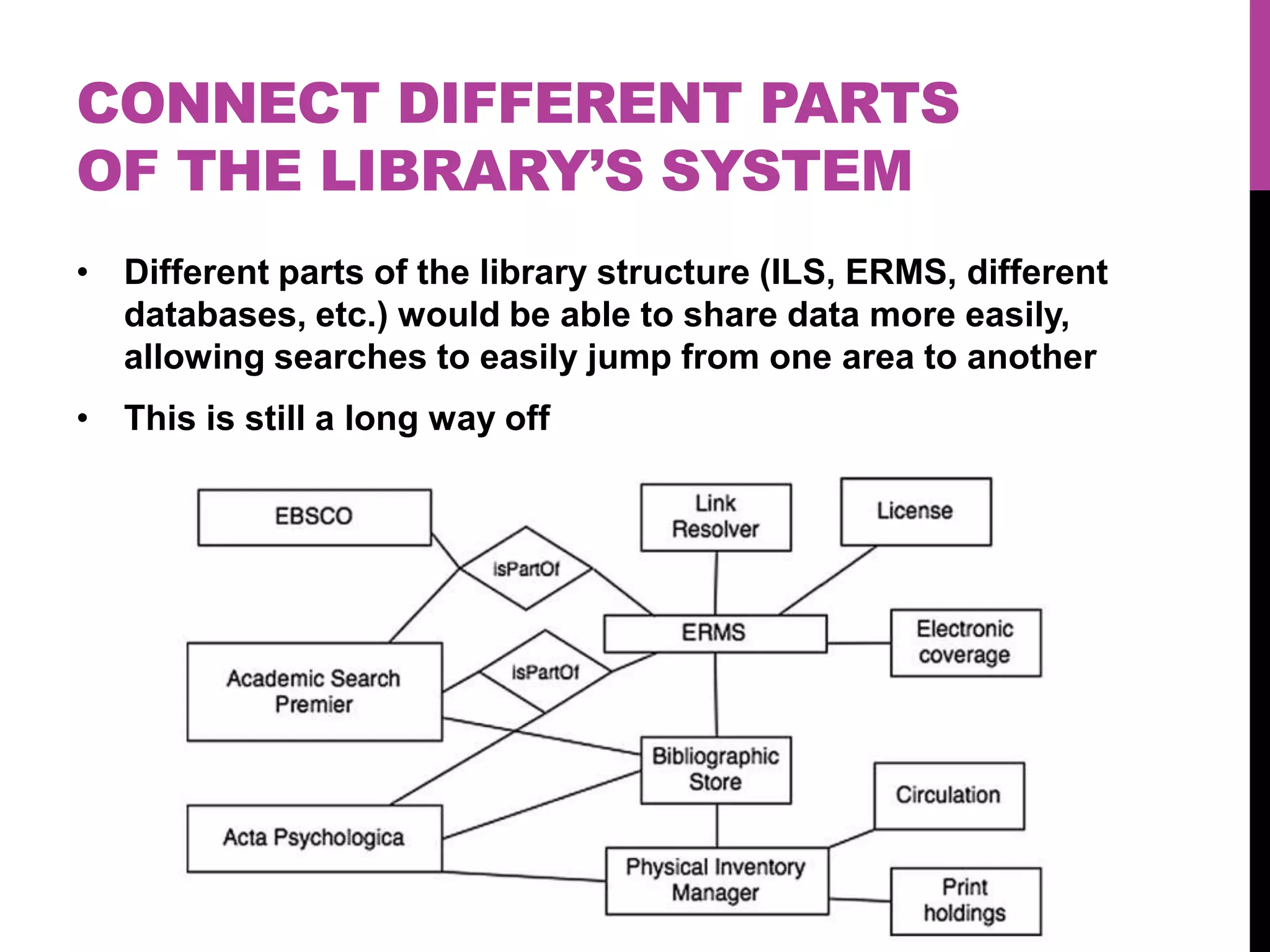
CONNECT DIFFERENT PARTS
OF THE LIBRARY’S SYSTEM
• Different parts of the library structure (ILS, ERMS, different
  databases, etc.) would be able to share data more easily,
  allowing searches to easily jump from one area to another
• This is still a long way off
THE END
BIBLIOGRAPHY
Baker, Thomas et all. ―Library Linked Data Incubator Group Final Report.‖ W3C
          Incubator Group Report. October 2011. Available at:
          http://www.w3.org/2005/Incubator/lld/XGR-lld-20111025/
Berners-Lee, Tim. ―Linked Data.‖ W3C. June 2009. Available at:
          http://www.w3.org/DesignIssues/LinkedData
Bizer et all. ―Linked Data—The Story So Far.‖ International Journal on Semantic Web
and Information Systems 5 (2009): 1-22.
Chudnoy, Daniel. ―Libraries in Computers: What Linked Data is Missing.‖ Computers in
          Libraries 31 (2011): 35-36.
Fox, Robert. ―Avoiding the Weak Link.‖ OCLC Systems & Services 27 (2011): 163-169.
Miller, Eric, and Westfall, Micheline. ―Linked Data and Libraries.‖ The Serials Librarian
             60 (2011): 17-22.
Singer, Ross. ―Linked Library Data Now!‖ Journal of Electronic Resources Librarianship
          21 (2009): 114-126.
Wallis, Richard. ―Linked Data Applicable for Libraries.‖ Talis. Available at:
            http://consulting.talis.com/resources/presentations-from-linked-data-and-
libraries-2011/
Westrum, Anne-Lena et all. ―Improving the Presentation of Library Data Using FRBR
          and Linked Data.‖ Code{4}Lib Journal 16 (2011): 1-7.

Linked Data in Libraries

  • 1.
    LINKED DATA IN LIBRARIESOR: HOW I LEARNED TO STOP WORRYING AND LOVE THE WEB
  • 2.
  • 3.
    USING THE WEBTO CONNECT DATA SIMILAR TO HOW IT CONNECTS PAGES • ―Linked Data is simply about using the web to create typed links between data from different sources.‖ –Christian Bizer, Tom Heath, and Tim Berners-Lee, ―Linked Data—The Story So Far‖ • Connections between data are understandable by computer programs • Data is sharable, extensible, and reusable.
  • 4.
    TIM BERNERS-LEE’S FOUR RULES 1. Use URIs as names for things 2. Use HTTP URIs so that people can look up those names 3. When someone looks up a URI, provide useful information, using the standards 4. Include links to other URIs, so they can discover more things
  • 5.
  • 6.
  • 7.
  • 8.
    RDF: RESOURCE DESCRIPTION FRAMEWORK • Themain standard of linked data • RDF is a data model that expresses connections in the form of ―triples‖ • Model, not schema (expressing RDF often done in XML)
  • 9.
    THE RDF TRIPLE Subject Predicate Object First Second Resource Resource Defines relationship using set vocabulary (ex. Dublin Core)
  • 10.
    THE RDF TRIPLE: CONCEPTUALEXAMPLES same as author of
  • 11.
    LINKED DATA GRAPH Classifies Document 3 Author A Subject Written by Written by Author of Classified as Document Document 1 2 Author B ―Follow your nose.‖
  • 12.
    WHAT CAN LINKEDDATA DO FOR LIBRARIES? (A LOT)
  • 13.
    UNLOCK LIBRARY DATA •Transforms library data so that it is of the web • Becomes easily searchable • Libraries can integrate outside data into what they already have • Anyone can reuse library data to create their own applications
  • 14.
    EXAMPLE: CONTROLLED VOCABULARIES • CreateURIs for each word in a controlled vocabulary • Creates method for classifying and cataloging web resources that can easily be used by libraries and others • Library of Congress has released LCSH as linked data, and OCLC has a modified version of LCSH called FAST as linked data
  • 15.
    CATALOG COMPLEX RELATIONSHIPS • LinkedData is flexible enough to express entity- relationship relationships such as FRBR/FRAD that MARC struggles with • Oslo Public Library Pode project • Define relationships between different manifestations of a work • Allow patrons to either request any version a work or a specific manifestation
  • 16.
    CONNECT DIFFERENT PARTS OFTHE LIBRARY’S SYSTEM • Different parts of the library structure (ILS, ERMS, different databases, etc.) would be able to share data more easily, allowing searches to easily jump from one area to another • This is still a long way off
  • 17.
  • 18.
    BIBLIOGRAPHY Baker, Thomas etall. ―Library Linked Data Incubator Group Final Report.‖ W3C Incubator Group Report. October 2011. Available at: http://www.w3.org/2005/Incubator/lld/XGR-lld-20111025/ Berners-Lee, Tim. ―Linked Data.‖ W3C. June 2009. Available at: http://www.w3.org/DesignIssues/LinkedData Bizer et all. ―Linked Data—The Story So Far.‖ International Journal on Semantic Web and Information Systems 5 (2009): 1-22. Chudnoy, Daniel. ―Libraries in Computers: What Linked Data is Missing.‖ Computers in Libraries 31 (2011): 35-36. Fox, Robert. ―Avoiding the Weak Link.‖ OCLC Systems & Services 27 (2011): 163-169. Miller, Eric, and Westfall, Micheline. ―Linked Data and Libraries.‖ The Serials Librarian 60 (2011): 17-22. Singer, Ross. ―Linked Library Data Now!‖ Journal of Electronic Resources Librarianship 21 (2009): 114-126. Wallis, Richard. ―Linked Data Applicable for Libraries.‖ Talis. Available at: http://consulting.talis.com/resources/presentations-from-linked-data-and- libraries-2011/ Westrum, Anne-Lena et all. ―Improving the Presentation of Library Data Using FRBR and Linked Data.‖ Code{4}Lib Journal 16 (2011): 1-7.